
A Dot That Went For a Walk
Paul Klee said:
“A line is a dot that went for a walk.”
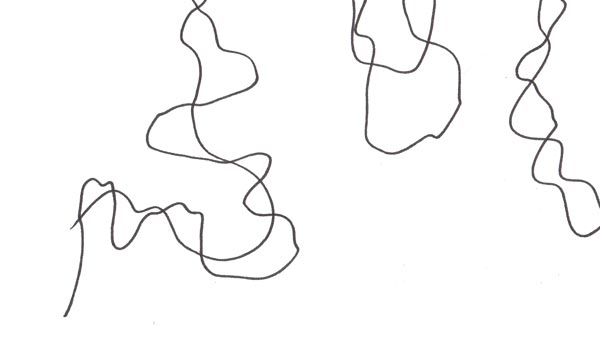
I would continue the conversation about the line:
“Art is a line that was freed to play.”
Everything starts with a single line. When people say they can’t draw, they simply haven’t made friends with their line yet.
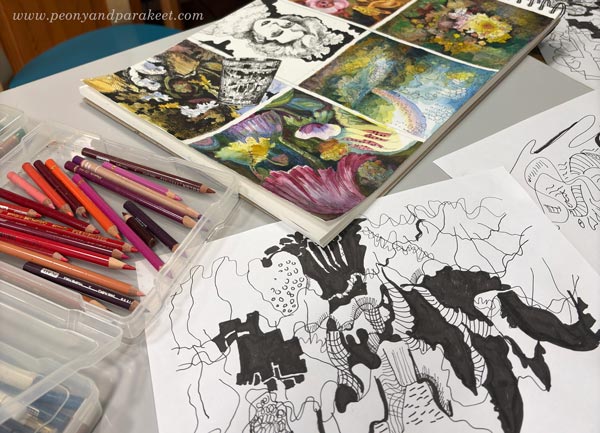
Art doesn’t start by comparing yourself to others. It starts with your own line. Observe where it turns naturally, and learn how to vary it—so that a drawing isn’t just a monologue, but a conversation, a play, an event.
When a drawing is a happening on paper, art happens. And that’s when you know you can draw!
Drawing Soulfully – Sign Up Now!
My newest course, Drawing Soulfully, is about finding your living line and starting a journey to your artistic style.
Drawing Soulfully goes much deeper than standard technique. In the course, I open up about the invisible side of art. I guide you to move beyond concrete ideas into conceptual thinking that frees your creative process. I also share how emotional needs shape our lines, and how to balance intuition and technique.
In my explanations, I’ve focused on what isn’t directly visible. Making art is so much more than just looking and creating. >> Sign up Now!
From Drawing to Style
I know there are plenty of art courses out there advertised with slogans like “find your style” or “discover your inner artist.” To be honest, those sound like pretty big words to me. Maybe it’s because we Finns tend to be quite modest—and sometimes so brutally honest it makes you want to shake us a little!
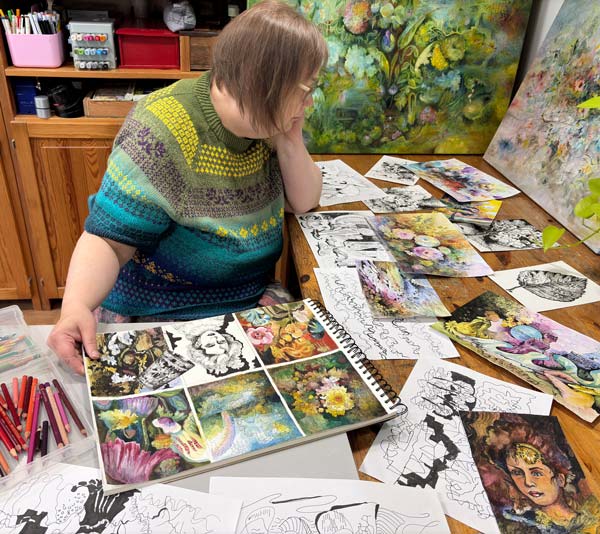
But as I started creating my new course, Drawing Soulfully, I wanted to raise the bar. After so many years of teaching, making art, and deeply exploring artistic thinking, I wanted to gather my insights for developing your own style. And not just share theoretical ideas, but show you in practice how drawing forms the core of visual expression.
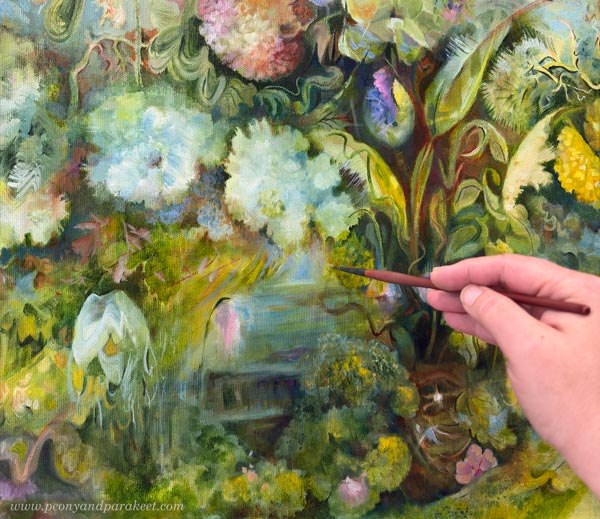
Even though my main works are paintings, I developed my style through drawing. I kind of threw myself into a free fall guided only by the hand-drawn line—and survived it so that my inner world came out onto the paper. For that, I’m forever grateful to my line. I deeply believe that by awakening your line and giving it a soul, you can unlock your unique artistic style. And once you find that style, you can use it in any visual art, not just drawing.
Style Isn’t a Fixed Destination
Style is a journey. In the beginning, we all walk the same path together, and slowly, we start to branch off. The fundamentals are the same for everyone, but how we apply them comes down to subtle choices, tones, and personal emphasis. That’s why I like to teach the principles first, and then show examples of how you can adapt and play with them. In Drawing Soulfully, techniques are just tools, not the final goal.
One of the hardest things in teaching art is artistic expression. I think that’s why so many art courses focus purely on technique. But to me, that feels like hopping on one leg. Can you even have true style without expression? In Drawing Soulfully, both are included.
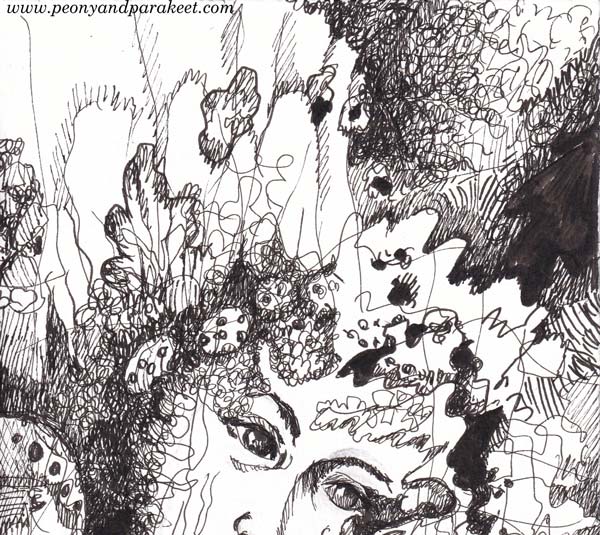
Some projects are black and white, some colored. You will need black fineliner pens and your favorite coloring supplies. The examples are in watercolor, and some also use colored pencils.
The early-bird sale of Drawing Soulfully ends on July 26, 2026, at midnight PDT. Sign up now!
Let’s crown this year with a passion for drawing!
Finding Your Soulful Line
This week, I am excited to talk about the soulful line and share thoughts behind the new course Drawing Soulfully. This blog post can be watched as a video here!
We want to achieve something grand with art, but in reality, art begins with something so small it almost goes unnoticed. Art begins with a line. Style begins with a line. Bringing soul to paper begins with a line. When we say we can’t draw, it means we haven’t become friends with our line.
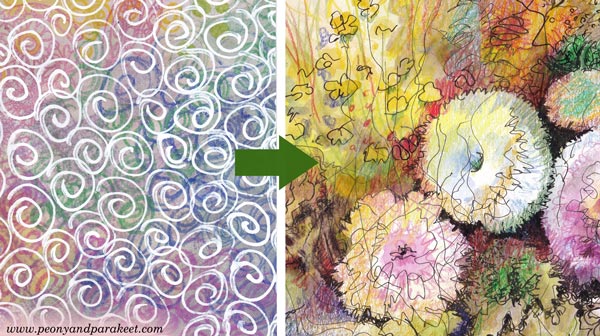
At first, a line can be clumsy and closed off. But when it opens up, and a connection is found, drawing becomes a channel for our creativity. Even when we draw every day, we don’t have to draw just everyday life, but we can also escape it by drawing. We can draw more than we dare to dream, because on paper, even the impossible is possible.
That is why art can’t be born only in your head; it is born when you create. Through the pen, you see further. Your soulful line connects you with art, making you understand your taste, your style, and as it all develops, a new world is born. Your art is born.
From Living Line to Soulful Line
For a long time, I have wanted to create a comprehensive course on drawing. In the past, I have had courses like that — Inspirational Drawing and its successor, Inspirational Drawing 2.0. Those courses were retired quite some time ago, and over the years, I have discovered new ideas and concepts that weren’t included in them. However, the core philosophy (which also forms the foundation of my own artistry) remains the same: in art, the line is the beginning of everything, the seed of expression from which everything else grows.
I decided to make the new course and name it Drawing Soulfully.
I have talked a lot about the living line, but when I started working on this course, ‘living’ no longer felt like enough. Our line may look lively, but do we live within our line? Do we feel the line all the way in our souls? This is what an artist wants to strive for!
Drawing Soulfully
Drawing Soulfully is about expressing yourself through drawing. It’s a journey into your artistry and teaches a way to work towards your style. We will draw mostly with black pens, and then color some of the drawings with watercolors and colored pencils. We will use reference images for some projects, but in a creative way that broadens your perspective.
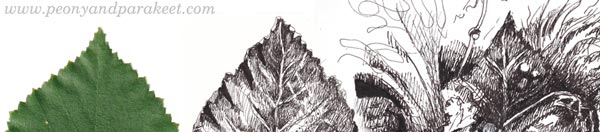
In Drawing Soulfully, I want you to think about your artistic roots – the cultural history that touches you. In the course, I also share some of mine. At the end of the 19th century, many artists who studied or worked in central Europe came back to Finland for the summer. They read, wrote, and painted in their summer cottages, and thus, captured the best season in their souls. Yet, in the past, they didn’t have all the ways to express their emotions. There were walls that no longer exist. Nowadays, we can free up our pens and pour it all out on paper.
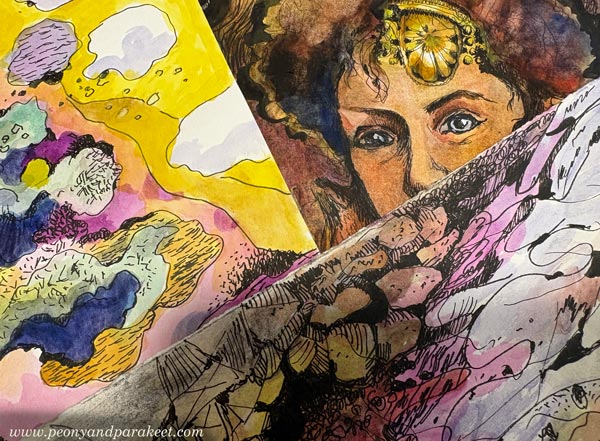
Your line is your voice. Just like for a singer, a great voice isn’t just about physical technique — it’s about connecting the voice to the soul.
Drawing Soulfully – Sign Up Now!
Drawing Soulfully begins on August 25, but the early-bird sale is now on!
Get 20 EUR OFF! >> Sign Up Now!
Sneak Peek at The New Course
This week, you get to see a sneak peek at the upcoming course! The course is about expressing yourself through drawing. It’s a journey into your artistry and teaches a way to work towards your style. We will draw mostly with black pens, and then color some of the drawings with watercolors and colored pencils.
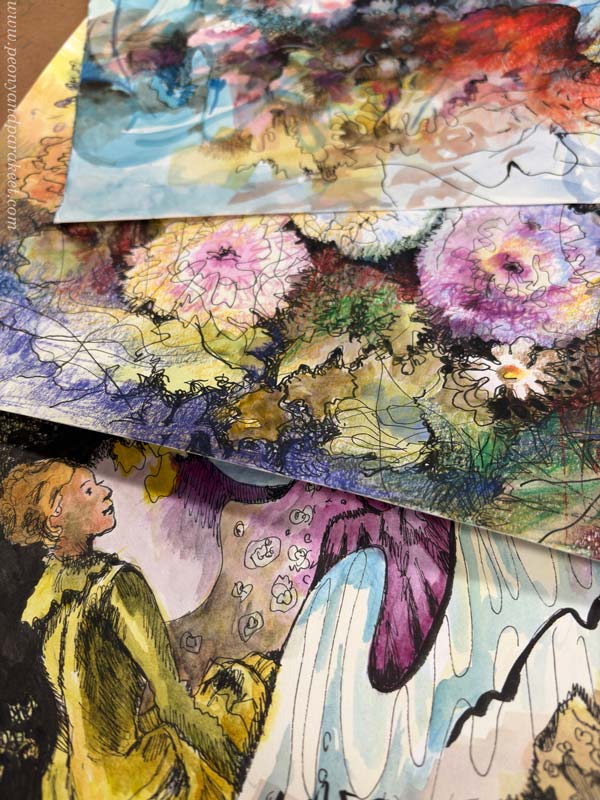
Drawing a line is in the center of the course. How to draw is not only about how to draw realistic objects so that they are recognizable, but also about how to find a living, soulful line that makes you want to pick up a pen again and again.
I believe that without the ability to draw, it’s impossible to create any visual art. Everything is based on a line, and thus, on drawing. And not just any kind of drawing but …
Drawing is not about sketching something that you quickly erase and change. When you draw soulfully, the pen opens up a new horizon, and you live within your drawing.
We will use reference images for some projects, but in a creative way that broadens your perspective.
You not only learn how to draw but also how to get the most out of the practice.
Your Journey to Drawing
In Drawing Soulfully, I want you to think about your artistic roots – the cultural history that touches you. At the end of the 19th century, many artists who studied or worked in central Europe came back to Finland for the summer. They read, wrote, and painted in their summer cottages, and thus, captured the best season in their souls.
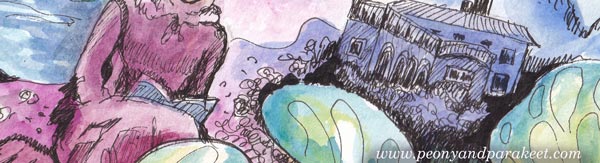
But it is also so that in the past, they didn’t have all the ways to express their emotions. There was suffocation, which no longer exists. Nowadays, we can free up our pens, the colors, and pour it all out on paper.
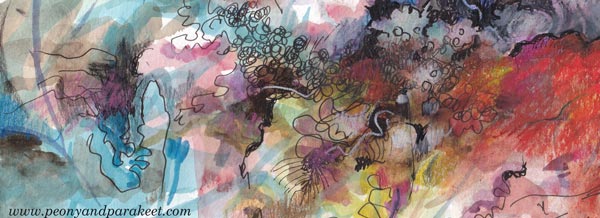
When lines are soulful, so will the art be.
Drawing Soulfully will begin on August 25th. The course will be published in three parts and will last three months. The early-bird sale will begin next week.
What do you think? Will you join me?