
A Dot That Went For a Walk
Paul Klee said:
“A line is a dot that went for a walk.”
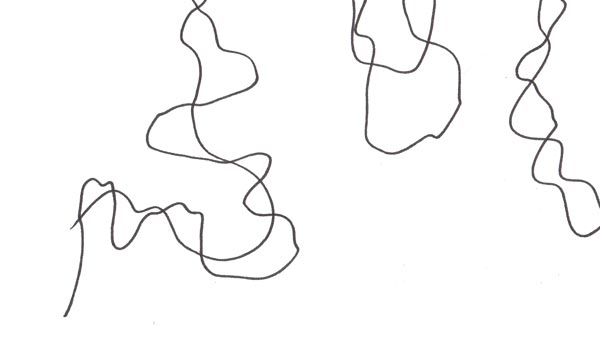
I would continue the conversation about the line:
“Art is a line that was freed to play.”
Everything starts with a single line. When people say they can’t draw, they simply haven’t made friends with their line yet.
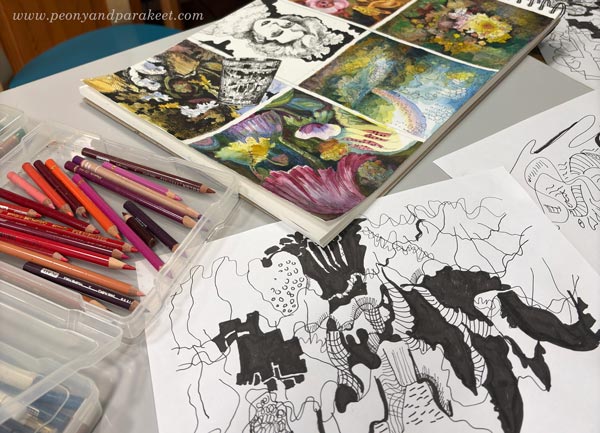
Art doesn’t start by comparing yourself to others. It starts with your own line. Observe where it turns naturally, and learn how to vary it—so that a drawing isn’t just a monologue, but a conversation, a play, an event.
When a drawing is a happening on paper, art happens. And that’s when you know you can draw!
Drawing Soulfully – Sign Up Now!
My newest course, Drawing Soulfully, is about finding your living line and starting a journey to your artistic style.
Drawing Soulfully goes much deeper than standard technique. In the course, I open up about the invisible side of art. I guide you to move beyond concrete ideas into conceptual thinking that frees your creative process. I also share how emotional needs shape our lines, and how to balance intuition and technique.
In my explanations, I’ve focused on what isn’t directly visible. Making art is so much more than just looking and creating. >> Sign up Now!
You Can Draw Patterned Papers!
This week, I answer the question: “I want to draw, but don’t know how or what! How to start?” My suggestion is to start with patterns. So, draw repeated shapes and make a collection of patterned papers that you can use for collage art, for example.
The No-Pencil Approach
I usually start my line drawings with a black thin-tipped drawing pen or a blue ball-point pen.
If you say you can’t draw, say goodbye to the pencil era. Don’t be one of those who sketch many parallel lines and erase all the time! A pencil is a crutch that might feel helpful, but trust that you can walk and pick up a pen. The first steps may be scary, but when you risk more, you draw better. Your line is not just a vague and neutral curve, but one that expresses your existence.
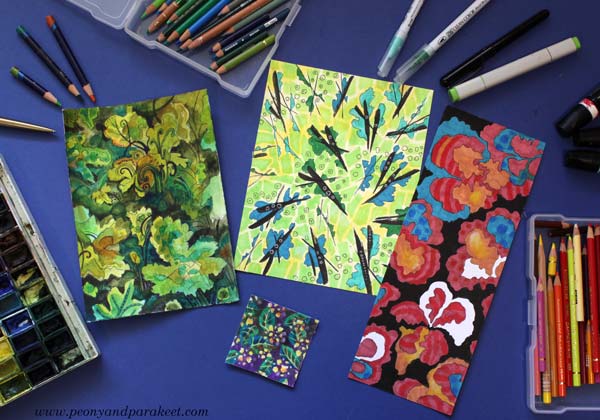
Let’s draw four patterned papers!
Paper #1 – Small Flowery Shapes
Pick a tiny piece of paper and a pen, not a pencil. When you can’t erase, you focus more and draw better. Small paper doesn’t need anything grand, so clusters of tiny flowery circles are enough, and if not, you can add some leaves.
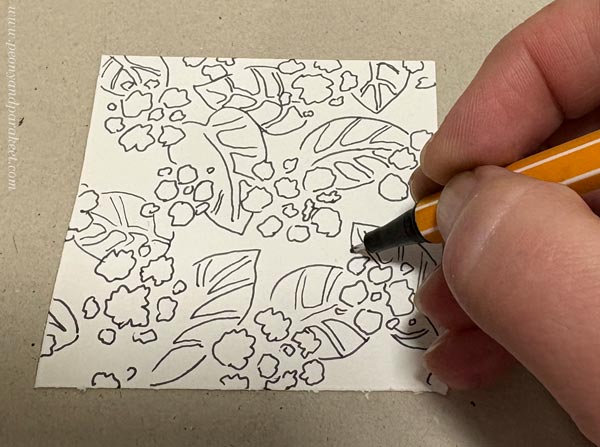
I colored my pattern with colored pencils. The fun thing with colored pencils is that you can use an eraser to add more patterning. I have a precision eraser pen that is handy for small dots. If you use a bigger eraser, color the dots smaller after erasing.
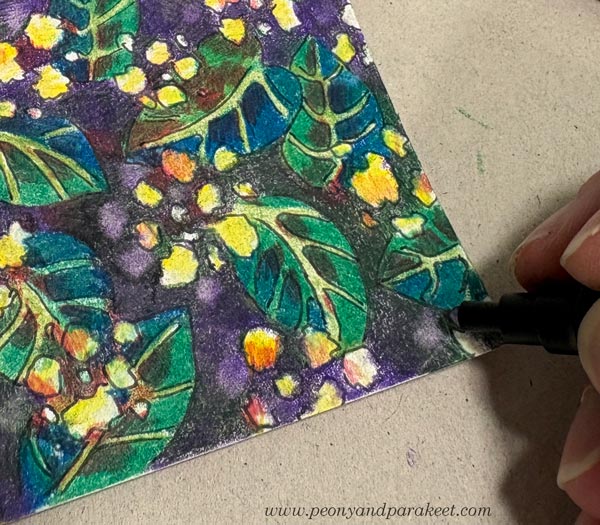
I love colored pencils because it’s easy to layer the colors to get a variety of tones.
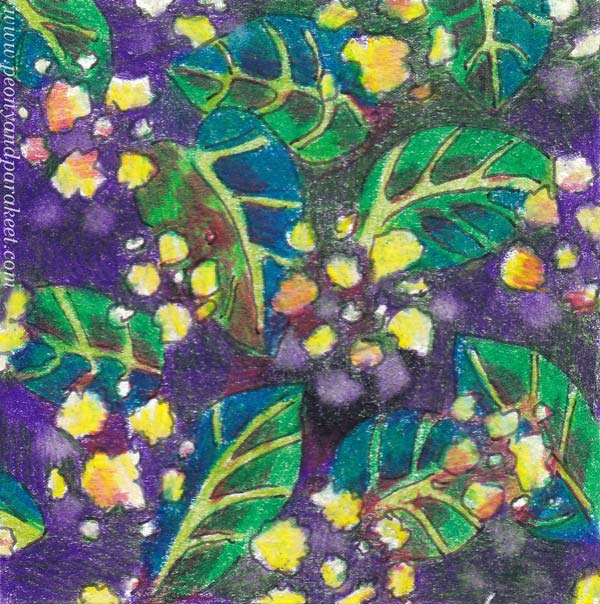
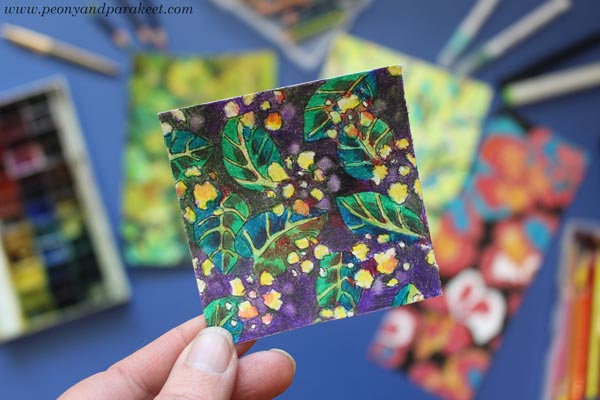
People may say: “It’s just a pattern, not a picture.” Or: “Tiny scraps mean nothing.” But I think it’s a packet of seeds, ready to grow and expand. The first paper may be a secret thing, something you glue on your notebook or planner, to freshen up all the mundane words like “To do” or “Meeting at 9 AM.”
Paper #2 – Big Nested Shapes
Let’s get bolder and pick a bigger paper! The shapes should now be so big that most of them are only partly visible.
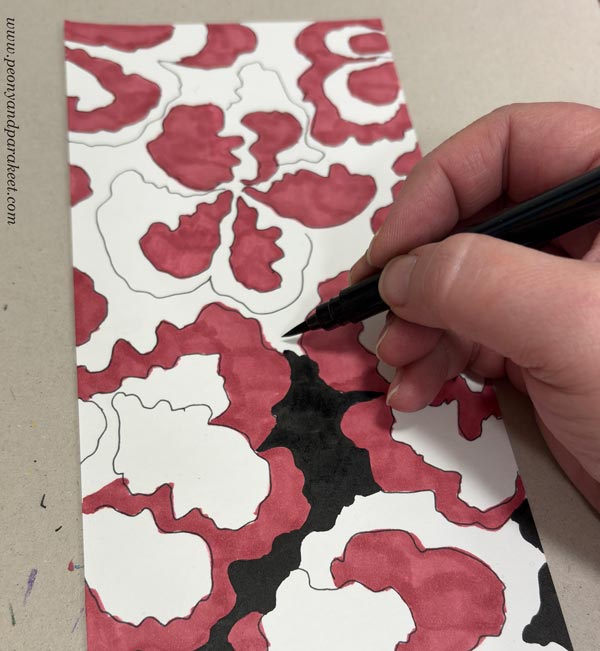
Draw nested shapes. The first lines define the inner shapes, and the second lines are the outer shapes that group them. These are fun to color! I used felt-tipped pens and strong contrasts.
Then I added circles, stripes, and some color variation with colored pencils.
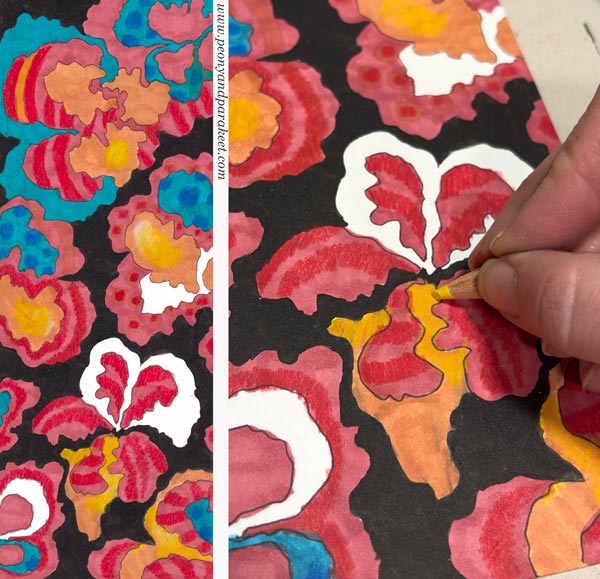
When the motifs are big and the colors bold, the shapes can be quite simple. The Finnish design company Marimekko has produced great patterns over the years. See inspiring examples here at Marimekko’s site!
Paper #3 – Dynamic Strokes
Pick a pen with a brush tip. You can also use ink or watercolors with a paintbrush. Draw clusters of three intersecting strokes. Then draw curvy lines that travel around the strokes. The result is dynamic and looks like flying trees or the sight when looking up at the trees. You can add small, flowery shapes and circles too.
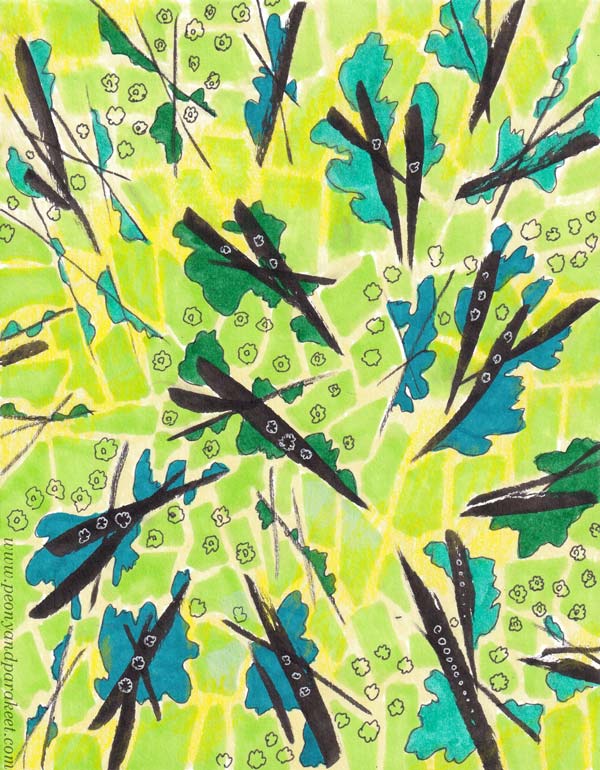
I also played with the background and added a free-form low-contrast grid that is like a city map or a tiled wall. The more you draw patterns, the more you will cluster and layer. This way, you will gradually move towards making expressive art rather than staying in the area of surface design.
Paper #4 Traveling Line
Now let your line travel more freely. Repeat what you have learned in the previous exercises, but do it in a more relaxing way, without too much care about what comes on paper. Think about the line being just a foundation for coloring.
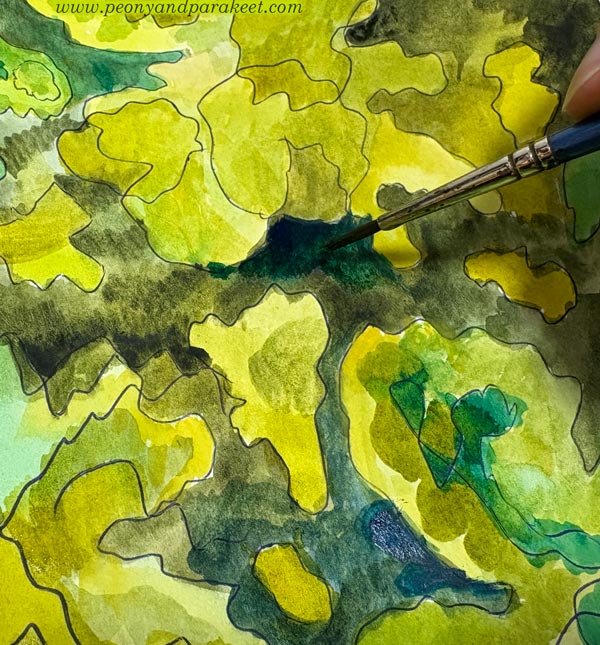
When the first lines are just a foundation, you can add decorations like swirls and small dots, which are often seen in surface patterns. Some motifs might be more decorative than others, and the result becomes more like scenery than a design.
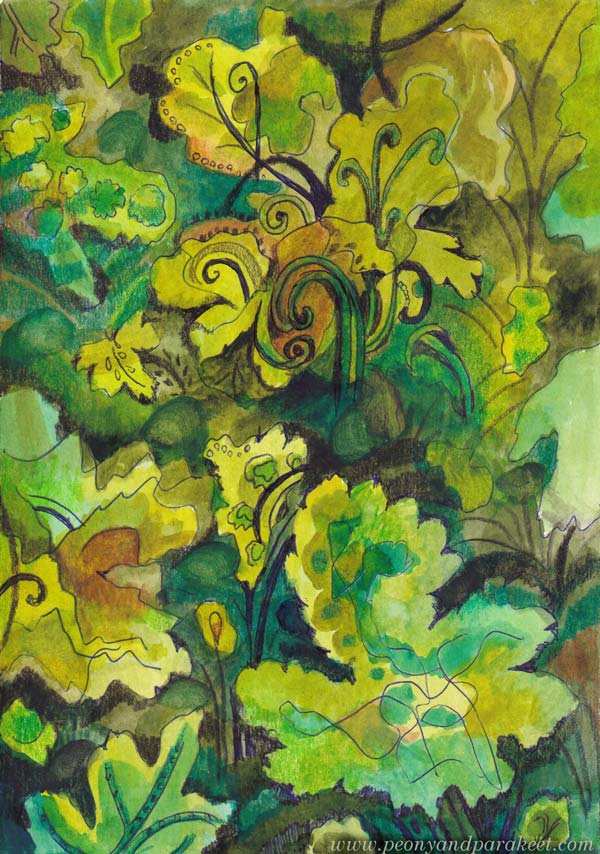
I used a regular ball-point pen for the first lines, then colored the paper with watercolors, and finally added decorative details with colored pencils.
To Draw Freely? – What It Is
Drawing means letting your pen take the lead. It means guiding it forward, meandering, and turning. It means traveling your own paths, daring to go back, and driving over and past them. When drawing freely, you don’t really care about the destination, but you want to enjoy the ride.
Your pencil should be firmly on the road, but not so heavily that it’s hard to move. A person who travels with their pencil and focuses on the line knows how to draw, unlike those whose line merely flits across the paper before fleeing. Drawing isn’t about the line representing something, but about the line having someone who treasures it.
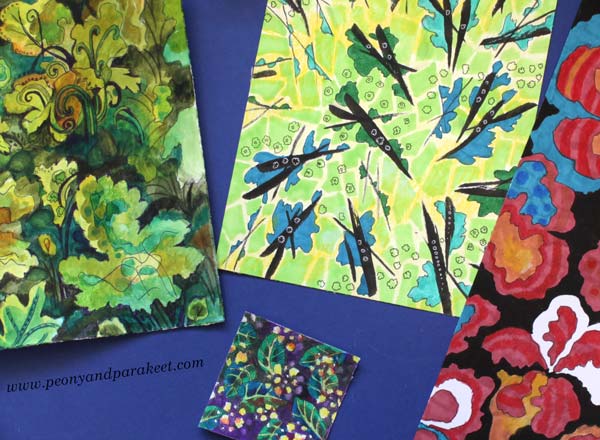
Extra – From Hand-drawn Paper to Digital Kaleidoscope Pattern
If you can use image processing software like Adobe Photoshop, scan or photograph your design and duplicate it several times. Flip some copies vertically and some horizontally to build a continuous kaleidoscope pattern.
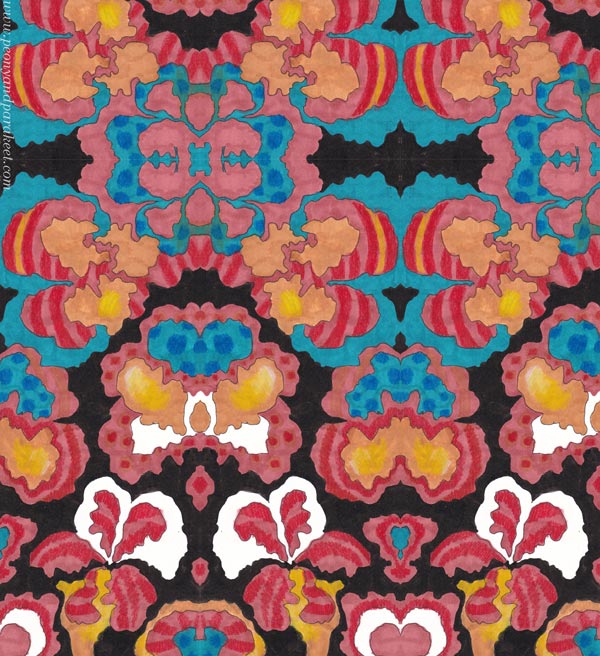
Draw and Use Patterned Papers -More Inspiration
Use your papers! See this project: Painterly Collage in Rut Bryk’s style
Create more paper and make collages: See the class Collageland
Draw freely: See the classes Intuitive Coloring, Joyful Coloring, and Mystical Minis
Half-Empty Art Journals I Should Fill Up
Last month, I went through my art supplies and wrote a post about the supplies I shouldn’t use anymore. After the post, I gave most of those useless-to-me supplies away. Now I have reviewed my art journals and have come to the conclusion that I have too many half-empty ones. I should fill these up and at the same time, end one era in my artistic journey.
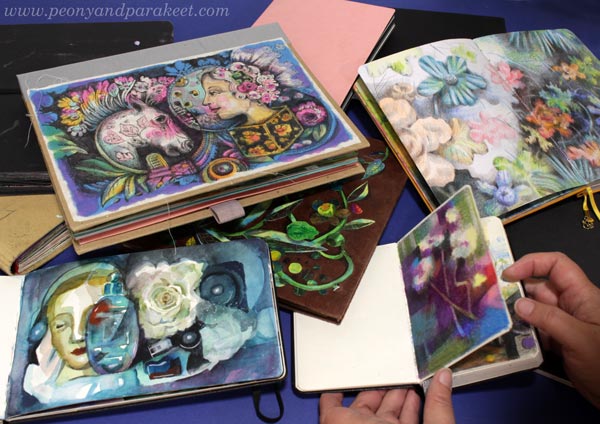
I don’t mean I shouldn’t have any art journals or sketchbooks anymore, but I think I could do well with only one or two. I have grown my skills by drawing a lot, but now I feel I am more of a painter. Most of my creative energy nowadays goes into painting, and I mostly make either watercolor or canvas paintings. So, the books don’t serve me as much as they have in the early years.
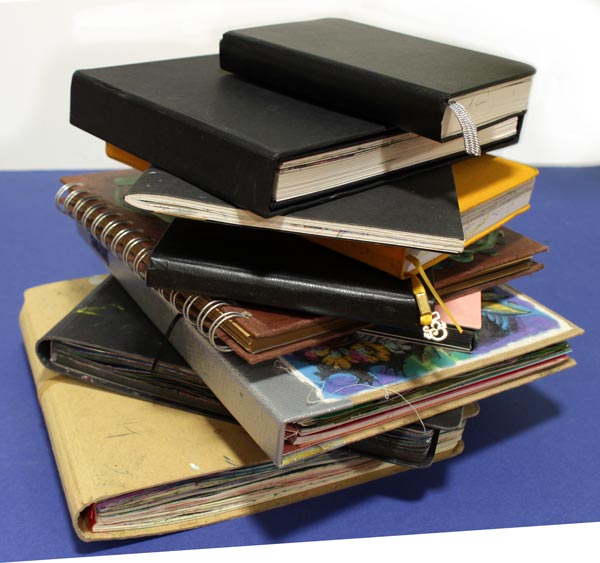
Ten of my art journals are half-empty. I don’t think it’s realistic to fill them in a short time. On the other hand, I have small pieces and hand-drawn motifs that I could attach to the pages and make collage art. Anyway, I wanted to share my inventory. Time will tell how quickly these will be filled!
Art Journal #1 – Smash Book
Who remembers the Smash Books by K&Company? I have several, but only one of them is unfinished. This one has the best cover as I have attached my fabric drawing to it.

This journal has all kinds of pages, but I want to show you the spread that has slow stitching. I have just glued the hand-embroidered fabrics on the pages.
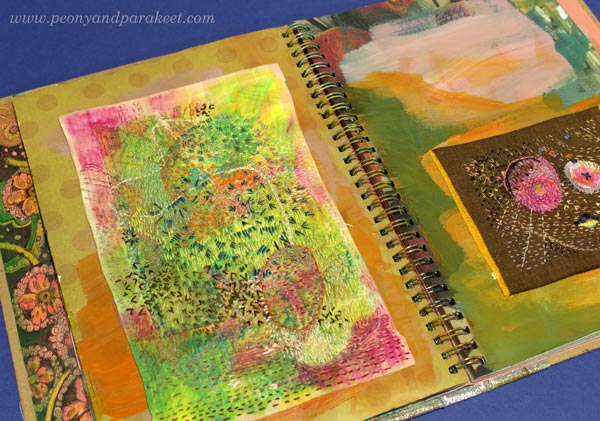
Maybe I could continue this journal with the fabric theme and search for other hand-embroidered pieces from my needlework stash?
Art Journal #2 – Accordion Book
This art journal is really fancy. It’s an accordion book with a separate casing. The paper holds watercolor well but it’s smooth enough for drawing and coloring too. I have got this as a gift from a student of my courses.
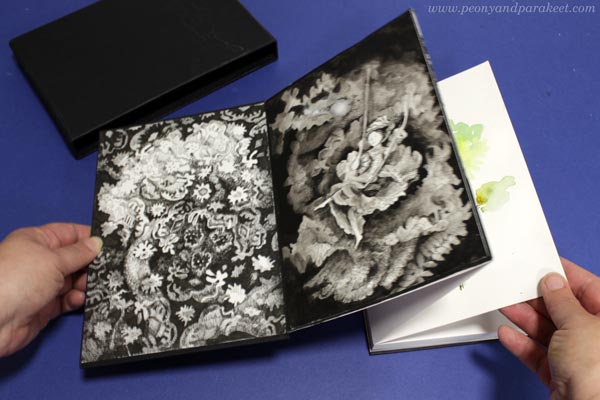
This journal has quite a many filled pages, but as it’s an accordion book, I could fill the rest of the pages with a watercolor painting that would continue from one page to another.
Art Journal #3 – Spiral Bound Sketchbook
I shared the process of making the collage cover in this blog post from 2020.

When I start making a new course, I often buy a new sketchbook, and that’s what happened here too. This book has mostly portrait drawings. They were drawn when practicing and gathering ideas for the course Innovative Portraits. Some portraits are very abstract like the one below.
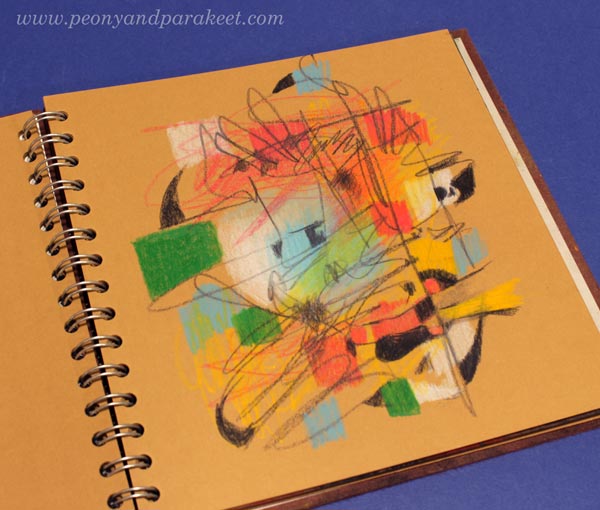
This book has still many empty pages. Here, I could gather other face drawings that I have made over the years. I think that at some point, every artist wants to draw faces.
Art Journal #4 – Small Sketchbook
Most of my art journals are filled with colorful art and contain fairly little writing or black-and-white sketches. This little sketchbook has some interesting ideas and it’s more like a notebook about art-making.
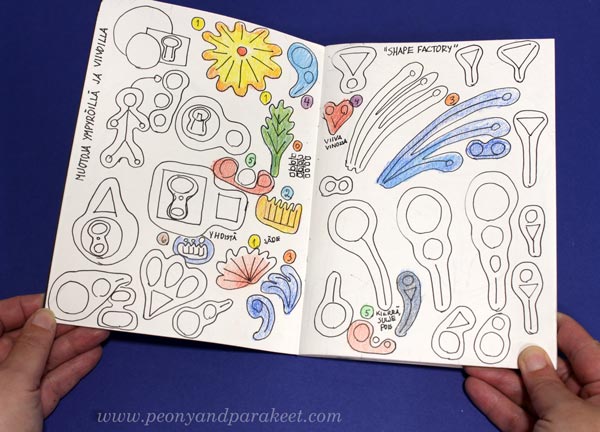
This sketchbook is almost full, and could be filled very quickly with the ideas for the upcoming paintings and courses.
Art Journal #5 – Colored Pencil Diary
This journal is an Archer & Olive Notebook that I call my colored pencil diary. I have filled many pages already. For example, see the blog post about coloring without limits!
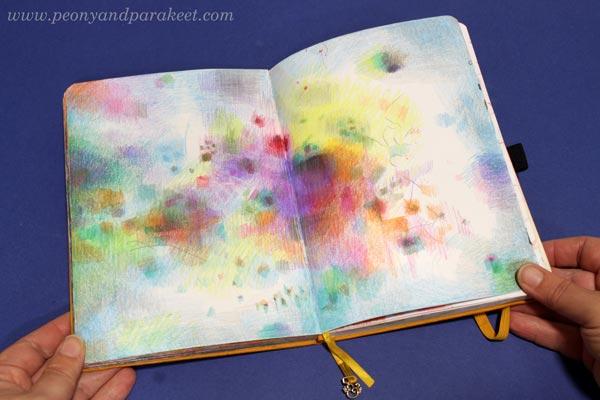
My favorite part of the book is the chapter that has fun plant-themed pages. I made them for the course Fun Botanicum.
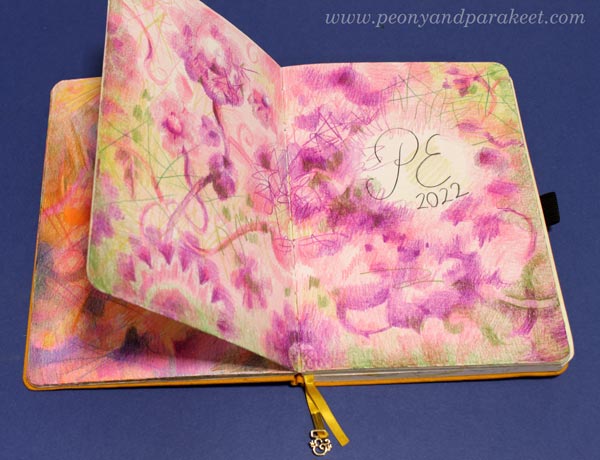
Even if this journal has many filled pages, it still has a lot of blank pages. However, I feel the journal is ready to be called finished. Should I remove the blank pages? What do you suggest?
Art Journal #6 – Bullet Journal
I love bullet journals but don’t usually draw in them. However, in 2018-2019 I bought a dot-grid journal just for small drawings. These became inspiration pieces for the course Animal Inkdom.
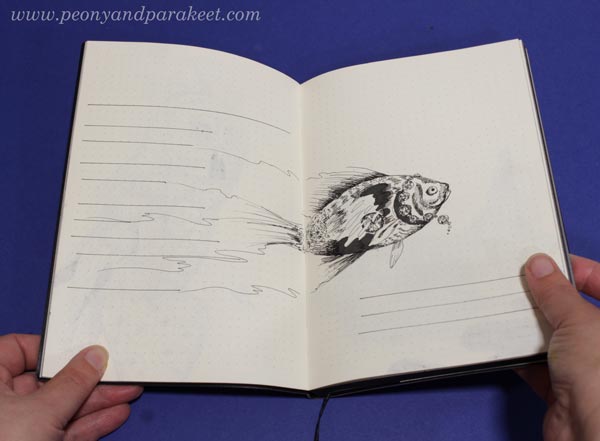
The drawings leave room for writing, and there are many empty pages left. I think I should remove this journal from my art journal shelf and use it for bullet journaling once my current bullet journal gets full.
Art Journal # 7 – Tiny Sketchbook
My smallest art journal is still quite empty. It has some lovely drawings, though!
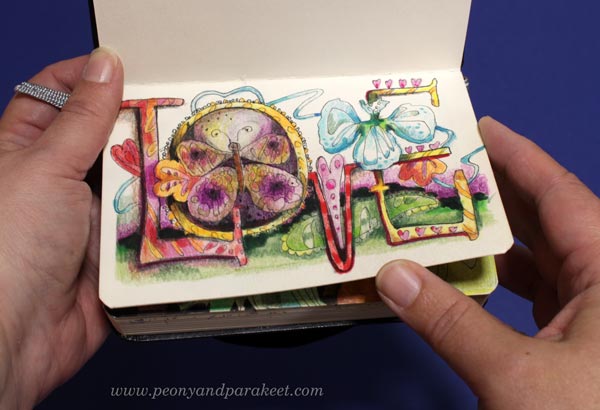
Should I continue this, or just take out the pages and glue them on another art journal? When I carry a journal with me, I prefer a bigger one.
Art Journal #8 – Dylusions Creative Journal Square with Black Pages
Dylusions Creative Journals are sturdy and their paper is quite thick. I like to practice painting by filling their page. Black is a nice background, especially when I use leftover paints from the palette.
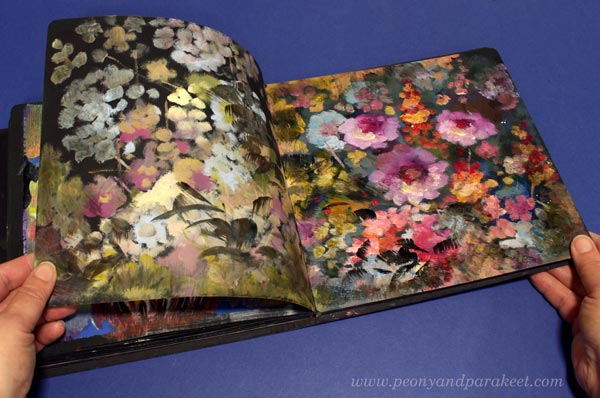
This is the kind of journal I still want and need. It will get filled over the years and there’s no pressure to do it right away.
Art Journal #9 – Moleskine Watercolor Notebook
Moleskine watercolor notebook is a small journal, but it has lovely panorama spreads and nice paper. See this blog post for more inspiration!
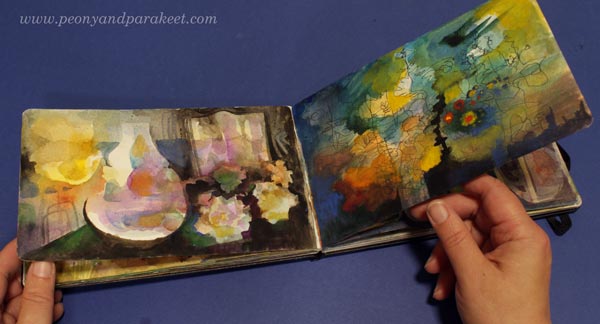
I am going to continue this one, for sure!
Art Journal #10 – Dylusions Creative Journal Square with Cream Pages
Dylusions Creative Journal with cream-colored pages is my favorite art journal. This journal works well with colored pencils, for example, see this drawing tutorial of Vermeer Girl!
The inside cover is colored freely with felt-tipped pens. I used thin marker paper for the drawing and then glued the paper on the cover.
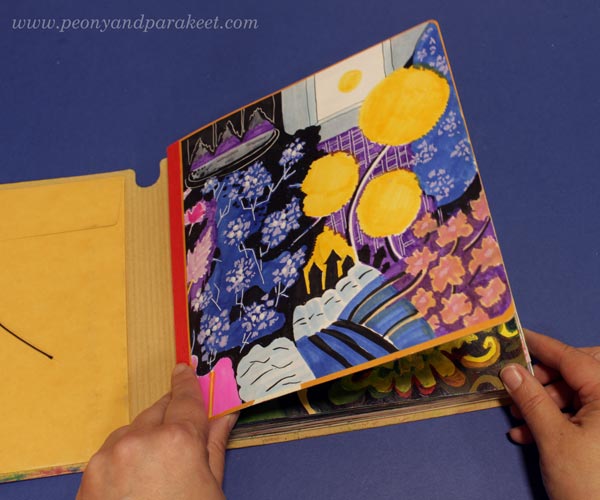
I started this journal about five years ago, and have almost filled it. But I like to keep working on the older pages, making them more beautiful. Like with the black journal, leftover paints find their way here.
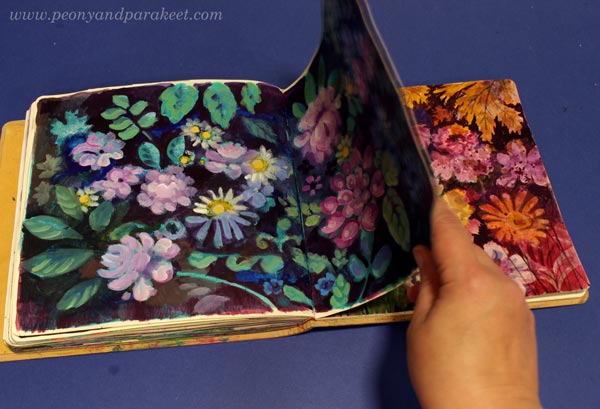
The paper holds water fairly well, and I use watercolors, acrylics, and oils there. I only wish that the paper would be bright white, not cream-colored. When the journal is full, I will record a flip-through video of it.
Half-Empty Art Journals – Question!
I have a shelf that has many full art journals. I have now put the half-empty ones on the right, so that they don’t get mixed with the full ones.
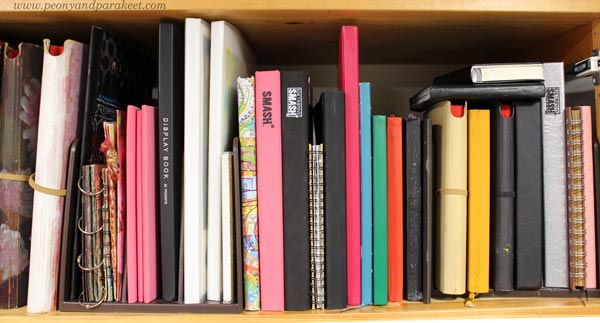
How many half-empty art journals do you have? Leave a comment!
Wild Garden – Paint with Me!
In the upcoming course Wild Garden we will paint flowers freely, intuitively, and expressively in watercolor. Watch the video and sign up now!
Wild Garden will begin on September 22, 2025. Sign up here!
Maximalist or Minimalist? Style Experiments in Art Journal Pages
This week, we experiment between maximalist and minimalist styles.
Every time I open one of my art journals, I feel a sense of relaxation. It’s time for experimentation and risk-taking. In art journals, failure can also be success. Page by page, I learn to know myself better and thus, express things that can also be relevant to others. Now I wanted to experiment with style and picked my Dylusions Creative Journal for that.
Maximalist – Multiply!
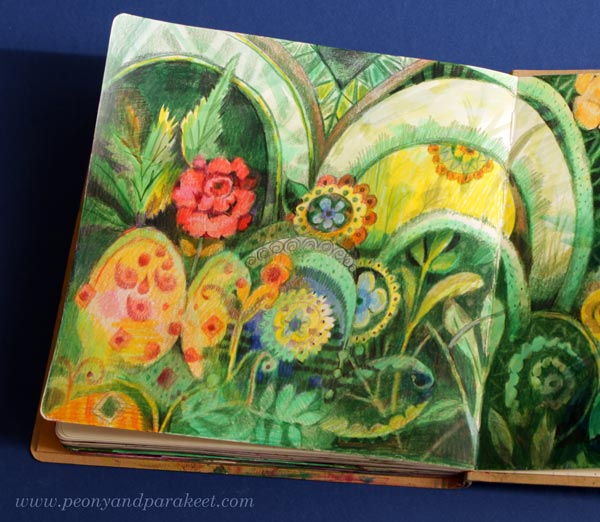
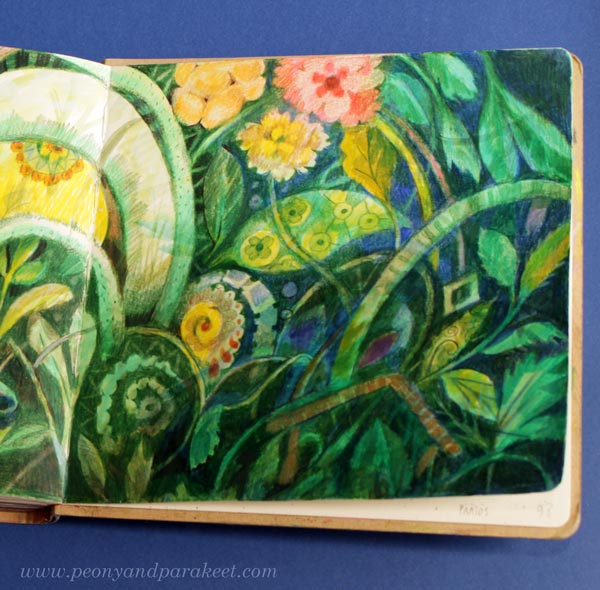
I know that I’m more of a maximalist than a minimalist, so I started with that and made a spread with the principle of “more is more”.
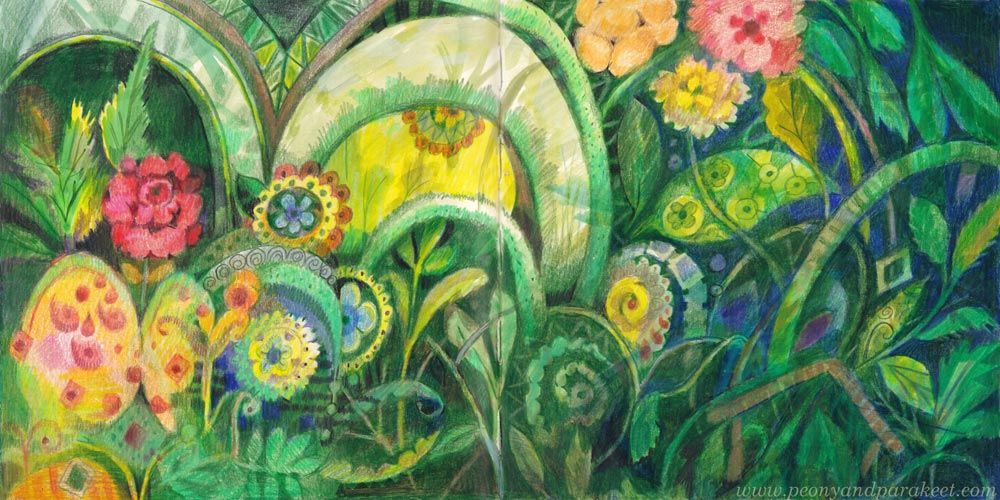
I’ve started to be fascinated by buildings, both exterior and interior, and here too motifs began to create a sense of space as they turned into ornaments.
It was so fun to add a new detail on top of another that I forgot to take more pictures of the different stages, but I started with watercolors and soon moved on to colored pencils.
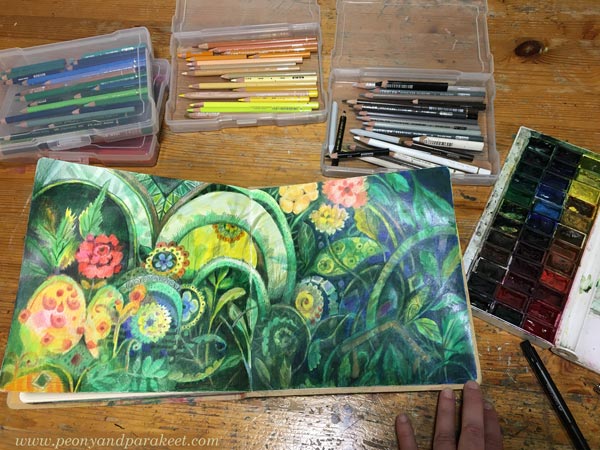
I’m fascinated by abundance and luxury. I connect that with the courage to be brave and let it all out. When I feel like that, the maximalist style is born effortlessly.
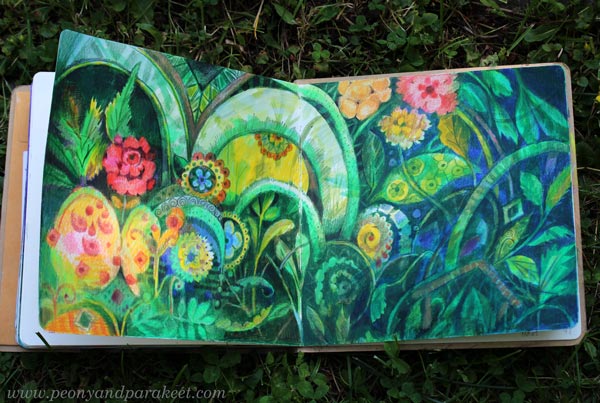
Adding details and dividing one shape to many can be done over and over again. I could have refined my drawing even more!
Maximalist or Minimalist – Adult or Child?
For me, maximalism is associated with adulthood and minimalism with childhood, although many probably think the opposite: that as a child you sprawl and as an adult you can prune. But when I look at my childhood drawings, I can say that my poor drawing skills made me a natural minimalist as a child.
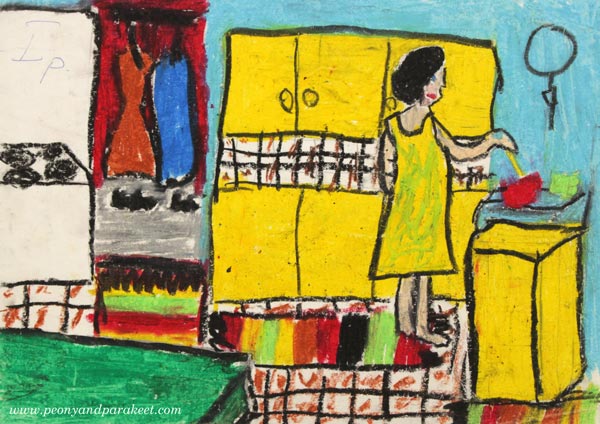
It was a little unpleasant that the organizer has written the prize in the drawing,
but now it just adds a nostalgic flair to it.
But let’s remember that even as an adult, we can grab a light marker and start coloring with clumsy strokes and without outlines.
Minimalist – Simplify!
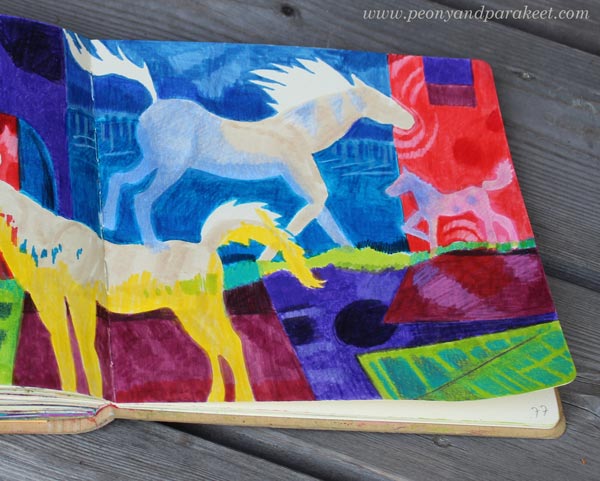
I colored the shapes of horses directly on a blank piece of paper without outlines. When I colored the background, I then refined the shapes.
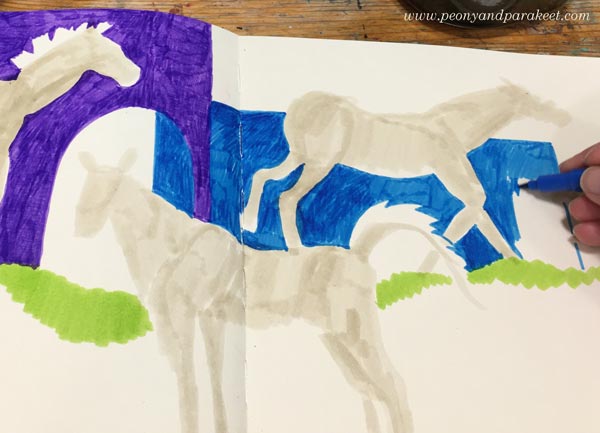
As a child, I loved playing with plastic horses and red tights were my favorite accessory.
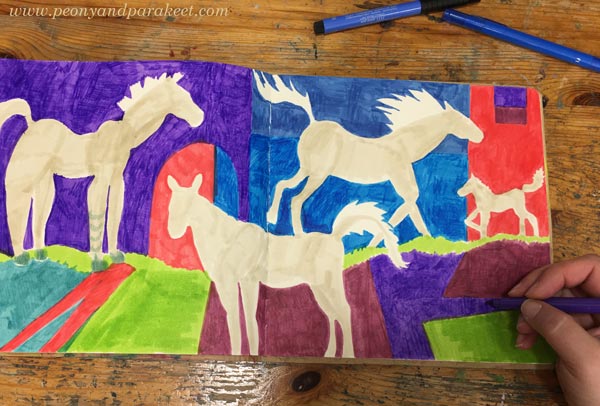
While making this art journal spread, I felt a deep connection not only to my childhood in the 1970s, but also to my teenage years in the 80s.
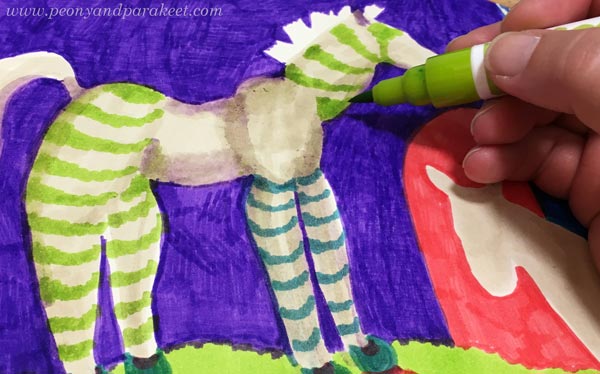
Back then, everything was still possible and ahead. The horses galloped wildly in my small room, but my mind was already far away in the outside world.
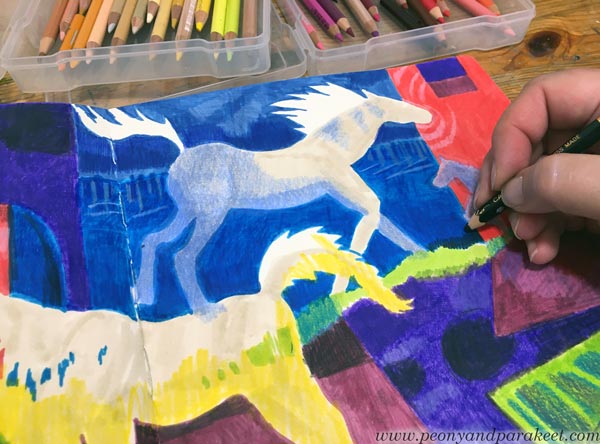
The controversy between the style and the content is the key here. The picture is clear, and the colors are raw, but the atmosphere is intense and a little mysterious.

It is as if I were each of those four horses. At the same time, a playing child, a baby seeking support, a galloping youth, and an adult whose life is still a mystery.
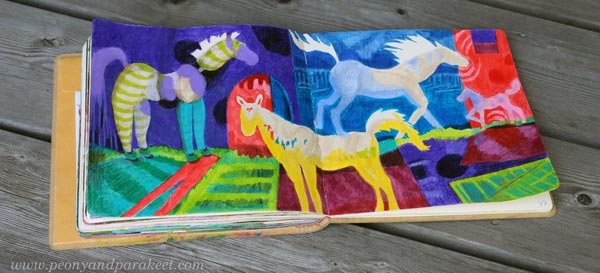
When I compare these two spreads, I think that I could give the minimalist a little more space, and it would not reduce the expression, maybe vice versa?
What do you think? See the pics below and leave a comment!
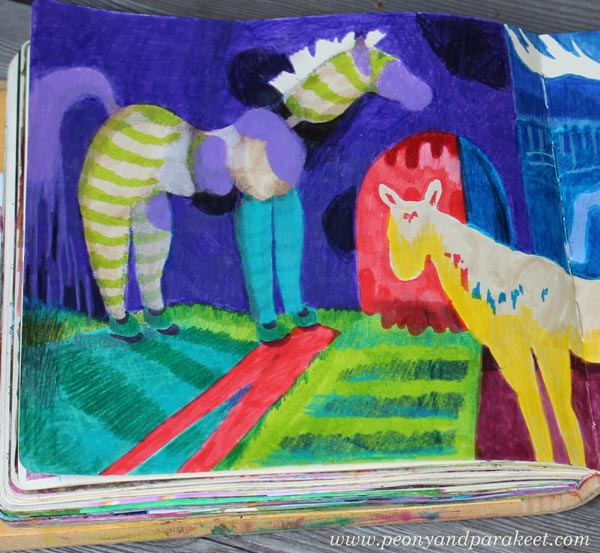
Exercise: Maximalist or Minimalist?
Try the same experiment in your art journal!