
Creating Art Inspired by the Garden – The Story Behind My Latest Floral Painting
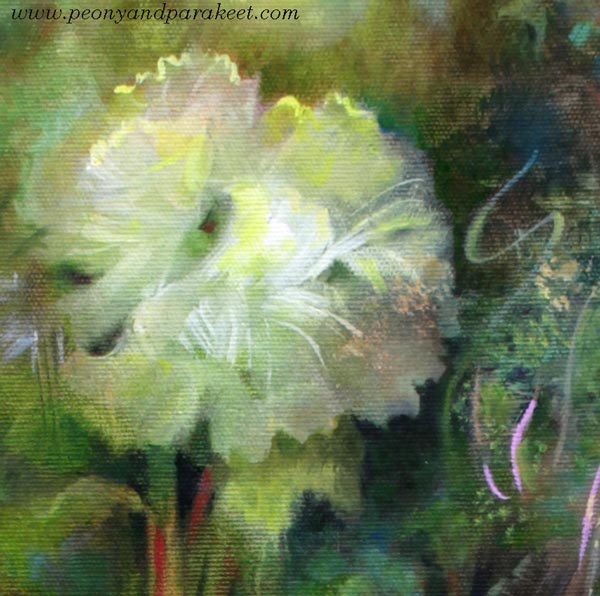
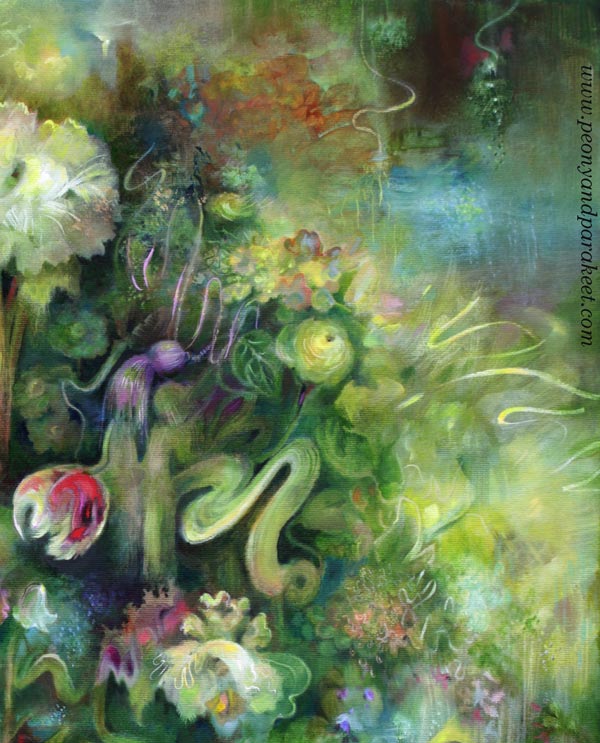
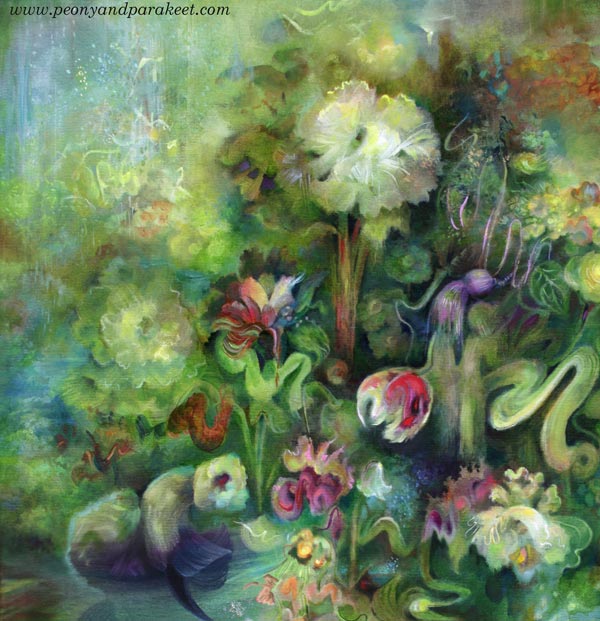
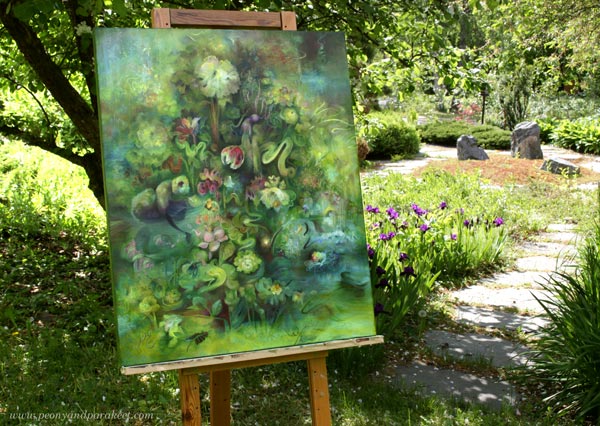
Let’s create art inspired by the garden! This week, I share a couple of short videos about my latest painting called Jardin.
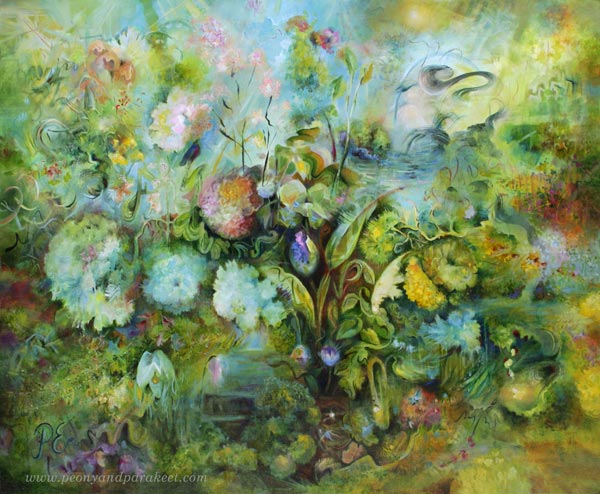
Let’s Finish a Painting – Making of “Jardin”
This video shows parts of the painting process, and it only has music. It’s a shortened version of the video that I published a couple of weeks ago. >> See the longer version here!
The Story Behind the Painting
Here’s the second video where I talk about the ideas behind the painting and share inspiration from our garden.
Transcript: We have two gardens – one in the back, one in the front.
As a painter, I often think of Claude Monet, who had his garden in France over 100 years ago. He said that the light and the air vary continually in the garden. And it’s so true. Every day, the light, the weather, birds, growth, and decay make our gardens look different.
Capturing the cycle of life is important to me. In this painting, plants at different stages are gathered in a tree-like vase. Right in the middle, there’s a bud that’s just about to open.
Monet once said he’d like to paint the way a bird sings. I think about birds a lot too – not their song, but their flight. I’d love to paint the way a bird flies. Imagine if their paths left trails in the sky, adding new shapes to the landscape. That’s the richness of nature’s motifs that I wanted to capture in this piece.
The hardest part was connecting the earth and the sky. A garden needs water and light, so it acts like a mirror to the sky. And the stronger the roots, the higher you can reach.
I brought the blue of the sky down to the bottom and filled the top so your eyes always have somewhere to land. Even a small garden can feel endless with layered plantings. That feeling of infinite space is what I wanted to create in this painting too.
I hope these two videos inspired you to paint and draw inspired by flowers, plants, and the beauty of gardens!
Artist Vlog – Day in the Life of an Artist
This week, you get to see my day from morning to evening! I’m walking the dogs, painting in oil and watercolor, taking care of my orchids, editing course videos, etc. I hope you enjoy this kind of documentary-style artist vlog!
The black journal that I used in the video is the Dylusions Creative Journal.
Remember to sign up!
Drawing Soulfully – Sign Up Now!
Awaken your line and find a way to your style!
Drawing Soulfully begins on August 25, 2026. >> Sign Up Now!
Layered Painting – The Many Details of Golden
Layers make a painting. My newest layered painting, Golden, is surprisingly a rebirth of an older piece of mine.
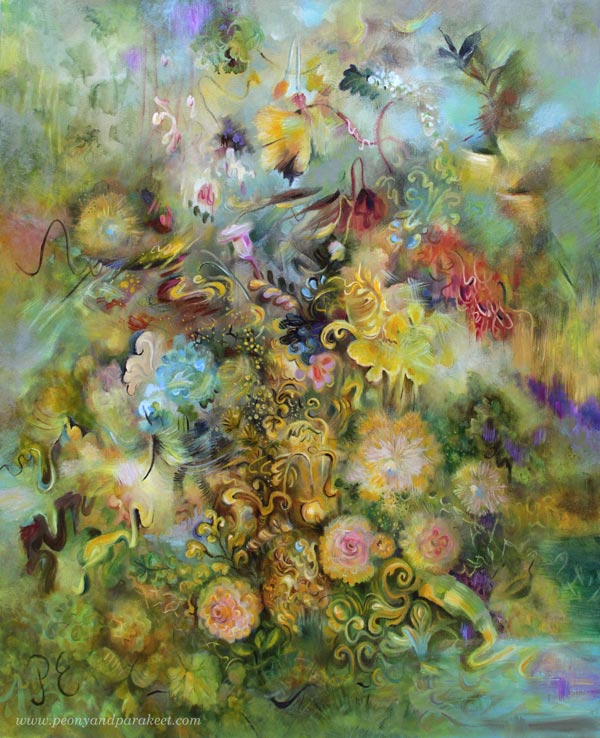
From Gossamer to Golden
The painting behind Golden was Gossamer.
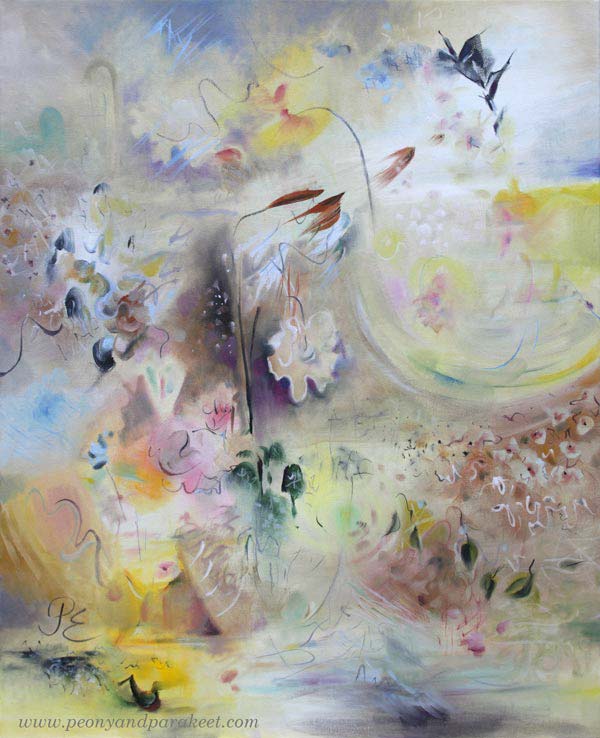
Gossamer started as a test. I wanted to see if I could finish a painting in one go and with a more minimalist, modern style. I thought it turned out pretty nice.
But after looking at Gossamer for a while – especially the top-right corner – ideas started flowing. A beautiful tulip bloomed in my front yard. I found myself missing a sold painting called Elixir. And I got hooked on the hit song Golden (specifically the version performed at the Oscars).
So, I made a promise to Gossamer: “Even though most of you will be covered up, you’re going to be reborn as something even better.”
I bet Gossamer had its doubts at this point!
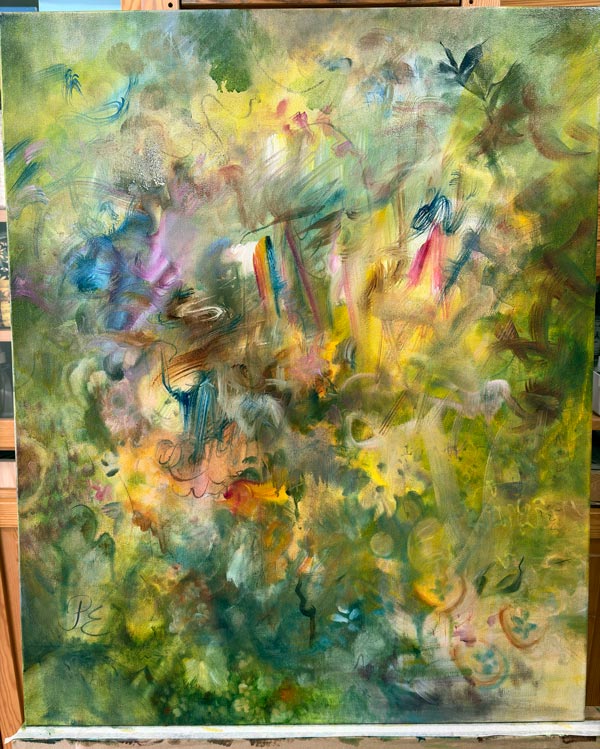
Layered Painting
Here’s a short video of one of the painting sessions in May.
It took almost three months, but layer by layer and detail by detail, Golden appeared.
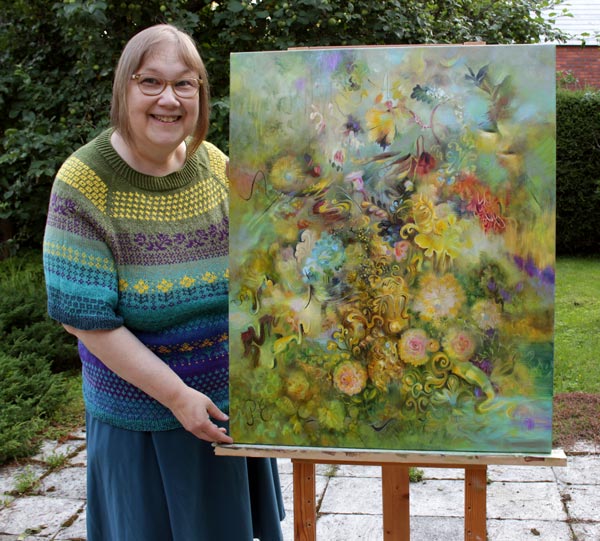
Here are some photos of the finished details.
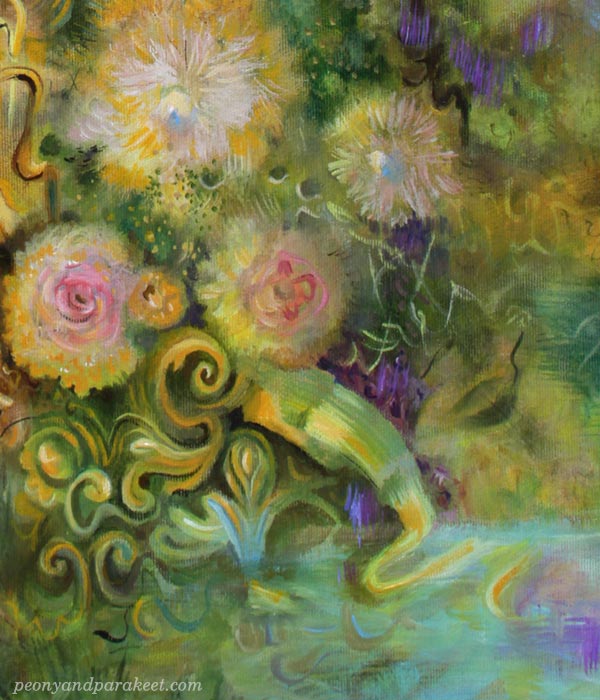
I like to use a lot of lines when I paint.
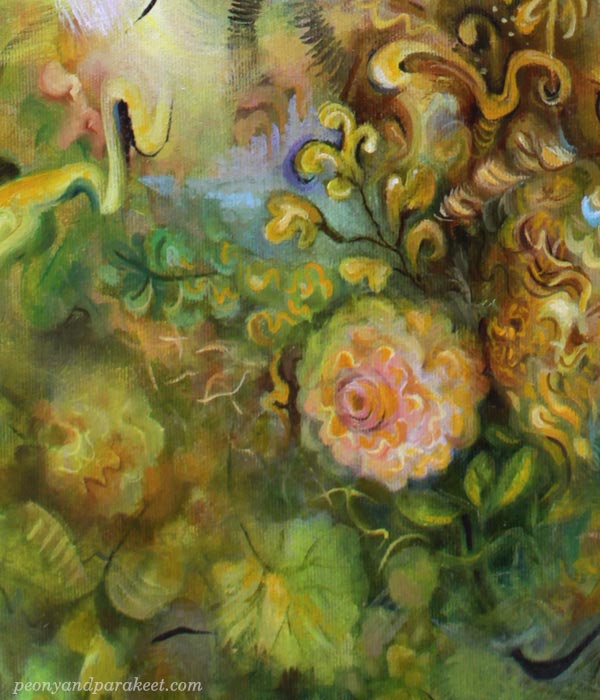
The secret of easy layering: Any blurry spot looks sharp when there are lines on top.
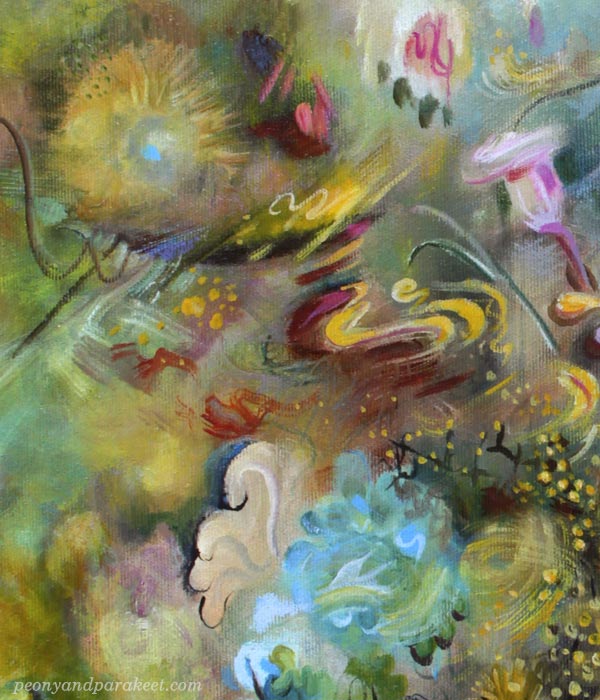
Drawing has improved my motoric skills so that I can easily paint all kinds of elegant shapes with a thin brush.
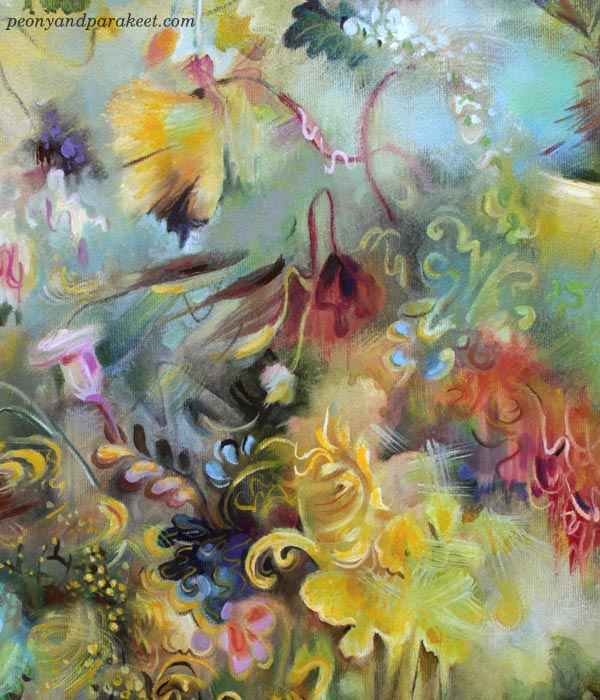
Here is a short video where you can see this layered painting even closer.
My long history of drawing influences my paintings, and Golden is no exception. I love a lively, soulful line, and all the different textures and tones you can create with it.
Drawing Soulfully – Sign Up Now!
Drawing Soulfully begins on August 25, but the early-bird sale is now on!
Get 20 EUR OFF! >> Sign Up Now!
The sale ends on July 26, 2026, at midnight PDT.
Ikigai – Making Intuitive Painting Feel Natural
This week, I show you my newest oil painting, ‘Ikigai,’ and talk about how intuitive painting can become logical, and how a logical painting can feel natural.
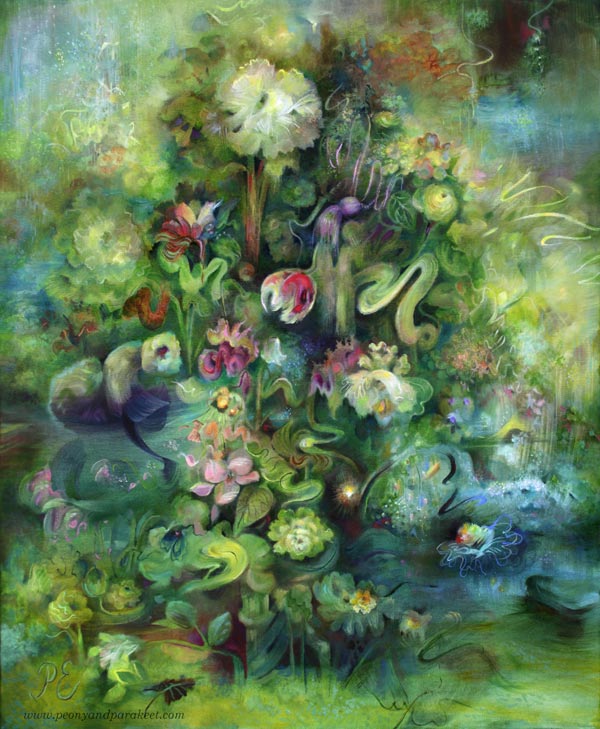
There are many extraordinary elements in this painting, but it still feels quite realistic and natural.
Find the Guiding Element
When you create intuitively, the first layers get all kinds of random details. After that, it is about:
- What to save
- What to tone down
- What to highlight
- What to hide
- What to add
In Ikigai, I looked for an element where the canvas had already come to life as a painting. When I found it, I protected that pulsating spot so that its spirit spread and a small world grew around it.
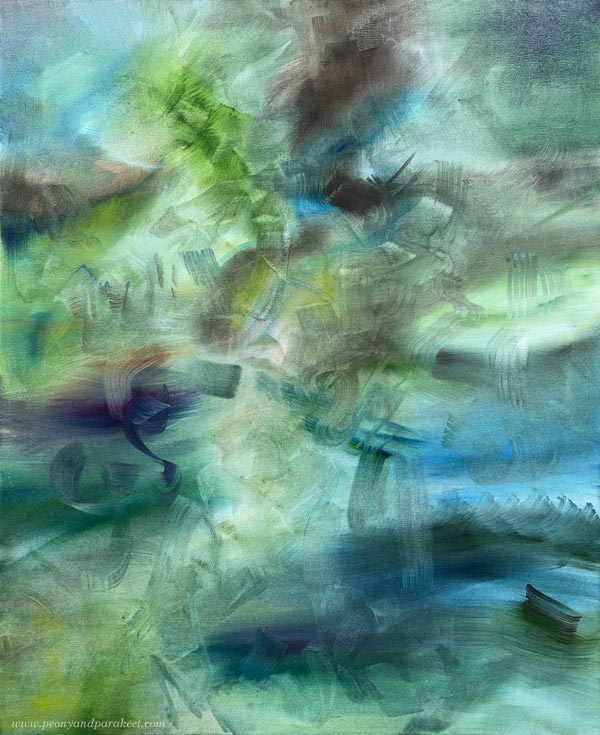
Can you already guess what element guided me through the whole painting? The picture above is the first layer, and the picture below shows the painting in progress.
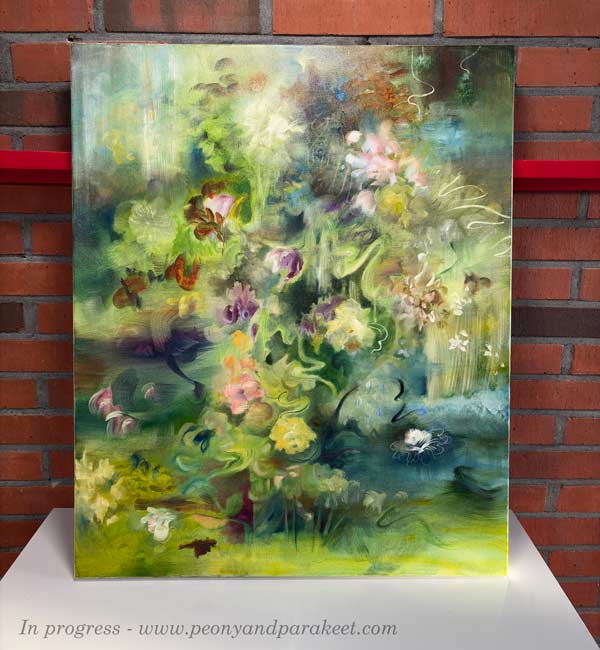
Intuition is like a whisper that can expand into a stronger sense of presence. That requires time and skills, but also logic.
From Writing a Course to Painting a Picture
Lately, I have been writing a script for a new course (some info). The more courses I make, the more I realize how important the script is. Having a script doesn’t mean I cannot choose my words freely when speaking to the camera. It also does not stop me from throwing myself fully into the drawing exercises while the camera is rolling.
Course videos include many different elements: theory, examples, explanations of the process, and reflections on artistic thinking. All of this needs a good rhythm. I need to know what I am saying and how freely I am speaking in different parts of the videos. My goal is to build a logical educational structure behind the course, without forgetting the human side of making art. I want my courses to be inspiring, entertaining, and encouraging, but also educational, so that you will move forward in your art-making.
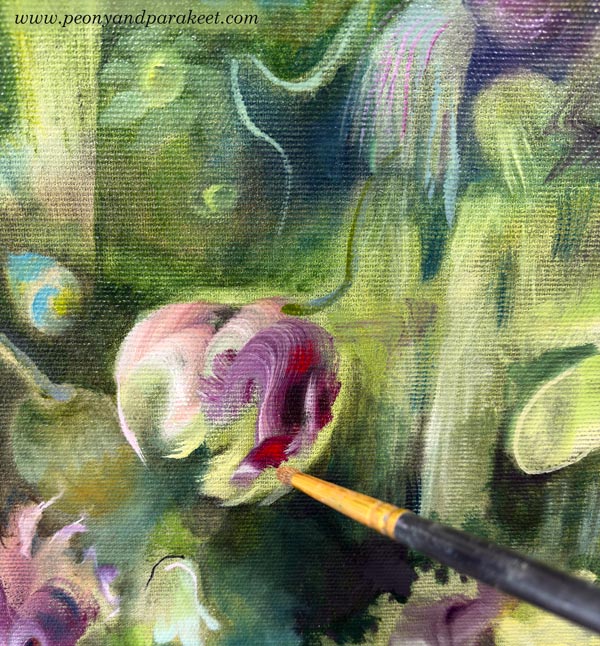
Painting is very much like making videos. Even if you didn’t sketch beforehand, you still need structures and ways to connect single elements into a whole. You need both technical and expressive skills. It’s also beneficial to be able to see what is essential and to understand the role of logic.
The Logic Makes the Magic
When a painting is logical, it feels natural. Logic in painting does not mean that the picture has to be realistic. Instead, it means that there is interaction between the elements. For example, a weak line can humbly take a curve to go around a strong dot. Or a bright line can send small rays of light over nearby shapes, changing their color. The interaction ties everything together.
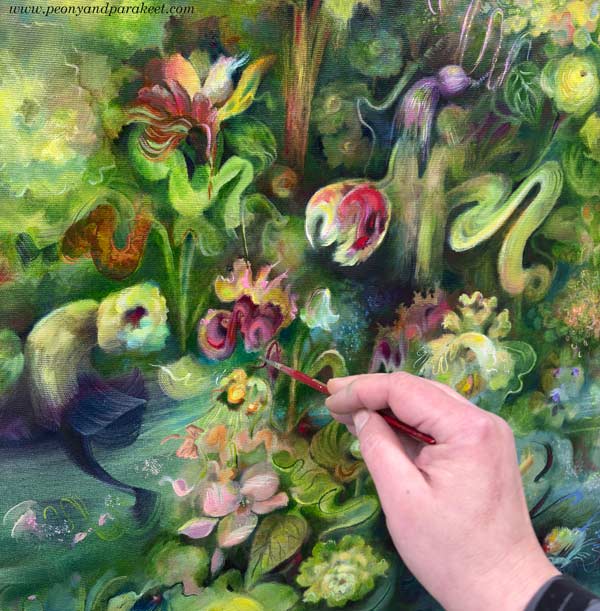
Even a static image can feel alive. At its best, you can look at a painting like an event. It’s fascinating how interaction makes the unreal elements feel real. Being able to express ourselves freely on paper and canvas is one of the best things in life.
Details of Ikigai
Here’s the guiding element in my painting. I have made some additions to the original strokes, but the spirit is the same.
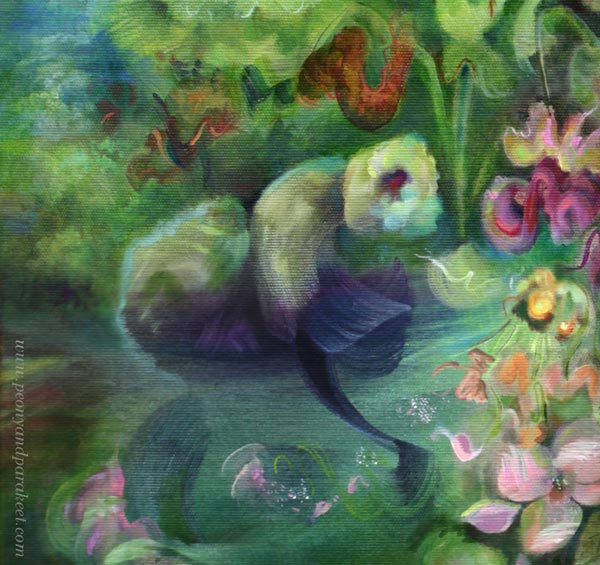
I have noticed that in my paintings, the guiding element is rarely a focal point. Here’s the focal point – the tulip and her two red friends.
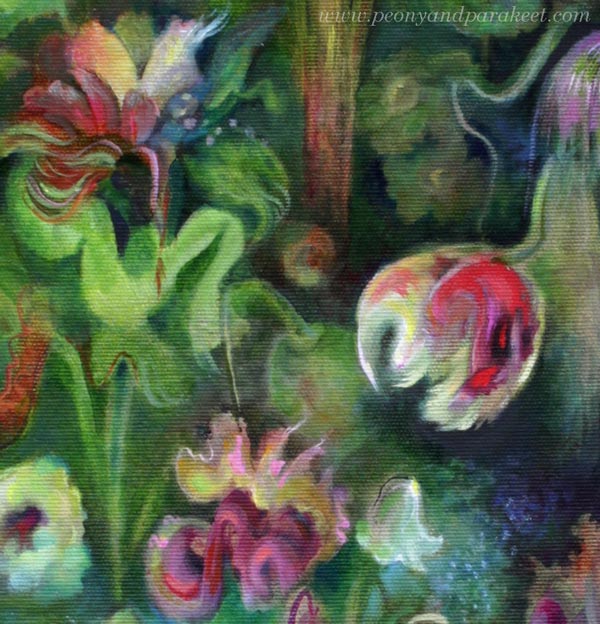
Ikigai – a reason to live, a reason to wake up in the morning. According to this Japanese philosophy, we should orient ourselves toward the point where our passion, mission, calling, and profession meet. I feel like ikigai is condensed into the exact moment where night and morning meet.
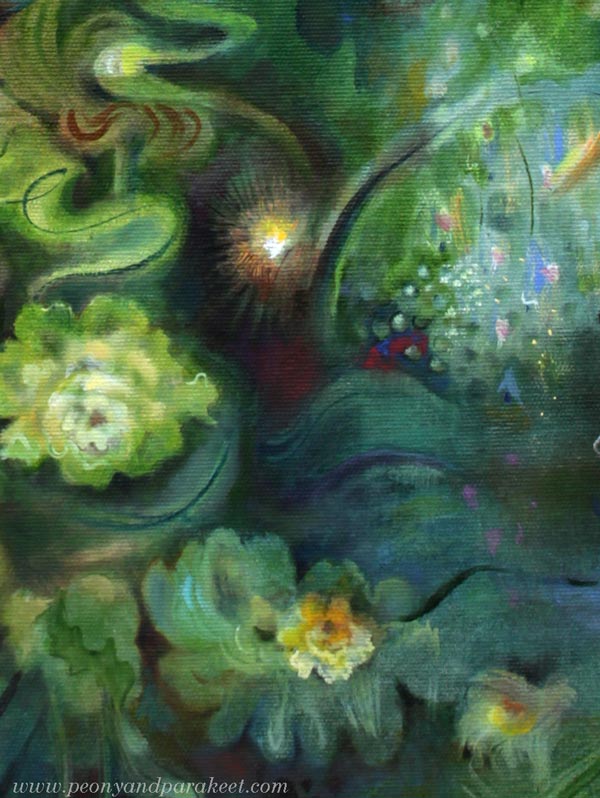
In the morning, deep reflection is interrupted by the call to action – get things going! And we get up despite all our responsibilities, but also because of them.
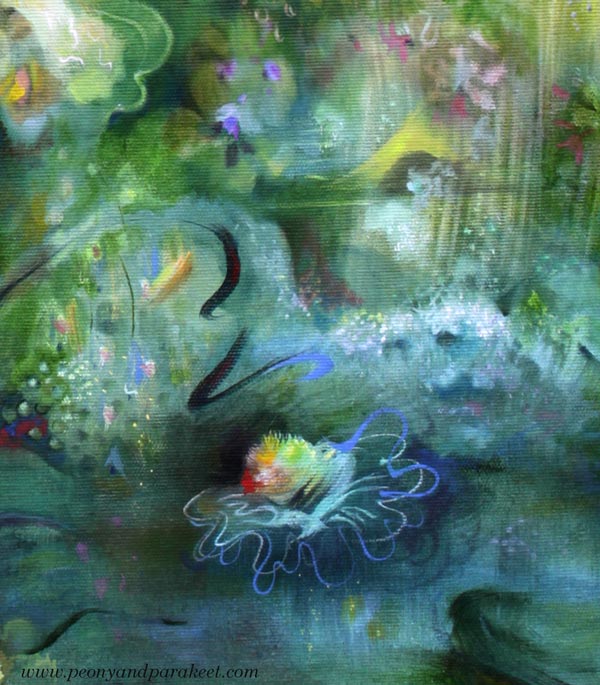
I love this kind of contradiction and complexity of life, and I try to bring it out as naturally as possible in my paintings.
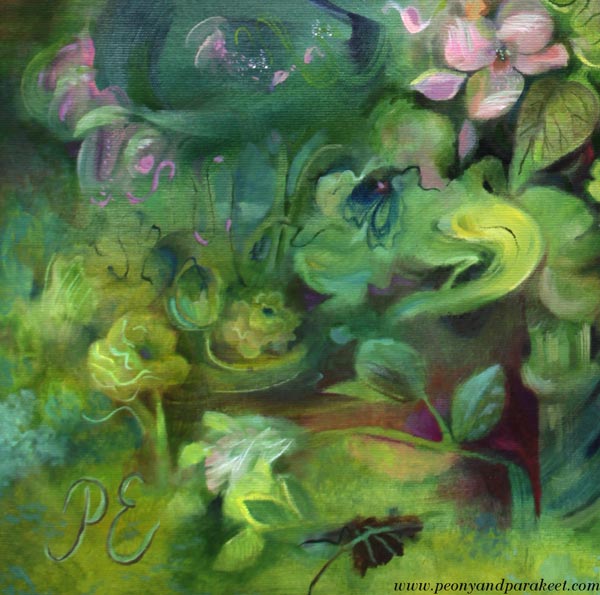
The Four Principles of Ikigai and Making Art
Passion – What you love – Intuitively found
Calling – Why you exist, what’s your inner purpose – Naturally rising
Mission – What you do in practice – Needs logic
Profession – Where you are good at – Skill-oriented
The sweetspot is where all are met and aligned.
What do you think?