
Art Is a Conversation

Let your art supplies take turns and enjoy one thing leading to another! See how my supplies talk with each other on the video!
Feel more confident in creating art journal pages!
>> Sign up for Imagine Monthly
New Class: Imagine Monthly!

I have been preparing for the spring season and composing my newest class: Imagine Monthly. This art journaling class lasts from January to June and is slower-paced than my workshops. It also includes less tutoring, but will be perfect for developing artistic skills through regular practice, compelling techniques and new ideas. Hopefully I will see you there! (If you read this in November 2015, you might actually want to stop reading now and purchase the class, as it’s on Black Friday Sale!)
Planning a New Class is Like Creating a New Collection of Art
When I am planning a new class, I use notebooks. I have Moleskine sketchbooks where visual ideas get recorded and a green Moleskine notebook that I use for plans that need more writing. Building a class is a creative process that requires not one idea but hundreds of small ideas that are processed into one focused entity.
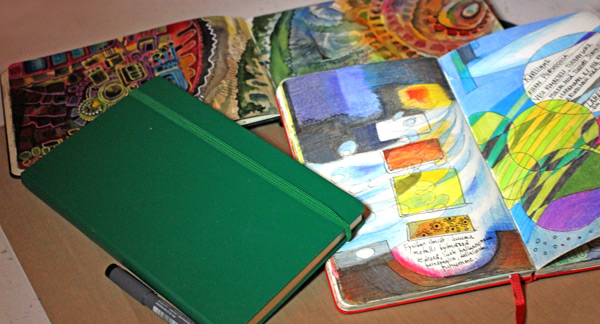
When planning a new class, I try to keep the collection of ideas as diverse as possible. I try to include not only technique-oriented ideas but also philosophic ideas, principles, practical problems, various motifs and styles etc. This also affects how my notebooks are filled. I try to be open to all kinds of things and write single sentences, play with different styles and break the content in modules that I can use for building new kind of combinations.
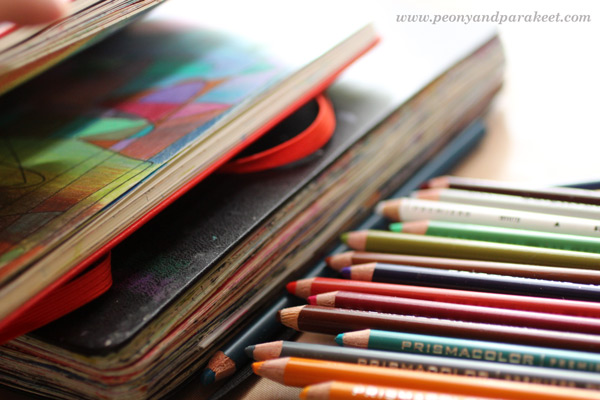
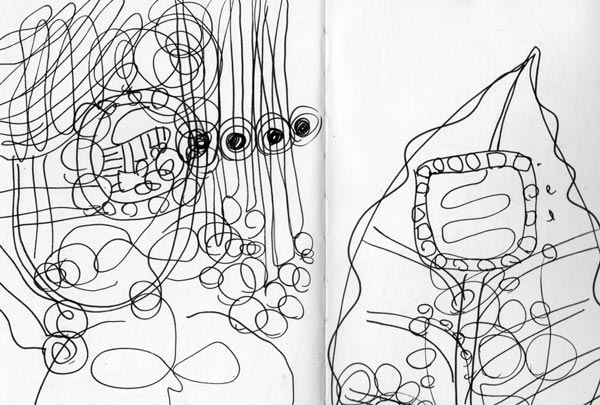
In my opinion, even most elaborate art journals should have occasional style changes and imperfect pages. It’s in the nature of art journaling to support creative process and not try to keep everything as tidy as possible. However, I have noticed that short sentences that made a perfect sense a couple of weeks ago don’t always remain useful. Same thing happens with fast sketches: some are just plain ugly!
That’s why I think it’s important to make more detailed pages too: focus on the shapes and coloring and put more effort on saving the original idea.
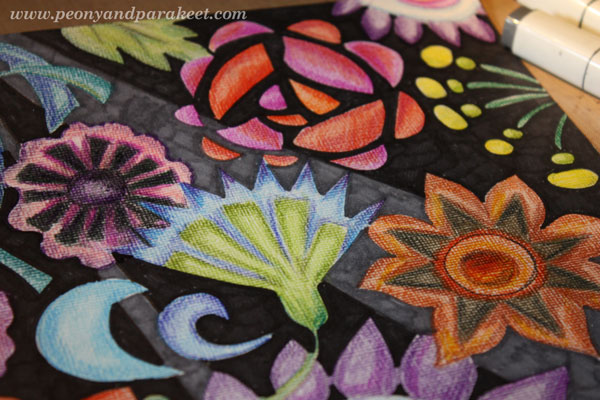
Like combining all kind of different ideas for one class, creating art is also a process of building new entities from smaller motifs. These motifs are like building blocks. If you have problems with your imagination, maybe you don’t have enough building blocks in your toolbox? Or if you want to take your style to a new direction, maybe you need new building blocks too?
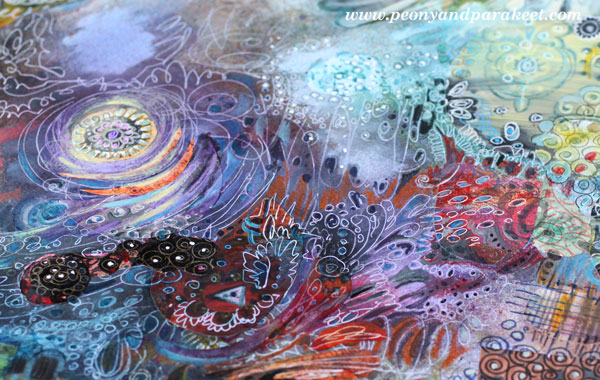
In my opinion, best art journals include quick sketches, collections of reusable building blocks and luxorious, imaginative pages. These art journals can work as creative portfolios – notebooks that we browse with pleasure to find new ideas for the next pieces.
Imagine Monthly – Pre-Order Now!
Sign up for a 6-month art journaling journey Imagine Monthly to get new building blocks and create pages that will take your art journals to a new level! To thank you, my most active followers and customers, I have tried to make the class as affordable as I can. And if you buy the class during Black Friday weekend, including Cyber Monday (Nov 26th-30th 2015 PST), you will even get a special discount price!

Find Your Art Journaling Inspiration!

After stretching my limits at the last blog post, I felt the need to go back to basics. I picked my Moleskine Watercolor Notebook and made three spreads by just answering the question: what does continually inspire me?
The short answer is: I am constantly inspired by the history of decorative art. I believe that it’s important to respond to the question on a general level like this. If you only list specific artworks and other artists, there may be less room for personal interpretation. If you define yourself too tightly through others, you can find it hard to figure out what to create next and how to find your personal style.
My Art Journaling Inspiration Sources
I am constantly inspired by embroidered fabrics and wool rugs from the first half of the 20th century.
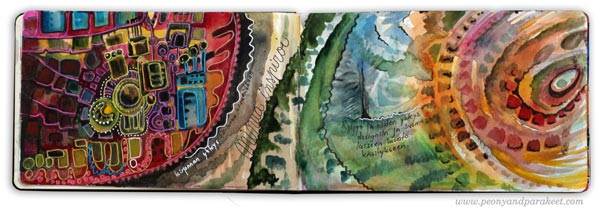
I am constantly inspired by art glass, fabric prints, and the way these characteristics are seen in today’s street fashion, especially Japanese street fashion.
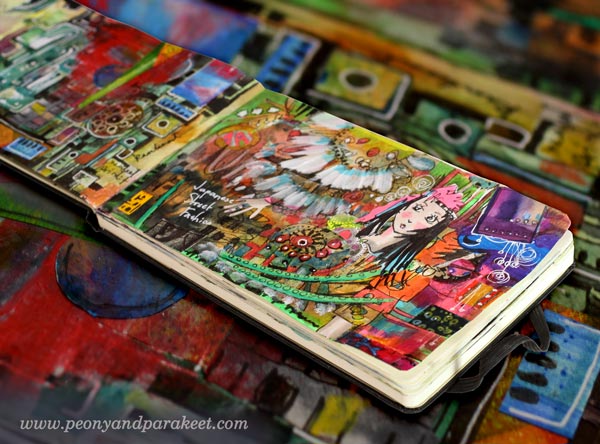
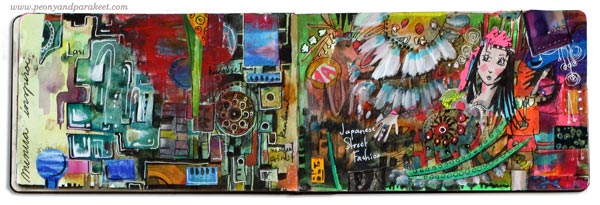
I am constantly inspired by Russian decorative plates, European Art Nouveau and the way they combine drama with natural colors and shapes.
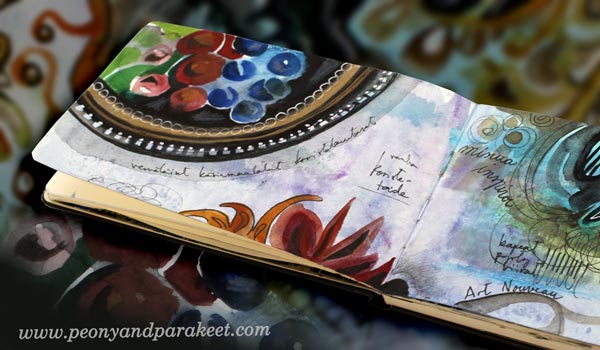
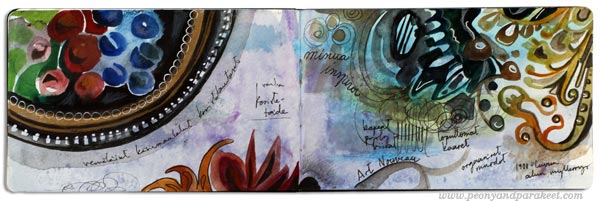
Even if I don’t have the ability to paint decorative plates or the looks to wear Japanese street fashion, I can use them as a constant source of inspiration. I can let them show in art journals and other artworks, often in a way that is less literal but still obvious for myself.
The history of decorative art fills my mind with values that I can resonate with. They are understanding nuances, focusing on details, telling stories that last time, uplifting people with beauty and spirituality and integrating production with technology. It may not be the whole big picture of the subject, but it is how I look at it. That in turn, inspires me to create art, to blog and to deliver new techniques and workshops.
Let art journaling make you happy – fill your pages with subjects that truly inspire you!
Monthly art journaling inspiration: Sign up for Imagine Monthly!
Processing Visual Inspiration
Last week, I visited Natural History Museum of Helsinki. My idea was to take a sketchbook with me and make few sketches – if I happened to see something inspiring. My skeptic attitude changed once I entered the place. I remember visiting the museum over 20 years ago but only the front door of the old building seemed a bit familiar, everything else looked new to me. I was mesmerized by the colors and details of stuffed animals, and only after a short while, almost overwhelmed by the amount of information and visual stimulation. It would have been impossible to put all the inspiration into sketches, so I took photos.
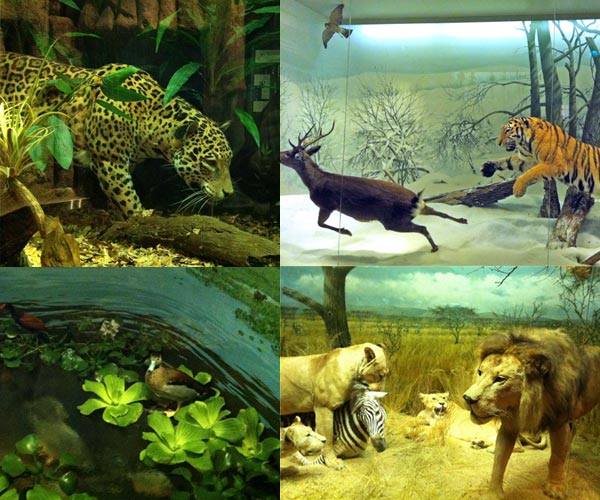
When I got back home, I knew I had to create an artwork inspired by the visit. But my mind seemed too full, not knowing where to start, what to express. I started a painting but against all my principles, I tossed it because I was totally clueless even if my mind was full of inspiration!
After a couple of days, I decided to make a sketchbook spread to help me process the subject. I loaded the photos to iPad and created several layers of watercolors while browsing the images.
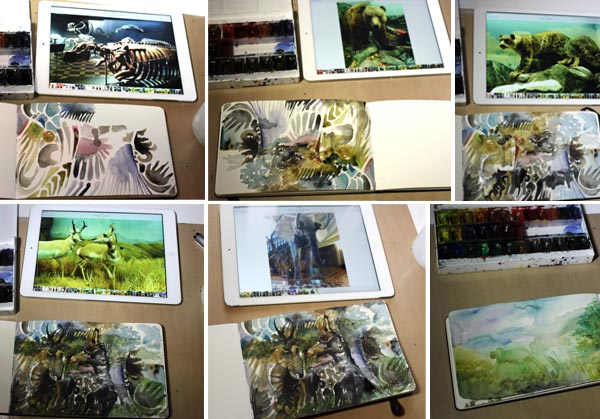
I wrote down some of my thoughts: how I admired lions and African animals in general when I was a child and how rich country Africa is, in terms of nature.

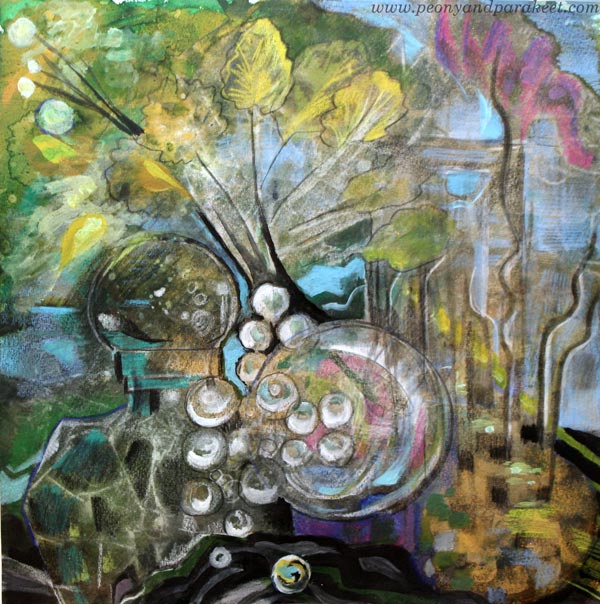
After this spread, I asked myself: what inspiring did I see that than the animals. The answer was: glass cabinets and the concept of collections that were kind of surreal. With that in mind, I started a painting on a thick watercolor paper.
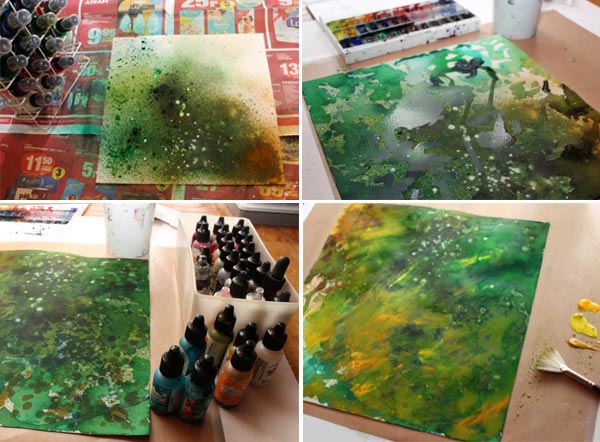
Randomly creating new layers with ink mists, watercolors, alcohol inks and gouache paints, I focused on the color first. Greens, turquoises and ochras were the ones that made the strongest impact on me when looking inside the glass vitrines.
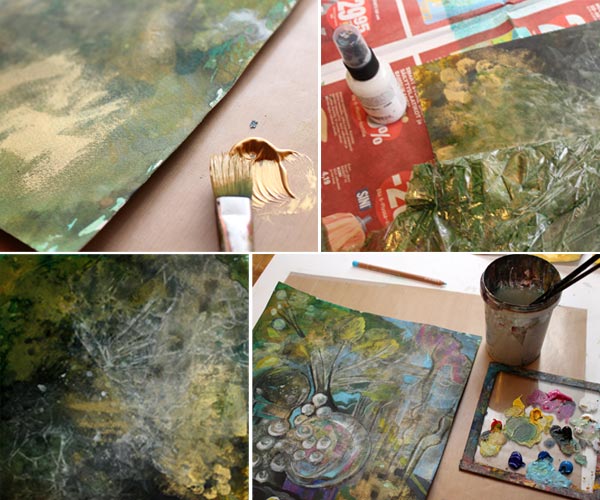
With gold paint and white ink, I created more details to embark my imagination. Then I thought about Slavic melancholy, fall, piano concertos and let all of that get mixed with glass and nature. When I looked at the end result, I kind of like the idea of mixing a landscape with a still life. The idea is surprisingly similar than what I saw in the museum: still-lifes that are also landscapes! I would have not thought it this way though without processing the subject so much. By taking photos, painting without a clue, working with the sketchbook and then creating a lot of layers made me somehow understand what inspired me in the first place. When I let go and followed the pencils and brushes, it was ready to come out.
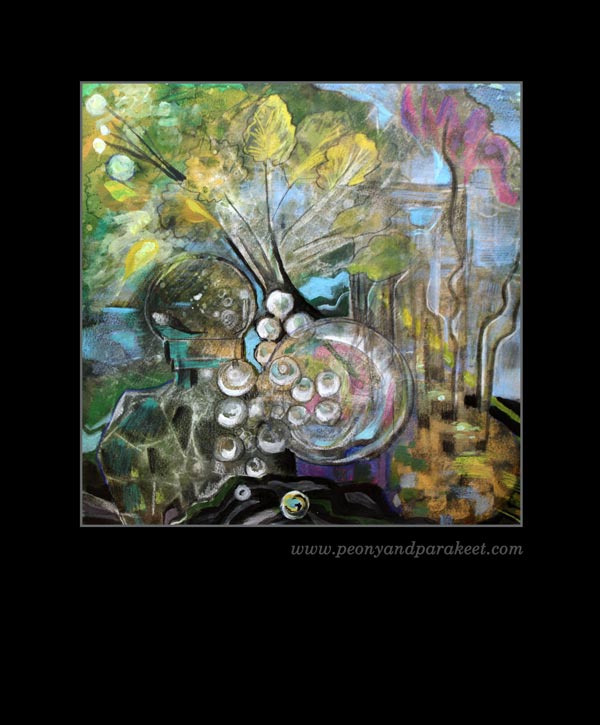
What I learned was: sometimes the creative process takes a lot of time, a lot of phases, don’t stop too soon!
Challenge yourself in mixed media art! Buy a bundle of 6 art journaling classes!