
Exploring Light and Mass When Creating Semi-Abstract Art
This week, I show my latest painting and talk about creating semi-abstract art where some details are quite realistic, and others are more abstract. I also give five concrete ideas for creating semi-abstract drawings or paintings.
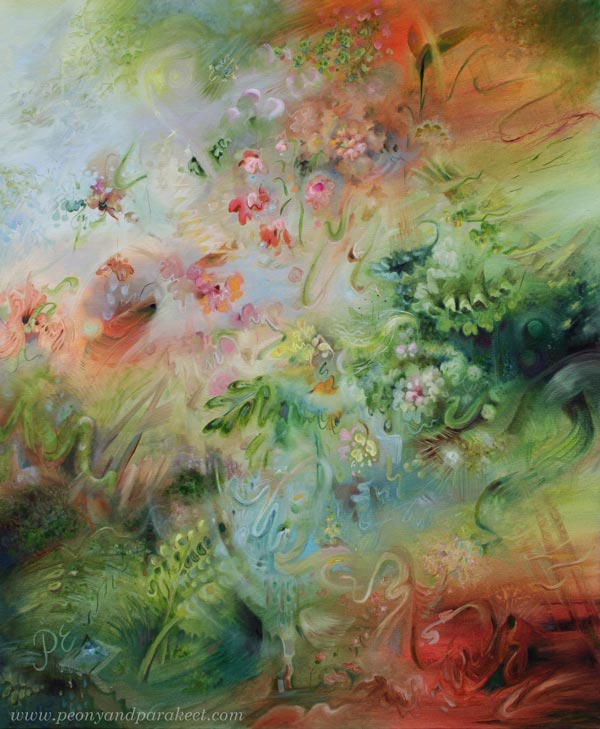
For the past couple of months, I’ve been working on four “sisters.” They are all the same size, yet each possesses a distinct personality. Halo was the first to be completed. She is the most delicate of the sisters, and perhaps the most beautiful. Fauna is nearly finished, just awaiting the final touches. She is a rule-breaker and a trailblazer who faces the world without fear.
Then there are the two who are still so early in their journey that they only have working titles. I often give my paintings temporary names that may change many times before the final version. The third sister is currently Ikigai, referring to “meaning of life.” She reminds me most of my mother; despite her shyness, she is strong, and though she might wish to blend in, she never truly will. The fourth sister, with the working title Jade, is the only one who has a landscape orientation. As the youngest, she views the world with the brightest, most optimistic eyes.
You will get to see Halo’s sisters once they are finished and photographed. I also always update the new paintings in the gallery page at paivieerola.com.
Light and Mass – Spiritual and Concrete
As an artist, I am fascinated by light. I often feel that once I’ve captured a unique atmosphere and lighting — something you might even call its temperament—the most important work is done.
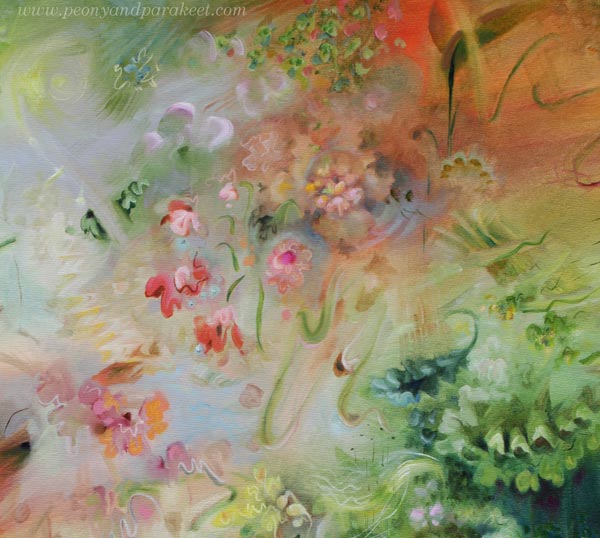
Beyond light, I think deeply about the physical mass within a piece. In the case of Halo, for example, I contemplated how realistic the vase needed to be versus how abstract I could leave the flowers and other forms. After all, the phenomenon of light carries an inherent sense of mystery.
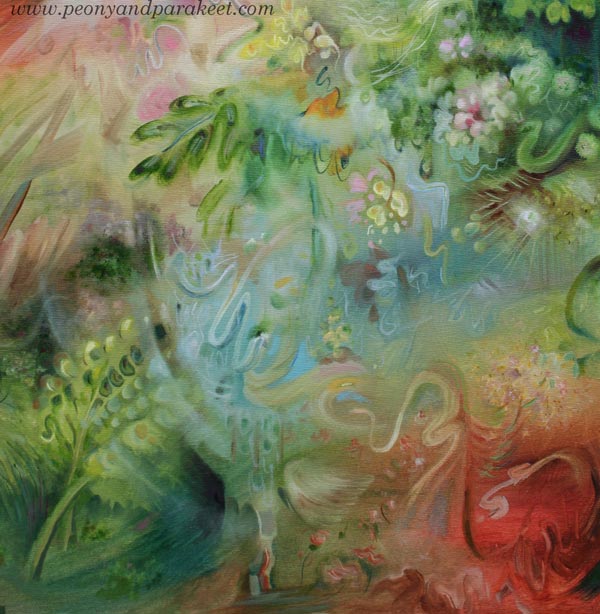
When light plays, it blurs the line between the concrete and the abstract. Just by looking, it becomes difficult to distinguish what is light and what is physical matter. I believe the same applies to us as human beings: the physical affects the spiritual, and vice versa.
Creating Semi-Abstract Art
This interface between spirituality and reality exists in all art, but it is, of course, most visible in semi-abstract art. Whether it’s a small sketch or a large painting, it’s fun to analyze which parts are tangibly real and which are spiritual in nature.
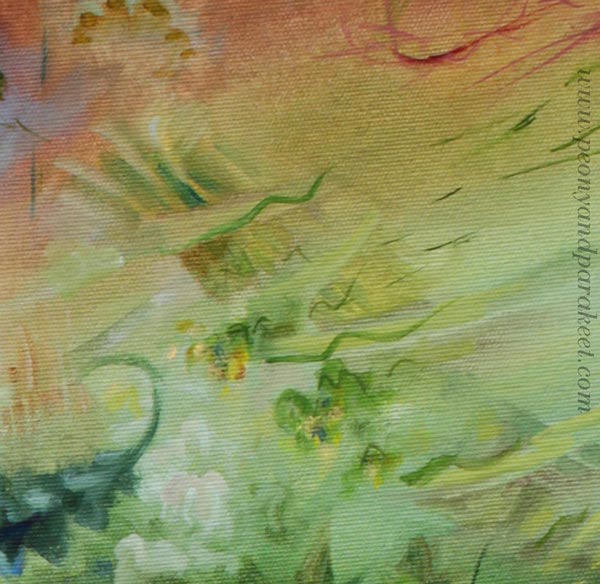
And when creating, it’s good to stop and think about which parts can remain abstract and which could be more concrete.
I challenge you to look at your own work through this lens! I also have some practical tips for …
Making Your Art More Abstract – Five Ideas to Experiment with!
For simplicity, I’ve used colored pencils and drawn flowers in the examples, but you can apply these tips to any medium and any realistic object.
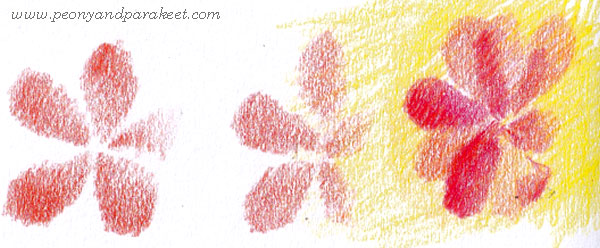
Vanishing – Let some of the petals fade away so that the flower is partly invisible.
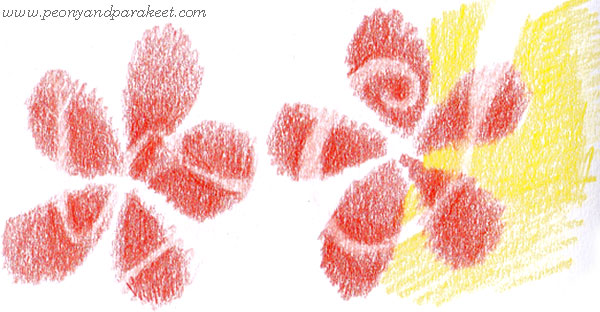
Lightline – By erasing, create a line that travels over the flower. The thickness of the line can vary, and it can also continue on the background.
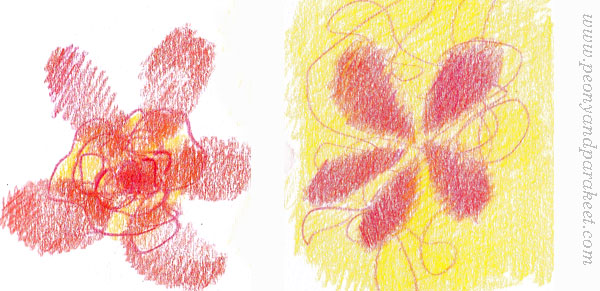
Living Line – Draw a contiguous line that lives, breathes, and touches your soul. The line can form a part of the object, for example, the center of the flower, or express the object’s spirit and stay in the background.
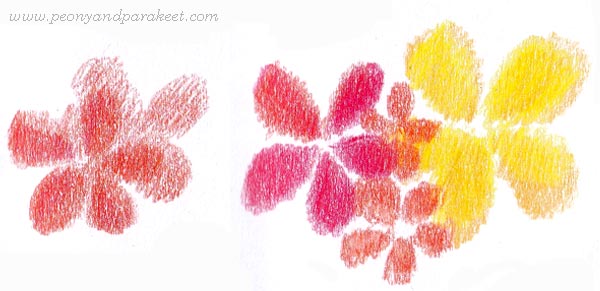
Echo – Repeat the object so that its color is weaker and its position slightly different. You can also make the echo smaller or bigger than the original object.
Geometric – Include geometric shapes in your organic drawing. A geometric shape can be partly on the top or in the background, or become a part of the object.
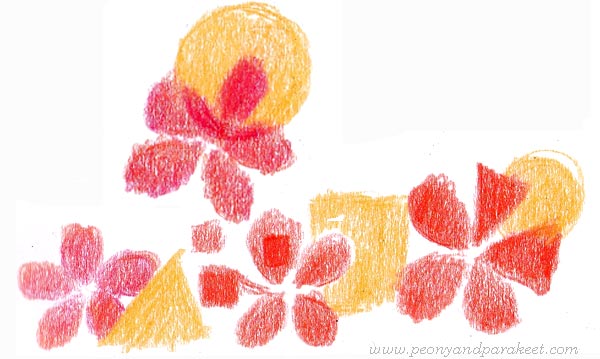
I hope these tips inspire you to create semi-abstract art!
Learn more about creating freely – welcome to my courses!
3 thoughts on “Exploring Light and Mass When Creating Semi-Abstract Art”
Comments are closed.
Wonderful ideas, thank you Paivi
Thank you, Marilyn!
Great tips Paivi. Thank you for sharing.