
Less Sketching, More Creativity!

Did you see my latest video: “Art is a Conversation”? I have made this piece by applying the principle presented in the video: letting one detail lead to another. No sketching involved!
The Creative Process with No Sketching Involved
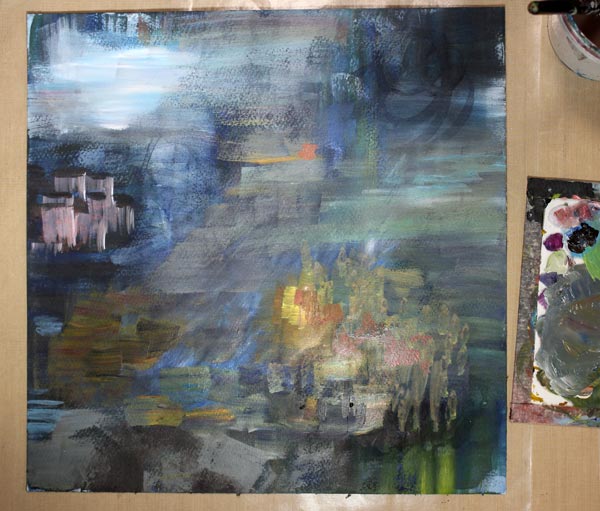
I picked a random background made with watercolors and started adding collage pieces. They, in turn, inspired me to paint some elements with watercolors.
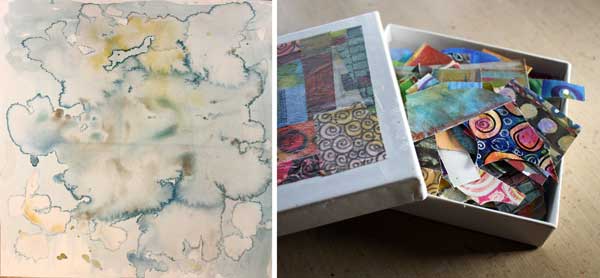
Here are the first steps:
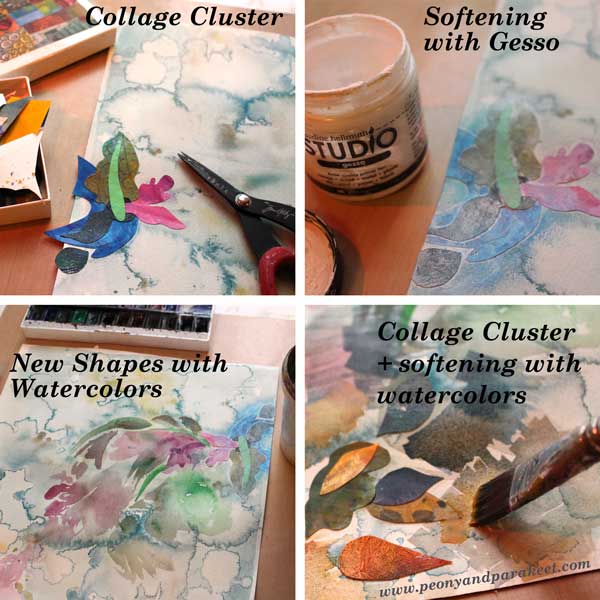
Why Sketch? Why Not?
You might feel the need for sketching because filling the blank page feels too scary. Some people want to sketch because they find it difficult to bring ideas that lead to something. If they create a collage, the result is just an evenly spread pattern and then what?
Dogs have taught me many things. One thing is to focus on the present. I try to teach them new things by dividing them into small steps. When I focus on explaining the next step only, they will listen and respond. They will do their best to understand and make most of my advice.
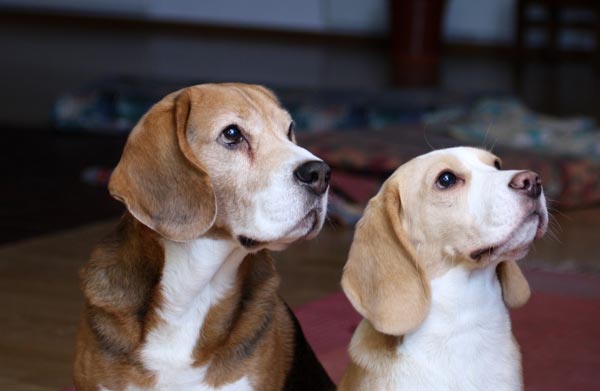
My beagles say: Stay close, focus and stop controlling what we can’t comprehend yet.
Those principals can be applied to art making too. Add new element close and partly on top of another. Enjoy each stroke, each color, and shape at a time. Stop worrying about the areas where you have not reached yet. Let creating grow your thoughts instead of being fixed to one idea.

When I reached the upper right corner, I saw a watercolor splotch that looked a little bit like a fairytale princess, so I quickly emphasized those shapes!
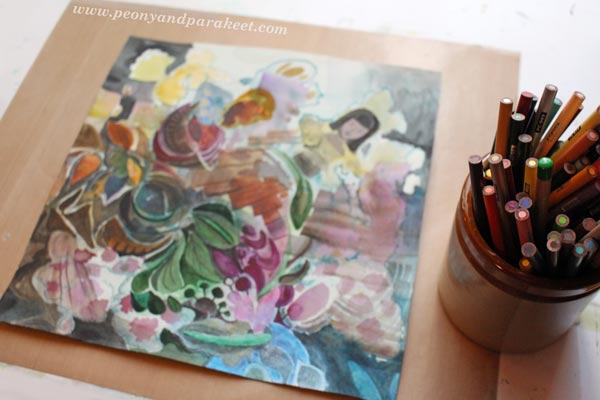
I believe that too much sketching brings too much stiffness: the stiffness of ideas, the stiffness of lines, the stiffness of composition.
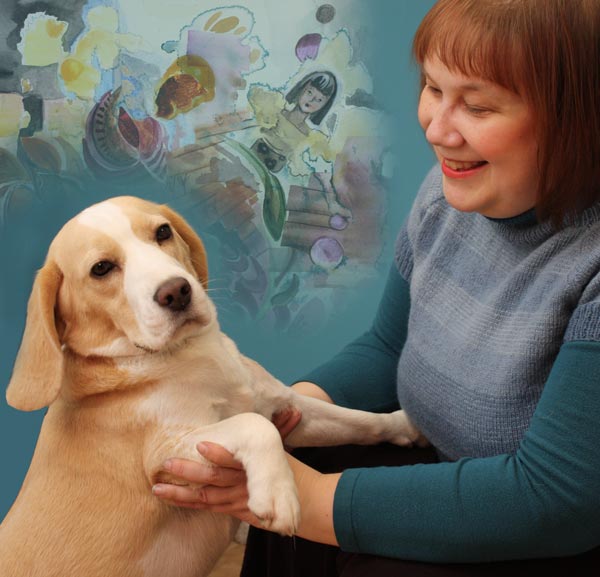
When we try to create with control, it is like trying to trace better than dogs do. We can guide them to sniff, but we also have to let them do the job.

Subscribe to my weekly emails – Get a free mini-course!
What Are the Cornerstones of Your Art?
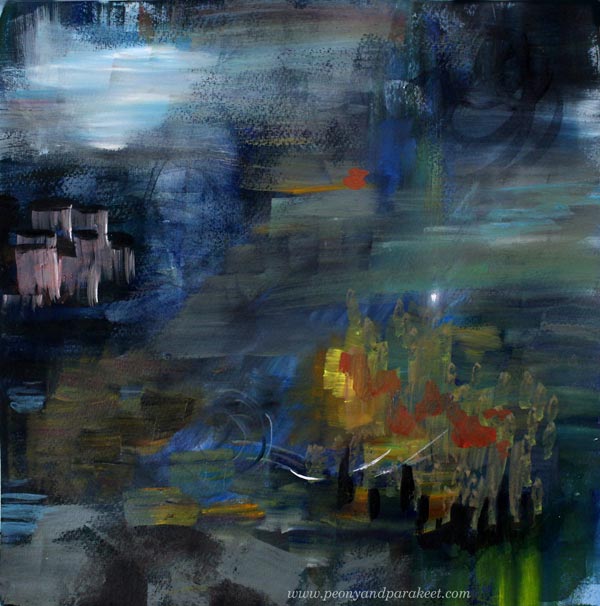
I have always loved abstract paintings. It occurred to me just recently that even if I rarely create realistic art, I rarely go to extremes in abstract. But then, what would prevent me from doing that, putting those cornerstones of my style to a new order.
Namely, if you know what you love to create, why not play with that? Thick black color, sharp lines, dramatic color transitions, sense of movement and muted but distinct colors – those are what I always seem to aim.
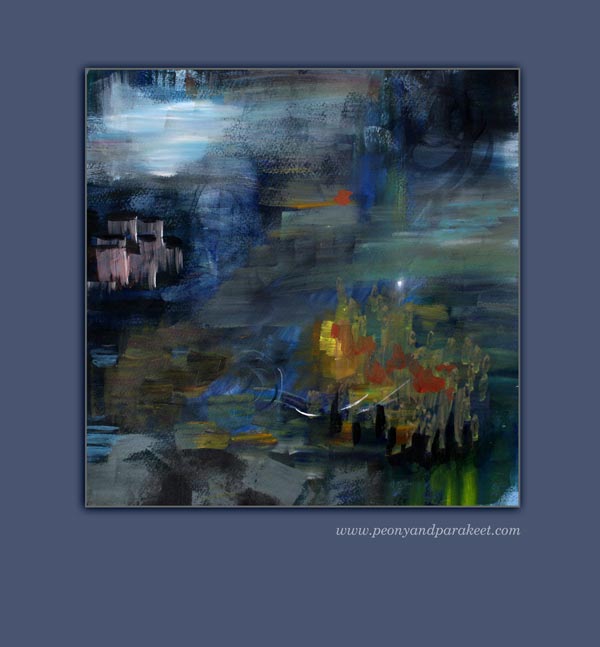
This painting is called “Cornerstones” as I like this detail the most.
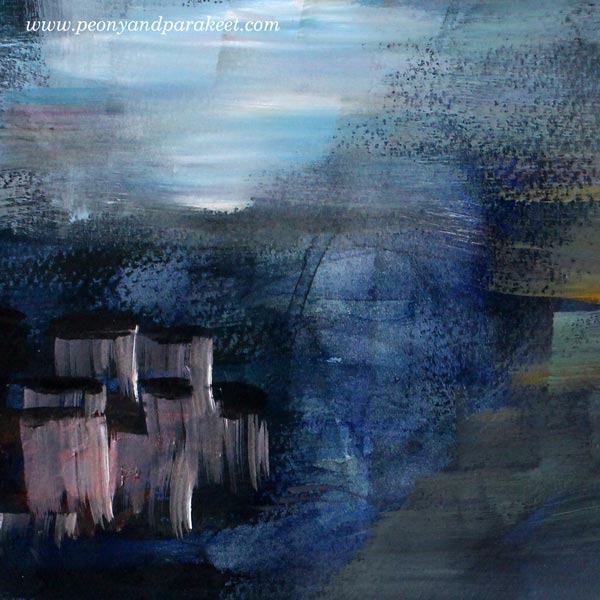
When you have your cornerstones set, you can feel free to experiment: use less of something, more of another thing, express deeper thoughts or become more playful.
My favorite supplies are watercolors, acrylic paints, and colored pencils. They can be seen as cornerstones as well. If I create something a bit different, it isn’t so scary when I use these old friends.
So I started the painting with watercolors. I had some leftover acrylic paints from other projects, so I stopped to watch the watercolored surface and tried to figure out how to create something a little bit different with them.
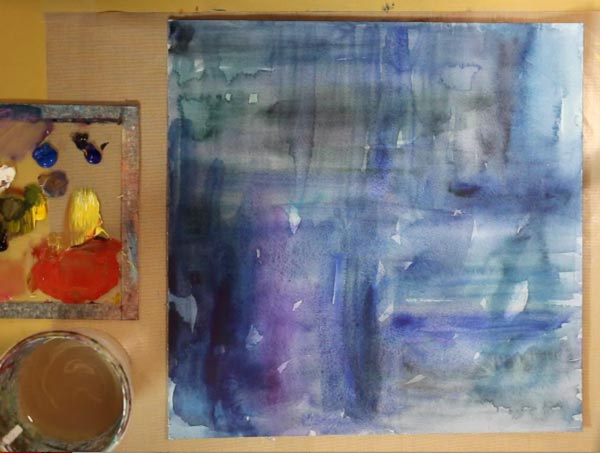
One thing that I love in acrylic paints is to have many colors on a brush at the same time and get delicious color effects.

I worked with fairly thick brushes so no wonder when the artwork reached this point, I felt it needed some sharpness and movement.
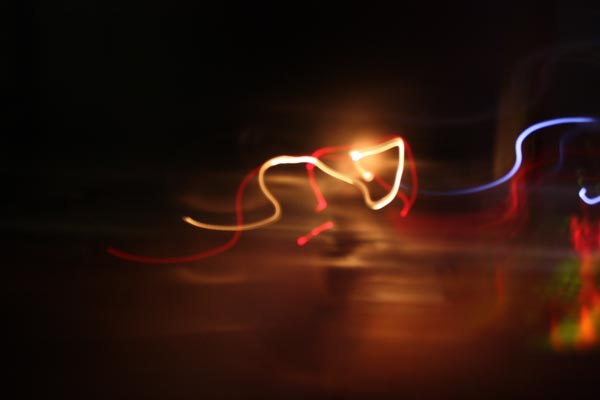
Then I remembered the photos that I love to shoot. I adjust the shutter speed low and move my camera to doodle with light. My photos are not brilliant, but I absolutely love playing with the camera this way. These photos make me think of bit streams and all the wonderful technical innovations.
So I added a few sharp light details, and it was finished!
Subscribe to my weekly emails – Get a free mini-course!
Drama and Contrasts in Art
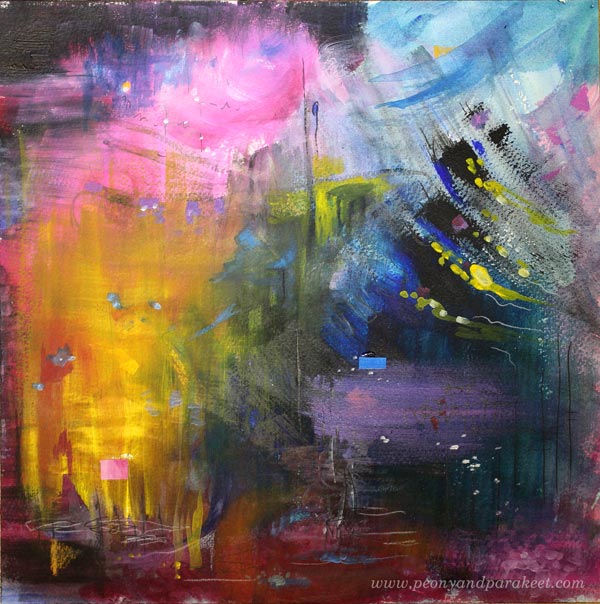
This is my latest painting called “Counterforces”. The idea for this came from the books that I have read recently. They are Outlining Your Novel and Structuring Your Novel by K.M. Weiland. I picked those books, not because I would be writing a novel, but because I want to understand more about drama and how to bring it to visual art. With self-expression, I aim for describing scenes and experiences rather than static figures. I want to experience the drama while I am creating and show the drama in the result as well.
Create Contrasts and Suspense – Watch the Video!
I recorded the process of creating the painting. While creating, I tried to bring as many contrasts as possible to the painting. The most memorable moments in our lives often include some drama – countering forces or feelings.
Let me be your mentor in art: Subscribe to my weekly emails!
Put Thoughts and Feelings into Your Art

I am excited to start the fall season with a video blog post! I will create the mixed media painting above from start to finish and show the atmosphere of my creative space as authentically as I can. I will also talk about Inspirational Drawing, my online drawing workshop that will begin in September!
Subscribe to my weekly emails – Get a free mini-course!