
How to Imitate Glass with Paint
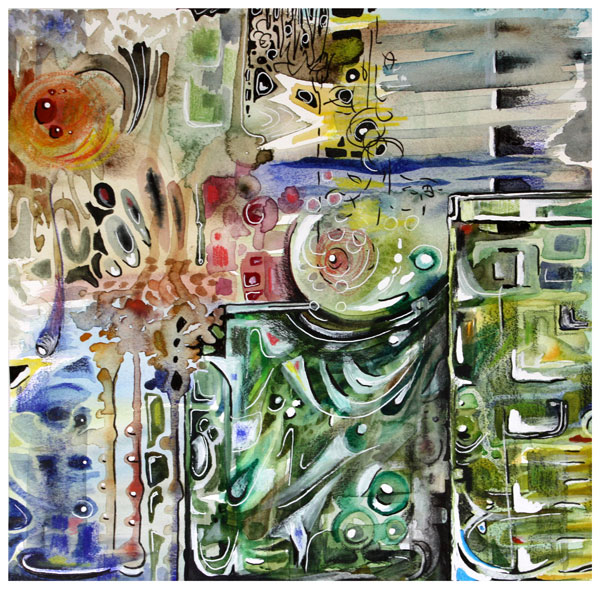
For this painting, I learned how to imitate glass. It is called “We Will Protect You,” and it’s about parents trying to protect their children. The parents have good intentions, and they do their best, but in the end, they have to let the child step into the world. I have painted two glass vases to represent the parents. The child sees the world through the parents, and even if they want to protect the child, they are fragile too.
Artistic Inspiration from Glassware
The idea for the painting began last Saturday when I went to the local library to get some ideas for the future blog posts. I saw the book called The Art of Glass. It was about Kaj Franck, a Finnish designer who was extremely skillful in designing glassware.
 Most Finns have Kaj Franck’s glassware. He didn’t design unique pieces only, but everyday glass as well. My most precious glass item from him is this red “Goblet” which was originally owned by my aunt. She passed away ten years ago, and the color of this Goblet reminds me of her vivid character.
After browsing few pages of the book, I knew I had to make something glass-related. It’s not the first time the glass has inspired me: see the collage inspired by Nanny Still, and I have also knitted a folk bag inspired by Oiva Toikka. Both Nanny Still and Oiva Toikka are Finnish glass designers as well.
This time, I wanted not only to find out how to imitate glass but to explain it to you too. Before beginning the bigger painting, I painted few circles on a small paper and tried to make them look like glass.
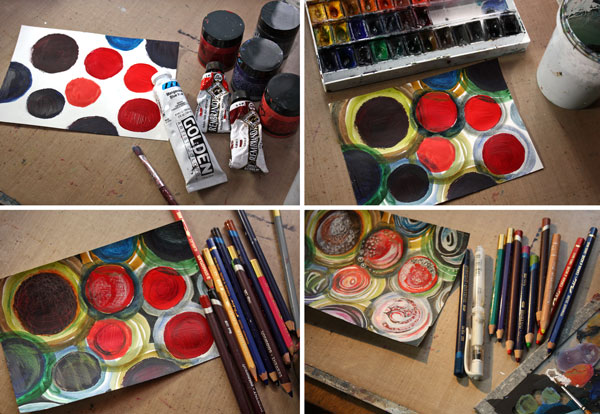
I used acrylic paints to paint the circles and then watercolors to add more circles around the previous ones. The shapes were softened with colored pencils. Then I added white with acrylic paint and a gel pen, and black with a PITT Artist Pen.

I made each circle a bit different. I was not fully satisfied with them, though. The center circles were too solid in color. I decided to start the bigger painting with watercolors as they are easier for making transparent layers.
8 Tips on How to Imitate Glass

1) Paint several transparent layers which intersect each other. Use a lot of water to create thin layers.

2) Use a lot of hues and shades of the same color. Mix colors to get new tones which have slight differences from each other. Use small spots of other colors too as glass reflects its surroundings.

3) Paint geometric shapes like circles, squares, half-circles, and triangles.

4) Add white with acrylic paint. When painting the white shapes, soften one side of them by adding water.
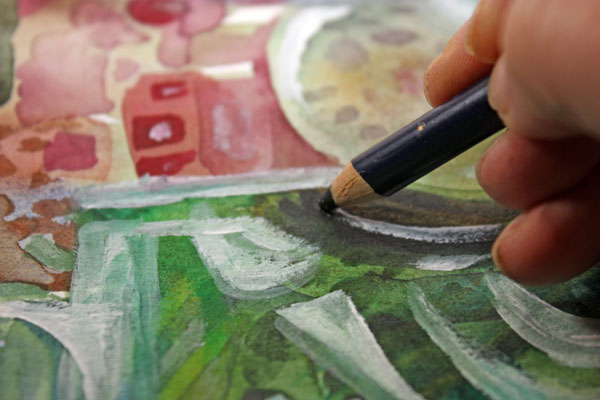
5) Use a black colored pencil to add dark near the sharp edges of white areas. Make the dark areas soft too.
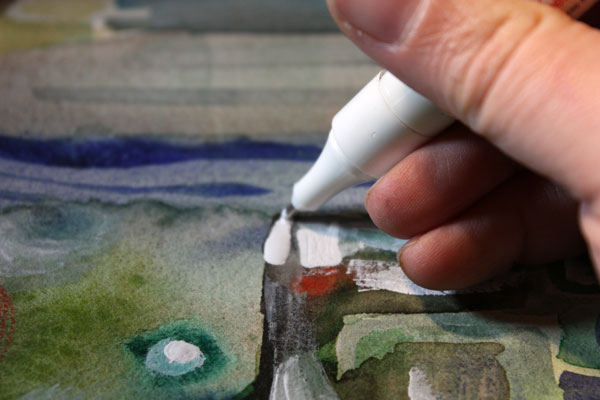
6) With correction pen, add brilliant white to highlight parts of the white areas.

7) Add jet black with a black marker (I used a brush tip PITT Artist Pen) to make dark areas pop as well.
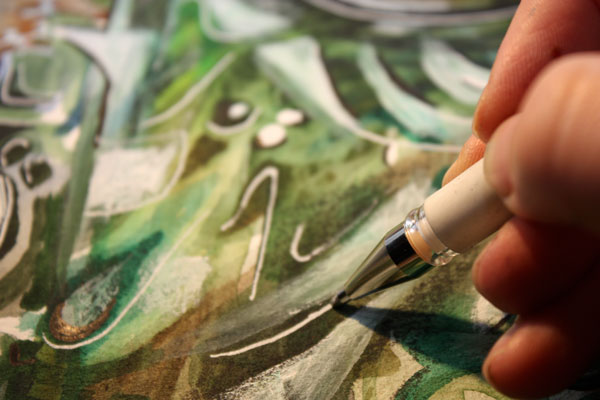
8) Finish with thin lines using a gel pen and a black marker. It will make your glass look a bit thinner and more elegant.

What kind of glass do you like the most? Does mimicking materials interest you too?
Let me be your mentor in art: Subscribe to my weekly emails!
Create Pastel Softness!

This time it’s all cute! I had the feeling that this blog is getting too serious. Don’t get me wrong! I want serious, I love serious and hope that you do too! Still, behind all good art, there’s a big portion of imagination. And the best way to embark that imagination is to play a little!
Pastel Colors in Teddy Bears

So I asked my teddy bears if they were willing to help me with this post. And they responded: “Yes, sure!” When I interviewed them, they reminded me that there are two big factors in cuteness: softness and pastel colors. “My friend is a black teddy and he does not get so many hugs as I do”, said Apple Blossom. Pink Princess continued: “It’s not just the color, but it’s the fluffy softness that’s important too!” And then they both agreed that the huge nose and strong eye contact make a teddy even more successful.
Pastel Colors in Old Scrap Pictures
Then I showed them the old scrap pictures that I had found from an antique flea market some years ago.

“Oh yes!”, they giggled. “If you want to create something cute, these sure are good examples! Round shapes make them look reaaaaally soft!”
India Ink and Circles
I picked up my India ink bottles (used also in the video blog post last week) and tried to think about what kind of soft and cute to create with them.
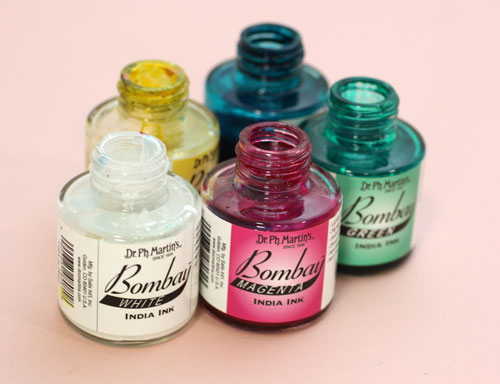
Then I remembered the round shapes. That could be the start.
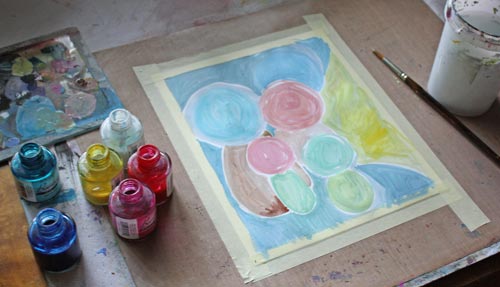
So I painted some round shapes with pastel colors on a thin watercolor paper. While painting, I noticed that to get beautiful pastels you need to use a lot of white. Sometimes adding a lot of white can create hues that lack softness if the base color is cold. You can fix that by adding some yellow or a tiny portion of black. Speaking of soft and white, meet another teddy of mine called Niamh …

I am not a big fan of white but who could not love the color after seeing her!
Clustered Shapes
Back to the painting: Small shapes were added near the large ones to create cute creatures. I made some large shapes form the part of the background. More shapes were painted to made creatures more interesting.
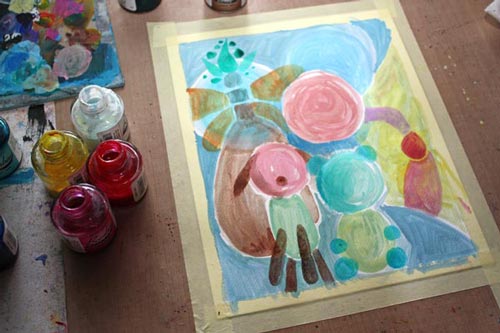
I made the shapes look dimensional and detailed with colored pencils.

Finishing
I finished the painting by adding more details and sharpening them with a white gel pen and a thin tip black marker. As a final touch, I added white acrylic paint on the face of the biggest creature. It lightens up the work and makes a great contrast with the black. Namely, if you look at the scrap pictures and the teddy bears, the black color makes pastels look so soft and bright. Small black dots here and there on a pastel colored circles can be enough to create a page that’s all soft and cute.

So, why not have a go: create a pastel colored art journal page to soften the hard world!
Let me be your mentor in art: Subscribe to my weekly emails!
Create Abstract Botanical Art!
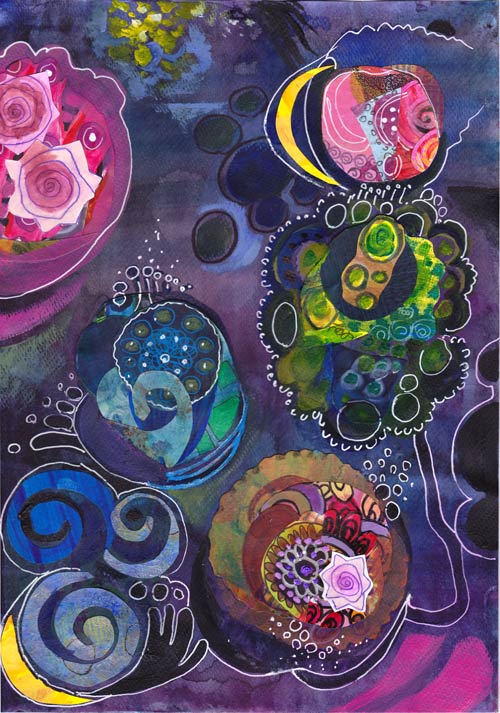
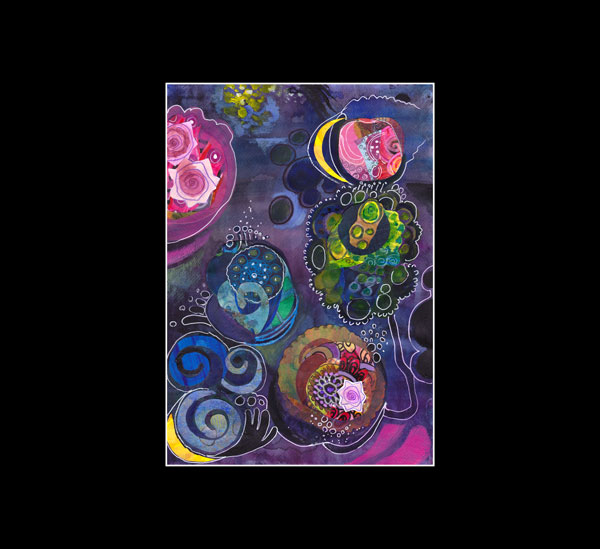
Last Friday I saw impressive paintings. When I see something that appeals to me, I try to analyze that in pieces. It is fascinating to find out little things that make a painting so memorable. I created this collage called “The Odd Nature” by using those factors. The whole subject – abstract botanical art – is mind-blowing.
Inspired by Hilma af Klint
Starting from the beginning: I was at Hilma af Klint‘s exhibition at Kunsthalle Helsinki. I had seen a few of her works before, but never this many at the same time. Hilma af Klint (1862-1944) painted botanical art and landscapes but then moved to create abstract art. She was a female artist and one of the pioneers of abstract art. When that is combined with her interest in spiritual ideas, no wonder she did not make her work public. In fact, she ordered that her work should be shown not earlier than 20 years after her death! Look at some of Hilma af Klint’s paintings on the Swedish Moderna Museet’s website.
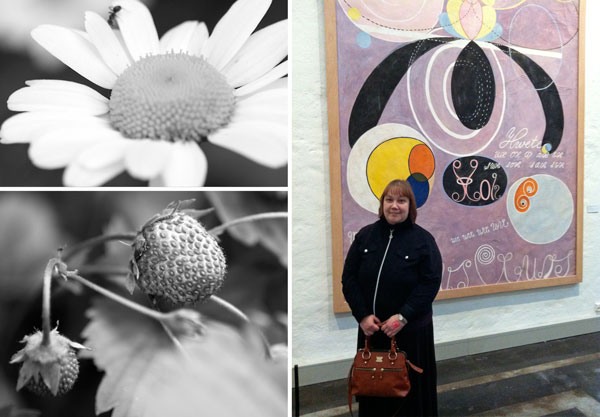
Here’s what inspired me with Hilma af Klint’s art:
1) Odd compositions that were skillfully balanced.
2) Graphic, often decorative shapes which reminded me of plants and biology.
3) The combination of bright and muted colors with great contrasts.
Zoom in on Nature!
After the exhibition, I began to think about how far we often look at the world around us. To me, it felt like Hilma af Klint had divided living objects like plants into small components and then constructed new pieces out of them. So I began to zoom in on the photos I had taken from my garden this year.

When thinking about the structure of apple blossom, I remembered something which is small too: the little box where I save the tiniest scraps of my hand-decorated papers.
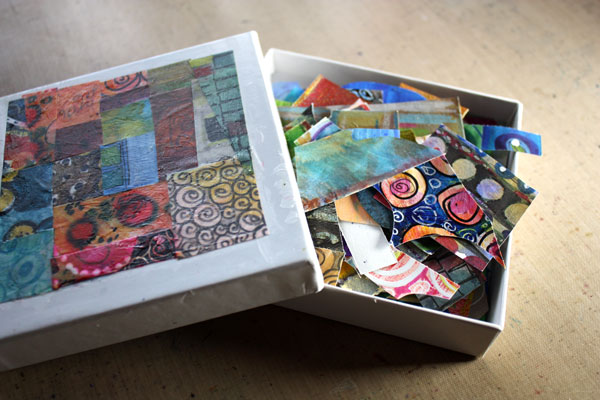
Creating abstract botanicals from the paper scraps would be the thing to do!
Color Inspiration
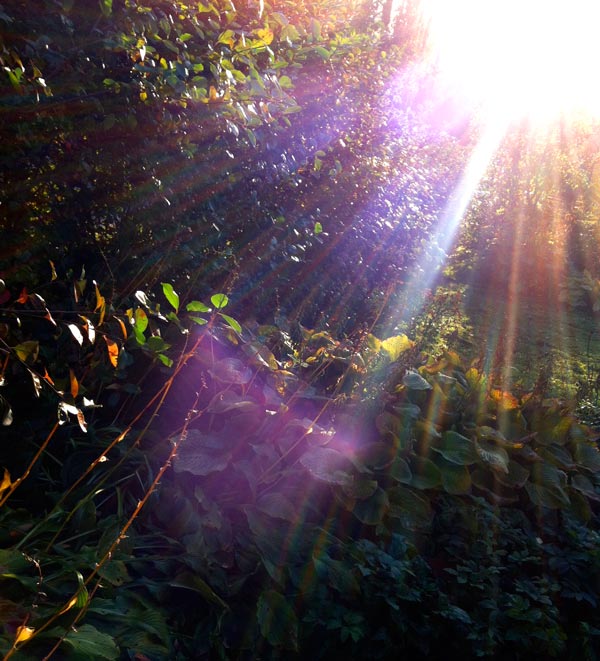
The idea for the color scheme and the atmosphere came from this photo, taken just a while ago. I painted the background blue purple by adding several layers with watercolors.
Collage Shapes
After the background had been finished, I began to create the abstract shapes.
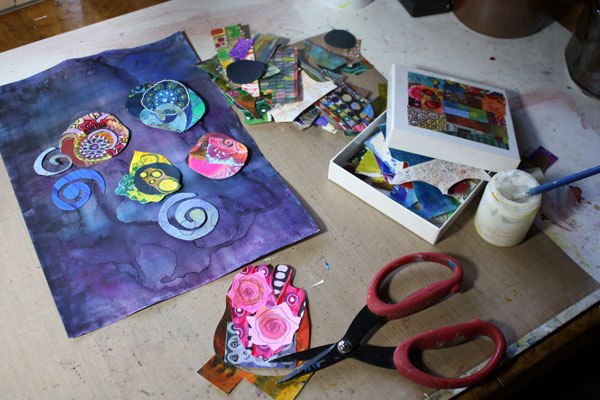
You can easily create intriguing collage pieces by combining small scraps together. Your cut shape does not need to be perfect before gluing it on the background. You can think of the shape as the beginning of the final shape. You can add more details with paint and pen around the shape later.
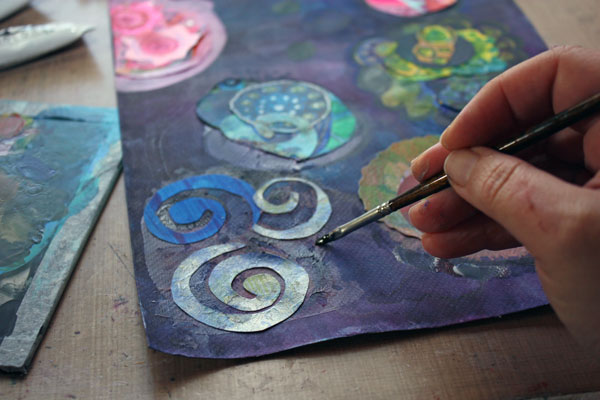
Composition
When gluing the shapes before they are finished, you need to make bold moves in the composition. I advise not to think of the composition more than this: make sure that the shapes are not evenly spread in the background. After the preliminary shapes are glued, you can then continue working with them by expanding them with painting and drawing. At the same time combine some of the shapes together and create new, smaller shapes to balance the work.
In my work, the center of the work is left almost empty. There I created a tiny detail that adds dimension to the work: a blue horizontal line near the two small circles.
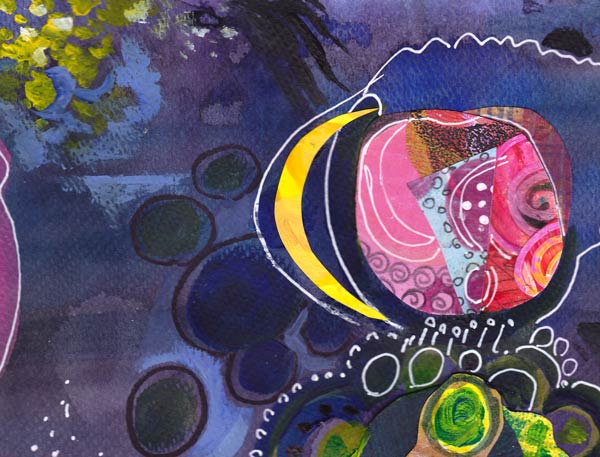
So why not pick up your scraps and honor Hilma by creating surrealistic botanical art!
Read also
Fun Designs from Decorative Papers – An easy technique to create collage elements.
How to Draw a Rose – A simple rose seen in the collage above. You might want to use it as a decorative element too.
Self-Expression with Gelli Plate
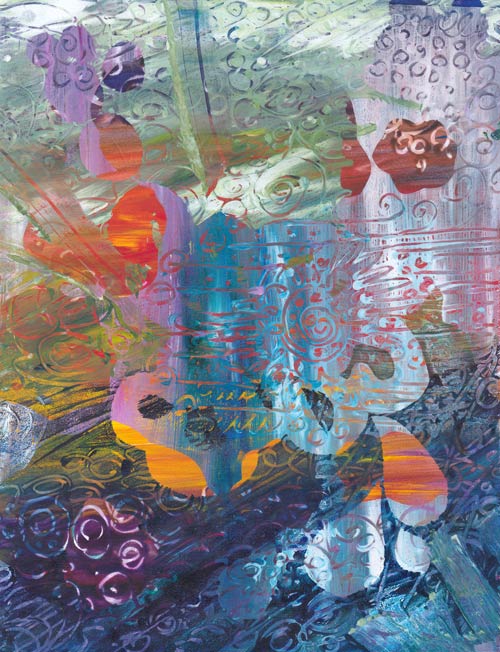
Printing with a Gelli plate was one of the things that popped up from the reader’s survey. As I happen to love mono printing techniques, it was quickly selected for the theme of the week!
Glass Plate
Almost 30 years ago, long before Gelli plates, I used glass plates for mono printing. I usually made a sketch first and then added each color as a separate layer.
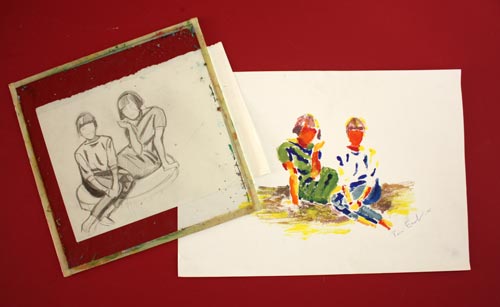
This monoprint was made in 1988, and it represents my sisters.
Gelli Plate
Gelli plate is a great invention, and it’s available in various sizes and shapes. My plate is 8 x 10 inches in size. Acquiring one is not a necessity. Glass plates work fine even today. You can also use any plastic transparent like overhead projector transparencies. The advantage of Gelli plate is that it has a flexible and sticky surface. That makes the using of masks easier. So if you fall in love with mono-printing, I would recommend purchasing the Gelli plate.
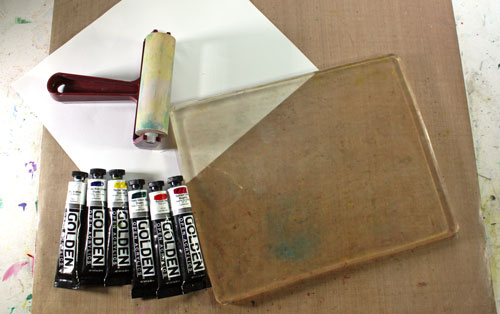
In addition to the plate, I have Golden Open acrylic paints. These paints have extended drying time, so they are especially suitable for mono-printing. I only have six colors, but by mixing them, I can get a huge variety of colors.
To create monoprints that include self-expression, I have 6 tips for you.
Tip 1: Use brushes instead of a brayer
The most common tool with the Gelli plate is a brayer. I have a Speedball brayer, but I often use brushes instead. They make the prints much more artistic, unique and expressive. With brushes, you can easily create non-repeating details and large color areas – the elements that contain more communication than monotone repeats.
Tip 2: Use a variety of tools
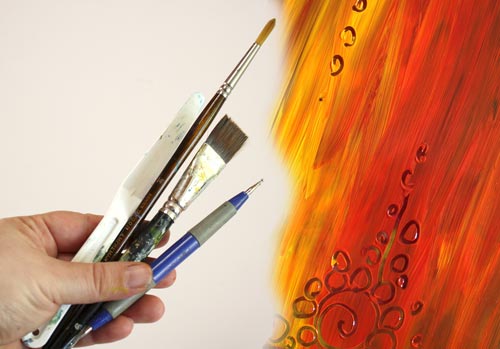
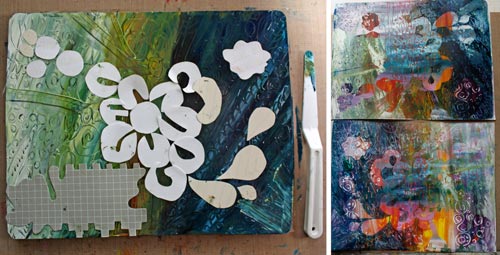
Your artwork is much more interesting if you use a variety of tools. For this post, I have used two different brushes, a double-ended embossing needle for doodling and a long palette knife for wider strokes. Your imagination is the only limitation when tools are considered. Just remember to avoid sharp objects!
Tip 3: Use hand-cut shapes for masks
When combining a variety of colors and surface patterns with hand cut shapes, the result is much more organic than using one color and cutter-cut shapes. The temptation to create a repeated design is bigger than when using freely cut unique shapes.
Here are some patterned papers that I printed from machine-cut shapes.
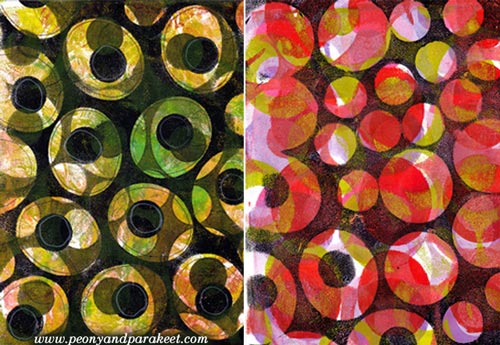
But with freely cut shapes, I avoided repeating the same motif.
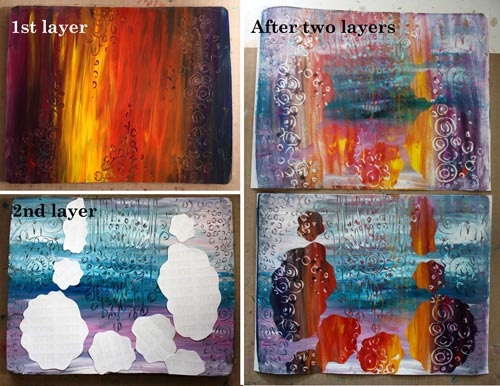
Tip 4: Let each layer bring something new to the artwork
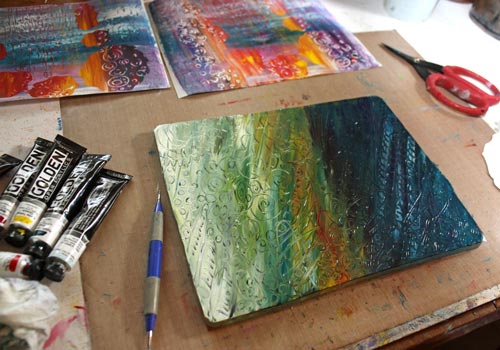
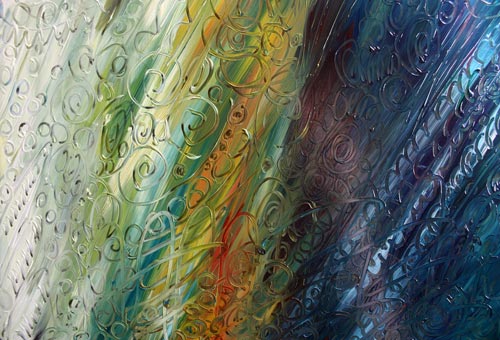
When creating a new layer, I do not mix and match colors too much. Sometimes colors look even more amazing on a plate than on a print, so I had to take a close-up from the plate!
I also think that cutting new shapes for each layer can really pay off. Add new and different with each layer, still letting the lower layers show too!
Tip 5: Create at least two monoprints at the same go
If you use slowly drying acrylics, you can get at least two monoprints from the same layer of paint. You can also experiment with that by creating two different artworks by changing the printing direction. I have turned the last layer upside down in the second monoprint. Thus the two prints differ slightly.
Tip 6: Doodle and color over
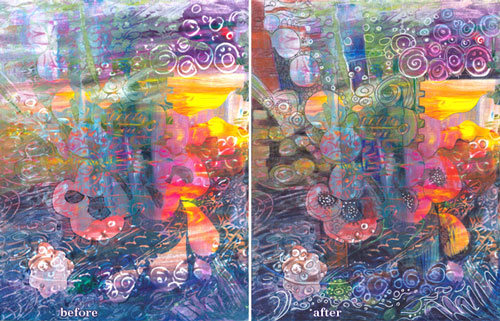
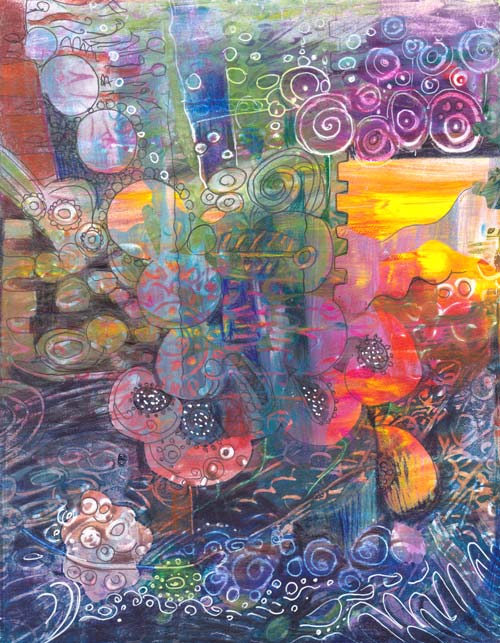
I doodled over the other of the two monoprints created for this post. Besides a white gel pen and a black thin tip marker, I also used colored pencils to fine-tune the colored areas slightly.
Here’s the bigger picture of the decorated print:
Finished Prints
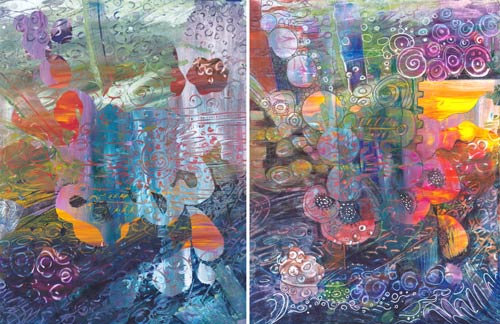
Here are the two finished pieces. Which one do you like more, the one that is not decorated or the one that is?
My husband asked after seeing these: What are you thinking while making these? – I try to think of nothing while creating, I said. I believe that you have to think before you create, not while you create. However, after a vivid discussion, I named these: the one on the left is Humanity, and the one on the right is Technology.
Gelli Printing Project in a Video – Apples and Tomatoes!
In this video, I talk about how and why to add diversity to your art. At the same time, I am creating a monoprint with a Gelli plate showing easy techniques to create an image.
All Gelli Posts
Let me be your mentor in art: Subscribe to my weekly emails!