
5 Lessons Learned When Painting on a Big Canvas
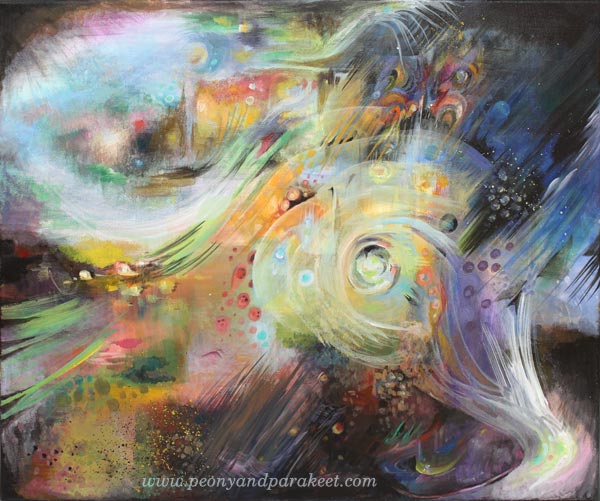
I have now finished my first big canvas painting. It is called “Human Nature.”
1) Smaller Paintings Can Take As Much Time
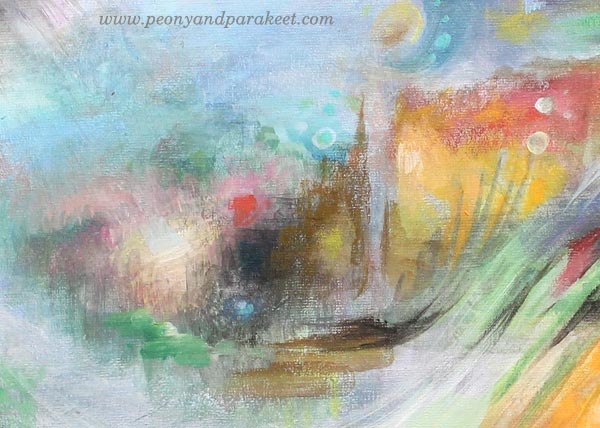
About two years ago, when I left my day job, I had a dream about creating a big painting. But my job is to teach art, and I don’t have much spare time, so it felt impossible to fit in the schedule. Now when I think about that, I kind of feel that the lack of time was an excuse. I think I was intimidated even by the thought of painting on a big canvas. The usual question raised: “What should I paint?” And then: “How could I maintain my focus for such a long time?” I exaggerated the time that painting would take. I thought it would take months and months. But when I started painting, I realized that I could use broader brushes and be less detailed. If you have ever tried to make small paintings as finished and polished as possible, it takes a long time. Adjusting the details on a big canvas is much easier.
2) Use an Easel, at Least in the Beginning and Finishing Phases
My canvas was not huge. It’s 60 cm x 50 cm (appr. 23.5 x 19.5 inches) Still, it was hard to see the whole painting when it was laid down on the table. I painted parts of the canvas so that it was on the table but set the foundation and finished the final details with the help of the easel.
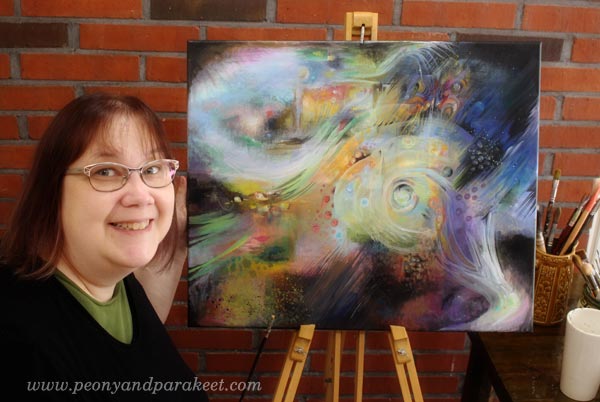
My easel also has sentimental value. My father who passed away a long time ago has made it. He was a skilled woodworker. We didn’t talk much, but I think that making the easel was his way to encourage me to paint.
3) Eat the Elephant One Bite at a Time
I got the courage to start the painting when I realized that I could combine painting with building an art class. My upcoming workshop Nature in Your Mind (do sign up!) has instructions for the techniques that I used. I treated the canvas as my sketching board for the class.
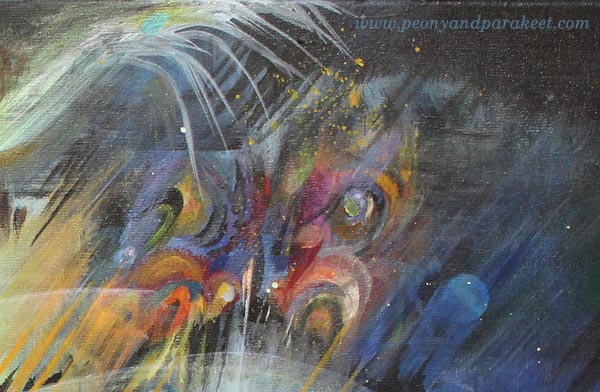
For example, the project for the first week of the class is “Rising Butterfly.” I practiced the techniques on a big canvas and then sought for the easiest and most enjoyable way to create a butterfly on a smaller canvas.
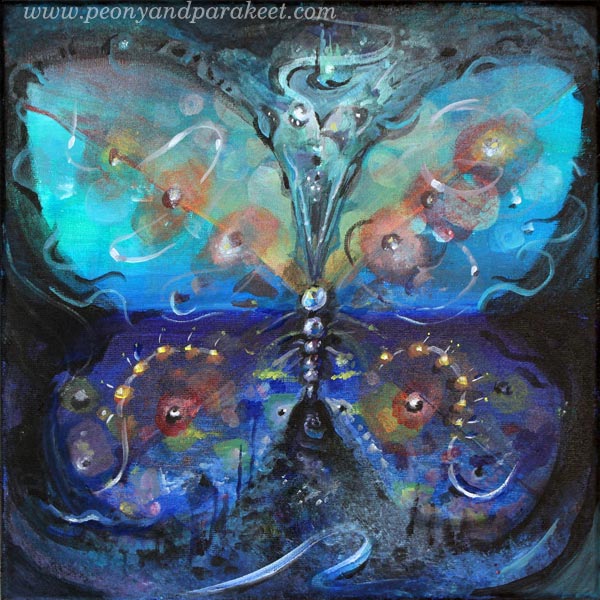
This kind of experimenting transformed the big canvas to my playground. The size was no longer intimidating.
4) Big Brushes are Great for Details
Thin lines, little dots, all look so much better when working with a big brush! It has changed my attitude towards broader brushes. I have started to use them on smaller paintings too.

It was surprising that sharp lines can be so easy with a big brush!

5) Big Canvas, Big Story
If you have been following my blog for a while, you know that my style is detailed. I know now why I wanted so badly to create a big painting and why I was so intimidated by it. You can express a much greater story on a big canvas. It’s much easier to create images that are like events or scenes on a big canvas. When one detail connects with another, it’s like moving from one chapter of a book to the next one.
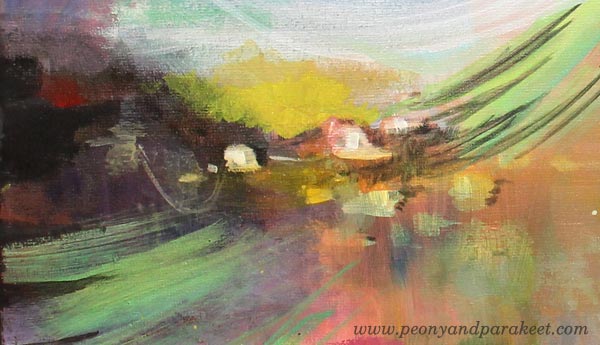
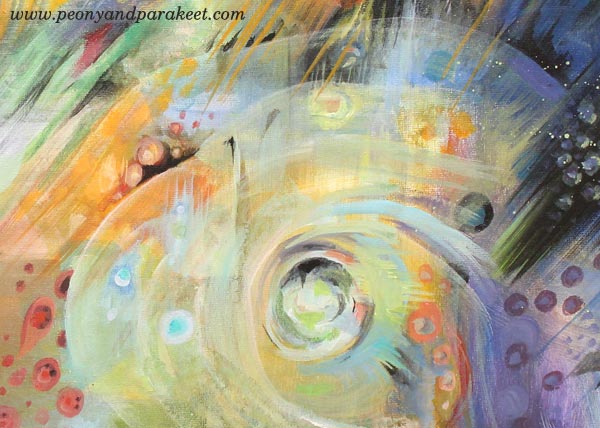
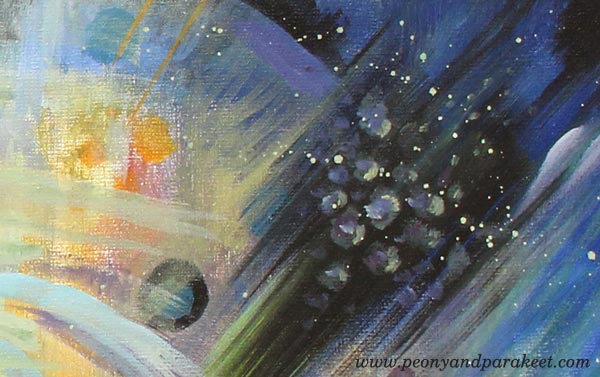
My story is about human nature: how we are spiritual beings, have imagination and ideas and are conscious about the circle of life. I doubt if I could have expressed all this on a smaller canvas.
Let me be your mentor in art: Subscribe to my weekly emails!
What’s in a Good Composition?
Quick question:
When you create art, how much time do you spend for composition?
I mean: trying to make it work, trying to balance it, trying to make it look more eye-catching?
For me, finishing the composition can take as much as 50% of my creating time! Some years ago, it was easily 75 % … I don’t find adjusting the details particularly relaxing. I take photos, use a mirror, and change the orientation of the piece to see if I have missed something. Sometimes I sleep overnight and make the last adjustments in the morning.
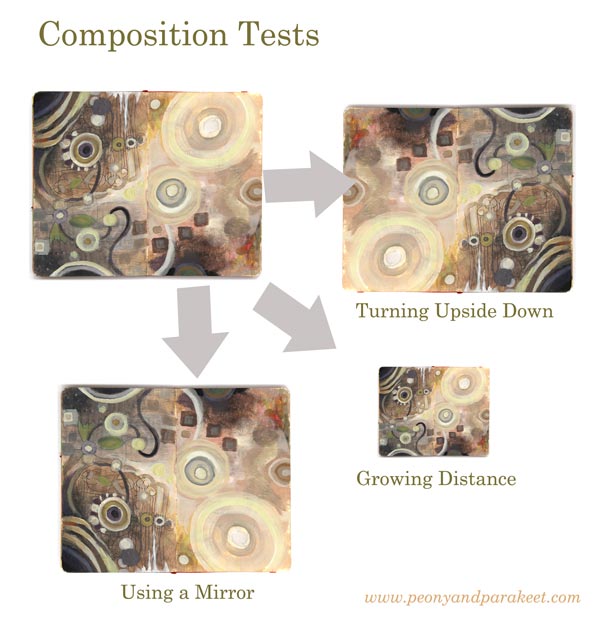
But teaching art has had some benefits here. I get to help people to make better compositions and thus, I have become faster. Namely, the two top requests that I get in my classes are: 1) How can I make this look finished? 2) What more could I add here?
So when I created a new class, Planet Color, I wanted to build a step-by-step creative process so that when you add elements, you don’t have to worry about the composition so much. I wanted to find ways that support you so that you can release your mind and fully enjoy working with colors.
What’s in a Good Composition?
Here’s my conclusion. A good composition has elements that a great party has:
1) concierges who invite the viewer to the painting
2) a star singer who takes the viewer’s attention
3) clear routes and breathing space which make wondering around easy
4) good food and good company which makes the viewer stay in the party
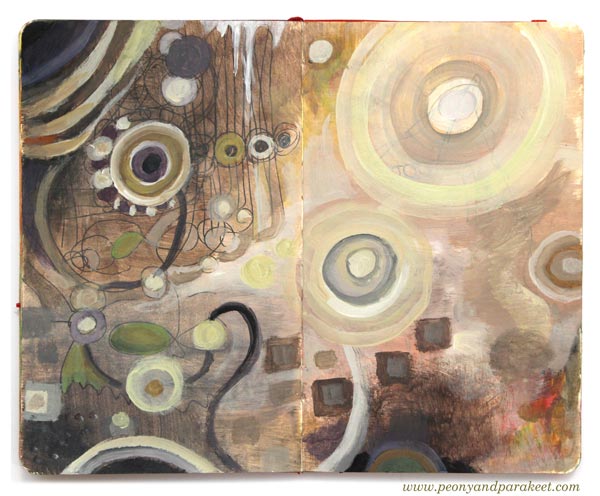
I have built all these elements in one 7-step process. It doesn’t mean that this process produces identical paintings. It means that when you enter the finishing phase, you have already done most of the work you should do anyway. But without all the agony and with all the creative enjoyment! That’s why my workshop Planet Color is as much about composing elements as about releasing your mind with colors.
And again, if you have problems in making the final adjustments, I am there to help for all the 14 days.
See you there!
Using Color Schemes from Home Decor
In the early 1990s, I bought an interior design book from the UK. It’s called “Design and Detail” and it’s written by a famous designer Tricia Guild. She was not as well-known as she currently is back then, and I hadn’t known her before I saw the book.
Creating Art by Using Color Schemes from Home Decor
I felt drawn to the interior color schemes and the decorating style presented in Tricia Guild’s book. Never before had I felt such a strong appeal to home decor. I knew I liked to be surrounded by strong colors, but I had never seen them used in such a powerful way. Since then, my every home has had elements and spaces inspired by the book. Whether I lived in a small single room as a student, in a flat or a house, I have always browsed the book when I’ve needed inspiration for interior color schemes.
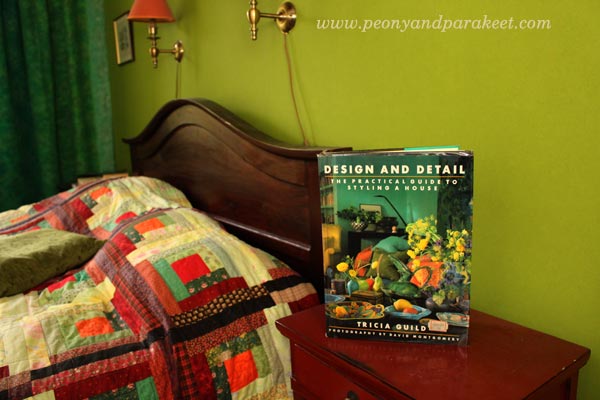
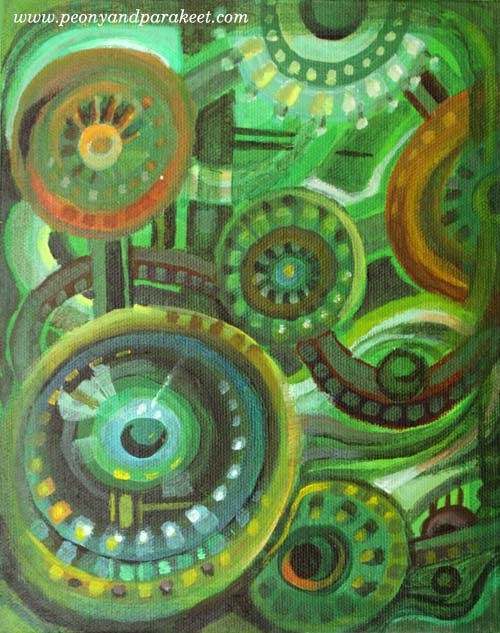
Last week, I saw a picture that had one of the color selections that are presented in “Design and Detail.” It was the combination of green and black including a little bit off-white, yellow and muted orange-red. We already have that color scheme in our bedroom but at that moment, I wanted to play with those colors again. So I started a painting that has green and black and followed the instructions from my upcoming class Planet Color!
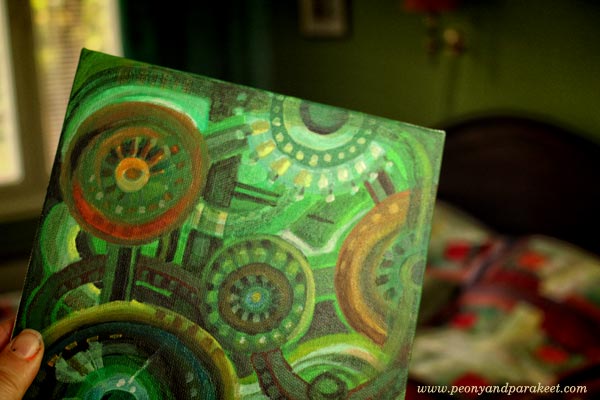
Once it was finished, I painted more interior color schemes from the book. Again, I used the 7-step method from Planet Color. I had so much fun creating these!
Warm and Inviting Colors
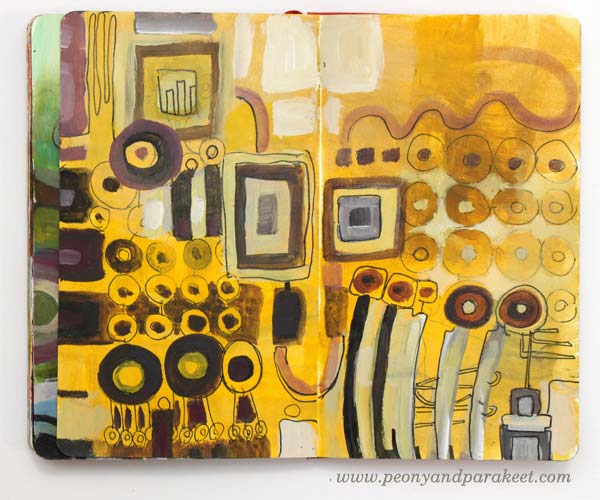
The dining area in Tricia Guild’s book looks very cozy. The striking combination of yellow and black is balanced with earthy colors and then brightened with a few warm, bright spots.
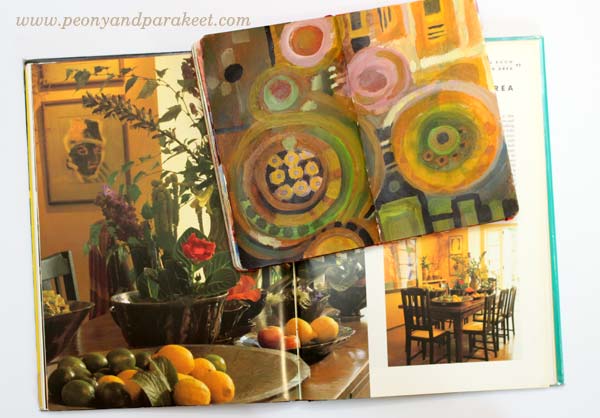
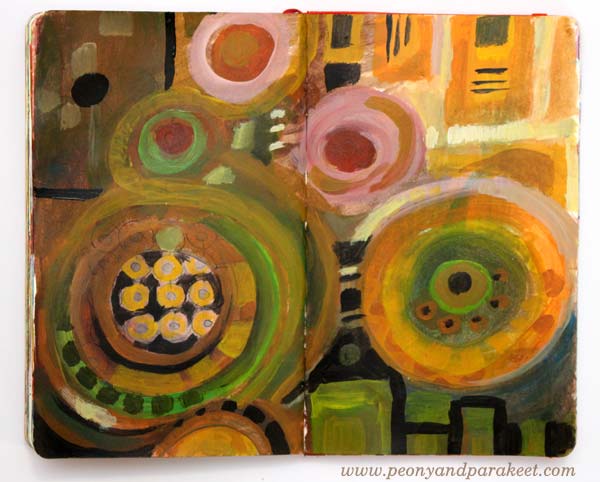
My art journal spread is inspired by the flowers and vases. It also plays with angled and round shapes as seen in the dining room.
Whites and Neutrals
I am definitely out of my comfort zone when using pale colors in larger quantities whether it’s creating art or home decor. But I wanted to try to get inspired by Tricia’s master bathroom. It was surprisingly easy when I focused on expressing the textures shown in the photo. The narrow color scheme also made me focus on adjusting the colors only slightly.
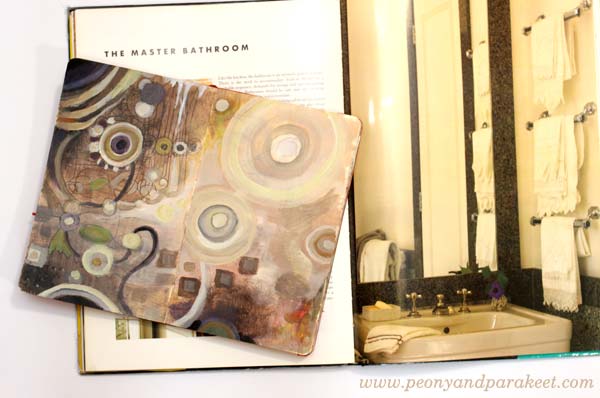
It is surprising how many tones can be created from a very restricted color palette. I also quite like the red/orange spot on the right and how it balances the upper left corner. When using neutral colors, even the smallest colorful detail can make a difference.
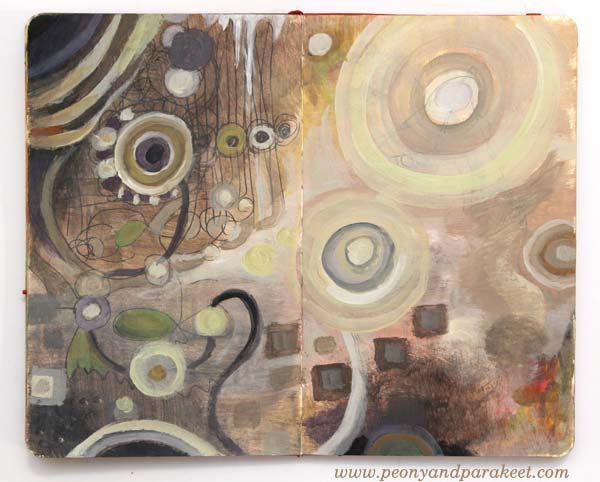
Many Shades of Yellow
I had a bedroom that had quite a lot of warm yellows when I was a child. But before “Design and Detail,” I never thought I could have bright yellow walls. But during the years, I fell in love with the warm yellow shade that I call “Tricia Guild’s yellow.”
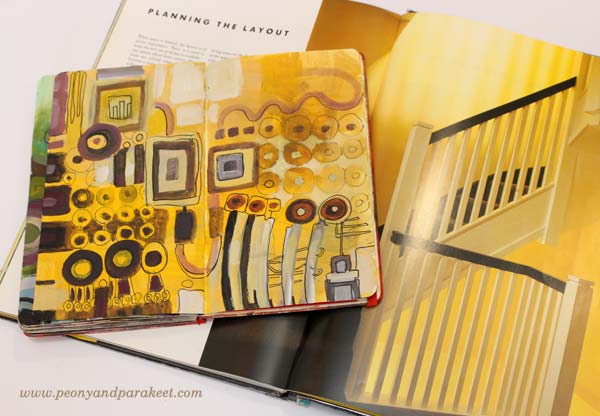
In the art journal spread, I played with various shades but six years ago, when we moved to our current house, I wanted to have that particular “Tricia Guild’s yellow” on a wall.
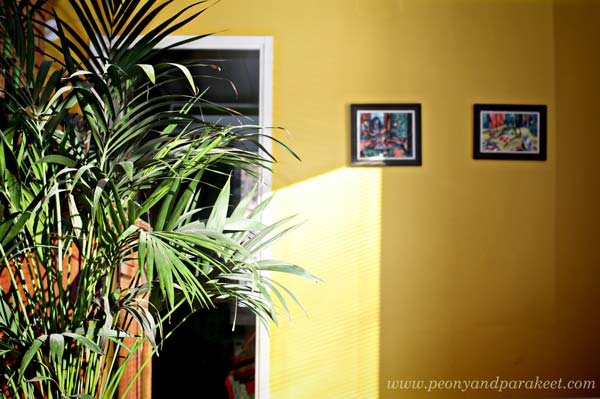
Even if there were tens of yellows available as paint, “Tricia Guild’s yellow” wasn’t found in the color charts. I thought people must think I am mad being surrounded by all the yellows and shaking my head. Then I just picked one that was closest and we started painting. But it wasn’t the right shade and after one layer, it felt too warm. After carefully analyzing the yellow in the book and comparing it with the wall, I decided to add warm black to adjust the tone. And so we got “Tricia Guild’s yellow”, just the perfect tone on the wall!
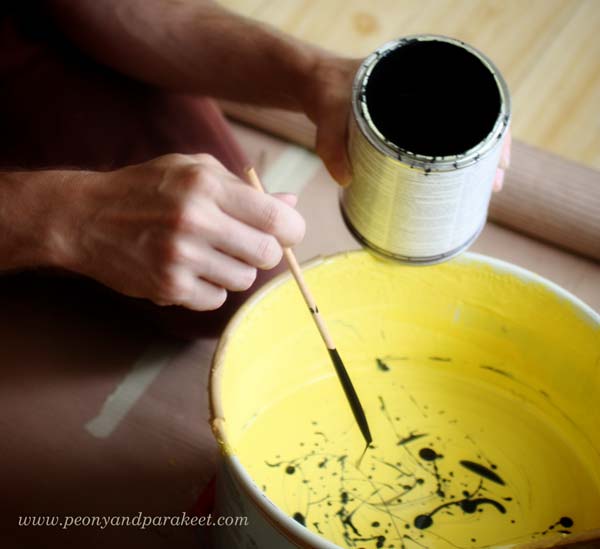
This story shows how many colors there are in the world and how little you experiment with if you are using only ready-made colors. Start mixing your colors! It is a reason why I built Planet Color, my color-oriented workshop!
Colors from Potted Garden Using Leftover Paint
After creating so many paintings, I ended up having some leftover paint on the palette. I decided to use the paint by getting inspired by exteriors too.
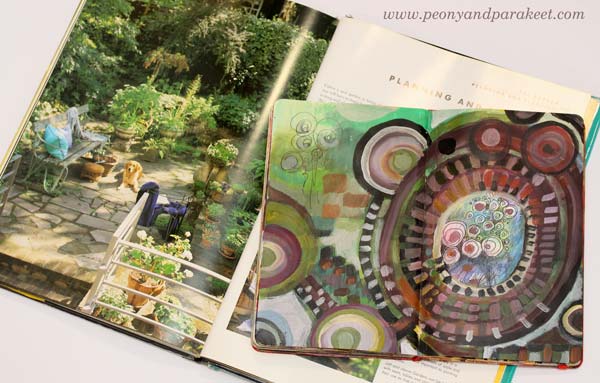
Expressing a potted garden with circles is easy. Angular tiles are also easy to add to the picture.

Sign up for Planet Color!
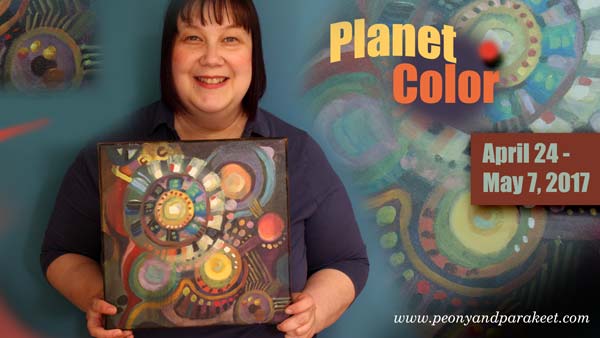
Take your favorite interior design book, or Pinterest board, or any source that inspires you with color, and sign up for Planet Color! I’ll show you how to experiment with colors so that your painting is more than just a selection of color samples. I’ll show how you can make colors interact and how to enjoy adding more instead of just making a mess! And if you are more of a minimalist, you can omit some steps of the process and create a simple yet eye-catching painting! Reserve your spot now!
Four Steps to Finding Your Passion in Art
Sign Up for Paivi’s Weekly Emails and get a free mini-course, Color the Emotion!
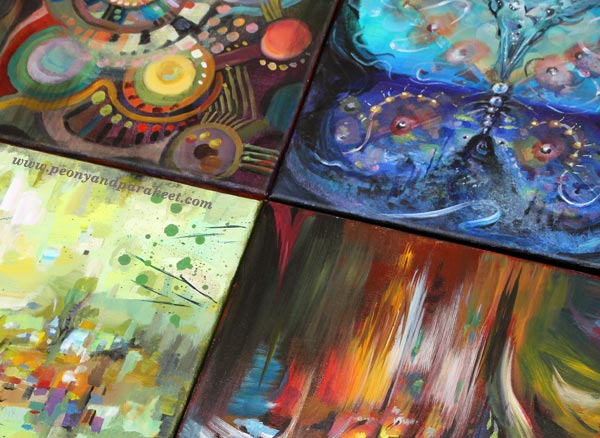
I have two painting workshops coming up in October. It’s terribly exciting. It has been an investment in time to create the classes. I have tried to create as coherent, useful, and fun classes as possible, taking all the comments and suggestions into account without losing the focus and the real benefits that these workshops can provide.
Planet Color celebrates color in a 7-step process.
Nature in Your Mind creates a natural connection between the mind and the brush.
Finding Your Passion in Art
This blog post is a pre-session for Nature in Your Mind. With this post, I want to show how much potential and passion you can have as an artist. I also hope that you will sign up for Nature in Your Mind, discover more possibilities and get personalized guidance while having a great time painting!
1) Discover through Experimenting!
Think about art as an exploration journey! Through experimenting, you can pick ways that feel most natural and enjoyable to you. Just like there are thousands of species of birds, there are many ways to paint. If you use only one technique and one approach to painting, it’s like sitting on a balcony and listening to the same bird every morning. But if you stand up and go walking in nature, you will hear a variety of melodies.
Discoveries happen through experimentation. Try painting with a dry brush, a wet brush, a brush that has thin paint, a brush that has multiple colors, etc. Start painting with one thought and then change your focus to another one. Learn to see the possibilities of an unfinished painting instead of judging it like it’s already finished. Start with safe and easy, and then be open to small mistakes that can show you a new direction. If you weren’t able to mix an even color, embrace the variety of colors, the painterly look, and go to a new path from there.
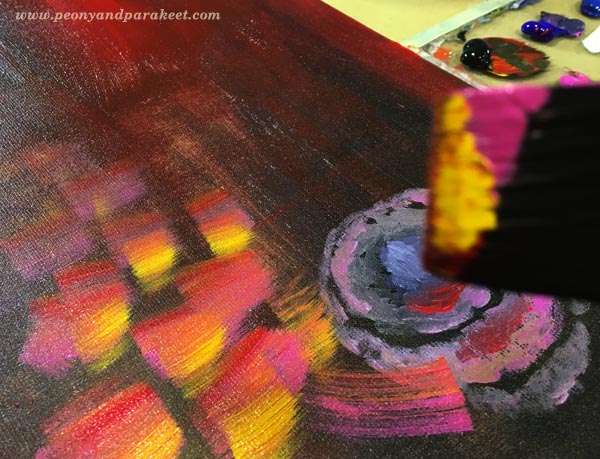
Three Levels of Experimenting
The way you paint most naturally isn’t what feels most comfortable at first. Staying on the balcony is easy. You can tell everybody that you have this friend, the bird that sings to you every morning. But you don’t know what you miss out if you only stay friends with one technique, one theme, or one way to plan your painting.
My painting workshop Nature in Your Mind contains experimentation with paint in three levels.
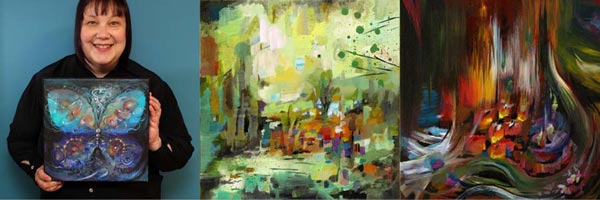
First, playing with the way you look at things by changing the perspective in the middle of the painting.
Second, playing with a theme by building abstracts from realistic images.
Third, playing with control by taking turns with controlled and loose strokes.
While experimenting with these, you can pick ideas and techniques that suit the best for you and then start applying them to your art. You can set new goals and see how your art can bring more enjoyment not only to you but also to other people.
2) Listen to What Others Say about Your Art!
Let’s get back on the balcony. I remember the time when I felt totally lost in art making. It was like I had opened the door, but didn’t see any birds singing. I felt alone. But then, I got tips on how to attract birds. I drew and painted what I saw other people do, too. I felt like I had company but still, I felt limited. I was one of the many who had the same bird singing on the balcony. Sometimes it even felt like we were competing with whom the bird would sing the loudest.
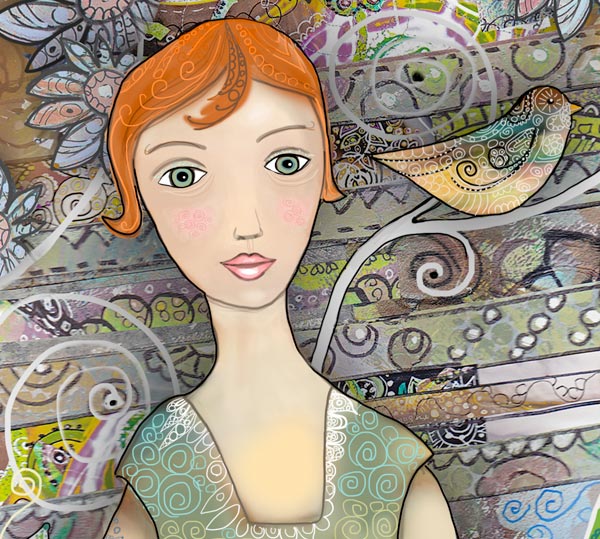
The situation changed when I started listening to what other people say about me. I expanded my attention to how my art affects others. I found many comments extremely useful, even if the person was a family member, a blog reader, an art teacher or anyone who saw my art. First, there was just a word or two that I could grab. When I felt like I was following a path that was hardly visible, I found asking follow-up questions beneficial. I asked: “Why did you like this picture?” or even “Why didn’t you comment on anything?”. The comments led me to strange places. But as I continued, my images changed, the voices got louder, and I heard more birds singing.
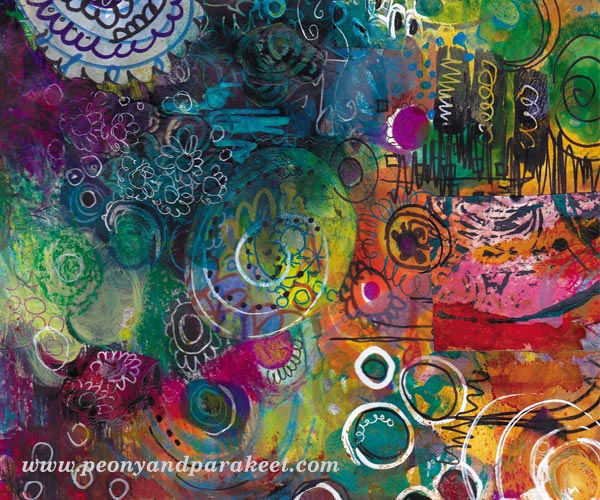
But I wasn’t quite there yet. I hadn’t found what would personally resonate with me. After trying to see the big picture from people’s comments, I understood why we read horoscopes, click through personality tests, and search for our personal style. We try to see our originality – where our talents truly are.
3) Accept That Your Flaws Can Be the Best in You!
I used to beat myself up for being too demanding, a perfectionist. I blamed myself for not being good with routines either. To get through the mundane work, I have reinvented the wheel too many times. My husband has found the perfect way to make a bed and fill the dishwasher. I have found many different ways, and I am in search of more.
But a couple of years ago, I made a test that described how other people see me. The test said that my ability to invent unconventional ideas, make new interpretations of old things, and always aim for the highest standard attract people the most! That’s probably the reason you are reading this blog. I have become more open with the worst in me, which, in turn, has inspired me to blog more and create more. Sometimes the best things in us seem ugly to ourselves. However, authenticity attracts people. Our black can be pure gold to others. Our black can be like soil for the flowers that we can grow from there.
4) Find Your Real Reason for Creating and Put It Into Words
When people ask me why I create, my first answer is: “Because I need to.” I need to have time for balancing my life, be able to reflect on what has happened, and get energy from creative activities. But the answer doesn’t help me when I am staring at the blank canvas. I need a higher reason to create images that feel meaningful to me. I need more than some inspiring Pinterest boards to connect emotionally with my work. I need a direction, a statement that defines when I have succeeded and what I am passionate about.
I used to have a hard time evaluating my pieces. Some looked ok, but there was something missing. Others were clumsy and awkward, but I felt connected with them. I wanted to create unique pieces and still be as good as anyone creating with the same style. I wanted to make my personal version, but I didn’t have a clue what to include and what to exclude. I wanted to express myself, but still, play to be someone else. I wanted to escape, yet seek the truth. I felt I had to focus and limit myself, but at the same time, I wanted to be free when creating. It all felt controversial.
My solution has been to find the words that describe the real reason why I am creating. It’s surprising that the words have been the answer because the problem seemed to be visual only. I think that our left brain has to understand what our right brain wants to express. It’s like after naming the birds, you would hear them better. Whatever I create, I have the same focus. It’s not a theme, it’s not a style, it’s the emotional connection that I want to make through whatever I create.
My Artist Statement
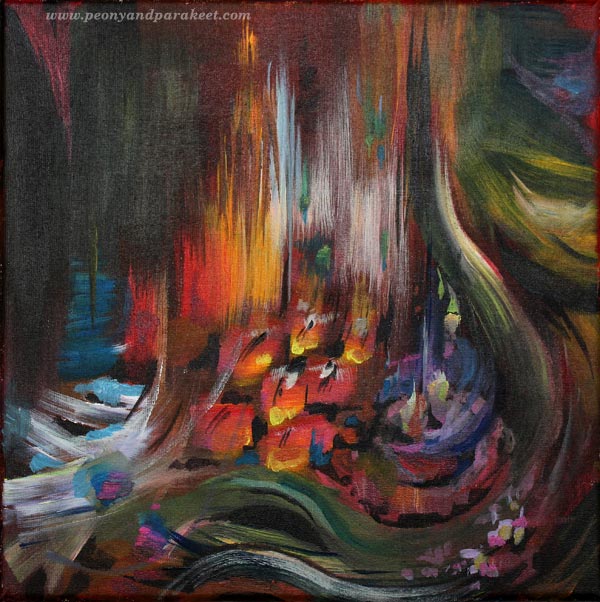
In my art, I want to console people. I want to express grief and sorrow, blacks and browns. But I also want to show the power that is more joyful, and that comes in with brighter colors. I want my paintings to have the atmosphere of places that make you connect with your spirituality. I am inspired by churches, libraries, museums, and special places in nature. I see spirituality as an uplifting, timeless force that has no specific religion. I hope that even for a short moment, my art can be your icon, the image that connects you with your spiritual self. I wish that my art brings you hope, no matter what your source of melancholy is. I wish that the images inspire you to overcome darkness, and even more: to go and create yourself.
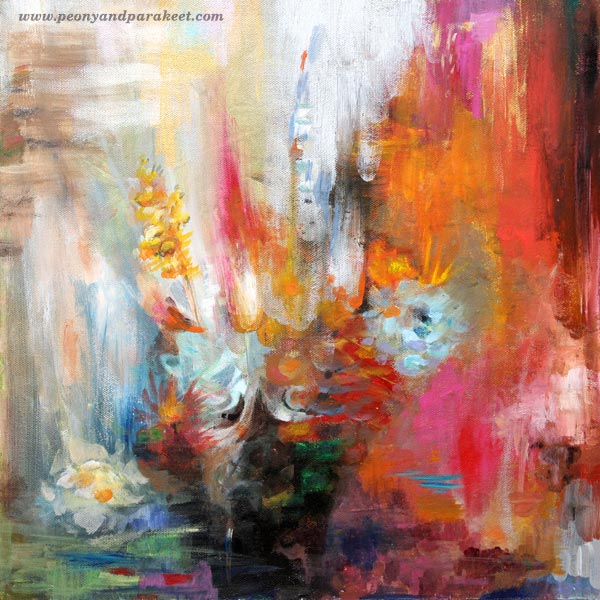
When you have your inspiration in words, nature in your mind is a happy place. When you hear the birds singing, you can pick the melodies that resonate with your mission. You can choose techniques, compositions, and colors that you feel most naturally aligned with. You may not always succeed, but your mission makes you continue creating. Instead of looking for the perfect technique, the perfect style, the perfect theme, search for what is behind all that! Search for the mission that makes creating art most meaningful and inspiring to you! That is the real reason why you paint, and that’s also the key to finding more passion for creating art.
I want to help you not only with painting techniques but also with your passion.
Sign Up for Paivi’s Weekly Emails and get a free mini-course, Color the Emotion!