
Do You Paint Your Dreams?
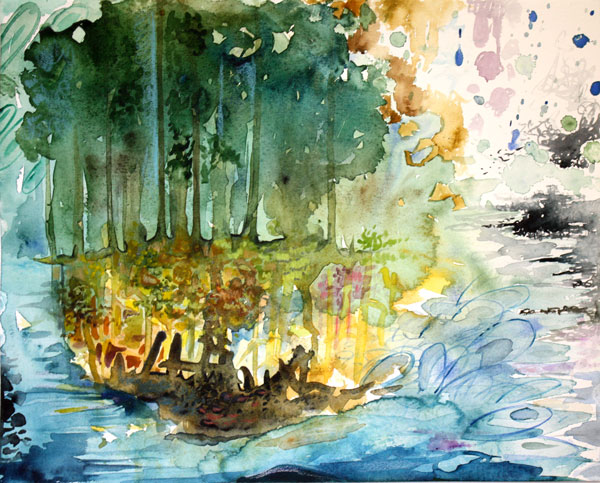
My recent watercolor painting is called “The Forest Speaks”. I painted it using the intuitive painting method which I show on the video “Watercolor 101 for Intuitive Painting”. The initiative for this painting came from a dream, almost a nightmare that I had a few days ago.
Before I quitted my day job, I developed e-services for the Finnish forestry sector. I had planned my resignation for a long time. It was a tough waiting period. A couple of months ago I finally entered the full-time creative entrepreneurship. After resignation, I felt free and happy and practically stopped thinking about my old job.
But just recently I began to see these dreams – some kind of nightmares. The setting was always the same: my last day at the old job. There was so much to do that I was never able to leave. I woke up sweaty and distressed. Then, in the latest of those dreams, I was given one final job: to paint a painting for the hall of The Forest Centre. I knew exactly how it should look like but somehow did not get it right. Again, I woke up with anxiety.
In the morning I began to think that maybe there’s something that needs to be handled and documented – painted that is! So I took my watercolors and began to paint the image visioned in my dream.

The painting is finished now and the last nights have gone smoothly. I became convinced that our minds can be slower than we think. Our subconscious may have a lot to deal with. By nurturing our creativity we can become more aware of all what’s going on inside us. They might not be any bad or weird things, they are just stories that need to get told. For many people that I used to work with, the forests and forestry were very important. The forests spoke to them. For me, it is art that speaks and that’s why I had to leave.
After this experience, I want to interact more with my dreams. Is that relevant to you too? Have you ever painted anything related to your dreams?
Subscribe to my weekly emails – Get a free mini-course!
The Feelings while Creating Art
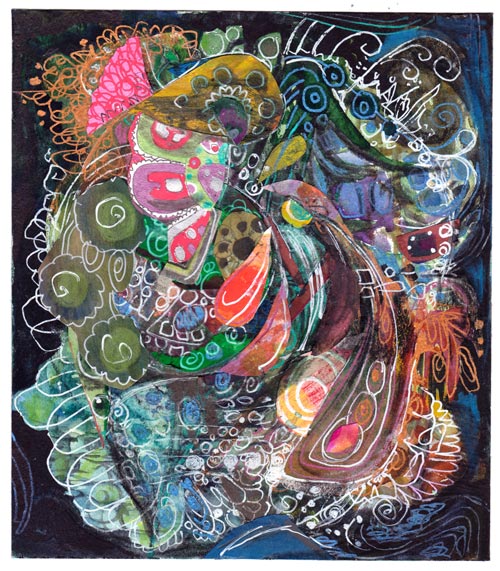
I wanted to create a video blog post again but due to my flu, I was unable to speak. So I made the video with the background music only, but I think that the subject of it is most interesting: the feelings while creating art! During the creative process we often experience a variety of feelings that have affect on the end result too. You will get to see what I felt while creating this collage!
I often start pretty smoothly, then face several problems and in the end it all comes together. Feeling vulnerable at some point of the process is very common for me. I think that when creating you have to open up so much that it can feel intimidating. But if you do not cross that line, the end result does not feel so close.
Record your feelings while creating! Then analyze how they show in your artwork!
Subscribe to my weekly emails – Get a free mini-course!
Art Journaling with Still Lives
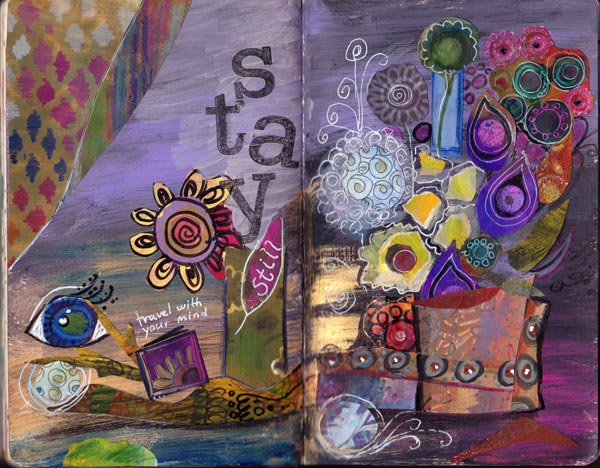
For the last couple of years, I have felt drawn to still lives. I even have the Pinterest board of the ones that I especially like. I used to think that old still lives are very conventional but they really are not! There can be anything happening in the painting, like a squirrel running on the table, and there can be a wide variety of objects too. And even the flowers look magical! Art journaling has a lot to learn from the old masters.
So, I thought it could be a fun concept to create still lives by applying the tips from the previous blog post. I could combine odd paper pieces and doodles with text and create surreal art journal pages.
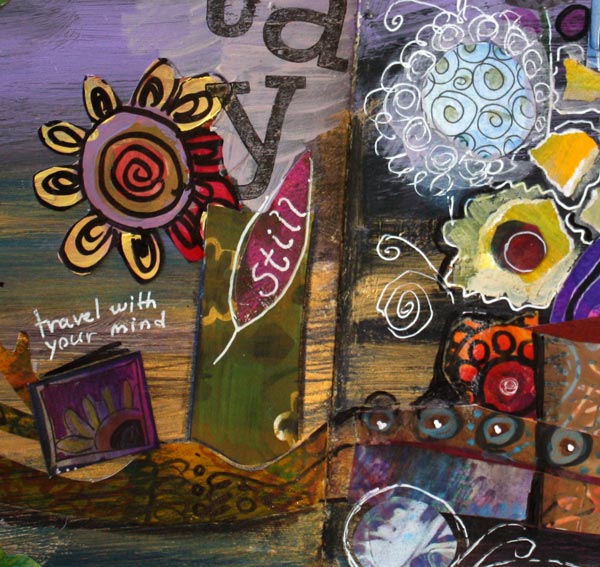
I kind of like how this first still life combines conventional elements like flowers with the more surreal ones, like the eye. The same contradiction is also seen in the color scheme: bright purples look mystical when combined with olive greens and warm browns.
Group the elements!
The principal of composition in still lives is simple. Just group the elements closely together!
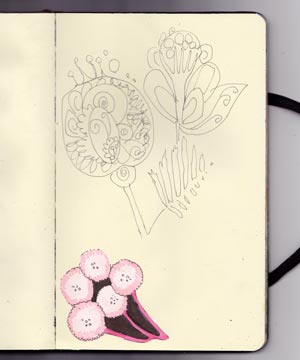 My art journals often have unfinished pages with elements here and there. This page had some doodles and a small illustration that I had drewn for a surface pattern. I often glue odd pieces to my art journals to save them. A page like this can be a great starting point for a still life!
I started working this page by adding the text so that it creates the vase for the flowers. I emphasized that with colored pencils. Then I colored the soft background with colored pencils. The softness is a great contrast to the graphic element on the bottom.
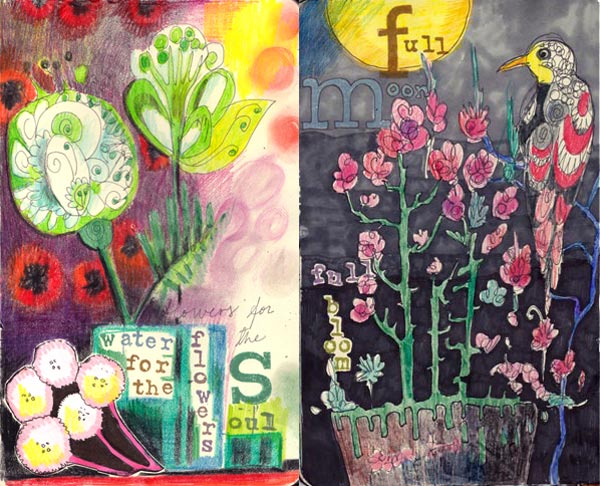
The third still life is formed around a doodle found on another page. It included just the bird and the flowers. I added the pot, stamped the text, colored the doodles with colored pencils and finally created the background with markers.
Why Are These Pages So Fast and Simple?
1) The starting point does not have to be grand, just some doodles, or paint, or odd pieces of paper.
2) Stamping few words tie the oddly placed elements easily together.
3) Coloring does not have to take a lot of time when it adds something new to the page.
More Still Lives
Watercolor 101 for Intuitive Painting – my video introduces an easy method which is especially suitable for surreal still lives and landscapes
A Formula for Composition – another way for creating a still life
Stretch Your Style – instructions to step out of the comfort zone, showcasing one of my favorite still lives
Visual Chronicles and Fast Art Journaling
In the newsletter sent 5th November, I mistakenly sent a wrong link, here’s the link to the latest video
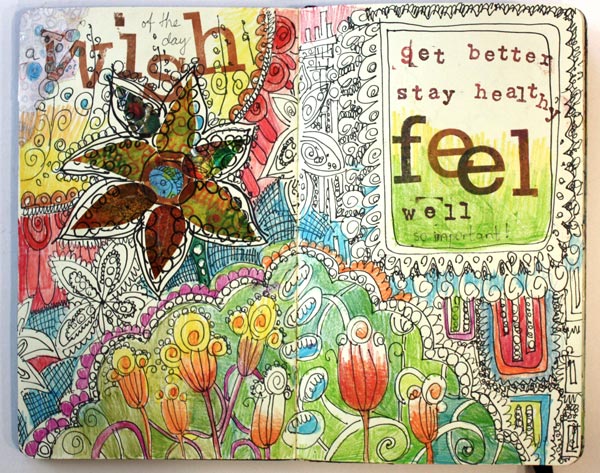
In Finland, the weather got colder last week and I got a terrible flu. It is so frustrating to be able to do nothing but sleep. Being healthy feels so important then!
If there’s anything positive in lying down and doing nothing, it’s the creative break. It is weird how much processing time some things require. In 2006, I saw a new book in Amazon.com. It was called Visual Chronicles. It was nothing like I had seen before and I felt strangely drawn to it. I was mesmerized by the concept of creating relaxed pages combining text, paint, simple illustrations and photos. Art journaling was a new word in my vocabulary.
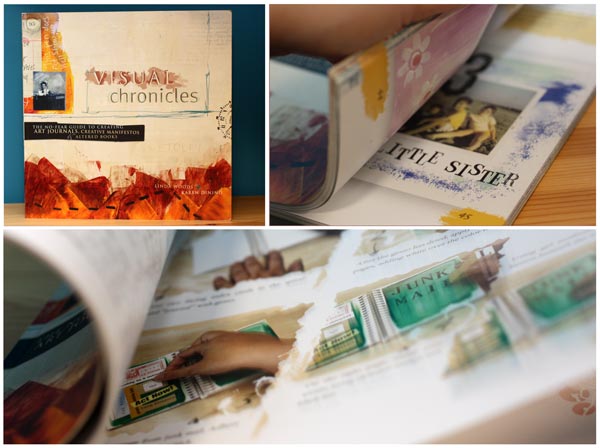
I took the book everywhere. While reading it, I tried to understand what it is actually about. I picked a blank book and tried to fill its pages. It was so disappointing to see how horrible my pages looked and furthermore, I did not have good time when I created them. I browsed the book over and over again. I could not get it!
But I did not give up. During the time I bought more books and made more experiments. I also noticed that there seemed to be other people doing the same thing. I took some online courses and finally… My first art journal was finished in 2010! (See the journal and my first blog post about art journaling)
Four years of agony! And now when I read Visual Chronicles, everything that I had learned stands there so clearly! However, there was still one thing that had been bothering me from 2006. The pages in the book are very simple and still I find most of them visually appealing. But if I tried to do the same, the end result was nothing alike.
After sleeping two full nights and the day between, I finally figured it out! It is the stamped journaling that makes the pages stand out in the book! I had never tried to stamp the words as I have always hated handling the alphabet stamps. But I do own two sets and had many pages waiting for journaling!
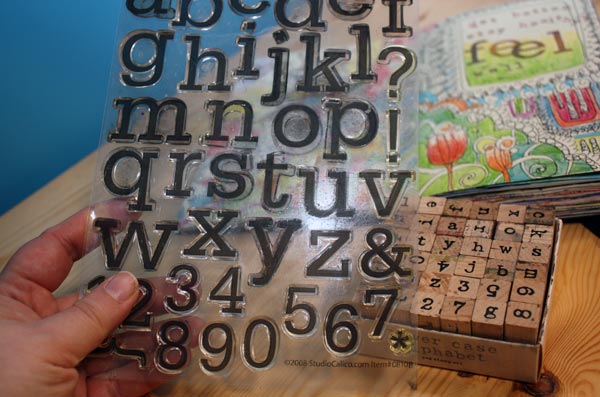
Now I am hooked!
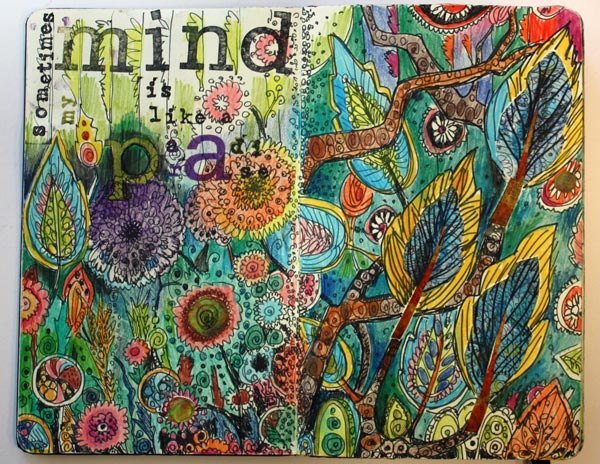
“Sometimes my mind is like a paradise”

“My life, my problems”
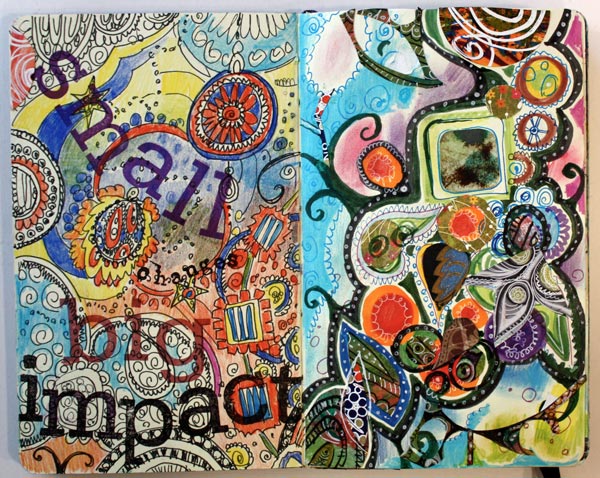
“Small changes, big impact”
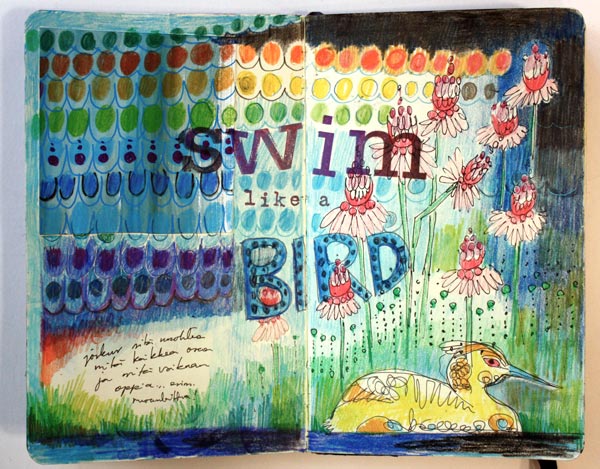
“Swim like a bird”
Visual Chronicles by Linda Woods and Karen Dinino is still one of my favorite art journaling books. It does not take art journaling too seriously. Linda and Karen also have a blog which is written with the same humorous attitude. “If you are alive you have succeeded” is one of their recent advices. While still recovering, it feels very relevant at the moment!
Tips for fast art journal pages:
1) Divide the making of the page into three phases: a) doodling with a black pen b) coloring the doodles c) adding the text
2) Use colored pencils for easy coloring. A Moleskine Notebook and the colored pencils work really well together.
3) Add the text by grouping stamped words with the doodles. Use big and small stamps to create contrasts.
4) Let your personal history of art journaling get recorded into your journals! If I could turn back time, I would not toss those first pages.
5) Buy the book: Visual Chronicles