
Gobelin Tapestry in Mixed Media
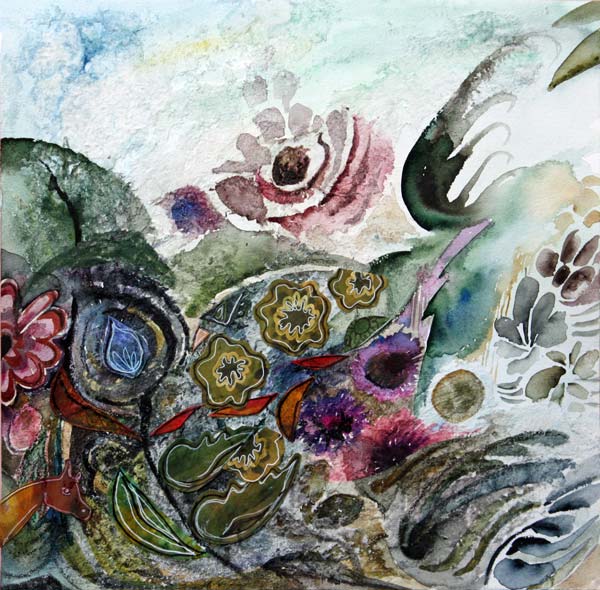
I like the sources of inspiration be quite distant. They should not instantly make my mind figure out the result. While packing craft supplies to empty a sewing room for renovation, I found some pieces of woven upholstery fabric. Those reminded me of a Gobelin tapestry, the woven wall hangings.
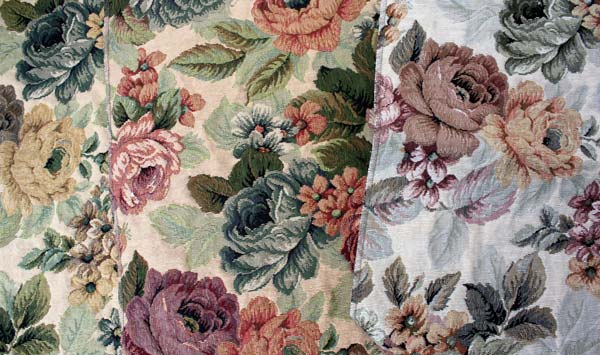
You could think there’s nothing more conservative and static than those, but I was immediately inspired by two things: 1) to show how beautiful muted colors can be 2) to create a dynamic composition that still reminded of textiles.
Fiber Paste in Mixed Media Art
To get into the spirit of heavy woven tapestry, I chose to use a lot of fiber paste to create a texture on a fairly smooth watercolor paper.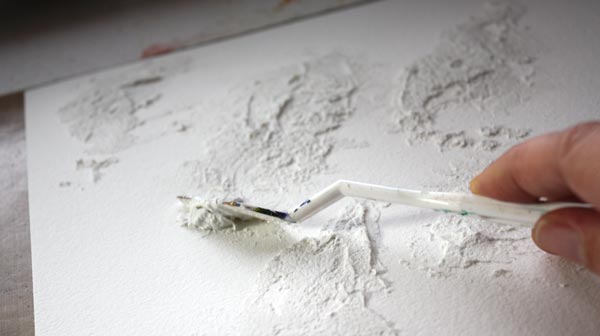
Now, the rational thing would be to spread the paste evenly. Or to spread the splotches evenly. But as I wanted to create a dynamic composition, I chose to add fiber paste mostly to the left side of the work.
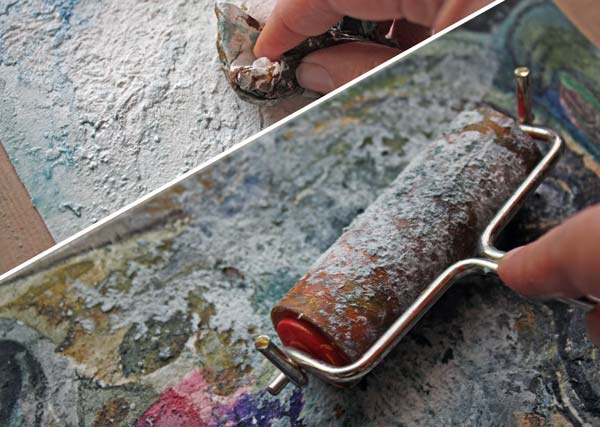
With fiber paste, you can create interesting, uneven surfaces by using tissue paper or various tools to spread the paste. You can also use fiber paste for creating layers and attaching collage pieces (more about those later in this post).
One more good thing in fiber paste is that once it’s dried, you can paint with watercolors over it. I find the change in the surface texture somehow good for my creativity. It is impossible to paint accurately when working on fiber pasted area. That makes me accept the imperfections right at the beginning. Too much self-control can be destructive to the creativity. So, fiber paste is one of my medicines to let go!
Watercolors
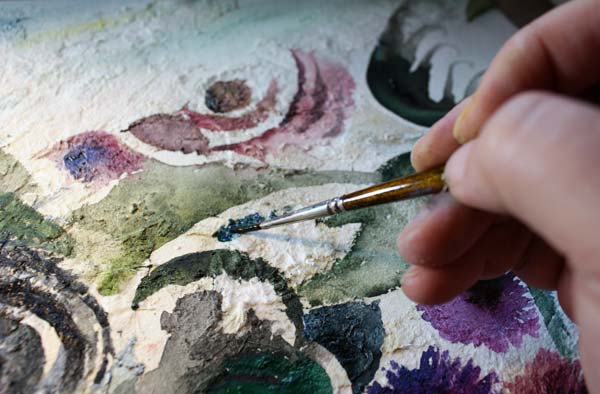
Here I chose to work with watercolors instead of acrylic paints because they are much faster when creating delicate color variations. I usually mix watercolors by dipping the brush to many color pans on the same go and letting them mix naturally on paper.
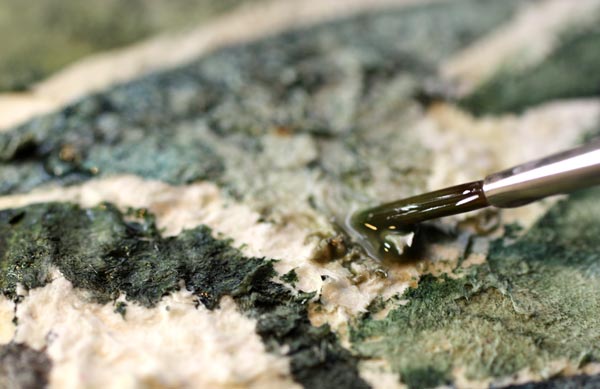
With watercolors, you can easily change the intensity of color. I often start with a fairly dry brush and intensive color. After a stroke or two, I then add plain water to dilute the color. This technique is shown well in the video where I paint watercolor postcards. On the fiber paste surface, you can use a lot of water for lighter shades.
Mixing Colors
I still remember my moment of mixing black with other colors. I was a teenager, and it was a warm summer day. Acrylic paints were quite new to me, and I wondered how they should be mixed to express the hot weather.
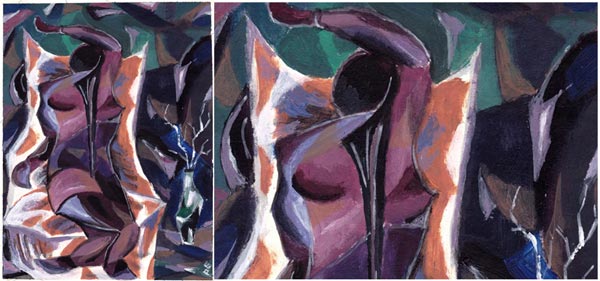
The dark shadows made me think of black. I remember the surprise of getting beautiful purples and browns. That was a moment when I realized that the power of colors is not just what I admire in other people’s work, I can learn it too. By mixing colors, I could express anything!
Just this year when I bought my newest watercolor set, I discovered browns. I wondered why there are so many brown shades in the set, but now I know: mixing colors with browns create beautiful hues! In this piece, I have mixed the colors from both browns and blacks.
Collage
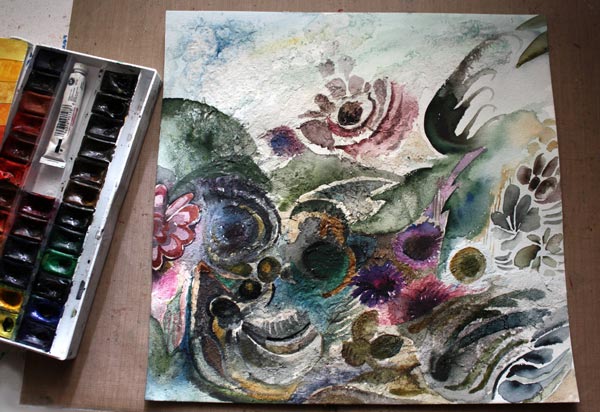
I was pretty happy with most of the painting – except the lower center area. The composition of the center elements did not work. To create something totally new, I used my most common method: to make it ugly and then try to save it. I took the jar of fiber paste and began to cover the bad areas with the paste.
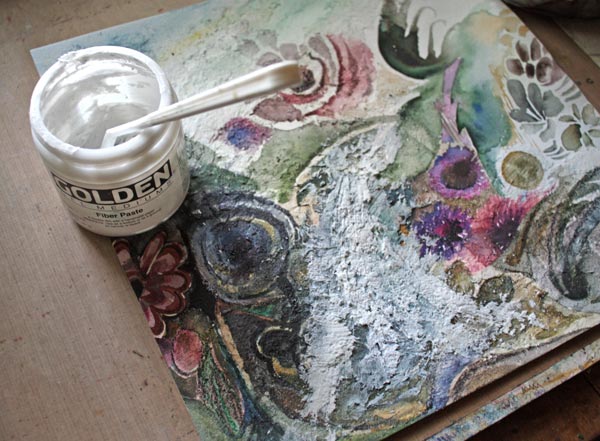
“You have ruined it now,” said a bitter voice in my head.
Have you ever experienced the same? It is the moment where you can truly stop pleasing others and begin creating art.
I took the pile of hand decorated papers and started cutting. Fast!
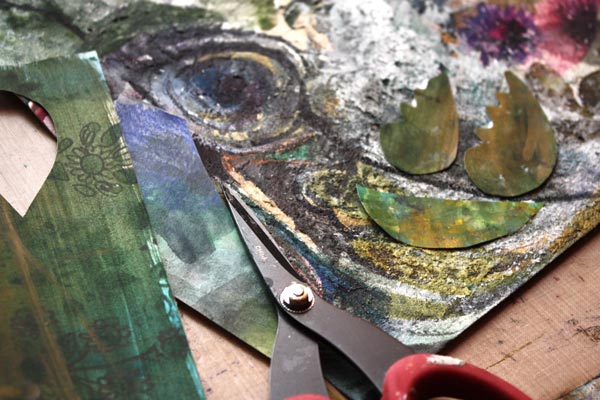
Some time ago, when I made those decorated papers, they were so ugly I almost threw them away. But now they looked like they were made for this muted color palette! And the fiber paste works as glue so it was easy to attach the pieces.
While cutting the pieces, I watched the fabric of the two chairs in the library room where most of the creating happen. I found the chairs at a recycling center a few years ago. I took them for renovation, so I was able to choose the fabric.
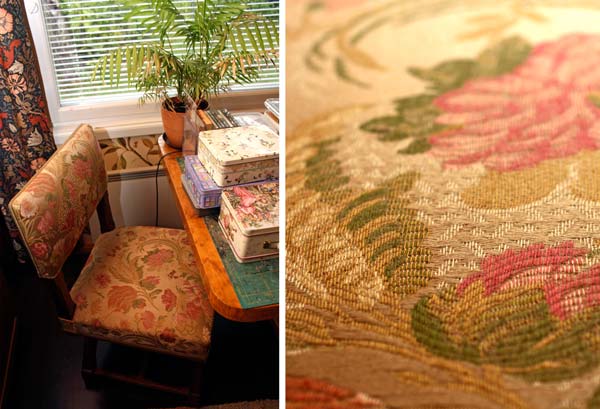
I love the fabric’s silky texture, romantic pattern and how well it goes with the wallpaper and William Morris’s curtains! Looking at that chair made me realize what I needed to add the feel of fabric to the artwork. To cut several similar flowers to represent a repeating pattern!
Finishing
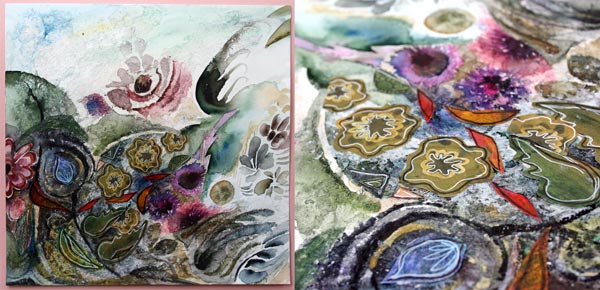
After drawing some detailed lines with colored pencils and markers, the collage seemed to be finished. But then I remembered the original idea: Gobelin wallhangings. Don’t they often have deer in them? A small deer was added in the lower left corner to wonder about the blowing winds!
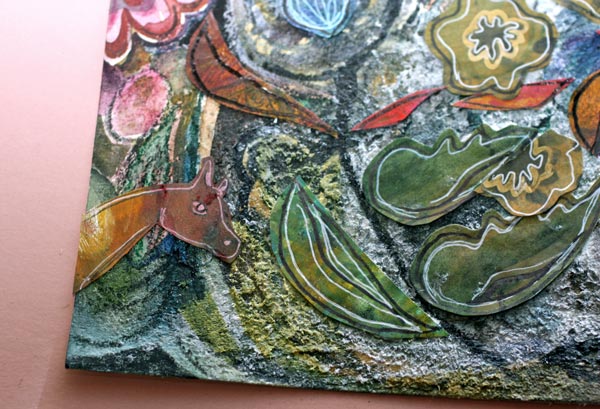
I have noticed that many mixed media pieces are made from commercial products. I want to encourage you to create your own elements and textures. Your art will be much more original and complete. No factory-made flower can express your emotions as accurately as the ones you make yourself!
Let me be your art teacher: Subscribe to my weekly emails!
Sunflowers – Tell Me How to Improve
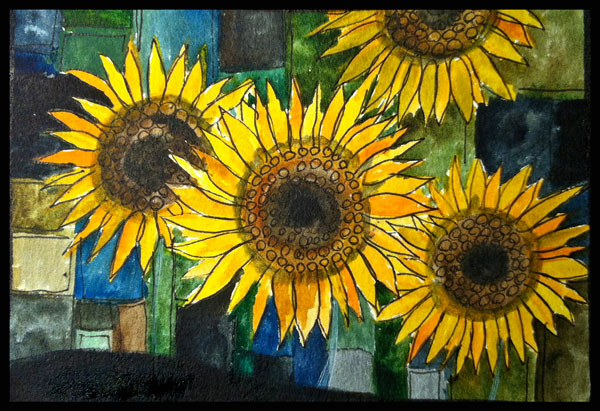
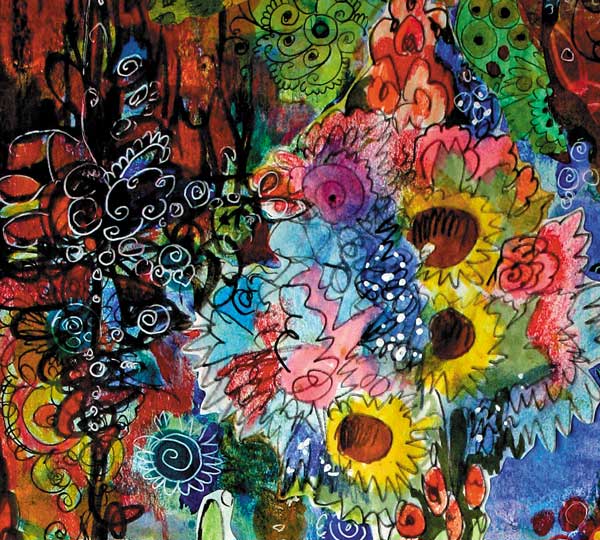
Sunflowers bring light to darkness and look very powerful. Perhaps that’s why they symbolize a life change for me. This fall they are more relevant than ever. I resigned from my day job just few days ago and started as a full-time creative entrepreneur!
In the past, I have always admired the people who make changes in their lives. But I never thought I could do that myself. It seemed to require exceptional courage and ability to take risks. Seven years ago I experienced a small change when I decided to change my professional identity from computer engineer to designer. I went to study industrial design.
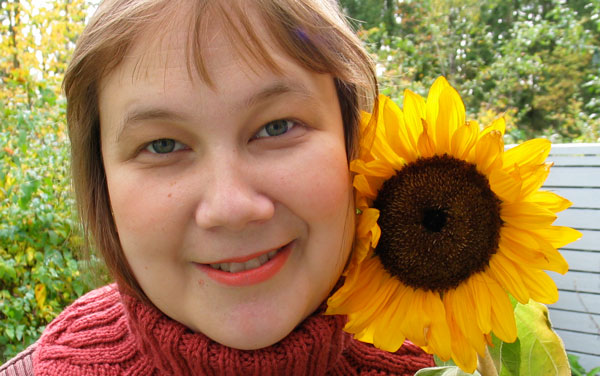
Little did I know back then that it was the seed for the big change that I am experiencing now. I thought I would be perfectly happy developing new products focusing on user experience more than their technical qualities. But with designer studies something reappeared to my controlled life that had been hiding for a long time: the compelling need to create art.
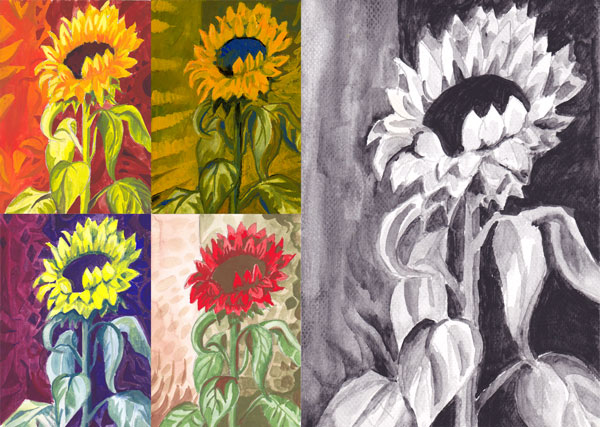
The assignments connected to my studies gave some basic skills but I missed more – self expression! That goal in mind I spent years practicing most of the evenings, analyzing what went wrong and where to improve. At some point I realized that I do not want to be the greatest artist on earth. I do not want my blog to be the showcase of my artwork only. I want to share what I have learned and also what I am currently learning while struggling. I want to teach art.
It took years to dream and nine months to plan the big leap. I have gone through the fears of being lonely, poor, inadequate and uninteresting.
Now, in this special phase of my life, I ask you: help me improve and develop new products and services!
Answer the reader survey of this blog!
While answering, think where you want art to take you!
Art Journal Inspiration from Children’s Books

The art journal spread shown above is created from hand decorated papers, colored pencils, and markers. The main message here is “You can ride with your imagination in any way you want.” As it implies, I like my art journaling to capture dreams and fairy tales, not so much everyday life.
Mini-Worlds and Fantasies
I think that an art journal can be childish and playful. The way I see it, children’s books are the predecessors of them. Children’s books also combine illustrations and text to create mini-worlds and stories. I love to add both decorative and naive elements on the same page, and children’s books are great inspiration for that!
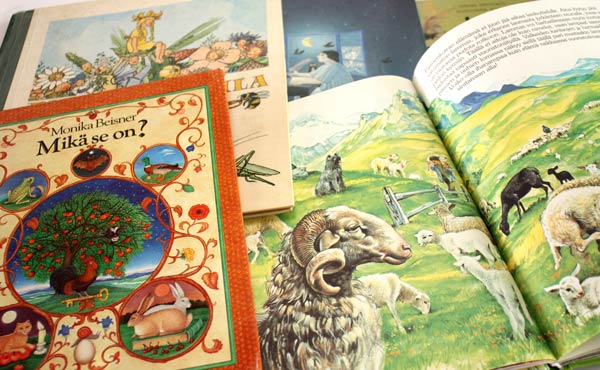
I buy used children’s books from recycling centers. They cost only a few euros (few dollars). That is a fantastic value considering all the inspiration they can give. I pick the books that have a lot of good quality illustrations. As I love detailed drawings, I try to find books with sharp lines and many details. Browsing children’s books can be a good practice for finding your artistic style. Pick the books that you feel most drawn to and then list all the things they have in common. I prefer books that have matte pages because I sometimes create collages from them. Then it is good if I can draw or paint on them.
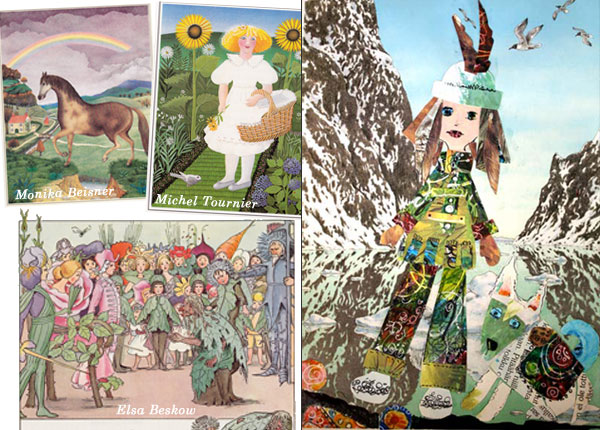
I made the collage on the right while teaching at a workshop last fall. It’s one of the pages where I have used the papers from children’s books. I often give few pages from various books for each participant of the workshop. It’s much easier to start creating when you don’t need to stare blank paper.
That little explorer resembles anyone who is entering the world of children’s books!
Subscribe to my weekly emails – Get a free mini-course!
How to Trust Yourself when Creating Art
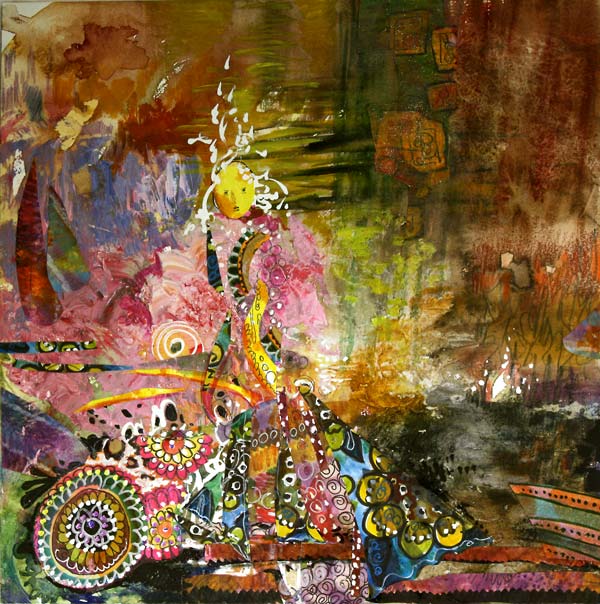
When I begin creating art, I often have petty thoughts like: “I want to draw a flower” or “I want to create something pink.” Even if I create regularly many times a week, I am still bothered by the fear of failure. I know I have to handle that at as soon as it comes, preferably before the first brush stroke. Why? Wouldn’t it be fun sometimes to draw that single flower or create that pink square? I believe that if we give ourselves that kind of clear commands and simple tasks, we don’t really trust our creativity. The big question is always: do you trust yourself when creating art?
The Unpredictable Nature of Art
If you trust yourself, you can step into the world of unpredictability. Not knowing exactly what to aim for is a major factor when creating art. We can set restrictions and principles, but we have to leave space for unpredictability. It means that we are more creative if we do not have the clear picture of the result.
Setting Restrictions on Supplies
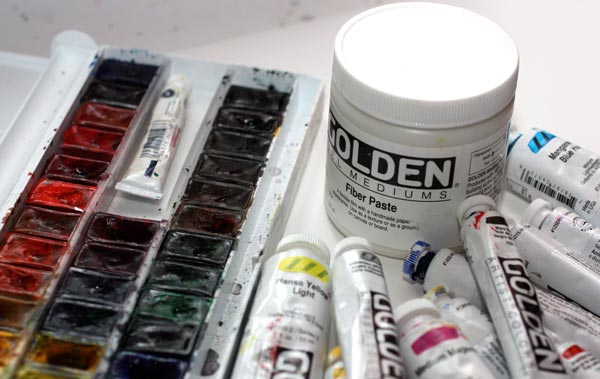
These are the art supplies that I gathered when I began making the collage of this post. Watercolors, acrylic paints, and fiber paste. I also picked a thick watercolor paper and cut it to a square. I chose the supplies but left behind the thoughts about what I was going to make.
Find what You Want to Express
My method is to browse art books just before creating art. I do it only for few minutes, and I try to pick art that really lifts my spirit, raises the bar, sparks my imagination. Usually, it is something from the history of world art. This time I browsed a picture book from impressionism.
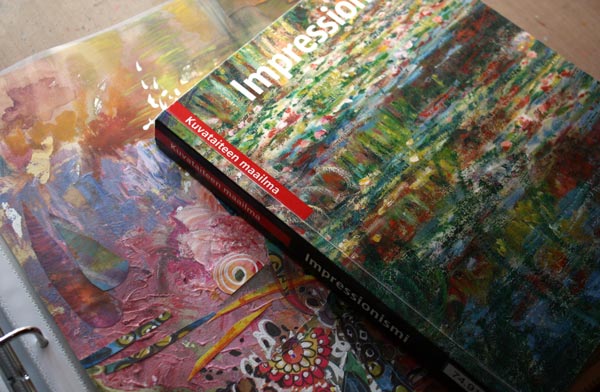
So, do I advise you to get a book of impressionism? No. I advise you to name what spheres you want to reach when making art and pick images which resonate with that. They do not have to be the same style than what you want to accomplish. The more important is the feeling that they evoke in you. When I browsed the book of impressionism, I thought how art is above all the mundane things. How those artists who lived at the end of the 19th century have managed to describe the beauty in the way that is still understood. How the brush strokes, full of paint, were successfully set to represent weightless light. All that would be exciting to see in my piece too.

When the first watercolors hit the paper, I still had some self-doubt: I could not ever do anything like the great impressionists. I heard the sarcastic voice in my head: “Reborn Monet, yeah right!” But that sarcasm is the moment when I know I am almost there: I am almost leaving the rational side of me behind. Then I just need to wow to trust myself, stop seeing any desired images in my mind and start working fiercely.
Layering (With Some Moments of Self-Doubt)
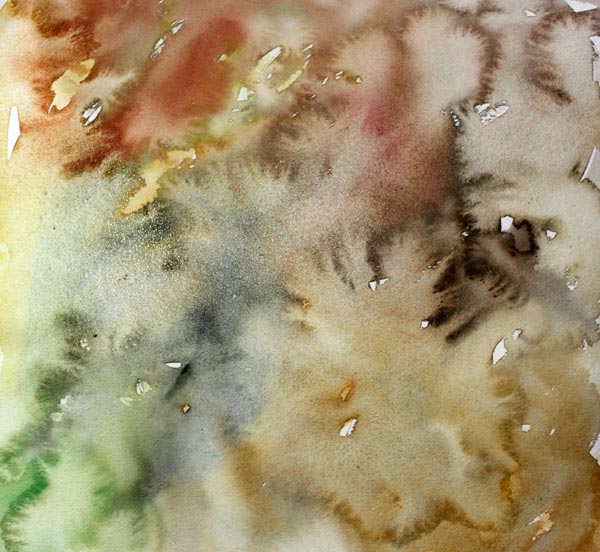
I often start with watercolors because they cover the paper quickly. Even if I have the idea of creating some surface structure, I wanted to use watercolors first to get into the mood of uncontrolled splashes.

While waiting for the watercolors dry, I mixed some acrylic paint. Pastel shades like many impressionists used to choose. 
To get some interesting texture with the paint, I used a palette knife instead of a brush.
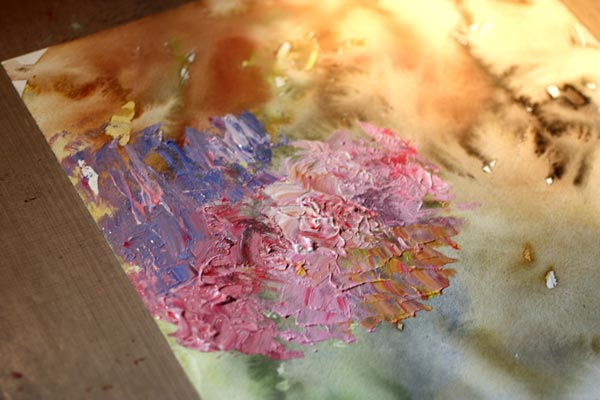
After playing a little with the palette knife and thick paint, I became clueless of how to continue. It’s important to recognize these moments. If you are not aware of these, your rational side takes the control and decides to do things you really cannot justify. Like: “Let’s use the rest of the paint to cover the surface evenly.” Or: “Let’s get some other colors and splash the paint here and there.” When you feel that you do not know what to do, don’t do the obvious. I might browse some pages of the book again to get back into the mood. Or change the media, the solution that I made this time. I doodled something not so important with the colored pencils just to realize I wanted to continue with watercolors and a thin brush.
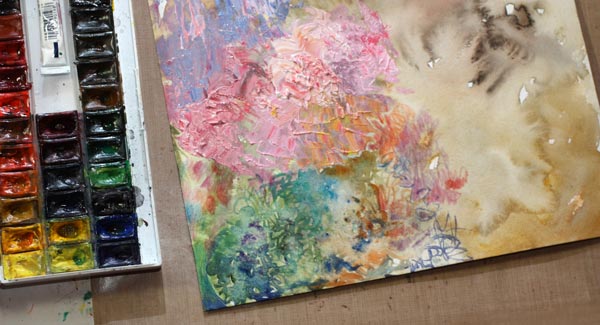
When I got bored with colored pencils and watercolors, I opened the jar of fiber paste. Even if I often prefer to stay with the basic art supplies, fiber paste is something I like. It not only creates an interesting texture like watercolor paper, but it also works like a watercolor paper. You can paint over it with watercolors and create beautiful details to your work! 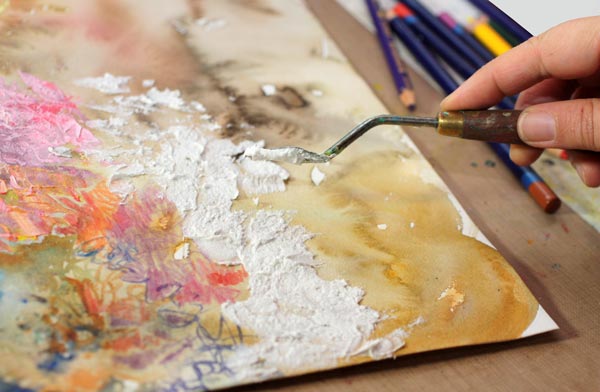
Trying to achieve distinct variation in the surface texture, I used the palette knife again.

Then my mind was empty again, so I browsed few pages from the book again and then continued with colored pencils.

When I reached the next point of frustration, I decided to change to the watercolors and work with high speed. Working fast helps to get creativity flow.
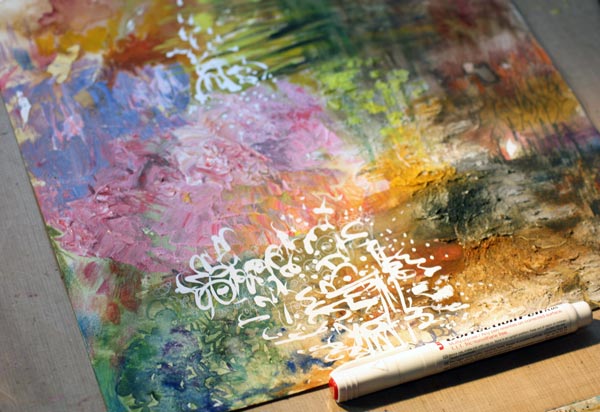
Once the paper was covered all over, I started adding details. A white correction pen is great as it usually works on any surface.
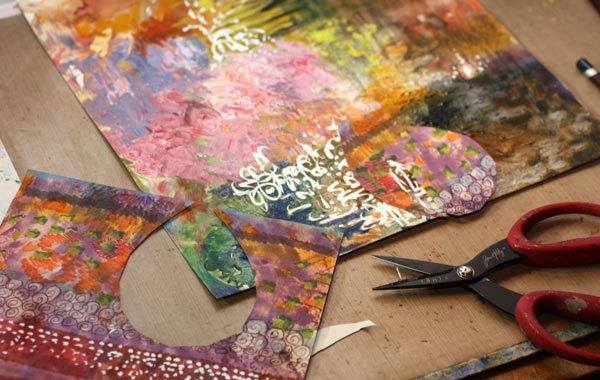
Hand decorated papers are great for details. I picked some of my prettiest papers and began to cut them. The paper shown in the picture isn’t that great as an artwork, but it’s versatile for collages as it has a lot of variation.
Finishing
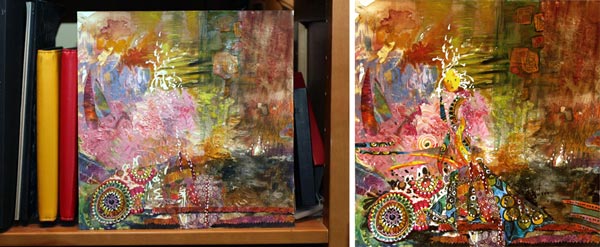
I felt that it was time to begin finishing the work. It is always useful to stop and think. I often put the artwork somewhere where I can look at it, like on the nearest bookshelf. Then I step away and try to figure it out where to lead the viewer’s eye. Here’s another step where you should not question your trust: It will be great! You just need to connect some dots and find the lost pieces of the puzzle. Like I did when I realized that there is someone in the picture. I added the faces and made the rest of the character more visible. Then some tiny adjustments to the composition and after that, the work was finished.

I think that this piece is aesthetically very much my style, but the impressionistic approach to the surface structure makes the work interesting.
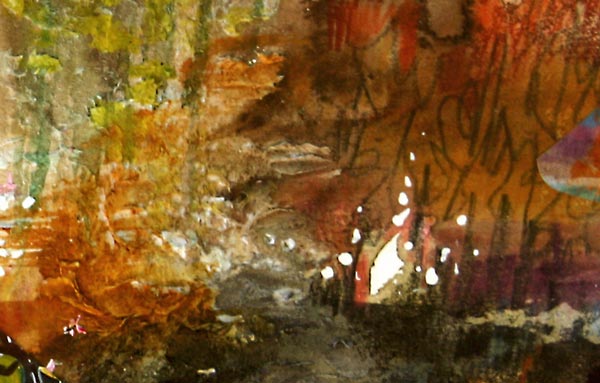
Never underestimate the power of layering: this is my favorite detail, the white area showing the blank watercolor paper. It was created in the first phase, and it still exists in the end. If I had done the obvious and filled the paper with each media layer by layer, this little detail would not exist. So, cherish each stroke and trust your creativity! Focus on the feeling, not to the result! You are allowed to feel like a world-class artist even if you know you are not. Fly to the world of imagination!
This might also interest you: – Stretch Your Artistic Style
Let me be your mentor in art: Subscribe to my weekly emails!