Have You Ever Felt Like an Outsider?
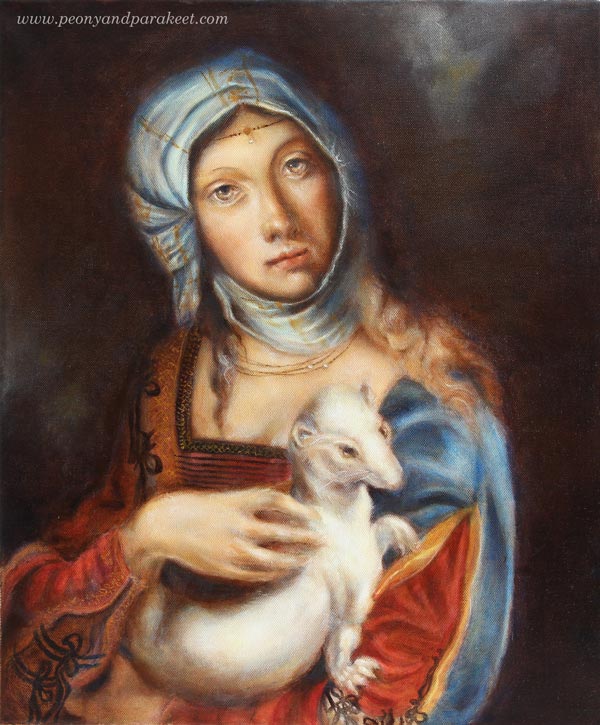
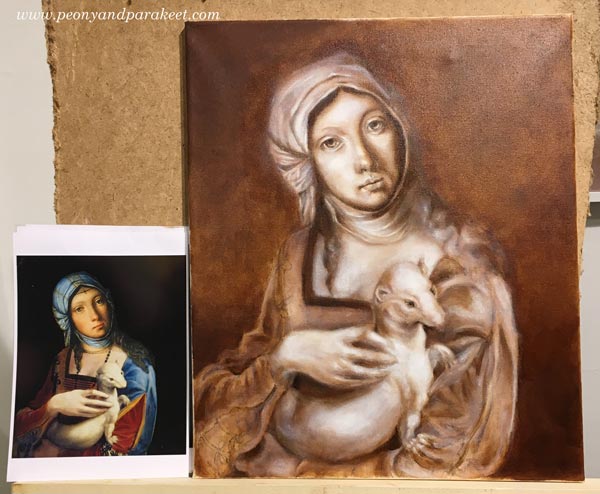
I have finished a new oil painting called “Gypsy Madonna.” I painted it at Emmi Mustonen‘s class during this spring while learning more about old masters’ painting techniques. It took about 42 hours from start to finish and about four months in calendar time. Every thin layer of paint had to dry before adding a new one. I show you some phase photos, but I focus on the deepest thing that I learned from this painting: feeling like an outsider and what to think about it.
The Basics of the Painting Process
My Gypsy Madonna combines two Renaissance paintings: Boccaccio Boccaccino‘s Gypsy Girl and Leonardo da Vinci’s Lady with an Ermine.

First I was just on a mission to get better with the painting technique.
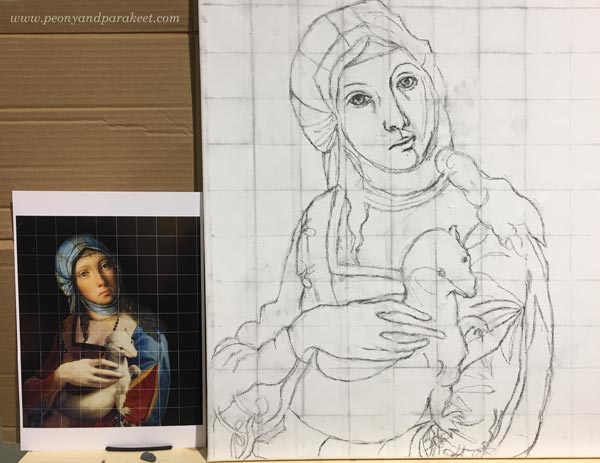
Then I wanted to play with the setting and discovered several stories that could be told through that (some of them are in this blog post).
Experiences of Being an Outsider
One day during the painting process, I remembered a childhood memory of a real gypsy girl. The local library had a weekly hour for children to listen to fairy tales and to play together. We were playing a game where two of us danced in the middle while others were watching. There were a lot of children, all waiting for to be chosen. Someone picked me, and we danced in the center of the ring while others were cheering.
Then it was my turn, and my friend Anne almost stepped up. But I had seen a sad gypsy girl sitting there, head drooping. She knew that nobody would pick her up. It was one of those games that would only depress her. It broke my little girl’s heart to see her sadness. I just had to do it, leave Anne sitting and ask the girl to dance with me. I never forget that smile when we were swirling around. It may have been the best thing that I have done in my life so far.
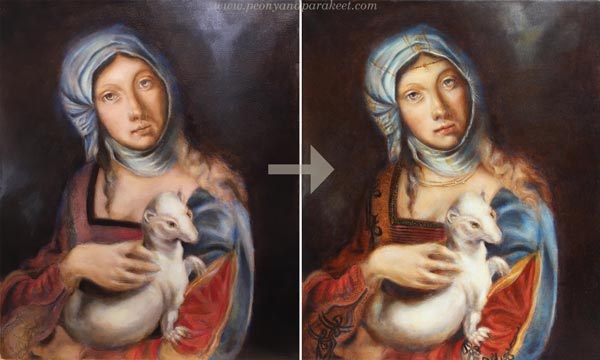
When I continued painting, it was suddenly me in the picture. I became the gypsy girl who gently scratches her pet. The outsider who never got children because she was much more enthusiastic about her love for animals. The outsider who was the only girl in most of the classes when studying technology. The outsider who dreamt about art while trying to tackle the more practical career. There are so many moments when I have felt like a black Madonna, not quite fitting in.
Everybody Is an Outsider
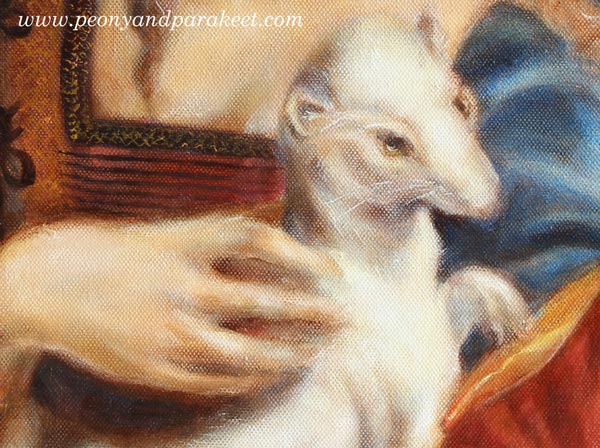
To me, the finished image symbolizes the beauty of choosing differently, being different. Even if I know that it’s perfectly ok to be different, the painting helps me to connect with the feeling on a deeper level. It makes me empathize with other people as well. Everybody is an outsider despite their personal story. We all belong to a minority in some ways. We are all Gypsy Madonnas in one way or another.

Have You Ever Felt That Nobody Understands Your Art?
To be honest, I feel shy about showing this painting. It’s not what I usually create, and I have shared some very personal stories. It has crossed my mind for several times how you, as a reader of this blog, might feel confused: “Is this what Paivi is creating nowadays? Is she going back to the Renaissance age?” I have also feared that the dark colors of the painting will make you want to stop reading. But on the other hand, I don’t want to stop exploring. If you don’t explore, you are unable to integrate new things into your creative work. Pablo Picasso has said: “To copy others is necessary, but to copy oneself is pathetic.” So no wonder if there are times when nobody understands what you are creating!
It’s also difficult to grow artistic identity when a part of that experience is feeling like an outsider. When you start creating art, you want to find your personal way to do it, but those discoveries can also make you feel lonely sometimes. This contradictory has caused me to challenge myself. I want to be better at not only understanding my personal feelings but also supporting other artists in their explorations. In the end, we are all on the same journey. We are standing together on the border of art and the rest of the world, expressing the same view through different eyes.

Stay tuned for my new class for building belongingness, making art that matters, and strengthening your artistic identity! The registration will open in May!
3 Secrets for Removing Stiffness When Creating Mixed Media Faces

When you don’t want to spend too much time on deciding what to create, a portrait is an easy choice. This blog post is for you who struggles with stiffness when drawing faces and feel the lack of imagination when creating mixed media faces.
1) Draw Curvier and Shorter Lines
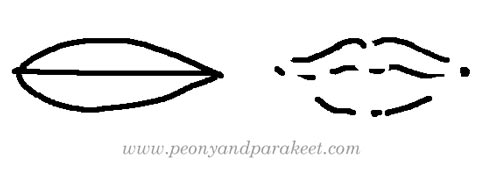
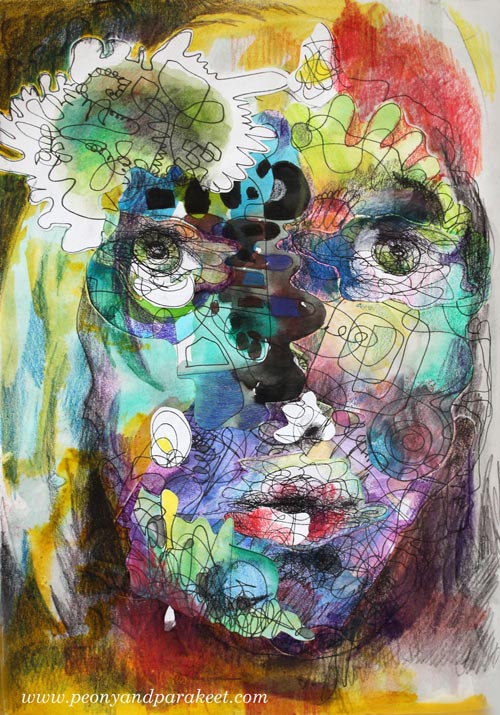
Long straight lines or arcs and fully outlined shapes look stiff no matter what you create. Cut the lines, make them curvier and change their thickness. This way you express light and shadows in a 3-dimensional shape and let the viewer use the imagination to complete the shape.
You can also use freely exploring line to create openness and softness as I have done in the eye below.
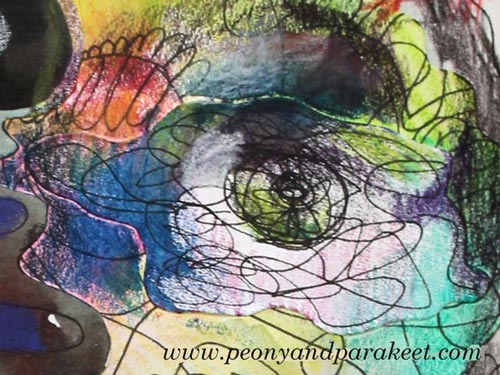
Here’s the full portrait:
2) See the Light and Shadows as Shapes
When coloring, instead of filling the closed shape with color, create a composition of flowing shapes. If you are creating mixed media faces, using collage pieces, a tiny detail like lips or a chin can be constructed from several organic pieces.
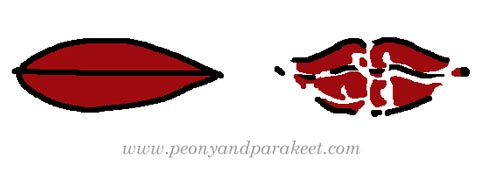
I often think about light as water that is poured on the face.
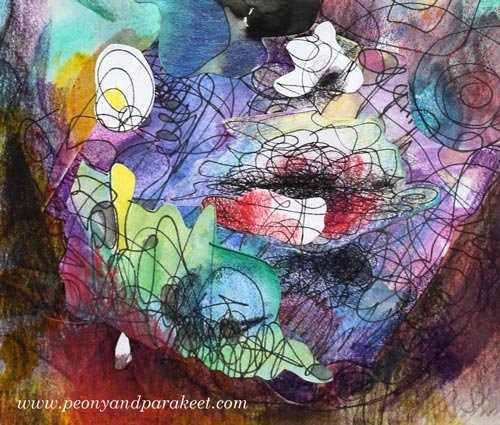
3) Forget The Stereotypes – Focus on Expression
Stiffness is often a result of the stereotypes we have in our minds. We have a certain preconception how the lips should look like, what is the color of the skin, how the eye is constructed, and so on. Even if we used reference photos, these stereotypes often take over. But we can break the stiff ideas by steering our minds to more creative directions. Instead of thinking about drawing lips, think about drawing a landscape. Instead of trying to control the big picture, think about facial features as miniature abstract art pieces in a larger puzzle.

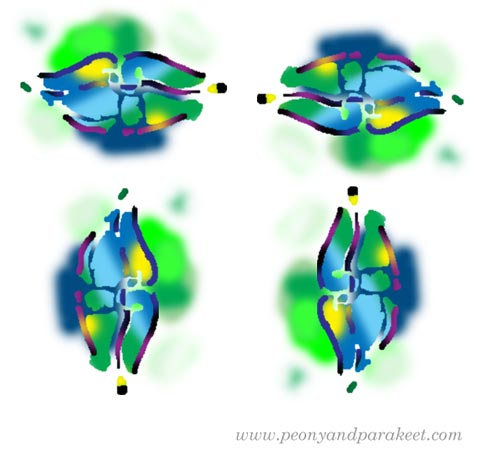
I often change the orientation of my piece while working. It helps me to focus on expression and to check that my miniature art piece looks good from all directions.
These Secrets for Mixed Media Faces Originate from the 16th Century!
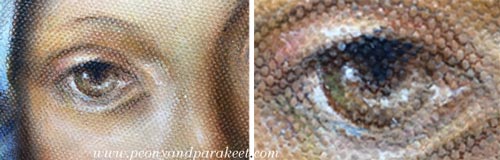
These are not new ideas. If you study portraits from 16th century very closely, you’ll see that the painters’ knew how to break the line, leave less important details less defined, use a wide range of colors, and make each area of the painting work on their own in addition to creating a seamlessly flowing stream. Here’s a detail of my recent painting where I have used Boccaccio Boccaccino’s painting about Gypsy Girl as one of the reference images. (I will blog about this painting later!)
So you can apply these secrets to any style!
Liberated Portraits in Practice
Knowing these things is good but when you want to integrate these kinds of formulated ideas into your art, seeing how to get started and getting feedback to notice the blind spots can be ground-breaking. In Lesson 4 of Inspirational Drawing 2.0, I guide you to create liberated self-portraits without reference images. I show you how to create collage pieces and compose mixed media faces and draw portraits by coloring with colored pencils only.
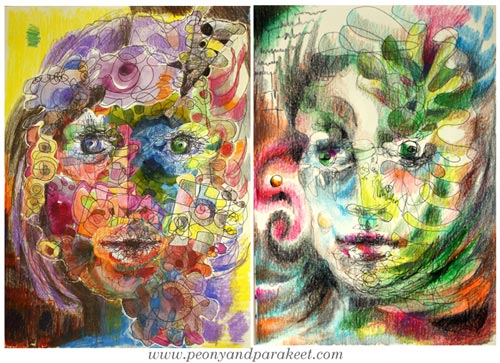
Start creating art that is full of imagination and expression!
>> Buy Inspirational Drawing 2.0!
Boosting Imagination + Last Days to Sign Up for Planet Color!
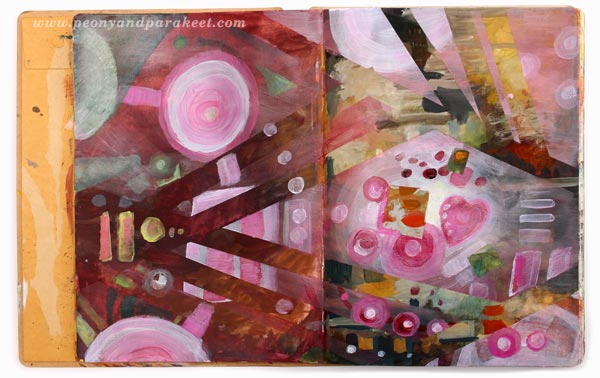
Sometimes it’s difficult to use words when you want to give a hug. Like when I get emails that say: “I am afraid I have no imagination.”
I know how the story goes because I have experienced it several times myself: First, there’s no imagination and then if you manage to get started, there are problems with the composition. I often turned the music louder just to make my brain make some sense of what I had created. And then next morning, I wondered why it’s so difficult to say whether my work is good or bad.
Regular practicing, getting a degree in design, educating myself through classes helped but if I could turn back time, I would have just given myself the formula that I have created for Planet Color and stop all the fuss. So nowadays when I get some occasional thoughts about lacking imagination, like last Monday, I open the class material and get started. The heart is for all of us who sometimes feel the need for boosting imagination.
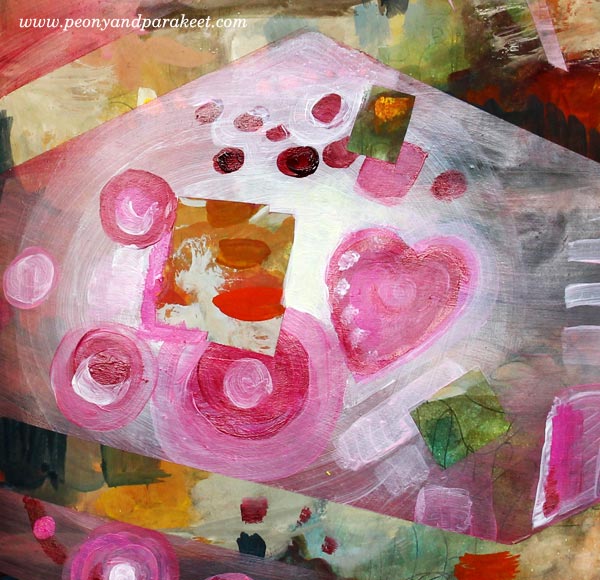
It’s the last week to sign up for Planet Color!
Watch a new video below to see what I think about boosting imagination, and to get more information about the class!
Last fall when I ran this class for the first time, it was for acrylic paints only.
But now I have included an extra video for those who want to apply the techniques to watercolors.
Planet Color is currently available as a self-study class – Buy Now!
Easter Still Lifes in Watercolor – Video Included!
In February, I went to see an art exhibition with my husband. The destination was one of my favorite art galleries in Helsinki. Helsinki Contemporary has interesting artists, and I also like the gallery space and how it’s located in the center, near many art supply stores. This time I was to see watercolor paintings by
This time I was to see watercolor paintings by Kati Immonen. She is a master in watercolor techniques, but I also became fascinated by the theme. The exhibition called Flora included many still lifes that were like miniature worlds. My husband is fond of bonsai trees so he liked the theme too.
Easter Still Lifes with a Wet Brush
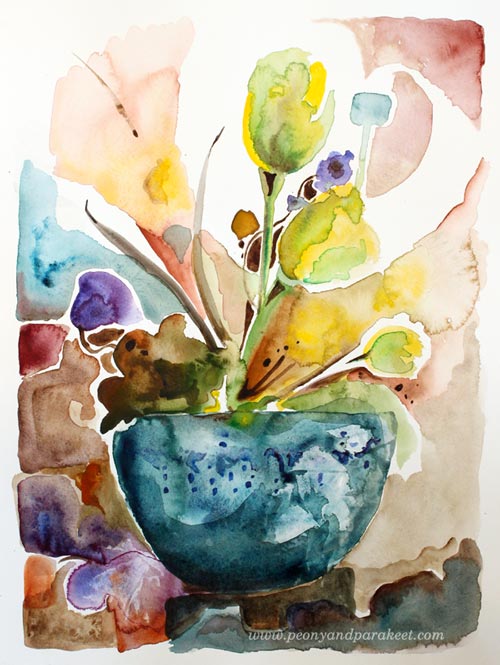
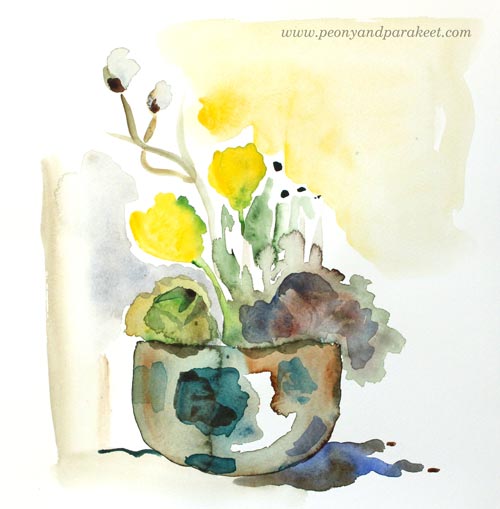
Yesterday when I picked up my watercolor set to paint something seasonal for you, I remembered the exhibition. I became inspired by the simple idea of painting a pot or a vase and then adding some spring flowers using a lot of water. By painting with a wet brush, the flowers could appear naturally along with any other unintentional decorative elements.
After painting with oils and acrylics recently, my skills were a bit rusty so I made three paintings. Here’s the first one.
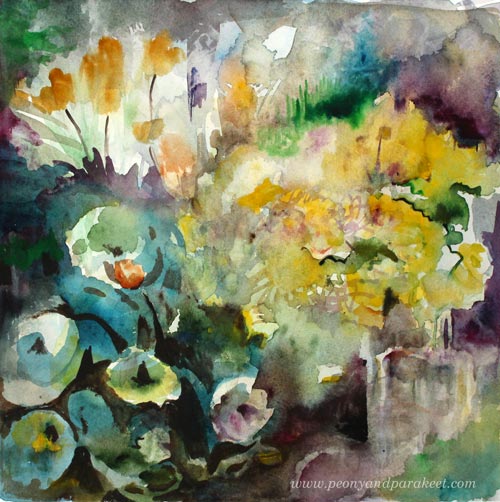
Here’s the second one.
Easter Still Life on a Video
After the second painting, I turned on the camera and recorded a video of making the third one. It is a mixture of the two previous ones, a bit simpler than the first one yet somewhat complicated and refined than the second one. After creating these, I applaud Kati Immonen! I have a long way to go to challenge her, but it doesn’t prevent me from enjoying the watercolors from time to time. Watch the video with some tips to create your own spring painting!
Acrylics or Watercolors – You Choose!
I enjoyed painting with the watercolors so much that I made an extra video for my next online workshop Planet Color. Whether you want to use acrylics or watercolors (or both) in the class, I will help you! Sign up now!