
Freedom and Fear of Drawing – with Students of Peony and Parakeet
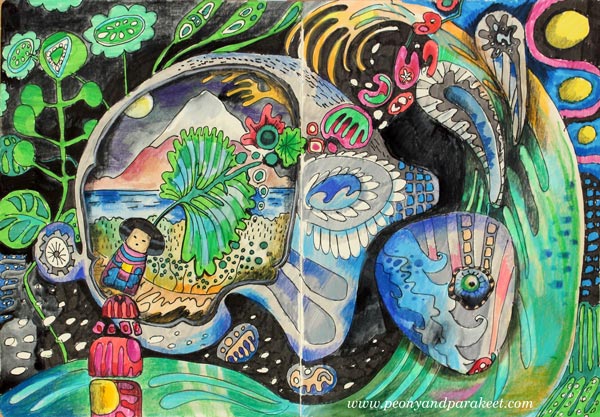
I dedicate this blog post for drawing, but I want to talk about cross stitching first. It’s one of my long-time hobbies, and I find it relaxing. I don’t have to make any decisions, use any imagination, just follow the chart, and the result will be just like I wanted it to be. Cross stitching is like a simple house plant. If you give a little bit of time for it fairly regularly, it will grow even if it doesn’t feel like so at first.
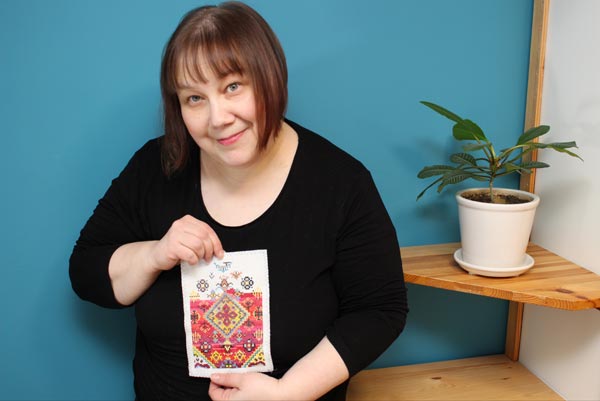
I can choose complicated charts or simple ones, and easily adjust the attention required for stitching. But there’s one problem that always remains: pixelation. Each image is made from single square-shaped stitches. No matter how complicated the design is or thick the fabric is, the pixelation is there.

Working with single stitches is not only a visual problem. It’s also a problem if we want to create more freely. Then we need a medium that allows faster and more flexible thinking. Like drawing. There are many kinds of drawing styles. When I want to experience creative freedom, I don’t do sketching using a pre-made model. (The photo shows a recent Renaissance-style painting in progress. I have designed it first in Photoshop.)

A Fear for Freedom – A Fear of Drawing
When I want to feel free, I don’t want models. Then it’s just a blank paper and a pen and a wish for a glimpse of imagination.
But freedom and fear are strangely connected. About three years ago, when I planned to leave my day job and start an art business, I warned myself. I told how I would no longer be anyone noticeable. I would have no office, no place to go every day, no colleagues to discuss with, no job title, no respect from others, no self-esteem. I would live in the darkest edge of the society and completely against the way of life I was taught. With these stories, I tried to prevent myself making the life change, and at the same time, I knew I had to try it. I had to turn the page and start a completely blank one.
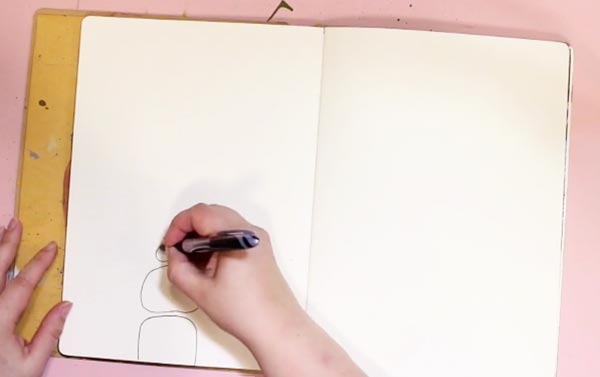
I often connect with the same fear when I start drawing. That I am no one, that I have no power, that it is overwhelming and I don’t know what to do. But then, it’s the same gate that leads to the most wonderful feeling: the feeling of freedom.
Before I left my day job, I started to follow other self-employed women online. I listened to podcasts where they told their stories, and they all had one thing in common. They had put what they already know into use and then learned more. It made me list all the skills that I had and be more content about the decision I had made.
Drawing Factory Teaches You to Draw from Stick Figures
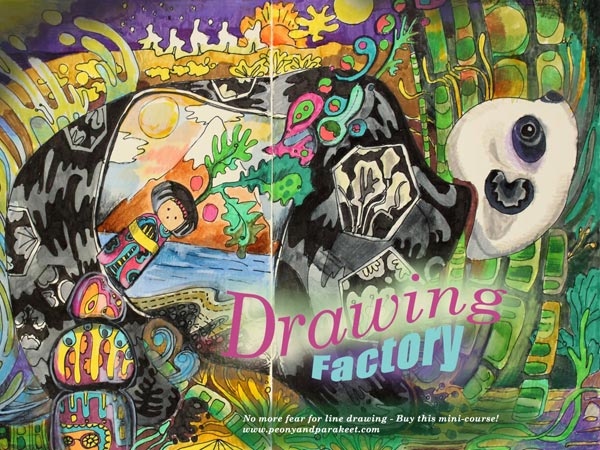
Still, on this day, I find it both assuring and inspiring to acknowledge what is already there before starting something new. So last year, I wanted to create a mini-course about line drawing, using the same philosophy. That was how Drawing Factory was born. It teaches you to start from stick figures and then move on to flowing lines and more imaginative illustrations.
Student Artwork
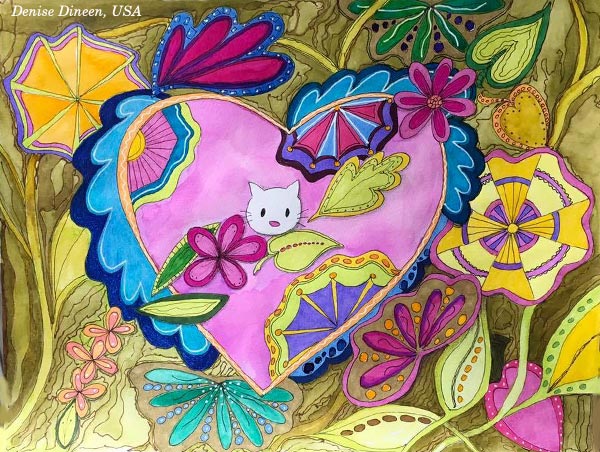
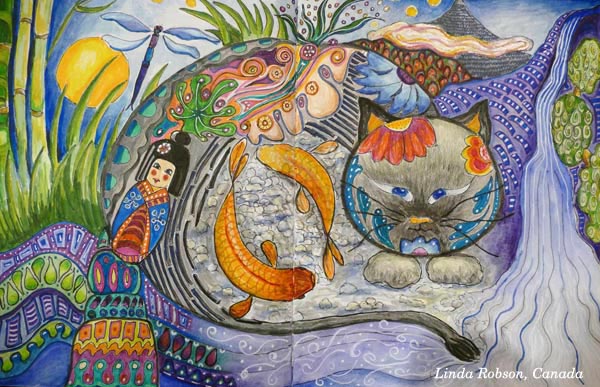
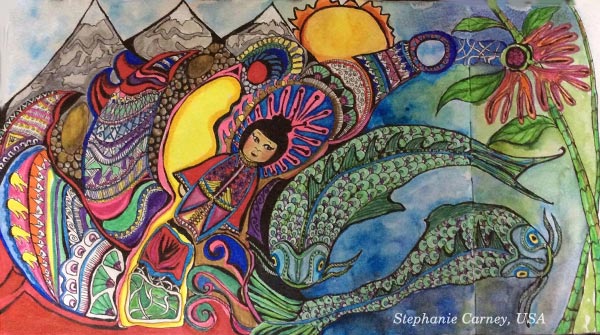
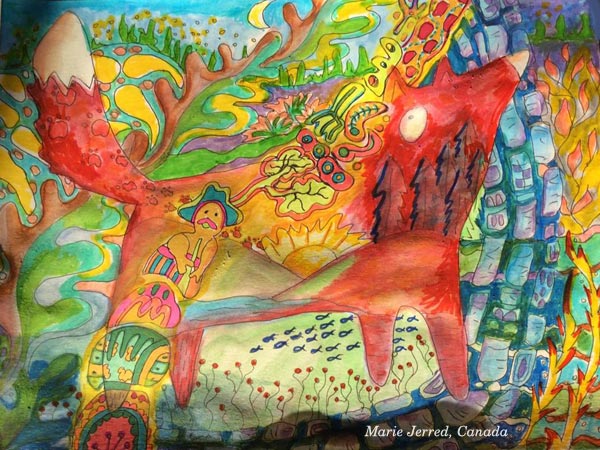
I offered Drawing Factory as a part of Imagine Monthly Fall 2016, the series of monthly mini-courses. See some of the gorgeous pieces that my students have made of the course! Another central theme in the course is Japan, the land of pretty details and high productivity and that has inspired Denise Dineen, Linda Robson, Christie Juhasz, Stepanie Carney, Marie Jerred, and Kathy Gallant, too.


Overcome Your Fears for Line Drawing – Buy Drawing Factory!
Drawing Factory is now available as a single self-study class. >> Click here to buy!
You can also buy the whole bundle of five art journaling classes, published last year as Imagine Monthly Fall 2016.

Thank you for supporting my journey now and during the last three years!
14 Answers about Creating Art

14 DAYS – 14 ANSWERS about creating art! To celebrate my upcoming workshop Inspirational Drawing, I have been publishing a new video every day for two weeks. These videos are short answers to the questions people usually ask from me. The last one is about artistic growth: how to prevent being stuck and keep on growing. Watch the whole series!
#1 How to start?
#2 From Mind to Paper
#3 Not As Good As Them
#4 Inner Critic
#5 Disappointment
#6 Avoiding Stiffness
#7 Finishing Artwork
#8 Artistic Talent
#9 Less Realism
#10 Too Messy
#11 More Beauty
#12 Popularity
#13 Personal Style
#14 Artistic Growth
Learn to express more with enjoyable, free handdrawing!
Sign up for Inspirational Drawing!
The Power of Positive Self-Criticism in Art
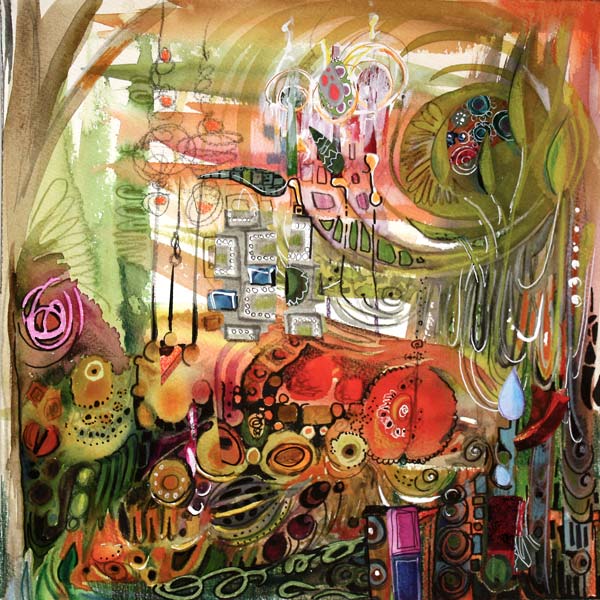
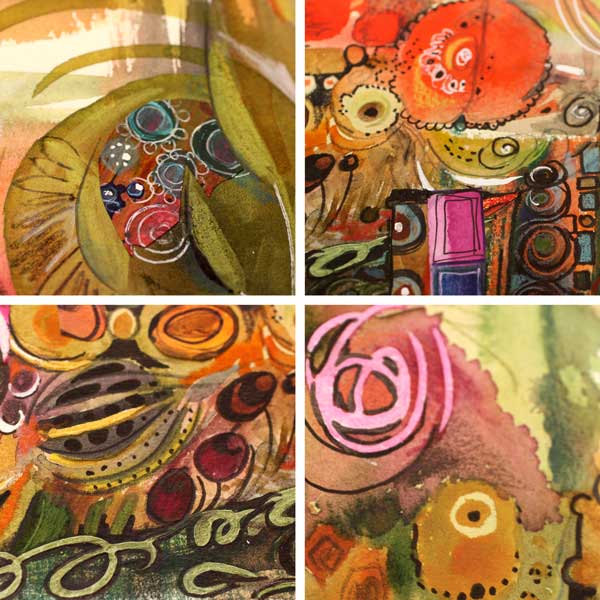
My latest mixed media artwork is called “Positivity Grows”. It is dedicated to all of you who have a strong inner critic. If you want to improve, it is essential to evaluate your own work. But sometimes the self-criticism can have too negative tone. Have you experienced any of these?
1) Big Picture Panic
The artwork gets evaluated as a whole in a too early stage. It is like making a meal and after tasting the raw potatoes, you’d decide that it’s not going to succeed. “I must have done something wrong when peeling those potatoes!”
2) Overclean Obsession
You take the safe way: you don’t mix colors, don’t let anything intersect, draw sloo-owly, keep everything plain, simple and controlled. This reminds me of a tadpole (a baby frog) which I got from my friend when I was a child. The tadpole lived in a jar filled with muddy water. I picked a clean vase, poured plenty of tap water and put the little frog there. It did not live long. I did my best to take care of it but did not understand that for the tadpole, there was nothing to eat, nowhere to hide. So – Mix those colors! Add diversity! Give some nourishment to the growing artist in you!
3) Mistake Hunt
If you focus on the things that “went wrong” instead of those which “went right”, you are playing the wrong game. Art is in small nuances, it requires sensitivity and openness. If your self-evaluation is too negative, you do not notice the beautiful little details that appear in your art. They are often lucky accidents if you take care of the diversity. When enhanced, those details can take over and bring your end result to the new level.
Positive Self-Criticism
You can get cured of any of those diseases with a healthy dose of positive self-criticism. From the moment you make the first brush stroke, focus on the details and look for beautiful and interesting areas. I will show you how I did that while creating the artwork of this post.
Phase 1 – Watercolors
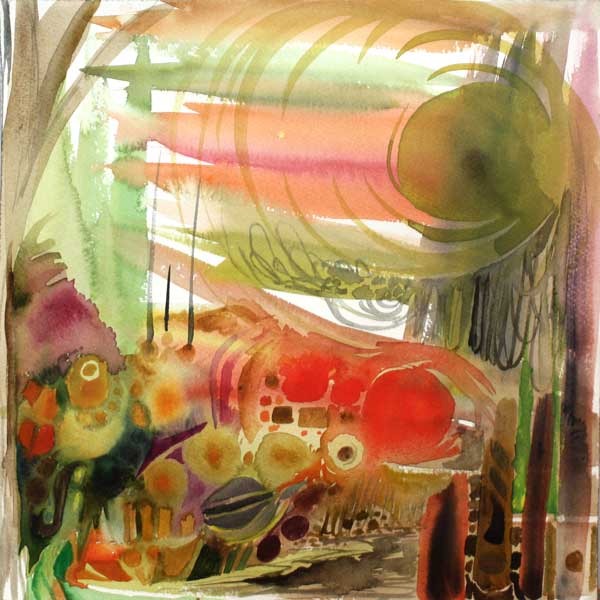
When I began the artwork of this post, I just made a mess with watercolors. I kind of made the muddy jar for tadpoles to prosper!
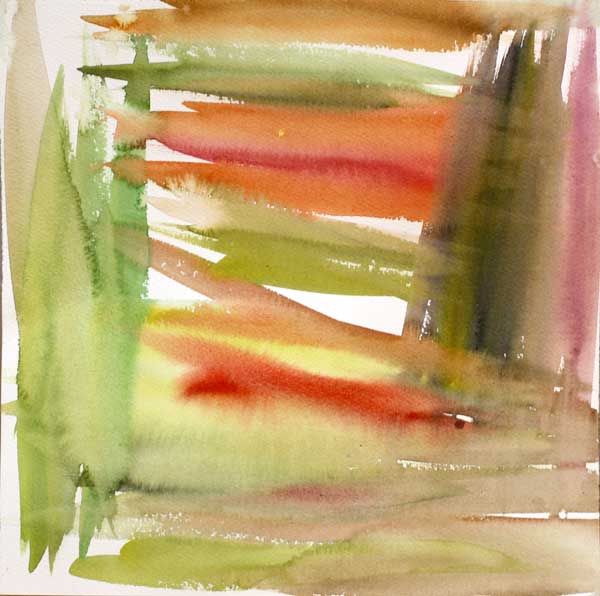
After painting this, I could have just quitted and called it ruined. Or I could have tried to make that dark muddy area brighter. But instead, I began to investigate the painting closely.
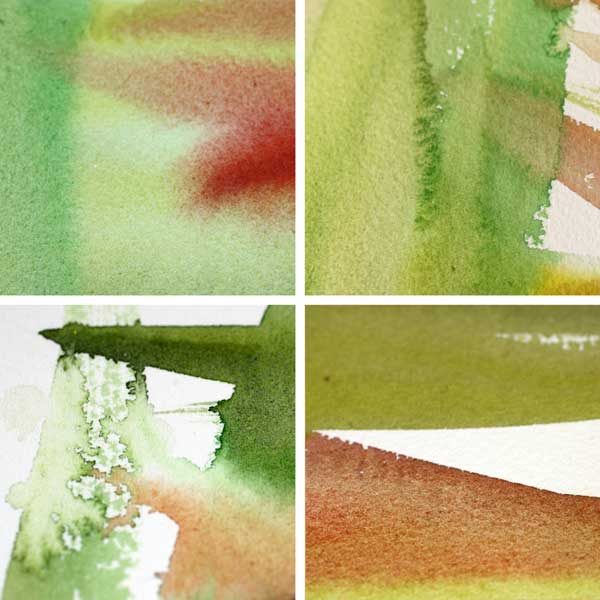
My inner critic pointed the little details with so much beauty that I began to feel confident and excited. The whole process of making this artwork began to feel like an adventure. Instead of mistakes, I was hunting treasures!
Phase 2 – Watercolors
Next, I continued with watercolors and created new layers of elements. I took care of the diversity: there’s a lot of various hues and shapes. And even more important: the layers intersect so that they create new happy accidents.
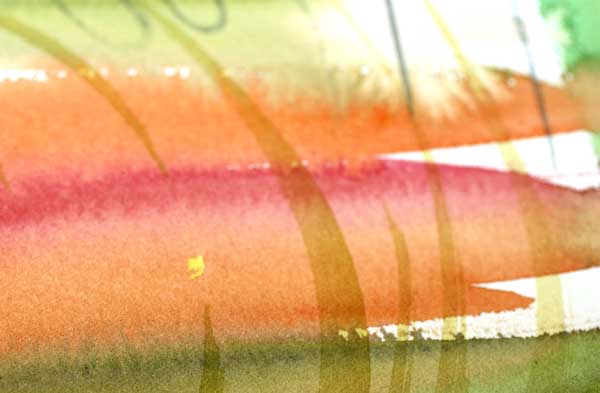
After painting this, I enjoyed this tiny detail: a yellow spot. It was like a little star! I felt I was lucky and genius at the same time.
I spent some time searching for more beautiful areas and enjoying them. With watercolors, the edges of brush strokes are often really beautiful.

Phase 3 – Colored Pencils
To keep the diversity level high, I changed watercolors to colored pencils. I also changed the music I was listening to. Working from a small area to another, I enlarged the beautiful details found after another.
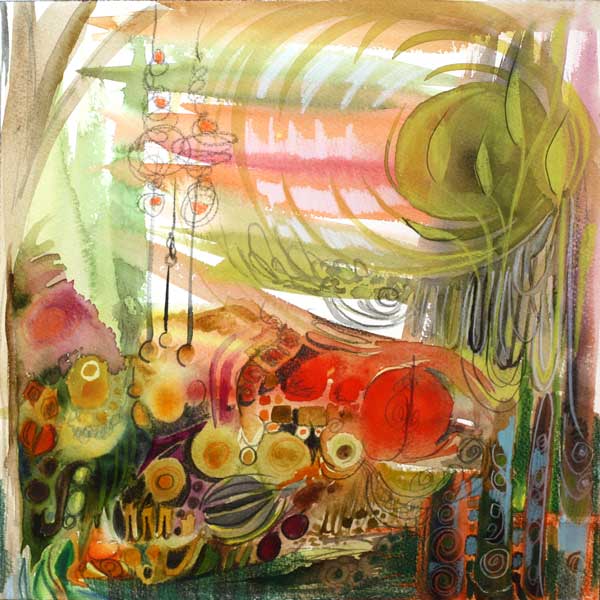
In this phase I realized that the main theme of the artwork would be growth. I searched for the details that would express the theme. I found several and they made me happy!
Phase 4 – Pens
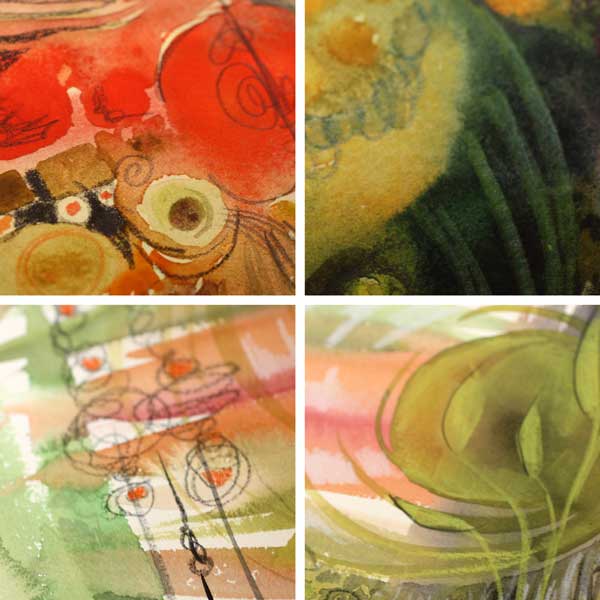
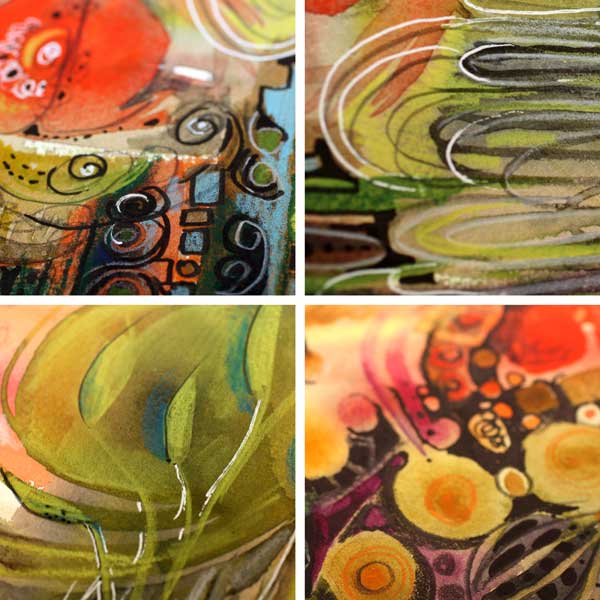
New music and new supplies! This time I picked a black PITT Artist Brush Pen and a white gel pen (Uni-Ball Signo). I was encouraging myself to create strong contrasts. They would make the pretty details really pop. Again, I was not worrying about hiding the not-so-pretty details but enhancing the good ones.

In this phase I began to look the artwork as a whole. However, instead of correcting the poor composition, I analyzed which of the details looked most appealing and how they were located.
Phase 5 – Finishing
When finishing, I like to listen to the rhythmic music which gives me the confidence to carefully adjust the balance of the work. I picked a white correction pen and a box of hand decorated papers. By doodling and cutting papers, I changed the composition so that the eye would find all the pretty little details one by one.
The Summary
You can be analytical and critical when making art. You can also be strict: mix the colors, change the tempo, keep the image alive! But maintaining the gentleness and sensitivity is crucial too. Let the little details that appeal to you be the foundation for your self-expression!

Blank Page Syndrome before Big Picture Panic?
Buy the video “Watercolor 101 for Intuitive Painting” where I will show you how you can get a fast start and keep going! Click here for the preview!
Light, Water and Fire
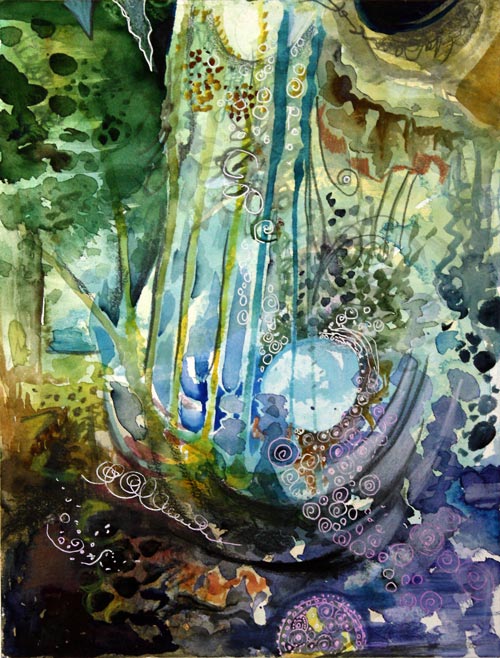
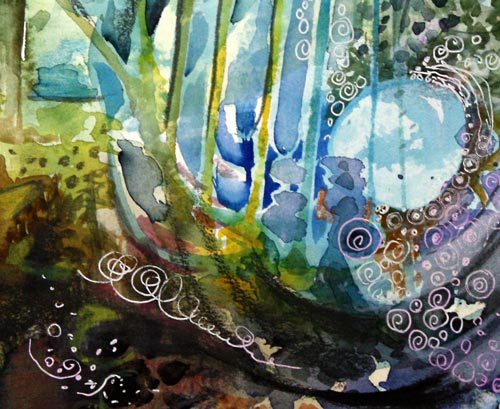
This watercolor painting is one of those I made for the video Watercolor 101 for Intuitive Painting. The painting uses the techniques presented on the video, so I won’t publish phase photos this time as they are on the video. Buy the video and you’ll learn the techniques!
This blog post is about doubt – the doubt that all the beauty you can create in your art does not really exist. Who cares? Well, at least I do. To be exact, a part of me does. Besides design, I have a degree in computer science and sometimes I can be an overly organized and analytical person. So, there’s a little engineer in me who always questions what I am doing. I call her “he” here, just to separate the little engineer from the little artist (the artistic side of me) easily.
When she showed him the watercolor painting, the little engineer said:
– “Ok, but can this really exist?”
– “Well, it’s an intuitive painting expressing how I see the music”, she answered, feeling a bit offended.
– “It is called Graceful Aria”, the little artist continued.
– “I just see some kind of landscape there”, he said. “It makes me wonder if that kind of landscape could really exist.”
– “I don’t think the landscape is important here. If you want to grab something concrete, you should look for the light and water. This painting focuses on them.”
– “This is just the kind of dreamy thoughts from you, that I do not understand. I just see trees, mud and some sky. But to be honest – if you want to paint trees, mud and sky, you could do a better job there.”
The little artist gritted her teeth. But then she realized she could actually show the connection of light and water. Namely, the little engineer had filed all her photographs so that it would be really quick to find the nature’s wonders she had documented while the little engineer had controlled the leashes of the dogs.
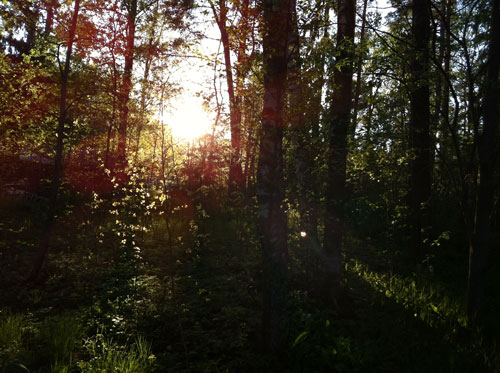
“Remember this evening?”, she asked. “See how the light hits the leaves!”
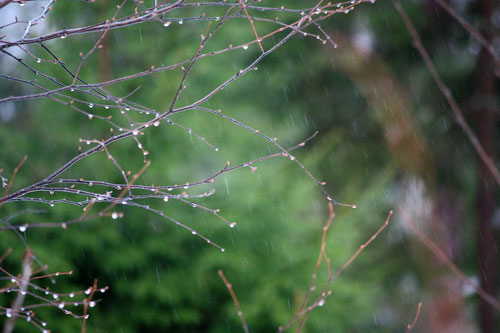
“This spring was really rainy. You hated the rain, but look how beautiful and soft it can be!”
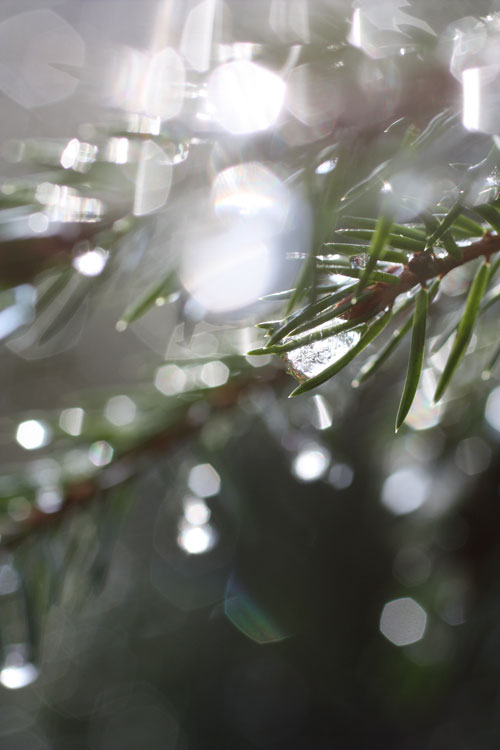
“And you must remember this magical morning, when the rain drops had frozen and it was like millions of diamonds were set on the trees!”
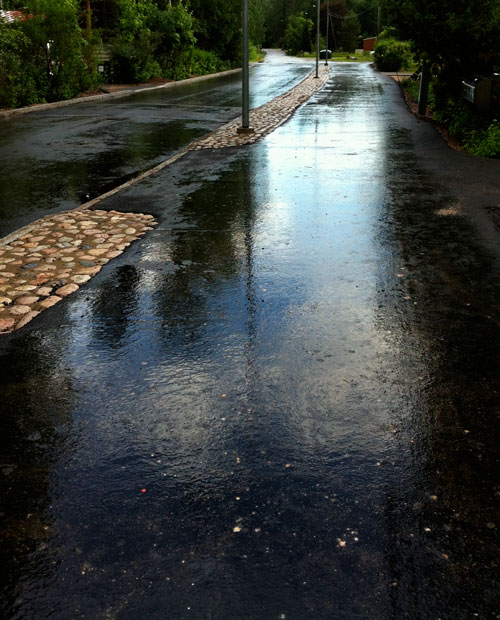
“When we walked home one afternoon, it was mesmerising to see the sky refelecting from the fresh asphalt. In the painting, the water creates wonders too. It makes the watercolors show their true beauty.”
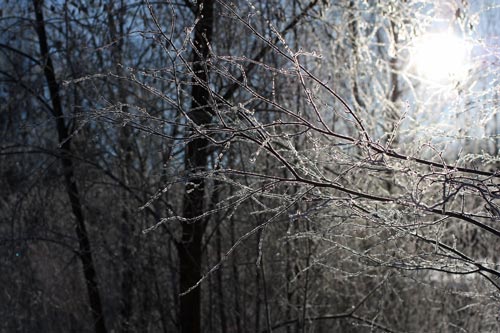
“I always want to photograph this, when in March, the snow and light interact with each other. The snow is frozen water, did you know that?”
“Of course I knew that! Ok, you proved your point. If you could always present things as systematically as you did here, we would not have any problems, you know.”
– “I need a nap today since it’s so tiring to explain big things, like art, to you.”
– “I thought I was able to fire you up to get the blog post done! Go ahead and take the nap, meanwhile I can sort out and sharpen your colored pencils!”
Have Fun with Watercolors – Buy Watercolor 101 for Intuitive Painting