
The Only Thing You Desire to Paint – Whether You Are Aware of It Or Not
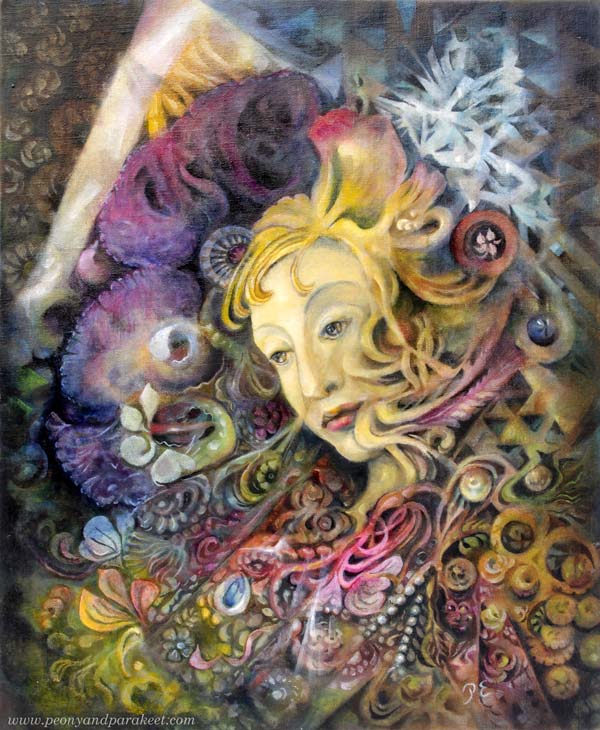
I finally painted something that I have tried for years – my view of life and my personal mystery.
Art, Religion, and View of Life
Art and religion have been connected for centuries. Some see it primarily as a business connection – churches have ordered paintings and artists have made their living.

But I like to think that the connection is not only about money but that’s spiritual too. At best, art expresses what we think about life and death. This doesn’t mean that an image has to be gloomy, or that it has to illustrate any particular religion. Vice versa, I believe that every person has their view of life. Let’s call it a personal mystery!
Searching for Personal Mystery
Your personal mystery sets the direction of your deepest thoughts, but it’s difficult to put into words. Now and then, you can catch it emotionally. But intellectually, it can feel impossible to reach.
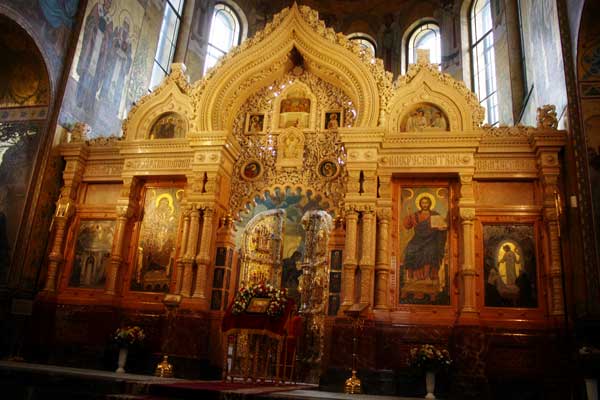
Even if your personal mystery is unique for you, it’s so authentic that it resonates with many other people too. When I go to historical places like the Church of the Savior on Blood, they have a flavor of my mystery. But still, it’s not quite in line with my deepest thoughts and feelings.
The Only Thing You Desire to Paint
Your personal mystery dictates your artistic goals. Whatever you say you want to accomplish, the deepest desire is to express your personal mystery. You can say you paint because you want to escape everyday life, but in truth, the escape is about reaching your mystery. No matter how successful you want to be, you also want to be authentic – and that requires discovering your mystery! Your visual style may seem like the primary goal but believe me, it’s secondary – just a tiny hammer in a big toolbox that you need to reveal your mystery.
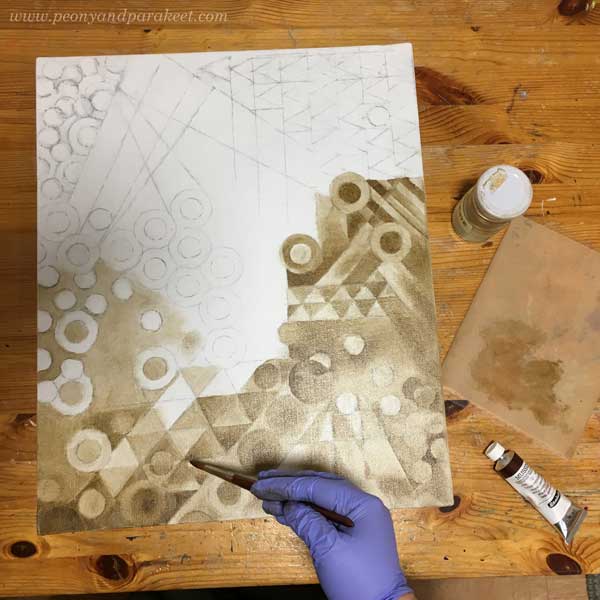
No matter how orderly you begin the painting, the final goal of the process is to let go and become one with your mystery.
Painting Your Mystery
In the middle of the painting process, your mystery like a secret whisper, so sacred that it feels forbidden even to try revealing it. This secrecy sends mixed messages to your creativity and the process gets confusing and disappointing.
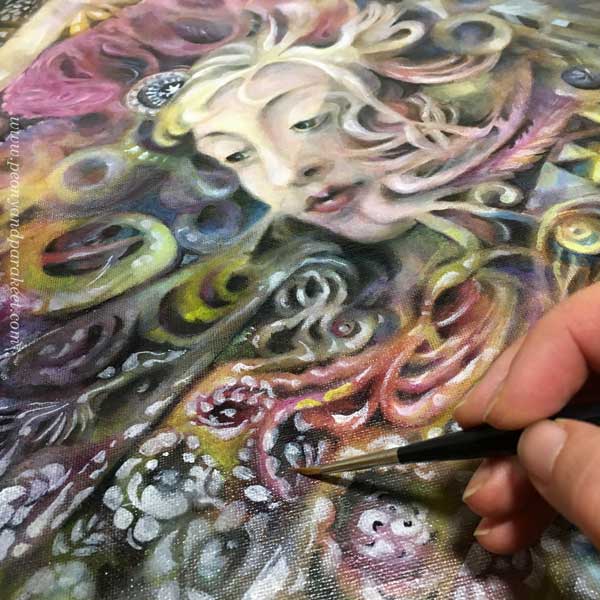
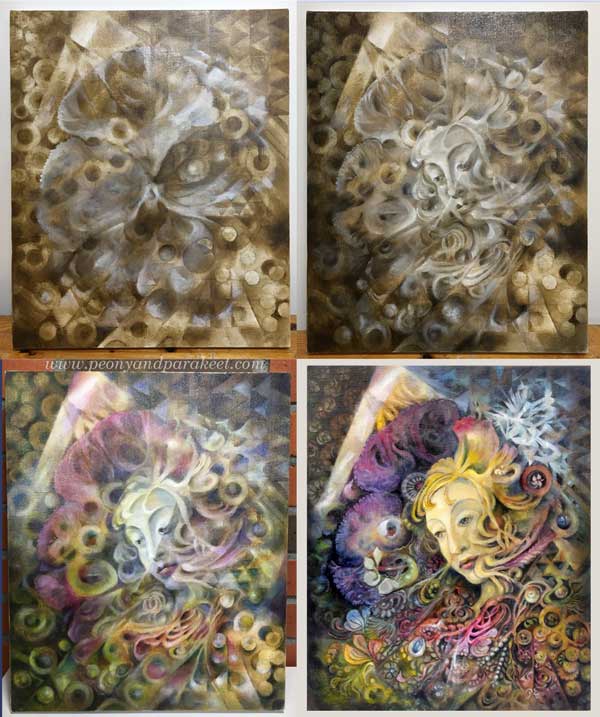
When painting the woman and all the colorful details, I started to hate the mess and get disconnected with it. The image felt too complicated and decorative, and I didn’t know what to do with it. I was traveling through strange places and wondering how to reach an unknown destination.
At this point, it’s tempting to give up. I put my painting away for months. My plan was to wipe the paint away with turpentine so that I can re-use the canvas for another painting. But about a month ago when I picked the unfinished piece again, I knew instantly how to finish it.
Five Tips for Revealing Your Personal Mystery
I don’t think there’s a straightforward formula for revealing the mystery, but here are some things that are helpful:
- Grow visual skills so that you can freely choose what you paint whether it’s representational or not. Learn to use references creatively, and study the principles of abstract art (my favorite book about abstract art).
- Grow confidence so that you can let uncomfortable, erroneous, silly, and “wrong” things happen while creating. You won’t find the mystery if you stay in your normal zone (breaking the rules)
- Grow imagination so that you can jump from one association to another and come up with a unique solution. Creating from prompts help with that (I recommend Inktober).
- Curate what you love and value. List things that inspire you and keep filling and editing the list (remember to include innocent little secrets)
- Become more aware of details and nuances in all art-related things. The more general you think (“I am an abstract artist”, “I draw faces only”, “these are pretty flowers”), the more difficult it is to connect with your uniqueness and find inspiration.
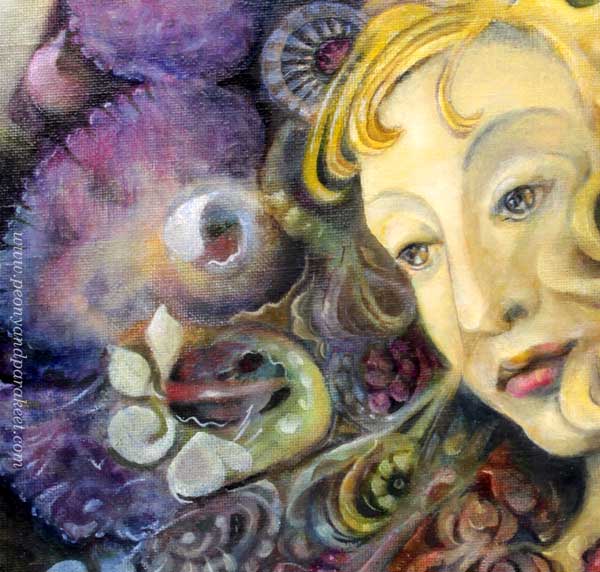
I used to think that when painting people, humans should look as realistic as possible. But I am more of an engineer and an innovator than a portrait painter. By trying to make the woman look like a real person, I had blocked my personal view of life appearing on the canvas.
When I realized that the woman is just an anonym observer, the painting was very straight-forward to finish.
My Personal Mystery
In my mind, science, beauty, and spirituality are all connected.

The biggest miracle for me is how the universe works, and how I can take parts of that to create a new world.

Historical buildings and paintings connect me to the origin of our culture and universe emotionally. To me, the painting looks historical enough to fit in.

In the future, I hope to create more pieces that express my personal mystery.
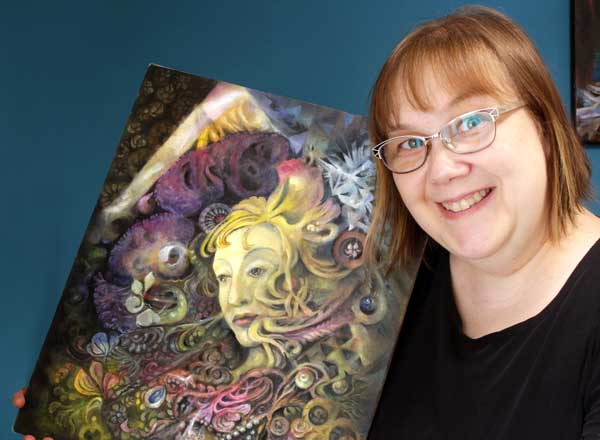
For Finnish readers: Come to see this piece and more of my art! I show about 10 artworks in a group exhibition this month in Helsinki. Lisätietoja täällä!
Out of a Creative Rut – Do What Illustrators Would Do!
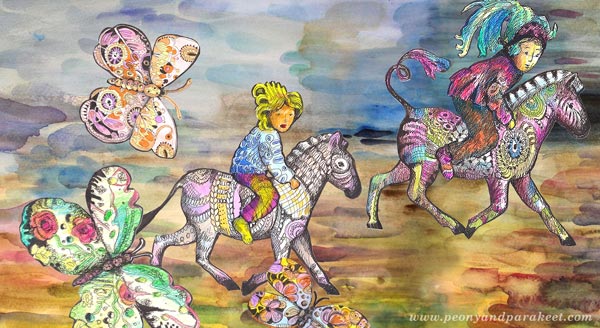
I am currently reading James Clear’s book Atomic Habits. It’s about growing skills and making changes in life a small step at a time. James Clear doesn’t believe in setting goals as much as building a new identity. James tells about a person who lost weight by thinking “what would healthy people do” every time he had to make a decision about eating, sleeping, and exercising.
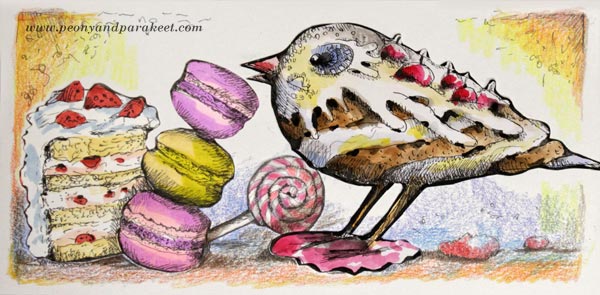
Out of a Creative Rut by Asking What Would Illustrators Do
Since last fall, I have been practicing “what would illustrators do.” I have wanted to make art that is less abstract and more joyful and rememorize the things I learned when studying design several years ago.
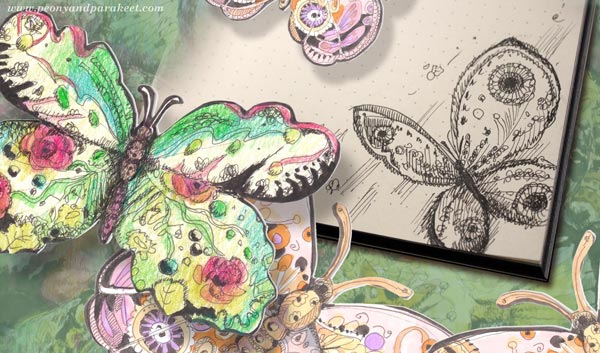
When building the latest classes Animal Inkdom and Magical Inkdom, I have wanted to include more small projects than before so that you can quickly grab a pen and draw more regularly. James Clear advises building habits by combining them with our current ones. When we do something like having a cup of tea in the evening, we can also grab a pen and doodle a bit. It’s not much, but when it’s repeated regularly, the results will come.
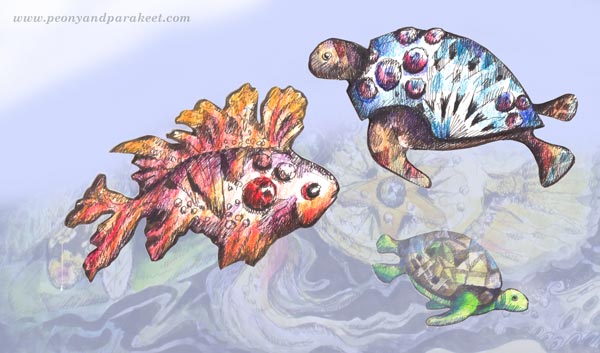
To me, drawing small collage pieces has brought back the joy of drawing. I haven’t always had the time to do a lot, but I have made it a regular practice because “that’s what illustrators do.”
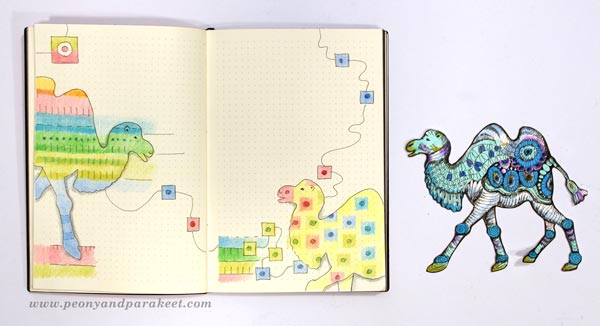
Drawings are Like Pets – Treating Them Gently
I have also developed gentle self-talk by thinking of these animals as my pets. That way, I don’t try to control the outcome too much or negatively judge a single piece. They are my pets, and I love and care about them because “that’s what animal lovers do.”
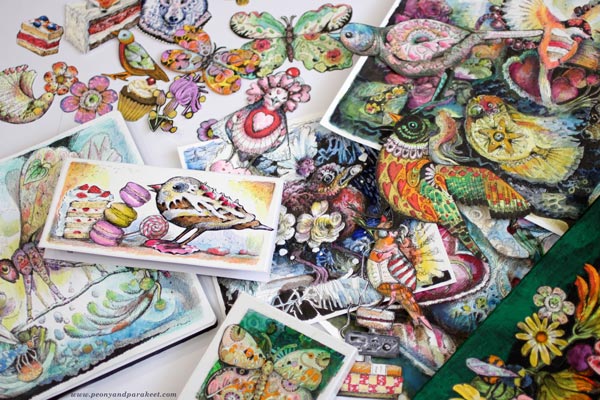
Breaking a Creative Rut and Moving Forward
At the same time as I have developed the illustration classes, I have also built my illustration portfolio.
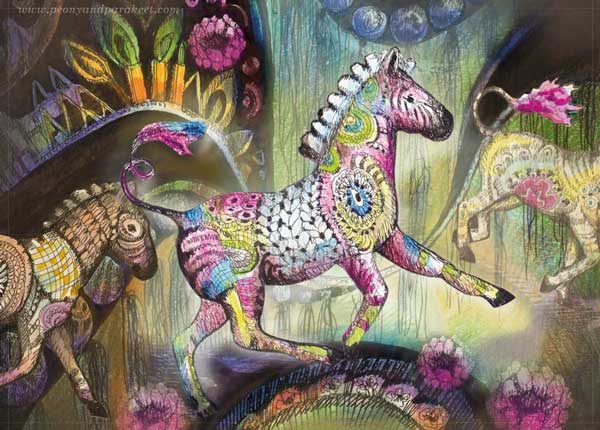
During the next couple of months, I am doing more “what illustrators do” when I am making images for a book. I will share more pics about this commission later.
Practicing illustration has also brought new perspectives to my fine art projects and what I want to create in general. So, I highly recommend practicing “what illustrators do” – especially if you are in a creative rut or have a too strong inner critic.
Start now – Animal Inkdom Is for Sale!
This weekend: Buy Animal Inkdom for 59 EUR (normally 79 EUR).
The sale ends on Sunday midnight Sept 1st, 2019 (PDT).
>> Buy here!
Between Fine Art and Illustration – Combining Both Into One Artwork
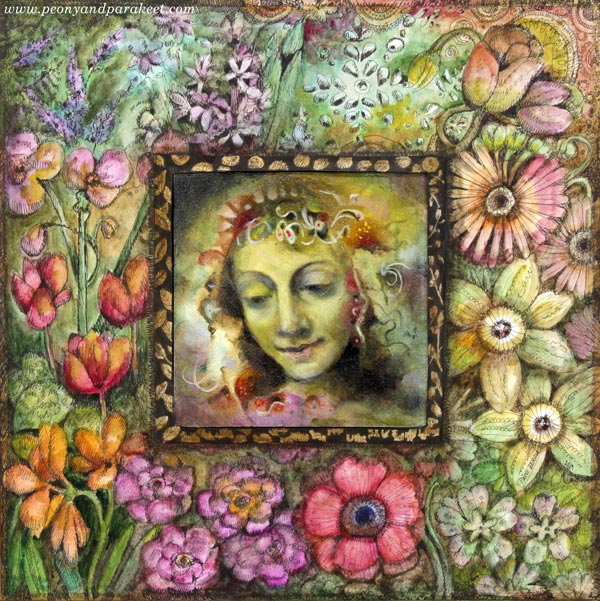
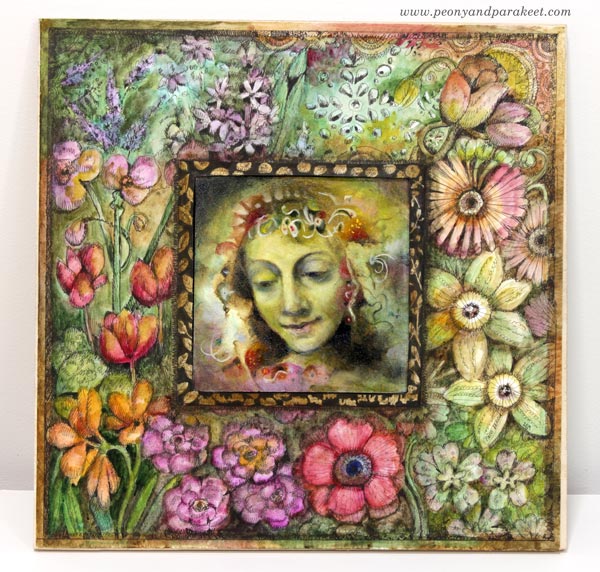
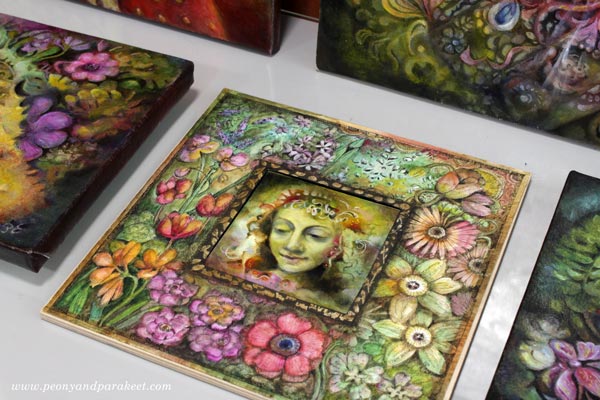
This week, I continue showing pieces that will be presented in the upcoming group exhibition “Flower Gardener’s Diary” (Kukkatarhurin päiväkirja, 9.- 22.9.2019, Hietsun Paviljonki, Helsinki). This one is called “Flower Fairy’s Year.” I will be presenting both paintings and drawings, so I wanted to create a piece that would build a bridge between fine art and illustration. I hope you find this project inspirational!
Inspiration Piece: Wheel of Fortune
When building the class Magical Inkdom earlier this year, I made a fun drawing called Wheel of Fortune. It has a center that’s separate from the rest of the piece, and it can be rotated so that the heads of the figures change. The bigger drawing is attached on thick cardboard so that it feels like it’s a game board, not just a flimsy piece of paper.
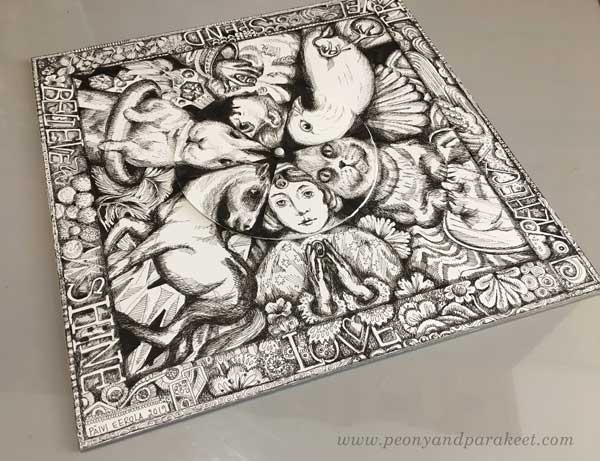
I wanted to use the idea of a separate centerpiece and sturdy base for this project too.
Fine Art Centerpiece: A Miniature Oil Painting
The project started by finishing a miniature oil painting that I suitably had in progress. It’s only 4 by 4 inches.
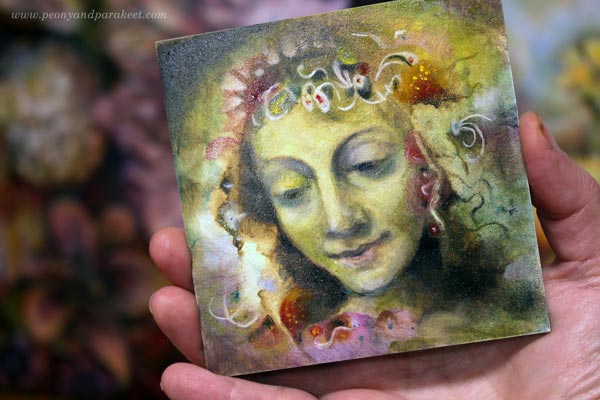
The painting was made very traditionally. I sketched the face with charcoal, and then made an underpainting with umber and white. I used Bernardino Luini’s portrait of Saint Catherine as a loose reference for the facial features.

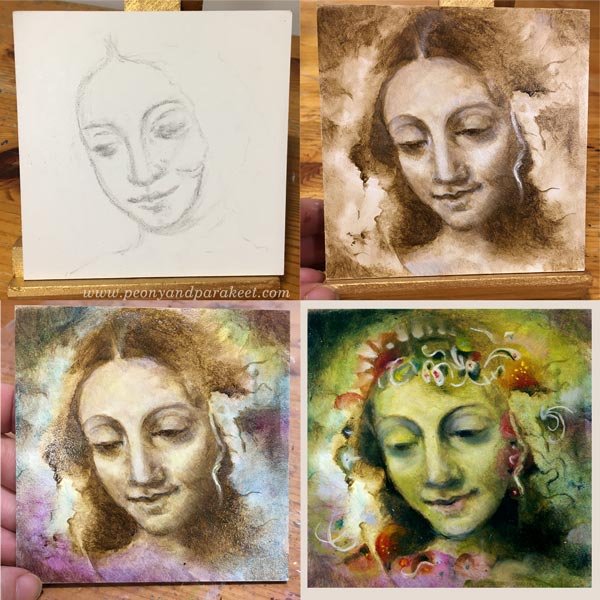
The color layers were thin so that the previous layers stayed visible too. It took a bit of courage to give a green wash to the face, but I really like the result. Decorations were easy and fun. They are quick lines and shapes that make the saint look like a floral fairy.
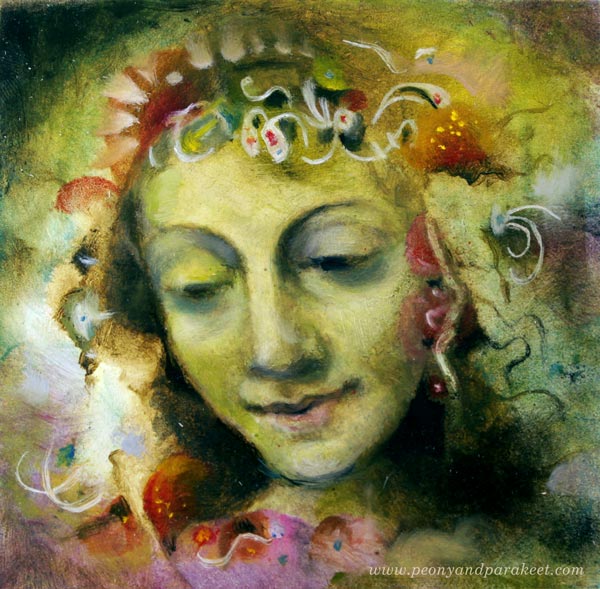
With oil, the most difficult thing is to wait for every layer to dry separately. Other than that, I find oil easier to handle than acrylic paint.
Illustration: Decorative Flower Frame
For the frame, I cut a piece of Bristol paper. It’s about 10 by 10 inches.
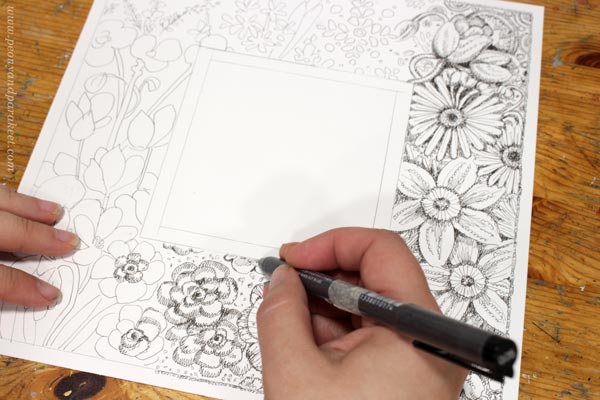
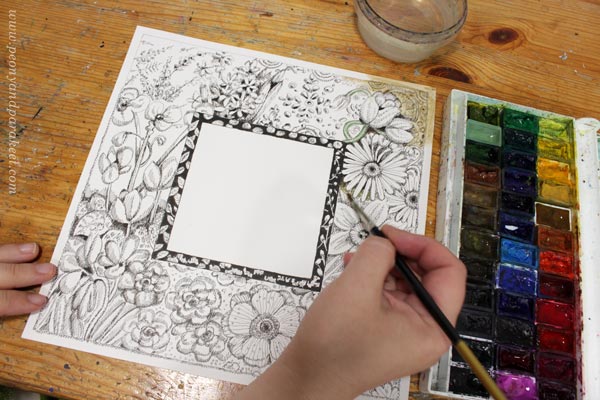
I wanted to include flowers from January to December so that the frame is like a clock that has months instead of hours. The drawing was made with Copic Multiliners (I mostly use 0.05 tip), and I colored it with watercolors.
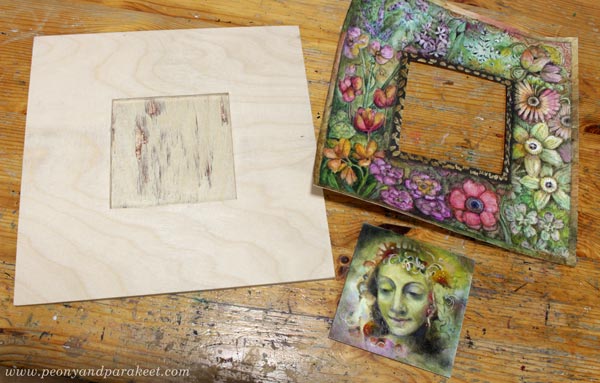
Plywood Base
My original idea was to cut two layers of cardboard so that the topmost layer would have a 4-by-4-inch hole. But when I told my husband that “Ideally, the base would be wooden”, he went to his workshop and came back with a hand-carved plywood base!
Putting All The Pieces Together
I painted the plywood black near the surroundings of the miniature painting. It makes sure that the plywood won’t show if the piece is observed from different angles. I varnished the oil painting with Gamvar and let it dry overnight. I put a plastic plate over the frame to reduce the curviness of the paper after painting it with watercolors.
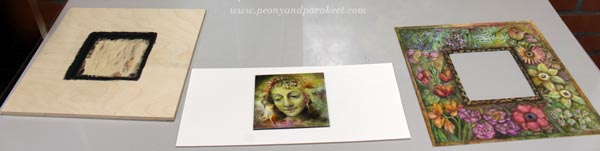
Then I glued the painting to the base with gel medium and attached the frame with double-sided tape. Finally, I marked a line of 0.5 cm from the edge of the base and made sure that the motifs extend there. This piece will be professionally framed, so I didn’t want to leave too much empty space around the edges.
Between Fine Art and Illustration
In the art world, there’s a lot of talk about choosing between fine art and illustration. Many define fine art so that it comes up solely from the artist’s own creative expression when illustration illustrates a story or can easily be used with the text. One way to separate them is the number of copies. Fine art pieces are often unique or manufactured in very limited quantities only when illustrations are more of everyday art, consumed by the masses. Some say that it requires talent to create a piece of fine art, and just art education to create a piece of illustration.
In my artistic path, I have found the definitions both helpful and destructive. It has been essential for me to expand to illustration – to learn how to visualize text and written ideas. It has made me more connected with the surrounding world, and it has also brought me more work. However, I feel that art is free, and without exploring that freedom, it’s also difficult to create insightful illustrations. So I have tried to keep up with both worlds.
However, I hate when people say that you have to choose between fine art and illustration. For me, bringing the two approaches as close as possible has been a working solution. I think this project shows really well how one is not the enemy for the other.
I can’t wait to show you more pieces that I have finished for the exhibition! I will also have many framed and will blog about how I selected the frames in the upcoming weeks. Stay tuned!
Come to draw fantastic art (+ fantastic frames) with me –
Sign up for Magical Inkdom!
Right after the registration, you will get all the lessons, and you are good to start drawing! >> Sign up here!
All Things Necessary in My Artistic Journey
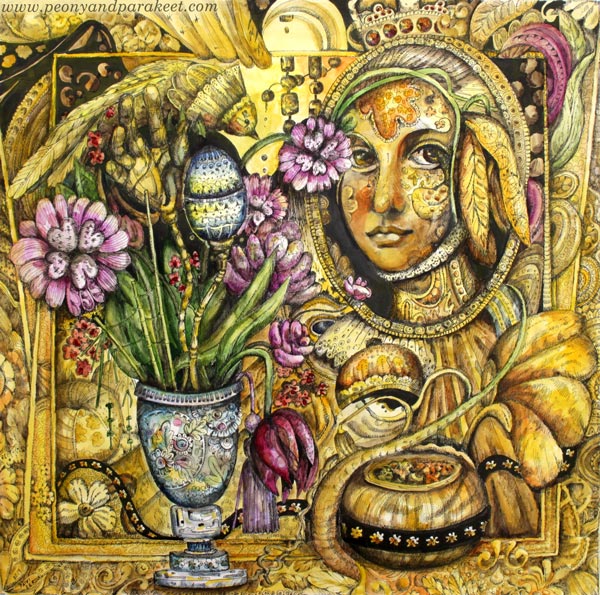
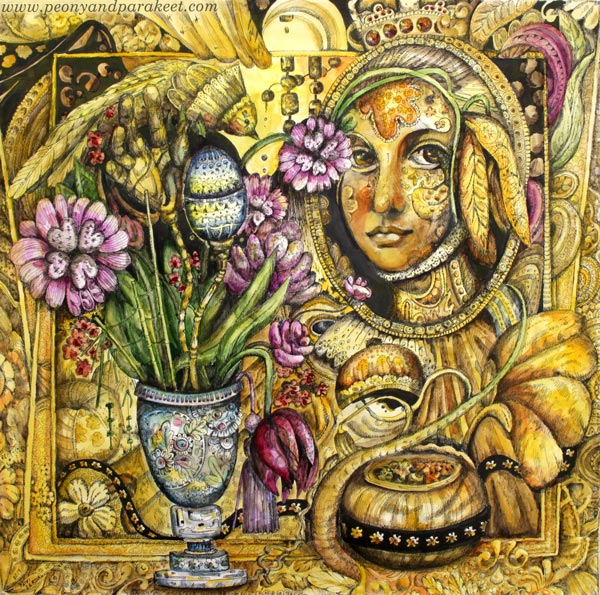
Here’s my recent drawing called “All Things Necessary.” It’s inspired by the discoveries that I made while building the class Magical Inkdom. When I taught IT professionals back in the 1990s, we teachers used to say that you learn best when you teach a class. We had to constantly learn new technologies, and it made us professionals not only in teaching but also in learning.
However, some things take time, and even if trying to find the best ways to work with both ink and watercolor enabled this piece, the idea behind it goes much further back in my artistic journey, to the year 2014.
A Great Idea but Not So Great Execution from 2014
I have archived many of the old blog posts because back in 2014 I wasn’t very good at writing, and the posts are too short for the search engines. But I found the blog post in my personal archive and here’s what I wrote back in 2014:
“I often get these ideas that cost a million. Like the big painting that shines in gold and silver. It would look like a reproduction of the beautiful doors I saw last year when visiting the Hermitage Museum, in St. Petersburg, Russia. Someday I will make it! So I made a small prototype. It is a wooden block that is covered with all kinds of stuff found in my crafting space.”
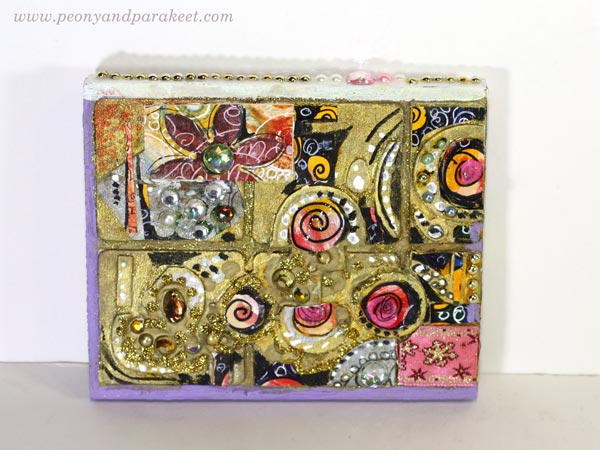
This idea has haunted me since I made this crafty block, or I could say since I visited St. Petersburg, Russia. I have two blurry photos from that trip that I look at quite often. One is the golden door and the other is a handpainted plate at The State Russian Museum.
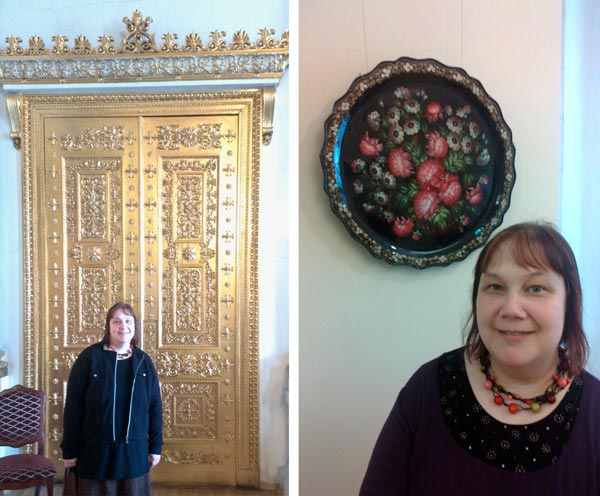
I felt I had found the aesthetics that I also wanted to create. First, I thought I would literally need real gold. Here’s how I ended the blog post:
“So, if you follow me, then you know what I will do if I win in a lottery! Real gold, jewels … wow, it will look astonishing.“
I wish I could turn back time, and say to myself: “Don’t lose this idea! Keep creating, and once your skills will grow, you will find the way.”
Dumping the Idea – “It’s Too Superficial”
The problem with me has been that when my skills haven’t met my vision, I have let go of the ideas around it. I have said to myself:
– “It wasn’t what I wanted to create anyway.”
– “It was too superficial, I want to create deeper stuff.”
– “The idea was great but not what other people would want to see”
– “Only rich and overly successful people could do that.”
– “There will be new and better ideas that are easier to execute.”
And so I have felt lost many times in my artistic journey because I haven’t been able to re-create that golden door, my true desire.
Getting Back to the Idea with More Skills
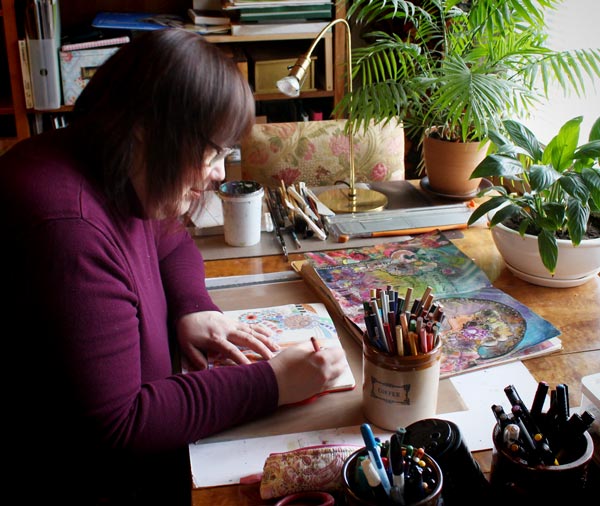
But for Magical Inkdom, I wanted to create gold. There my main message has been that we can make the wrong right, and define what’s magical to us. So I drew some golden frames, and they looked magical! (Instructions will be published in Lesson 4.)
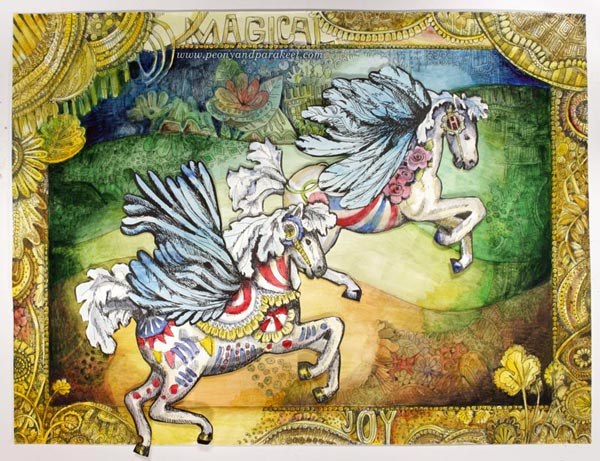
Of course, I couldn’t just have a little bit of gold and settle with that. So I began a new piece, approximately 18 by 18 inches. It’s the biggest ink drawing that I have made so far. I knew my skills are there. I didn’t need a sketch or a prototype but just pour out everything that I love.
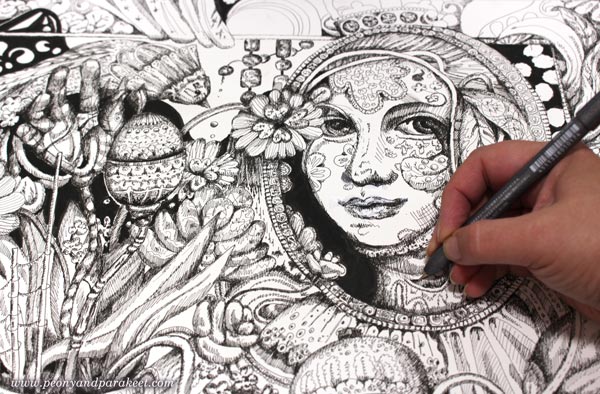
While I colored the drawing with watercolors, I thought about the appropriate title. The most accurate that came to my mind was “Kaikki tarpeellinen” meaning “All Things Necessary”. This kind of golden luxury may seem unnecessary and even overwhelming to many, but it’s necessary for me. I need to load this daily into my mind to keep my zest for life alive.
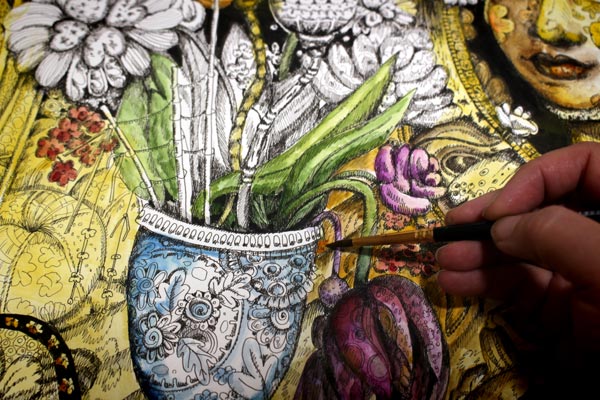
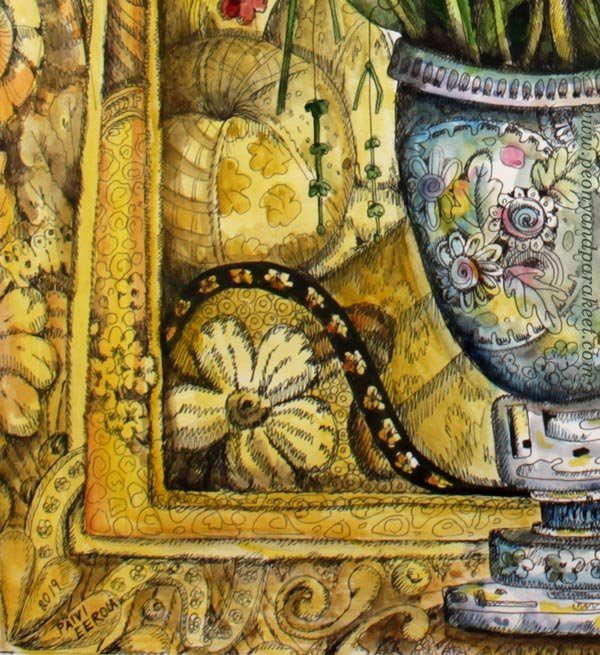
All Things Necessary: It’s a world where Salvador Dali travels to the Rococo era, and then back and forth between the Renaissance age and the 20th century.
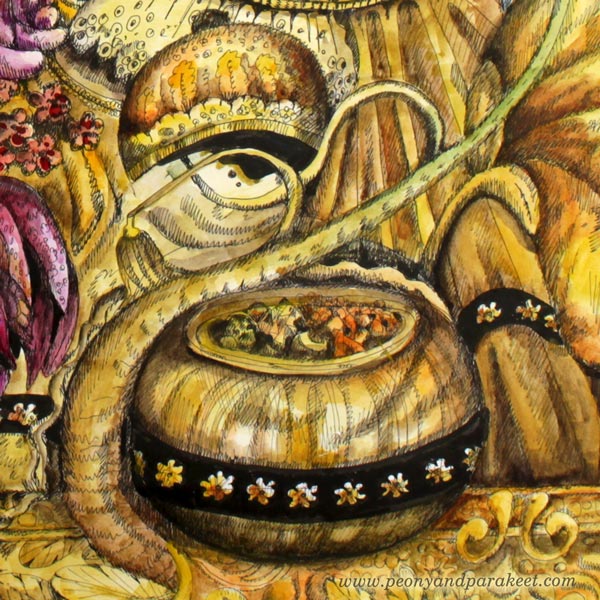
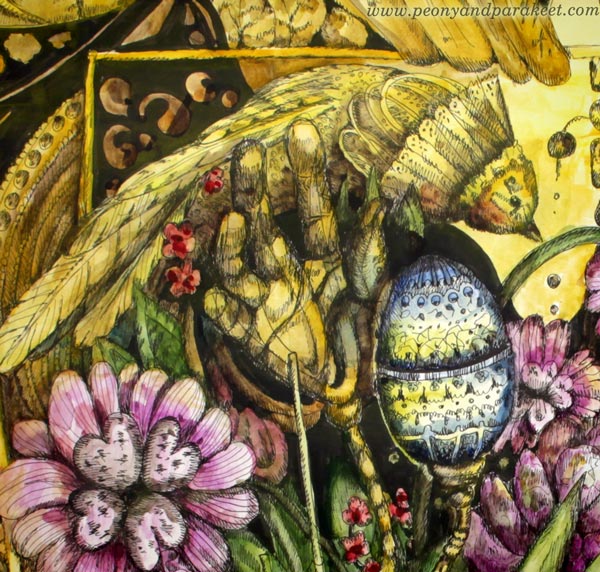
It’s a world where golden birds lay Faberge eggs and land on golden fingers.
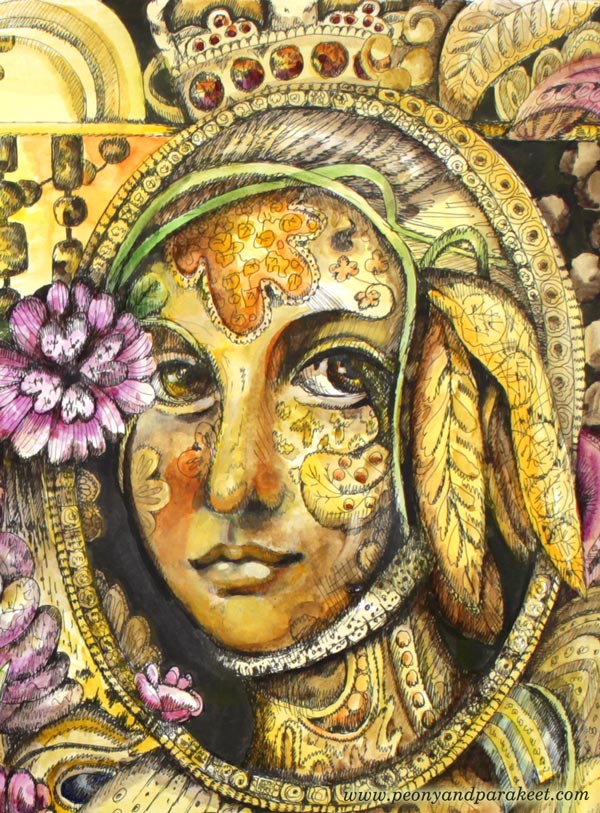
It’s a world where people, animals, and physical items share the same qualities and play the same symphony.
It’s a world where a cembalo plays a bit too loud, where all the gold hurts your eyes, and where the chaos is suspiciously acceptable.
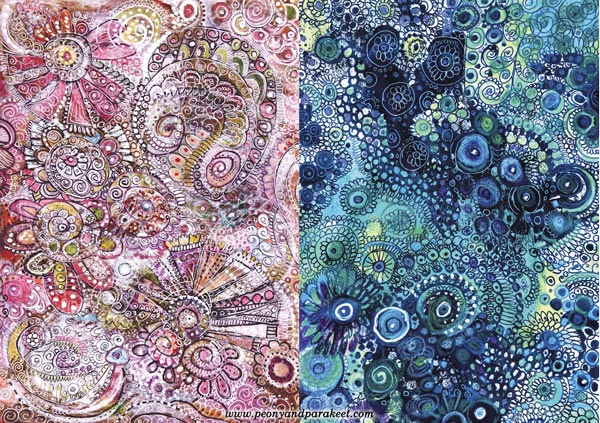
It’s the same place that I was trying to find in 2011, when I was madly drawing circles, and when some of you started following this blog.
All Things Necessary for Moving on in the Artistic Journey
This new piece has made me re-think about the whole discussion about the artistic journey and finding a visual voice. I have blogged a lot about it, coached people for it, but it’s not easy to dig out a quiet seed that needs a lot of time and care to grow. Our artistic vision, the road sign, can be an ugly “prototype” like my old craft project that we carelessly toss away!
Let’s hold on to the things that keep deeply touching us while growing our skills in drawing and painting.
Come to draw fantastic art with me – Sign up for Magical Inkdom!
Right after the registration, you will get all the lessons published so far, and you are good to start drawing! >> Sign up here!