
Moleskine Sketchbook – Another Full Art Journal!

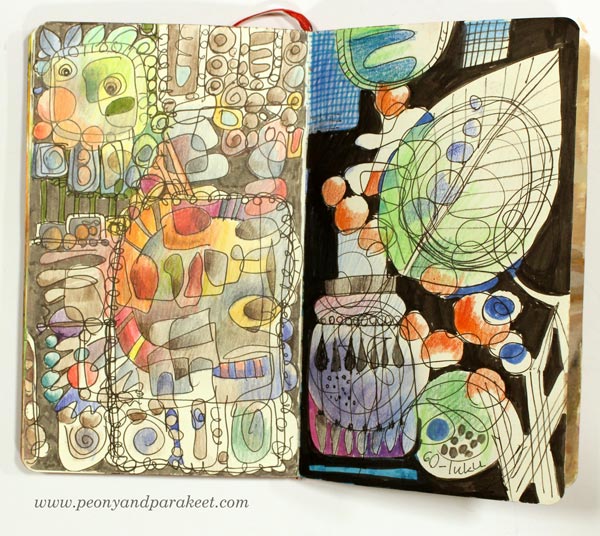
I just finished my red Moleskine Sketchbook. It always feels like an accomplishment when an art journal gets full. So I’m happy to show a couple of photos and a flip-through video of all the pages!
Moleskine Sketchbook as an Art Journal
Moleskine Sketchbooks are one of my favorite books for art journaling. The paper is sturdy, and it can be used with a variety of supplies. I use mostly watercolors, acrylic paints, colored pencils and PITT artist pens. But I also use inks, gel pens, hand-decorated papers for collages, etc. The small size is handy for quick pages and easy to put in a bag. However, sometimes the size is a little bit too small, especially for acrylic paintings. So I also use other journals, especially large Dylusions Creative Journals. The paper is very smooth, so it’s not ideal for watercolors. But I don’t mind that too much, I use a little less water to make watercolors work with the paper. Some prefer coarser paper for colored pencils but I love how effortless it is to color the pages in Moleskine Sketchbook.
The Purpose of an Art Journal
For me, art journals are little more than just sketchbooks. I like to call them “idea books” as I often process my ideas further when I am working on the page. I don’t always make one page on the same go, but work with it several times, adding more ideas as the page progresses. However, I have quite low expectations on how my pages will look. They are not pieces of art but more like collections of ideas to me.
As you can see from the flip-through video, my ideas are often connected to art history and different styles. The first photo of this blog post shows a spread inspired by Rococo. The second photo shows a spread that I made after browsing designs from the 1960s. Even if I sometimes write short stories or make notes about my current thoughts, I mostly write about beautiful things that I have seen and visualize the ideas I have gotten from it.
My art journals are not chronological diaries but random visual notes that I process to full images. I can make a quick sketch of a rose one day and then continue the page with painting on the other day. When I am working with a new art class, I use art journals to record my visual ideas and practice the techniques. I also see creating art journal pages a route to bigger paintings. When I paint on canvas, I use the ideas that I have come up with when making the pages. Every artist should also be an art journaler!
Flip-Through Video
Create Step by Step!
I have gathered all the most popular free step-by-step instructions and all my flip-through videos on a separate page. Go to Create Step by Step!
Start Drawing from Stick Figures!
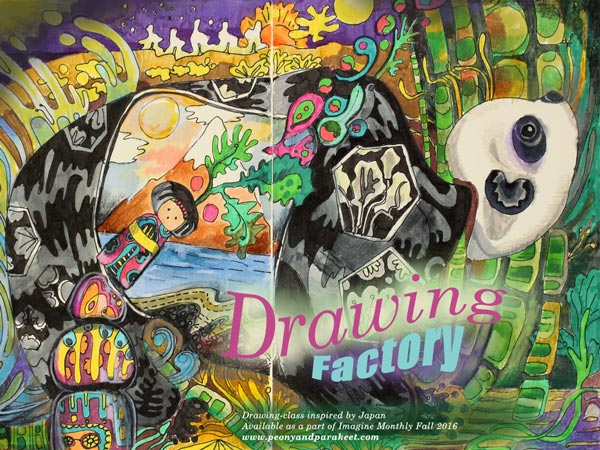
If you browse my blog posts this fall, you would think that I have been painting only. But no, I have drawn too! I’m really happy about my recent mini-course that is available as a part of Imagine Monthly! It’s called Drawing Factory as it’s about drawing efficiently no matter what your current drawing skills are. Plus it’s inspired by Japan, the land of high-production factories and fascinating culture.
Drawing ATC Cards
I got the idea for the mini-course in summer when I got the urge to draw a series of ATC cards.
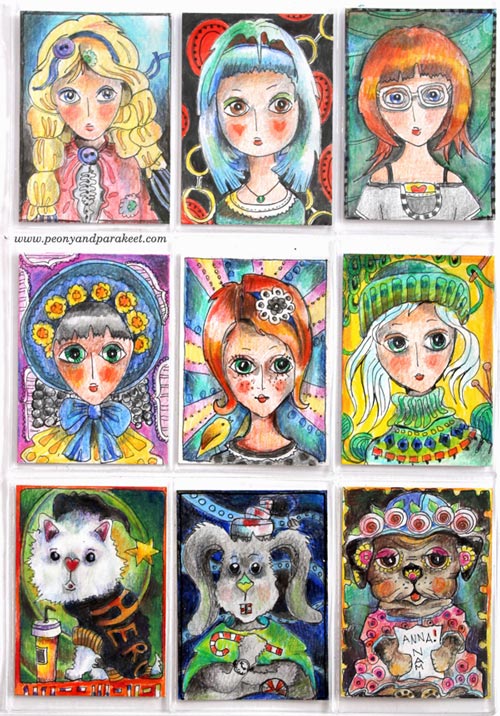
I had so much fun drawing these! While drawing, I thought about how much people use stamping instead of drawing in ATC cards. I felt liberated without them, drawing freely. How could I make hand-drawing more attractive and enjoyable?
Drawing with the Help of Stick Figures
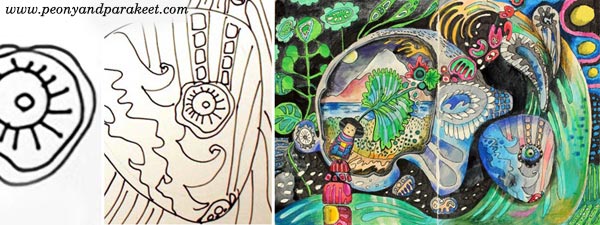
Along drawing this big bunny art journal spread, I developed a series of tips and tricks about how you can create imaginative line drawings without tedious sketching.
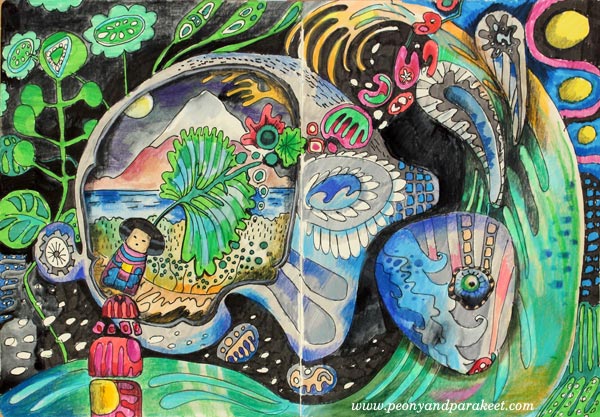
My method is based on stiff lines as people often say: ” I can only draw a stick figure!” But sticks can be an answer, not a problem!
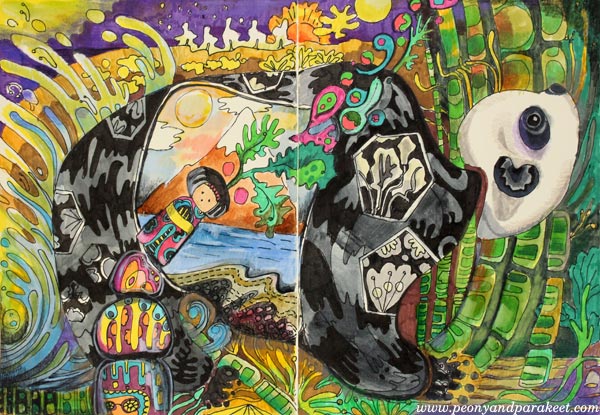
The panda is the project that I am creating in the class video. The video also includes a drawing lesson where I show how to build drawings, or should I say rich illustrations, based on simple lines.
Buy Drawing Factory!
Drawing Factory is now available as an individual self-study class: Buy Now!
A Decorative Pattern for Art Journals and Beyond
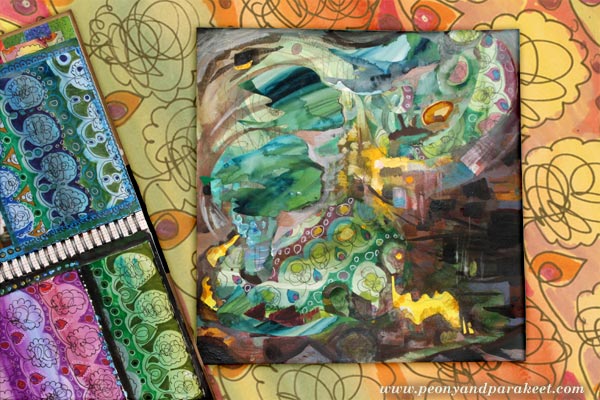
A couple of months ago, I made a flip-through video of a full art journal. Many noticed a spread that was made from decorative papers mostly. I remembered that I took some photos while making the papers and I will share step-by-step instructions here. This pattern is good practice for motoric skills and drawing, but it can also go beyond! I used it for a more expressive purpose, for a collage art piece.
1) Paint Stripes with Watercolors
Use a fairly thin paper and paint it with watercolors. Use a selection of colors to create stripes or curves.
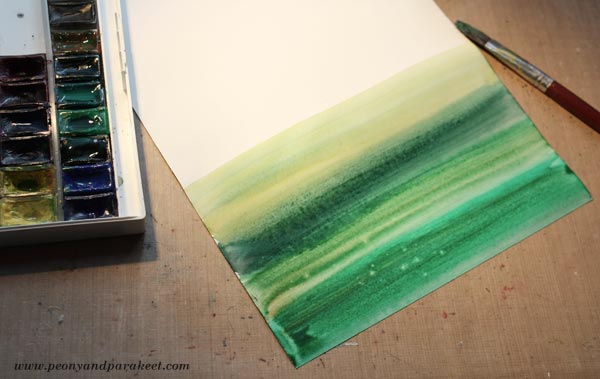
You can add drops of water if you want to make the background more interesting with bleeds.
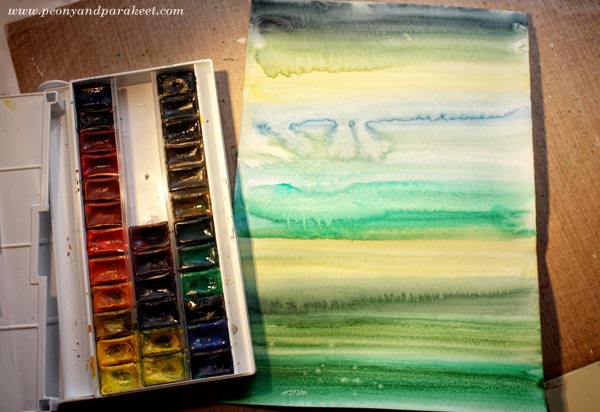
Let the paper dry properly.
2) Decorate the Stripes with a Simple Loop Pattern
Using a thin-tipped black drawing pen, draw a simple loop and end it with a curve upwards. Without lifting the pen off the paper, add a bunch of loops on the top of the curve. Then continued by drawing a curved line downwards. Repeat and draw the whole row on the same go. Work fast and don’t worry too much about the symmetry or similarity of the loops.
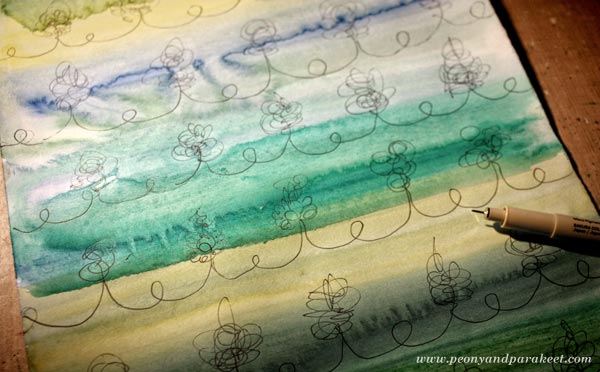
After drawing the rows, frame the loops to make them more distinct. I used simple shapes to create flowers and leaves.
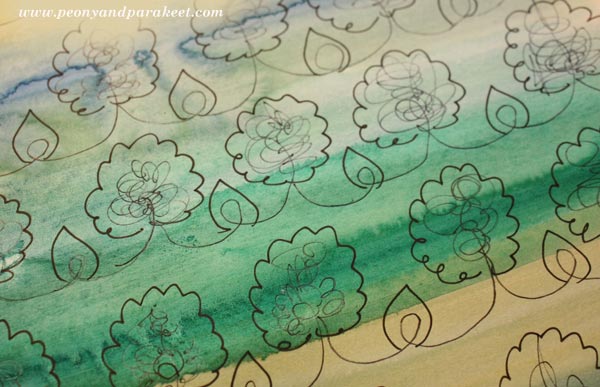
3) Color the Background and Add More Decoration
To make the watercolored layer look more lively, use felt-tipped pens (marker pens) and color the background around the doodled shapes. You can also add more color to doodled details and use a white gel pen to add more decoration to colored areas.
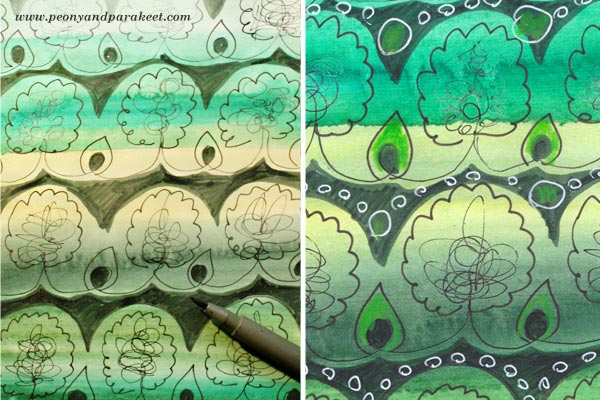
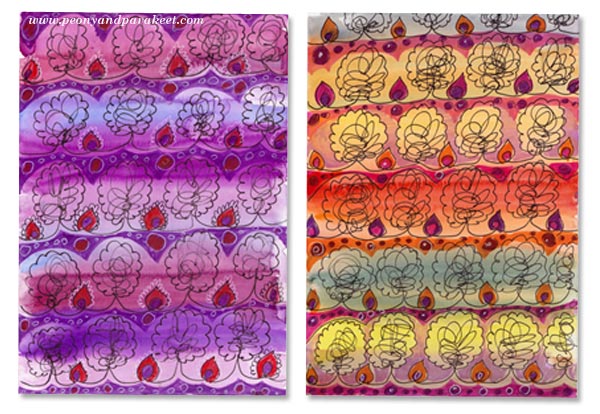
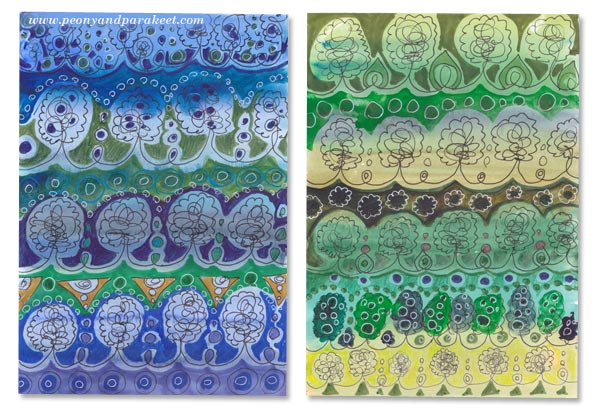
Decorative Pattern in Many Colors
This pattern looks luxurious when you make many papers in many colors with slightly different decorations.

Here are some that I made!
Decorative Pattern in Collage Art
I am fascinated by the interface between art, design, and crafts. The idea for the pattern came from knitting. I wanted to find a similar relaxing circular motion using a pen instead of a knitting needle. So that’s how a craft transformed into a design. But design can also be a part of a more expressive piece.

In this collage, I use decorative paper pieces with paint. My starting point was a watercolor background, acrylic paint, and a piece of decorative paper.
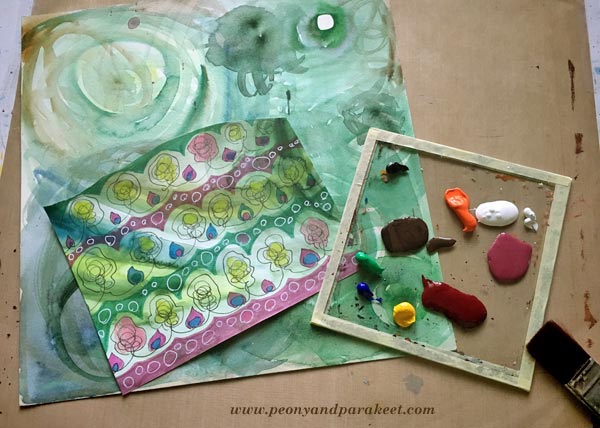
I cut a couple of decorative shapes and glued them on the background with gel medium.
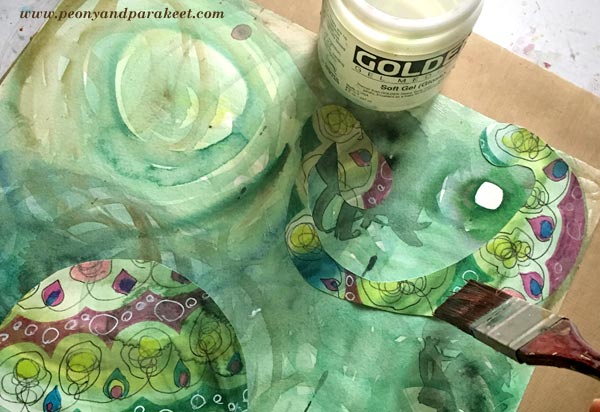
Then I continued with painting using acrylic paints. In the finishing phase, I also used some more paper pieces and few colored pencils. A week or two ago, I heard the geese flying over our house. They were leaving Finland, going to a warmer place for a winter. Their sounds made me think how limited we people are, not being able to fly so freely, not always being able to stick so tightly together. The screams of the geese felt bright yellow and for a short moment, I wanted to join them and not stay in Finland, waiting for snow …
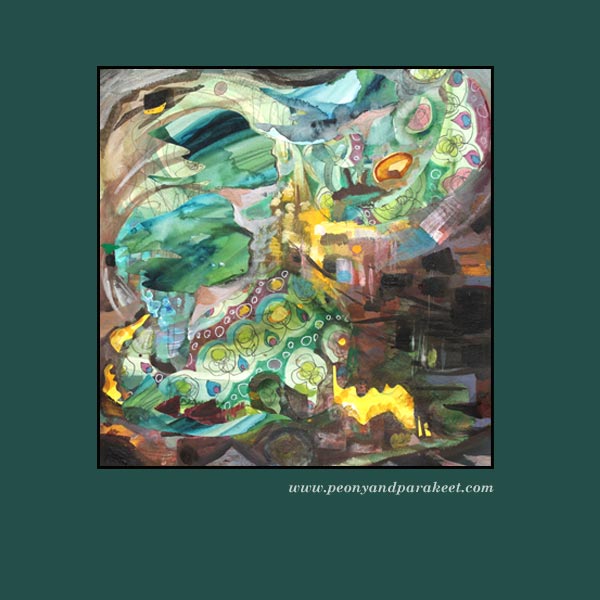
Get step-by-step instructions for doodled collage art – Buy Doodled Luxury!
Video: Full Art Journal Flip Through!

There are two special moments in art journaler’s life: starting a new art journal and finishing one. As the latter is much rarer, I am happy to announce that I have just finished this journal! I truly feels a small victory!
From Decorative to Expressive
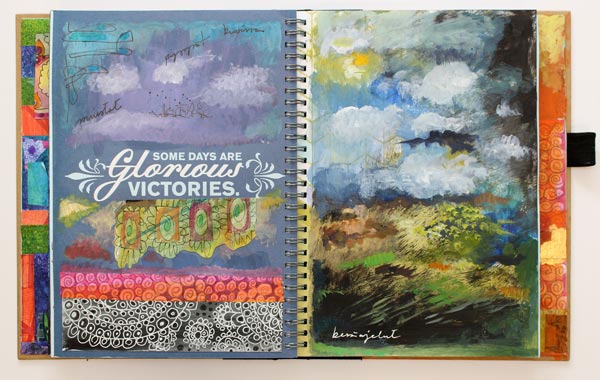
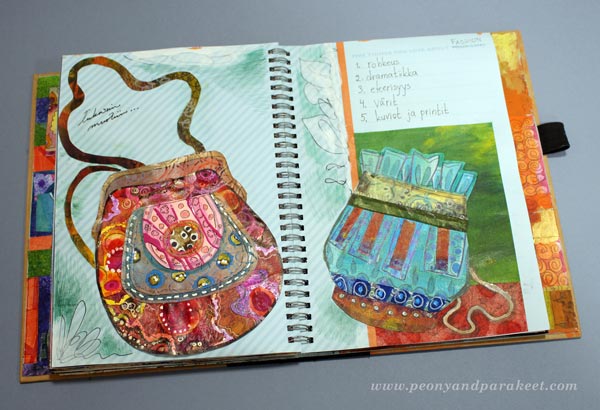
I purchased this Smash book in 2014 and intended to make it fashion and textile oriented. It has a lot of those, but also other stuff like little paintings, a few cards that I have wanted to save, and some collages that include photos. When I started this journal, I was very much into decorative style and the book has a lot of hand-decorated papers in it. Now, when I look back, I no longer see decorations as a self-purpose but a channel to move forward. Once I have got my imagination going, I have been able to move to create more expressive art.
Art Journal Flip Through
Many pages of this art journal are a bit clumsy but I still wanted to celebrate the finished journal. I also think that this kind of “collage book” contains quite a lot of ideas that you can use in your art journal too. So I created a flip-through video for you to watch. Hopefully it will inspire you to art journal every week, even if it’s just one little circle on the corner of a page.
Go deeper into art journaling …
Imagine Monthly – Sign Up Now!
Create stunning art journal pages with techniques that expand your possibilities!
>> Sign up for Imagine Monthly Fall 2016