
Transfer Your Expertise to Your Art

If you want to grow as an artist, the best advice anyone can give you is this: Recognize your expertise and bring it to your art! If you breathe art and only art, you will become shallow and miserable, and it will also show in your art.
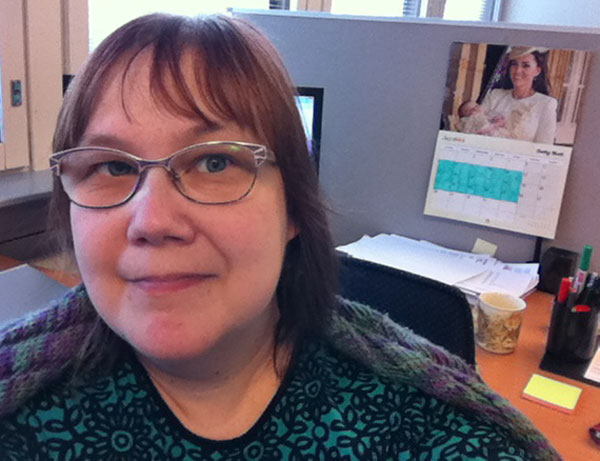
When I left my day job a year ago, I would not have said all this. I had my last days marked on the calendar (a special gift from a friend from the UK!) and I could not wait to forget most of the things I had learned from developing IT systems.
But the more I got distance from my past, the more I began to realize why I chose computers before art some 25 years ago. I realized that I also love to think, not only create. When I get a crazy idea, I try to put it into a logical form too. The architecture of computer systems still inspires me. Layering, hierarchy, interfaces … all those are concepts that I often apply to my art too. Being accurate and always questioning why – these basic nerd characteristics continue to describe me.
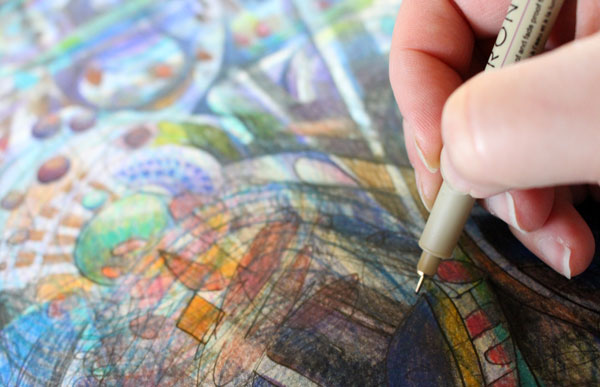
In the eyes of a systems developer, the world is full of details that have to be edited and classified.
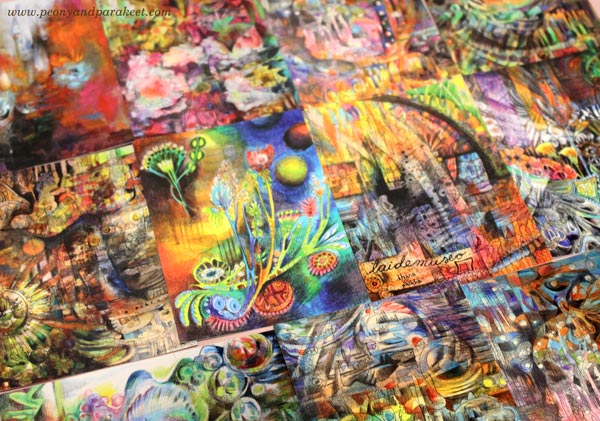
I have realized that the more I show my understanding in my art, the more it also relates to other people. They don’t have to be computer engineers to feel drawn to my art. Behind every expertise, there are values that communicate much more widely.

In computer science, innovations are constantly made. People working in the field always have to be ready to learn new things. And not only that, but they also have to make existing systems work with the latest technology, so they are constantly adapting old with the new. For me, creating new from the history of art and design is one way to use that skill.
I believe that when people say they don’t know what to create, they overlook their expertise. It is not very easy to notice all the things you already know and deeply comprehend. In information technology, it is common knowledge that the projects where many systems are integrated together are the trickiest ones. I used to manage that kind of projects. I became interested in them after I realized: if you really want to build something that will have a bigger impact, integration is the key.

When you begin to integrate your other expertise to your art, I am pretty sure that things get … just like in IT projects … a bit rough. Different values and opinions will fight, and co-operation seems impossible at first. But after the merging process begins, you will be more creative, and you will have much more to express than ever before.
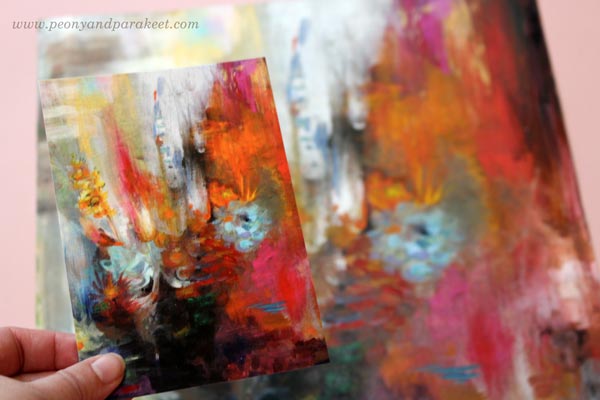
When I create art, I try to always arrange the time for the little nerd inside me. I know that if I just let my creativity decide, there’s a nagging voice inside my head saying: “You could do this better, why did you do that …” By taking breaks and thinking before creating, I accept my past and the part of my personality that is more logical than creative.
When you hear your inner critic speaking, maybe it is the voice of your expertise! Maybe part of you is disappointed not to get fully involved. Make your inner critic work with you, not against you!
Subscribe to my weekly emails – Get a free mini-course!
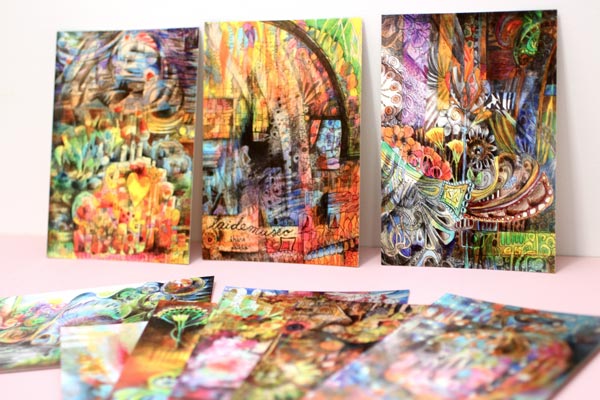
P.S. You can buy postcards at Paivieerola.com
Put Thoughts and Feelings into Your Art

I am excited to start the fall season with a video blog post! I will create the mixed media painting above from start to finish and show the atmosphere of my creative space as authentically as I can. I will also talk about Inspirational Drawing, my online drawing workshop that will begin in September!
Subscribe to my weekly emails – Get a free mini-course!
Force Yourself to Experiment!
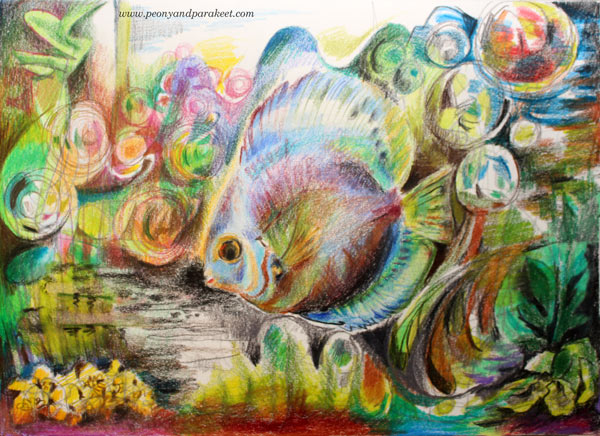
One day at the local library, I browsed the latest issue of International Artist magazine. I must confess that I had to force myself to do that as the magazine showcases a lot of traditional and realistic art, landscapes, and portraits. Especially in the recent ten years, I have been more interested in examining what is seen inside my head, reflected from outside world, than to illustrate the exact images of the outside world. But now and then I like to force myself to examine things that I don’t feel drawn. It makes me more open and allows me to pick ideas that are hidden behind processes that I am unlikely to obey.
So I gave myself a task: pick any photo and draw one element from it! After drawing and coloring the element I was allowed to fill the rest of the art journal page freely. So if I followed the boring routine, I was able to treat myself in the end.
Choosing the Photo
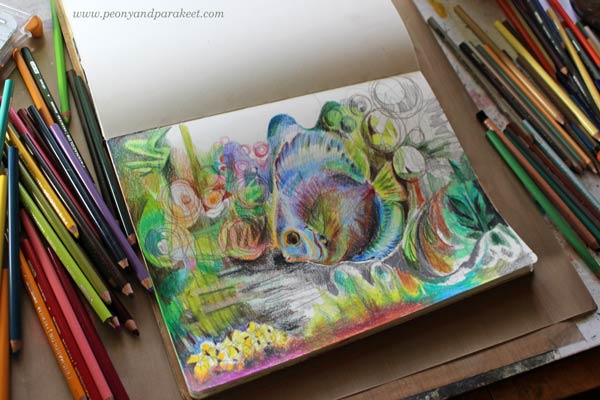
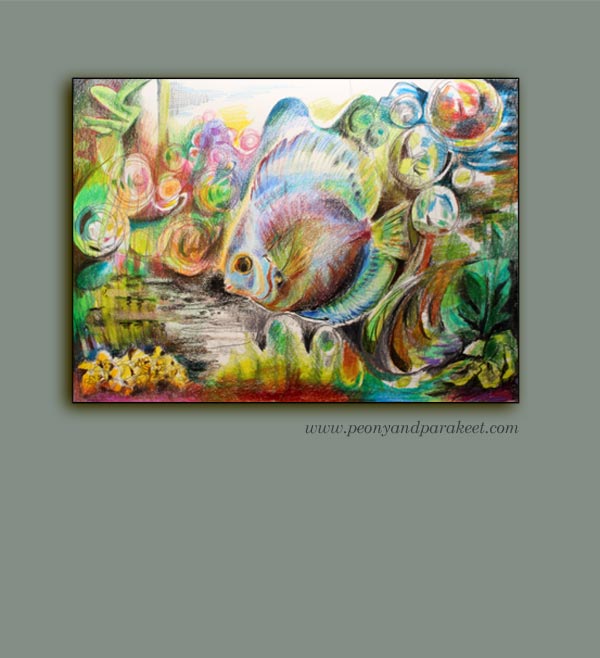
My husband has an aquarium, and I love it. Just recently he bought five new discus fish. I happened to take a photo once they were released to the tank. I thought that this image would be just perfect for the purpose. The more I art journal, the more I think of it as a diary. It’s mainly a diary of my inner world, but this fish is so beautiful that I could happily let it swim to my imaginary world as well.

Realistic Drawing – Sketching the Fish
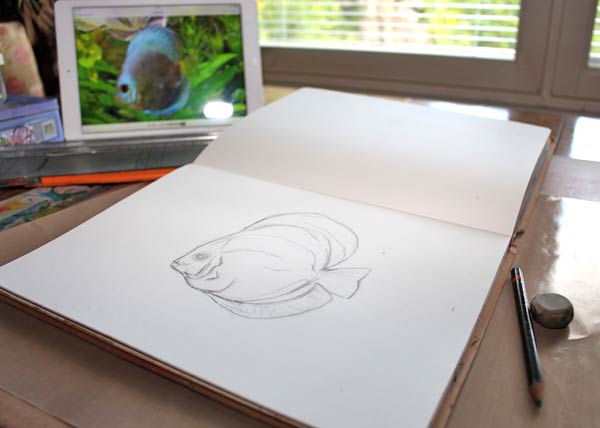
I don’t usually use a pencil as I like every stroke to be visible. However, this time, I followed the artists from International Artist magazine: they all seem to use pencil or charcoal for sketching. I drew a simple sketch of the fish taking care of proportions more than the details.
Coloring the Fish
I followed the photo in color choices as well. I just made each of the color more vibrant. While coloring, I also added more details to the fish.

After the fish had been finished, I gave myself the freedom to doodle my heart out.
Finishing
Coloring the fish with colored pencils did not feel particularly inspirational. But when I began adding colors to the mess I had made around the fish, all the fun began! I was able to do anything – yes anything! I thought about water flowing and bubbling freely, and everything started to look more loose and alive, even the fish.
Lessons Learned
After finishing the page, I asked myself, could I create more pages this way: combine realistic drawing with more imaginary elements. Yes, I could. But I think that it would be more fun to create it all freely: drawing the central element first with extra care and then adding surrounding elements. Or pick elements from various photos and construct a scene that way or … All in all, I got few new ideas, and this was a good experiment!
However, I know now why I love drawing that is liberated from all the expectations. It is much more fun and exciting! I also believe that it is good for us to both see and process what we think and feel. It is so liberating to let it all come out on the paper.
Subscribe to my weekly emails – Get a free mini-course!
A Natural Approach to Creating Art

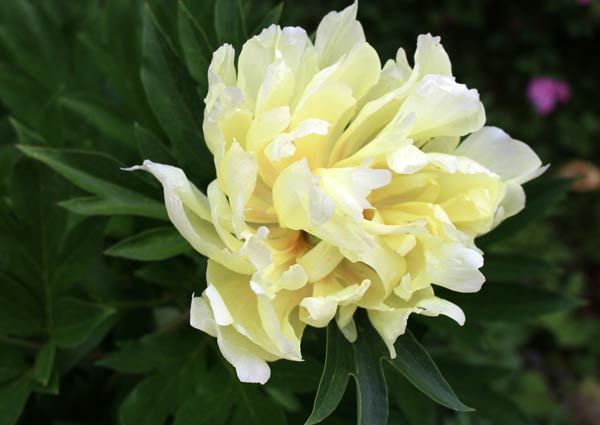
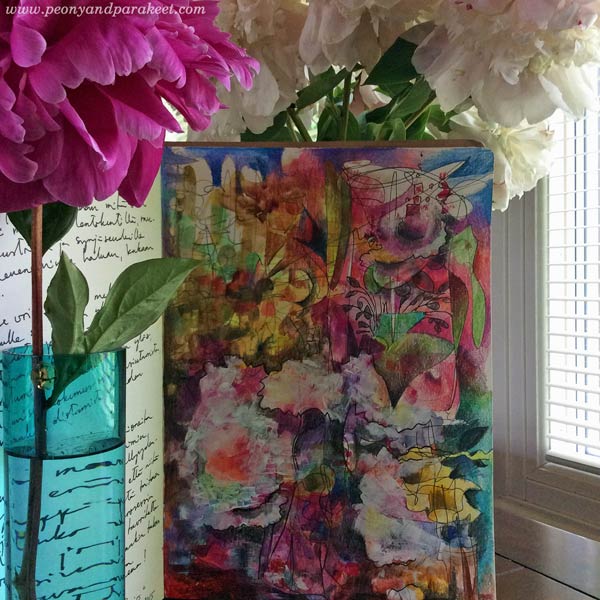
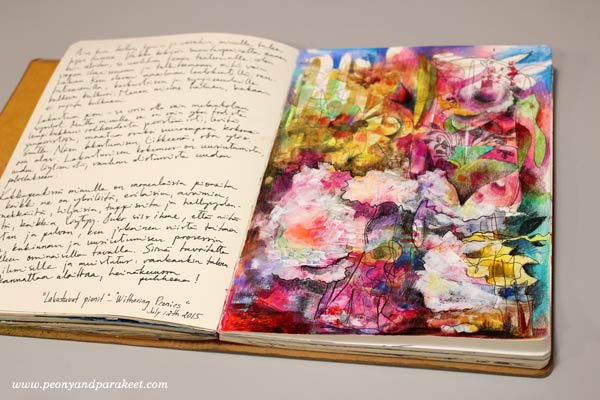
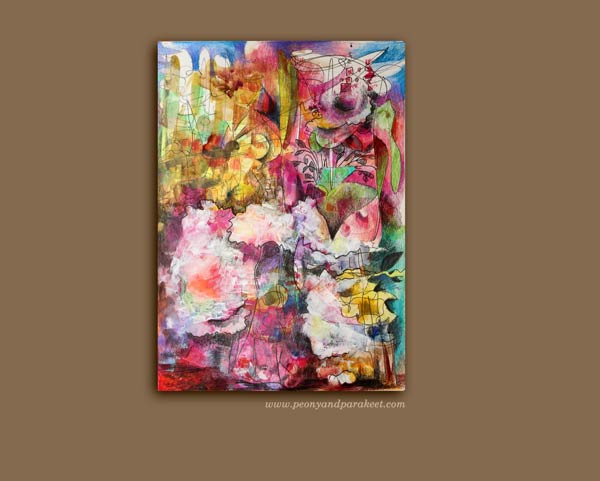
My latest art journal page is called “Withering Peonies.” What I love most about peonies is that they are always graceful and brave, whether they get ready for blooming or withering, whether it is late autumn or early spring. They are living in the middle of the continuous transformation, and it’s always enjoyable to watch them. They seem unique and individual; even every flower looks different from each other.
No Fixations, Just Painting and Doodling
When watching peonies, I think about the word “natural.” To be able to grow as artists, we need to learn to express ourselves naturally. Like peonies bend towards the light, we should bend towards our inner thoughts and feelings. So when I began to create the artwork, I did not think about anything particular, not even about peonies.

I started with acrylic paints and a palette knife creating thin spots of color using a restricted color palette. Then I changed to a drawing pen and let it move freely, without any fixated thought.

I believe that we suffocate our creativity when we have fixed images in our minds. We get disappointed if we cannot copy the images exactly on paper. But then, the fixed image is often imperfect, impossible to copy. It is more like a collection of visuals, a movie or an emotion that is not very detailed. If we fixate on that, we turn away from what is natural.
Moving forward is natural. It’s natural to let thoughts flow freely and add more colors and layers.
More Mixed Media
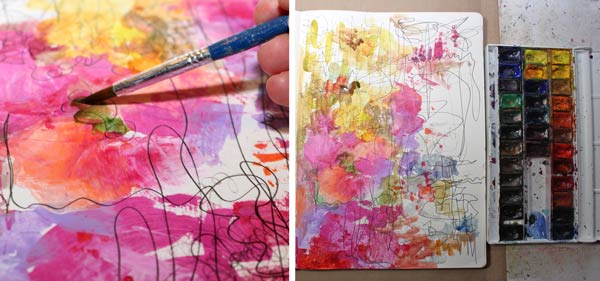
I used watercolors for some areas.
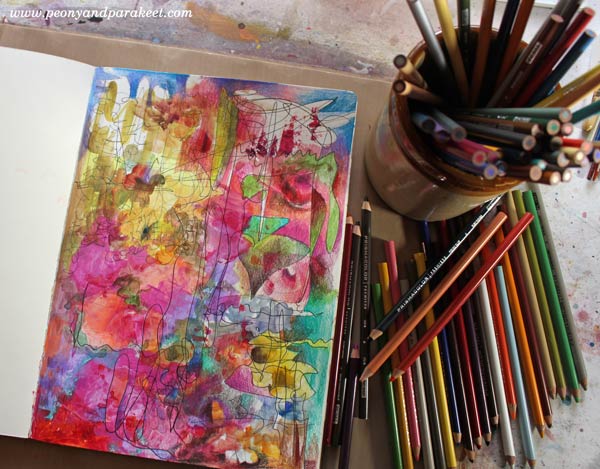
After watercolors, I worked with colored pencils.
A Theme Emerges
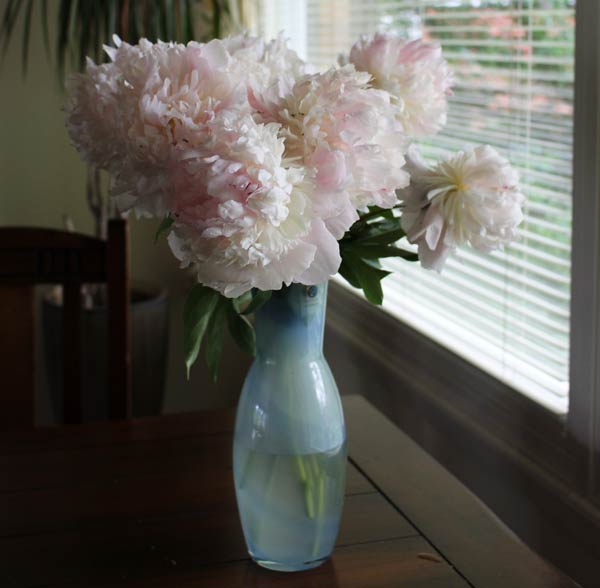
While coloring, I saw peonies emerging on the page and I remembered the peonies that were put in a vase to save them from the rain.
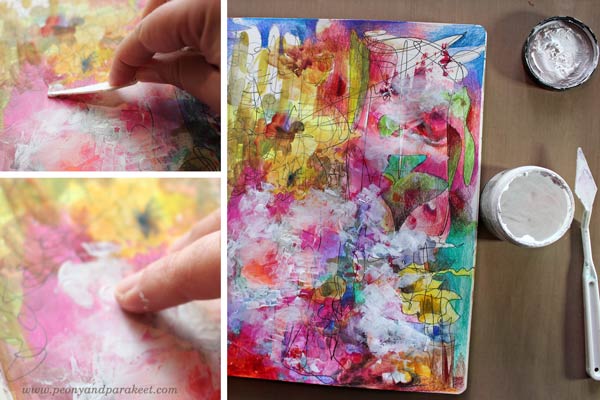
When peony flowers mature, they will lose their color. That gave me the idea to take some gesso and rub it on the surface of the piece. First with a palette knife but then with fingers, to soften parts of the edges.
Finally, I sharpened some details with a drawing pen and made some color areas clearer with colored pencils.
Journaling
Writing thoughts after creating an artwork feels natural too. Drawing or painting is not only a technical process, but it’s also a way to process thoughts.
The Natural Approach
Withering peonies can be a symbol of letting go. When you open yourself to art, something beautiful might disappear. But it is so exciting to see what else will appear – naturally!
Subscribe to my weekly emails – Get a free mini-course!