
Happy Holidays with a Video Story!
With this video I want to thank you for following my blog and purchasing my classes in 2015. It means a world to me, thank you for the bottom of my heart! Let’s make 2016 a year of art!
Let me be your mentor in art: Subscribe to my weekly emails!
Less Sketching, More Creativity!

Did you see my latest video: “Art is a Conversation”? I have made this piece by applying the principle presented in the video: letting one detail lead to another. No sketching involved!
The Creative Process with No Sketching Involved
I picked a random background made with watercolors and started adding collage pieces. They, in turn, inspired me to paint some elements with watercolors.
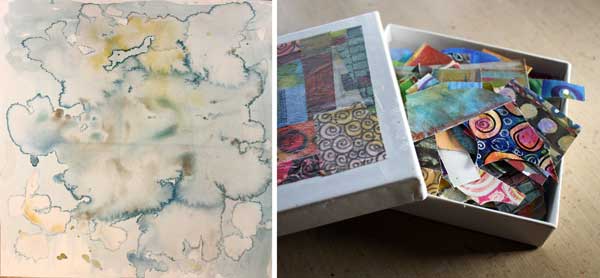
Here are the first steps:
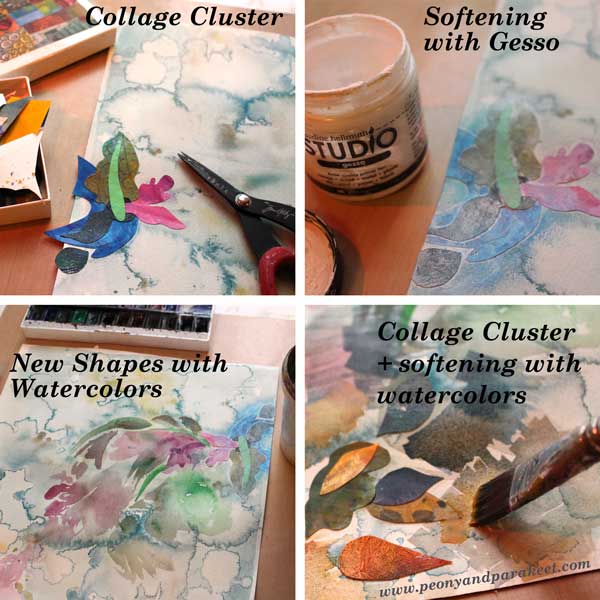
Why Sketch? Why Not?
You might feel the need for sketching because filling the blank page feels too scary. Some people want to sketch because they find it difficult to bring ideas that lead to something. If they create a collage, the result is just an evenly spread pattern and then what?
Dogs have taught me many things. One thing is to focus on the present. I try to teach them new things by dividing them into small steps. When I focus on explaining the next step only, they will listen and respond. They will do their best to understand and make most of my advice.

My beagles say: Stay close, focus and stop controlling what we can’t comprehend yet.
Those principals can be applied to art making too. Add new element close and partly on top of another. Enjoy each stroke, each color, and shape at a time. Stop worrying about the areas where you have not reached yet. Let creating grow your thoughts instead of being fixed to one idea.

When I reached the upper right corner, I saw a watercolor splotch that looked a little bit like a fairytale princess, so I quickly emphasized those shapes!
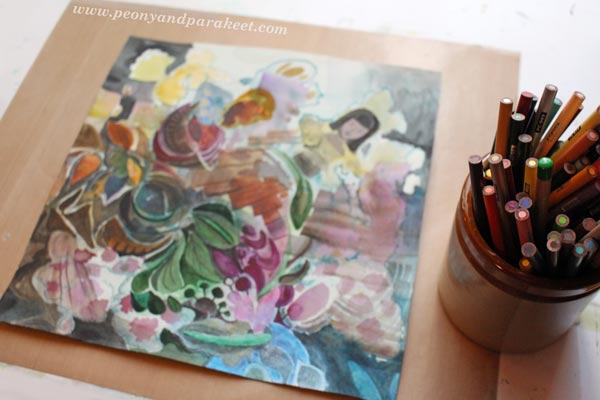
I believe that too much sketching brings too much stiffness: the stiffness of ideas, the stiffness of lines, the stiffness of composition.
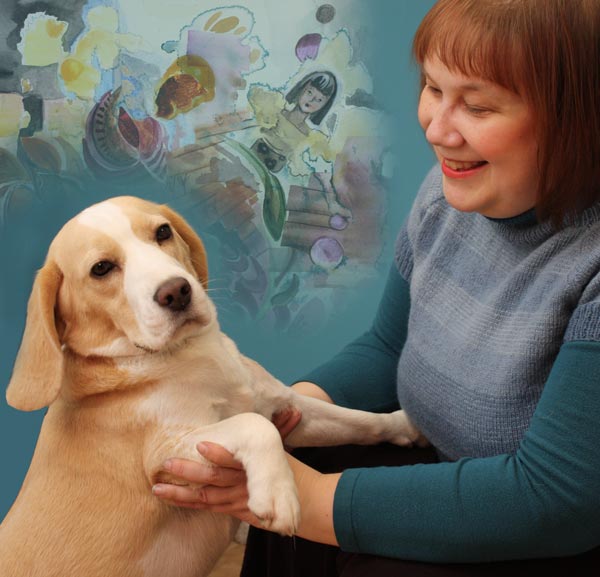
When we try to create with control, it is like trying to trace better than dogs do. We can guide them to sniff, but we also have to let them do the job.

Subscribe to my weekly emails – Get a free mini-course!
Art Is a Conversation

Let your art supplies take turns and enjoy one thing leading to another! See how my supplies talk with each other on the video!
Feel more confident in creating art journal pages!
>> Sign up for Imagine Monthly
New Class: Imagine Monthly!

I have been preparing for the spring season and composing my newest class: Imagine Monthly. This art journaling class lasts from January to June and is slower-paced than my workshops. It also includes less tutoring, but will be perfect for developing artistic skills through regular practice, compelling techniques and new ideas. Hopefully I will see you there! (If you read this in November 2015, you might actually want to stop reading now and purchase the class, as it’s on Black Friday Sale!)
Planning a New Class is Like Creating a New Collection of Art
When I am planning a new class, I use notebooks. I have Moleskine sketchbooks where visual ideas get recorded and a green Moleskine notebook that I use for plans that need more writing. Building a class is a creative process that requires not one idea but hundreds of small ideas that are processed into one focused entity.
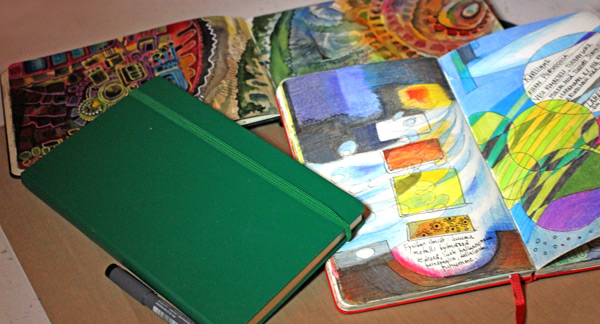
When planning a new class, I try to keep the collection of ideas as diverse as possible. I try to include not only technique-oriented ideas but also philosophic ideas, principles, practical problems, various motifs and styles etc. This also affects how my notebooks are filled. I try to be open to all kinds of things and write single sentences, play with different styles and break the content in modules that I can use for building new kind of combinations.
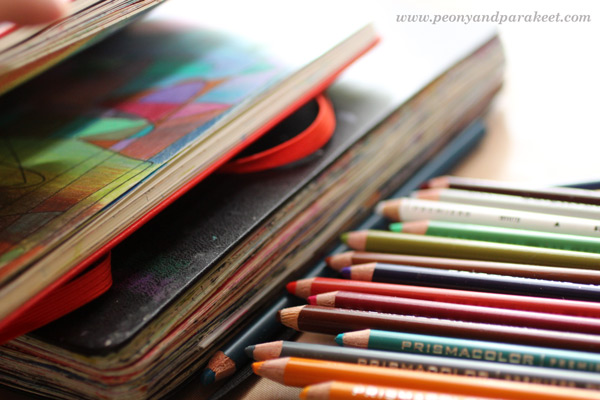
In my opinion, even most elaborate art journals should have occasional style changes and imperfect pages. It’s in the nature of art journaling to support creative process and not try to keep everything as tidy as possible. However, I have noticed that short sentences that made a perfect sense a couple of weeks ago don’t always remain useful. Same thing happens with fast sketches: some are just plain ugly!
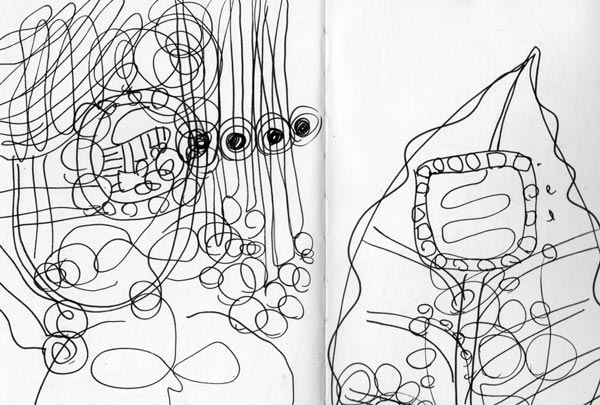
That’s why I think it’s important to make more detailed pages too: focus on the shapes and coloring and put more effort on saving the original idea.
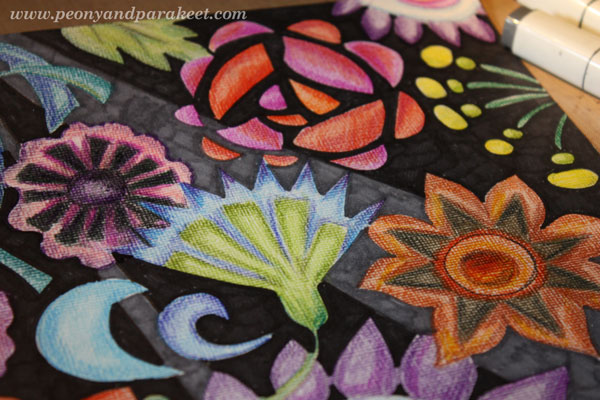
Like combining all kind of different ideas for one class, creating art is also a process of building new entities from smaller motifs. These motifs are like building blocks. If you have problems with your imagination, maybe you don’t have enough building blocks in your toolbox? Or if you want to take your style to a new direction, maybe you need new building blocks too?
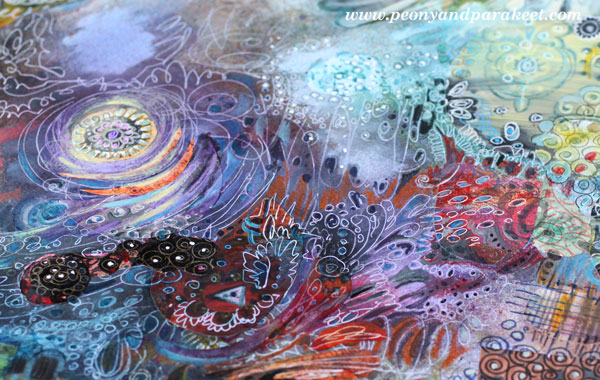
In my opinion, best art journals include quick sketches, collections of reusable building blocks and luxorious, imaginative pages. These art journals can work as creative portfolios – notebooks that we browse with pleasure to find new ideas for the next pieces.
Imagine Monthly – Pre-Order Now!
Sign up for a 6-month art journaling journey Imagine Monthly to get new building blocks and create pages that will take your art journals to a new level! To thank you, my most active followers and customers, I have tried to make the class as affordable as I can. And if you buy the class during Black Friday weekend, including Cyber Monday (Nov 26th-30th 2015 PST), you will even get a special discount price!
