
Find Your Art Journaling Inspiration!

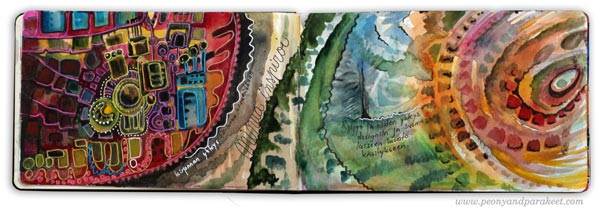
After stretching my limits at the last blog post, I felt the need to go back to basics. I picked my Moleskine Watercolor Notebook and made three spreads by just answering the question: what does continually inspire me?
The short answer is: I am constantly inspired by the history of decorative art. I believe that it’s important to respond to the question on a general level like this. If you only list specific artworks and other artists, there may be less room for personal interpretation. If you define yourself too tightly through others, you can find it hard to figure out what to create next and how to find your personal style.
My Art Journaling Inspiration Sources
I am constantly inspired by embroidered fabrics and wool rugs from the first half of the 20th century.
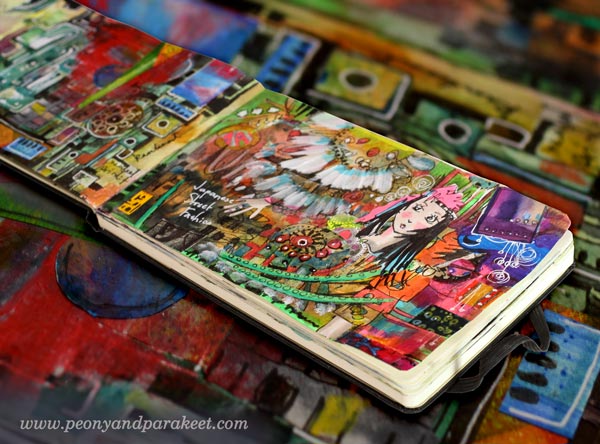
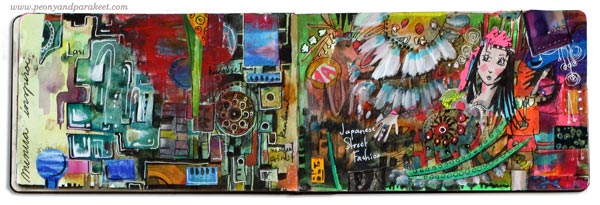
I am constantly inspired by art glass, fabric prints, and the way these characteristics are seen in today’s street fashion, especially Japanese street fashion.
I am constantly inspired by Russian decorative plates, European Art Nouveau and the way they combine drama with natural colors and shapes.
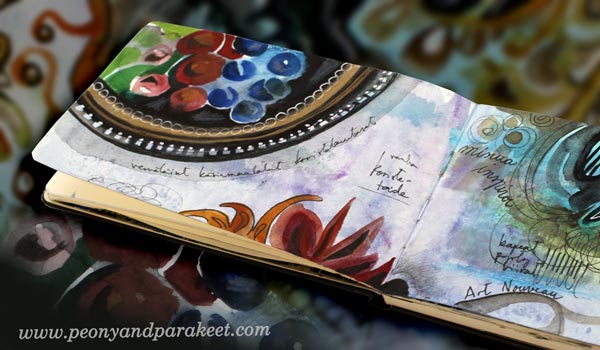
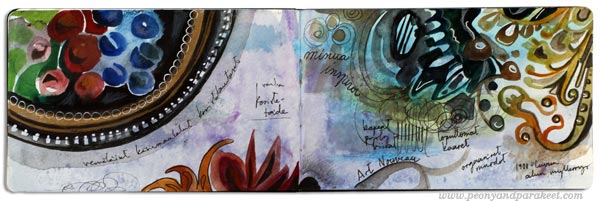
Even if I don’t have the ability to paint decorative plates or the looks to wear Japanese street fashion, I can use them as a constant source of inspiration. I can let them show in art journals and other artworks, often in a way that is less literal but still obvious for myself.
The history of decorative art fills my mind with values that I can resonate with. They are understanding nuances, focusing on details, telling stories that last time, uplifting people with beauty and spirituality and integrating production with technology. It may not be the whole big picture of the subject, but it is how I look at it. That in turn, inspires me to create art, to blog and to deliver new techniques and workshops.
Let art journaling make you happy – fill your pages with subjects that truly inspire you!
Monthly art journaling inspiration: Sign up for Imagine Monthly!
Processing Visual Inspiration
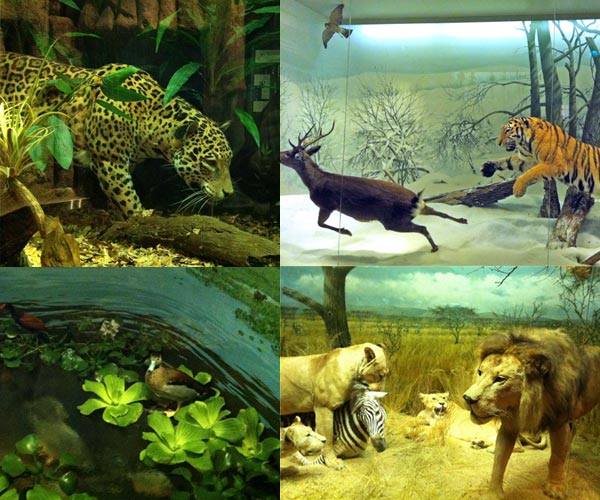
Last week, I visited Natural History Museum of Helsinki. My idea was to take a sketchbook with me and make few sketches – if I happened to see something inspiring. My skeptic attitude changed once I entered the place. I remember visiting the museum over 20 years ago but only the front door of the old building seemed a bit familiar, everything else looked new to me. I was mesmerized by the colors and details of stuffed animals, and only after a short while, almost overwhelmed by the amount of information and visual stimulation. It would have been impossible to put all the inspiration into sketches, so I took photos.
When I got back home, I knew I had to create an artwork inspired by the visit. But my mind seemed too full, not knowing where to start, what to express. I started a painting but against all my principles, I tossed it because I was totally clueless even if my mind was full of inspiration!
After a couple of days, I decided to make a sketchbook spread to help me process the subject. I loaded the photos to iPad and created several layers of watercolors while browsing the images.
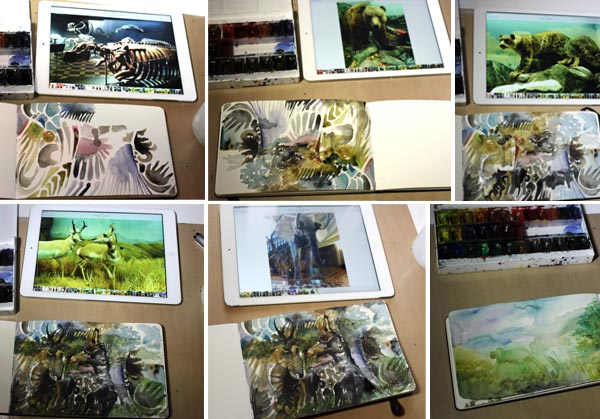
I wrote down some of my thoughts: how I admired lions and African animals in general when I was a child and how rich country Africa is, in terms of nature.

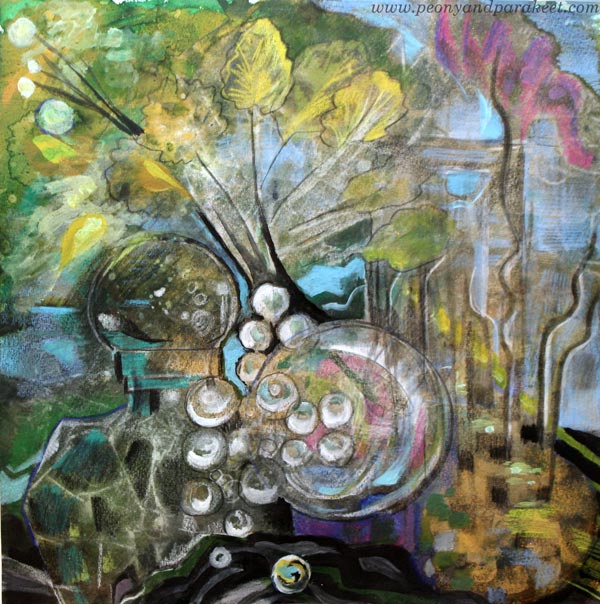
After this spread, I asked myself: what inspiring did I see that than the animals. The answer was: glass cabinets and the concept of collections that were kind of surreal. With that in mind, I started a painting on a thick watercolor paper.
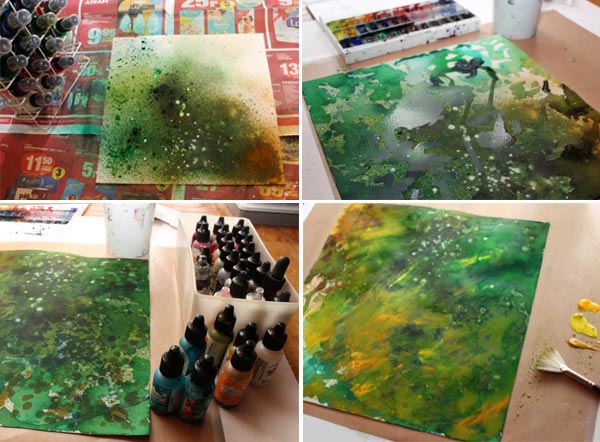
Randomly creating new layers with ink mists, watercolors, alcohol inks and gouache paints, I focused on the color first. Greens, turquoises and ochras were the ones that made the strongest impact on me when looking inside the glass vitrines.
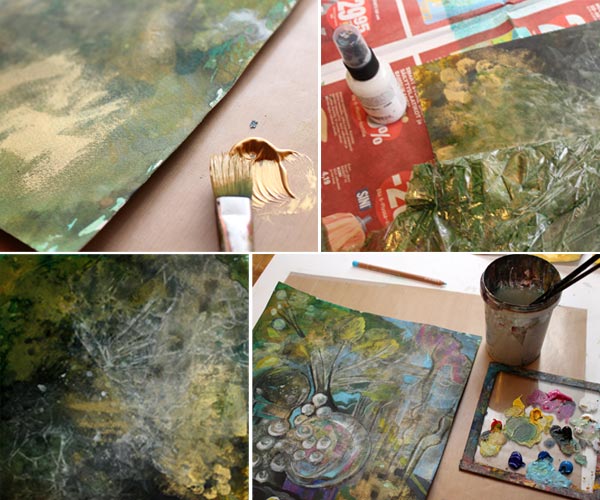
With gold paint and white ink, I created more details to embark my imagination. Then I thought about Slavic melancholy, fall, piano concertos and let all of that get mixed with glass and nature. When I looked at the end result, I kind of like the idea of mixing a landscape with a still life. The idea is surprisingly similar than what I saw in the museum: still-lifes that are also landscapes! I would have not thought it this way though without processing the subject so much. By taking photos, painting without a clue, working with the sketchbook and then creating a lot of layers made me somehow understand what inspired me in the first place. When I let go and followed the pencils and brushes, it was ready to come out.
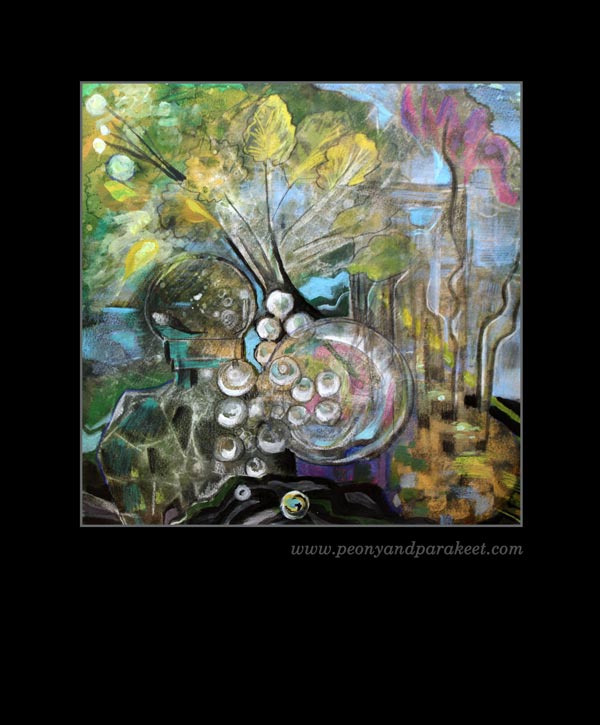
What I learned was: sometimes the creative process takes a lot of time, a lot of phases, don’t stop too soon!
Challenge yourself in mixed media art! Buy a bundle of 6 art journaling classes!
Art Journaling for Organized Person
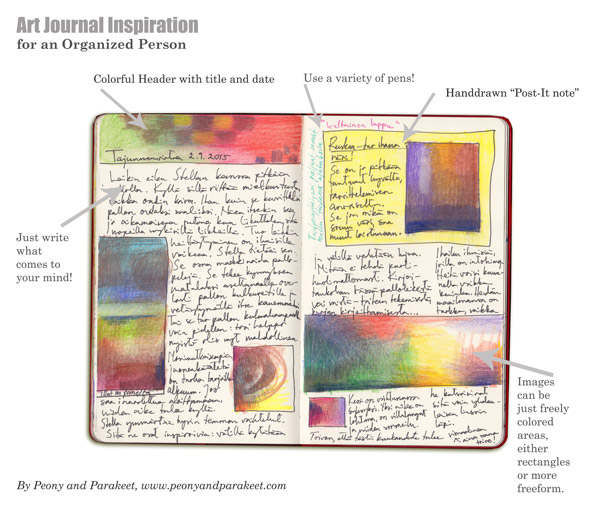
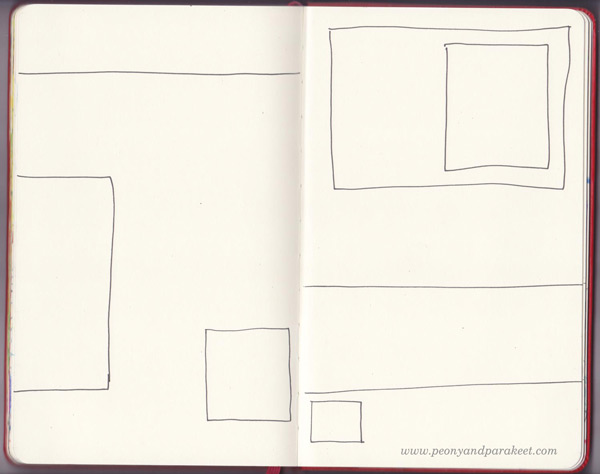
I wonder how many people have given up art journaling because they are not mess makers. Who says your art journal has to be a mess? Just draw a simple structure for a page and then have fun coloring and writing what ever comes to your mind! Don’t be afraid of starting art journaling, this page layout gets you going!
Let me be your art teacher: Subscribe to my weekly emails!
From Decorative to Expressive Art
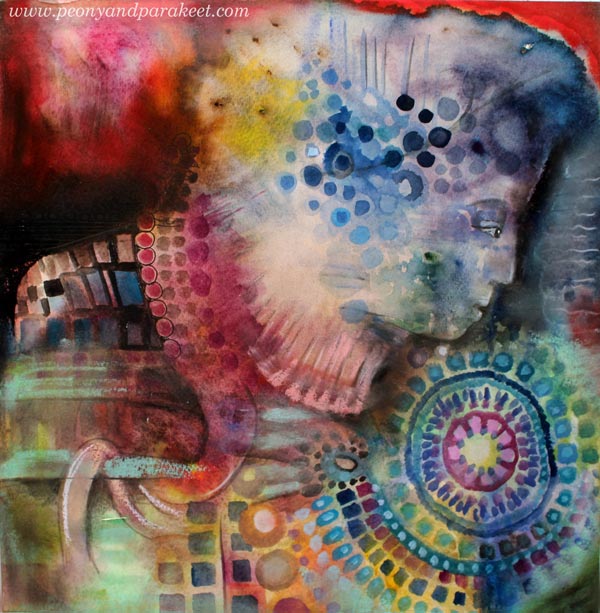
Last Friday, I traveled two hours by train to a yarn shop at Tampere. Not just to purchase new yarn, but to meet a famous knitting pattern designer Stephen West who had been invited to Finland. While I was attending his workshop, I was excited by the knits he showed and the stories he told. There were silent moments. We, Finnish women, counted stitches and pondered about what we heard. We Finnish can look very serious, quiet and occupied, even if we are about to burst with excitement. Stephen put it kindly: “Finnish carry themselves well.” That introvert attitude is also visible in this recent mixed media artwork, “Self-Portrait as a Knitter”. The person’s focus is so much on details that the inspiration, the yellow spot in the back of the head, doesn’t have room to show up.
From Over-Decorative to Expressive-Decorative
Sometimes similar kind of thing happens when we create art: the inspiration does not show in the result. There can be so much decoration going on, that not much room is left for the expression. We cover the background with little motifs and surface patterns, instead of enhancing what’s already there.

I admit it’s fun and fulfilling to work with thin brushes, pens, and pencils. Making a circle after a circle is like knitting a shawl, stitch by stitch.
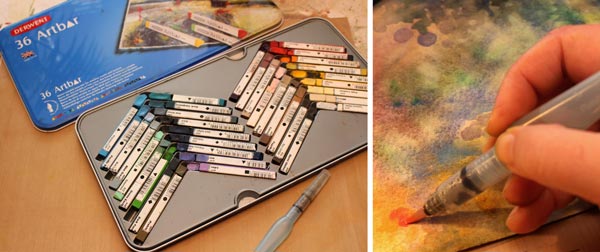
However, it’s good to add a little more variety and contrasts so that the expression comes through. It’s like changing the yarn or needle size once in a while!
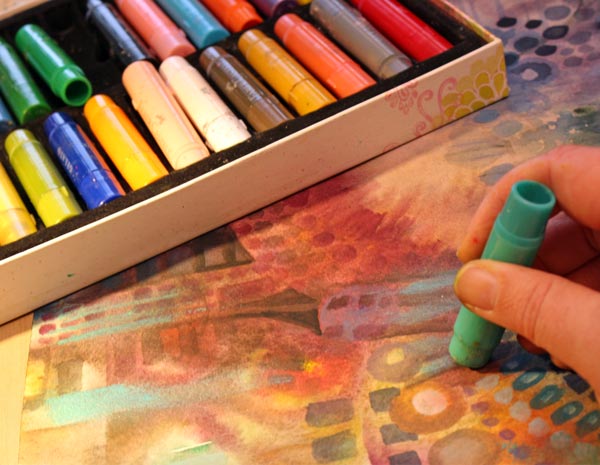
And like in handknits, just when you think your work is ruined, you need to calm down and do the finishing.

When knitting, you sew the seams, iron everything carefully and add the final balancing details.

When creating art, you bring up the most important details and connect the dots so that everything falls into its place.
You Can Create Both Expressive and Decorative Art
Sometimes there are debates whether decorative art can be expressive as well. But you can be both decorative and expressive. You can give meaning to your motifs. You can let motifs be pieces of a puzzle instead of covering everything evenly.
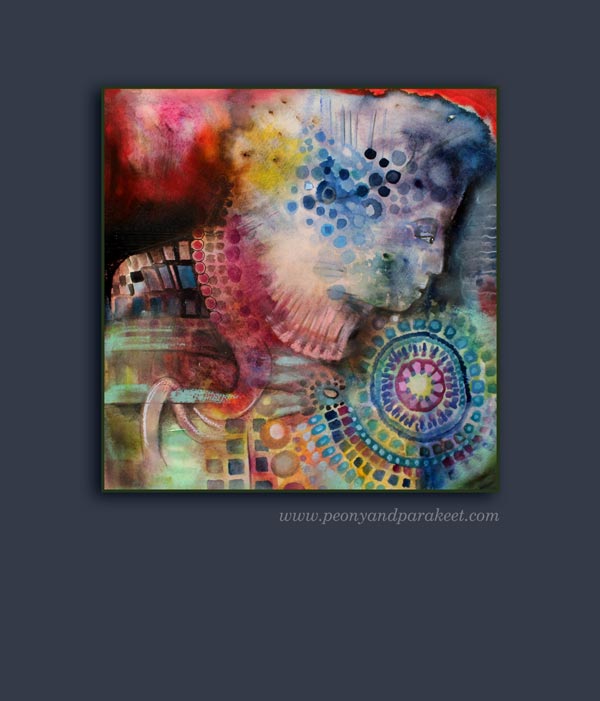
More decorative-expressive art with watercolors: Watercolor 101 for Intuitive Painting
If you are a knitter, check this out too: Folk Bag Workbook