
Writing a Craft Pattern
At first, I should probably give you a warning: I am in the middle of the chaos, this not so organized as my posts usually are! With this post, I invite you to the process of writing a craft pattern. I have had this idea for 6 years and it has become hugely important to me.
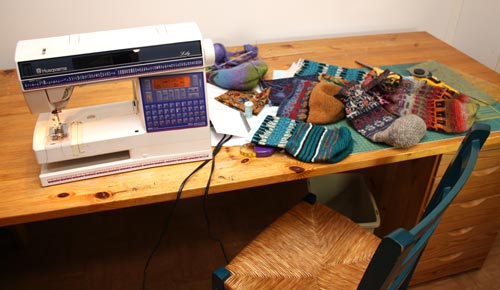
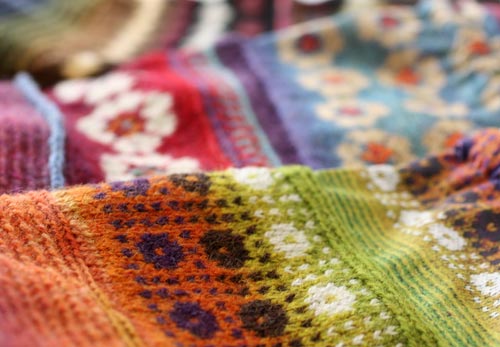
I designed a drawstring pouch which combines yarn and fabric in 2008. I have made tens of those bags, which I call folk bags, during the years and dreamed about writing instructions of how to create them. Within years I have learned a lot of making these bags. What first started a simple idea and simple sketch of a pattern, has become much more. It became clear when I began working with the pattern that I won’t be writing a regular craft pattern. I am writing instructions and formulas about how to design and customize folk bags so that you can make your own unique bags.
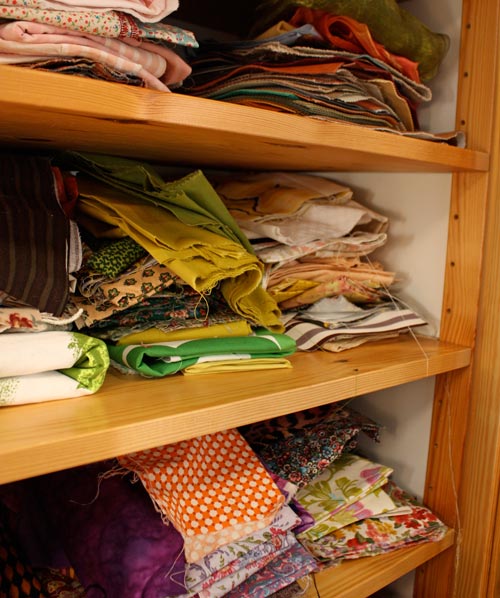
Writing a pattern is not just writing. I have to test each sentence for many times. So I need to actually make more bags while I am writing. Going to the fabric stash in the morning feels as inspiring as grabbing the pens and paints. What I find challenging is to go back and forth from knitting and sewing to writing. I do not know if it was a good idea to make the pattern both in English and in Finnish – and write the both language versions at the same time! Sometimes I get so mxed up that I have to translate the most simple words from English to my mother tongue Finnish! The good thing with working with two languages at the same time is that the instructions get checked much more carefully.
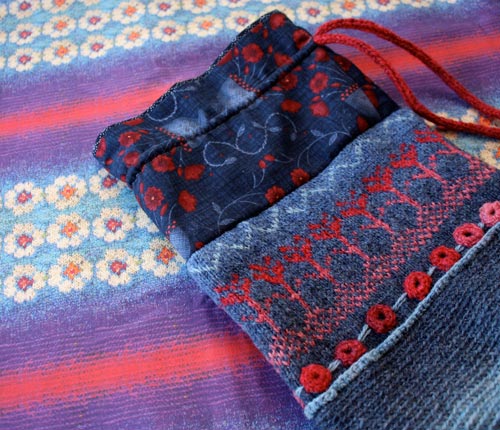
I knew I had taken a lot of photos of my bags during the years. It seemed to be a good thing. All the ideas that I have had and that had been implemented are recorded. Furthermore, I have a special folder in the photo organizing software where they all are. And yes, that’s great. But there are over 500 photos plus the new ones I have took during the writing. I need to pick the best images for each chapter and then process them. There’s still 250 photos to go through and few more to shoot.

After all this, I still have to confess that my heart sings when I am writing the pattern. I hope that with this work I am able to spread more joy than if only I made the bags. I wish that there will be more people experience the joy of both making the bags and receiving them.
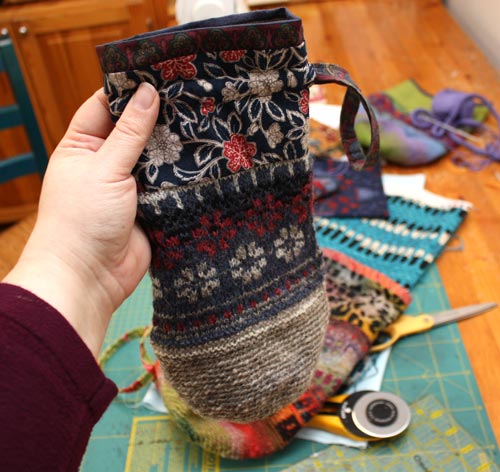
I hope to get the pattern published in this month. I already have finished many chapters and soon I will begin to insert the texts and images to the desktop publishing program. The working title of the pattern is Folk Bag Workbook. It will be available for purchase in my web site and at Ravelry.
Next week I have more news, also textile related in a way!
How to Imitate Glass with Paint
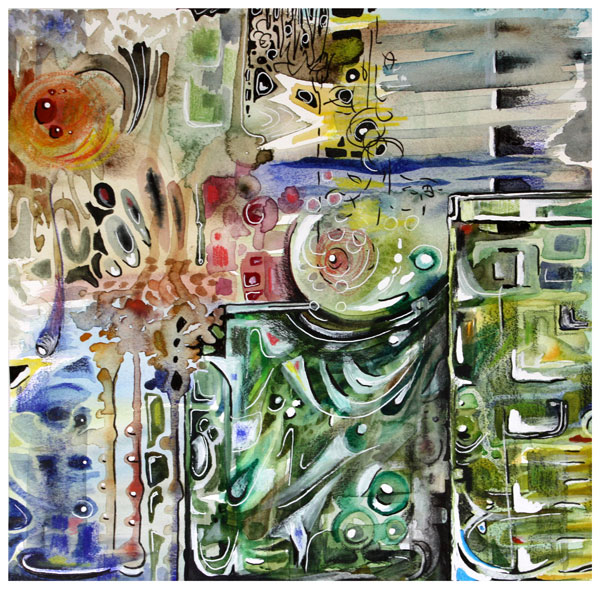
For this painting, I learned how to imitate glass. It is called “We Will Protect You,” and it’s about parents trying to protect their children. The parents have good intentions, and they do their best, but in the end, they have to let the child step into the world. I have painted two glass vases to represent the parents. The child sees the world through the parents, and even if they want to protect the child, they are fragile too.
Artistic Inspiration from Glassware
The idea for the painting began last Saturday when I went to the local library to get some ideas for the future blog posts. I saw the book called The Art of Glass. It was about Kaj Franck, a Finnish designer who was extremely skillful in designing glassware.
 Most Finns have Kaj Franck’s glassware. He didn’t design unique pieces only, but everyday glass as well. My most precious glass item from him is this red “Goblet” which was originally owned by my aunt. She passed away ten years ago, and the color of this Goblet reminds me of her vivid character.
After browsing few pages of the book, I knew I had to make something glass-related. It’s not the first time the glass has inspired me: see the collage inspired by Nanny Still, and I have also knitted a folk bag inspired by Oiva Toikka. Both Nanny Still and Oiva Toikka are Finnish glass designers as well.
This time, I wanted not only to find out how to imitate glass but to explain it to you too. Before beginning the bigger painting, I painted few circles on a small paper and tried to make them look like glass.
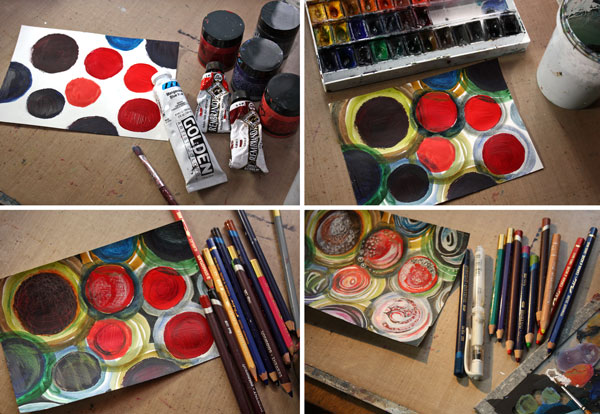
I used acrylic paints to paint the circles and then watercolors to add more circles around the previous ones. The shapes were softened with colored pencils. Then I added white with acrylic paint and a gel pen, and black with a PITT Artist Pen.

I made each circle a bit different. I was not fully satisfied with them, though. The center circles were too solid in color. I decided to start the bigger painting with watercolors as they are easier for making transparent layers.
8 Tips on How to Imitate Glass

1) Paint several transparent layers which intersect each other. Use a lot of water to create thin layers.

2) Use a lot of hues and shades of the same color. Mix colors to get new tones which have slight differences from each other. Use small spots of other colors too as glass reflects its surroundings.

3) Paint geometric shapes like circles, squares, half-circles, and triangles.

4) Add white with acrylic paint. When painting the white shapes, soften one side of them by adding water.
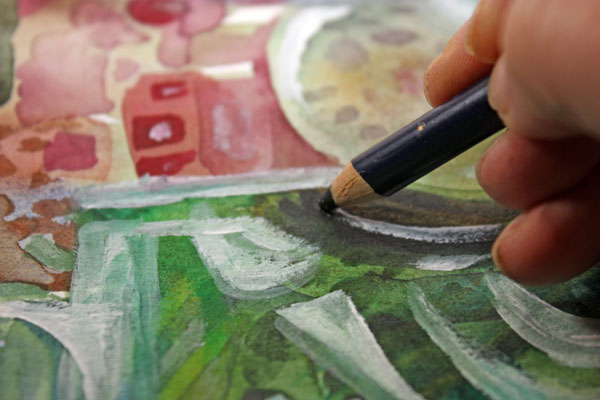
5) Use a black colored pencil to add dark near the sharp edges of white areas. Make the dark areas soft too.
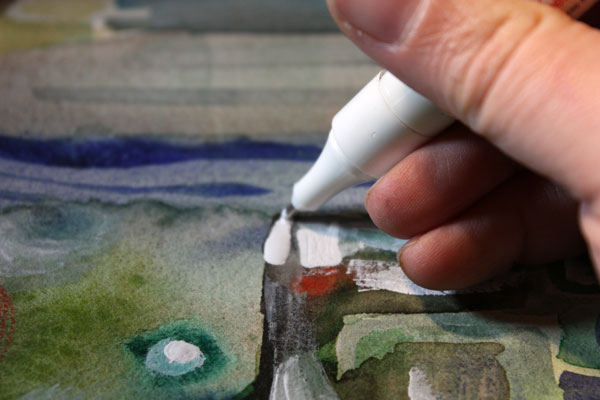
6) With correction pen, add brilliant white to highlight parts of the white areas.

7) Add jet black with a black marker (I used a brush tip PITT Artist Pen) to make dark areas pop as well.
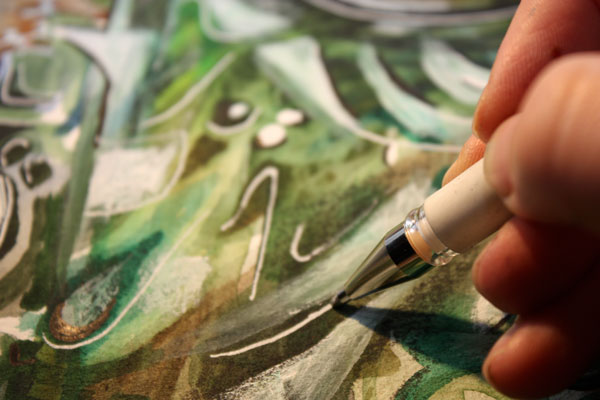
8) Finish with thin lines using a gel pen and a black marker. It will make your glass look a bit thinner and more elegant.

What kind of glass do you like the most? Does mimicking materials interest you too?
Let me be your mentor in art: Subscribe to my weekly emails!
Do You Paint Your Dreams?
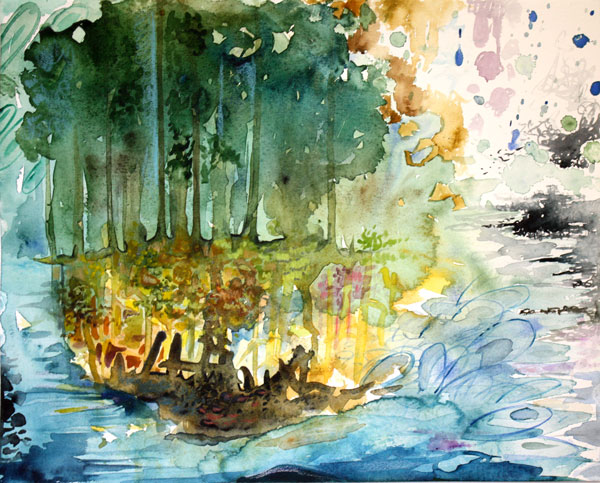
My recent watercolor painting is called “The Forest Speaks”. I painted it using the intuitive painting method which I show on the video “Watercolor 101 for Intuitive Painting”. The initiative for this painting came from a dream, almost a nightmare that I had a few days ago.
Before I quitted my day job, I developed e-services for the Finnish forestry sector. I had planned my resignation for a long time. It was a tough waiting period. A couple of months ago I finally entered the full-time creative entrepreneurship. After resignation, I felt free and happy and practically stopped thinking about my old job.
But just recently I began to see these dreams – some kind of nightmares. The setting was always the same: my last day at the old job. There was so much to do that I was never able to leave. I woke up sweaty and distressed. Then, in the latest of those dreams, I was given one final job: to paint a painting for the hall of The Forest Centre. I knew exactly how it should look like but somehow did not get it right. Again, I woke up with anxiety.
In the morning I began to think that maybe there’s something that needs to be handled and documented – painted that is! So I took my watercolors and began to paint the image visioned in my dream.

The painting is finished now and the last nights have gone smoothly. I became convinced that our minds can be slower than we think. Our subconscious may have a lot to deal with. By nurturing our creativity we can become more aware of all what’s going on inside us. They might not be any bad or weird things, they are just stories that need to get told. For many people that I used to work with, the forests and forestry were very important. The forests spoke to them. For me, it is art that speaks and that’s why I had to leave.
After this experience, I want to interact more with my dreams. Is that relevant to you too? Have you ever painted anything related to your dreams?
Subscribe to my weekly emails – Get a free mini-course!
The Feelings while Creating Art
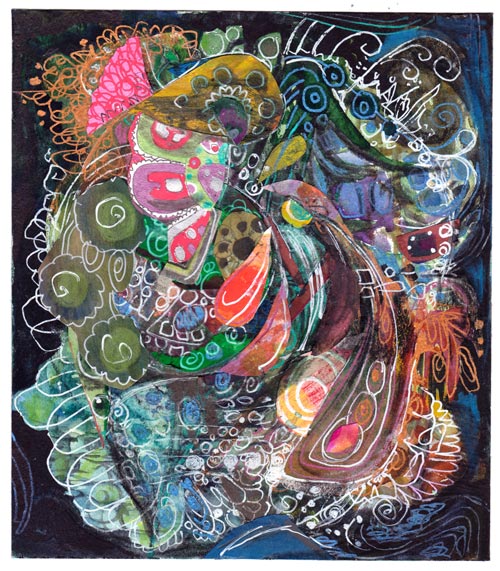
I wanted to create a video blog post again but due to my flu, I was unable to speak. So I made the video with the background music only, but I think that the subject of it is most interesting: the feelings while creating art! During the creative process we often experience a variety of feelings that have affect on the end result too. You will get to see what I felt while creating this collage!
I often start pretty smoothly, then face several problems and in the end it all comes together. Feeling vulnerable at some point of the process is very common for me. I think that when creating you have to open up so much that it can feel intimidating. But if you do not cross that line, the end result does not feel so close.
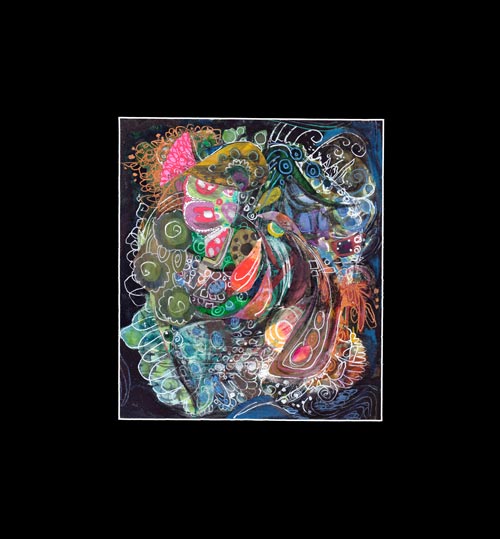
Record your feelings while creating! Then analyze how they show in your artwork!
Subscribe to my weekly emails – Get a free mini-course!