
Light, Water and Fire
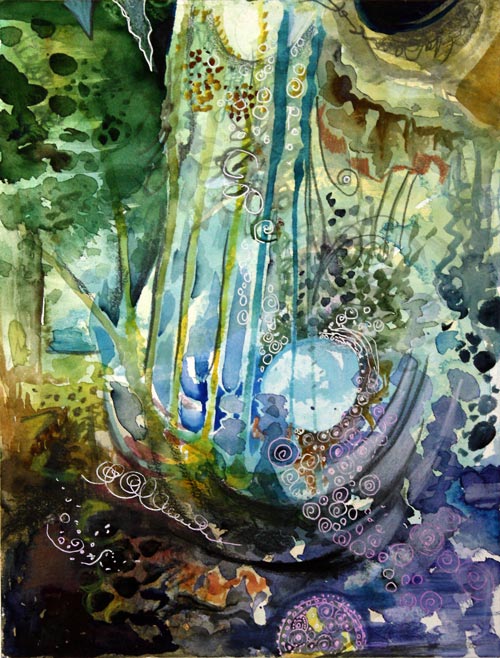
This watercolor painting is one of those I made for the video Watercolor 101 for Intuitive Painting. The painting uses the techniques presented on the video, so I won’t publish phase photos this time as they are on the video. Buy the video and you’ll learn the techniques!
This blog post is about doubt – the doubt that all the beauty you can create in your art does not really exist. Who cares? Well, at least I do. To be exact, a part of me does. Besides design, I have a degree in computer science and sometimes I can be an overly organized and analytical person. So, there’s a little engineer in me who always questions what I am doing. I call her “he” here, just to separate the little engineer from the little artist (the artistic side of me) easily.
When she showed him the watercolor painting, the little engineer said:
– “Ok, but can this really exist?”
– “Well, it’s an intuitive painting expressing how I see the music”, she answered, feeling a bit offended.
– “It is called Graceful Aria”, the little artist continued.
– “I just see some kind of landscape there”, he said. “It makes me wonder if that kind of landscape could really exist.”
– “I don’t think the landscape is important here. If you want to grab something concrete, you should look for the light and water. This painting focuses on them.”
– “This is just the kind of dreamy thoughts from you, that I do not understand. I just see trees, mud and some sky. But to be honest – if you want to paint trees, mud and sky, you could do a better job there.”
The little artist gritted her teeth. But then she realized she could actually show the connection of light and water. Namely, the little engineer had filed all her photographs so that it would be really quick to find the nature’s wonders she had documented while the little engineer had controlled the leashes of the dogs.
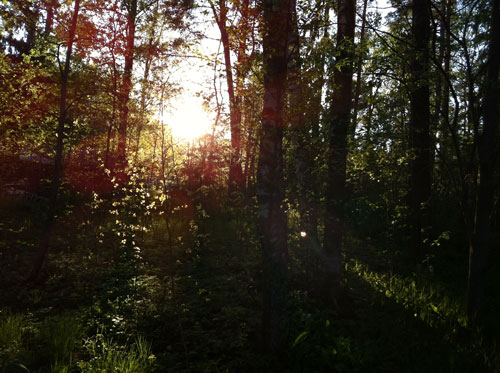
“Remember this evening?”, she asked. “See how the light hits the leaves!”
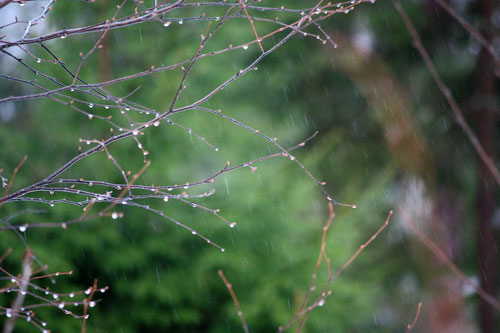
“This spring was really rainy. You hated the rain, but look how beautiful and soft it can be!”
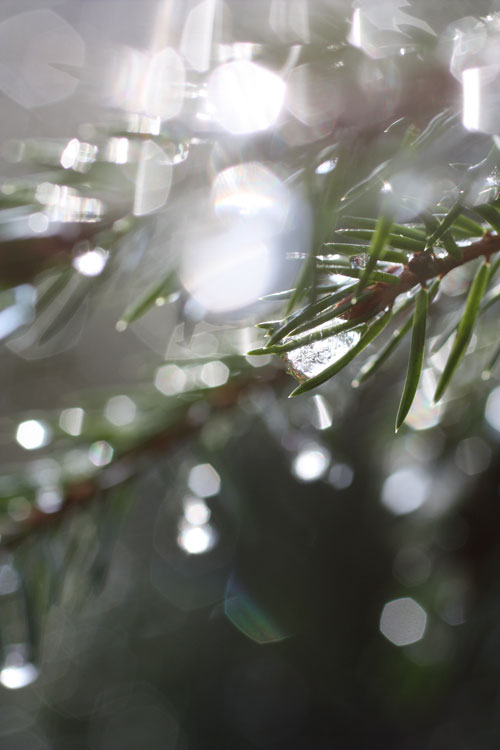
“And you must remember this magical morning, when the rain drops had frozen and it was like millions of diamonds were set on the trees!”
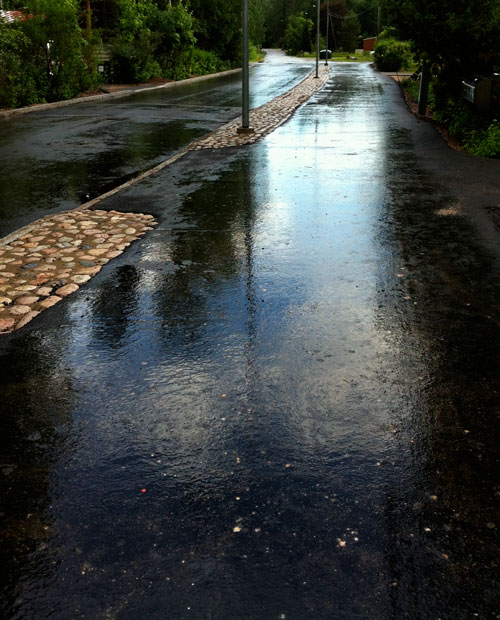
“When we walked home one afternoon, it was mesmerising to see the sky refelecting from the fresh asphalt. In the painting, the water creates wonders too. It makes the watercolors show their true beauty.”
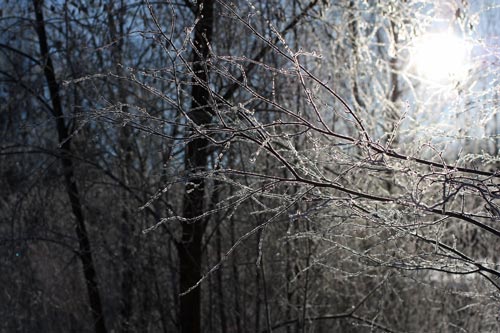
“I always want to photograph this, when in March, the snow and light interact with each other. The snow is frozen water, did you know that?”
“Of course I knew that! Ok, you proved your point. If you could always present things as systematically as you did here, we would not have any problems, you know.”
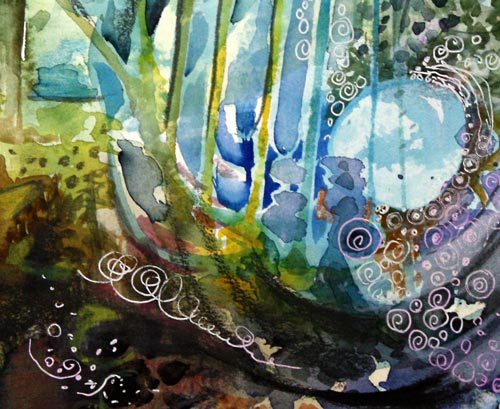
– “I need a nap today since it’s so tiring to explain big things, like art, to you.”
– “I thought I was able to fire you up to get the blog post done! Go ahead and take the nap, meanwhile I can sort out and sharpen your colored pencils!”
Have Fun with Watercolors – Buy Watercolor 101 for Intuitive Painting
Video Blog: Mix-and-Match Inspiration
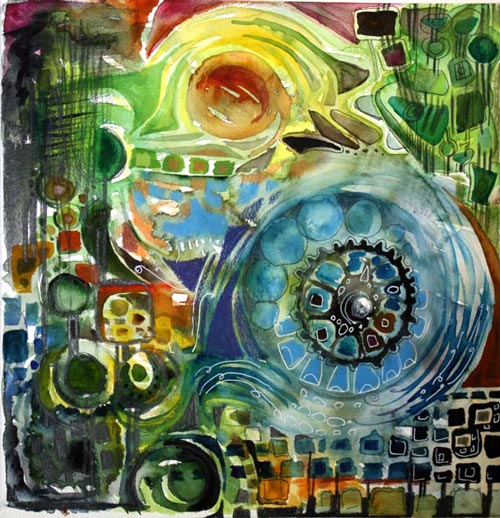
It’s time for a video blog post again! I will be creating this watercolor painting on the video. At the same time you will see how I grab pieces of inspiration here and there and add them to my work.
In the beginning of the video I am sitting on the floor of my new art studio. We are renovating a spare room for making art, photographing and shooting videos. I will show you more photos once the room is finished.
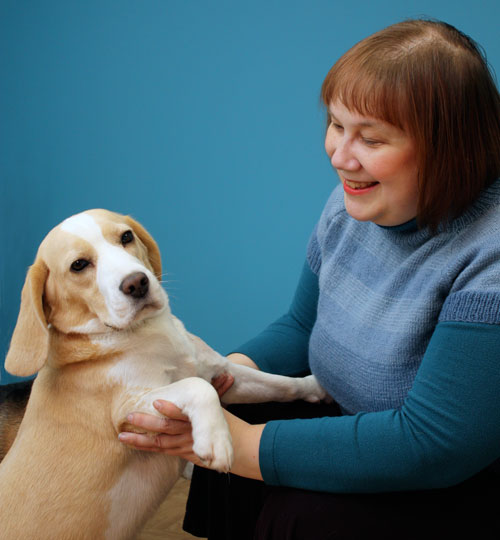
Here’s that turquoise studio wall again and me and my younger beagle, Stella. She is a very pampered pet, the sunshine of my life, also called as Princess Stephanie!
I am wearing one of my latest handknits, a sweater knit from Finnish naturally dyed wool, bought from a small Finnish company Riihivilla. If you are interested in knitting, here’s another picture of the sweater and more information about it.
Hopefully you will enjoy the video! Have a wonderful weekend full of inspiration!
Subscribe to my weekly emails – Get a free mini-course!
How to Trust Yourself when Creating Art
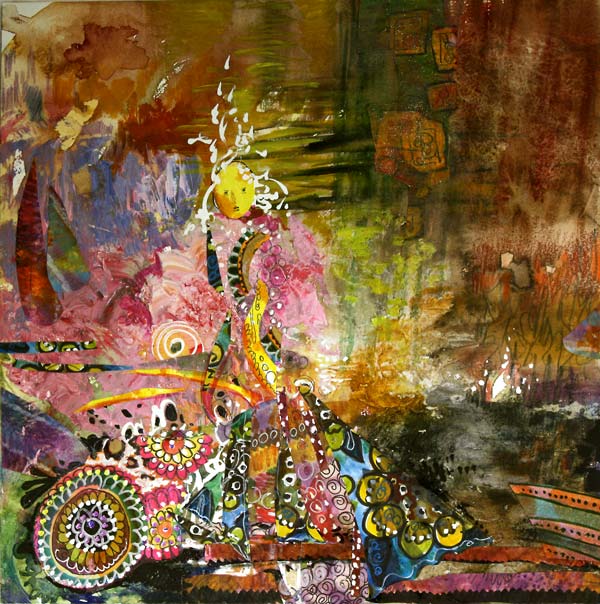
When I begin creating art, I often have petty thoughts like: “I want to draw a flower” or “I want to create something pink.” Even if I create regularly many times a week, I am still bothered by the fear of failure. I know I have to handle that at as soon as it comes, preferably before the first brush stroke. Why? Wouldn’t it be fun sometimes to draw that single flower or create that pink square? I believe that if we give ourselves that kind of clear commands and simple tasks, we don’t really trust our creativity. The big question is always: do you trust yourself when creating art?
The Unpredictable Nature of Art
If you trust yourself, you can step into the world of unpredictability. Not knowing exactly what to aim for is a major factor when creating art. We can set restrictions and principles, but we have to leave space for unpredictability. It means that we are more creative if we do not have the clear picture of the result.
Setting Restrictions on Supplies
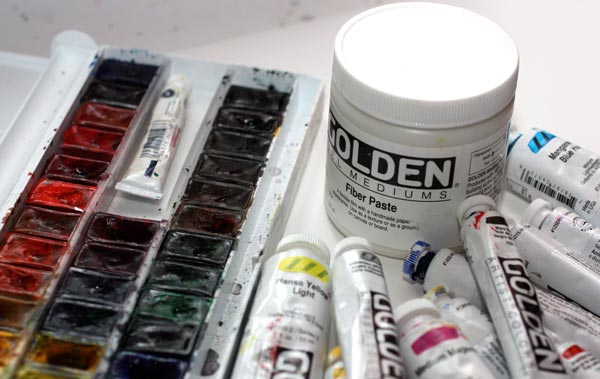
These are the art supplies that I gathered when I began making the collage of this post. Watercolors, acrylic paints, and fiber paste. I also picked a thick watercolor paper and cut it to a square. I chose the supplies but left behind the thoughts about what I was going to make.
Find what You Want to Express
My method is to browse art books just before creating art. I do it only for few minutes, and I try to pick art that really lifts my spirit, raises the bar, sparks my imagination. Usually, it is something from the history of world art. This time I browsed a picture book from impressionism.
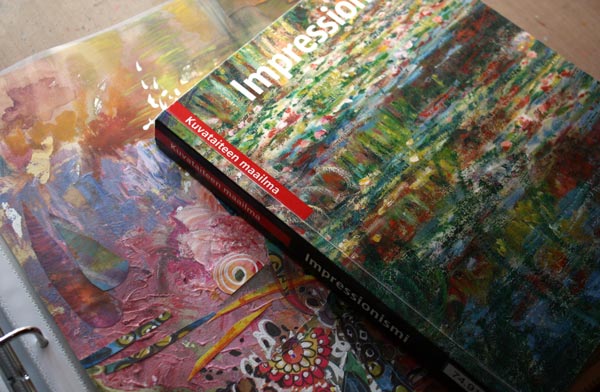
So, do I advise you to get a book of impressionism? No. I advise you to name what spheres you want to reach when making art and pick images which resonate with that. They do not have to be the same style than what you want to accomplish. The more important is the feeling that they evoke in you. When I browsed the book of impressionism, I thought how art is above all the mundane things. How those artists who lived at the end of the 19th century have managed to describe the beauty in the way that is still understood. How the brush strokes, full of paint, were successfully set to represent weightless light. All that would be exciting to see in my piece too.

When the first watercolors hit the paper, I still had some self-doubt: I could not ever do anything like the great impressionists. I heard the sarcastic voice in my head: “Reborn Monet, yeah right!” But that sarcasm is the moment when I know I am almost there: I am almost leaving the rational side of me behind. Then I just need to wow to trust myself, stop seeing any desired images in my mind and start working fiercely.
Layering (With Some Moments of Self-Doubt)
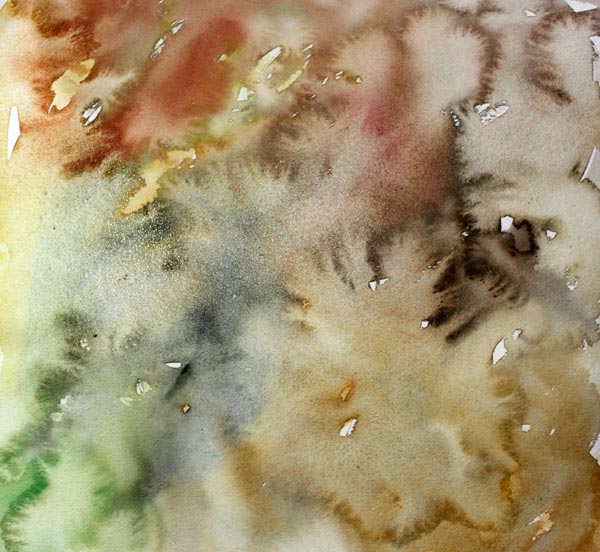
I often start with watercolors because they cover the paper quickly. Even if I have the idea of creating some surface structure, I wanted to use watercolors first to get into the mood of uncontrolled splashes.

While waiting for the watercolors dry, I mixed some acrylic paint. Pastel shades like many impressionists used to choose. 
To get some interesting texture with the paint, I used a palette knife instead of a brush.
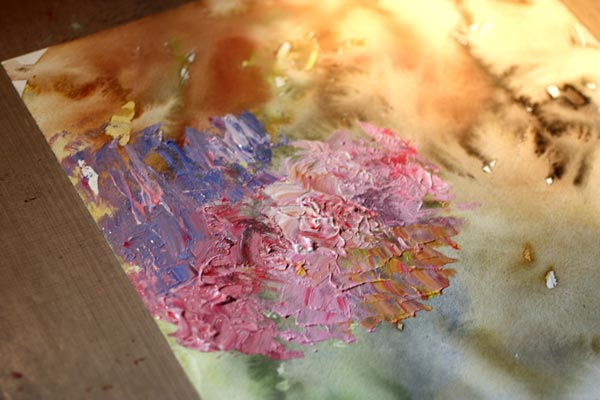
After playing a little with the palette knife and thick paint, I became clueless of how to continue. It’s important to recognize these moments. If you are not aware of these, your rational side takes the control and decides to do things you really cannot justify. Like: “Let’s use the rest of the paint to cover the surface evenly.” Or: “Let’s get some other colors and splash the paint here and there.” When you feel that you do not know what to do, don’t do the obvious. I might browse some pages of the book again to get back into the mood. Or change the media, the solution that I made this time. I doodled something not so important with the colored pencils just to realize I wanted to continue with watercolors and a thin brush.
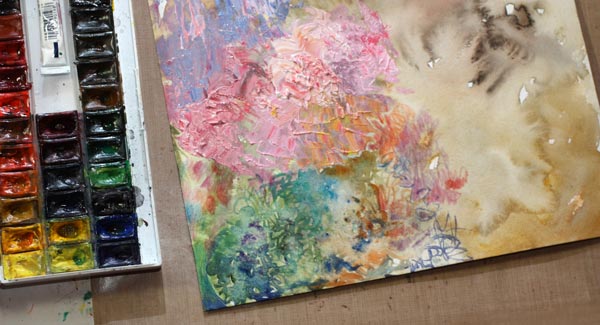
When I got bored with colored pencils and watercolors, I opened the jar of fiber paste. Even if I often prefer to stay with the basic art supplies, fiber paste is something I like. It not only creates an interesting texture like watercolor paper, but it also works like a watercolor paper. You can paint over it with watercolors and create beautiful details to your work! 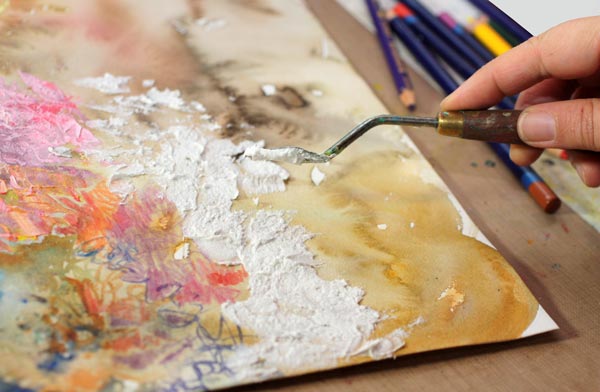
Trying to achieve distinct variation in the surface texture, I used the palette knife again.

Then my mind was empty again, so I browsed few pages from the book again and then continued with colored pencils.

When I reached the next point of frustration, I decided to change to the watercolors and work with high speed. Working fast helps to get creativity flow.
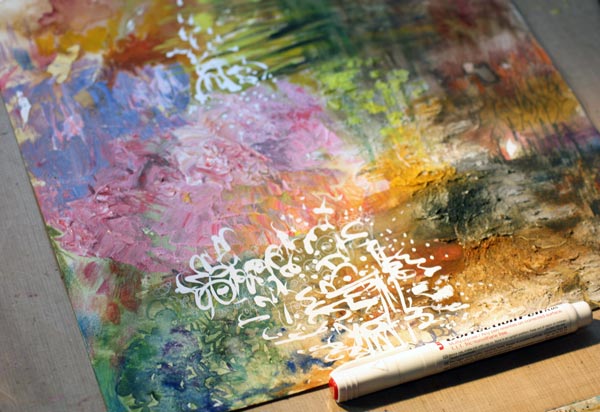
Once the paper was covered all over, I started adding details. A white correction pen is great as it usually works on any surface.
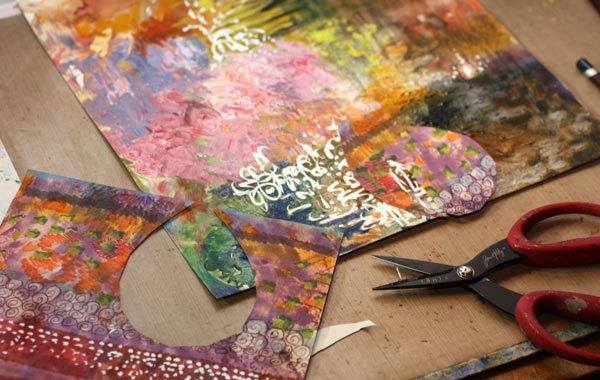
Hand decorated papers are great for details. I picked some of my prettiest papers and began to cut them. The paper shown in the picture isn’t that great as an artwork, but it’s versatile for collages as it has a lot of variation.
Finishing
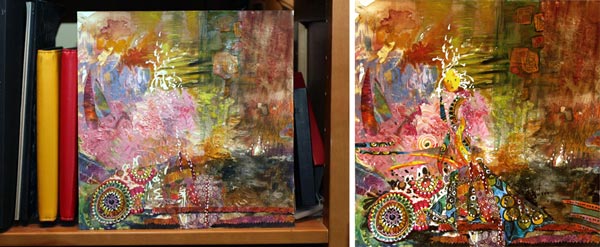
I felt that it was time to begin finishing the work. It is always useful to stop and think. I often put the artwork somewhere where I can look at it, like on the nearest bookshelf. Then I step away and try to figure it out where to lead the viewer’s eye. Here’s another step where you should not question your trust: It will be great! You just need to connect some dots and find the lost pieces of the puzzle. Like I did when I realized that there is someone in the picture. I added the faces and made the rest of the character more visible. Then some tiny adjustments to the composition and after that, the work was finished.

I think that this piece is aesthetically very much my style, but the impressionistic approach to the surface structure makes the work interesting.
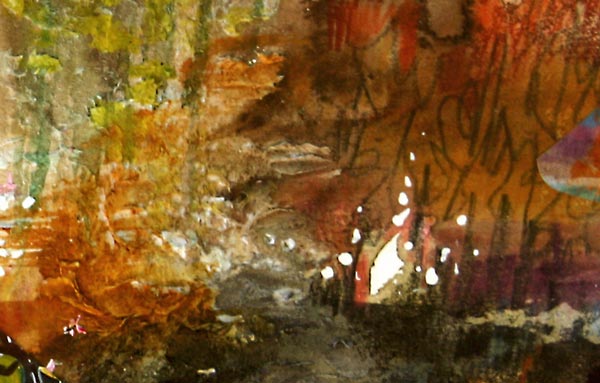
Never underestimate the power of layering: this is my favorite detail, the white area showing the blank watercolor paper. It was created in the first phase, and it still exists in the end. If I had done the obvious and filled the paper with each media layer by layer, this little detail would not exist. So, cherish each stroke and trust your creativity! Focus on the feeling, not to the result! You are allowed to feel like a world-class artist even if you know you are not. Fly to the world of imagination!
This might also interest you: – Stretch Your Artistic Style
Let me be your mentor in art: Subscribe to my weekly emails!
Move Towards the Flow State!
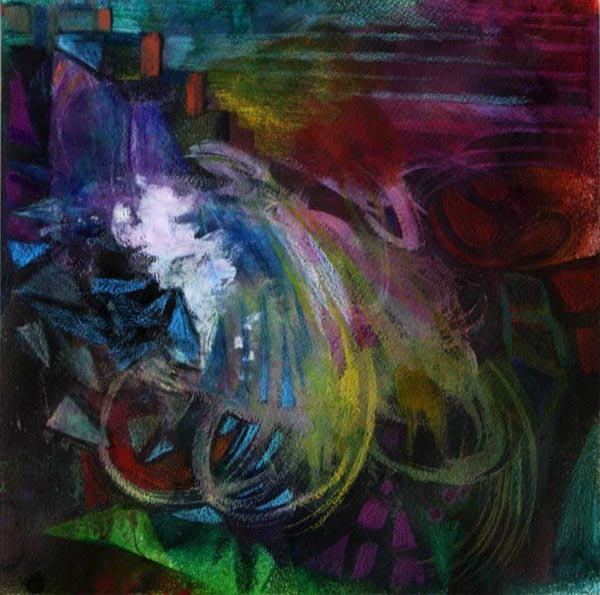
This mixed media painting is called Waterfall. It is inspired by the light in dark spaces.
Last week, I visited two places with old glass windows. The first was National Museum of Finland in Helsinki. The second was the Finnish painter Pekka Halonen’s summer cottage “Halosenniemi” in Tuusula. Both of them were built at the beginning of 20th century. Despite their windows, there’s fairly dark inside. While walking there, I saw how dark colors can be seen as soft and how daylight can look sharp.
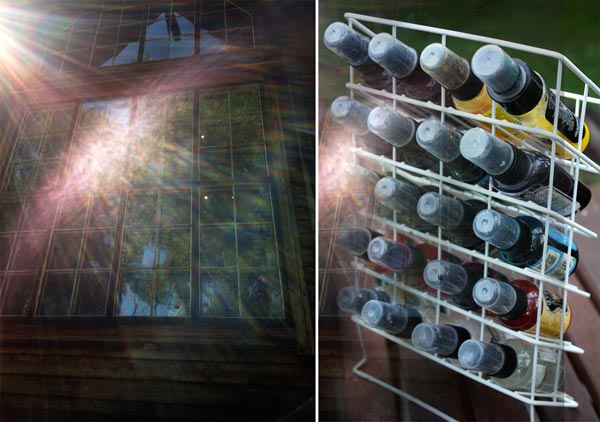
Perhaps the especially hot summer weather had it’s role too. No wonder I thought so positively about shadows and … water! I was tempted to use color sprays for this artwork. That way I could work outside and move around while creating.
A Big Mess with Acrylic Paints
Before spraying, I used acrylic paints to create color areas. They would work as a resist so that I could reveal them again after spraying. But the most important thing with the acrylics was: I grabbed a wide brush and said goodbye to rational thinking.
When you start with big brushes and create intersecting layers, you will naturally get into the creative mood. You will also begin to move. It’s often necessary to even stand up to make those big strokes wide enough. Check the front page of Heikki Marila’s website. He is a Finnish painter who creates huge paintings inspired by art history. See how those paintings are created, lots of movement there!
Also remember to change and mix colors as often as possible! Think that you are climbing towards the flow state where the creativity meets the happiness! Each interruption, the change in the movement and color, is one step closer to the flow.

The mess that I created with acrylics made my rational side cry and emotional side warm up. I was ready to get some fresh air and start even the bigger mess with sprays.
Entering the Flow State using Spray Mists and Handcut Stencils
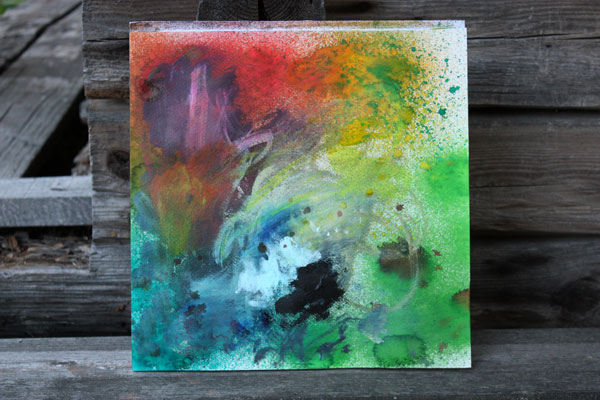
Here’s the first sprayed layer. Moving around the lawn and shaking the spray bottles were like a jump towards the flow state. I shook away the last rational thoughts and entered the happy state. I was flying.
Now, this is important: Be prepared to work quickly! When you get creative, you will get faster. There should be no need to rationalize what to do next or where to get the materials. They all have to be there. I had taken the scissors and a piece of paper with me. That allowed me to create stencils while waiting the layers to dry. I had also set up the blow dryer near the back door.
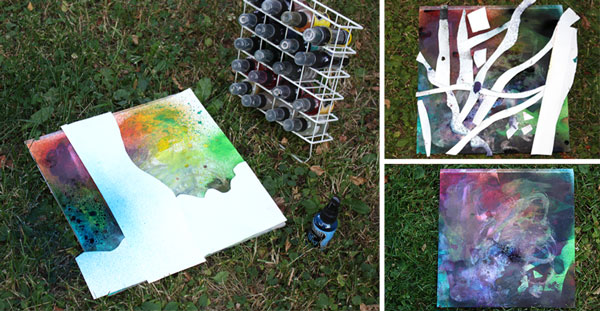
Running around the back garden with spray bottles, then inside to dry layers, then back again, I sprayed about five layers in total. As a result, I got the ugly mess shown in the photo right below. But I was not worried. I thought it looked amazing! One good thing when moving towards the flow: the inner critic leaves far behind!
I ended the day with spraying some areas with water. When wiping some of the spray ink away the acrylic paint areas were revealed.
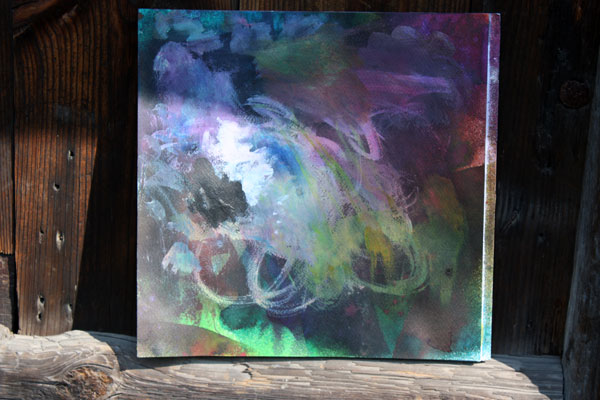
Next morning I had a problem to solve. How to finish the painting? I decided to create small geometric shapes with colored pencils to resemble the sharpness that light makes in the dark space.
Finishing with Colored Pencils
When using big brushes and big movements, creating details with small strokes adds interest and balance.

Colored pencils are wonderful to highlight the best and reshape the worst areas. When working with small details, I try to focus on one small area at the time.
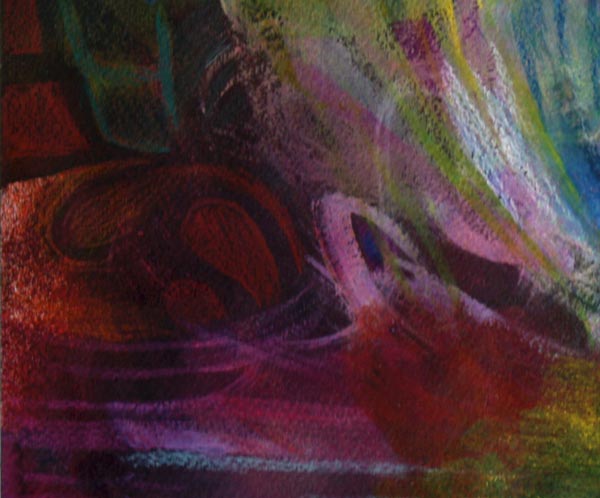
In the “big” phase, my focus was in the big picture. Now, when working small, my focus is in the details.
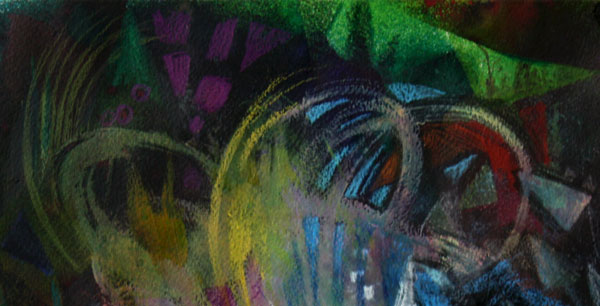
Balanced Composition
When I had gone through all the areas, I began to look at the big picture again. Then I made the final tweaks. So here it is:
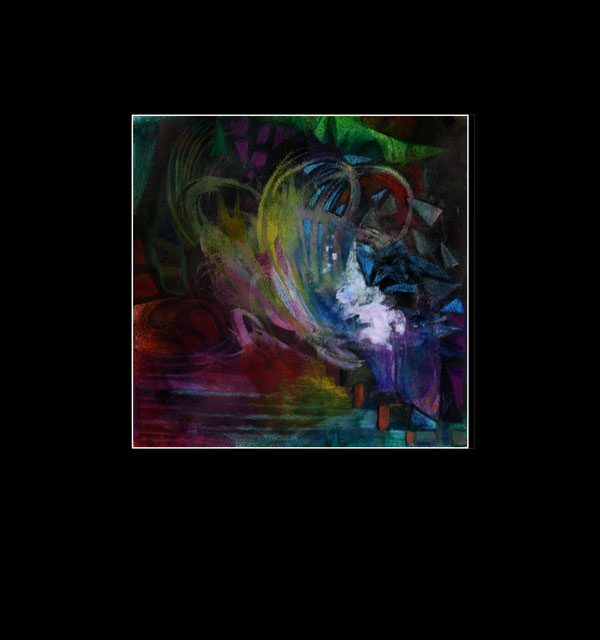
Hmm … wait a minute! Now it is upside down! Well, while coloring the work, I thought the direction would be this. But then, I noticed that it could be any of these three:
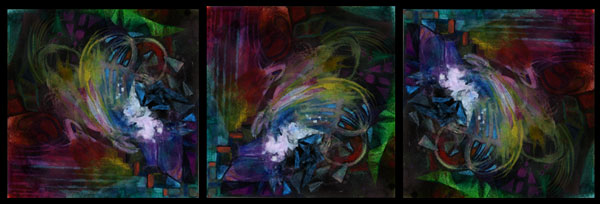
If the composition is balanced, the work will look balanced in any directions. By changing the direction, you can test if your composition is successful. Still, I rarely come to the result where changing the direction not only works but also tells the same story. I think that moving around the lawn had an impact here!
Experiment this in your art: Try to include physical movement into your creative process!
Subscribe to my weekly emails – Get a free mini-course!