
Take Your Art to a Passionate Level
What Does “Passionate” Mean to You?
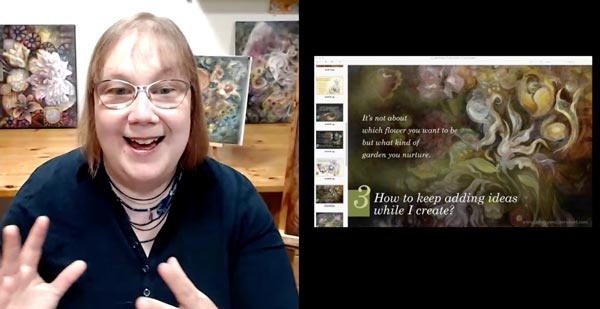
This week, I had a free live webinar of how to conquer the excuses and become more passionate about art. I asked what does “passionate” mean to you and then divided it into four categories. After that, I re-phrased five excuses so that you see them from a new perspective. It may sound theoretical, but you also get ideas of how to apply these things in practice as well. I hope you will enjoy watching the recording below!
Take Your Art to a Passionate Level – The Recording of the Webinar
The Exploring Artist Begins on Sept 10 – Sign Up Now!
The Exploring Artist is a 12-week group coaching program for artists, between Sept 10 – Nov 30, 2018. This coaching is for you who wants to get clear about your artistic passion and become more open about your art, for example, share your art in social media, blog about art, sell your originals and prints, teach classes, etc.
In The Exploring Artist, you will get coaching as a part of a small and tight-knit group. I will personally help you to put your passion into words and visual insights. We will work together to discover what you want to change in your art, where you want to move forward and how to do it.
The maximum number of the participants is 12,
and the early-bird sale ends on August 19 (midnight PST), so sign up now!
Bad Ideas Make You a Better Artist!
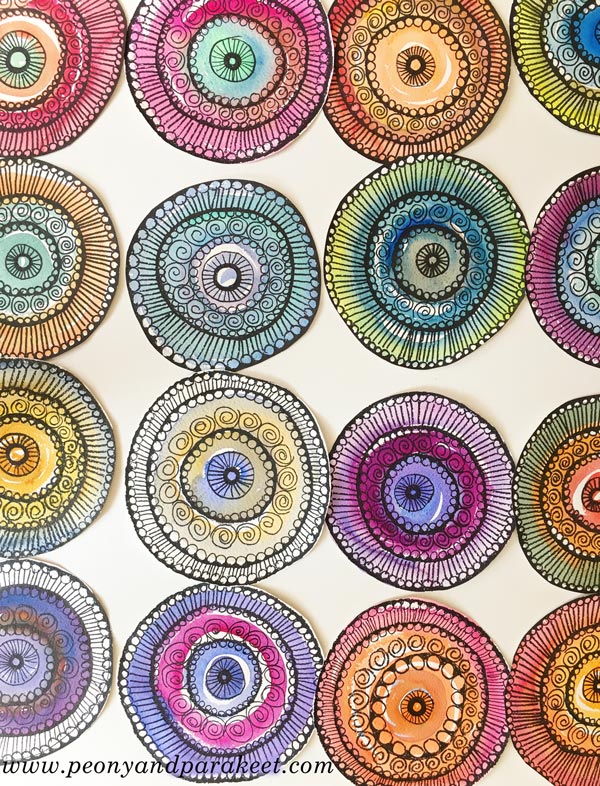
About four years ago, I got a crazy idea to draw doilies on a watercolor paper and cut them out like they would be crocheted pieces.
Handpainted Paper Doilies – Not So Good Idea
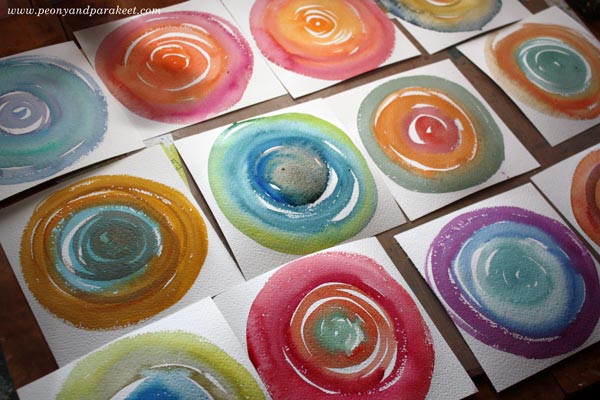
The process of painting the background circles and then decorate them with doodles was so much fun that I got carried away and made plenty.

After I had finished a pile, I enthusiastically showed them to my husband: “Look what I have made!”
– “What are these?”, he said. “What are you going to make from these?”
– “Maybe I share the idea on my blog or make a big wall hanging by joining the circles together. Wouldn’t that be cool!?”
I saw it on his face. He didn’t get it. And furthermore, he didn’t want paper doilies on our walls either.

But to me, the doilies made perfect sense even if they weren’t crocheted. By painting them, I wanted to build a bridge from crafts to art. The paper doily was a raw idea, and as I, fortunately, learned later, raw ideas can look really bad at first.
Big Ideas Come from Bad Ideas
The idea of a doily translated into art didn’t leave me alone. Last year, three years after inventing it, I launched a workshop called Planet Color, where I teach people to paint abstract compositions.
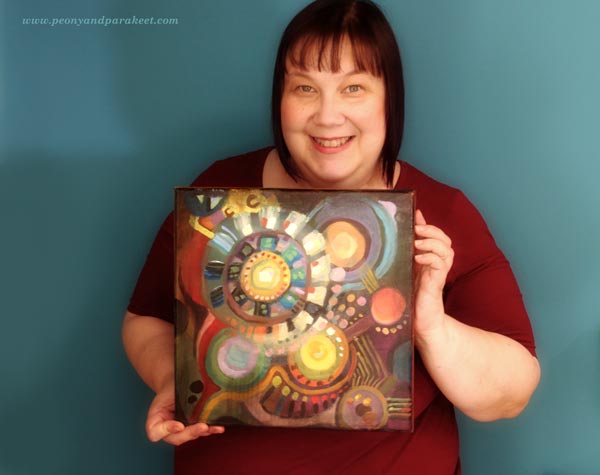
For the class, I needed a lot more ideas. I also needed to build a system and a structure that any beginner can follow. I needed to set it loosely so that everyone can use their imagination, but make it clear so that there would be no room for frustration. The idea of a paper doily was a seed, but it took some time to grow the flower.
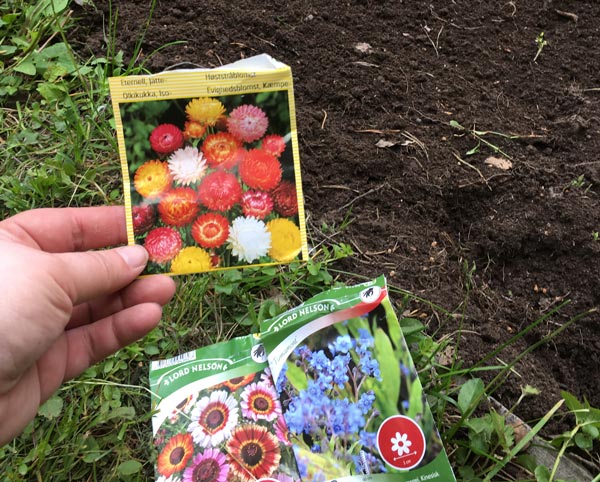
Often when we admire other people’s art, we see the flowers instead of seeds. Most artists don’t show the seeds because many times, like in my case, they are pretty pathetic. Still, it’s the seeds, the raw ideas, that make the published work possible.
Finland 200 – Not So Good Idea
Before I started making a new big painting, I saw some elegant yet simple still lifes in my mind. I had just seen a superb piece of art, a Finnish sculptor Laila Pullinen’s bronze sculpture Spring in Man. So I wanted to start a new painting with the intention to create something grand and dramatic to celebrate Finland’s 100th anniversary. “This would be called Finland 200”, I declared.
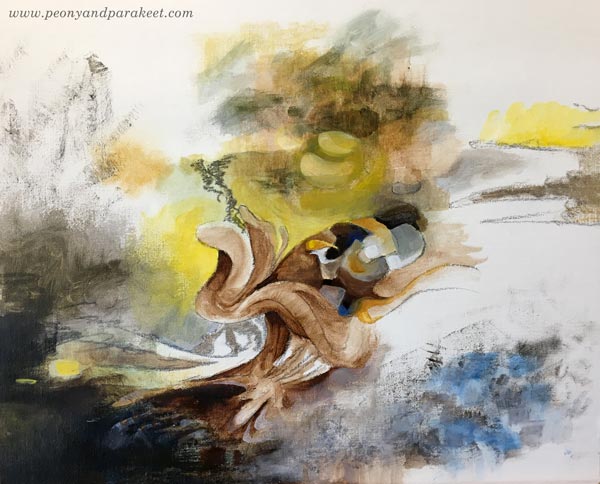
After painting for a couple of hours or so, I began to wonder what I wanted to say. Starting the painting with this much drama felt like a bad idea, and I wasn’t convinced about the centerpiece either. Would that be some kind of mushroom or what? Then my bad ideas just got worse – I decided to continue by writing an imaginary story about Finland after 100 years.
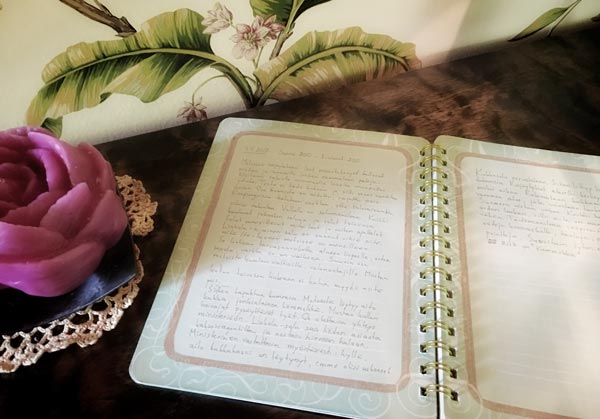
While quickly pouring the words out in my journal, I didn’t realize that I was actually writing a dystopia. The idea of a catastrophe in nature seemed exciting at first, but while painting, I realized that my visuals became very gloomy and weird-looking. I tried to make something positive out of it. I wrote a happy end to my story and painted a pink bubble with rare flowers inside it. That would be a new treasure of Finland, something everyone would want to come and see.

Even if the painting wasn’t finished yet, I already hated it. My original idea was bad enough, and now I had some more. I felt the despair rising.
New Vision – Imagination Takes the Lead
Luckily, I have a secret weapon in these situations. I connect with my passion and use the imagination to go to my happy place. It sets the mood, reminds why I create art and loads the right atmosphere into my mind while I am creating. The side of me that wants to control steps back and the side of me that is good at persuading re-evaluates the work.
– “What about changing the orientation of the painting,” she said.
– “And lose all the hard work?”, my pessimistic side responded.
– “No, nothing would be lost, we would just add a little bit of color to it.”
– “Color? What color?”
– “Brown,” she said cheerfully.
– “Why on earth would I pick brown of all the colors?”
And then she reminded me gently of my passion, about what inspires me and how I can feel free.
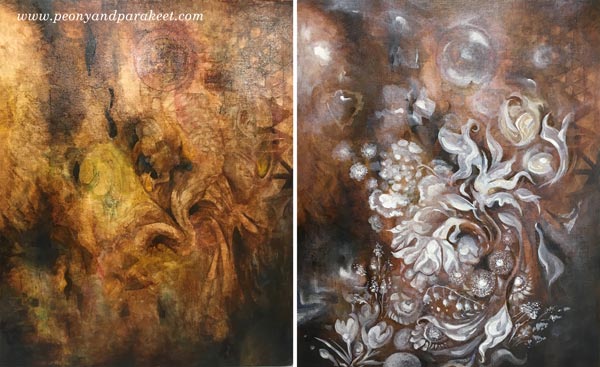
And she was right. I loved the painting after adding layers with umber. It became clear to me what the painting would be. Not Finland 200, but expressing something that has been here for hundreds of years and most probably stays the same for the next hundred: nature’s wonders when exploring the garden. I continued the painting by adding flowers that I have had in the garden. I adjusted the elements in the first layers so that they became the building blocks of the new vision.
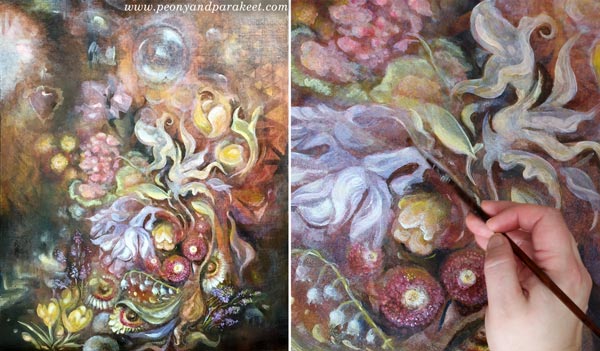
My painting is not finished yet, but it’s already a good example of how the raw ideas can be translated to more inspiring ideas with the help of imagination.
Bad Art, Bad Ideas – Also Behind This Blog Post!
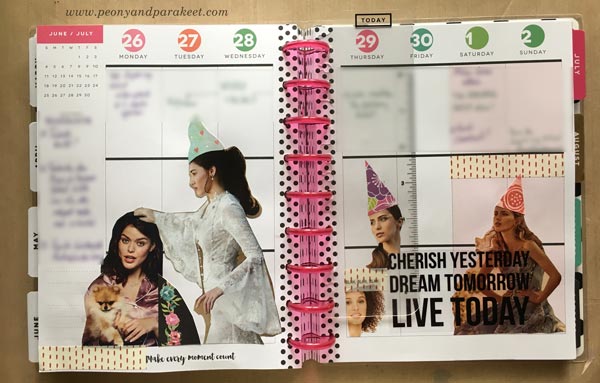
Before I wrote this blog post, I decorated my work planner to get ideas for it. I cut pretty ladies from a wedding magazine and put funny hats on them. While creating this, I thought how this kind of activity would be seen something that a “real artist” would not do, yet it’s essential to me to have a bit of play regularly. So that’s how I got the idea of revealing some bad ideas and how essential this kind of exploration is for producing work that you want to publish.
When Your Best Art Exists Only in Your Mind
Before I started making the paper doilies, I had wonderful daydreams inspired by my beautiful yarn stash. By seeing beautiful images in my mind, I came up with my bad idea, the ugly version of those daydreams.
Daydreaming is good, but it’s not successful when you try to translate something you see in your mind to paper. The creative process rarely works so literally. The images in our minds are often vague. Copying them detail by detail is practically impossible. The imagination is more like the leader who supports your art making, not a manager who controls it or the specialist who does the work. During the recent years, I have developed a method of using imagination to connect with the passion of creating art. I teach this method in the group coaching program called The Exploring Artist.
6 Steps to Making an Impact
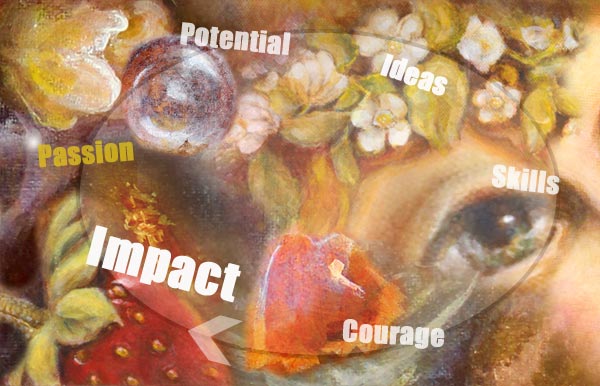
The Exploring Artist helps you to connect the play with your deeper passion and use that to move forward in all levels of art-making. During this program, you will:
– lead yourself by playing and imagining
– grow ideas from your personal feelings and experiences
– remove blind spots and build skills through the challenges
– get confident in publishing your art, whether it’s just friends or a bigger group of your people
The Exploring Artist is also about connecting and soul-searching within a friendly group. We will work through 6 steps and have live group coaching sessions, where your art and your art-making is in focus.
This is not a class where you create after me and try to get the similar result. It’s for you who wants to get support and guidance for creating freely from your personal standpoint. You can use any media you are comfortable with and apply the methods to your visual project(s). If you feel that you are “all over the place,” and want to find a creative direction, The Exploring Artist is the program for you!
The Exploring Artist will come back in 2018 – Subscribe to my emails to be the first to know!
Expressing Inspiration Through Art
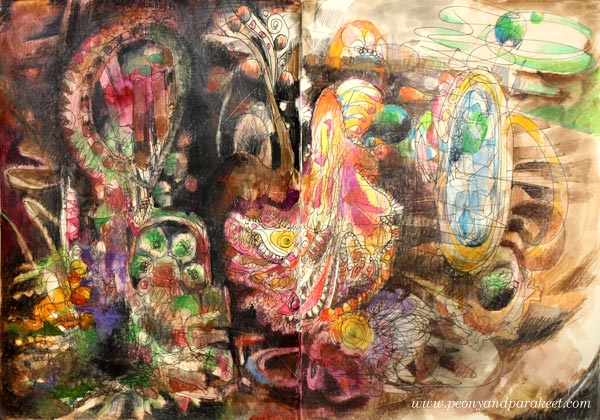
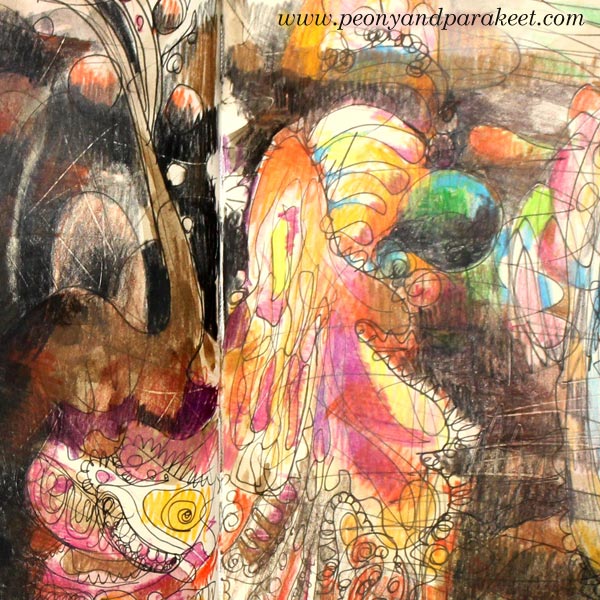
I made this mixed media drawing “Storyteller’s Power” for the class Inspirational Drawing 2.0. I have created it from a collection of inspiration images. One of them is Luca Mombello’s Renaissance painting “The Immaculate and God the Father” which I saw at the recent renaissance art exhibition of The National Museum of Finland. Seeing the artwork, and how it reminded me of modern fantasy novels, caused a huge spark of inspiration. But when I heard that the frame was handmade by the painter, it felt mind-blowing. What an artist!
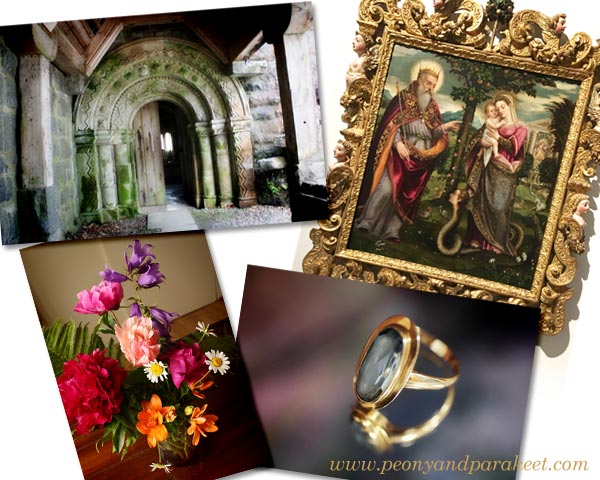
Inspiration is Often Visual
It doesn’t have to be an art exhibition to make me inspired. I see ideas everywhere. Because of that, I am a useless listener without doodling or knitting. If I listen to a long lecture without nothing to do with my hands, I find visual ideas and inspiration everywhere. I look at the pipes attached to the ceiling or count the colors of the clothes. Soon, I have discovered a new idea that has nothing to do with what I came to listen! I believe that especially for visual people, inspiration is often visual too. We get excited by what we see and can’t help being drawn to colors and details.
Only You Can Express Your Inspiration!
Over three years ago I started to find a solution for expressing inspiration by drawing and painting. The world was full of images that embarked my excitement, but it seemed impossible to express it genuinely through art. I was either too intentional which brought stiffness, or too intuitive, which took me just further away from my original inspiration.
I already had some experience of using mood boards when studying design so I was certain that there was a solution to the problem. But rather than creating a new design, I wanted to use the images for enriching artistic expression. The idea was not to copy but boost imagination in a meaningful and intentional way. After all, inspiration is a personal feeling, and it should be interpreted in a personal way. Even if it’s evoked by something or someone, there’s always something unique in the way each one of us experiences it. Only you can express your inspiration!
Expressing Inspiration Through Art
An inspirational image can quickly touch hearts but drawing and painting is a slower process. We can use images for picking visual ideas but we also need to process the inspiration so that we know why we got inspired in the first place. I believe that the images are like icons that bring up personal memories, points of view and aspirations. If we don’t connect with those, we don’t fully put the inspiration into use for art making.
At the first version of Inspirational Drawing, I showed a method for using an inspirational image as the source of ideas for a new drawing. At Inspirational Drawing 2.0, I introduce an improved process. It helps you to use one or more images as an inspiration source, connect with the thoughts and feelings that they evoke and create unique art from there. First, I show samples and walk you through a simplified process. Then I help you to create a bigger project that uses many kinds of inspiration along creating.
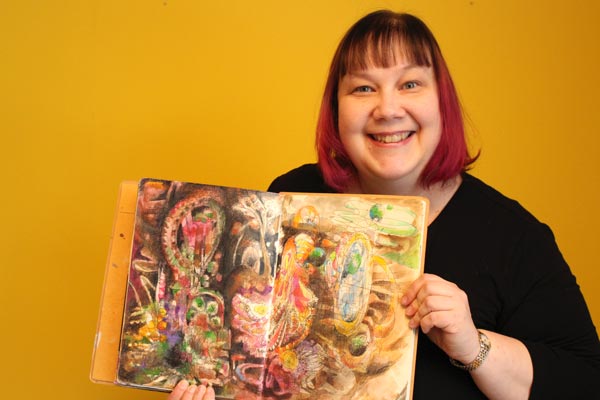
Claudia Watkins, one of the students says: “Paivi is a very profound lady. Her insights are amazing. Although having a technical background, Paivi sees beauty, philosophy, and art in everything. Paivi has helped me a lot in my art journey.”
Express Your Inspiration: Sign up for Inspirational Drawing 2.0!
Video: How to Move from Figurative to Abstract Art?
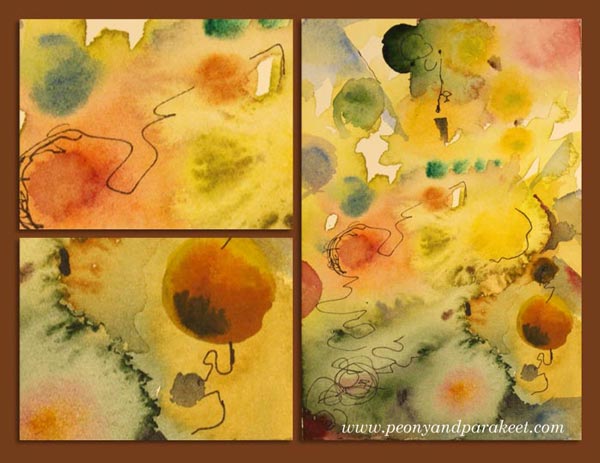
I made a video blog post again. This time I answered to a reader’s question about how to open up to create unique and abstract art. This video is especially for you who wants to move from figurative to abstract art.
In the end of the video, I paint an abstract-themed postcard with watercolors. Hopefully, you’ll enjoy it!