
Free Video – Flower Postcards
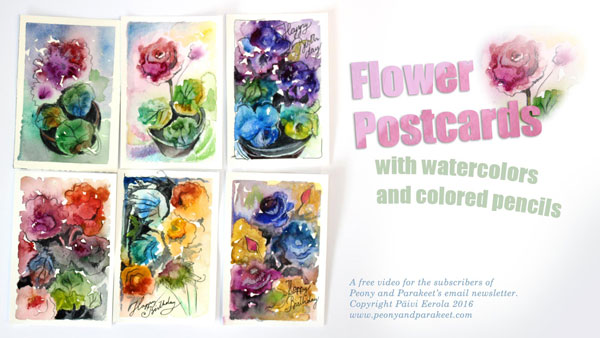
Flower Postcards with Watercolors and Colored Pencils
This step-by-step video is perfect for all who want to start painting intuitively, more from imagination than from photos. The video was a free gift for the email subscribers but it’s now available for all. >> Click here to watch!
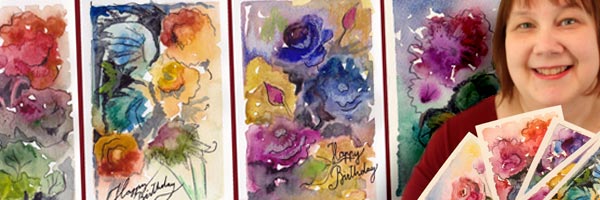
See My Watercolor Art Journal
More Free Videos about Watercolors
How to paint Watercolor Postcards in Vintage Style – another, older video
Painting in Liberated Style – mixed media with watercolors
>> All blog posts about watercolor painting – plenty of those!
Step-by-step instructions for unique art: Buy Watercolor 101 for Intuitive Painting
From the Students of Liberated Artist
This blog post is dedicated to my painting workshop Liberated Artist.
Read how the students have experienced the class
and enjoy the wonderful art that they have made during the class!
Make Creativity Bloom!
Christie Thomas says: “Every lesson started with a bit of fear, then once started I found that I often set it aside because I could not move on to the next step. I did not “see” anything. But with Paivi’s patient encouragement on the videos and free flowing hands, I watched, listened, and tried to follow the instruction even if it was completely foreign. I finished the pieces and feel excited about my creativity.”
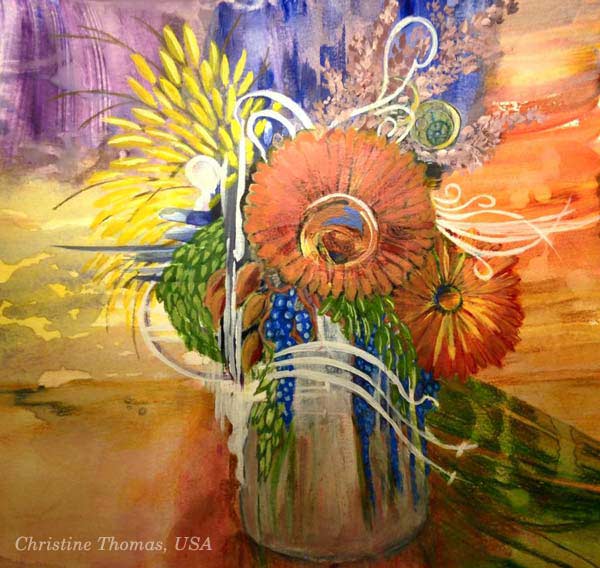
Move Forward with Painting!
Geraldine Norris says: “The course allowed me to move on in my art practice, by being engaged with a teacher who is inspirational, celebrates diversity, creative expression and artistic self acceptance. I now feel I am able to see a sustainable way of moving forward with my painting by having experienced a clear connection with my intuition through the weekly exercise prompts, rather than always wanting to know what work is going to look like finished. In this course I have felt supported on the journey into the unknown and encouraged to make space for the unexpected.”
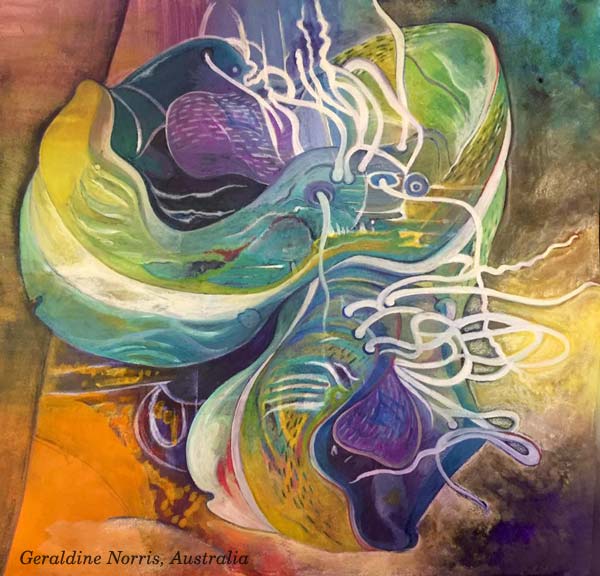
See Art with Fresh Eyes!
Deb Weiers says: “The class made me more open to staying in the struggle, to be willing to walk away and come back with fresh eyes, to be able to wait longer for the art to come through. To stay open to the unexpected.”
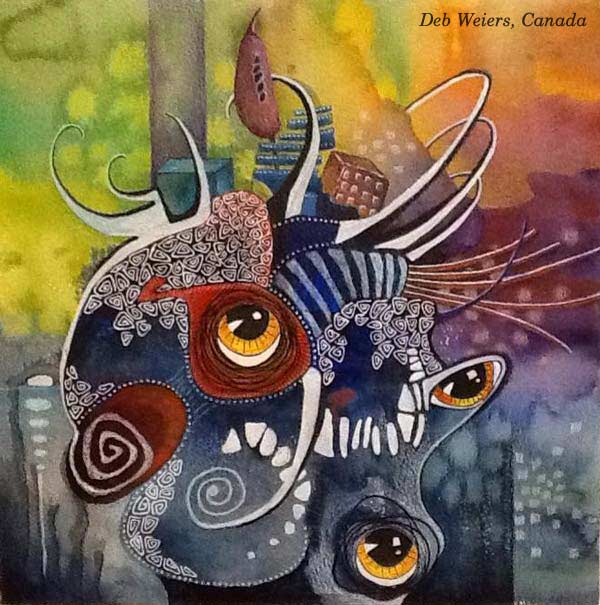
Express What You See and Feel!
Cheryl Rayner says: This class really helped me to see how I could start from ground zero and express something that was personal. I am even encouraged to start art journaling now, which I had always been turned off to, because it seemed like everyone was just trying to see how much product they could use! Paivi’s approach is far more meaningful.”

Let the Painting Grow into a Story!
Karen Nowviskie says: “I am no longer afraid of using watercolors. Most importantly, I have learned to embrace the unexpected and be open to the story of the painting.”

Bring More Elements into Your Creative Process!
Kathy Lewis says: “I am looking at creating so differently. I don’t even know how to start to describe my excitement for this course. I trust the process so much more and look into the colors to see things that I would never have noticed before. The actual coloring process has also changed. I love mixing watercolor, color pencil, and acrylics! Never thought of some of these techniques before this class. Now I want to go through all the lessons again!”
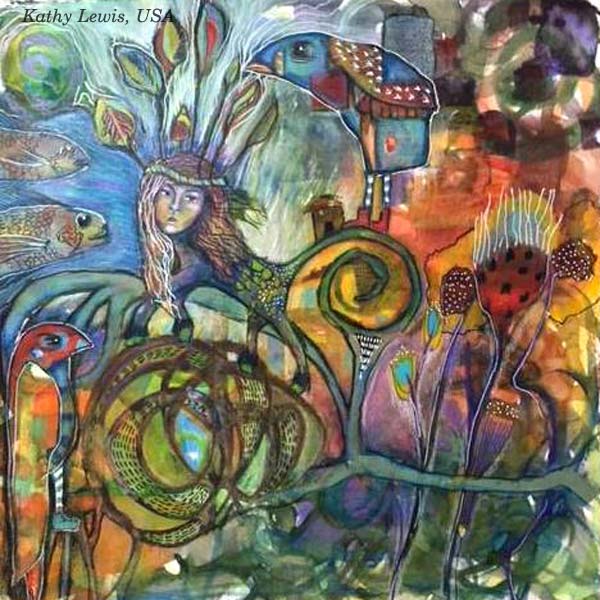
Compose with Colors!
Mackie d’Arge says: “The class inspired me to search harder for the hidden images that appear on the painted page. I’m looking at the balance of colors now instead of just the balance of images and lines in a composition. This class was a pure joy. It was four weeks of anticipation and struggle and frustration and trying again and again…but oh what fun!”
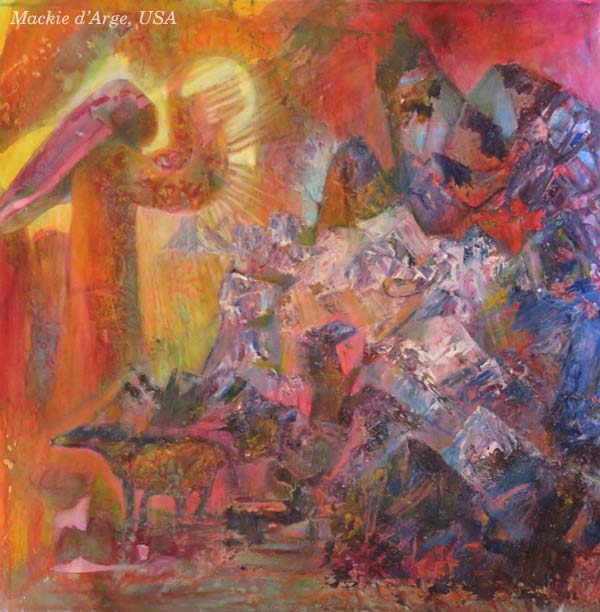
Take Creative Escapes!
Nea Wiseman says: “It’s a wonderful course. I am starting to free up my control buttons!”
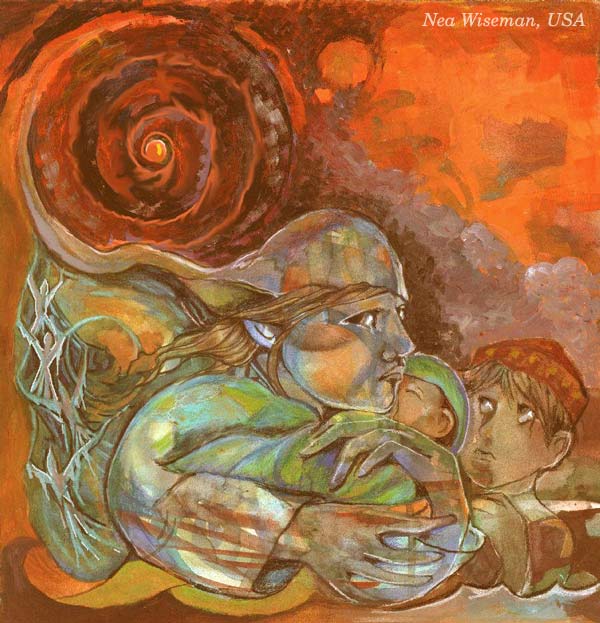
Overcome the Fear of Beginning!
Ulla M. Holm says: “I discovered that I need not be afraid of watercolors, or to start painting. I am beginning to find my own style.”

Express through Painting and Drawing!
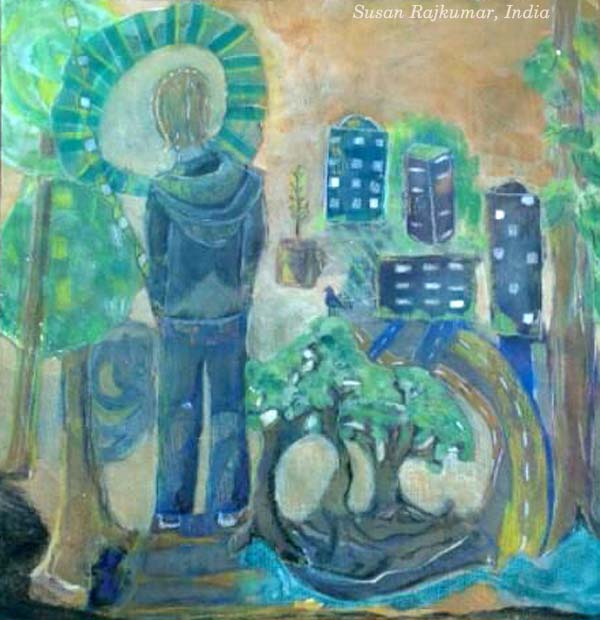
Susan Rajkumar says: “Something huge inside of me changed, and then it became much easier to sit down and freely let it flow through me. Suddenly I could draw. Seriously. I don’t think about it much now. This was the best art course online.”
Dive into Art More Often!
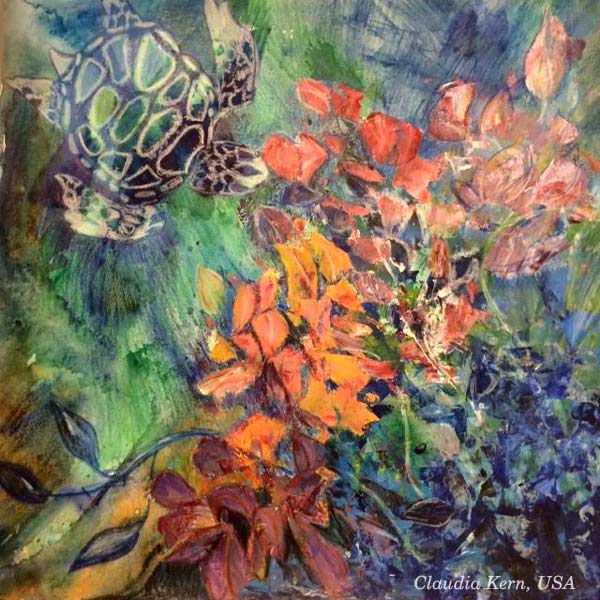
Claudia Kern describes: “I expanded my artistic toolbox to include acrylics and pencils which means much more can happen/unfold than working strictly with watercolors. So for me trusting that something as yet unknown to me would emerge and having more tools to use were both liberating. I have learned so much, and the structure of the class has enabled me to make a huge leap forward in making art a part of each day.”
Let Your Thoughts Grow while You Play!
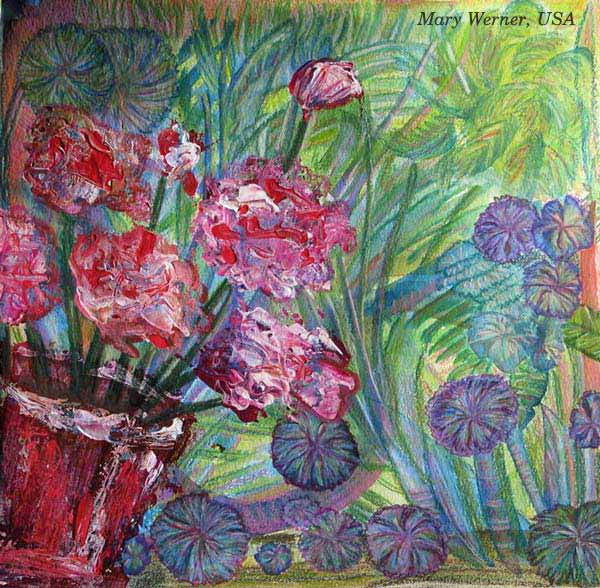
Mary Werner says: “I learned to work in phases both with materials and with slowly completing the painting. I learned to begin with one image without knowing the whole picture allowed a deeper meaning to develop as I was involved with the slow building and thinking of the process. It gave my creativity a chance to play.”
Subscribe to my weekly emails – Get a free mini-course!
Making the Most of Visual Nuances
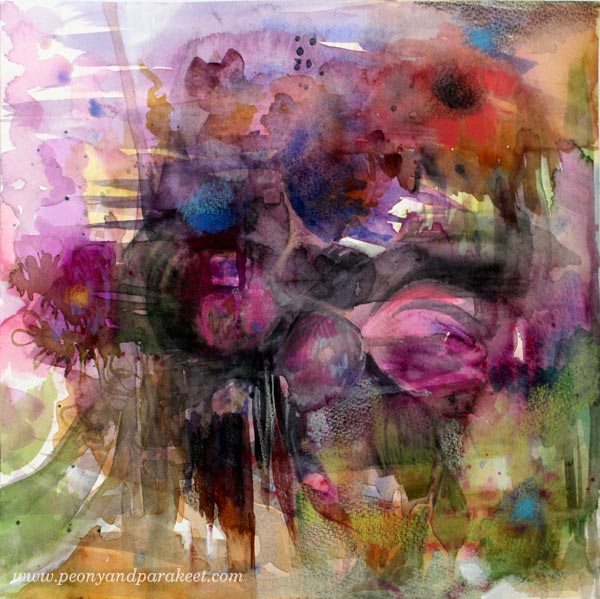
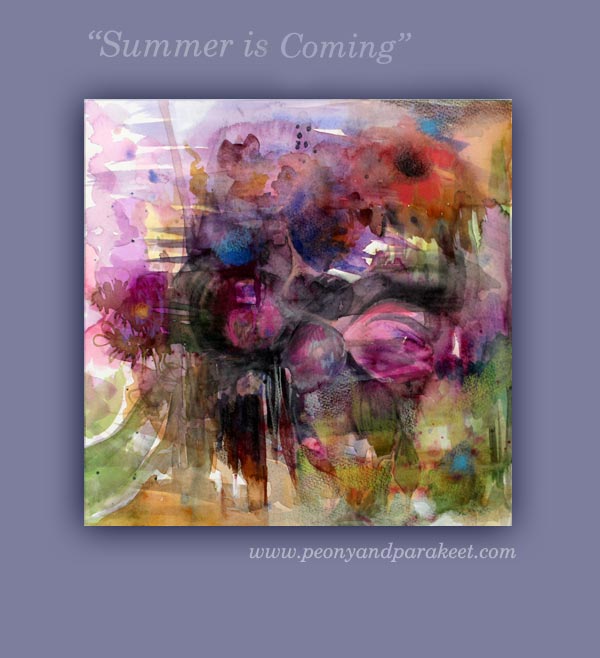
This is my latest mixed media painting “Summer is Coming”. It has been exceptionally warm weather in Finland and all that sunshine has brought summer not only to my mind but to my painting too. I tell you now how I created the painting!
First Layers: Having Fun with Watercolors
The painting began with watercolors. I made a mess that didn’t look so good when looking at it from a distance. But it looked wonderful when taking close-up photos!

After splashing the first couple of layers with a big brush, I changed to a smaller one. I painted simple shapes with soft edges and thought that maybe this will be an abstract piece.
Is This a Still life – Again?
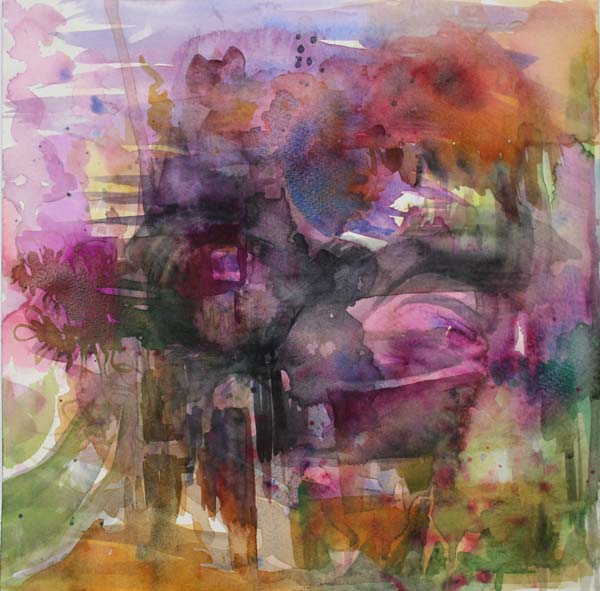
But after a while, it looked like a still life! I must admit that I have developed some kind of obsession for still lives. I have loved them for a long time already. But recently it has begun to feel that anything could be expressed with them. Well, a Finnish artist Miina Äkkijyrkkä has painted and sculpted cows for all her life, so still lives might not be so bad …
More Details with Colored Pencils
With colored pencils, I made the flowers more distinct. I wanted to work as softly as I could so that the delicate look of watercolor paint would still be dominating.
Almost There – Visual Nuances
Then I entered the actual finishing phase. This is what I call “Almost There” phase. It is the point where many just call the painting finished, and they try not to think about it too much. But if I am teaching a class, I encourage people to continue. One way is to show them what they can do next. So I open the photo of the painting in Photoshop and make little adjustments. With these suggestions, I try to add more visual communication and interest to the painting. Sometimes a little spot of color can make a big difference! See what kind of suggestions I made for my painting!
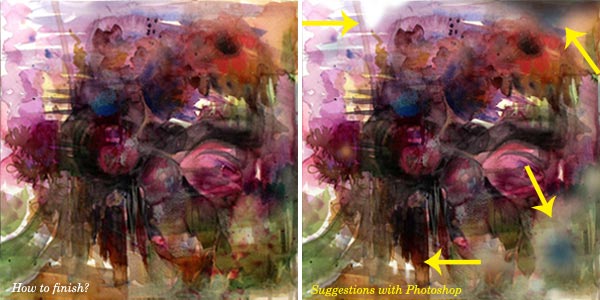
What’s the Magic of Using Photoshop for Suggestions?
One thing is that I can zoom as far as I can. Another thing is that I can try out different kind of adjustments without making a mess. I don’t do this often for my paintings, but I wanted to show you how little guidance can take the image to the next level. This is one thing that an art teacher can do: show you how you can fine-tune your work so that it has those visual nuances that make the painting more dynamic and alive.
Finished Painting
Here’s the painting after finishing it according to the suggestions. I used colored pencils and white gesso for the final details.
Subscribe to my weekly emails – Get a free mini-course!
Painting in Liberated Style
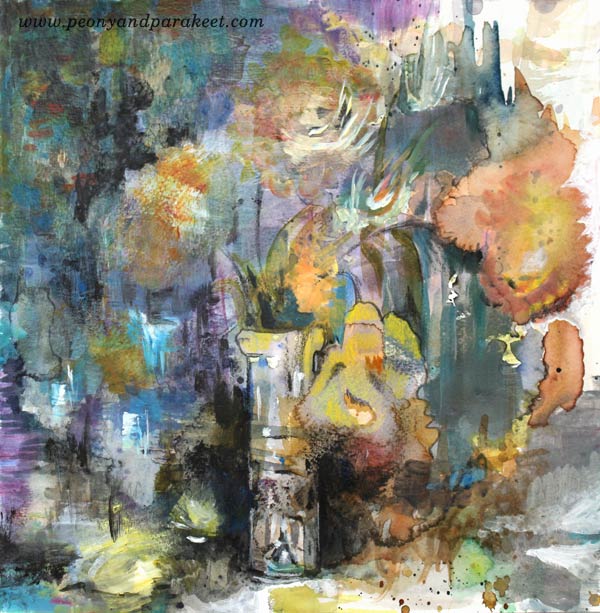
Welcome to my creative space to see how I create this mixed media painting “March Still Life”!
Watch the video and listen to my thoughts about creating and teaching art while I paint in a liberated style.
Liberate Your Art!
The workshop mentioned in the video is currently unavailable
but come and join me on the course that is based on it:
Liberated Artist Revisited – Buy Now!