
Minimalism in Creating – Making the Most of What You Have
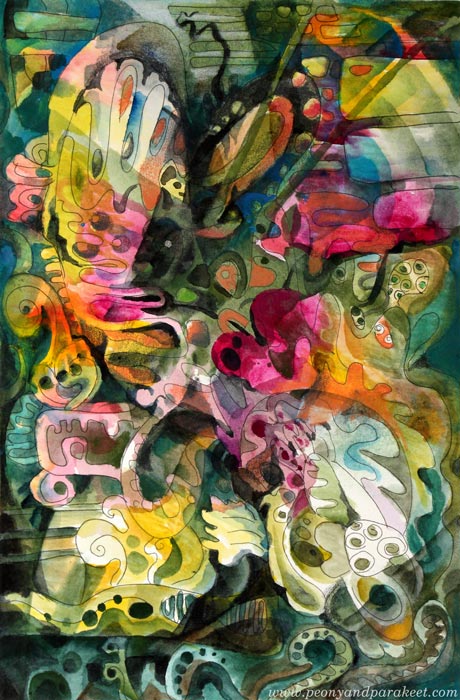
Here’s my latest little study in watercolor, called “Ikebana.” I finished it today, but for a long time, it was just a piece of watercolor paper with random doodles and colored spots. I had started the piece in December 2016 when running a local art class. I had just painted mindlessly while discussing with the students and then left the piece unfinished.
Choosing Not to Toss Away
When I was holding the unfinished, ugly painting, I thought of my choices. I could toss the paper away and forget the thing. Or I could treat it as a treasure and make the most of it, despite the controlling straight lines that went through the page and other uninspiring details. To me, choosing to continue the painting, is usually always the better choice. Making the most what I have calms me down, gives me a sense of purpose, and positively challenges me. I don’t consider it so much as a choice of saving money or space but getting a peace of mind.
I have also noticed that when I work on with the old pieces, I find new ways to make them more expressive. That in turn, helps me to develop better classes and help my students. This time, I was inspired by April’s theme of Bloom and Fly – surreal art!
Getting back to old doodles also reminds me that even if I can’t make all the details work together, art is never fully perfect. Often the minor “mistakes” add personality and interesting tension to the piece.
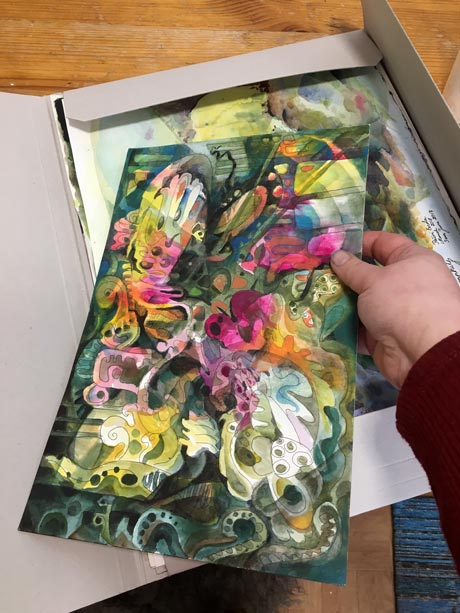
I also like to store the finished pieces organized in folders.
Using Up Old Art Supplies
One of my favorite things is to organize art supplies once in a while. I try to find the best places for them so that they get used up. I find it much more pleasurable to buy new supplies when there’s the actual need. It’s also nice when I have had time to think what to purchase next.
So when I noticed that some pans of my White Nights watercolor set are getting empty, I decided to experiment and fill some with paint from the old tubes. I found an old gouache tube by Schminke, the pink that I totally love but had forgotten, and I hope it will keep on wetting well even after the pan is fully dried.

One of the pans that I made, the muddy green, is a color mix. It’s a color that I usually use for watercolor paintings to give brighter colors more power.
My Meditation – Cleaning Brushes
The longer I have created art, the more I have put a focus on my brushes. I used to buy them carelessly and toss them away once they didn’t seem to work anymore. But nowadays, I like to appreciate what I have and take time to clean the brushes carefully after each painting session.
The cleaner that I currently use is The Masters Brush Cleaner, recommended to me by my artist friend Eeva Nikunen. I have saved many old brushes by cleaning them properly with this cleaner, and I couldn’t even think of cleaning oil paint from the brushes with anything else.
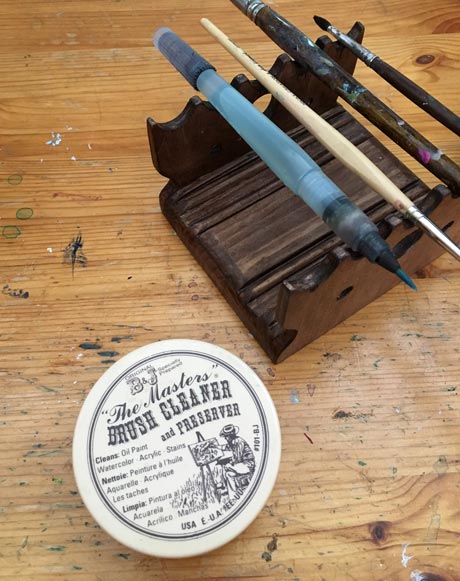
This cleaner is a solid soap. You dip the brush in water and then rub the soap with the brush. Formerly, I only washed the brushes with warm water after watercolor painting. Now I use the cleaner for watercolor brushes too, and it’s lovely to begin a new painting session when my brushes are like new!
No Need for Inventing New Ideas
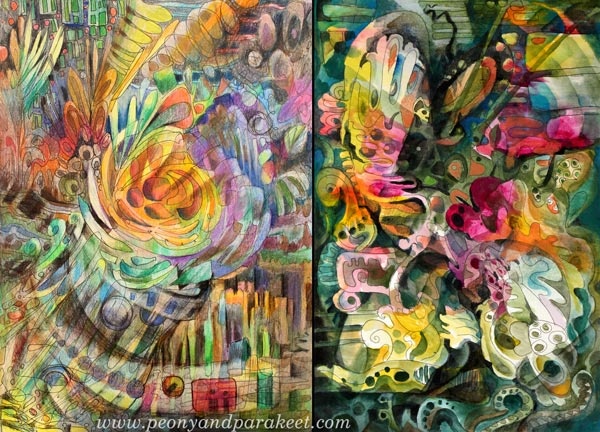
To me, looking old stuff with fresh eyes is one of the best things in art, and it applies to ideas as well. See “From Innovation to Experience” from 2014 and Origami from 2016-2018!
Is This Too Much Minimalism?
I was hesitant to write this blog post because I don’t want to take the joy out of buying new stuff and starting new art. I also enjoy that! But often the best cure for procrastination is to stop thinking what you don’t have and start using your creativity to make the most of what you already have. Bonding with the old supplies and ideas can give a sense of independence and freedom too.
“It’s not who you are that holds you back, it’s who you think you’re not.” – Artist Jean-Michel Basquiat
I heard this quote from one of the members of Bloom and Fly, and it feels appropriate here too!
Bloom and Fly – Get new inspiration and perspective to your art!
>> Sign up here!
Limited Creative Time – A Personal Story
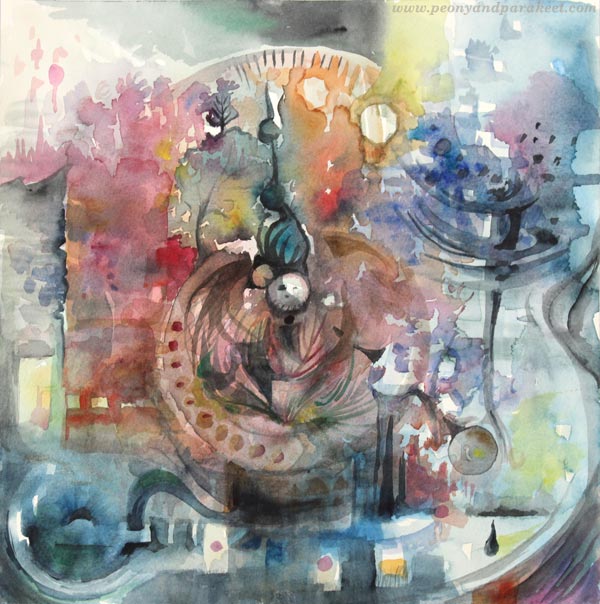
Here’s my latest watercolor painting “The Sense of Time”, made just a couple of days ago. I limited my creative time immensely when painting this. But this time I want to share the whole story, not just images of how I made the painting. At the same time, you will see some of my summer crafting projects and learn a couple of fun facts about Finnish summer.
Peonies Embrace the Midnight Sun
When people ask what would be the best time to come to Finland, I always suggest summer. Finnish summer begins in June and ends in August. In my opinion, the best month is July. Even in the south, where I live, you can experience the midnight sun, warmth and see the best in Finnish people. Like peonies, we are all introverts in the dark and cold winter, But when the sun comes up, it’s all smile.

Colors Compete with Shapes
My husband always has his summer vacation in July. As dog owners, our possibilities to travel are limited to day trips unless we take them to kennels or arrange somebody to look after them. As both of us love old art and antique, we always go to Billnäs and Fiskars for an antique fair. If you have watched a British television series Lovejoy, these are the places where you could see him and his assistants if they traveled to Finland. There are two antique fairs at the same time. They last 4 days and are packed with people selling and buying antique items in the middle of Finnish countryside. The fairs are partly indoors, partly outdoors and truly a collector’s heaven whether it rains or shines.
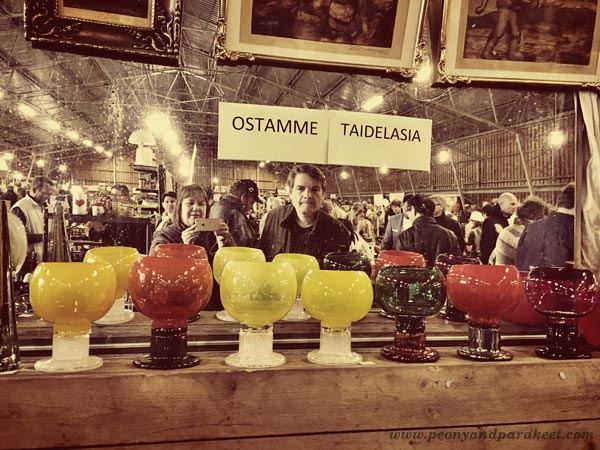
When looking at the sales tables, I always notice color first. My husband, a skillful woodworker, examines the shapes. Together we are unbeatable!
Art Rises from the Dollhouse
It was both unfortunate and fortunate that I found an old display cabinet from Billnäs. Fortunate, because it’s just what I had dreamed of for my doll collection. Unfortunate, because I didn’t have the space for the dollhouse anymore. I had to empty the tiny kitchen with miniature wine bottles and delicacies as well as all the other tiny rooms filled with similar items.
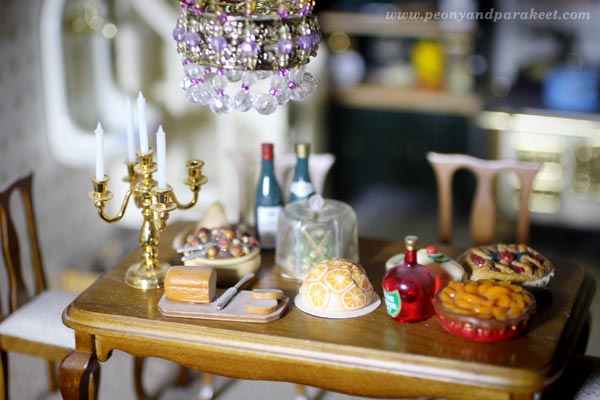
While taking the little paintings off from the walls, I realized that one of them wasn’t just printed image. It was a cross-stitch project that I had made years ago! I remembered not being very happy with it. When I started it, I thought that I could make more than one and then sell some. I didn’t have any pattern and the end result didn’t look as painterly as I would have wanted. So I gave up the idea of making more and placed the piece above the dining table, in the spot where it wasn’t as visible as other pictures. No wonder I had forgotten it!
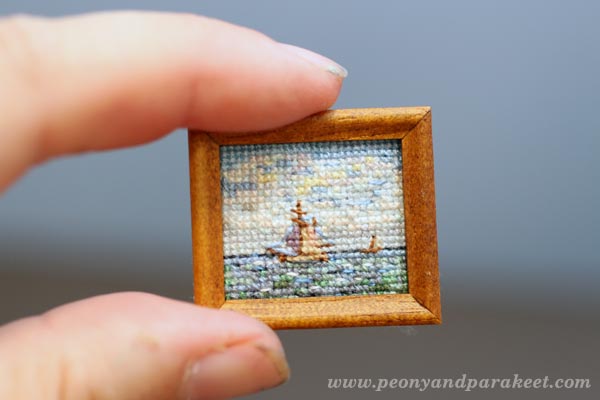
But now, it looks just perfect to me. Now I see more than just clumsy stitches. I see how my love to combine arts, crafts and design came out even when I was decorating a dollhouse.
William Morris Visits Ikea
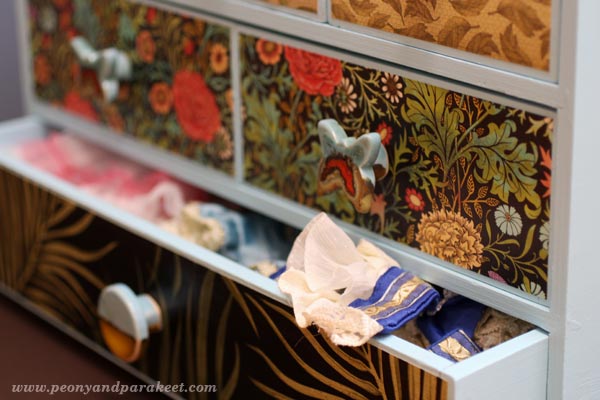
One of my creative routines is organizing things. Even at antique fairs, I sometimes get the urge to rearrange items and I have to restrain myself. This spring, I was organizing a storage space of our house and found an old Ikea Moppe mini chest of drawers. Putting old stuff to use is a creative challenge that I am often willing to take. I went to Pinterest, saw boards like this and was ready to get started.
The first challenge was that I also wanted to use up old paints. The only paint with the suitable quality was baby blue. I wanted to place the mini chest in the library room near my doll collection and store fashion doll clothes in it. I had a hard time seeing baby blue suit to the style and color scheme of the library room. We have decorated the library room in the styles of 1890-1930s. The curtains have William Morris’s pattern. How could the Ikea mini chest ever with the style? Trusting that I could figure it out, I refused to buy new paint as I had another purchase in mind. I wanted to buy ceramic knobs for it.
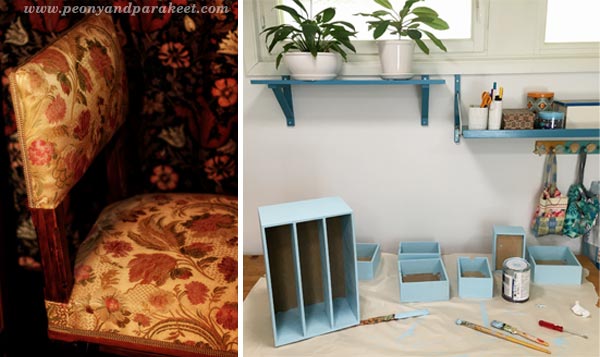
If I had to choose one material that I adore, it would be a difficult decision between ceramics and glass. But I think the winner would be ceramics. Even if I have never really dived deep into creating with clay, I love ceramic items. Especially if they are both decorative and expressive. I also like them to be a little rustic, have some handmade feel without being overly clumsy. The knobs I wanted to buy should also have some baby blue, some William Morris, look both old and modern and be traditional but somewhat innovative. Despite the high expectations, I optimistically began to search handmade ceramic knobs. It took a couple of days but my optimism paid off and I found just the perfect ones! They are made by an English woman living in Israel. Her Etsy shop is called “Clay is My Art”, a heaven for anyone who loves rustic, but sophisticated ceramics.

As you can see in the photo, I was able to find decorative papers that not only matched the knobs, they fit perfectly to the style of the library room. The papers with palm plants are leftover wallpapers. The other two are from my scrapbooking paper stash.
But wait, this story continues …
Leftover Flosses Praise the Pattern
Have you ever had anything in your home that was ok before you changed everything in its surroundings? My number one thing was a small key storage cabinet, which was fine in our old home on a muted dark red wall. But when placed on a bright yellow wall of our current home, it really bothered me. With the experience in cross stitching for dollhouses, I got an idea of stitching a dollhouse carpet pattern from Janet Granger‘s book Miniature Dollshouse Carpets.
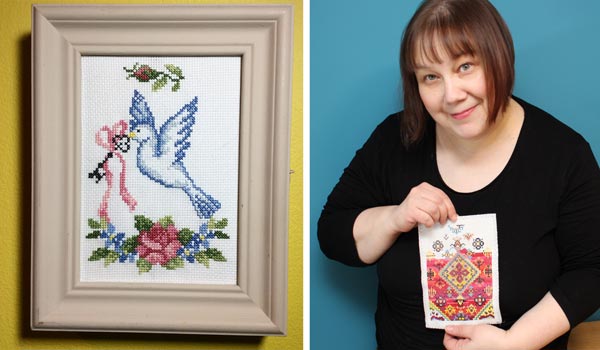
It took all spring when working slowly but at the beginning of summer, I got it stitched. I also repainted the wooden parts. This time I did buy the dark green paint but this is still a project using leftovers. Namely, I didn’t just use the few colors set in the pattern. I used leftover skeins of embroidery floss creatively so that the carpet looks like an old antique one. I much prefer this look to using only a few colors.
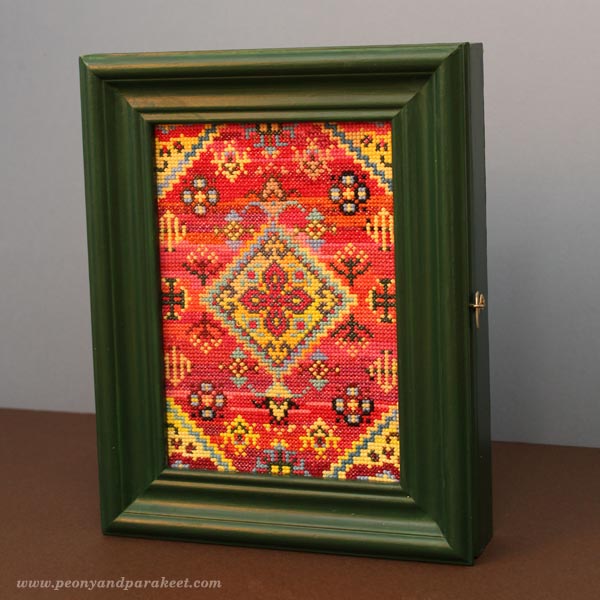
The cabinet looks great on the yellow wall. I temporarily took it down for photographing it in a better lighting. There was also another reason, connected to the watercolor painting …
Limited Creative Time – Craft Projects Inspire the Painting
This time I had limited creative time. Before I started painting, I placed the three handcrafted items on the table in front of me. The key cabinet, the mini chest and the miniature cross-stitch work were all there to inspire me. Then I glanced my watch and gave myself 15 minutes to paint the first layer. Namely, I had another project in progress too. I was editing one of the videos for Imagine Monthly Fall, the art journaling class that begins on August 1st. Editing videos requires a lot of concentration and I wanted to keep the quality good by taking small breaks. So after 45 minutes of editing, I had 15 minutes for my painting, all day.
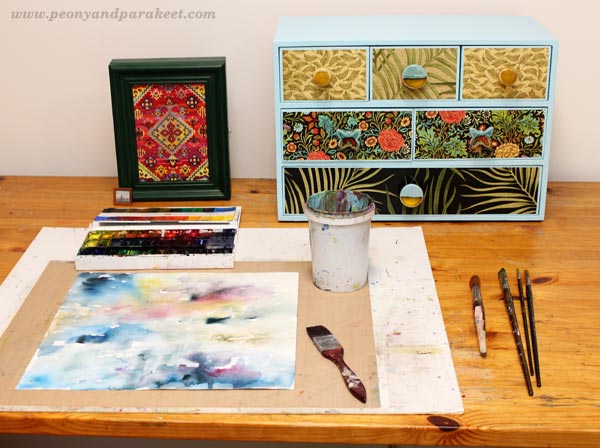
If you work in short periods of time like this, inspiration items become essential. Seeing the same objects again and again, even if you are not actually recreating any of them, maintains the focus and direction.
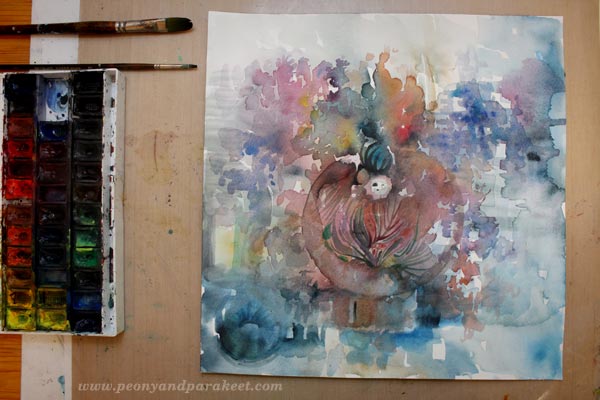
After four 15 minute sessions I was at the point where I had painted this and that with five different brushes but had no clue of what I was trying to express. It was fun to paint like this but clearly, I couldn’t finish the painting without setting up a longer session.
Finishing – Summing Up
I soon discovered that being so aware of the time had also affected the painting. I saw clocks and pointers which made me ponder about the concept of time. It flies so quickly in creative activities that it’s difficult to think about it as a simple measure. This, in turn, made me think about the antiques and how great designs last time. After my husband and I are gone, there will always be new enthusiasts who will drool over those Kaj Franck‘s bowls.
I often finish my watercolors with colored pencils to easily add new layers of details and decorative lines. But this time, I was reminded of my craft projects: “Make the most of what you currently have.” So I resisted the urge to go to another room and get the jars of colored pencils. It only took an hour to finish the painting.
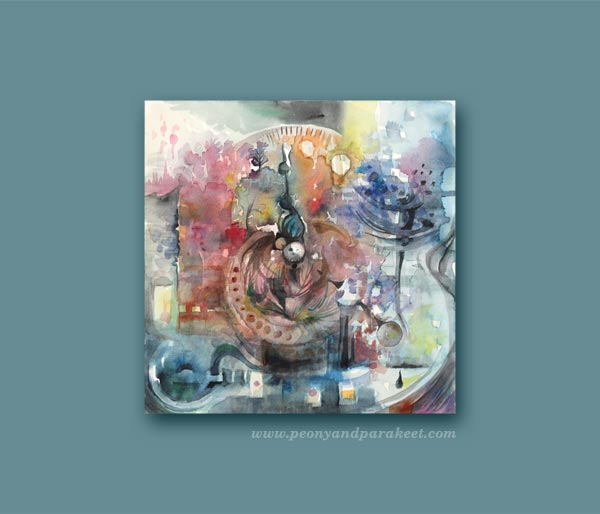
Some midnight sun, some glassware, mini horizons, small amounts of leftover colors, block shapes and last but not least: the description of how my inner artist sees the sense of time.
The Way I Process Ideas and Produce Classes
This blog post demonstrates how I work with ideas. It’s not only one idea that goes into one piece of work, it’s a collection of ideas that have different levels. Some are more abstract, others are more concrete. I believe that every good art class is filled with multi-level ideas that in turn, embark your own ideas. That’s why I never underestimate the importance of the background study that I do for my classes. I listen to audiobooks. I go to libraries to browse books. I collect Pinterest boards and inspirational items. I make sketches and paintings that I call pre-class paintings (yes, the one above is one of these). They prepare me to bring my best to the classes that I produce. They ensure that the class is not only about one whimsical thing that I fell in love with but about a holistic, yet clear and inspiring view to the subject. All in all, we all have limited creative time.
Sign Up for Imagine Monthly Fall!
Take your art to a new level by practicing drawing and painting with themes inspired by fine arts. Express prestigious nostalgia, impactful aesthetics, and futuristic imagination through art journaling. Let’s make idea-full art journal pages your channel to move forward in art making!
Imagine Monthly Fall 5 challenges, great community >> Sign up now!
Organizing Art Supplies with Konmari Method
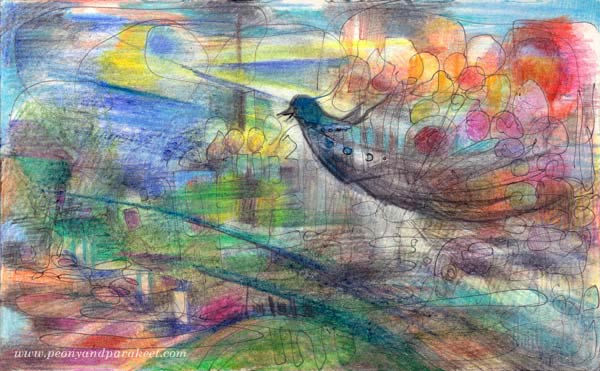
This art journal page is about how less stuff can uplift us. I feel like a bird with balloons after I sorted out my art and papercrafting supplies.
The Life-Changing Magic of Tidying Up
It all started from a book: The Life-Changing Magic of Tidying Up – The Japanese Art of Decluttering and Organizing. It is written by Japanese professional organizer Marie Kondo and she calls her method “Konmari”, which is an abbreviation of her name.
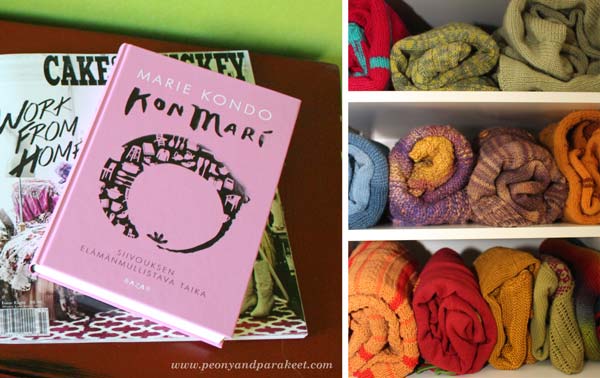
The Konmari method is fairly simple. First you get rid of all the stuff you don’t use or enjoy, and then you store them by type. The process is explained more in detail in the book. The book recommends starting with clothes so I organized my sweaters first. Most of them are my own handknits. Marie Kondo explains how to fold each type of clothing and recommends storing things so that you can see them in a row. I have always believed in little joys in life. However I had never thought of how much joy seeing those sweaters can bring. Each time I open the closet, it joyfully reminds me how much I enjoy both knitting and colors!
Art Supplies that Spark Joy
Marie Kondo believes in handling each object separately and considering if it sparks joy. These spark most joy to me: colored pencils and watercolors! These most simple art supplies delight me more than any new product on the market.
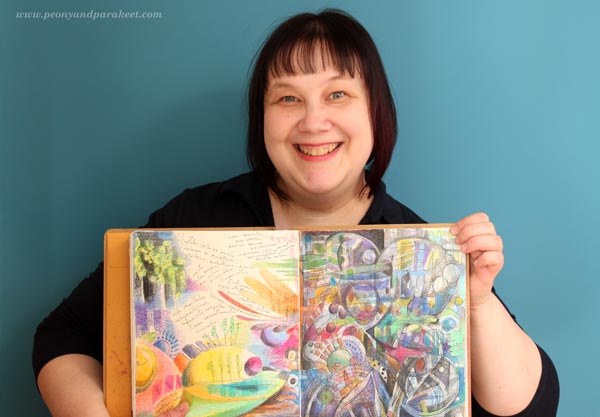
If you have followed this blog for a longer time, you might have noticed that the variety of mediums that I use in my art has been reduced gradually, especially during the last year. I noticed that I had bought many of the products believing they would solve my creative problems. I thought they would make me create better art faster and make creating more fun. But when experimenting with new products I forgot how little ingredients are actually needed for creating meaningful art. Nowadays I feel sad when I see beginners reading instructions that involve a huge variety of art supplies. The long lists of supplies are overwhelming and prevent many from start creating.
I believe we should focus less on things and more in our inner world. And Marie Kondo thinks exactly the same! She believes that when we are surrounded by fewer things, we can treat them better and start thinking what we really want to do in life. I believe that when you use fewer supplies, a lot of energy is saved from picking and choosing for the actual creating. You will also grow attached to the supplies and start displaying them and taking care of them more often.
Working Area Before and After
Even if I organize my creative space regularly, I felt it was the time for a bigger change. I had already started re-organizing my creative space before reading Marie Kondo’s book, so it felt natural to continue that process.
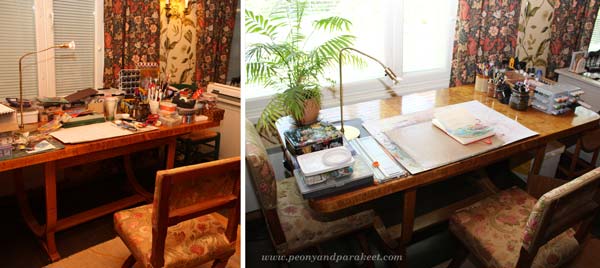
The photo on the left has been taken some time ago. After that I had already cleared the view to the window. But I had not actually got rid of anything, I had just removed some of the stuff to the nearest shelf unit. This time I picked out every single object and decided to give away or throw away those that I had not used for a long time. The photo on the right shows how the table looks like now!
Konmari Method Applied to Art Supplies
Marie Kondo suggests not to put items on the top of each other. That is quite difficult to achieve with art supplies. I managed pretty well though. Jars and boxes help with that.
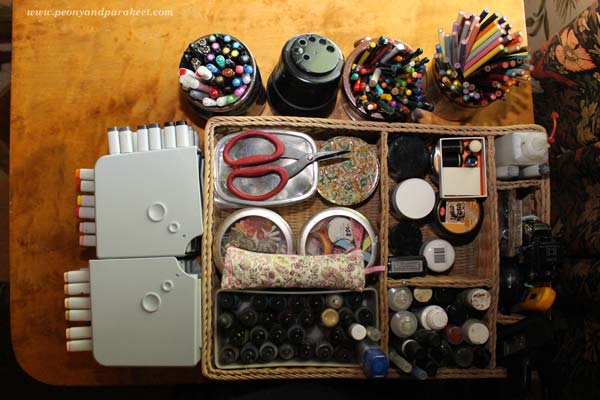
My creative space also includes shelves. Here organizing was a bit more challenging and the end result might not be how Marie Kondo had done it. She would probably group all the paper booklets, albums, and magazines together. However, I quite like it as there’s enough logic in how everything is located. As one of my hobbies is scrapbooking I have a large collection of stamps. I was able to put them all in one place on the upmost shelf.
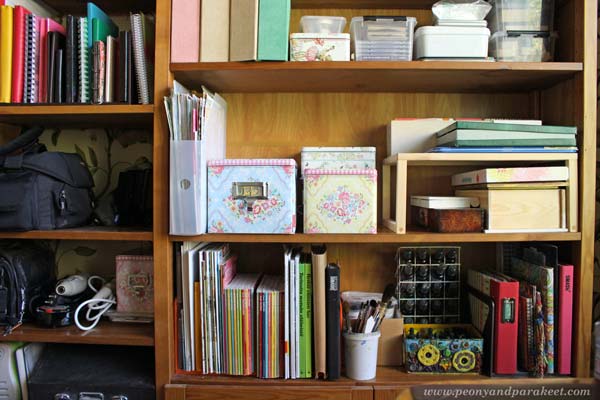
Marie Kondo believes that we should take time to consider which is the best way for storing each item. I found that odd bottles of ink are much happier in spray bottles with other liquid inks. Paints are now in boxes on the right side of the middle shelf. I love how easily accessible all the supplies are and how my art journals and inspiring magazines fitted there too.
How to Prevent Decluttering?
According to Konmari method the secret of staying organized is this: once you have dramatically reduced the amount of stuff and organized by type, you will consider buying new things much more carefully. When you group items by type, you will remember what you already have. When I saw what I had bought during the years, I thought that many times I could have just left the store early and put the time in creating. Focusing on fewer art supplies has reduced my yearn for shopping, so I do believe what Marie writes about.
Make your colored pencils spark joy!
Buy my e-book Coloring Freely
More Time, Better Art?
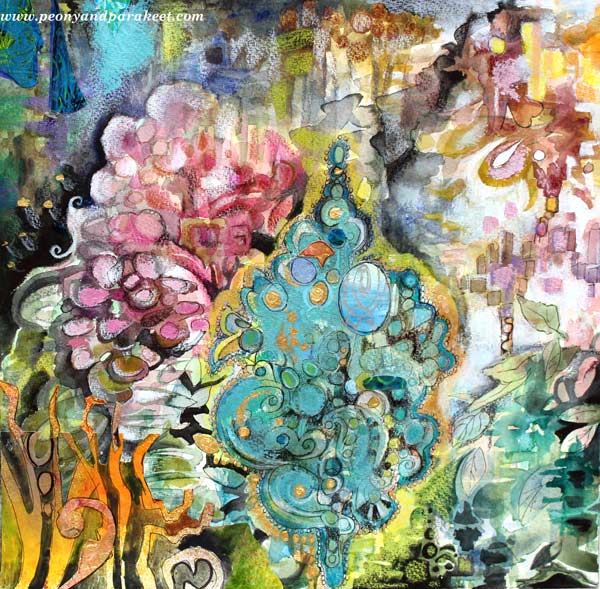
This artwork was inspired by Rococo, the 18th-century-period style with curves, asymmetry, gold, and ornaments. When I think of Rococo, I think of time. How long did it take to sew those elaborate women’s dresses? What about the porcelain table clocks, how many people, how many months did it take to get one finished and working?
The time we are living now is totally different. Not that I want to spend half of my life embroidering one chair. But I cannot help thinking: sometimes we create quantity but not quality. We get frustrated with our lacking skills and weak artistic vision, but often, there’s a simple solution: time. So, instead of creating three pages in a week for your art journal, make one!
Creativity needs time. The first thoughts are often the least innovative. When we take time to dig deeper, we reach not only frustrations but also new solutions.
Working in Short Periods of Time
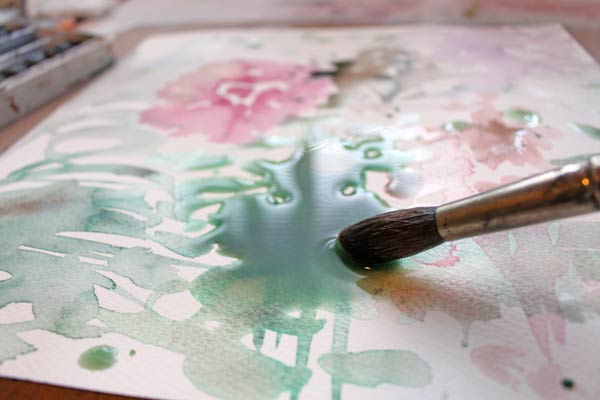
I used to have a difficult time working in several sessions. I wanted my work to be finished in one go. Leonardo da Vinci certainly did not have problems like that! He spent over ten years painting Mona Lisa. Of course, he did not dedicate all of that time to one painting; he did other things too. But he let his subconscious work during the breaks. So I did da Vinci – while waiting for the watercolor to dry, I engaged myself in other activities.
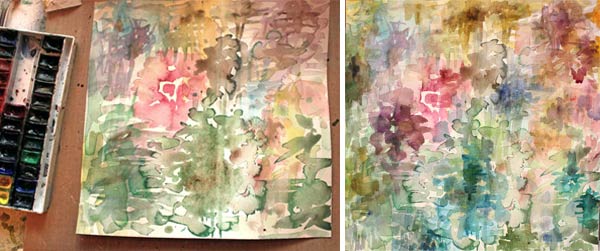
I built the foundation for this work with several thin layers of watercolors. Then I worked with colored pencils and watercolors to add details. A small flat brush is my favorite when adding details with paint.
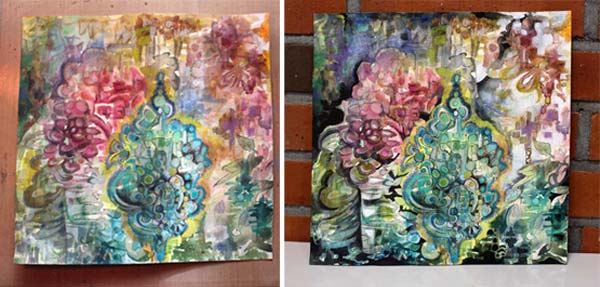
Some might call it finished at this point, but I wanted to add tension and interest. As this was about Rococo, some shimmer seemed appropriate!
Rococo Glitter!
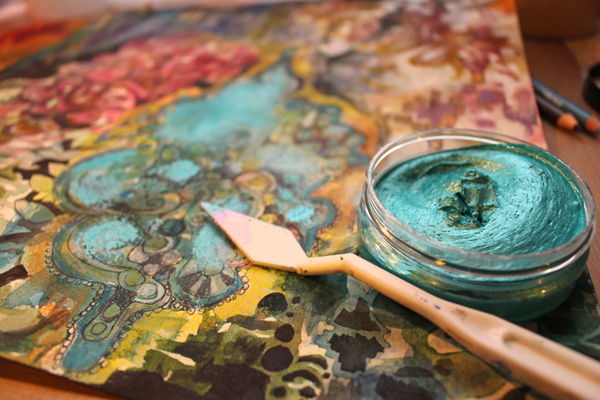
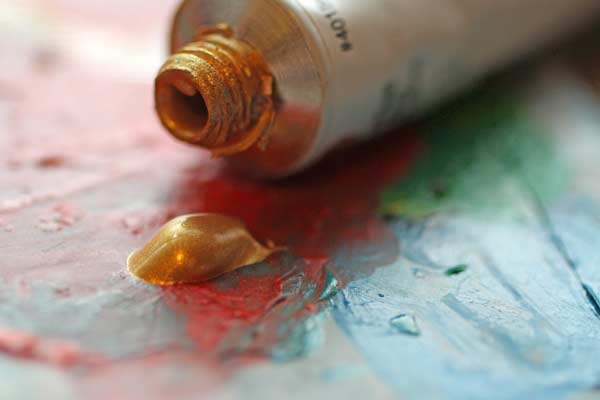
I have a few jars of Inka Gold, beeswax-based metal paint. They seemed just right for this artwork. And speaking of Rococo, some gold would be appropriate too. I love Golden brand’s gold acrylic paint.
Finishing
Some hand-decorated papers added richness and variation. Then I continued completing the tiny details.
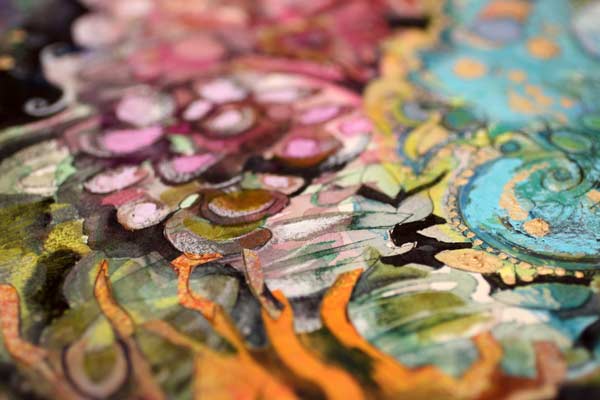
The size of the artwork is 12 inches by 12 inches. It took about three days from start to finish.
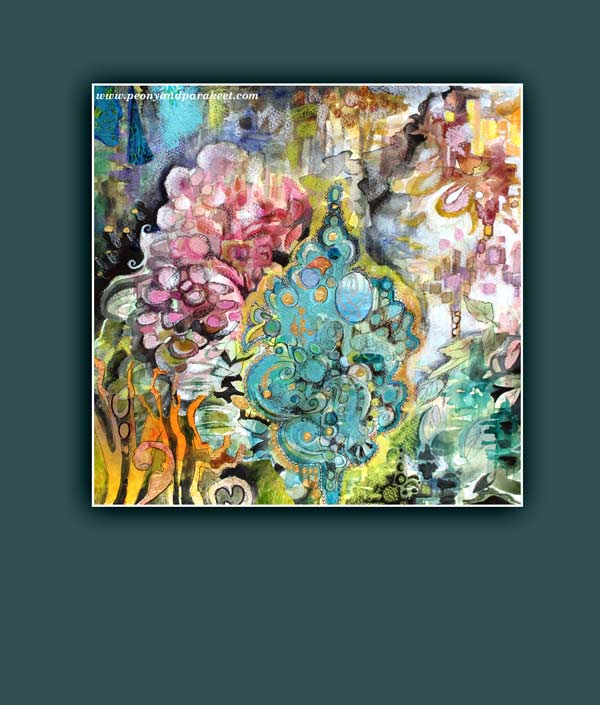
The quality of one artwork cannot be measured by the time the artist spent with it. Great art can be born quickly when skills and creativity meet. But on the other hand, if you want to improve your art and increase your creativity, why not focus on one artwork for a bit longer time.
What do you think? Can you make time work for you?