
All Things Necessary in My Artistic Journey
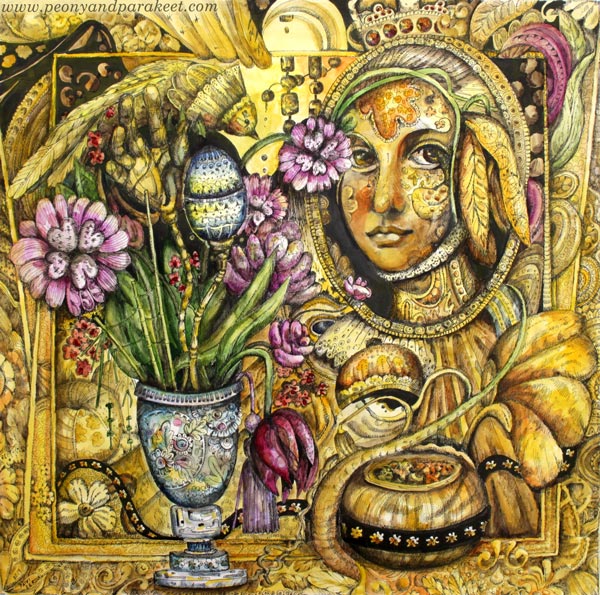
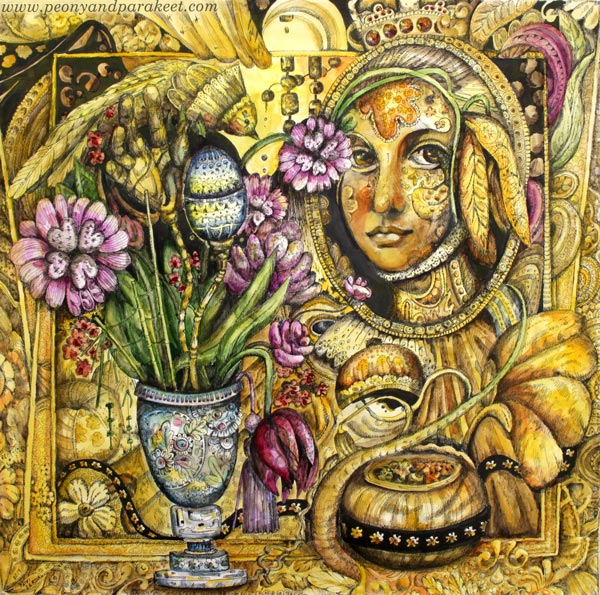
Here’s my recent drawing called “All Things Necessary.” It’s inspired by the discoveries that I made while building the class Magical Inkdom. When I taught IT professionals back in the 1990s, we teachers used to say that you learn best when you teach a class. We had to constantly learn new technologies, and it made us professionals not only in teaching but also in learning.
However, some things take time, and even if trying to find the best ways to work with both ink and watercolor enabled this piece, the idea behind it goes much further back in my artistic journey, to the year 2014.
A Great Idea but Not So Great Execution from 2014
I have archived many of the old blog posts because back in 2014 I wasn’t very good at writing, and the posts are too short for the search engines. But I found the blog post in my personal archive and here’s what I wrote back in 2014:
“I often get these ideas that cost a million. Like the big painting that shines in gold and silver. It would look like a reproduction of the beautiful doors I saw last year when visiting the Hermitage Museum, in St. Petersburg, Russia. Someday I will make it! So I made a small prototype. It is a wooden block that is covered with all kinds of stuff found in my crafting space.”
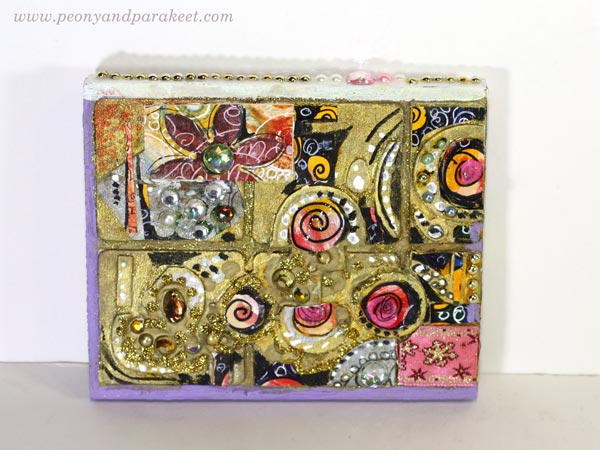
This idea has haunted me since I made this crafty block, or I could say since I visited St. Petersburg, Russia. I have two blurry photos from that trip that I look at quite often. One is the golden door and the other is a handpainted plate at The State Russian Museum.
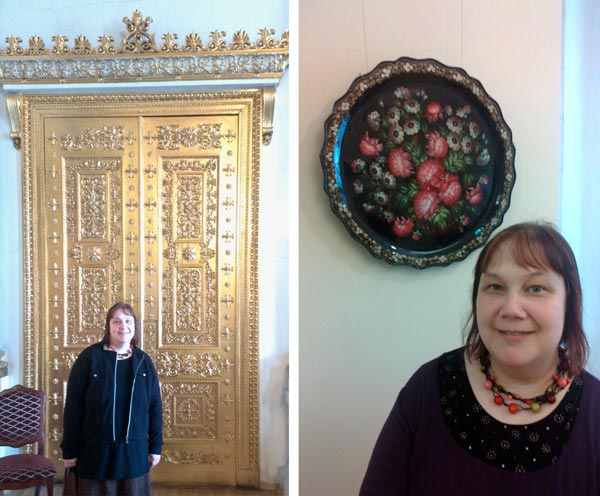
I felt I had found the aesthetics that I also wanted to create. First, I thought I would literally need real gold. Here’s how I ended the blog post:
“So, if you follow me, then you know what I will do if I win in a lottery! Real gold, jewels … wow, it will look astonishing.“
I wish I could turn back time, and say to myself: “Don’t lose this idea! Keep creating, and once your skills will grow, you will find the way.”
Dumping the Idea – “It’s Too Superficial”
The problem with me has been that when my skills haven’t met my vision, I have let go of the ideas around it. I have said to myself:
– “It wasn’t what I wanted to create anyway.”
– “It was too superficial, I want to create deeper stuff.”
– “The idea was great but not what other people would want to see”
– “Only rich and overly successful people could do that.”
– “There will be new and better ideas that are easier to execute.”
And so I have felt lost many times in my artistic journey because I haven’t been able to re-create that golden door, my true desire.
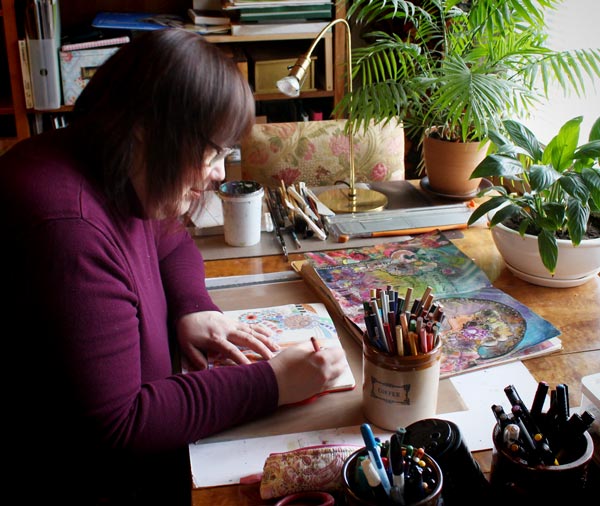
Getting Back to the Idea with More Skills
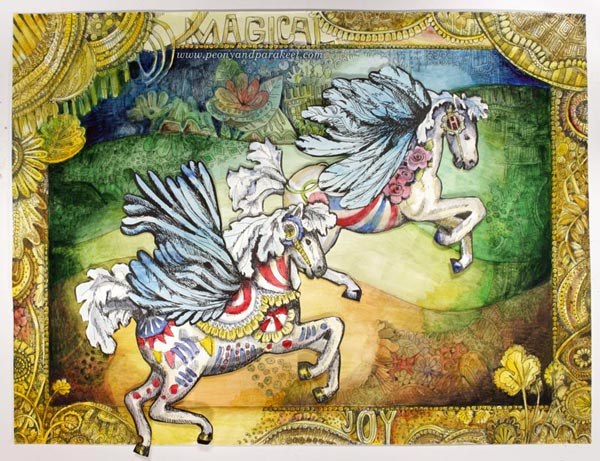
But for Magical Inkdom, I wanted to create gold. There my main message has been that we can make the wrong right, and define what’s magical to us. So I drew some golden frames, and they looked magical! (Instructions will be published in Lesson 4.)
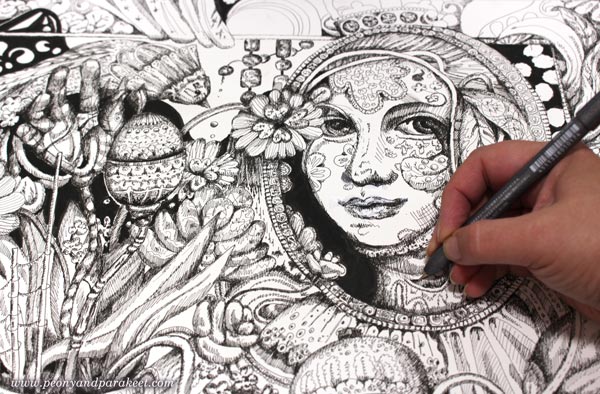
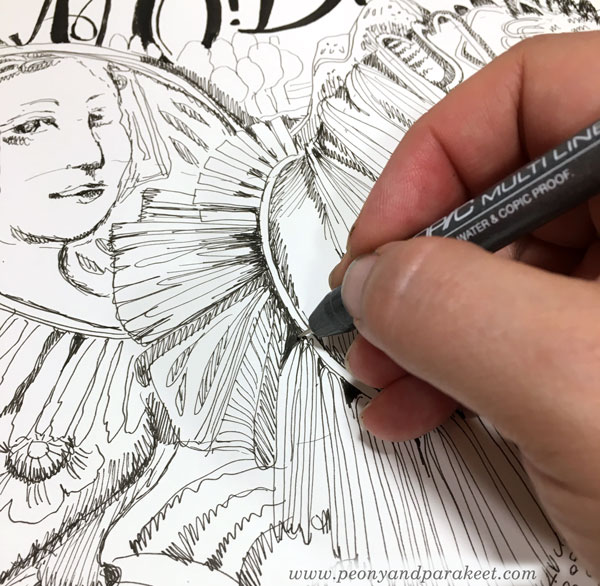
Of course, I couldn’t just have a little bit of gold and settle with that. So I began a new piece, approximately 18 by 18 inches. It’s the biggest ink drawing that I have made so far. I knew my skills are there. I didn’t need a sketch or a prototype but just pour out everything that I love.
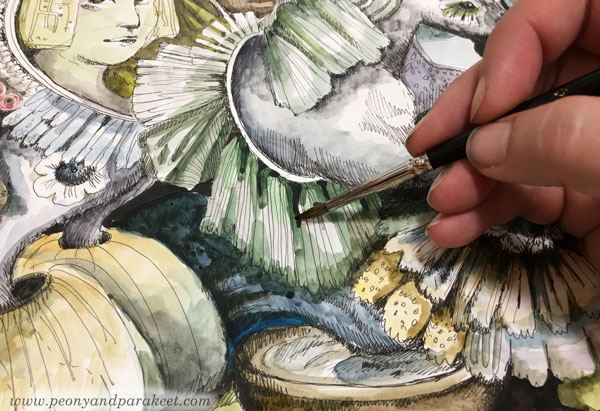
While I colored the drawing with watercolors, I thought about the appropriate title. The most accurate that came to my mind was “Kaikki tarpeellinen” meaning “All Things Necessary”. This kind of golden luxury may seem unnecessary and even overwhelming to many, but it’s necessary for me. I need to load this daily into my mind to keep my zest for life alive.
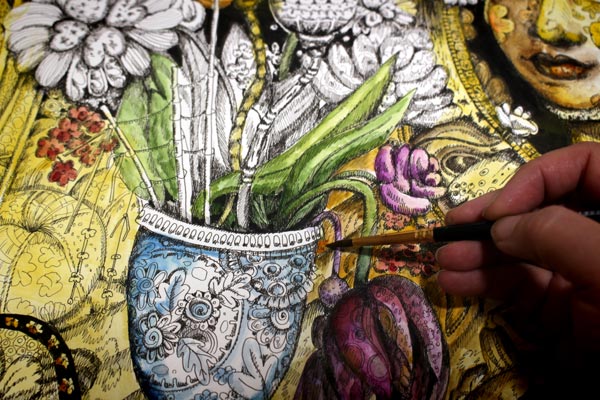
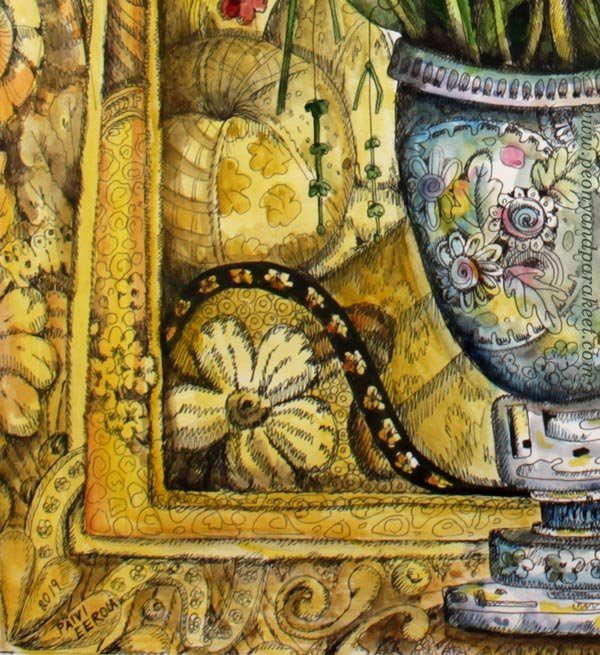
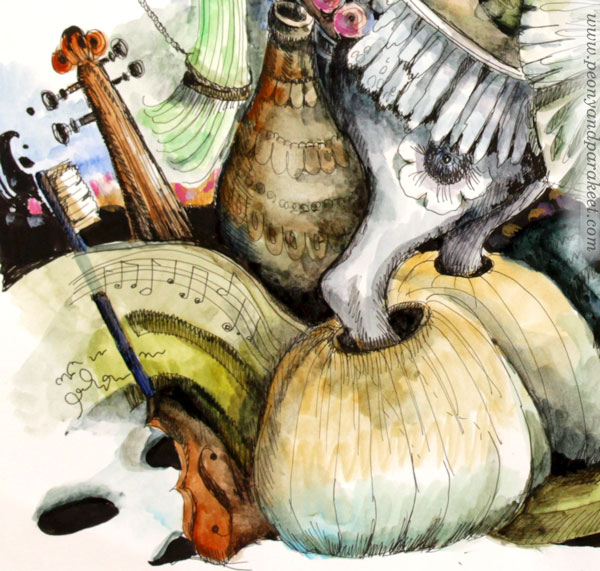
All Things Necessary: It’s a world where Salvador Dali travels to the Rococo era, and then back and forth between the Renaissance age and the 20th century.
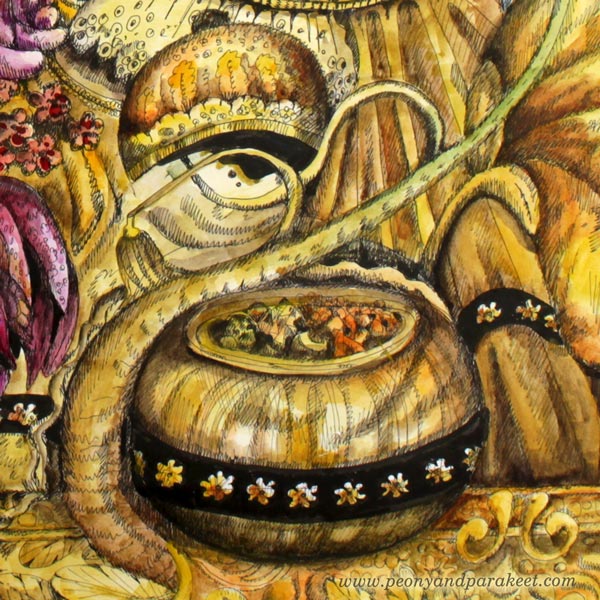
It’s a world where golden birds lay Faberge eggs and land on golden fingers.
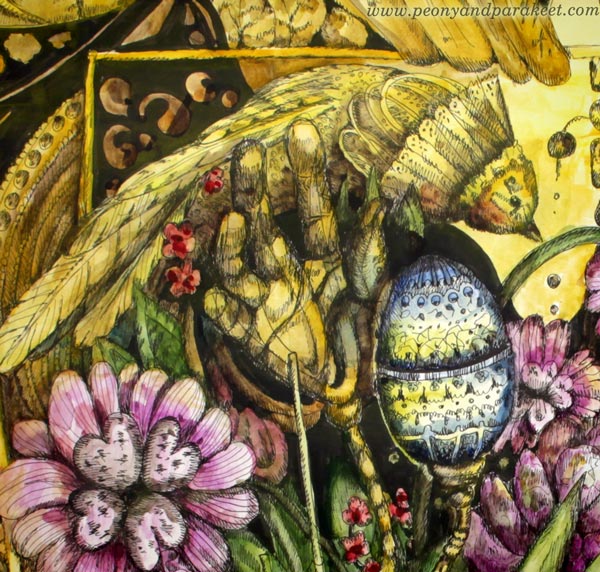
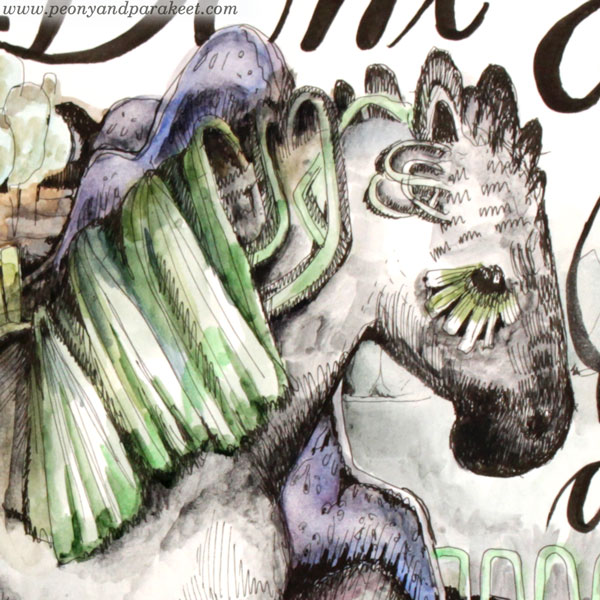
It’s a world where people, animals, and physical items share the same qualities and play the same symphony.
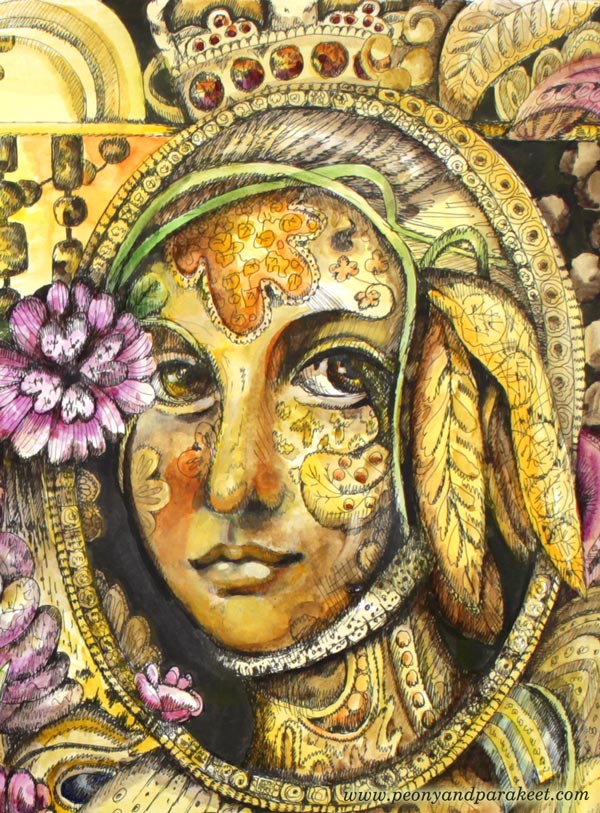
It’s a world where a cembalo plays a bit too loud, where all the gold hurts your eyes, and where the chaos is suspiciously acceptable.
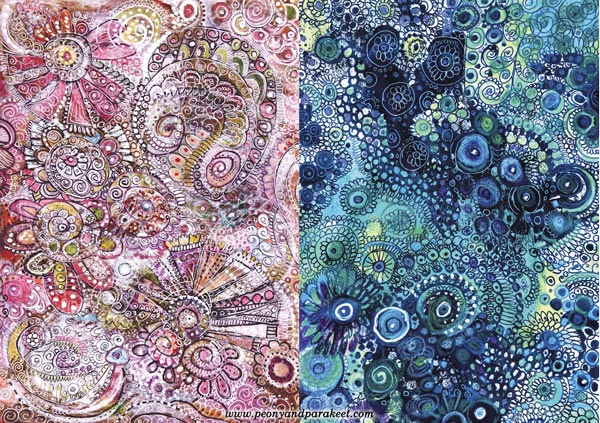
It’s the same place that I was trying to find in 2011, when I was madly drawing circles, and when some of you started following this blog.
All Things Necessary for Moving on in the Artistic Journey
This new piece has made me re-think about the whole discussion about the artistic journey and finding a visual voice. I have blogged a lot about it, coached people for it, but it’s not easy to dig out a quiet seed that needs a lot of time and care to grow. Our artistic vision, the road sign, can be an ugly “prototype” like my old craft project that we carelessly toss away!
Let’s hold on to the things that keep deeply touching us while growing our skills in drawing and painting.
Come to draw fantastic art with me – Sign up for Magical Inkdom!
Right after the registration, you will get all the lessons published so far, and you are good to start drawing! >> Sign up here!
Get Closer to True Artistic Expression – Draw Your Innocent Little Secrets!
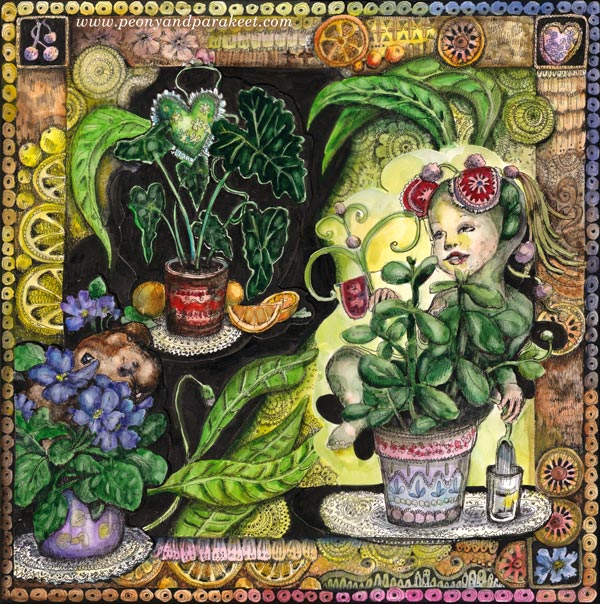
Here’s my latest art project, “The Secret Life of Pet Plants” – an illustration that I have composed of hand-drawn collage pieces. It’s about the love for house plants – the topic that’s close to my heart but that I haven’t touched much lately. I also wanted to include little secrets that I haven’t revealed in my art.
These little secrets are often pretty innocent stuff that we have labeled with words “too childish” or “too weird.” They can become creative blocks and drain our energy if we try to avoid them. Really, life is too short not to get them on paper! We can get more serious after they are out – if we ever want to get back, that is! I think I stay on this track for a while – making art that I have always secretly wanted to see. It feels good to be close to this kind of true artistic expression.
A Couple of My Innocent Little Secrets
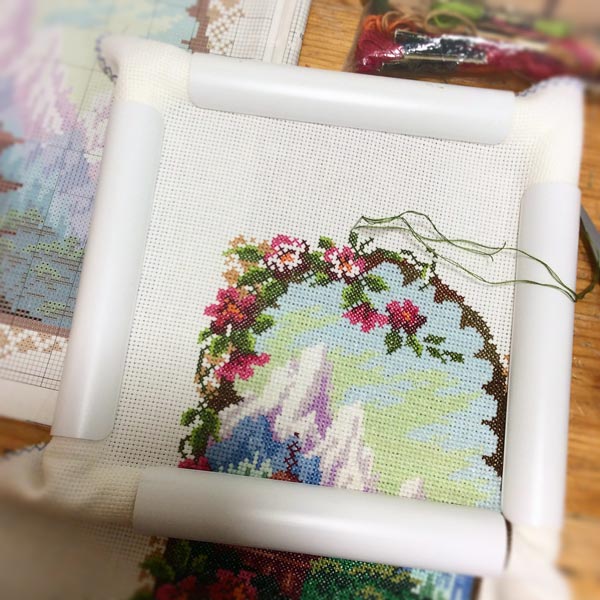
One of mine is my secret admiration for traditional (and often a little bit tacky) cross-stitch designs. They often have decorative borders and look more like a collection of motifs than a real scene.
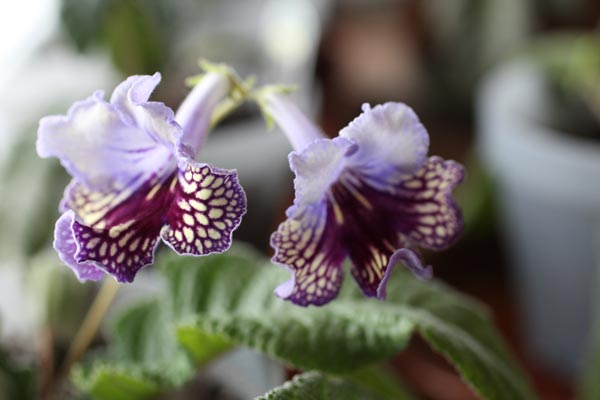
Another one is that, to me, plants are like pets with personalities. We have a lot of plants, both outdoors and indoors, and I feel a deep connection to many.
Here are the steps for an illustration made from hand-drawn collage pieces.
1) Make Small Drawings
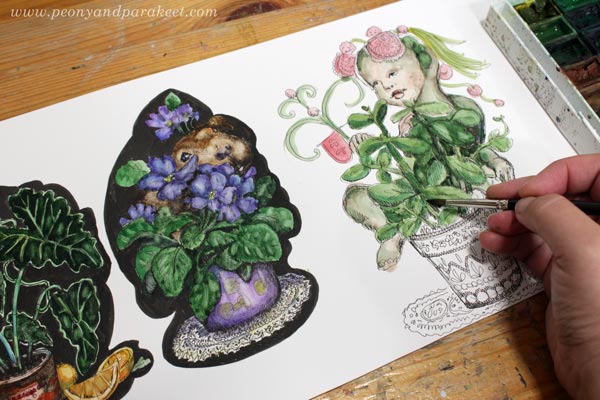
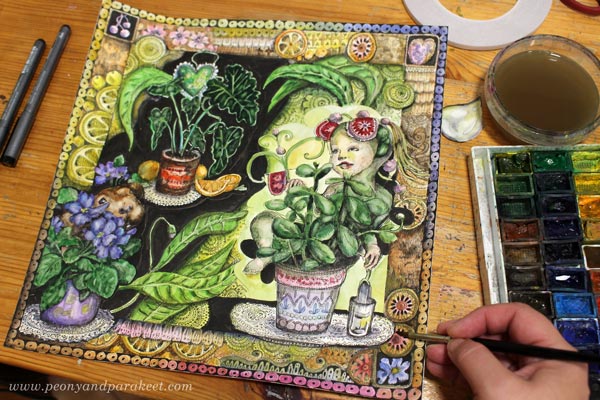
I started the process by drawing and coloring the main elements separately.
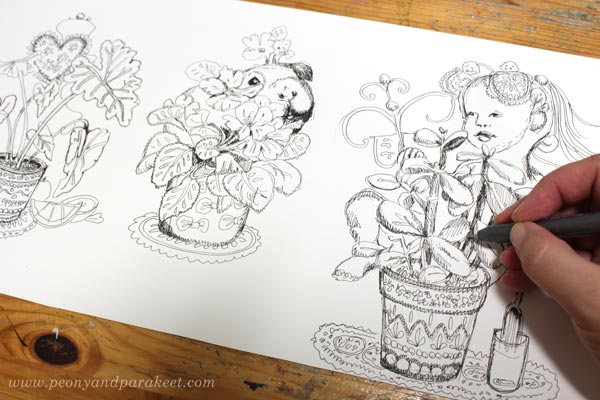
I love using watercolors with smooth Bristol paper. The color is easy to layer and also to wipe off if needed.
2) Draw the Background
I placed the colored collage pieces on a background that I had made for the class Magical Inkdom and tried how they would work as a composition. I also drew a water drop just in case I needed a small element for balance.
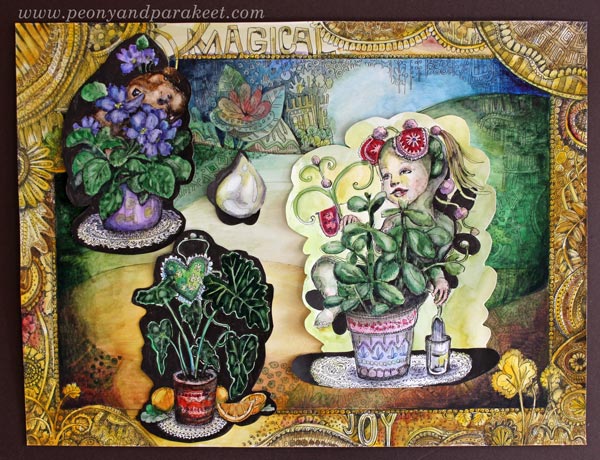
Then I drew a new background and marked the areas where the elements would go.
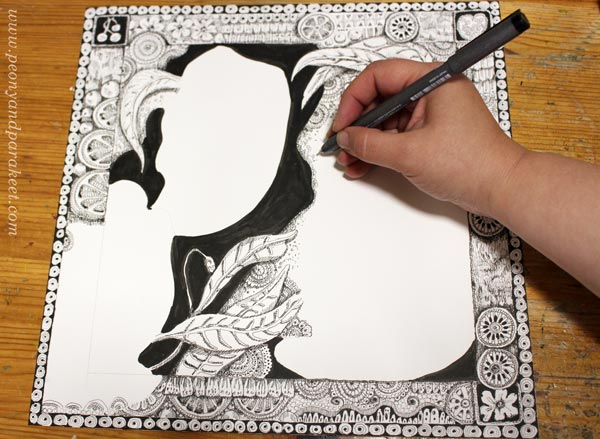
3) Attach the Collage Pieces to the Background
I usually attach collage pieces with gel medium, but this time, I used double-sided tape. It is easier to control, so I didn’t have to worry about having the medium in the areas where I wanted to add more watercolors.
4) Display the Little Secrets!
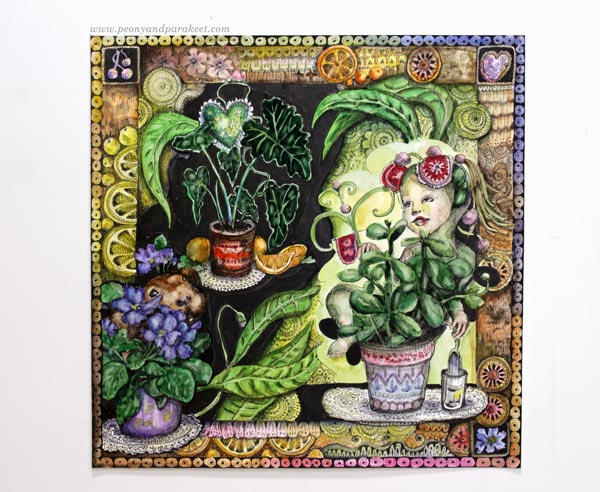
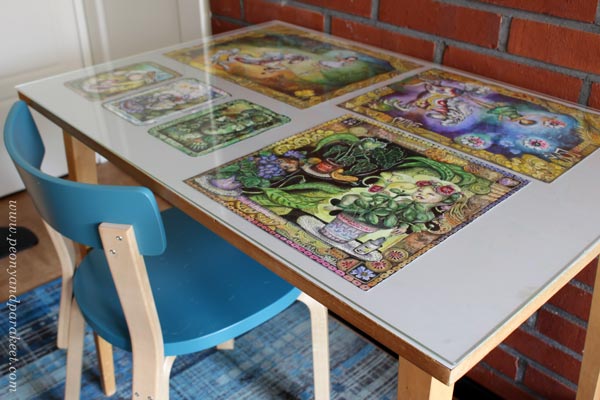
One wall of my studio is white so that I can photograph my work easily. But when I want to display the recent pieces, I don’t leave them on the wall but place them on the side table under a clear plastic plate. I love how this piece fits with the ones I have made for Magical Inkdom. It truly feels my true artistic expression at the moment.
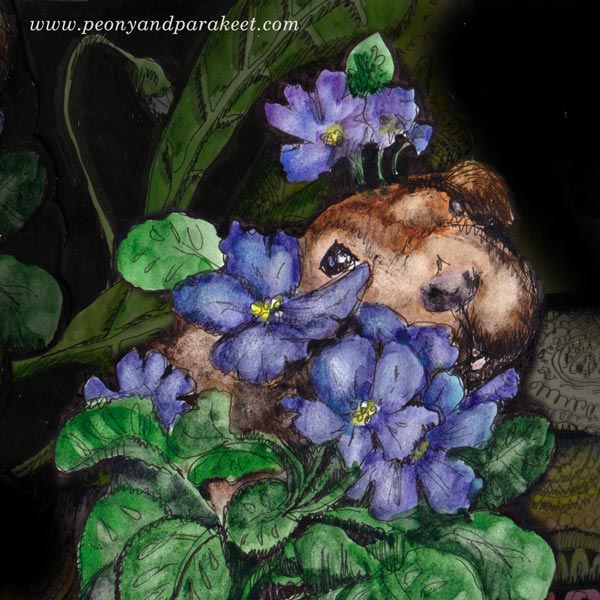
With the African violet that looks like a cuddly guinea pig to me, I want to wish you a happy and creative weekend!
Come to draw fantastic art with me – Sign up for Magical Inkdom!
Right after the registration, you will get all the lessons published so far, and you are good to start drawing! >> Sign up here!
What Artists Keep Doing – Series of Inspiring Quotes #3
This post ends the series of inspiring quotes that I have heard or read recently. In the last week, I wrote about the feeling of not being ready yet, and the week before about being honest about what you want to create. But now to this week’s inspiring quote!

This Week’s Quote
Don’t ever quit anything.
Who: Finnish journalist Kimmo Oksanen
Where: A column in the local newspaper Helsingin Sanomat (in Finnish)
At the age of 16, Kimmo bought a typewriter and a guitar with the money earned from a summer job. He thought he could be a famous singer-songwriter. But he quitted singing and writing songs when he went to university and found out that lyrics are not “real poetry.” He also used to draw, paint and do sports when he was a teenager but ended up quitting all that too. He used to aim for perfection and didn’t realize that mistakes make the master. Now he regrets that he hadn’t just kept doing, and his advice is: “Start a lot and never quit anything.”
Not Quitting Crafting and Writing Made Me an Artist
When I was a teenager, like Kimmo, I also loved to write. I wrote poems and short stories and attended some competitions too. I was also a crafter, always knitting and crocheting. My deepest desire was to become a visual artist, and I painted and drew almost every day.
Then I saw a computer for the first time and fell in love. It was the early 1980s, and the computer age was just getting started, but I knew that technology was my thing. I changed my plans to become an English teacher to a software engineer. But despite my interest in computers, I kept on writing, drawing, and crafting. There was a period when I spent less time with creative activities, but in one way or another, I have been a writer and crafter all my life.
When art began to call me again, I also wanted to start a blog. I was still quite a beginner in art, and my vision was bigger than what I could put on paper, but the encouragement I got from the readers kept me going. But now when I think about it, my old hobbies also had some role in that. I had learned resilience from crafting, self-expression from writing, and the old dream of becoming an English teacher oddly changed to the courage to blog in a foreign language. Without being a writer and a crafter, I wouldn’t be a blogger, and without being a blogger, I wouldn’t have become a working artist.

I Regret Quitting These!
However, there are a couple of things that I loved as a child but quitted doing. I used to write short plays and gathered an acting group from a few of my schoolmates. I also played the violin for a few years. During the past four years as an artist, I have regretted quitting both. When running classes, it’s good to be able to present things in a memorable and fun way. When selecting the music to the class videos, I try to find songs that fit with the topic of the project and keep the attention on the subject. The little that I learned in my childhood years has been useful, and I wish I had continued both acting and playing through all the past years.
Stephen King and Does Talent Dictate What We Should Keep Doing?
In art, the question of talent usually comes up in the discussion sooner or later. I just finished reading Stephen King’s book “On Writing” where he tells how it’s just a waste of time trying to learn something that you don’t have any passion. His son played an instrument, but because he showed no talent to him, Stephen advised him to quit. He had wanted to see some free playing, some evident joy, and some promise of the career as a musician. Because there were none, he thought the son could use his 30-minute practice better than playing.
I find the story and in general, the discussion of talent depressing. It determines both the person and the profession from a very narrow perspective and generates powerlessness. That’s why I have tried to avoid to think whether I am talented enough or not. However, the question of talents always lurks somewhere behind the surface. I got to realize that when suddenly, a few weeks ago, I was told that my grandfather had graduated from a design school. He had been a farmer and died a long time ago. I never met him, but some of his letters have been saved. Based on them, he was an unhappy man who yearned for bigger challenges than what country life could offer. Clearly, he wasn’t meant to be a farmer, but someone who develops new things.
When I heard what my grandfather had studied, a thin string around my heart broke, and the tension relieved. I was no longer the one who had just got an accidental obsession for art and design, but a link in the chain of generations. It became more meaningful than ever to continue the work that my grandfather wasn’t able to do. It also made me partly re-write my story – I had some talent after all! I have also felt embarrassed about how much that meant to me. In the end, the fact that we keep on practicing has much more effect on our skills than any inheritance.
Art is About Not Needing to Quit Anything
When making the illustration for the blog post, I brought things from the past that I carry with me. Many of them are funny and harmless, like my first dream profession of becoming the queen of England. My parents helped me to plant a bench of Queen Elizabeth roses under the window of my room. When drawing, I don’t have to quit that dream. I don’t have to quit anything.
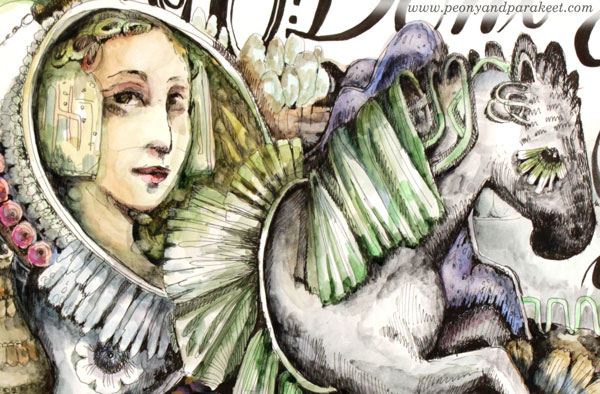
In art, we enter a world where we get to play freely with the things that have made an impact on us. If we hadn’t experienced or practiced anything, our imagination wouldn’t have the tools and the topics we have now. Let’s keep practicing, let’s keep not quitting, and let’s be assured that whether we feel talented or not, we don’t have to give up anything when we keep drawing.
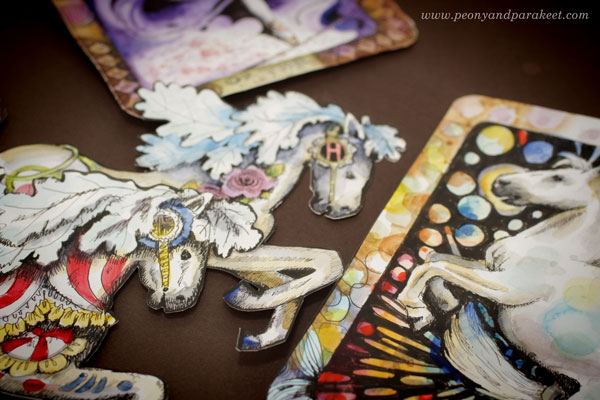
Take the Next Step – Do This!
Open a new page in your art journal or sketchbook. Draw and/or glue a collage of things you have grown to love and never stopped doing!
Come to draw fantastic art – Sign up for Magical Inkdom!
For a Late Bloomer in Art – Series of Inspiring Quotes #2

This post continues the series of inspiring quotes that I have heard or read recently. The last week’s post was the first one of the series. It’s about being honest about what you want to create, read it here. But now to this week’s inspiring quote – especially geared to us who are late bloomers in art!
This Week’s Quote
“You will never arrive”
Who Said?
American illustrator Lisa Congdon
Where?
Lisa’s Instagram feed, here’s the link to the post
Lisa is also a late bloomer, not pursuing art right from the beginning. When she was starting her art career, she dreamed about living a successful and carefree life as an artist. She thought that when she has it all figured out, she will reach a happy destination. But when Lisa’s fame grew, new challenges came along. She wrote: “If I have arrived at all, it’s in a place of accepting that I will never arrive.”
One Masterpiece vs. Chain Reaction of Inspiration
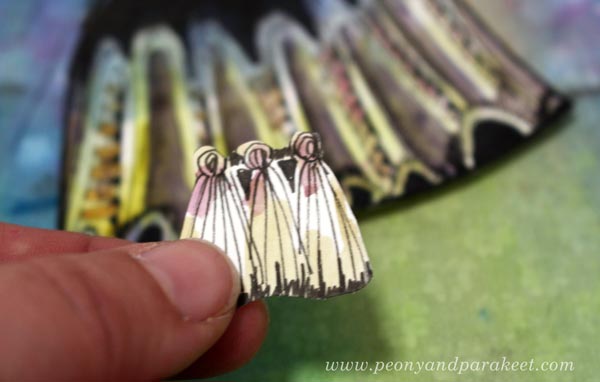
I am a late bloomer in art, just turned 50 this year, and been a working artist for only five years. The older I have got, the more aware I have become that one day this life is over. A few years ago, my reaction to it was to aim for creating pieces that will continue their life after my death. I wanted to leave a legacy. Recently, I have become to think differently, and Lisa’s post also contributed to that. I believe that everything we do for others is a legacy. Even this blog can be one of mine. And it’s not defined by how long the posts will be available, but by their effect on the readers.
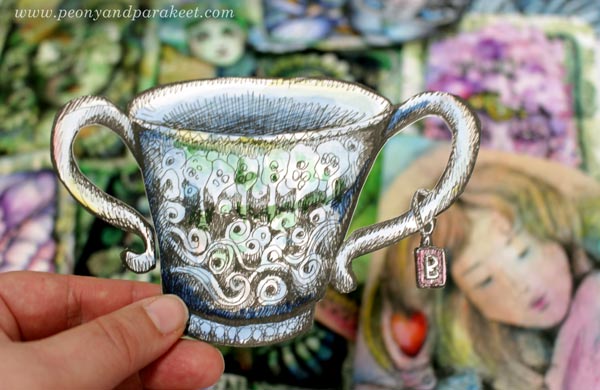
The encouragement for art starts a chain reaction. When we support other people to create, they can do the same and pass the inspiration forward. The drops become a cupful, and our existence lasts longer. And when we take the pressure off from a single piece of art, it also gives us the courage to express what we truly love – referring to the last week’s blog post – that feels honest to us.
Do You Have This in Common with Leonardo?
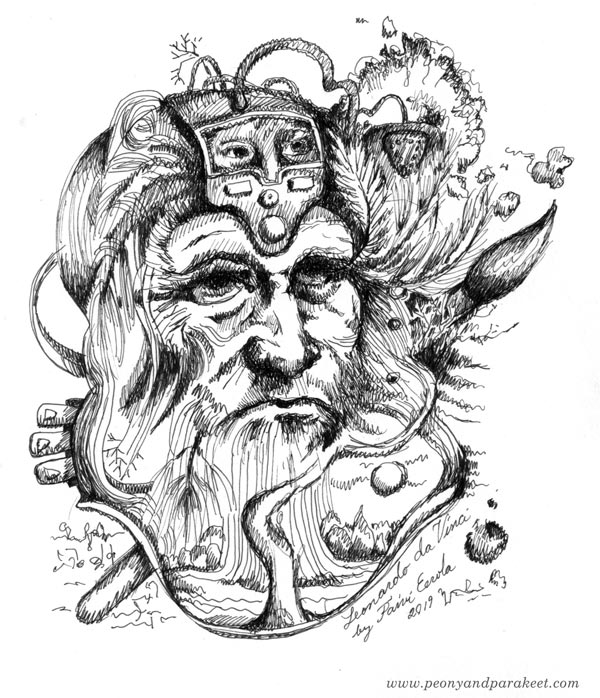
Leonardo da Vinci was famous for not being able to do his commissions on time. He had several different projects on the go all the time, and some never got finished. He felt like he was a failure and saw himself more like an engineer than an artist. (10 things about Leonardo)
If Leonardo felt like he had never arrived, the feeling must be connected with creativity. When we are creative, we are on an adventure and don’t stay put. The journey becomes tedious and depressing if we focus too much on the destination instead of enjoying the views.
Heading Away from the Safe Road
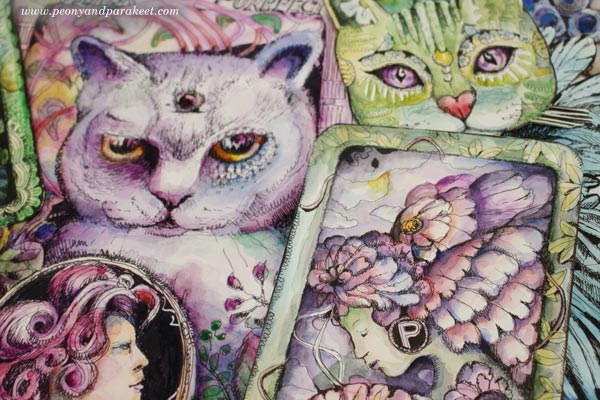
Instagram is full of skillful art, and sometimes, it makes me question myself as an artist when millions and millions of “better” images are uploaded all the time. It has made me postpone sending my work to juried exhibitions and reaching for opportunities to do illustrative work because “I am not quite there.”
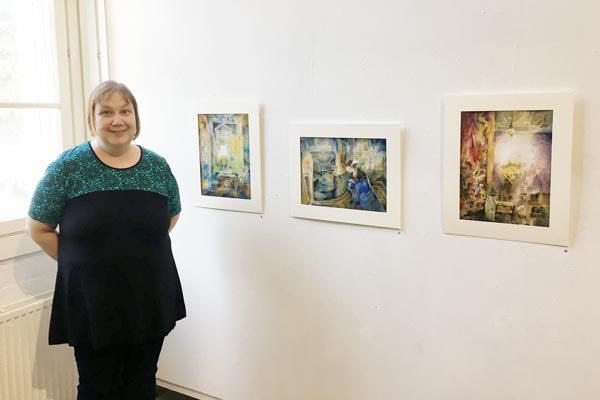
Two more group exhibitions coming up in the fall!
I have started to think that if the fact is that we never arrive, I should get out of my comfort zone and try walking on some of the side paths too. I also want to allow myself to create more art that is humorous and that can’t be taken seriously because every time I do that, it makes me smile and brings the sun into my studio. I may not follow the road that I had imagined a long time ago, but it makes the adventure of being a late-bloomer more exciting.
Take the Next Step – Do This!
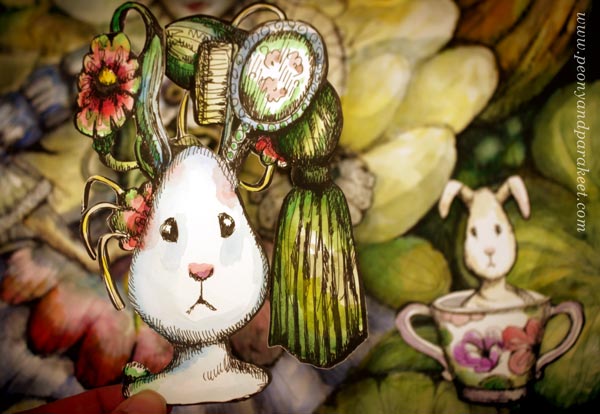
Imagine that you already have all the artistic skills that you will ever get. Do something that you have postponed because you have been waiting for your skills to grow!
Come to create fantastic art – Sign up for Magical Inkdom!