
Making the Most of Visual Nuances
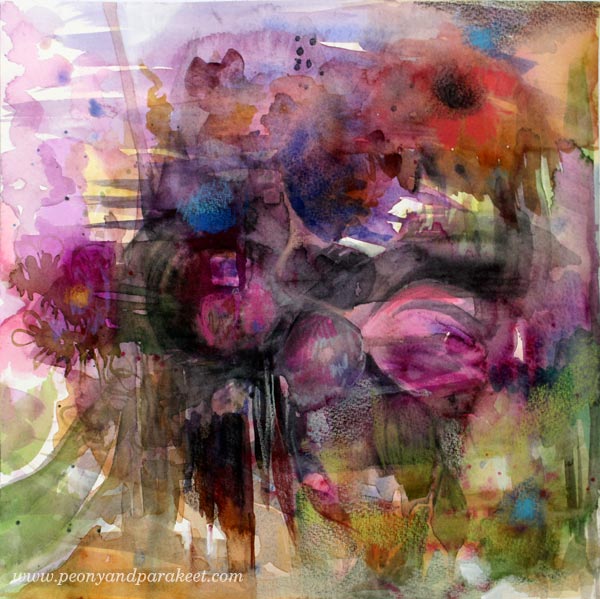
This is my latest mixed media painting “Summer is Coming”. It has been exceptionally warm weather in Finland and all that sunshine has brought summer not only to my mind but to my painting too. I tell you now how I created the painting!
First Layers: Having Fun with Watercolors
The painting began with watercolors. I made a mess that didn’t look so good when looking at it from a distance. But it looked wonderful when taking close-up photos!

After splashing the first couple of layers with a big brush, I changed to a smaller one. I painted simple shapes with soft edges and thought that maybe this will be an abstract piece.
Is This a Still life – Again?
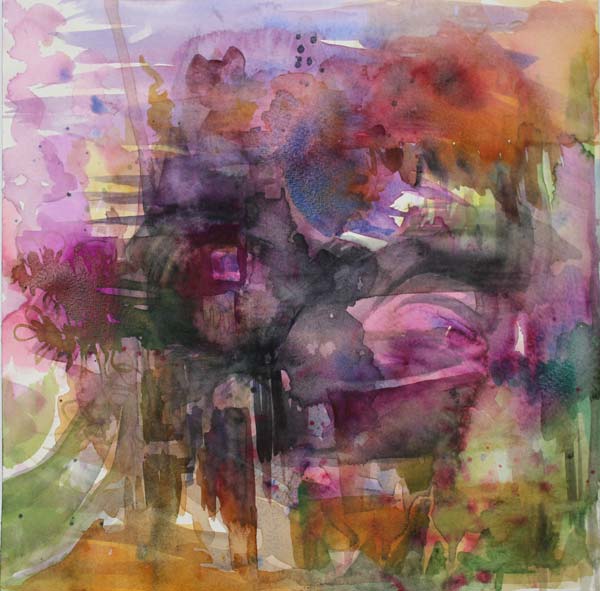
But after a while, it looked like a still life! I must admit that I have developed some kind of obsession for still lives. I have loved them for a long time already. But recently it has begun to feel that anything could be expressed with them. Well, a Finnish artist Miina Äkkijyrkkä has painted and sculpted cows for all her life, so still lives might not be so bad …
More Details with Colored Pencils
With colored pencils, I made the flowers more distinct. I wanted to work as softly as I could so that the delicate look of watercolor paint would still be dominating.
Almost There – Visual Nuances
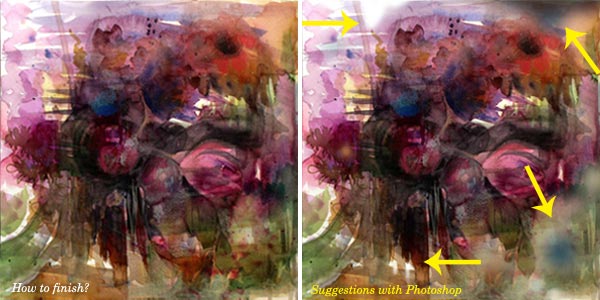
Then I entered the actual finishing phase. This is what I call “Almost There” phase. It is the point where many just call the painting finished, and they try not to think about it too much. But if I am teaching a class, I encourage people to continue. One way is to show them what they can do next. So I open the photo of the painting in Photoshop and make little adjustments. With these suggestions, I try to add more visual communication and interest to the painting. Sometimes a little spot of color can make a big difference! See what kind of suggestions I made for my painting!
What’s the Magic of Using Photoshop for Suggestions?
One thing is that I can zoom as far as I can. Another thing is that I can try out different kind of adjustments without making a mess. I don’t do this often for my paintings, but I wanted to show you how little guidance can take the image to the next level. This is one thing that an art teacher can do: show you how you can fine-tune your work so that it has those visual nuances that make the painting more dynamic and alive.
Finished Painting
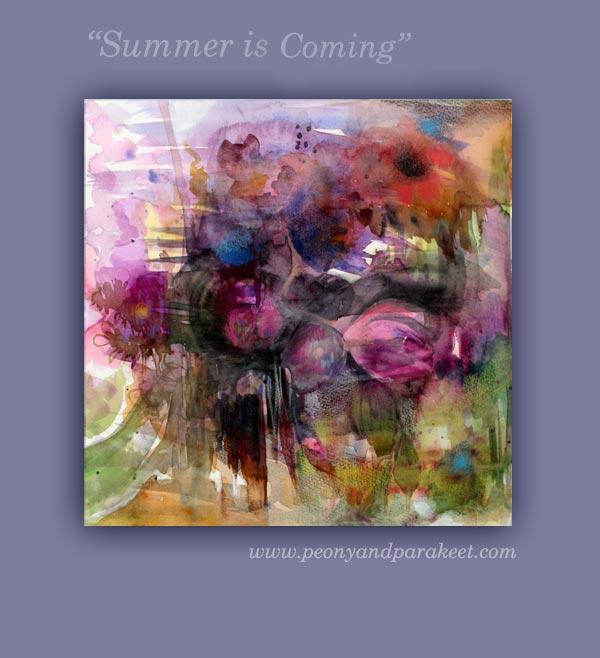
Here’s the painting after finishing it according to the suggestions. I used colored pencils and white gesso for the final details.
Subscribe to my weekly emails – Get a free mini-course!
From Intuitive to Intentional Painting
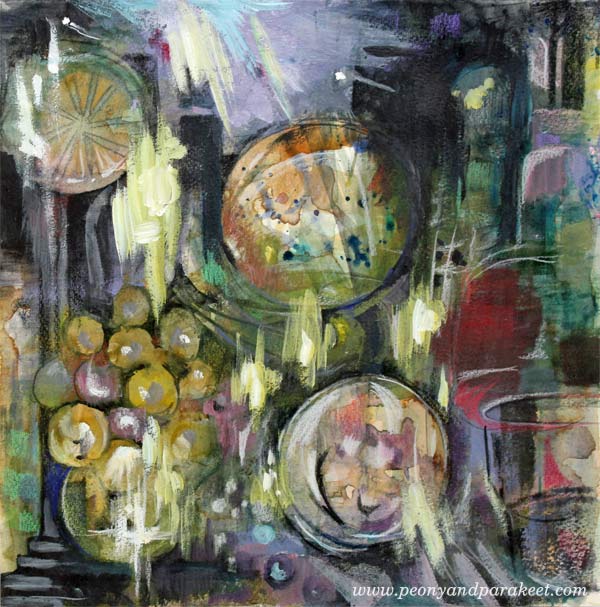
This is my latest mixed media painting called “The Phantom of the Opera.” Just saw the musical in The Finnish National Opera! I don’t know about you, but when I go to see a performance like that, I know that it will appear in my art one way or another. With this blog post, I want to challenge you to think what is intuitive and what is intentional in art. And – can they be combined?
Day 1 – Watercolors
It was a sunny winter day when I started the painting. A friend from the UK was visiting me, and we were chatting while I painted the first layers. With watercolors, like many times before.

I love how well watercolors support intuitive painting. You can just splash here and there and then get inspired by the result. In this phase, I tend to choose the colors quickly, based on what feels good. I would call this phase very intuitive also because I don’t usually have no idea about how the result would look.

After splashing watercolors on the paper, I tried to get something a bit more intentional out of it: distinct shapes, strokes and color areas.

The painting looked like it could be a still life with wine grapes and some fruits. But I did not have more time to continue with the painting, so I saved it in my album. I love to create 12 by 12 paintings as they fit on a regular scrapbooking album. I also love the square shape as it is easy to change the orientation of the picture in the middle of the process.
Day 2 – Acrylic Paints
About a week later I picked out the painting again. This time, I wanted to add some acrylic paint to it. I find the combination of transparent watercolor and non-transparent acrylic paint very attractive. When touching the acrylic paint tubes, I get ideas about color mixes that would work with the watercolor background. I would call this pretty intuitive step too.

As I am a very detail-oriented person when painting, I try to be bold when painting with acrylics. Broad strokes add more interest to detailed paintings.
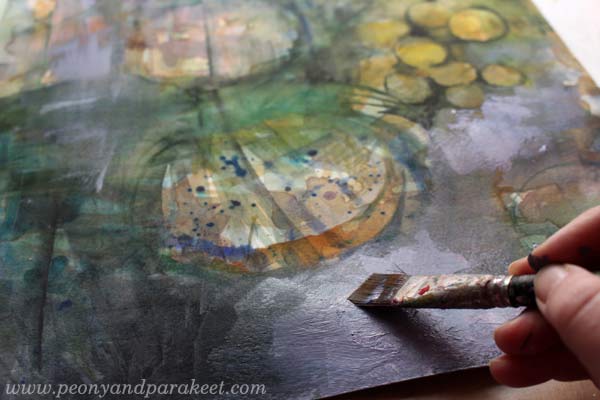
In the end, the painting still looked like a still life, but I wasn’t quite confident about the orientation of the painting.

Here you can see the difference between the end of day 1 (watercolors) and the end of day 2 (acrylics).
Day 3 – Colored Pencils
Because I love details, I also love to use colored pencils. With colored pencils, it’s easy to add little nuances here and there, and I also like the look of pencil strokes on the painting.
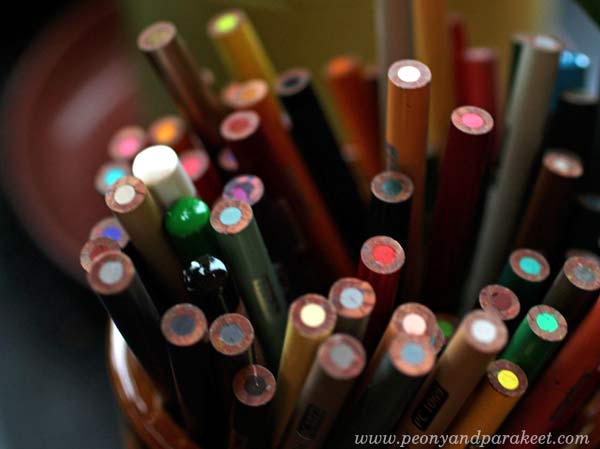
Day 3 was a day after day 2, but it was still before I had seen the musical. When I work with colored pencils, I am often very intentional. First, I had an idea to create wine glasses of the two round elements, but then I changed the orientation of the painting and saw lamps in the ceiling!

Which one do you like the best: the wine glasses or the lamps?
Day 4 – Acrylic Paints + Colored Pencils
Day 4 was after the musical. I got an idea from one of the scenes. The painting continued with acrylics expressing the famous chandelier crash!

So far I had been pretty intentional but then changed to intuitive. I played the music and tried to get into it as much as I could. I used both acrylic paints and colored pencils.
Here’s the result again:

Intuitive Painting – Guess What!
The story doesn’t end here! While photographing the finished painting, I glanced at my feet and saw the same color scheme in my socks! I had just finished them before Day 1 and worn them ever since. So, this painting actually started when I was picked the yarn from my stash for the socks. No, wait – it began when I bought the wool that I spun to the yarn …!

Combining intuitive with intentional is a lot of fun! It’s the best cure for getting rid of stiffness in the result. The intuitive parts allow you to feel free when painting; the intentional parts bring more clarity to the painting.
Get a Free Mini-Course: Subscribe to my weekly emails!
14 Answers about Creating Art

14 DAYS – 14 ANSWERS about creating art! To celebrate my upcoming workshop Inspirational Drawing, I have been publishing a new video every day for two weeks. These videos are short answers to the questions people usually ask from me. The last one is about artistic growth: how to prevent being stuck and keep on growing. Watch the whole series!
#1 How to start?
#2 From Mind to Paper
#3 Not As Good As Them
#4 Inner Critic
#5 Disappointment
#6 Avoiding Stiffness
#7 Finishing Artwork
#8 Artistic Talent
#9 Less Realism
#10 Too Messy
#11 More Beauty
#12 Popularity
#13 Personal Style
#14 Artistic Growth
Learn to express more with enjoyable, free handdrawing!
Sign up for Inspirational Drawing!
Less Sketching, More Creativity!

Did you see my latest video: “Art is a Conversation”? I have made this piece by applying the principle presented in the video: letting one detail lead to another. No sketching involved!
The Creative Process with No Sketching Involved
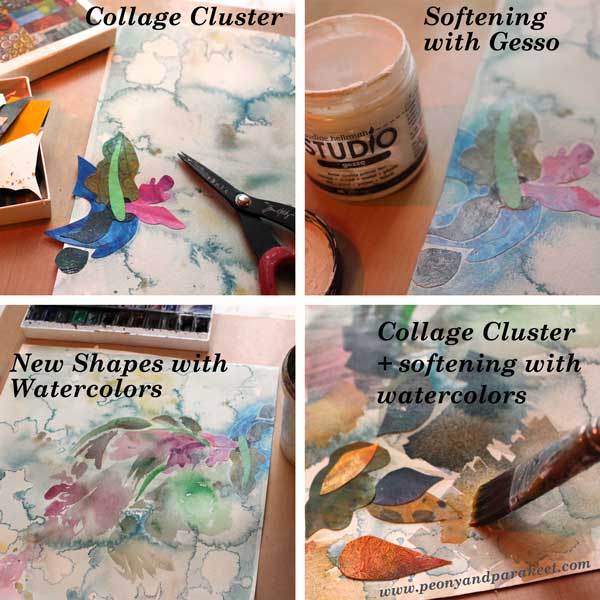
I picked a random background made with watercolors and started adding collage pieces. They, in turn, inspired me to paint some elements with watercolors.
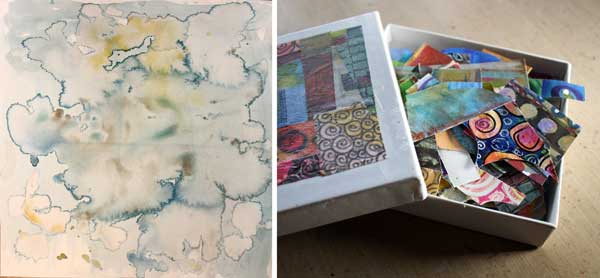
Here are the first steps:
Why Sketch? Why Not?
You might feel the need for sketching because filling the blank page feels too scary. Some people want to sketch because they find it difficult to bring ideas that lead to something. If they create a collage, the result is just an evenly spread pattern and then what?
Dogs have taught me many things. One thing is to focus on the present. I try to teach them new things by dividing them into small steps. When I focus on explaining the next step only, they will listen and respond. They will do their best to understand and make most of my advice.
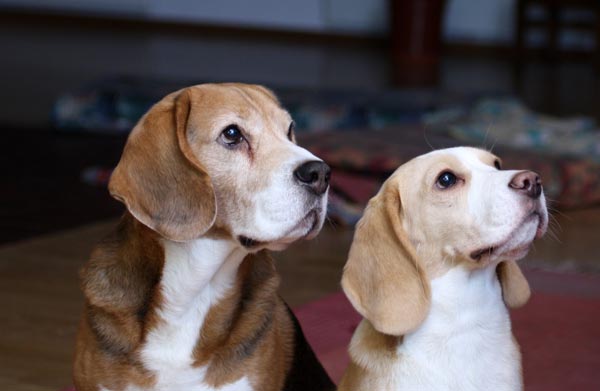
My beagles say: Stay close, focus and stop controlling what we can’t comprehend yet.
Those principals can be applied to art making too. Add new element close and partly on top of another. Enjoy each stroke, each color, and shape at a time. Stop worrying about the areas where you have not reached yet. Let creating grow your thoughts instead of being fixed to one idea.

When I reached the upper right corner, I saw a watercolor splotch that looked a little bit like a fairytale princess, so I quickly emphasized those shapes!
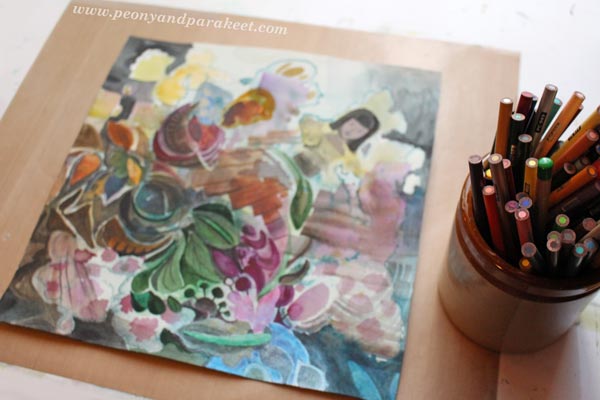
I believe that too much sketching brings too much stiffness: the stiffness of ideas, the stiffness of lines, the stiffness of composition.
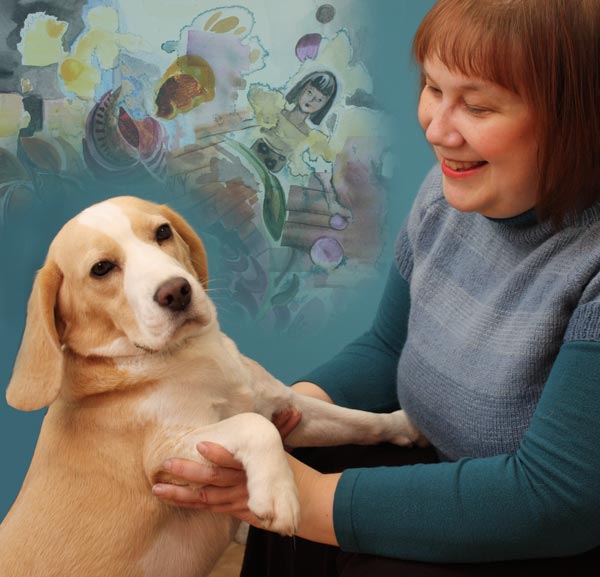
When we try to create with control, it is like trying to trace better than dogs do. We can guide them to sniff, but we also have to let them do the job.

Subscribe to my weekly emails – Get a free mini-course!