
Processing Visual Inspiration
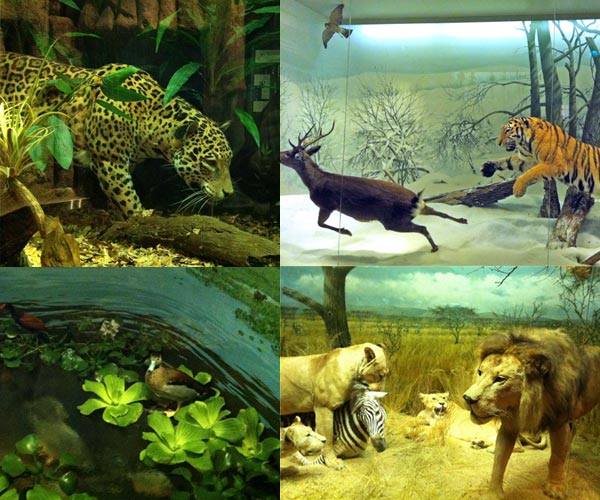
Last week, I visited Natural History Museum of Helsinki. My idea was to take a sketchbook with me and make few sketches – if I happened to see something inspiring. My skeptic attitude changed once I entered the place. I remember visiting the museum over 20 years ago but only the front door of the old building seemed a bit familiar, everything else looked new to me. I was mesmerized by the colors and details of stuffed animals, and only after a short while, almost overwhelmed by the amount of information and visual stimulation. It would have been impossible to put all the inspiration into sketches, so I took photos.
When I got back home, I knew I had to create an artwork inspired by the visit. But my mind seemed too full, not knowing where to start, what to express. I started a painting but against all my principles, I tossed it because I was totally clueless even if my mind was full of inspiration!
After a couple of days, I decided to make a sketchbook spread to help me process the subject. I loaded the photos to iPad and created several layers of watercolors while browsing the images.
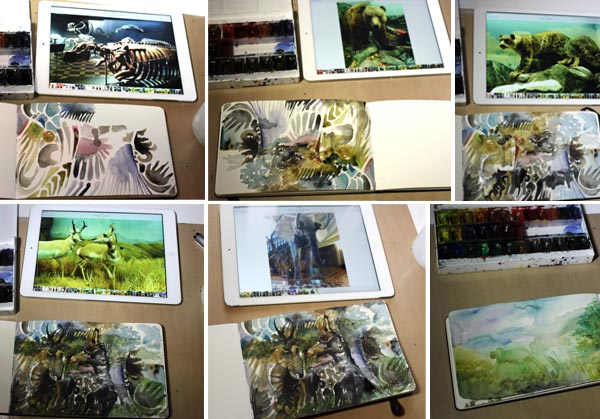
I wrote down some of my thoughts: how I admired lions and African animals in general when I was a child and how rich country Africa is, in terms of nature.

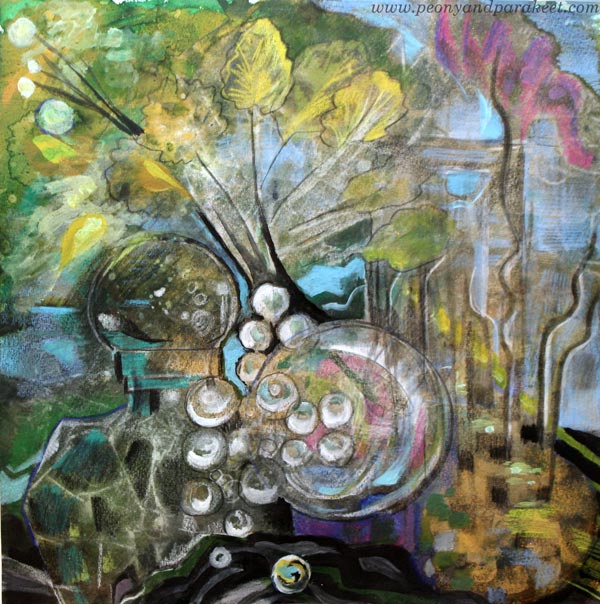
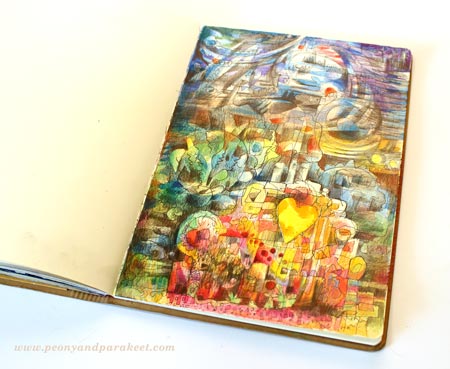
After this spread, I asked myself: what inspiring did I see that than the animals. The answer was: glass cabinets and the concept of collections that were kind of surreal. With that in mind, I started a painting on a thick watercolor paper.
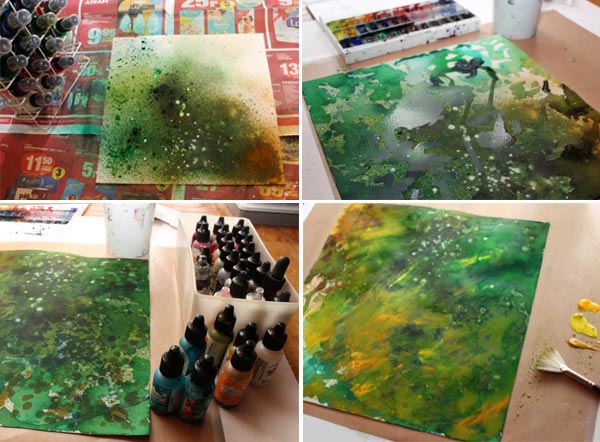
Randomly creating new layers with ink mists, watercolors, alcohol inks and gouache paints, I focused on the color first. Greens, turquoises and ochras were the ones that made the strongest impact on me when looking inside the glass vitrines.
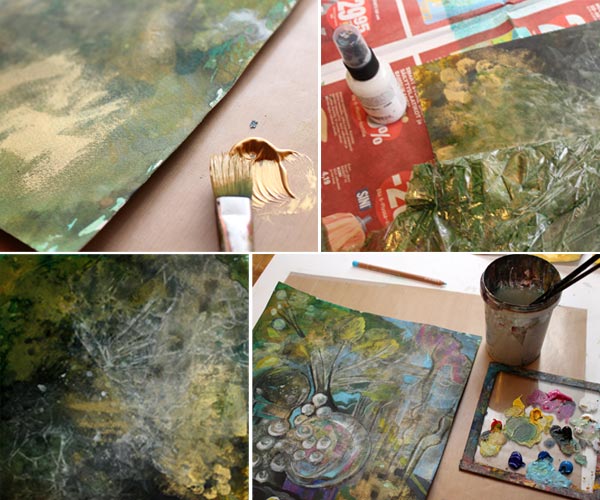
With gold paint and white ink, I created more details to embark my imagination. Then I thought about Slavic melancholy, fall, piano concertos and let all of that get mixed with glass and nature. When I looked at the end result, I kind of like the idea of mixing a landscape with a still life. The idea is surprisingly similar than what I saw in the museum: still-lifes that are also landscapes! I would have not thought it this way though without processing the subject so much. By taking photos, painting without a clue, working with the sketchbook and then creating a lot of layers made me somehow understand what inspired me in the first place. When I let go and followed the pencils and brushes, it was ready to come out.
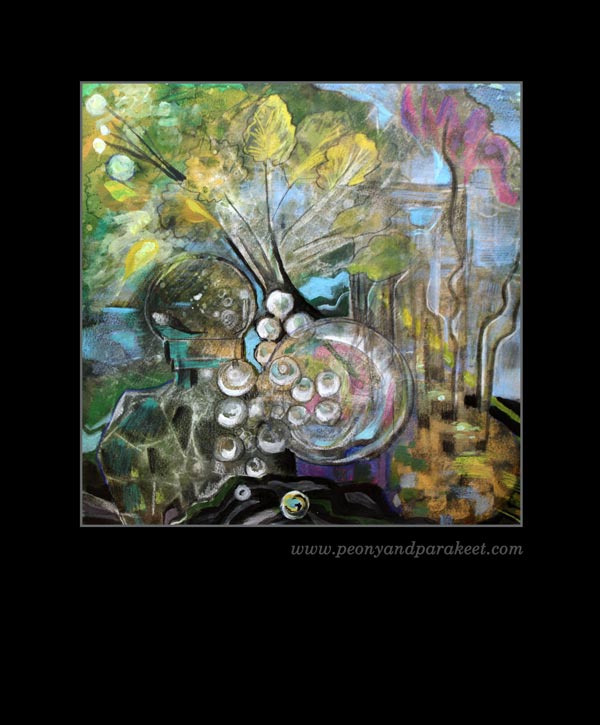
What I learned was: sometimes the creative process takes a lot of time, a lot of phases, don’t stop too soon!
Challenge yourself in mixed media art! Buy a bundle of 6 art journaling classes!
Explore by Drawing!
This blog post is illustrated by students of the 4-week online workshop Inspirational Drawing. All the illustrations shown here are created at the class by these wonderful artists: Dianne Guerin, Ellen Schulz, Terri Elverum, Joan Gaetz, Alison Schockner, Cheryl Rayner, Carol Dickson, Debbie Kreischer, Virginia Clinton, Rosemary Bosse, Mary Joyce Weening, Donna Peake, Joyce Brown, Nancy Kvorka, Judy Shea and Janet Joehlin.
I have often thought about the contradiction between maintaining who I am and being open to what I can become. My friend said that when you know somebody for a long time, you can look through life circumstances and see the person that’s behind all those. And still, while situations change, we change too.
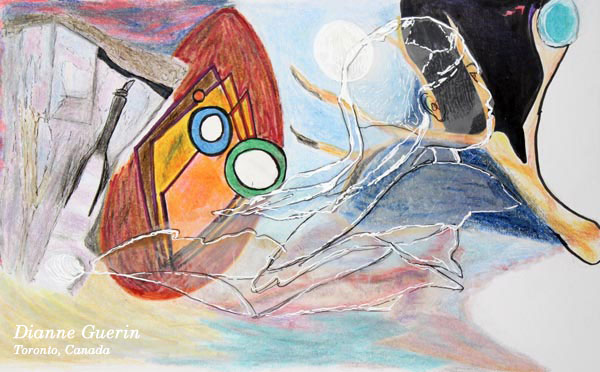
By creative drawing, we can find out where we are swimming and how deep we can go.
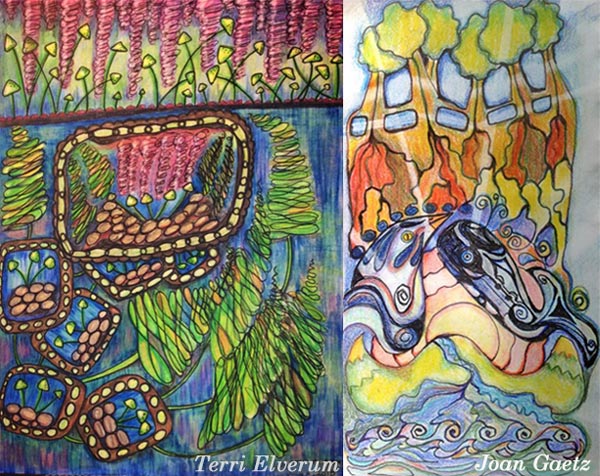
We can take personality tests but sometimes the best way to find out what kind of fish we are is to take a pen and start drawing.
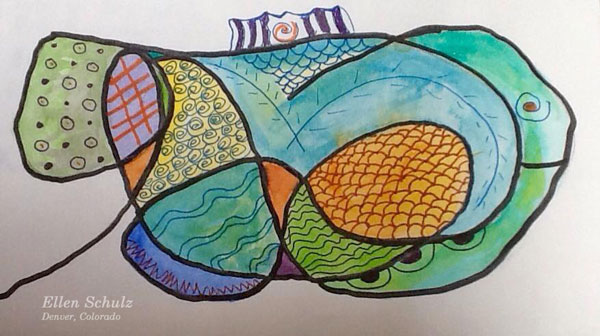
By drawing, we can explore how we see ourselves in our surroundings.
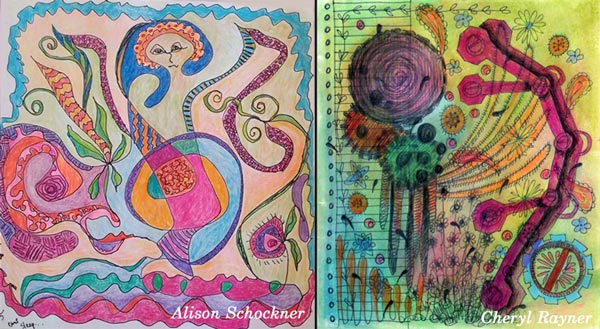
We can pick ideas from new places and cultures.
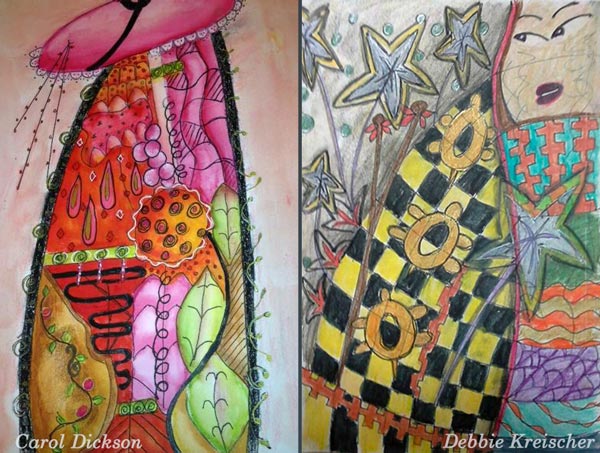
And we can explore what’s going on inside our minds.
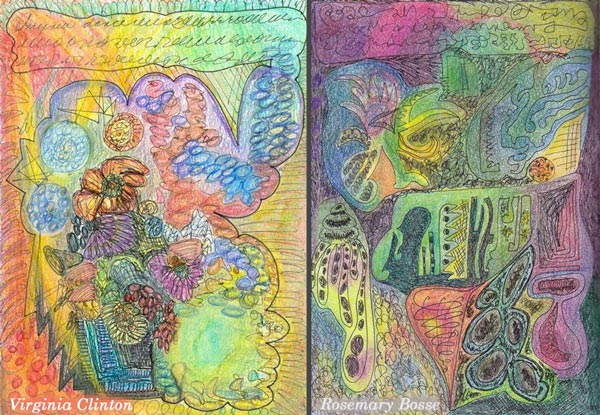
When we illustrate what we seem to be and how we see the world, new combinations start to grow and inspire us.

Our art journals become our inspiration books.
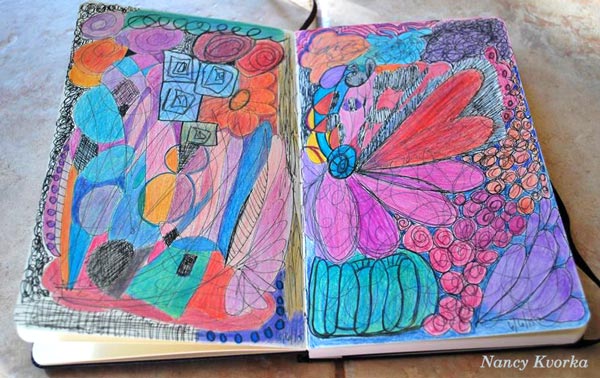
If we just use thinking, we can endlessly question our creativity and ability to find new solutions. But when we get into the habit of creative drawing, it will be evident that we are creative people regardless of circumstances.
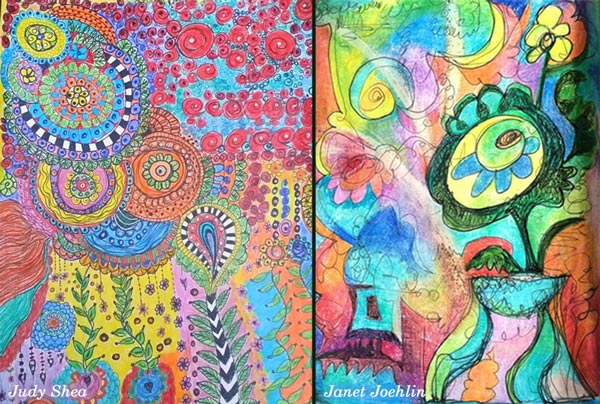
When we draw out our new thoughts and ideas, we become more aware of who we are and what our style is.
Let me be your mentor in art: Subscribe to my weekly emails!
Art Journal about Love for Home!
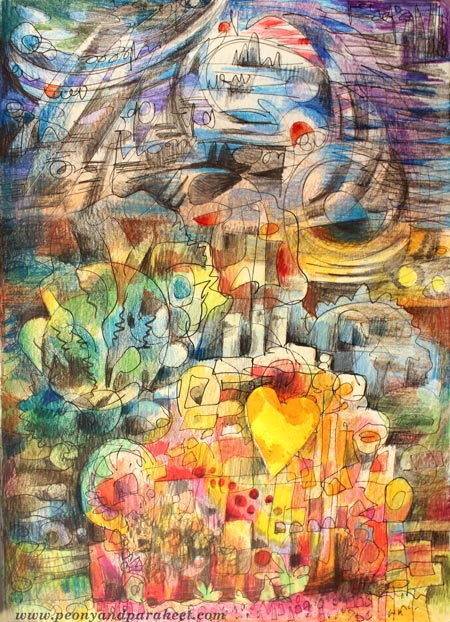
I am honored to be the featured artist in Documented Life Project this week! The theme is Hometown inspiration: “There is no place like home”. This, if any, is suitable for me and for my art journal! I had a stay-at-home mother and we did not travel much as a family. Probably because of that, I have always loved being at home. When I worked away from home, I missed it all the time. Nowadays, especially every morning when I wake up, I am extremely grateful to be able to work from home!
Let’s create an art journal page to celebrate home!
1) Background – Outside from Home
How do your surroundings look like when you are not at home?
Bring those things to the background of your page!
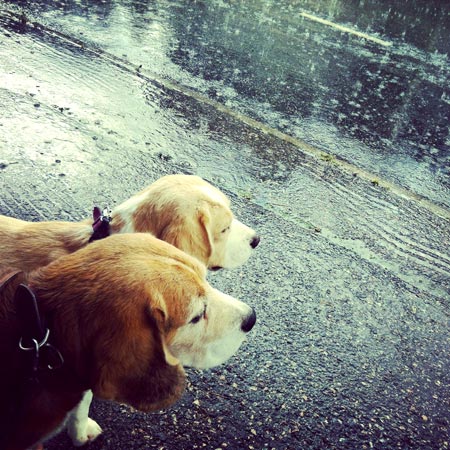
I thought about the situations when arriving home is most appealing. The house, and the living room couch, looks the most welcoming after walking the dogs on a bad weather.

Being a dog owner and living in Finland, I have been in the middle of snow storms, pouring rain and everything between.
2) Focal Point – Inside Your Home
Pick some of the items from your home which represent your love for home!
I wanted to express the experience of staying inside, feeling happy, warm and safe from the blowing winds. A couch and house plants are good symbols for that.
3) Location, Location!
Create the page where you feel most at home!
We, visual people, are often very easily affected by the environment where we create. To make sure that the page would express of a warm and comfortable place, I created the page by sitting on the living room couch.
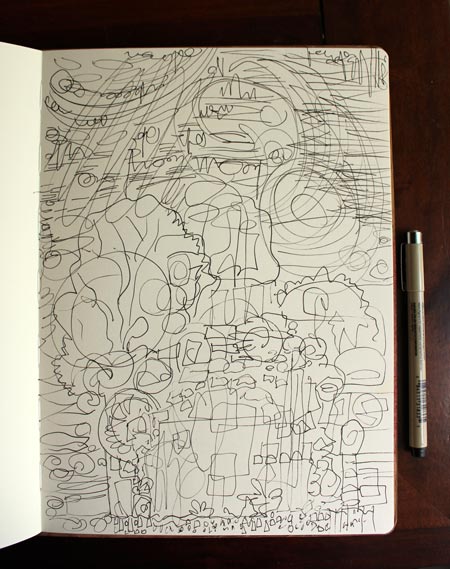
4) Start by Drawing Freely
Draw and doodle on the page. Don’t worry too much about the end result!
5) Add Color (+ 3 new ideas)
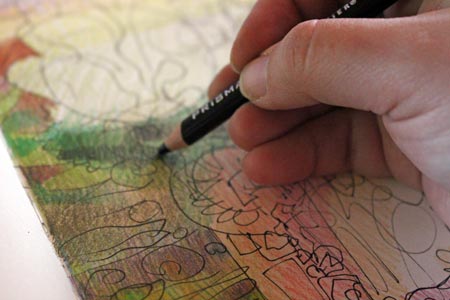
To make sure that your page expresses an experience and is not only a static illustration, add few new thoughts and ideas when coloring the page.
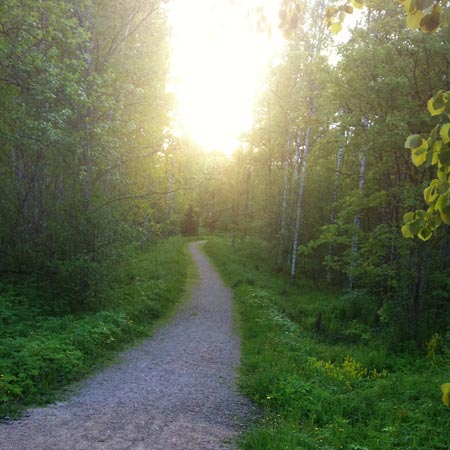
1st: For me, the first idea was the green color. Namely, living in Finland is not only enduring snow and rain. Now in summer, we have daylight almost through the night. Actually, if you read this on 20th June, we Finnish will be celebrating Midsummer, one of our biggest holidays.
This photo was taken just a week ago when walking the dogs 11 pm in the evening.
2nd: My second new idea was that home is not only a house or an apartment. It is a mental state. When I feel at home, my cup gets filled, I become peaceful and energetic at the same time.
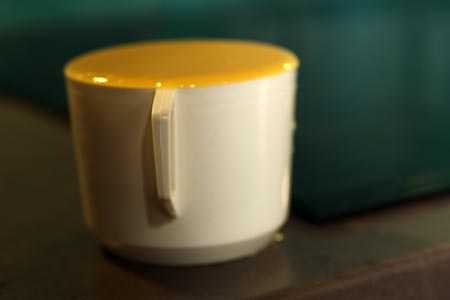
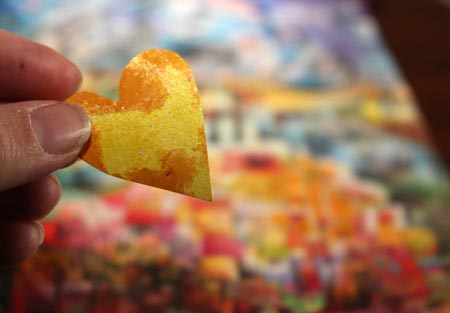
The combination of peace and energy looks yellow to me. So I made sure that the focal point has a lot of yellow. I also cut a yellow heart and glued it to the page with a gel medium.
3rd: Where ever we go, we always carry a piece of home with us. My third idea was to add some red spots to the background to express that.
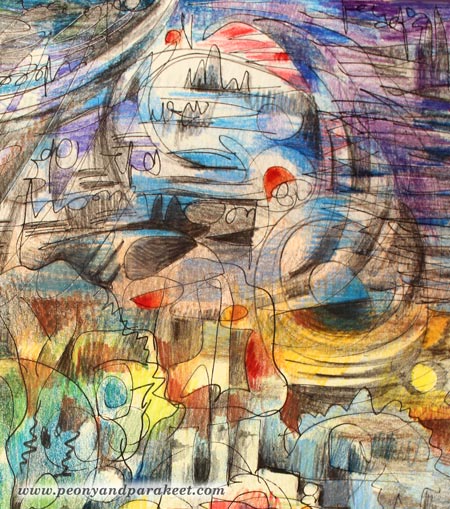
Boosted Expression
When you bring new ideas and thoughts on the theme while you are creating, you are not only making the page look more lively and expressive. You are also allowing your thoughts to move forward with creating.
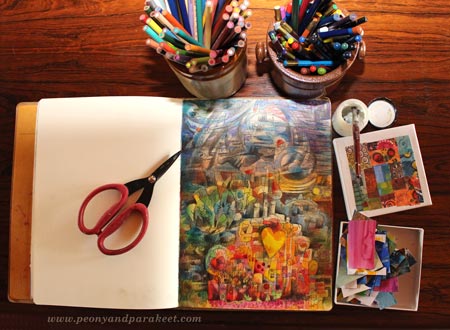
Supplies Used
A black drawing pen (Micron 0.8 mm), colored pencils, a piece of scrap paper and some gel medium were the only supplies used on this page.
Subscribe to my weekly emails – Get a free mini-course!
See What You Think!
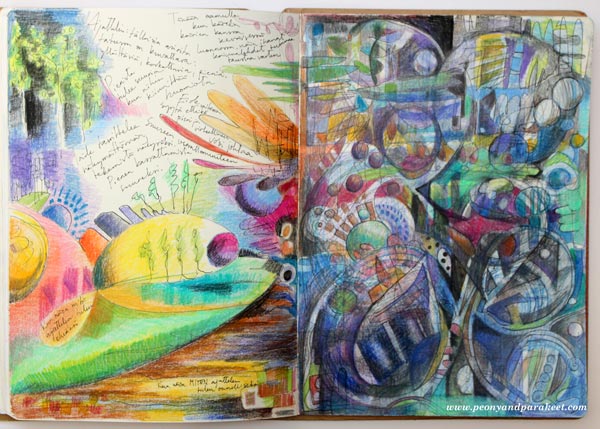
Here’s an art journal spread that I created from two little incidents: the intellectual and the emotional.
Visualizing an Intellectual Incident
Last week I went to an art gallery to see Ola Kolehmainen‘s photography exhibition. I often get very emotional when I see art, but this time I was more intrigued by structures and concepts. Ola Kolehmainen’s photo collages had a cubistic touch. They inspired me to experiment with squares and arches.
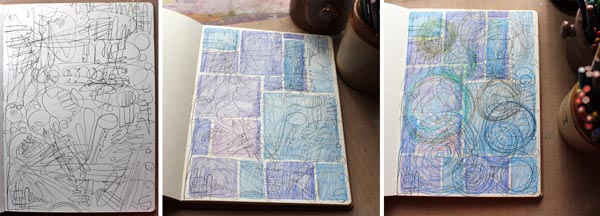
The art journal page looked pretty stiff and formal at this point. But also I felt excited about how it would direct my thoughts when continuing drawing and coloring.
Perfection Needs Order
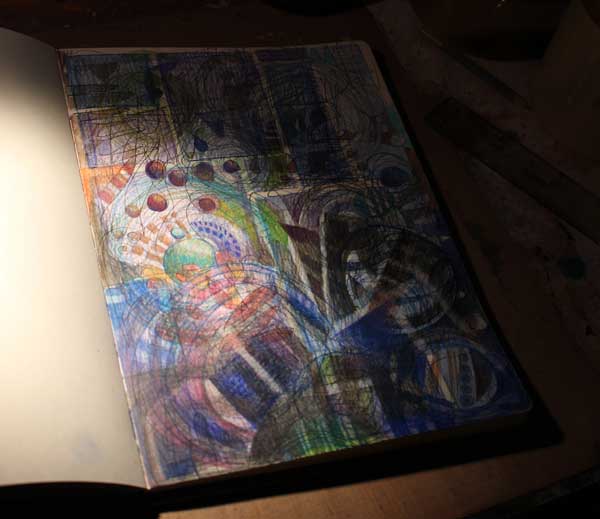
Working intuitively means that I do not always know what ‘s going to appear next. I just focus on a small area at the time. While listening to some opera pieces, I remembered how close mathematics and music were in the 18th century. One of the great mathematicians Leonhard Euler was also extremely interested in music. I feel that similarly, drawing can be an experience where we use the intellectual side. By drawing we can find out new solutions, practice nuances and fine-tune shapes until everything seems to be in its place. Like Euler said: “… in any thing where there is perfection, there is necessarily also order.”

Visualizing an Emotional Incident
But then, when we aim for perfection, we often miss the experience. Like the exhibition last week – I went out without noticing any particular change in my feelings. Then, this morning when walking the dogs, I saw the growing leaves and how they glowed against the sun. The sight was so beautiful, although pretty ordinary at this time of the year. Nevertheless, it felt like opening the door to a great gallery – to nature’s supreme art exhibition!
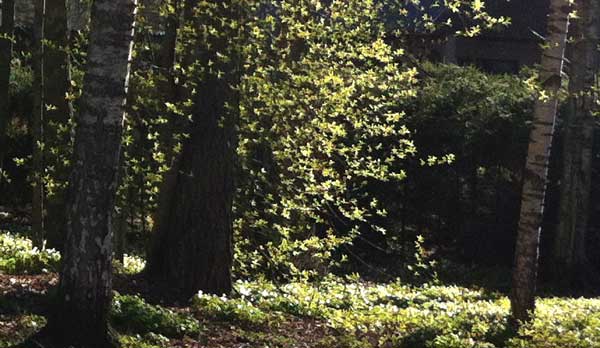
Combining The Intellectual and Emotional Incidents
When I got back home, I thought that it would be interesting to express the controversy of the intellectual and the emotional on the same spread. First, I drew my nature experience with careless lines but with clarity. Then I made it work with the page that had become very detailed but pretty complex.
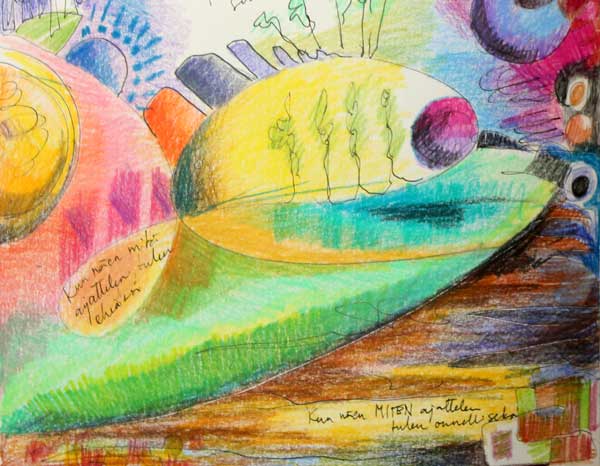
I wrote: “When I see what I think, I become whole” and “When I see HOW I think, I become happy”.
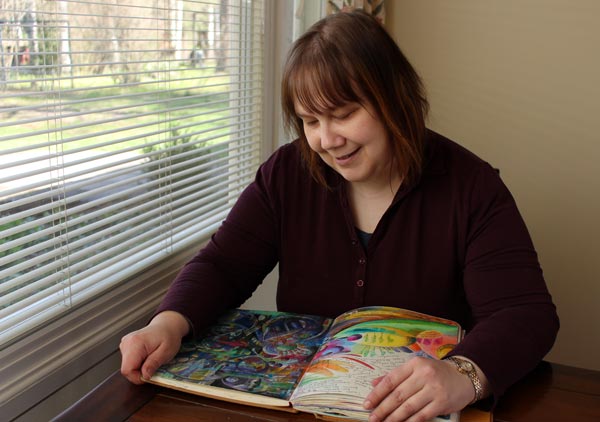
This page spread is not only about going to the art gallery last week and walking the dogs this week. It is what happened inside me and how these incidents were combined. They continue my story as an artist and help me to stay in touch with myself.
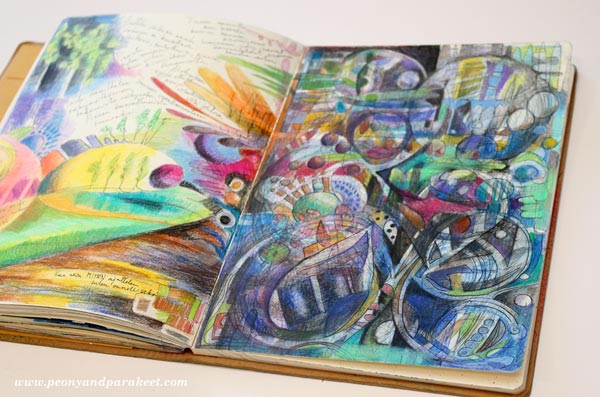
Visualizing thoughts and experiences bring it all together. There’s a lot of inner power in seeing what you think.
Subscribe to my weekly emails – Get a free mini-course!