
Breaking the Rules – Creating What’s Right for You
This blog post is about breaking the rules when choosing what to create.
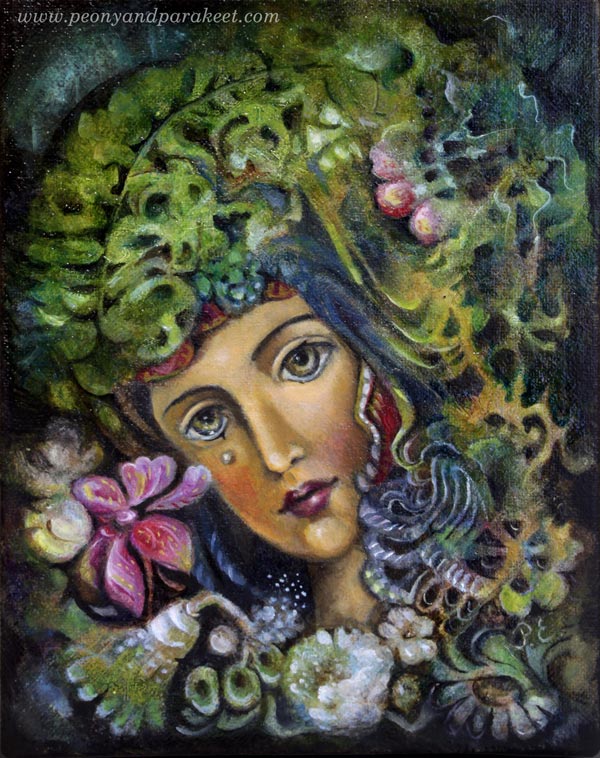
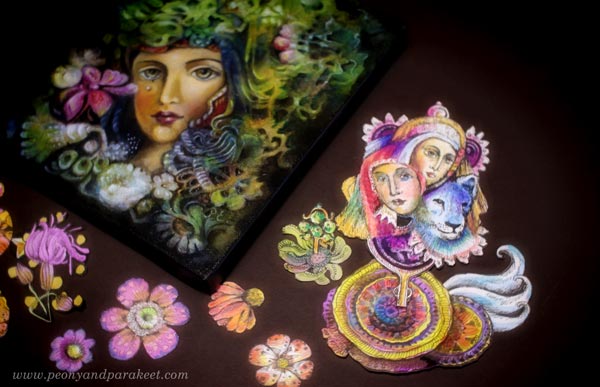
Let’s begin with this oil painting. Oil paintings are big projects for me, and I only finished two of them last year. The first was Temptation, and this is the second one, called Madonna of the Heart.
Following the Heart – Breaking the Rules
My Madonna is a small painting, only 18,5 x 23,5 cm, but it’s quite detailed. I first planned to make it fully abstract, but then got second thoughts.
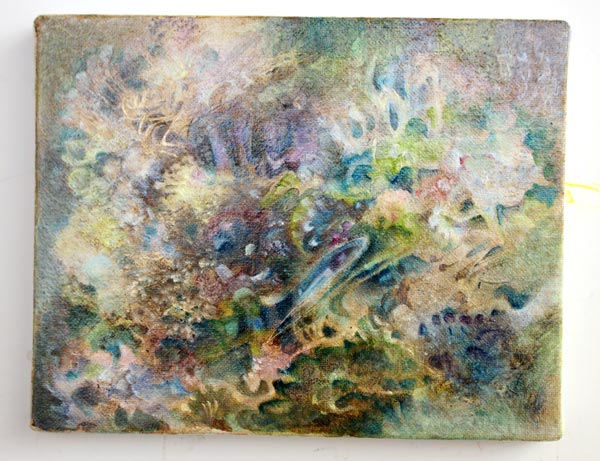
As a child, I learned the basics of eastern-orthodox art by attending an icon painting group. I was taught many rules – what colors to choose, how to mix the right tones, how to build layers, etc. It was not just about learning the right techniques, but also obeying the long tradition. The repeating discussion in the group was the difference between right and wrong. There was very little room for creativity, and I loved it! I was about 10 years old and eager to learn new things. Work was challenging, and it was comforting to know that there’s one clear direction.
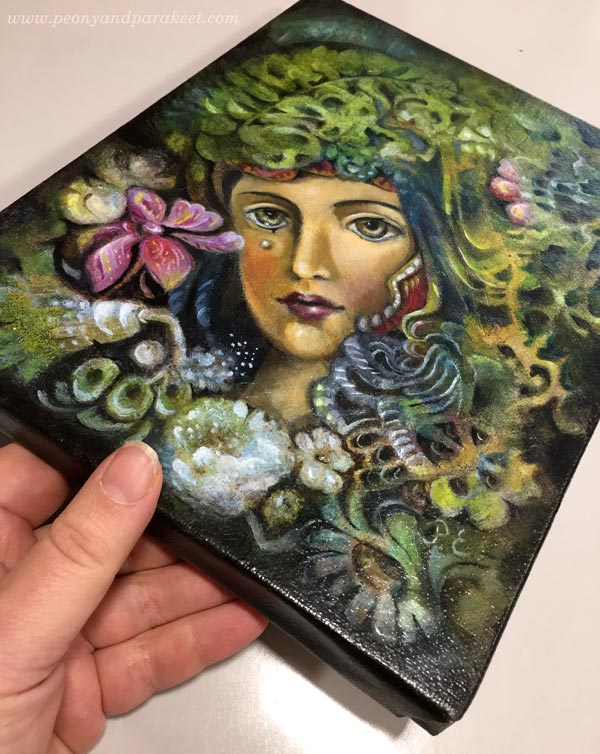
When painting the small canvas, I was tempted to travel back to my childhood, and participate in that small and safe group of icon painters again. But I also knew that it’s very wrong not to follow the rules. My supplies were wrong, my background was wrong, the whole idea was wrong. But it felt natural and tempting, so I made it.
Natural to You, Wrong to Some
Recently, I have found many creative blocks like this one. To paint an icon with oils on an abstract background is wrong to some, but it’s natural to me. I love painting intuitively, and the idea of an icon is the most beautiful that I know. Don’t we all need an image that offers consolation and reminds about kindness? To me, it has nothing to do with any specific religion. Everybody has a right to have a Madonna of the Heart.
While building the class Animal Inkdom, I have also filled my “boxes of joy” with hand-drawn collage pieces. Very soon after starting, I realized that the principle “natural to me, wrong to some” also applies to these small drawings.
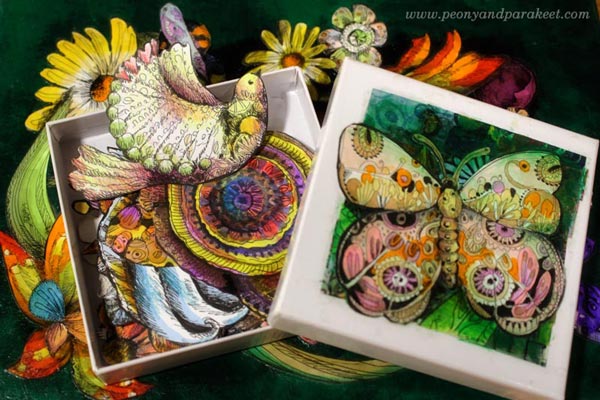
Yes, I love to draw flowers, birds, butterflies, very innocent stuff. But there are also pieces that are quite odd like this one.
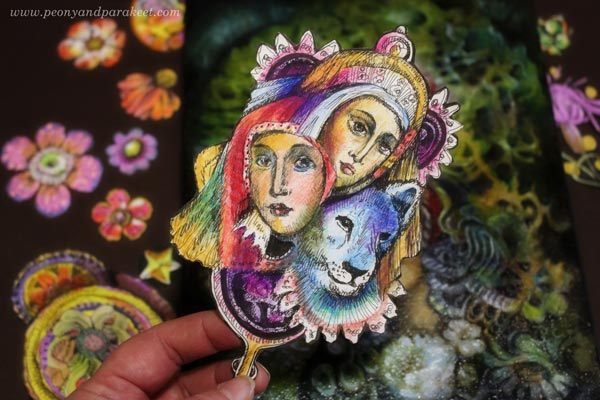
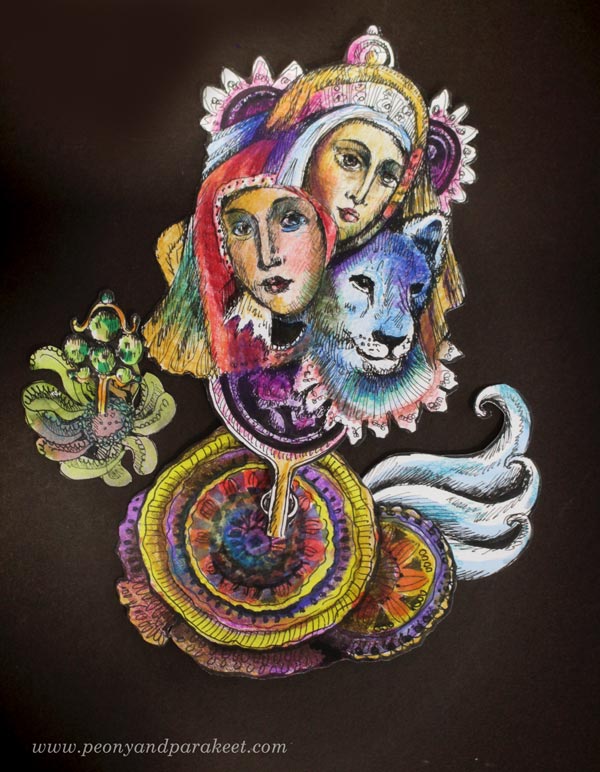
This hand-drawn ornament has two women, both dressed in old Byzantine clothing, and the lion. It has a handle so that it can be held like a sacred image. This small drawing is packed with stories about my childhood. I remember the conversations with my mother, already passed away. I remember my idol, Joy Adamson, and her lion Elsa. I remember my love for blue color. Seeing all that together makes me happy.
I also love to play with the ornament by adding more handdrawn elements around it!
Breaking the Rules Between Serious and Playful
So it happened that a carefully painted oil painting and this little ornament became equal. Of course, not equal in monetary value, but equal in the kind of satisfaction I get from them. And it also feels that this world that I am building is surprisingly inclusive, both humorous and deep. All I need to do is to make what’s natural to me, even if it would look wrong to some.
We often miss this natural zone because we are so focused on what makes sense to others. When choosing what to create, we work with pre-defined labels like “portraits” or “art journal pages” or “abstracts.” We do what seems to be right for the genre, rather than step into the world where someone might not get it, or in the worst case, might get offended. Still, the freedom in art can’t exist without the freedom of imagination.
Come to Play and Draw with Me!
So, I dare to suggest: play with your art! Cross the boundaries between “right” and “wrong”! Follow the general rules of aesthetics but brea the rules of subject matters.
I think that with Animal Inkdom, you can nail it. You will get practical tips and techniques, but there’s also humor and play, all flavored with the love for wildlife.
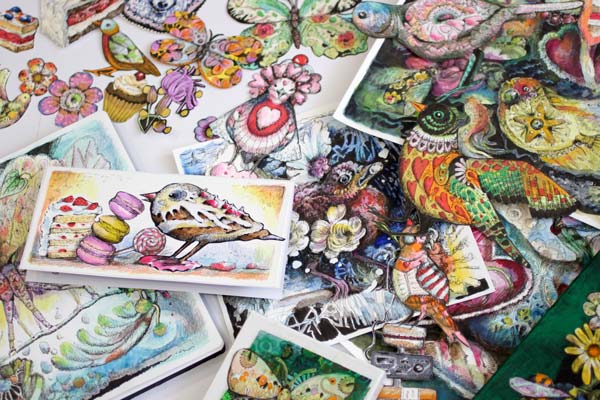
It’s still a good time to sign up for Animal Inkdom! The first one of the five modules is published, and you will get it right away after the registration.
Let’s keep on drawing, and never forget the playing part either!
How to Draw, and How to Enjoy and Keep Drawing
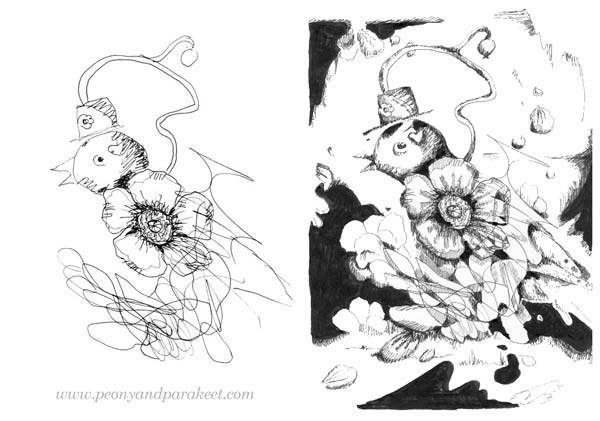
Yesterday, I ran a webinar about drawing. It’s always a lot of fun to talk about the topic I love so much. Thank you all who joined me!
The Joy of Drawing
I wanted to include the word “joy” in the title of the webinar because, in the end, it’s what keeps us drawing. I shared ideas about what supplies to use, what to draw, and how to solve those situations when you don’t grab a pen even if there’s a chance.
Unfortunately, the recording of the webinar wasn’t the best quality, maybe the snowstorm that has just blown over Finland had some effect on it. But luckily, I had some extra footage and I also made some more to compensate the parts that affected the experience. The video has a lot of ideas and examples, so it’s worth watching.
Animal Inkdom – Come to Draw with Me!
Let’s draw wild animals and decorate them with fun motifs and patterns. My new class Animal Inkdom is dedicated to the joy of drawing.
Animal Inkdom begins on Monday, January 21, sign up now!
Guiding Word – Choosing and Visualizing Your Word of the Year
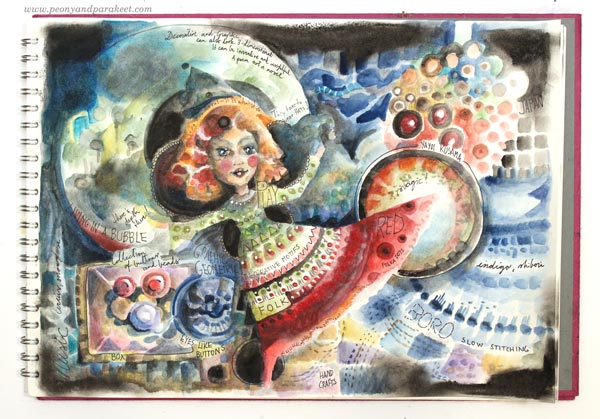
The year 2018 was groundbreaking to me. I was able to include things that seemed separate from my art in my art and build a new foundation for it. It strengthened my visual voice and style, but also, it felt more holistic than just that. I would say that my artistic identity got updated.
As a former software engineer, I see it this way:
Peony and Parakeet 1.0 – intuitive circles and colorful patterns, 2012-2014
Peony and Parakeet 2.0 – from mixed media to fine art, 2015-2017
Peony and Parakeet 3.0 – fantasy illustrations, 2018 -?
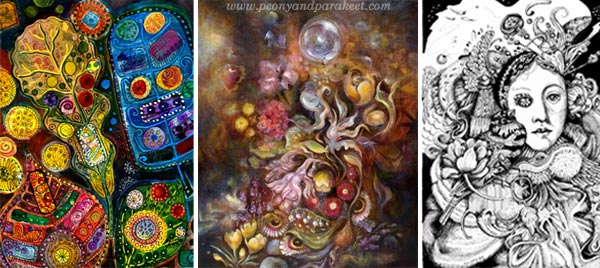
I am not quite sure how to label 3.0 yet, but it definitely started last year and went into bloom during the Inktober challenge in October.
What’s Your Word of the Year?
About a year ago, I developed a process for setting artistic goals. I introduced it to my art community Bloom and
My word for 2018 was “Depth”, and now when I look back, it was related to my old desire to create fine art. But the process of exploring depth was like the symbol of yin and yan. It started a journey towards the opposite word “Play.”
The process of choosing a word and exploring it through art-making had a huge impact on me, so I decided to share it openly. Watch the video to define your word and to explore it more in depth!
Guiding Word – Watch the Video!
My word for 2019 is “Play”. I am looking forward to
P.S. As you probably noticed already, this website and my artist website has been updated! There are still things to adjust and add, but feel free to browse the new look!
P.P.S. I am running a free live webinar The Joy of Drawing on Jan 17, 7 PM GMT – 11 AM PST, reserve your spot here!
The event is gone but here’s the recording!
How Inktober Strengthened My Visual Voice
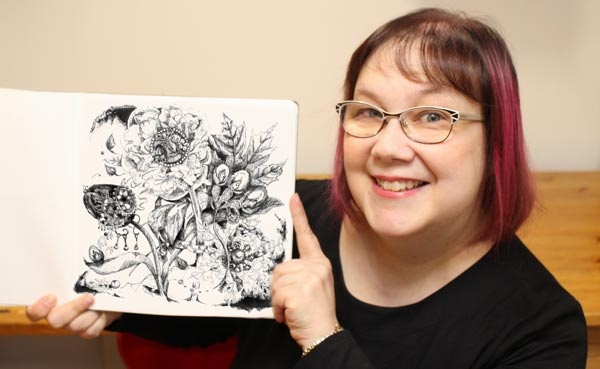
This is the second blog post about participating Inktober drawing challenge. See the first post here!
Inktober Experience in a Nutshell
Here’s what this challenge did to me:
1) Following the prompts and working with black ink only revealed some creative blocks. Becoming aware of these helped me to remove them!
2) I found what I love to draw and it has strengthened my visual voice.
3) I have always liked to draw with non-erasable ink but now I am addicted! I am more creative when I can’t erase the lines.
4) I have a lot of stories to tell that have never found their way to my art before.
5) I like being challenged by weird words that are difficult or even appalling to visualize.
What you can learn from all this:
a) Draw with pen or pencil only now and then so that your voice won’t get hidden behind the products.
b) Write what people have said to you about your creative skills. These may have been good advice back then but irrelevant now.
c) Start a list about things you love – these are also the things you should draw, no matter how superficial or deep they are. Make sure you include some things you loved when you were a child.
d) Give yourself a problem and solve it by drawing. Don’t settle for the obvious solutions!
Strengthening the Visual Voice – Watch the Video!
In the video, you can see all 31 drawings as a flip-through video, some thoughts, and how I used my sketchbook during the challenge.
I also attach the drawings in this blog post with the notes that I wrote for each one during Inktober.
Inktober #13 – Guardian
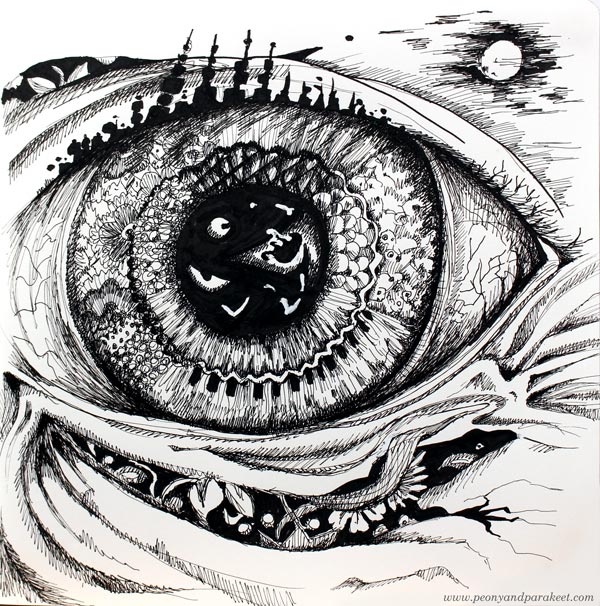
The external world may be designed for extroverts, but every introvert is a designer and guardian of her own world.
Inktober #14 – Clock
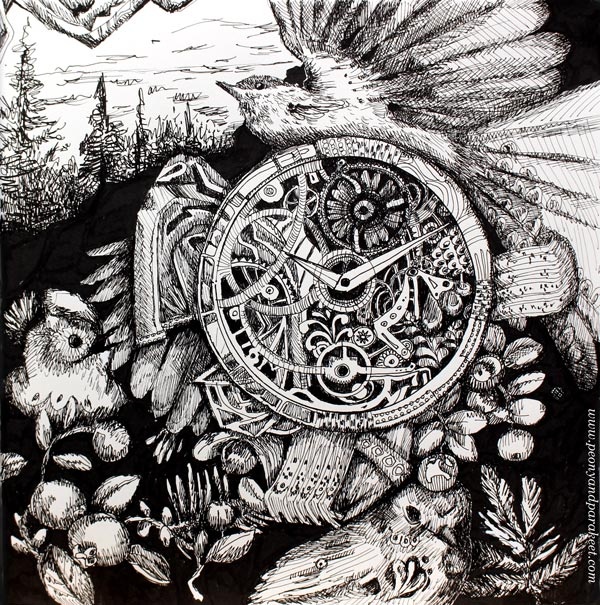
As a child, my favorite play was to be the queen of England. I lived in a small town near the Russian border, and the only real luxury was nature. To me, trees were the pillars of the enormous halls, and I graciously wandered from room to room, repainting every plant and bird in my mind. No matter what’s the time or the place, this is still true: We can’t be the queens of England, but we can all be the queens of Imagination.
Inktober #15 – Weak
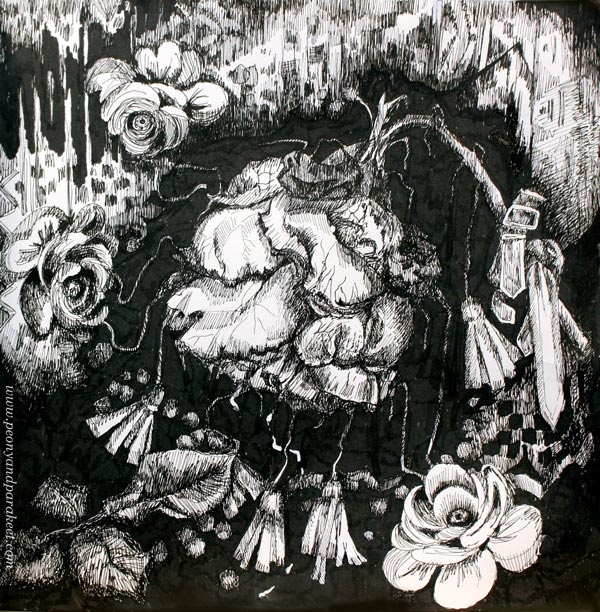
Even if all the ties and responsibilities may feel heavy, they are what keep us going through the hard times. Let’s stay connected so that we can support one another!
Inktober #16 – Angular
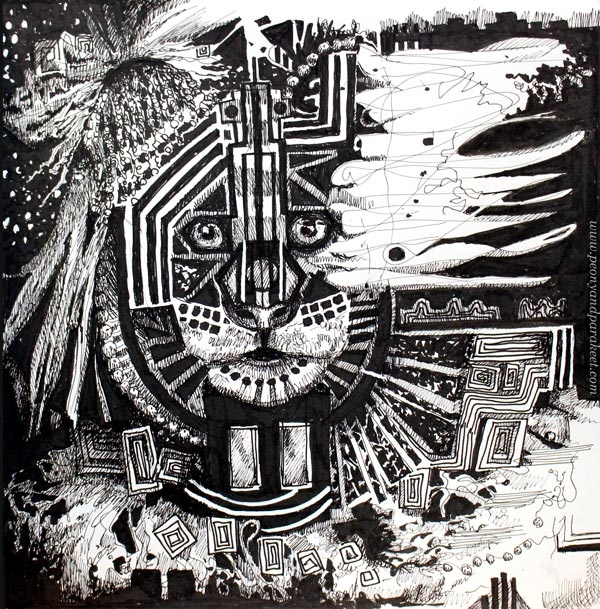
Have you seen the newest version of The Great Gatsby? It’s directed by Australian Baz Luhrmann, and it’s gorgeous. My favorite scene is the big party scene where everybody dances disco: “A Little Party Never Killed Nobody” wearing art deco party dresses in a divine-looking villa with pools, staircases and all. So today and tomorrow my Inktober pieces are dedicated to a big party, and you are all invited!
Inktober #17 – Swollen
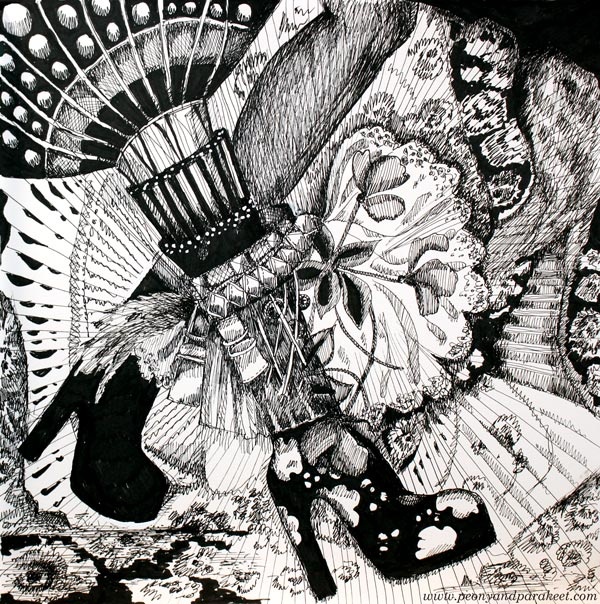
Let’s continue the party from yesterday! Imagine that art has two feet. One foot represents the techniques, and the other one is the imagination. Moving forward in one foot only is impossible in the long run. You need both feet. And – even if sometimes your other foot is swollen, don’t let that bother you too much! Here’s to celebrate our creativity!
Inktober #18 – Bottle
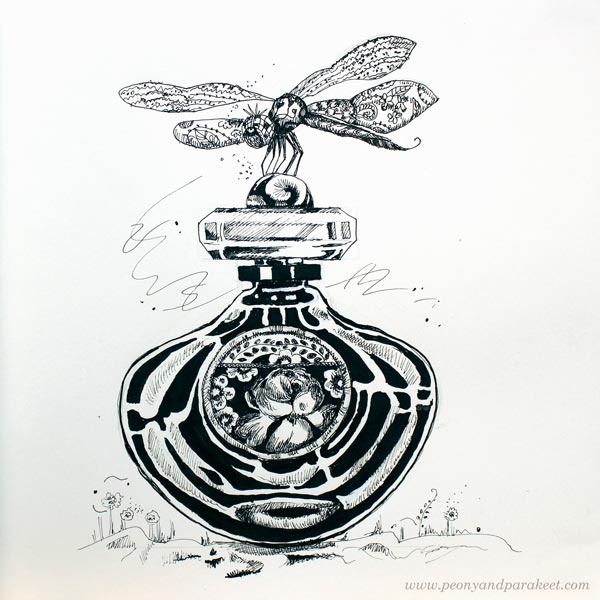
If only we could bottle nature inspiration! I would have a stash of Finnish summer days! Now when trees are losing their leaves, I could spray some summer breeze and the smell of peonies!
Inktober #19 – Scorched
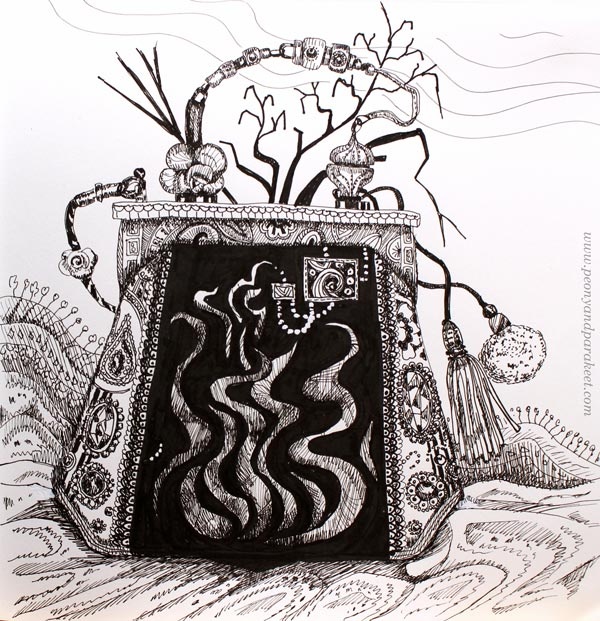
Sometimes the process is more beautiful than what comes out of it. All of us who like arts and crafts have experienced that, do you agree?!
Inktober #20 – Breakable
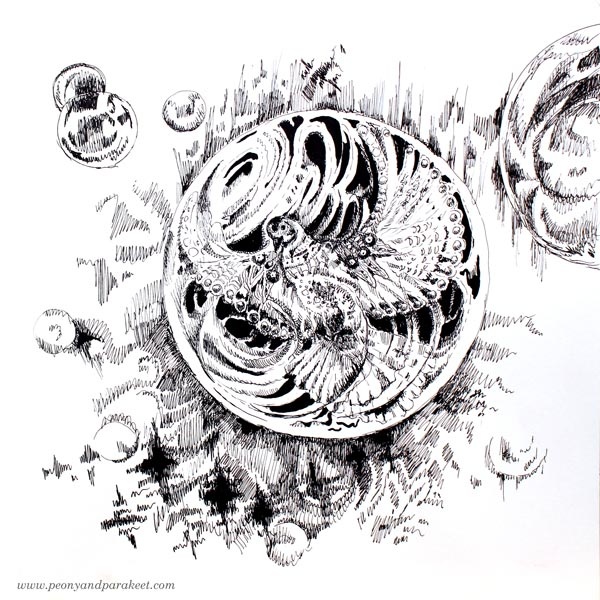
The misconceptions about what we can’t do are breakable. When becoming aware of any of mine, it feels like I have been a bird inside a soap bubble forgetting to use the beak. Why float inside the bubble when you can fly? Let’s believe in ourselves!!
Inktober #21 – Drain
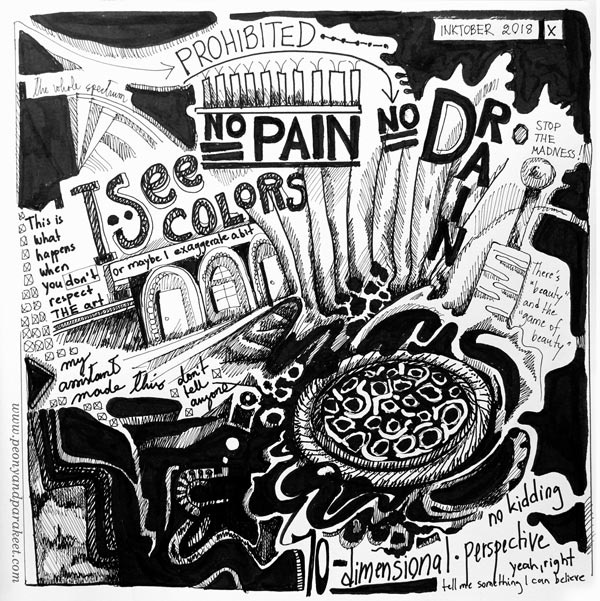
After drawing some ethereal and romantic pieces, I went to a couple of contemporary art exhibitions and this happened! When I was studying industrial design, it was made clear to me that this is NOT the acceptable style to draw. But today, let’s not care about those “don’t”s and “no”s and denials, and let the humor be a part of the art!
Inktober #22 – Expensive
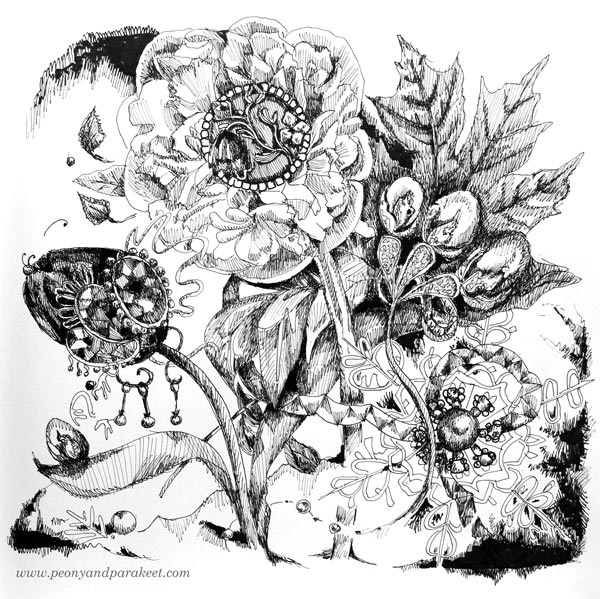
What could be the most expensive bouquet ever? All the four seasons in one bunch!
Inktober #23 – Muddy
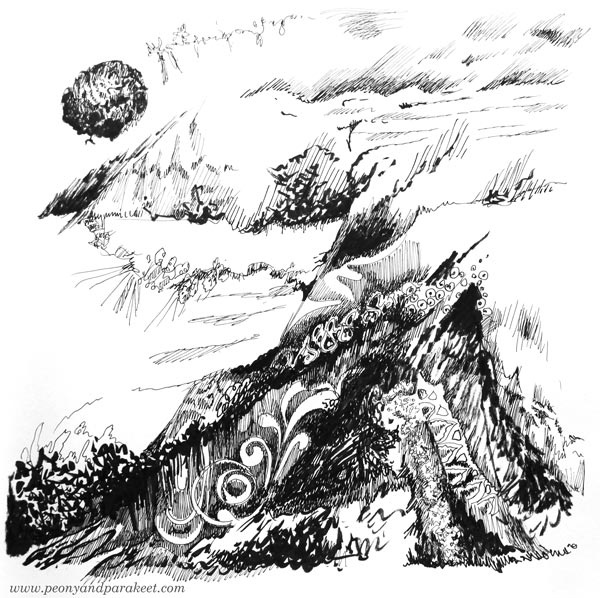
I believe in mud and dirt. If life becomes too sterile, it is not enjoyable anymore. That’s why I have animals and house plants, the garden, and I think that those who have children share this thought too. The same principle applies to art as well. If every stroke you paint, every line you draw is controlled and pre-planned, it lacks the soil where the ideas grow. So here’s to celebrate the mud in our lives!
Inktober #24 – Chop
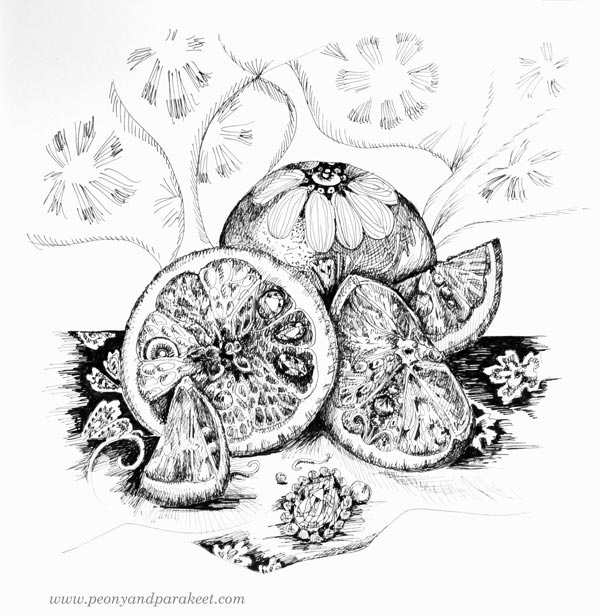
Now when I am well over the halfway, I have started to make a list of things that I love to draw. My list includes stuff like folk art, antique jewelry, glass, fabric, etc. Most of them are quite decorative and luxurious stuff. I have also sliced and chopped these words to less general subjects like Russian handpainted trays, victorian necklaces, crystal, kelim, etc. It has felt like day by day, I am getting more hang of what I really love to illustrate. One item on the list is citrus fruits, oranges, lemons, etc. so I made some for today’s challenge, decorated with jewels and folk art, of course! — Tell me, what’s on your list!
Inktober #25 – Prickly
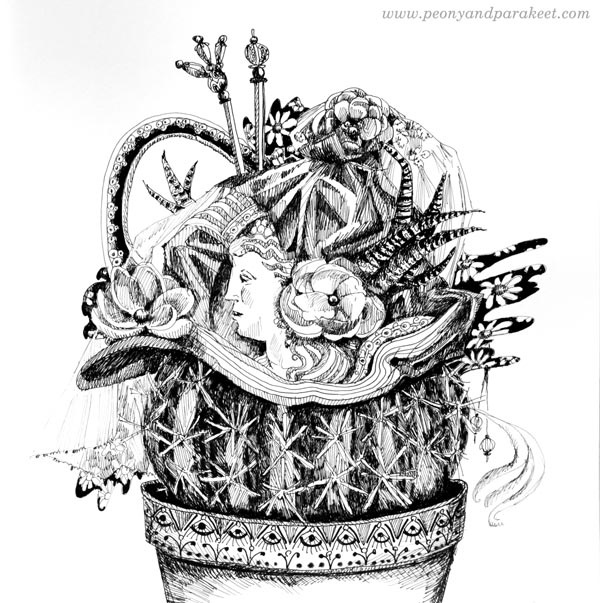
Virginia Woolf has said: “You cannot find peace by avoiding life.” So when the pot feels prickly and the hat too heavy, there can still be some kind of peace and satisfaction in all that.
Inktober #26 – Stretch

This one is dedicated for all who love to write. Many prepare for NaNoWriMo to write a novel during November. I am more of a visual creator, but there’s definitely risktaking involved in both writing and drawing. You never know where it takes you, but that’s also a big part of the reward!
Inktober #27 – Thunder
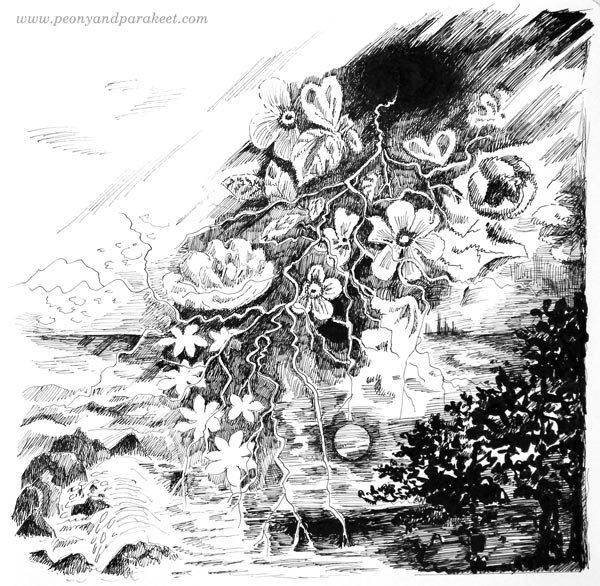
Only 4 to go! Really enjoyed drawing this one.
Inktober #28 – Gift
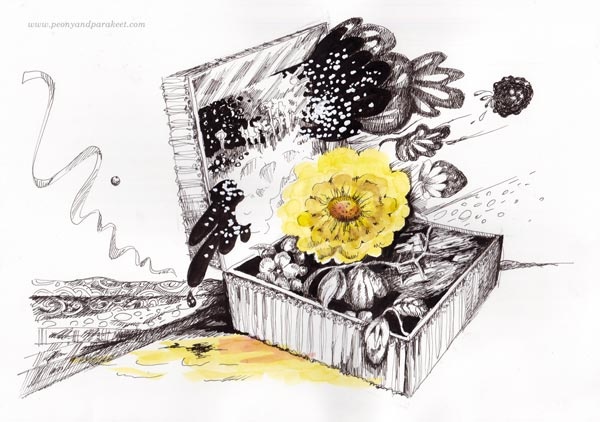
Out of the box, towards the change! Ink pens and watercolor on Bristol paper.
Inktober #29 – Double
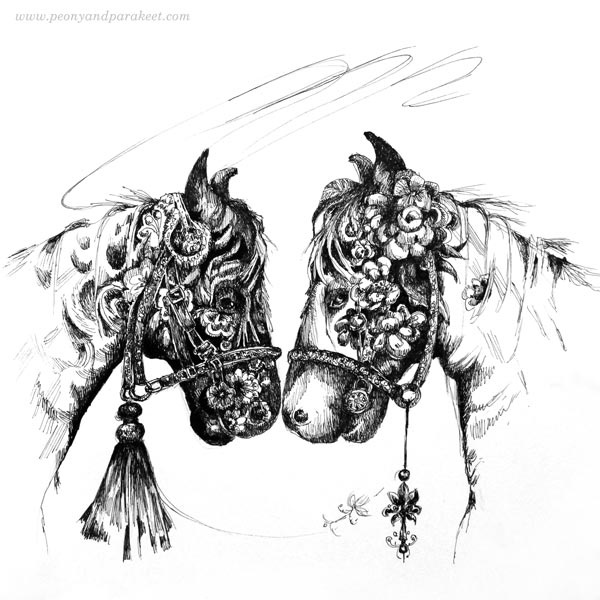
When you get to spend time with someone who likes similar things … Thank you, my friend, fantasy artist Eeva Nikunen! Here’s for the friendships between artistic souls!
Inktober #30 – Jolt
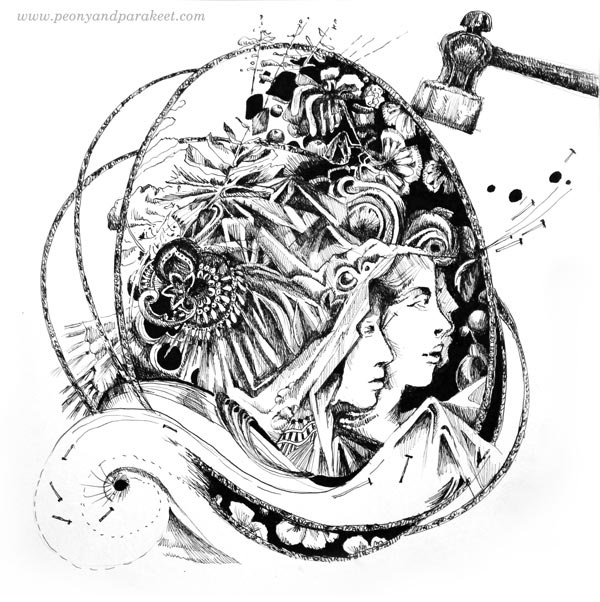
When I started this monthly challenge, I was quite timid. First, I used everyday life as an inspiration, but the more I drew, the more I yearned to go on a journey to the hidden world. I have always loved Russian zhostovo paintings, luxury handbags, decorative fabrics, antique jewelry, Dolce & Gabbana … so slowly all the luxury found their way to these drawings.
First, it felt like they would be fragile and disappear soon, but now I can take a hammer and hit them, and they just keep flowing onto paper. I have cried because I have lost a part of my old style and mindset, but after 30 drawings, there’s no hammer big enough to make all of this luxury disappear. Thank you for still following me, I know this has been quite a change for many of you, I hope you continue the journey with me anyway.
Inktober #31 – Slice
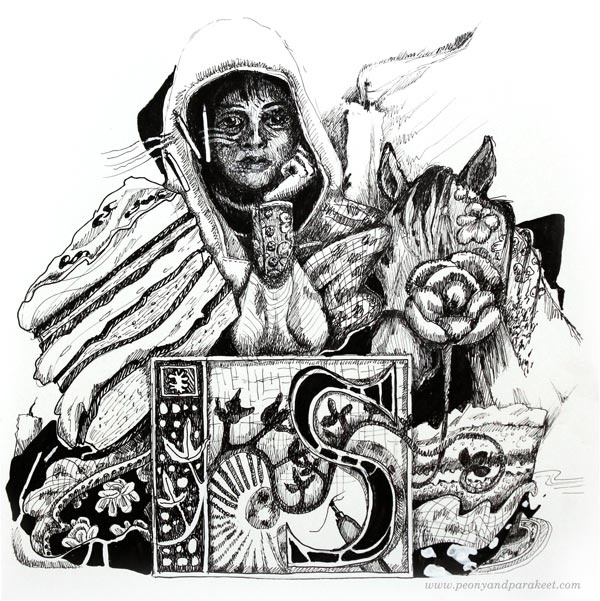
After the challenge, I am a like a nomad, carrying all the stuff that has come along with the journey, wondering what will happen next. Time will tell! Here, have a slice of cake with me to celebrate both this accomplishment and Happy Halloween!
Subscribe to my weekly emails – Get a free mini-course!