
Make Old Art Journal or Sketchbook New Again
This week, I have a 1-minute video about revamping my old art journal!
This sketchbook is from 2018, back when I was practicing different portraits and creating a course called Innovative Portraits. There’s still plenty of empty space left in the book.
My Old Journal and How the Cover Was Decorated
My old art journal is from The Pink Big. I decorated the cover around 2020.
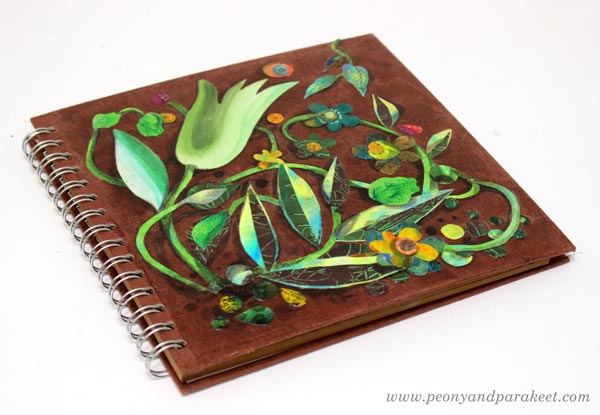
I cut hand-painted papers, added shadows, and protected the collage with gel medium. See an old blog post about how to create the collage!
Now I brought the book back out to start filling it up again.
Oil Pastels in A Journal
The first page was done with smudgy oil pastels, so I left the opposite page empty.
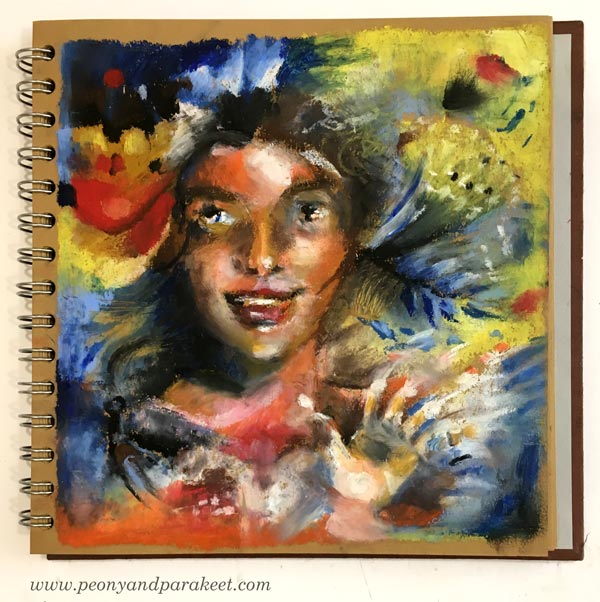
Oil pastels are fun, but maybe not the most practical for journals. See an old blog post about ideas for using oil pastels!
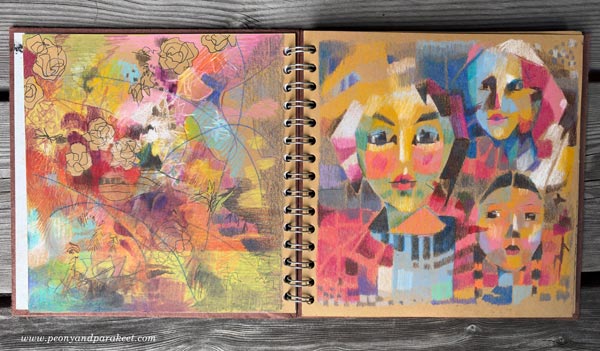
Abstract with Colored Pencils
On the next page, I made an abstract drawing using colors that go well with the original 2018 page.
Fun with Sakura Gel Pens
These brown pages are great for trying out gel pens. I made a new drawing on the opposite side.
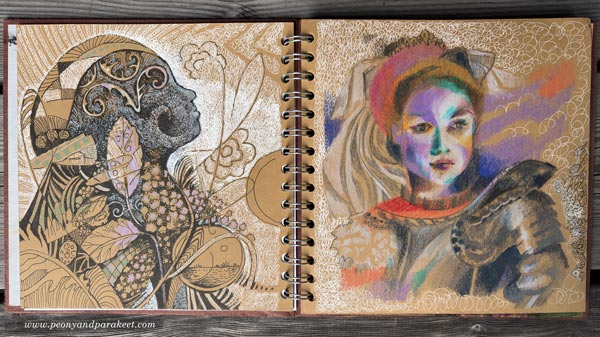
My newest course Drawing Soulfully is about drawing all kinds of lines, and it was fun to use those techniques here.
Flowers and Fabric with Colored Pencils
I placed a paper sheet to protect the previous page, and then colored flowers with colored pencils. The opposite page only had three faces, so I added flowers there, too. I love historical styles, so the main figure got a big, decorative sleeve with dramatic folds.
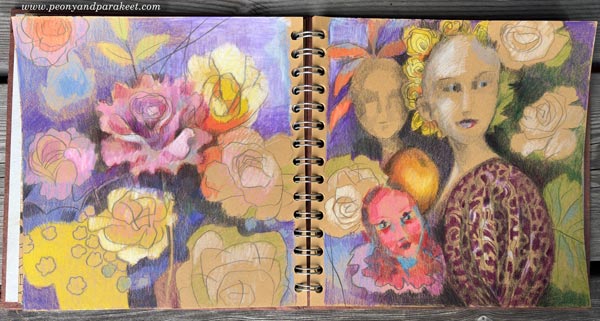
The next spread is already waiting! I hope this inspired you to make an old art journal or sketchbook new again and use your past pages as inspiration.
P.S. You can still sign up for Drawing Soulfully! >>Sign Up Now!
A Dot That Went For a Walk
Paul Klee said:
“A line is a dot that went for a walk.”
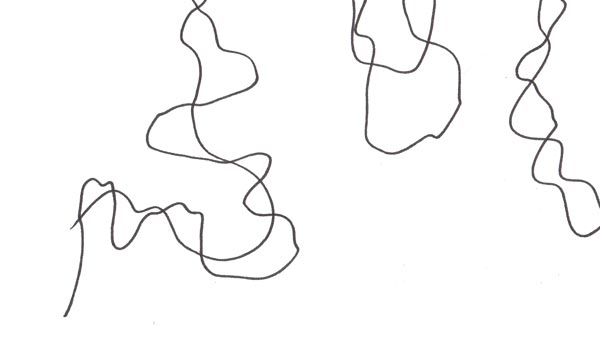
I would continue the conversation about the line:
“Art is a line that was freed to play.”
Everything starts with a single line. When people say they can’t draw, they simply haven’t made friends with their line yet.
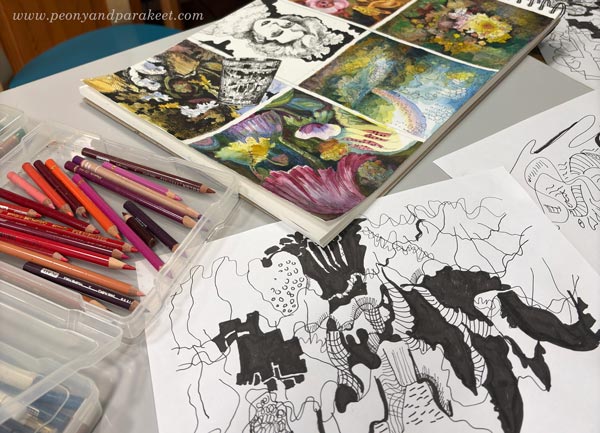
Art doesn’t start by comparing yourself to others. It starts with your own line. Observe where it turns naturally, and learn how to vary it—so that a drawing isn’t just a monologue, but a conversation, a play, an event.
When a drawing is a happening on paper, art happens. And that’s when you know you can draw!
Drawing Soulfully – Sign Up Now!
My newest course, Drawing Soulfully, is about finding your living line and starting a journey to your artistic style.
Drawing Soulfully goes much deeper than standard technique. In the course, I open up about the invisible side of art. I guide you to move beyond concrete ideas into conceptual thinking that frees your creative process. I also share how emotional needs shape our lines, and how to balance intuition and technique.
In my explanations, I’ve focused on what isn’t directly visible. Making art is so much more than just looking and creating. >> Sign up Now!
Artist Vlog – Day in the Life of an Artist
This week, you get to see my day from morning to evening! I’m walking the dogs, painting in oil and watercolor, taking care of my orchids, editing course videos, etc. I hope you enjoy this kind of documentary-style artist vlog!
The black journal that I used in the video is the Dylusions Creative Journal.
Remember to sign up!
Drawing Soulfully – Sign Up Now!
Awaken your line and find a way to your style!
Drawing Soulfully begins on August 25, 2026. >> Sign Up Now!
Stop Drawing the Same Subject!
When you want to grow as an artist, stop drawing the same subject! Stop thinking that you have to narrow it down to find your artistic style. This week, I talk about the benefits of drawing a wide range of subjects and show what we will create in the new course, Drawing Soulfully.
Theories and Practice
Drawing Soulfully isn’t about you copying me, but about you seeing deeper into what you create and how you can create. You learn to see the similarities and differences between different lines, and how lines and shapes connect with various subjects.
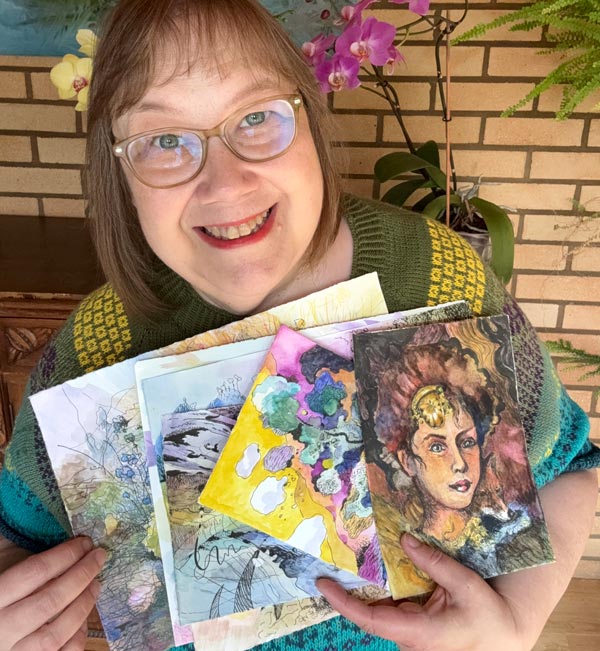
This course has interesting theories that make you look at any art with new eyes, but the core of the course is practical. I want to inspire you to draw more, and draw more soulfully. To draw so that you are present in your drawing and hooked on creating art.
Drawing Soulfully – Sign Up Now!
In Drawing Soulfully, we work with and without photos but always with a creative approach.
Drawing Soulfully begins on August 25, 2026. >> Sign Up Now!