
Art Journal about Love for Home!
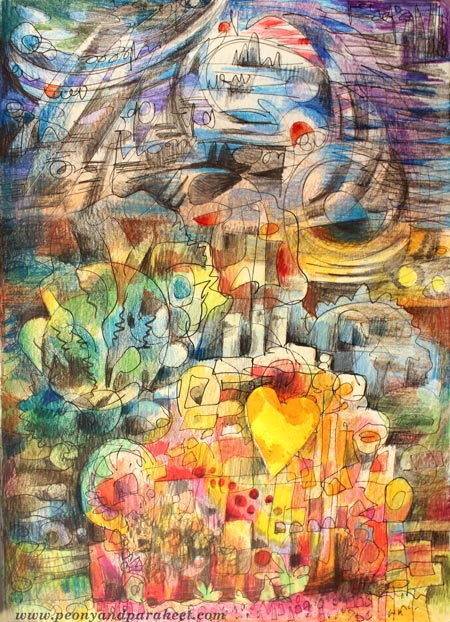
I am honored to be the featured artist in Documented Life Project this week! The theme is Hometown inspiration: “There is no place like home”. This, if any, is suitable for me and for my art journal! I had a stay-at-home mother and we did not travel much as a family. Probably because of that, I have always loved being at home. When I worked away from home, I missed it all the time. Nowadays, especially every morning when I wake up, I am extremely grateful to be able to work from home!
Let’s create an art journal page to celebrate home!
1) Background – Outside from Home
How do your surroundings look like when you are not at home?
Bring those things to the background of your page!
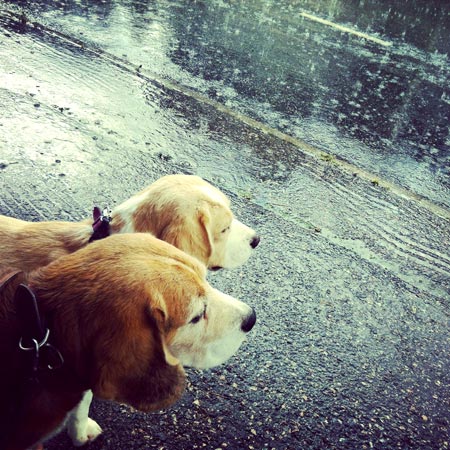
I thought about the situations when arriving home is most appealing. The house, and the living room couch, looks the most welcoming after walking the dogs on a bad weather.

Being a dog owner and living in Finland, I have been in the middle of snow storms, pouring rain and everything between.
2) Focal Point – Inside Your Home
Pick some of the items from your home which represent your love for home!
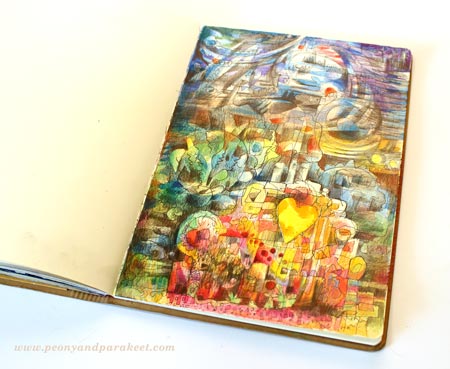
I wanted to express the experience of staying inside, feeling happy, warm and safe from the blowing winds. A couch and house plants are good symbols for that.
3) Location, Location!
Create the page where you feel most at home!
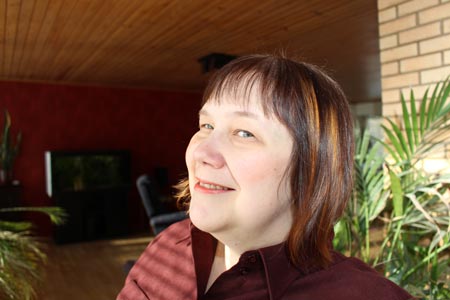
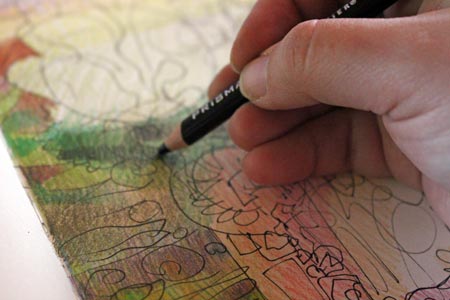
We, visual people, are often very easily affected by the environment where we create. To make sure that the page would express of a warm and comfortable place, I created the page by sitting on the living room couch.
4) Start by Drawing Freely
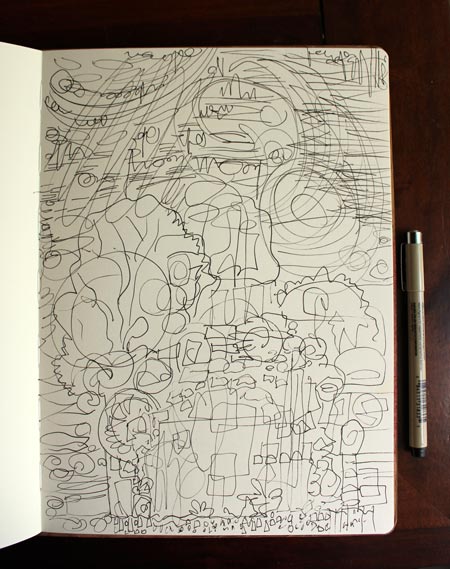
Draw and doodle on the page. Don’t worry too much about the end result!
5) Add Color (+ 3 new ideas)
To make sure that your page expresses an experience and is not only a static illustration, add few new thoughts and ideas when coloring the page.
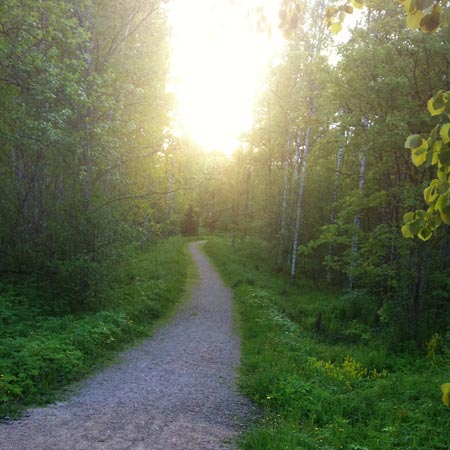
1st: For me, the first idea was the green color. Namely, living in Finland is not only enduring snow and rain. Now in summer, we have daylight almost through the night. Actually, if you read this on 20th June, we Finnish will be celebrating Midsummer, one of our biggest holidays.
This photo was taken just a week ago when walking the dogs 11 pm in the evening.
2nd: My second new idea was that home is not only a house or an apartment. It is a mental state. When I feel at home, my cup gets filled, I become peaceful and energetic at the same time.
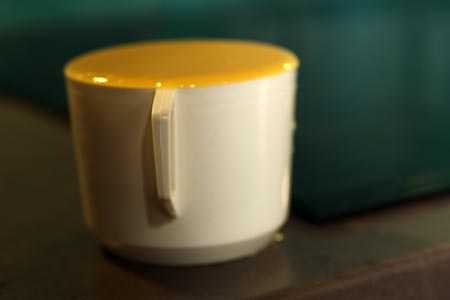
The combination of peace and energy looks yellow to me. So I made sure that the focal point has a lot of yellow. I also cut a yellow heart and glued it to the page with a gel medium.
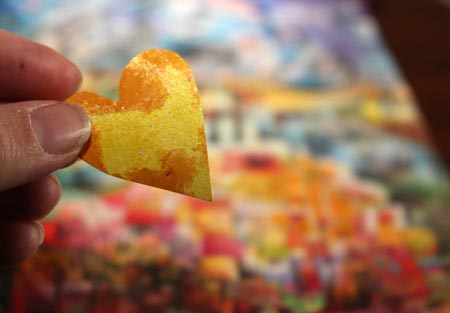
3rd: Where ever we go, we always carry a piece of home with us. My third idea was to add some red spots to the background to express that.
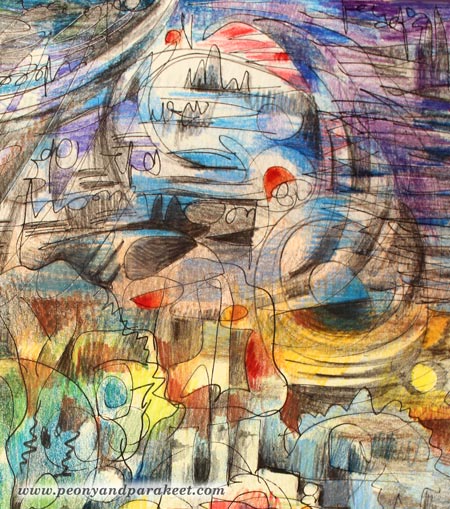
Boosted Expression
When you bring new ideas and thoughts on the theme while you are creating, you are not only making the page look more lively and expressive. You are also allowing your thoughts to move forward with creating.
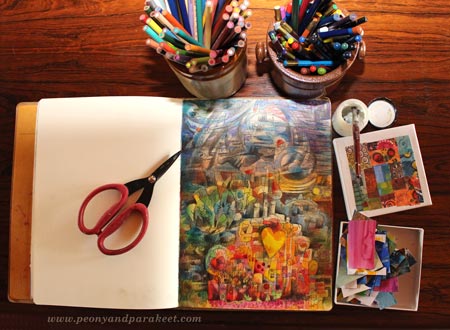
Supplies Used
A black drawing pen (Micron 0.8 mm), colored pencils, a piece of scrap paper and some gel medium were the only supplies used on this page.
Subscribe to my weekly emails – Get a free mini-course!
Organizing Art Supplies with Konmari Method
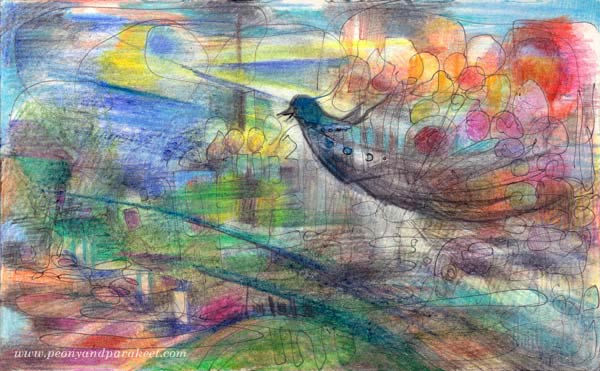
This art journal page is about how less stuff can uplift us. I feel like a bird with balloons after I sorted out my art and papercrafting supplies.
The Life-Changing Magic of Tidying Up
It all started from a book: The Life-Changing Magic of Tidying Up – The Japanese Art of Decluttering and Organizing. It is written by Japanese professional organizer Marie Kondo and she calls her method “Konmari”, which is an abbreviation of her name.
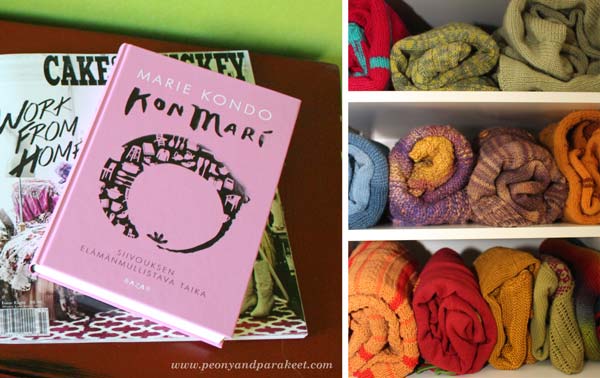
The Konmari method is fairly simple. First you get rid of all the stuff you don’t use or enjoy, and then you store them by type. The process is explained more in detail in the book. The book recommends starting with clothes so I organized my sweaters first. Most of them are my own handknits. Marie Kondo explains how to fold each type of clothing and recommends storing things so that you can see them in a row. I have always believed in little joys in life. However I had never thought of how much joy seeing those sweaters can bring. Each time I open the closet, it joyfully reminds me how much I enjoy both knitting and colors!
Art Supplies that Spark Joy
Marie Kondo believes in handling each object separately and considering if it sparks joy. These spark most joy to me: colored pencils and watercolors! These most simple art supplies delight me more than any new product on the market.
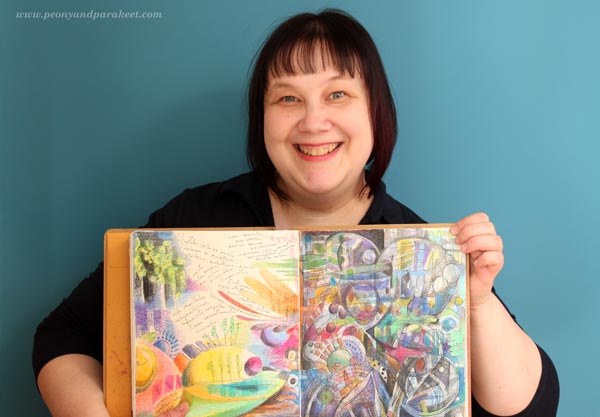
If you have followed this blog for a longer time, you might have noticed that the variety of mediums that I use in my art has been reduced gradually, especially during the last year. I noticed that I had bought many of the products believing they would solve my creative problems. I thought they would make me create better art faster and make creating more fun. But when experimenting with new products I forgot how little ingredients are actually needed for creating meaningful art. Nowadays I feel sad when I see beginners reading instructions that involve a huge variety of art supplies. The long lists of supplies are overwhelming and prevent many from start creating.
I believe we should focus less on things and more in our inner world. And Marie Kondo thinks exactly the same! She believes that when we are surrounded by fewer things, we can treat them better and start thinking what we really want to do in life. I believe that when you use fewer supplies, a lot of energy is saved from picking and choosing for the actual creating. You will also grow attached to the supplies and start displaying them and taking care of them more often.
Working Area Before and After
Even if I organize my creative space regularly, I felt it was the time for a bigger change. I had already started re-organizing my creative space before reading Marie Kondo’s book, so it felt natural to continue that process.
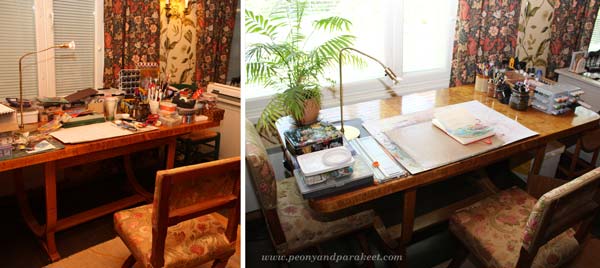
The photo on the left has been taken some time ago. After that I had already cleared the view to the window. But I had not actually got rid of anything, I had just removed some of the stuff to the nearest shelf unit. This time I picked out every single object and decided to give away or throw away those that I had not used for a long time. The photo on the right shows how the table looks like now!
Konmari Method Applied to Art Supplies
Marie Kondo suggests not to put items on the top of each other. That is quite difficult to achieve with art supplies. I managed pretty well though. Jars and boxes help with that.
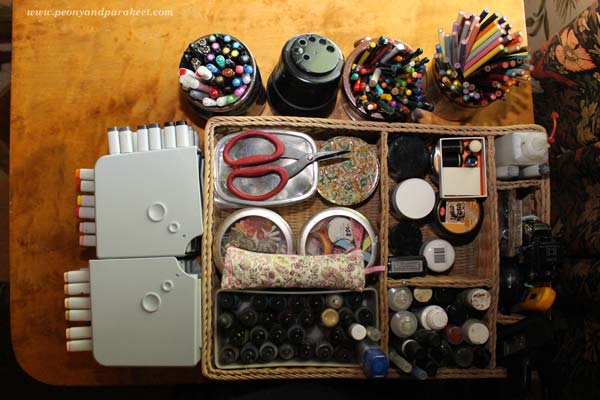
My creative space also includes shelves. Here organizing was a bit more challenging and the end result might not be how Marie Kondo had done it. She would probably group all the paper booklets, albums, and magazines together. However, I quite like it as there’s enough logic in how everything is located. As one of my hobbies is scrapbooking I have a large collection of stamps. I was able to put them all in one place on the upmost shelf.
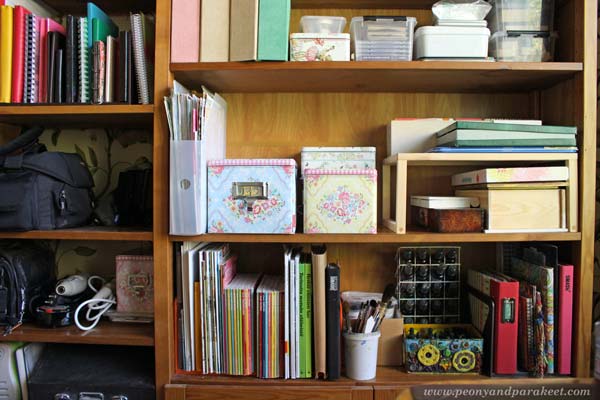
Marie Kondo believes that we should take time to consider which is the best way for storing each item. I found that odd bottles of ink are much happier in spray bottles with other liquid inks. Paints are now in boxes on the right side of the middle shelf. I love how easily accessible all the supplies are and how my art journals and inspiring magazines fitted there too.
How to Prevent Decluttering?
According to Konmari method the secret of staying organized is this: once you have dramatically reduced the amount of stuff and organized by type, you will consider buying new things much more carefully. When you group items by type, you will remember what you already have. When I saw what I had bought during the years, I thought that many times I could have just left the store early and put the time in creating. Focusing on fewer art supplies has reduced my yearn for shopping, so I do believe what Marie writes about.
Make your colored pencils spark joy!
Buy my e-book Coloring Freely
See What You Think!
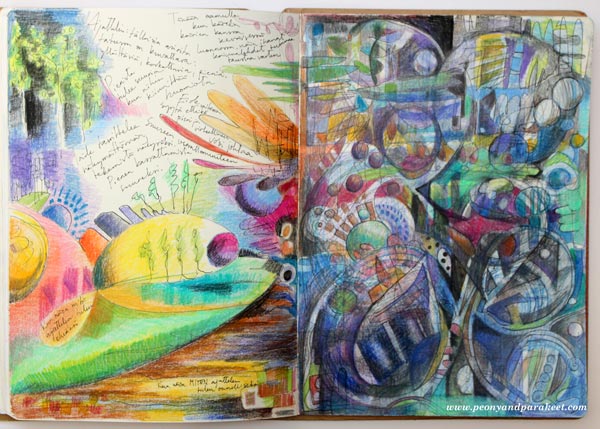
Here’s an art journal spread that I created from two little incidents: the intellectual and the emotional.
Visualizing an Intellectual Incident
Last week I went to an art gallery to see Ola Kolehmainen‘s photography exhibition. I often get very emotional when I see art, but this time I was more intrigued by structures and concepts. Ola Kolehmainen’s photo collages had a cubistic touch. They inspired me to experiment with squares and arches.
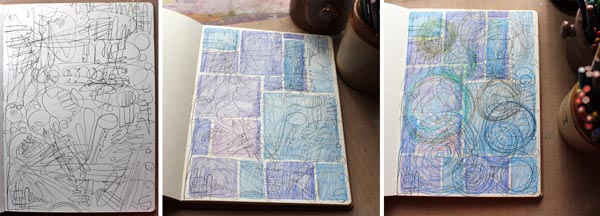
The art journal page looked pretty stiff and formal at this point. But also I felt excited about how it would direct my thoughts when continuing drawing and coloring.
Perfection Needs Order
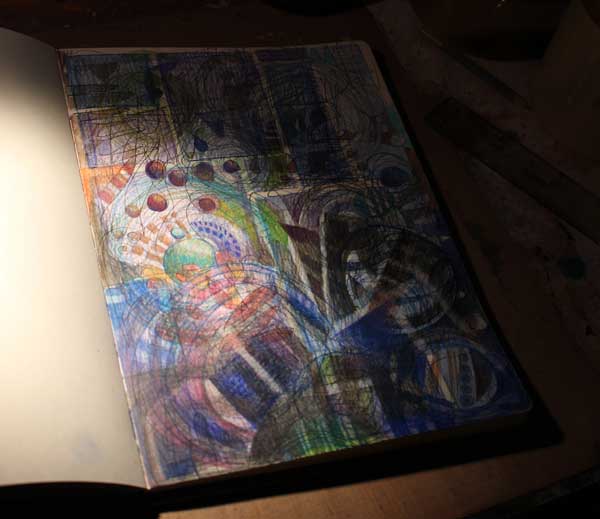
Working intuitively means that I do not always know what ‘s going to appear next. I just focus on a small area at the time. While listening to some opera pieces, I remembered how close mathematics and music were in the 18th century. One of the great mathematicians Leonhard Euler was also extremely interested in music. I feel that similarly, drawing can be an experience where we use the intellectual side. By drawing we can find out new solutions, practice nuances and fine-tune shapes until everything seems to be in its place. Like Euler said: “… in any thing where there is perfection, there is necessarily also order.”

Visualizing an Emotional Incident
But then, when we aim for perfection, we often miss the experience. Like the exhibition last week – I went out without noticing any particular change in my feelings. Then, this morning when walking the dogs, I saw the growing leaves and how they glowed against the sun. The sight was so beautiful, although pretty ordinary at this time of the year. Nevertheless, it felt like opening the door to a great gallery – to nature’s supreme art exhibition!
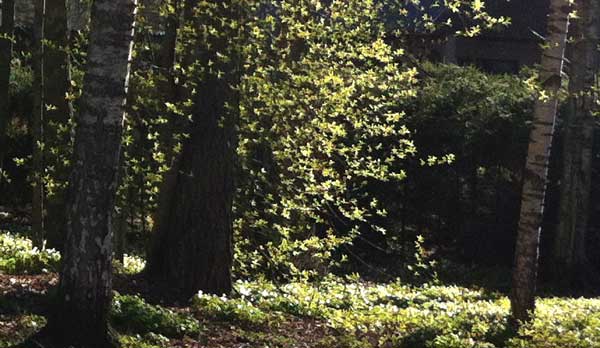
Combining The Intellectual and Emotional Incidents
When I got back home, I thought that it would be interesting to express the controversy of the intellectual and the emotional on the same spread. First, I drew my nature experience with careless lines but with clarity. Then I made it work with the page that had become very detailed but pretty complex.
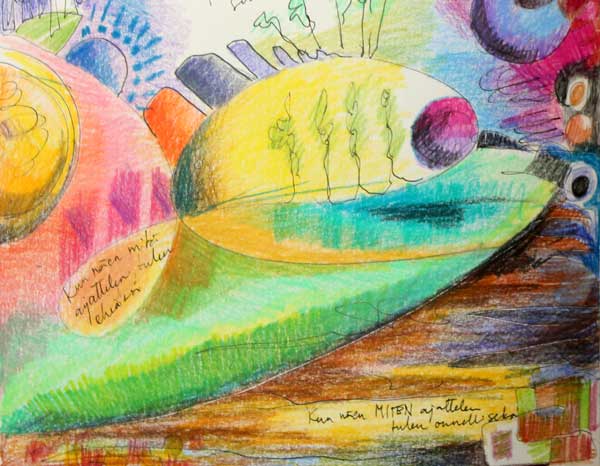
I wrote: “When I see what I think, I become whole” and “When I see HOW I think, I become happy”.
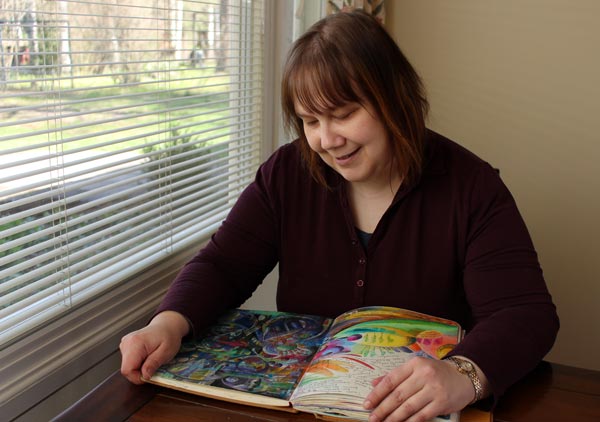
This page spread is not only about going to the art gallery last week and walking the dogs this week. It is what happened inside me and how these incidents were combined. They continue my story as an artist and help me to stay in touch with myself.
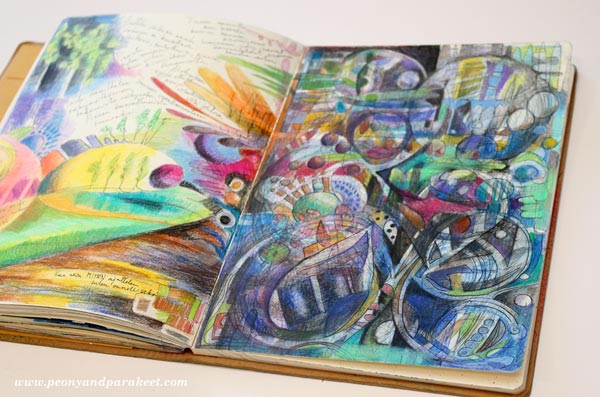
Visualizing thoughts and experiences bring it all together. There’s a lot of inner power in seeing what you think.
Subscribe to my weekly emails – Get a free mini-course!
Stop to See Your Inner World!
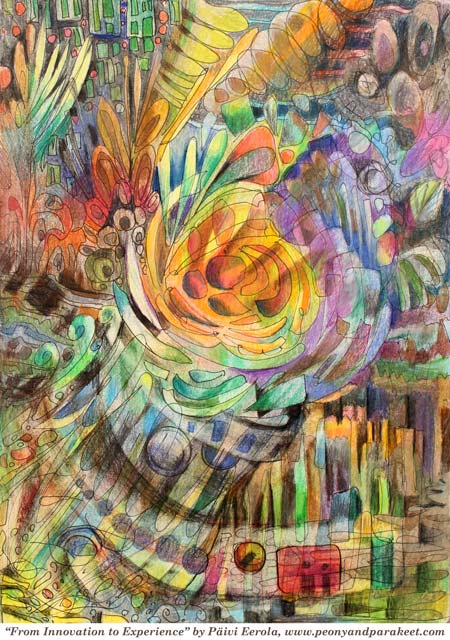
If you watched my recent video interview, you know that I love technology and innovations. People often say that technology is a tool. I do understand that phrase and agree with that to a certain point. But if I had to define technology, I would say that like art, it’s an experience. Whether I read about innovation in technology, or see an interesting artwork, I like to stop and think how I feel about it.
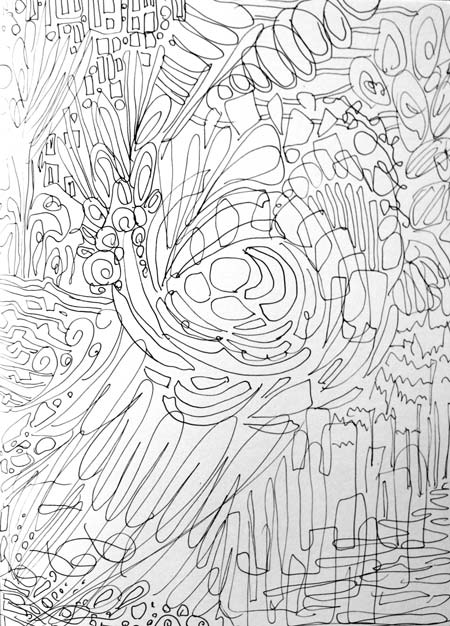
Now you might ask: “Why would I take any abstract concept or inanimate object and add emotion to it?”
My answer is: “Because that’s how you boost your imagination!”
When we see technology as a crowd in a concert or a tea cup as a gentle old lady, we will open the door to our inner world.

Often it requires that we stop. Stop taking in universal generalizations, and start adding our associations. It does not mean that you should do it all the time, but in small moments, every day. Because like Terry Pratchett has said: “Humans need fantasy to be human.”
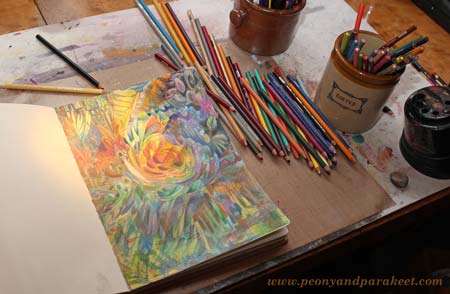
By drawing, we can work our fantasies so that they become insights. Instead of continuously searching inspiration from outside world, we can take time for processing information inside. When we integrate our past experiences with new ones, we can have an improved view of our life as a whole. As visual people, we can produce images that have that unified vision. These kind of holistic visions are almost impossible to express with words, that’s why they are called “the big picture.”
Sign up for Inspirational Drawing 2.0!
You will learn not only practical ways for processing inspirational material
but also how to let your subconscious take control.
Produce “the big pictures” of your experiences!
>> Sign up now!