
Art-Making and Garden Life
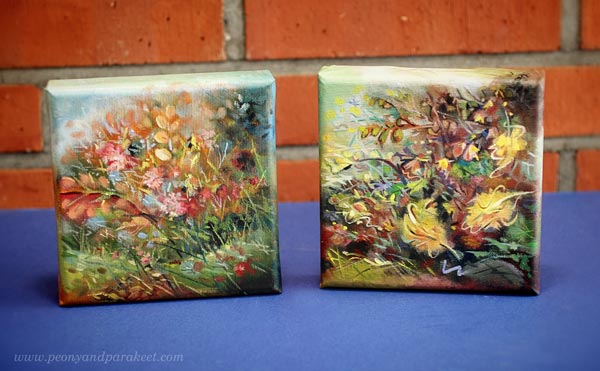
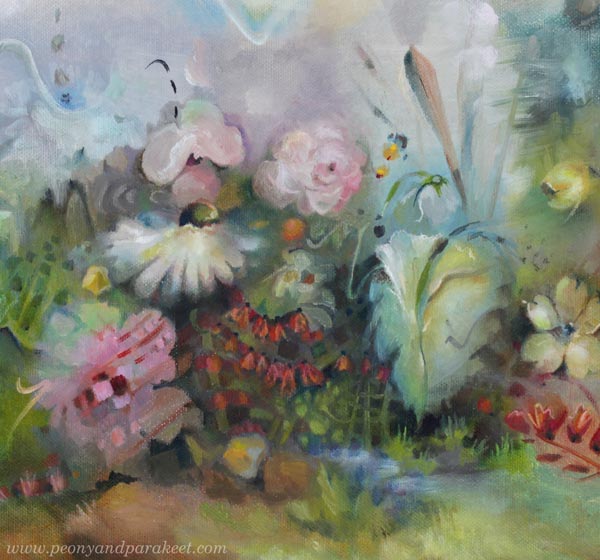
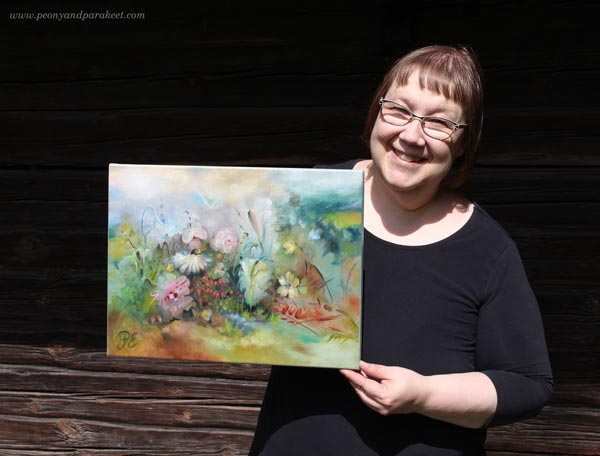
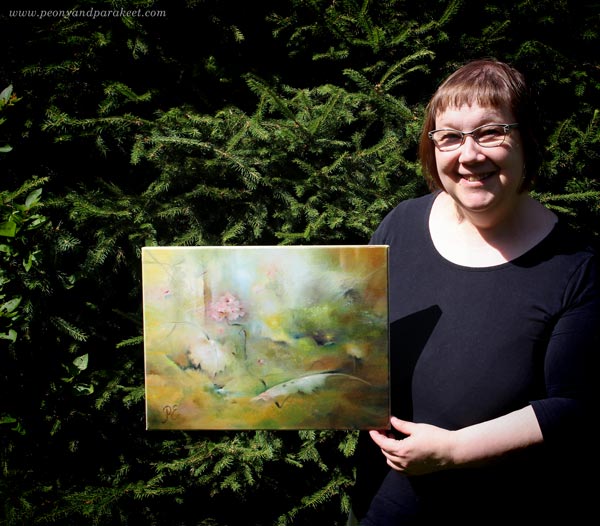
This week, I talk about how gardening inspires both my husband and me. The garden is present in these two new miniature paintings as well.
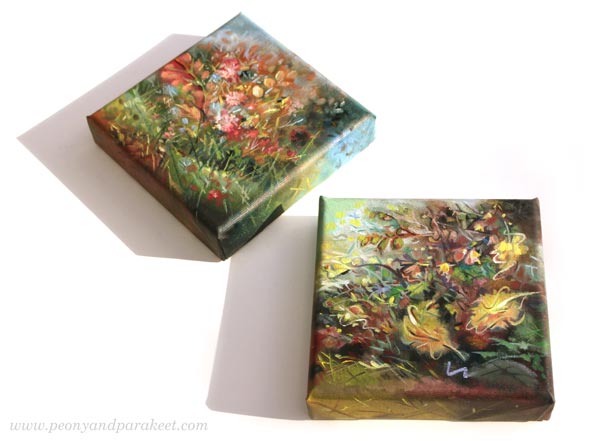
It is already autumn in Finland, but we have summer in our hearts because we have done a lot of work in the garden during the summer. My husband has put all his energy there, I don’t have quite as big a passion. The garden is his canvas, but for me, painting is the most important.
Freely Grown – and a New Sweet Spot
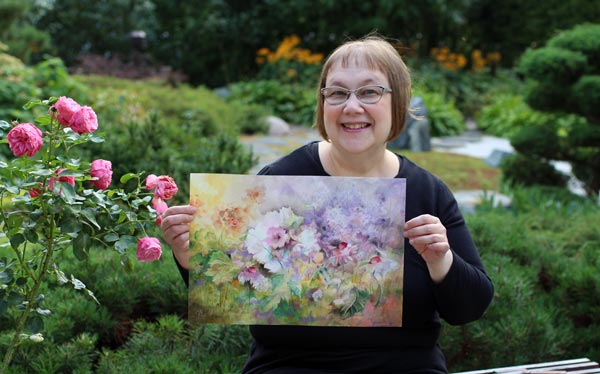
I have a new course in the making called Freely Grown, which I hope to run in late October and get for pre-sale next week. There we will paint layered flowers in watercolor and finish the painting with colored pencils.
Lately, I’ve found my sweet spot in the way I look at plants. I can see both playfulness and soulfulness in them. This perspective has brought new positivity to my life. I think that art always has a lot of possibilities. Making art is like walking down a long corridor full of doors. Now I have found a door where I can be funny and profound at the same time. This insight also affects the creation of the course. I’ve had a lot of fun, although I haven’t compromised on explaining the details.
Making a Dream Come True
The garden is my husband’s canvas. He’s been making a bigger water feature all summer. It’s big enough to be called a pond. I wasn’t terribly excited about it, but the further the project has progressed, the more I understand his vision.
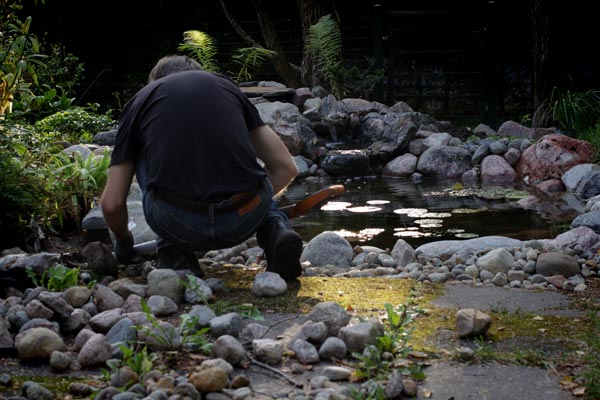
One of the hardest things both in art-making and garden life is visioning – so, dreaming! The dream must be simplified so that it can be remembered during the making. All projects have ugly phases. The dream must still be maintained.
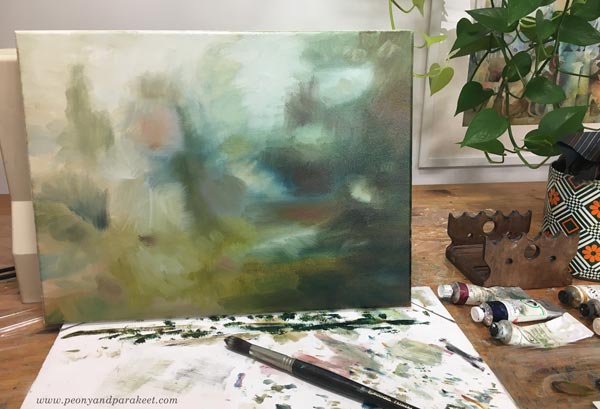
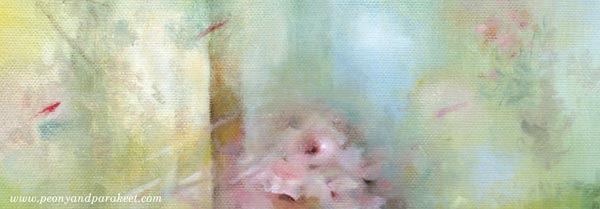
Even these miniature paintings, for which I use leftover paints from the palette, looked pretty terrible at first.
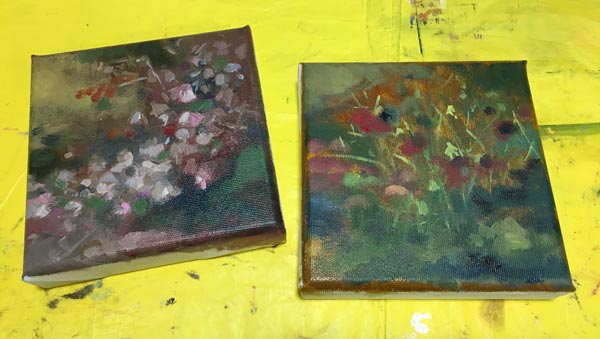
However, I had a dream and knew these would become really nice.
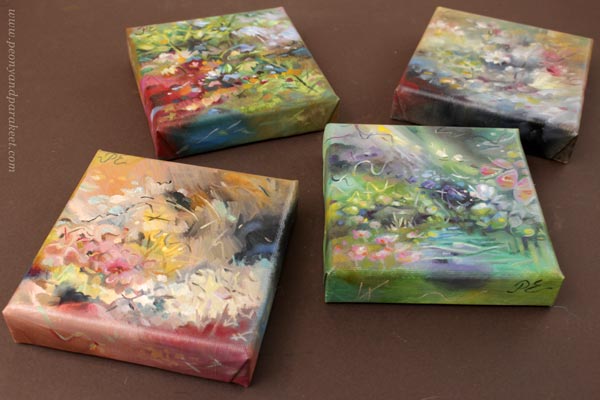
I also made small paintings like this earlier this year, remember?
See this blog post for more pics!
Planning a Garden
In the spring, we hired a professional garden planner to draw a plan for a part of our backyard.
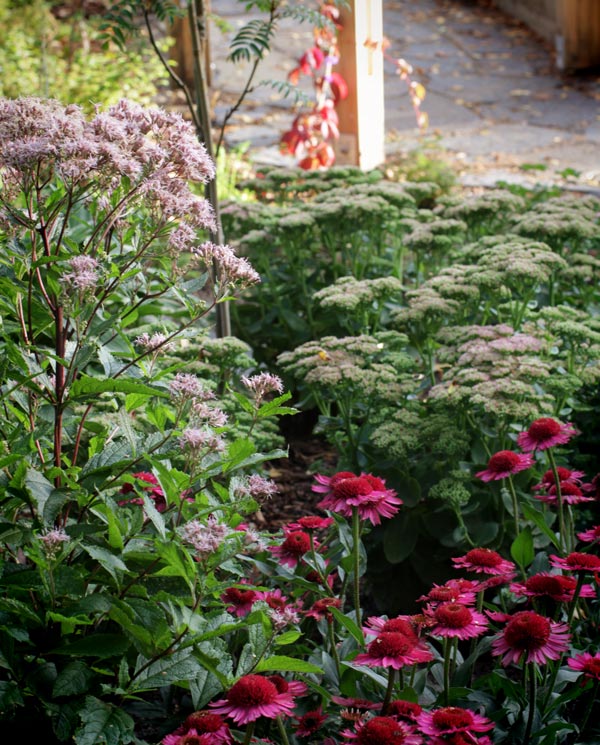
It was a bit like taking a course. We got points of view from a professional and she helped us to see further in our dreams. With that, I learned a lot about plants and how to plan a garden like dividing a house into rooms. It is not very far from a painting.
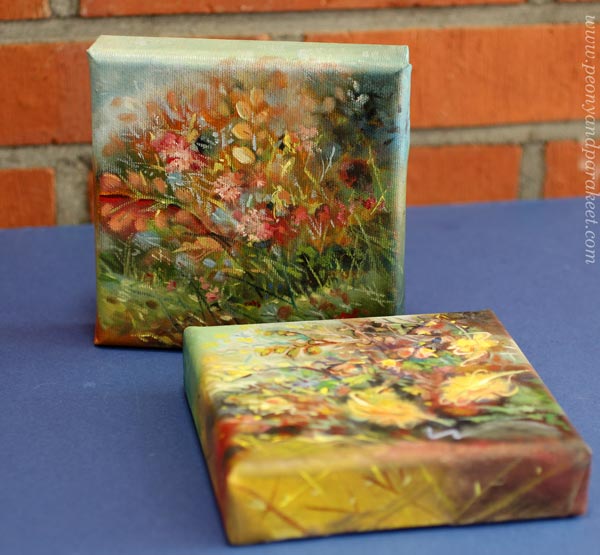
Think about a painting as a place that has its own identity. My small paintings are like tiny closets but bigger ones often like halls.
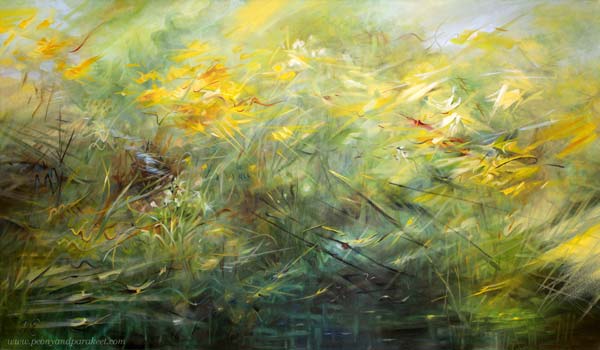
See more pics about this big painting in this blog post!
Art-Making and Garden – Back to the Pond
The pond is entirely my husband’s work – although he has probably watched all the pond-building videos on YouTube!
I feel that the pond already affects my paintings. Do you remember this watercolor painting I presented a couple of weeks ago?

See this blog post for more pics!
I think I already have a little love for that pond, its plants, its reflections, and how it reminds me of Monet’s garden.
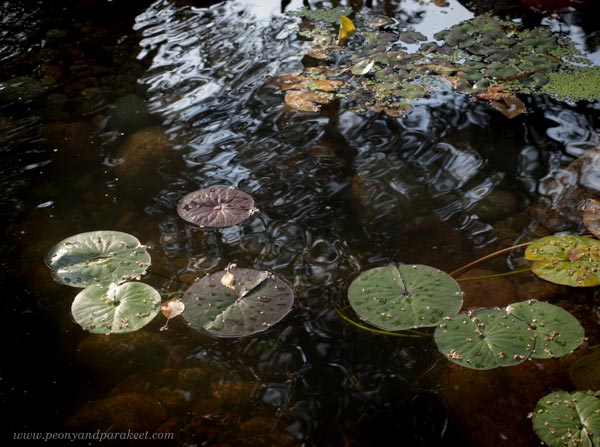
However, winter is already coming. Art-making and garden life will be a bit more separate then. But the flowers will bloom on the canvas. And my husband will start watching YouTube again to see what he could create next summer.
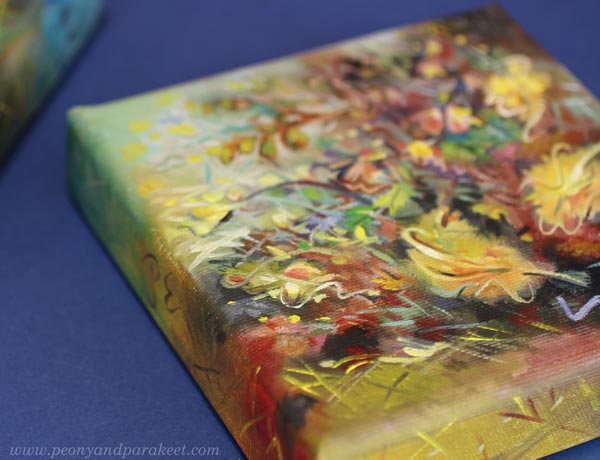
Can you relate? Do you have a garden?
Start with Something – Following Picasso and Edelfelt
This week, we are using inspirational art as fuel for our own art. I show how I created my own version of Albert Edelfelt’s masterpiece by following the advice given by Pablo Picasso.
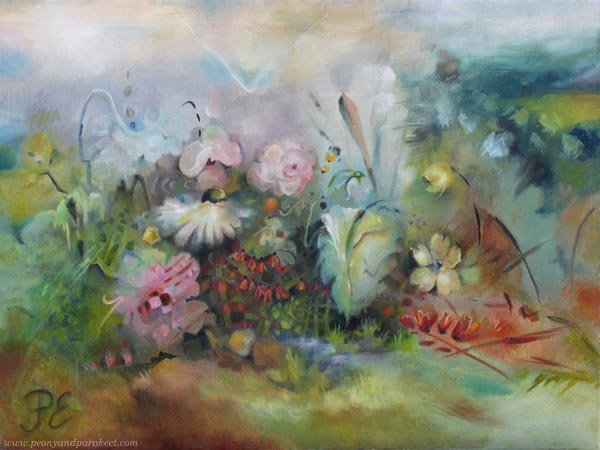
“Friends by Fate” is a small painting, but one of my favorites from the series that I made for the current exhibition. Because the title of the exhibition is Taiteilijat Edelfeltin tunnelmissa – Artists in the Mood of Edelfelt, I wanted to make my versions of some of Albert Edelfelt’s (1854-1905) artworks. For example, I made this one, and this one. “Friends by Fate” uses Albert Edelfelt’s painting “Women of Ruokolahti on the Church Hill” as inspiration.
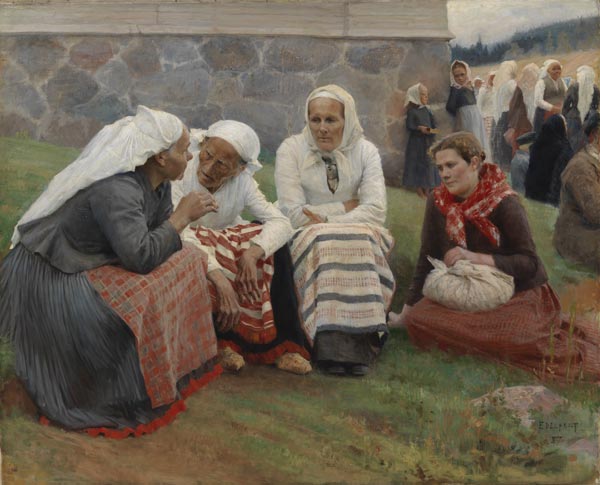
This is a very famous painting in Finland. Even if Albert Edelfelt painted a lot of portraits of wealthy people to finance his profession, he became known for pieces like this that depict ordinary folk.
Start with Something!
I have always been intrigued by this Pablo Picasso’s (1881-1973) quote:
“There is no abstract art. You must always start with something. Afterward, you can remove all traces of reality.”
In my opinion, this applies to any art, not just abstract. You can always start with something and then make your own version.
For example, even if there are people in Albert Edelfelt’s painting, it doesn’t mean that my version has to have them.
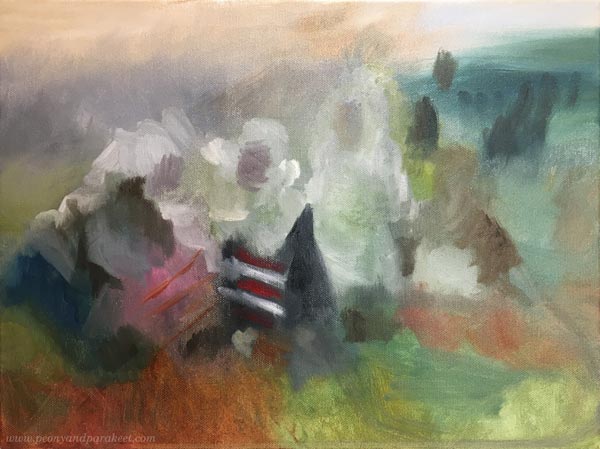
Start the painting with a similar composition, but then slowly let it grow in its own direction.
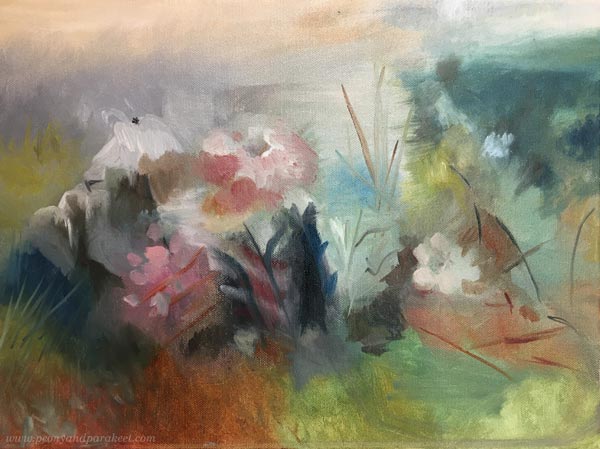
In my version, the flowers and plants replace the women, and the location is different too. I was thinking about the area where I live and how people gather together on a summer evening.
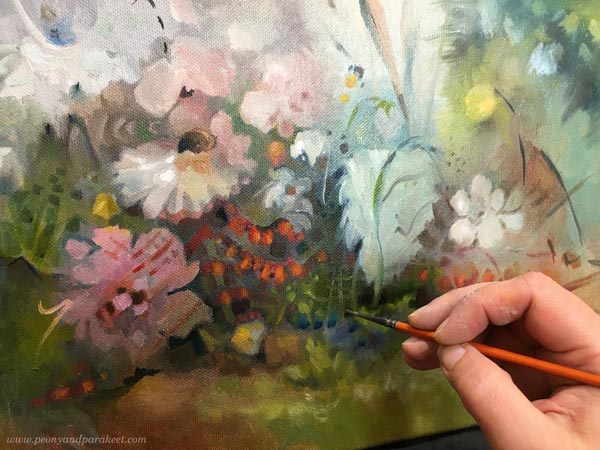
There was quite a lot of work in the details. Albert’s work is not clumsy, so I wanted mine to be well-finished too.
Following Picasso and Edelfelt
I love to paint so that flowers and plants are the characters of the painting. I feel I can combine my sense of humor with my yearning for beauty.
Flowers have given me a secret language that I can use to express anything. With this realization, I feel more and more drawn to the boldness of Pablo Picasso, the re-creator of Diego Velázquez’s 1656 masterpiece “Las Meninas”.
Others have seen what is and asked why. I have seen what could be and asked why not.
Albert Edelfelt was also appreciated in his lifetime, but he didn’t have the confidence that Picasso had. He wrote to his mother:
” I fear nothing else than that I become a raté – a half-talent and an unhappy person.”
(Free translation from Finnish)
This kind of seriousness is what I recognize too: puolilahjakkuus – half-talent – who would like to be that! But still – or maybe because of that, it’s good to embrace playfulness when creating art.
Like Edelfelt, you can recognize the fears and set the bar high.
But then, act like Picasso – Start with something and then ask: what could be and why not!
Finding Emotional Connection Through Imagination
Imagination and emotional connection go hand in hand in art-making. If you don’t feel a connection with what you are creating, bring in more imagination and treat different areas of your work as characters – even if you won’t be including any humans. Let’s look at this example!
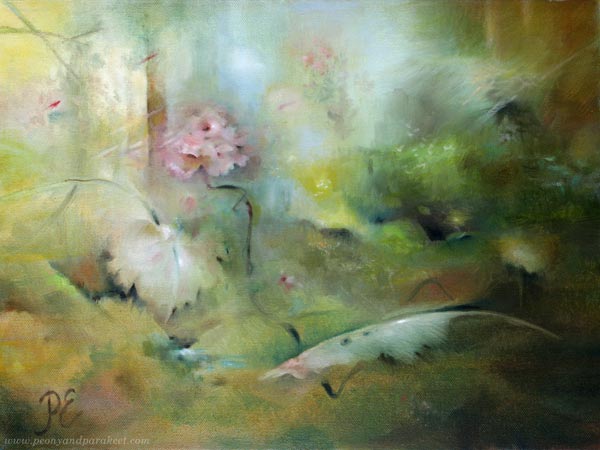
This small painting is part of a series I made for the Albert Edelfelt Foundation exhibition. It will take place in August-September.
Inspired by Albert Edelfelt
For the colors and composition, I was inspired by Albert Edelfelt’s artwork “Koivujen alla – Under the Birches”. It is not this painting that I photographed in the Albert Edelfelt exhibition at the Ateneum Art Museum, but another similar work that I made a mirror image of.
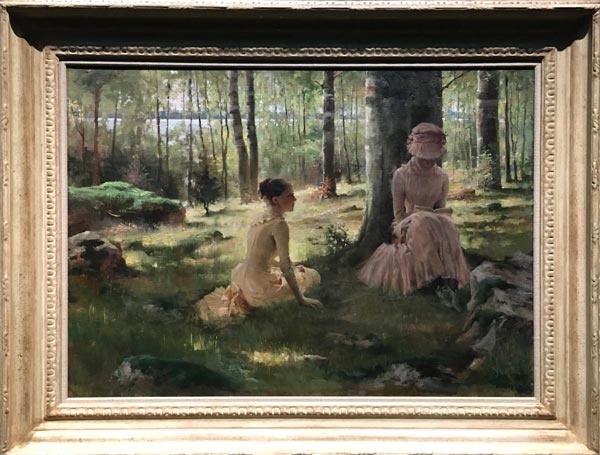
However, I was more inspired by another “Koivujen alla.” See the picture here!
My version of “Koivujen alla” didn’t have any people. Instead, I used my imagination to depict human characters in the form of a plant and an object.
Combine Inspiration and Observation!
A good way to get the imagination going is to combine two different things. For example, if you saw an artwork that inspired you to create, also gather unrelated observations from your surroundings. This way, you need your imagination to bring them into the same image.
In this project, I remembered a pine seedling that I had seen in a nearby rocky forest. The name of the area is Pöllökallio (owl rock) and we often go there with our dogs. This little pine tree was like a bonsai! It was so sweet that I took a photo of it.
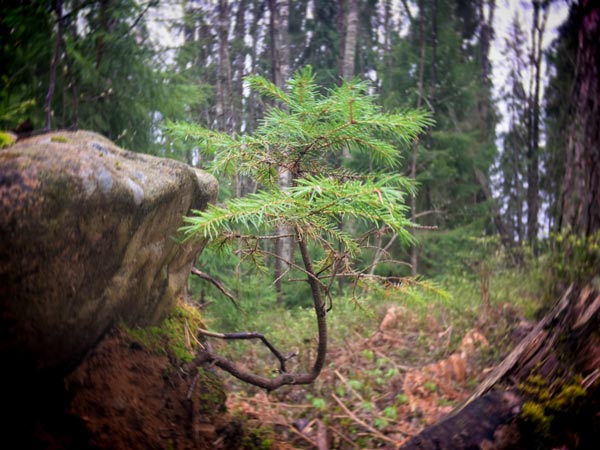
When the pink color of Edelfelt’s painting met a crooked stem of the pine, a tree-like rose was born!
Emotional Connection by Asking: Who is This?
The rose became the most challenging part because I wanted it to resemble the woman with a hat in Edelfelt’s painting. I thought about the hat when I painted a rose, but it didn’t work at all.
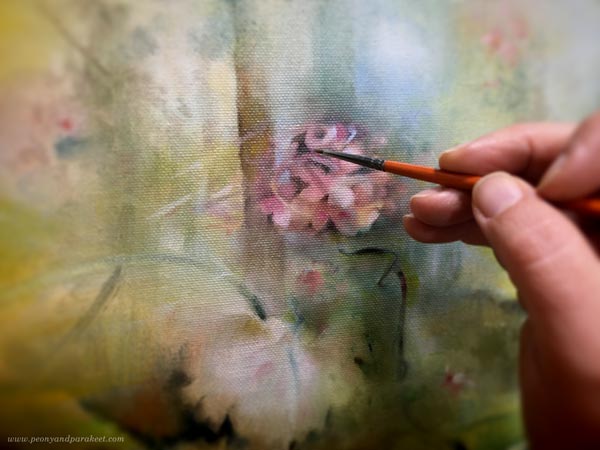
But then I came up with thinking about the character of the woman instead of her hat. That way my imagination met the emotional connection, and I quickly got the impression I wanted.
Build a Story to Boost the Emotional Connection!
One of the most common problems is that our art is full of separate islands. The sun might shine but the effect doesn’t show elsewhere. The person may smile but the eyes are not affected. There may be three ladies but what are their roles? Use your imagination to find connections between these islands and add elements that make the overall story make sense!
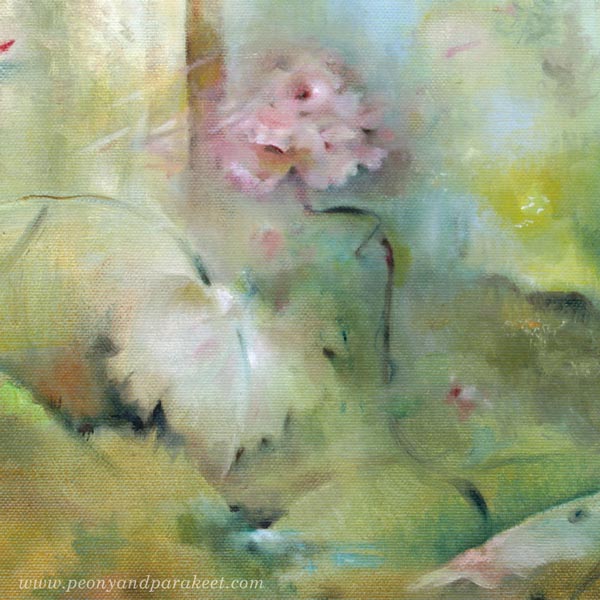
In my painting, there are not two women like in Edelfelt’s painting, but a rose, a leaf, and a feather – three introverts! The rose reaching for the sky has agreed to be the center point. The leaf examines herself through the pond. The feather has been a part of a bigger adventure and is now ready to shift the focus to others.
The small pond is a central element here. It brings the leaf and the feather together.
You can also see the colors of the rose elsewhere in the painting. For example, there are flying thoughts (red lines) that the rose tries to catch, and a bigger punch of roses that is in the background.
The painting is about three romantic introverts who went on a trip to a rocky forest on a lovely summer day. They are together, but in their own thoughts, just like the women in Albert Edelfelt’s painting.
When we paint or draw people, we hope to bring the character to life with their facial features. But we don’t need facial features to find an emotional connection. Once you get the hang of it, you can draw or paint anything, even just different shaped spots on paper.
What do you think?
Kaunosielu – Painting and Drawing Sensitivity
Kaunosielu is a Finnish word for which I don’t know an English equivalent. It means a dreamer who loves beauty, but the word has an ironic undertone. This romantic soul, alienated from everyday life, cares little about taking care of practical matters and frequently stops to admire the beauty around her.
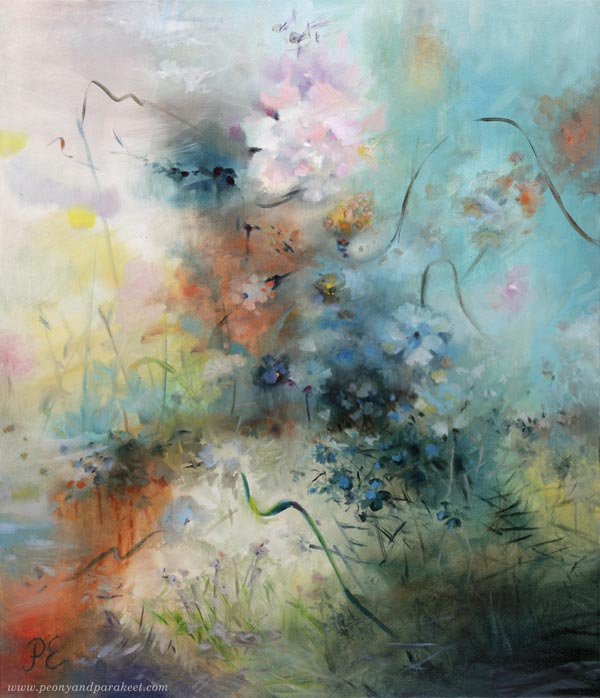
I’ve been thinking about people’s yards in my neighborhood a lot lately. The new houses have a small lawn area, a wooden patio, and a row of white cedars. These homes are advertised as “easy-to-maintain yards” in real estate ads. And yet, it often happens that when time passes, a few violets or a peony bush appear. It makes me believe that we all are “kaunosielu people” who have a sensitive heart and eye for beauty.
So my Kaunosielu painting is dedicated to that part of you who stops after seeing something beautiful. This topic was challenging for me because I usually express movement. Here, however, it’s all about staying rather than leaving and looking rather than running away.
Inspiration from Pastel Drawings
I am making a series of paintings for an exhibition called “In the Mood of Albert Edelfelt” and I have browsed a lot of Albert Edelfelt’s (1854-1905) works. Surprisingly, his pastel drawings fascinate me the most. Look at this woman, for example – or rather – her dress!
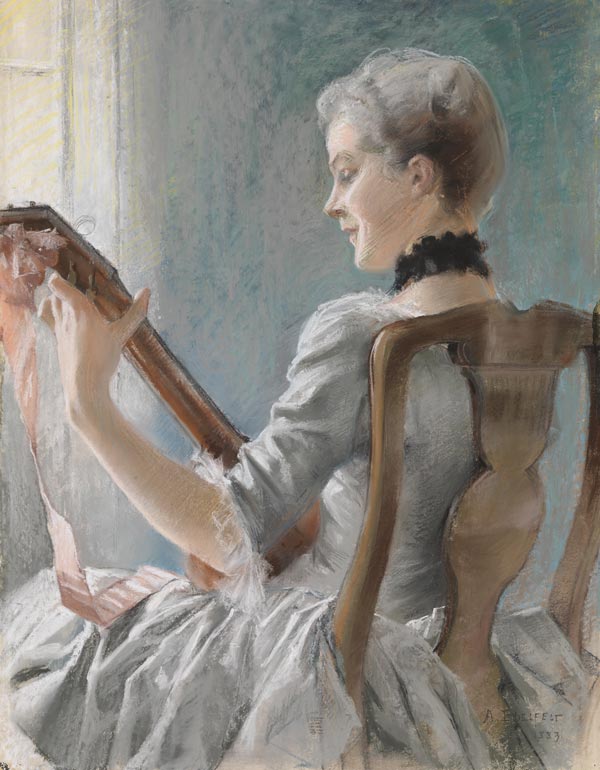
I see a similarity with flowers in old portraits. The outfits are pleated like the petals of flowers and the lines form interesting patterns.
I also started using chalk brushes in the ProCreate app. Here is a digital pastel drawing: peonies and strawberries.
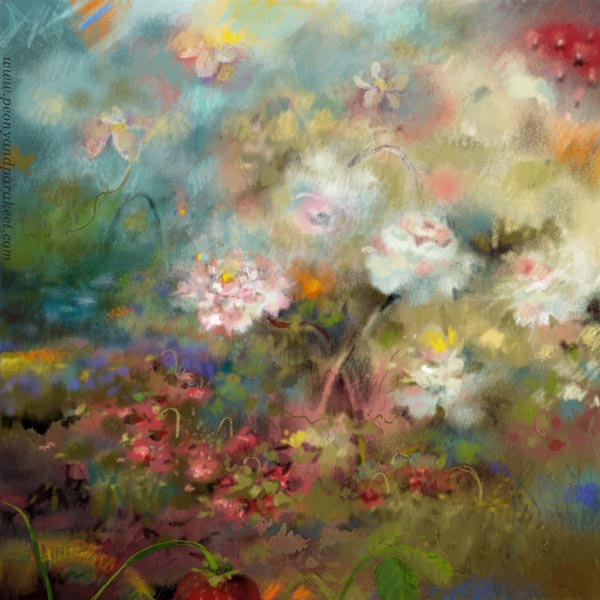
I have done oil pastel work for the course Innovative Portraits, but now I dug out the soft pastels.
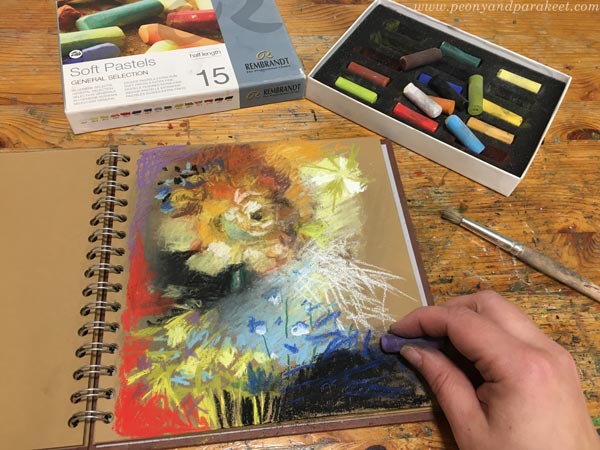
Soft pastels are more chalky than oil pastels and maybe a bit more difficult too because, unlike oil pastels, soft pastels also need fixative.
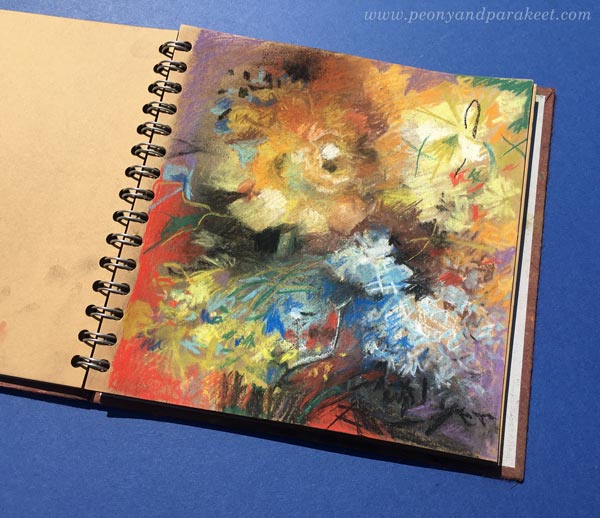
This is just a small notebook and a small piece but I like to practice between bigger paintings.
Kaunosielu on Canvas
My painting Kaunosielu is painted in oil, but it is close to pastel artworks in terms of color scheme and the use of lines.
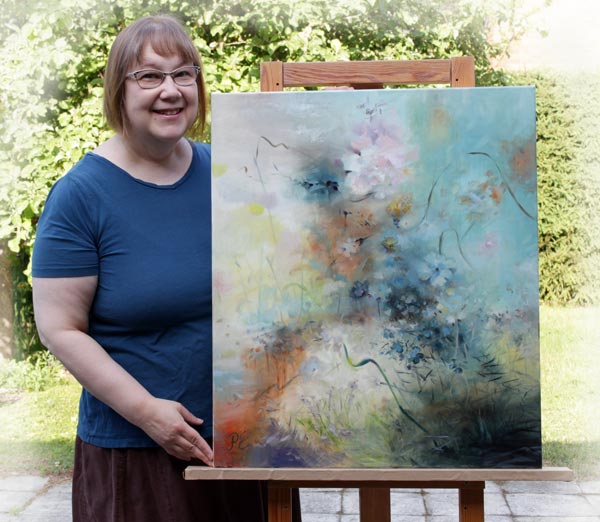
The painting is inspired by a lovely pastel drawing by Albert Edelfelt called “At the Window.” I was lucky enough to see this work authentically in the Albert Edelt exhibition of the Ateneum Art Museum. This piece is 68 x 62 cm, so it’s quite large for a work drawn on paper. And look at that frame!
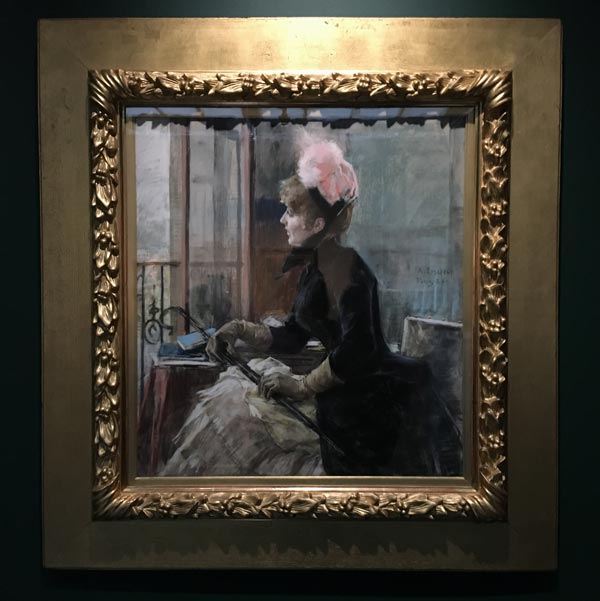
I was especially fascinated by the composition, and as soon as I started my painting, I felt that now it was coming: Kaunosielu! I had been planning to do a piece called that for a long time.
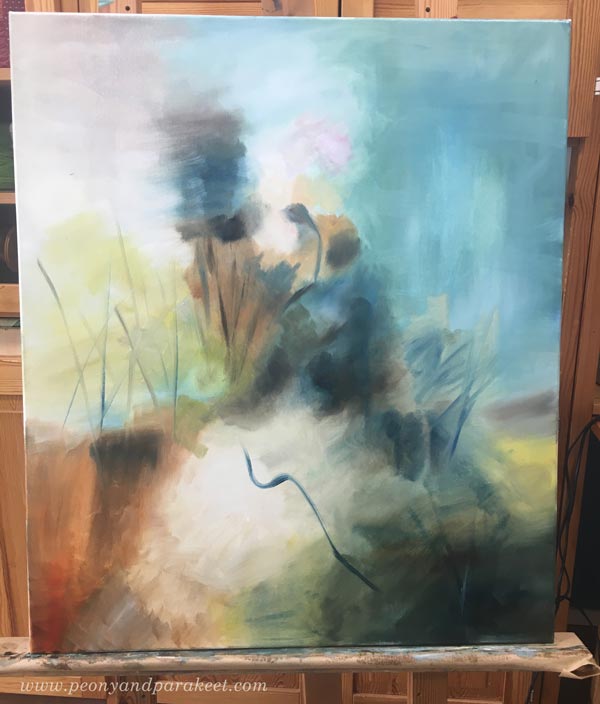
I wanted to incorporate haziness and vagueness into this painting, but at the same time use strong variations in darkness. With the big differences in color value, I wanted to create a sense of presence similar to Albert Edelfelt’s paintings.
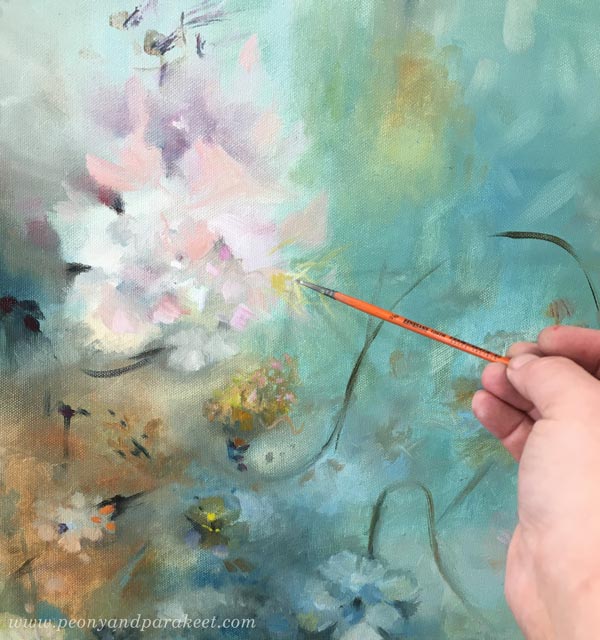
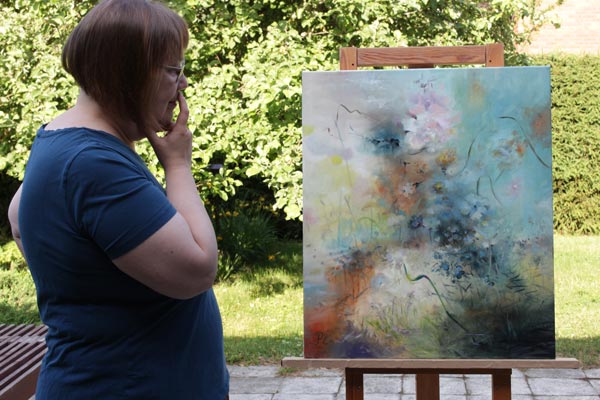
When I took this photo in the morning sun, it felt like the moment stopped and two Kaunosielus came into the picture.
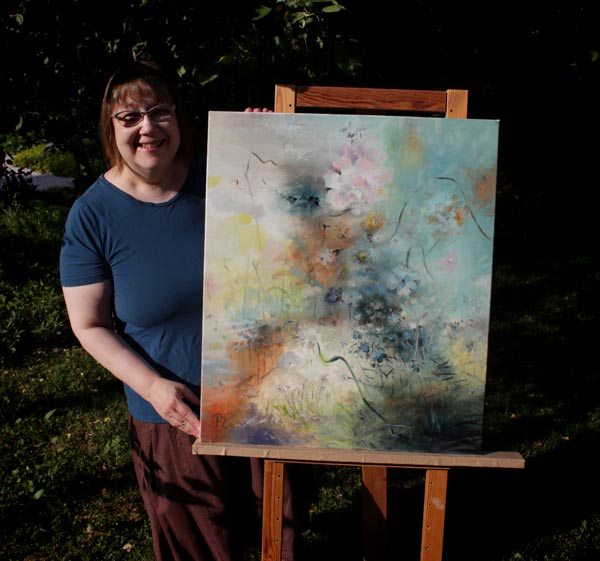
This photo shows so well how darkness and light go hand in hand.
This Week’s Challenges for Your Art-Making
- Empathize with the kaunosielu personality: Examine what it means to be an impractical but sensitive sielu – soul!
- Examine old portrait paintings. Dind the similarities between flowers and luxurious dresses.
- Be bolder with contrasts. Enhance your expression by combining pastel colors with really dark blues and browns.
- Experiment with soft pastels or oil pastels or mimic their effects with other art supplies.
I hope all these tips inspire you to start creating!