
Time to Change – From Teaching to Mentoring
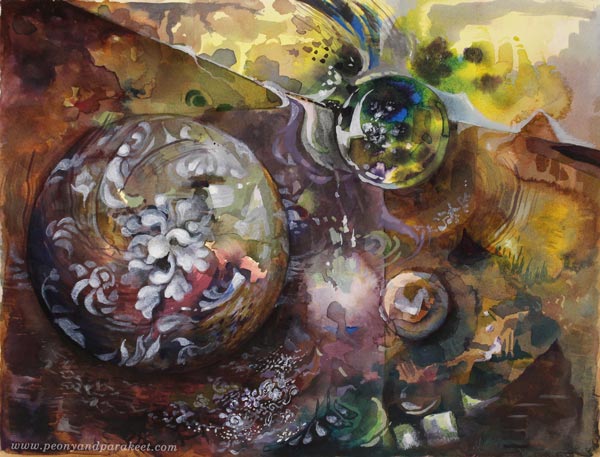
After finishing a series of canvas paintings, I have felt that it’s time to change. It has been smoldering in me for the whole year, but as we know, the change rarely happens in one go. There’s one big thing that I want to change in my teaching. I want to give more personalized suggestions and encouragement, and enable more sharing and connecting. I want to be a mentor rather than a teacher in the traditional meaning. When you start creating art, you need a teacher to follow. But when after a while, you will want to create something from your personal perspective. Then you will benefit more from observations about your art. When you have someone to help you see the possibilities in your expression, you will find it easier to grow your creativity. During this year, I have developed my online workshops in that direction, and the results tell me that I should continue on that path.
Questioning Your Talent vs. Willingness to Learn
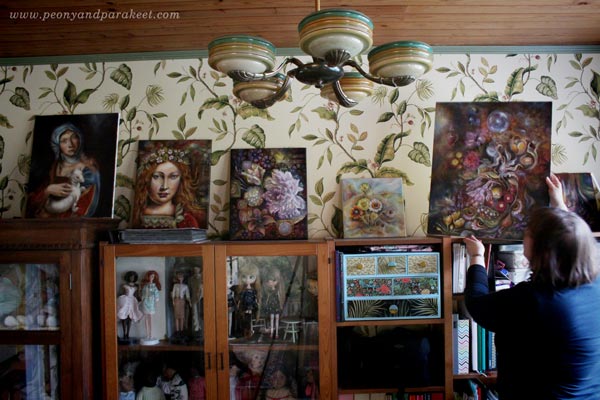
While pondering which paintings to frame, I was also thinking artist colleagues that have helped me to analyze my work in a new light. That’s one reason why I also want to enable connections between people who love to create art and even more importantly, want to change their art.
Here’s what I wrote on my Facebook page today:
“Am I talented enough?” – Pondering about it doesn’t take you forward. Replace it with the question: “Am I willing to learn?” Because art like any field has a set of principles and skills that you just need to know and practice.
Then there’s imagination and originality. Is that the talent that we talk about? I don’t think so. They are also skills that can be learned. They are about self-exploration, tolerating quiet time, being open to what inspires and irritates you.
When you see something that raises negative emotions, start questioning: “Why do I see this as a threat?” By answering, you will understand more about yourself, about people in general, and get the curiosity that makes you step out of the conventional. Your empathy and imagination will grow, and you become more willing to learn.
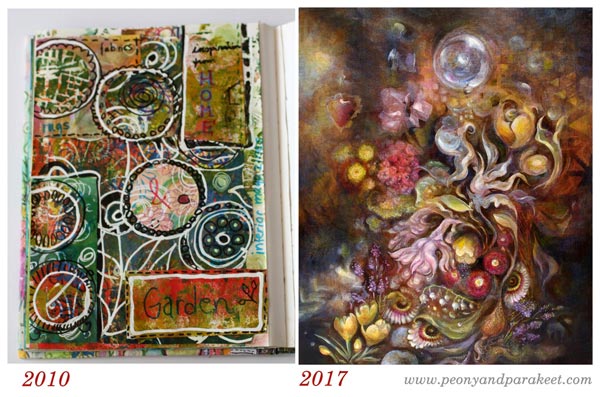
My art journal page from 2010, and my painting from 2017.
The Change Is in The Nuances
This week, I reorganized my art supplies and found an old art journal. Funny enough, there was this page: “Time to Change.” And when I compare it to the piece that I just painted, it looks quite similar if you omit the clumsiness.
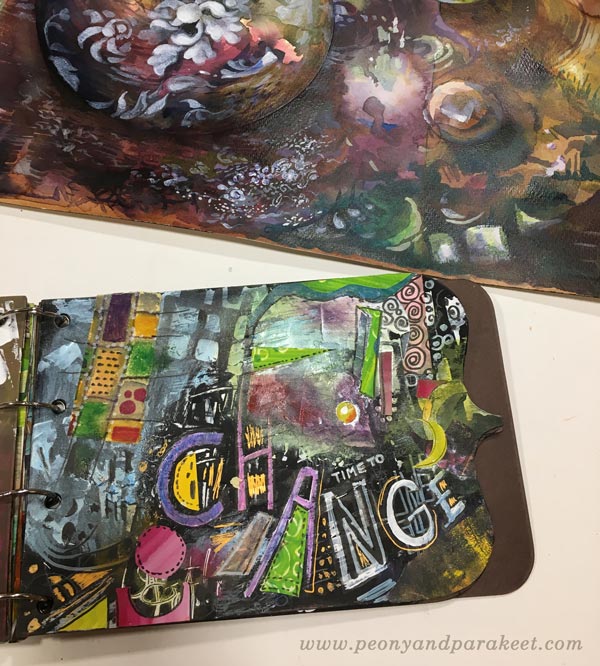
Then I realized that the painting that I had created a year ago also looks quite similar. I sat by it holding the new piece, and it felt like the two come together.
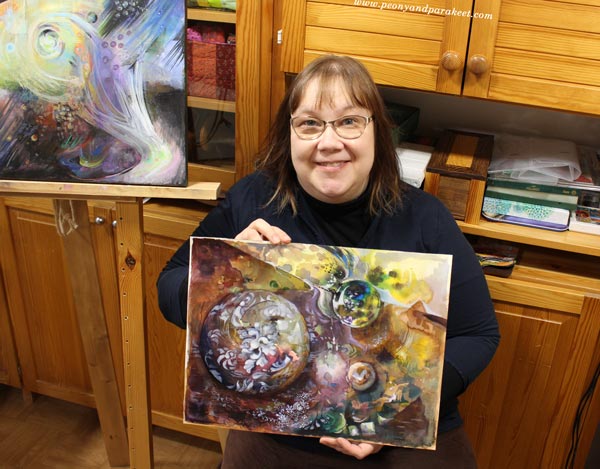
In art, the change is in the nuances. Many of your characteristics won’t change during the time. But how you express, invent and gain more self-knowledge will. Sometimes people say that they wish they would have started creating art sooner. I totally relate to that. I had a long break in creating when I was a young adult. But then, art is not just executing; it’s also about living. People who have more life’s experience than me, always make me humble. They have more to express, deeper insights to deliver. When I can help, inspire, and encourage with that, it makes my life meaningful as well.
Art Journaling and Mentoring
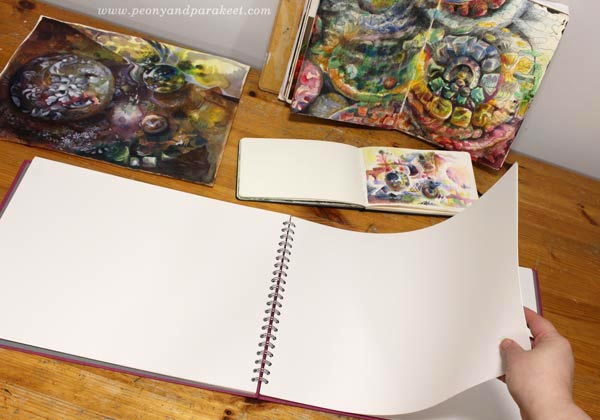
One thing that I don’t want to change is that I will keep on talking about art journaling. I believe in playing with ideas and not just creating big pieces. To me, a full sketchbook or art journal can be more of a treasure than a single canvas painting. Now when I have been painting bigger canvases, I also missed having a big sketchbook. So I purchased one that is twice the size than Dylusions Creative Journal that I usually use. It’s manufactured by a company called The Pink Pig from the UK.
Bloom and Fly – Stay Tuned!
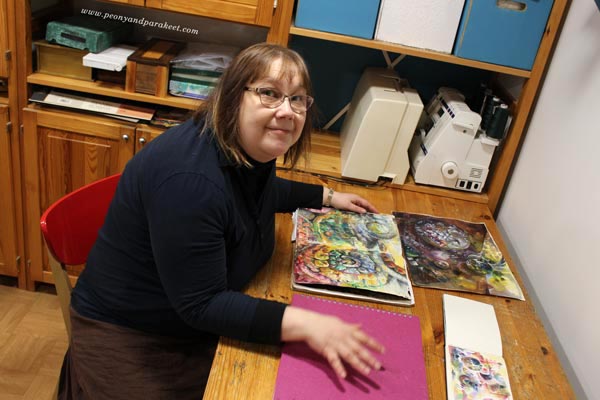
While browsing the art journals, I was planning for the upcoming spring season. Next year, I will run a new community called Bloom and Fly, and it’s for all who want to learn together with me. It will have a separate fee, but it will also include mentoring days, monthly live sessions and led discussions. You can share and work on any project there. So if you want support for creating from any of my self-study classes or any other art project that you desire to finish, join Bloom and Fly! The registration for the spring will open on Black Friday, Nov 24th. I will have a special discount for early birds so make sure that you won’t miss it!

Hopefully, you are as excited as I am! If you haven’t subscribed to my weekly emails yet, now is the time!
Painting a Series – How I Managed It!
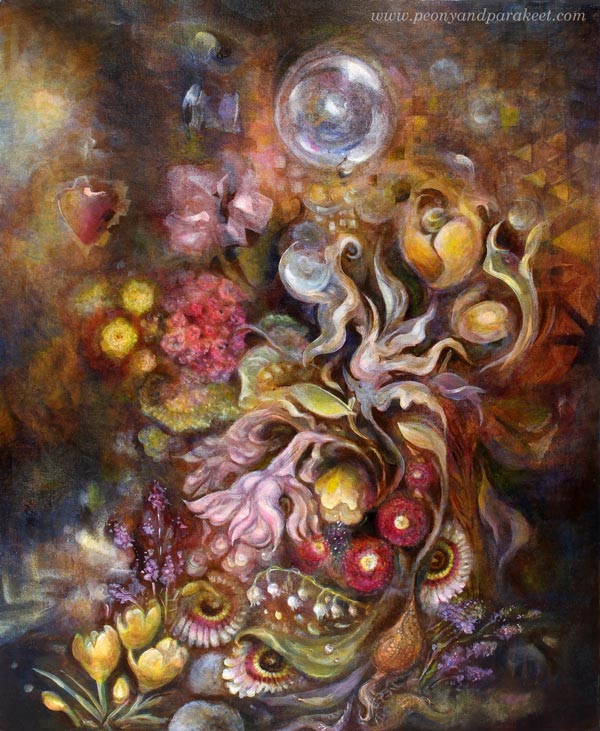
I have just finished a series of five flower paintings on canvas. Yesterday, when I was walking back and forth from my studio to the rest of the house, preparing for the photography and the varnishing, I felt both relieved and terrified. I was relieved because nine months of hard work was at the end. I felt terrified because I had run out of excuses for delaying the start of a new series.
Technique Came First, Themes Second
But let’s get back to early spring when I was painting the first of the five paintings. My goal was to master old masters’ painting technique in acrylics so that I could teach it. I had no idea of how many pieces it would require. Before teaching, I needed to understand “why” not just “how.” I also had to develop a logic that makes learning possible, variations that show the possibilities of the technique, and the systematic way of working to make everything as understandable and to the point as possible.

When I was painting Strawberry Madonna, it soon became clear to me that I was nowhere near to be teaching the technique. I needed to fix my strokes constantly. Even if the fixing doesn’t show in the finished painting, it became clear that I needed more practice. I couldn’t fuss around that way while teaching.
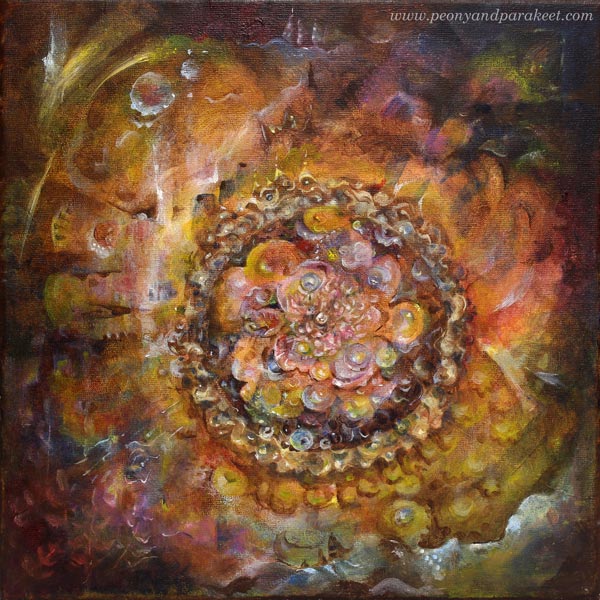
So I bought new canvases and kept on painting. I made experiments, art journal pages, and had several paintings in progress at the same time. I focused on painting what I wanted to include in the class as well: flowers and playing with historical styles. Crafts like crochet, decorative painting, jewelry, fabric, etc were also sources of inspiration. Most of the pieces took tens of hours from me to finish. The quickest is “Four Seasons” that I recorded for the class. With the final touches added after the recording, it took less than ten hours to paint. “Queen of Fantasy” took much longer. You can see me starting it in the free video, but I adjusted the painting many times after that.
Painting a Series – The Most Important Insight
The funny thing about all this is that I wasn’t intentionally painting a series. Working towards the goal of mastering and understanding the old masters’ technique, gave direction to my work. If I had thought about the series more intentionally, I would have probably freaked out! Now when I look back, the most important thing to me was that I expressed the power of flowers in all my paintings but thought about it differently in all the five paintings.
- For “Living Treasure” I got ideas from gardening.
- “Strawberry Madonna” connects flowers with fruits and their taste.
- “Queen of Fantasy” is about flowers representing romance.
- “Blooming Centuries” tells how flowers have always inspired painters, designers, and crafters.
- “Four Seasons” shows sisu, a Finnish word for resilience when you work against all the odds and still find the spirit to bloom and prosper.
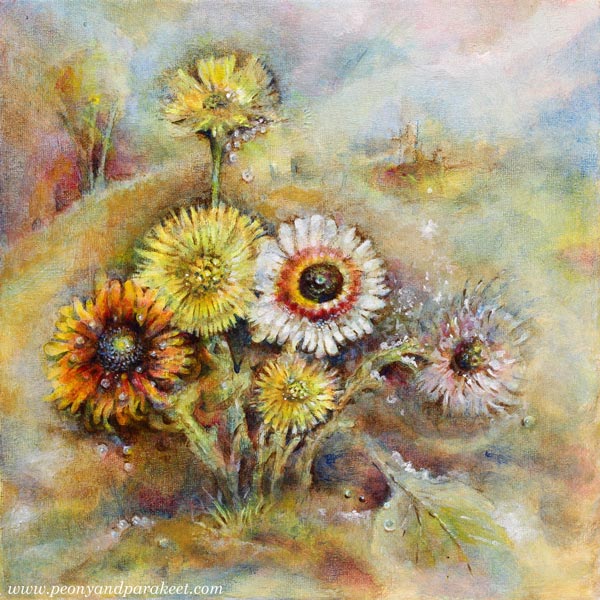
So I had a set of generic themes that were repeated in all the paintings, but different interpretations of them. That made them work as a series but so that they don’t look identical at all. Being very intentional about the series and prohibiting new ideas emerge while working can lead to a very boring result and in my case, it would probably make me quit because the lack of excitement and adventure that keeps me going.
I think this insight could also be useful for those who seek for their style. Rather than painting the same thing and get bored by it, find bigger themes and use your creativity to approach them from different angles.
New Era – New Series
During the past couple of months, I have felt fear when thinking where I want to go with my art. I have contemplated that can I share my plans or just keep them hidden because it’s likely that I will fail. For quite some time, I have felt the need to paint abstract art that plays with textures and geometry. I think many of the paintings of this series already have some of that.
I have a funny name for the style of the new series. It is “kinetic-romantic abstract realism.” “Kinetic” means that I want to include movement that is related to machines. “Romantic” means that I want to express through beauty and relationships. “Abstract Realism” refers to the idea of mimicking realistic surface materials for abstract shapes. Very odd, I know, and it terrifies me.
Creativity is a Living Treasure – Watch the Video!
Before the new beginning, it’s time to celebrate the finished series. I have made a short video of the five pieces and the thoughts that came to my mind when painting them. Hopefully, you’ll enjoy the video!
My Painting on Your Wall?
These paintings are also for sale!- Buy them directly from me here!
Three Artist Types and Why You Should Become All of Them!
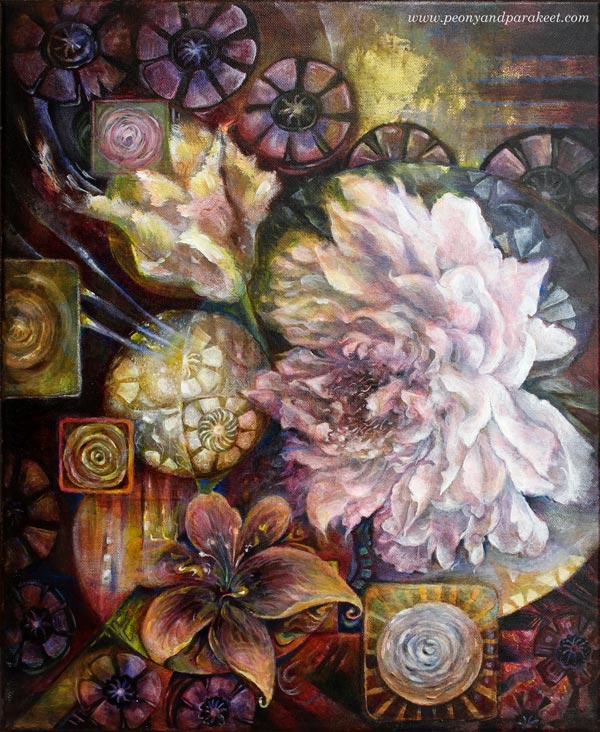
Here’s my latest acrylic painting “Blooming Centuries”. With this piece, I show you how stepping into roles of three different types of artists can grow your skills.
Tight Focus – Don’t Believe it!
The conventional way to grow artistic skills is to choose your media, mindset, and style and stick with the choice. To me, this kind of tight focus has never worked. It feels boring and too straight-forward to work in practice. It forgets the fact that creativity comes with limited persistence but with unlimited imagination.
For example, when I have a heavy heart and want to get quickly into the core of it, I don’t want to stick with the technique that is more labor-oriented. On the other hand, when I want to think and adjust, quick and simple is not what makes the most of the contemplation. Sometimes my imagination wants to be playful, other times it wants to be timeless and deep. When the moment and the mood can define the supplies and techniques, I not only enjoy more but also surprisingly, learn more!
3 Moods – 3 Artist Types
In my upcoming workshop, I will expand your toolbox for creating art in various moods, rather than trying to force everything under one media and one way of working. I have defined three types of artists and picked the techniques accordingly.

The most interesting column in the table above is “Emotion” because it brings up the benefit of the mood. When you imagine being a designer, you aim for clarity. You get happiness out of clearing your thoughts and communicating the essence. When you step into the role of an intuitive watercolorist, your core desire is freedom of expression. What appears on paper, is exciting and your adventurous mind makes the most of it. As a Renaissance painter, you are searching for the peace of mind. By creating a layer after another, you gently caress your way away from busy life.
Now you might say: “But Paivi, I am nothing but an intuitive painter. I am all about quickly creating a beautiful mess.” But don’t let your successes take you on the wrong track. Think about your struggles and what you can learn from the other artists. For example, if your mess has become nothing but beautiful it’s often because the small portion of clarity that we all need has been missing. Or if your mess looks too flat, it’s because your work doesn’t follow the concepts of the three-dimensional world. Also, the time that it takes to create tens of pieces quickly could be used to creating one piece that rises to another level.
I believe that growing as an artist is about learning the best of the many approaches. It’s like getting ingredients for the soup and then making a personal recipe to fit the current mood and style.
3 Artist Types – 1 Painting!
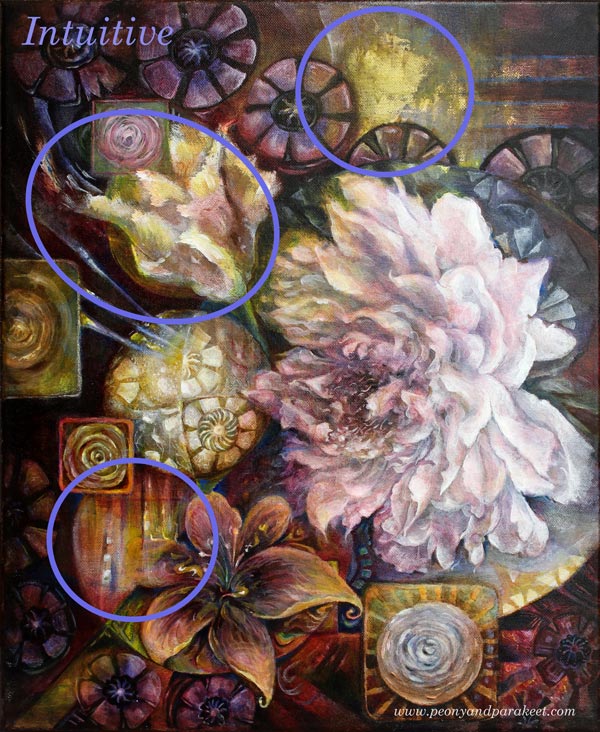
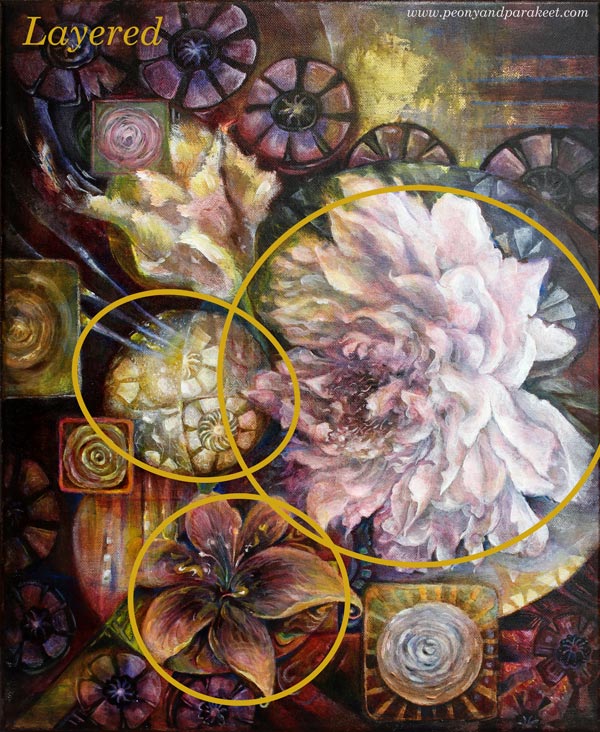
With “Blooming Centuries,” I wanted to express how flowers may be fleeting things, but in general, they have a strong position in the history of art and design. Flowers have inspired artists and designers through past eras, and they still inspire us to create no matter what mood we have. This painting is based on playing with different artist types from a designer to a Renaissance painter.
Designer: Some elements of the painting are more related to crafts and design than to the fine art. They are built from geometric shapes and are quite minimalistic.
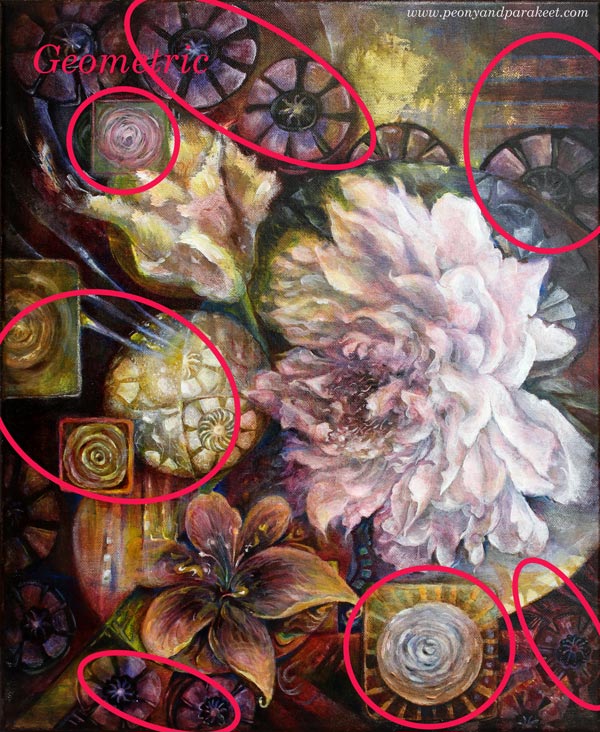
Intuitive artist: There are also elements that have been born freely and intuitively.
Renaissance painter: Some of the elements have a lot of layers and are more 3-dimensional than others.
Another Example – Combining Intuitive with Art Nouveau
Let’s imagine that you love Art Nouveau. You adore Alphonse Mucha’s work and everything from the beginning of the 20th century. You want your style to include a lot of Art Nouveau but in a refreshing way. So you might think you need to focus on developing your drawing skills only. You draw and draw, and you get closer and closer to Alphonse but the new twist that you want to give to your drawings, “your personal style,” is missing.
But if you start learning from Intuitive Watercolorist and Renaissance Painter, your Art Nouveau designs will take a new turn. By adding more transparent layers, you can express liveliness so that it still looks graceful. By finding ways to manipulate water, you get free-flowing shapes more effortlessly. Your art no longer is a copy of what someone else has created, but it takes a direction of its own. You begin to appreciate all kinds of art because you want to add more spices to your recipe. Your passion for art gets stronger, and the joy you get from it grows bigger. When you struggle, you see a wider range of solutions than before.
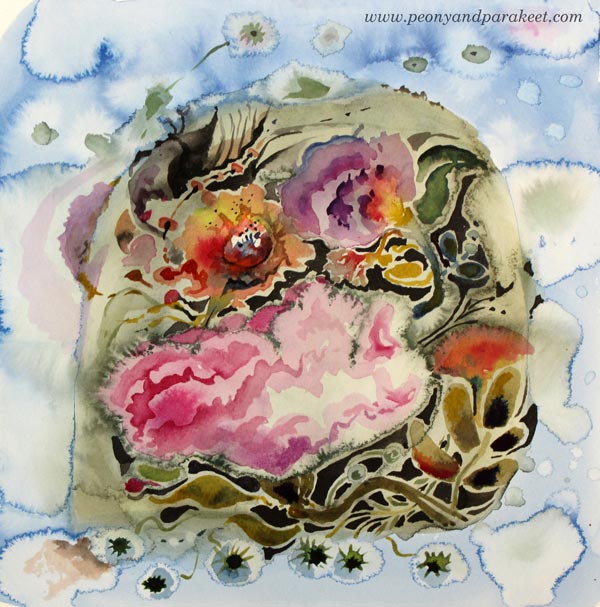
So, every Designer or Illustrator has something to learn from a Renaissance painter or an Intuitive Watercolorist. And the same applies to all artist types.
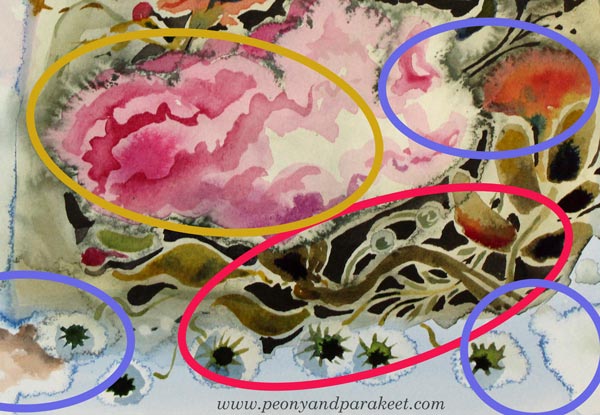
Get into the Minds of the Three Artist Types!
In my online workshop Floral Fantasies in Three Styles, we will dive deeper into the three artist types. It will expand your impression of style and how to construct one. It’s the class you don’t want to miss if you love flowers and want to become an imagination-driven artist! Reserve Your Spot Now!
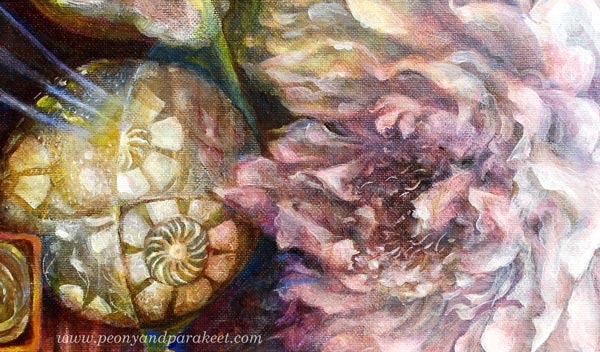
Floral Fantasies in Three Styles: Reserve Your Spot Now!
Mixed Media Painting Idea – Revisiting Your Old Style
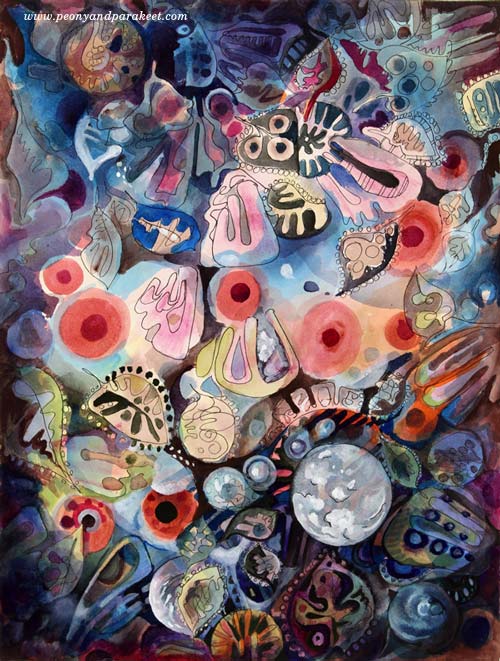
Between 2010-2014 I was enthusiastic about decorative art. I called myself as a “decorative artist” and saw myself more as a designer than as an artist who focuses on expression. My upcoming class Collageland (thank you, everyone, for the feedback you gave in the last blog post!), is a retrospective to that period in my life. While editing the videos, I have been pondering about what inspired me back then and how it’s different from what motivates me now.
Some themes and styles often feel too familiar to me. They don’t seem to challenge me anymore, so I have moved on. But now it hit me how harsh it sounds and how unnecessarily harsh it sometimes also is. So when creating the pieces shown in this blog post, I gave myself permission to take it easy and get decorative. I also became curious about comparing my past decorative work with the pieces that I would produce today.
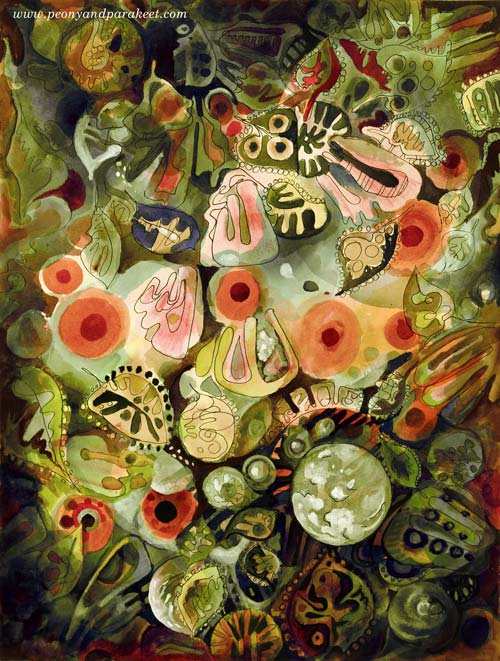
My comfort zone is getting inspired by design and translating that inspiration into art. So I made a mixed media painting that is inspired by the world of fashion, jewelry, lace, Renaissance murals, and botanical art. I call it “Lost and Found”. To embrace a designer’s approach to art, I also made two different color versions by processing the photo of the original artwork digitally in Photoshop.
Here’s Marine:

And here’s Botanical:
I don’t have many phase photos because I wanted to relax with that too but this is what I drew on my planner the previous day:

These quick sketches are the core of my creative process.
Another Painting with the Same Idea
I also made another design-inspired painting. The idea came from the ceramic art of the 1960s.
The photo below shows how the piece looked like before adding the decorative layers. Glowing watercolors remind me of the glazing used in ceramics. When this happens, I feel like I am a ceramic artist, playing with colors.
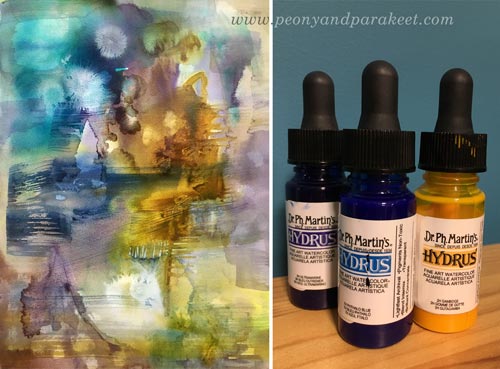
A student of mine kindly donated Dr. Ph. Martin’s Hydrus watercolors some time ago. First, I liked them, now I adore them. They are intensive and easy to use, and I especially love the coverage of white. I used Hydrus watercolors for “Lost and Found” too.
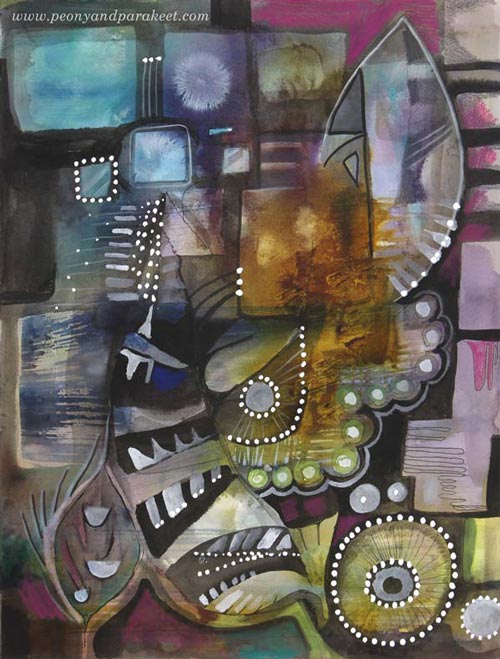
Here’s the finished painting called “Retro Living”. It is also a mixed media piece. I used colored pencils, PITT Artist Pens, and a correction pen for the last layers. I love these muted colors, so typical for the Finnish ceramics from the 60s. But then, I thought they might be too gloomy for many, so I made another version digitally that reminds me of furniture from that era:
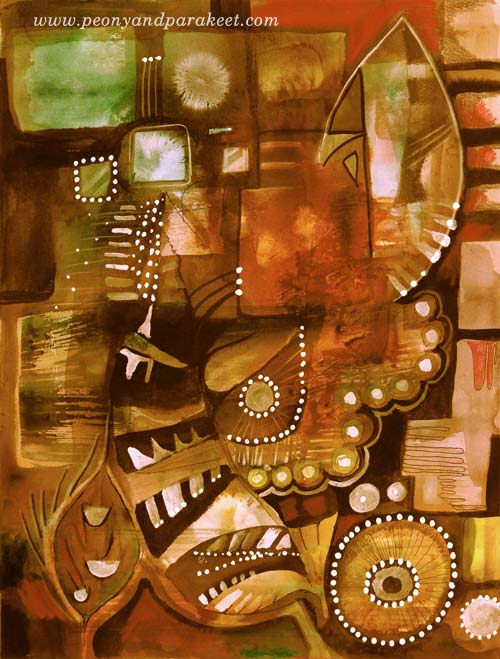
Comparison
See my new gallery showing decorative art and designs from 2011 to this day. When I look at the newly-created pieces as a part of that collection, it looks to me like I have traveled a long journey in art. And I have – I just never thought that it would show in this decorative style as well. It makes me want to explore more of this and also, see exciting challenges in this direction too.
My challenge to you: Pick an old piece and make a new one using the similar techniques and style!
Let me be your mentor in art: Subscribe to my weekly emails!