
Lessons from Palazzo Pitti – Don’t Apologize for Your Art!
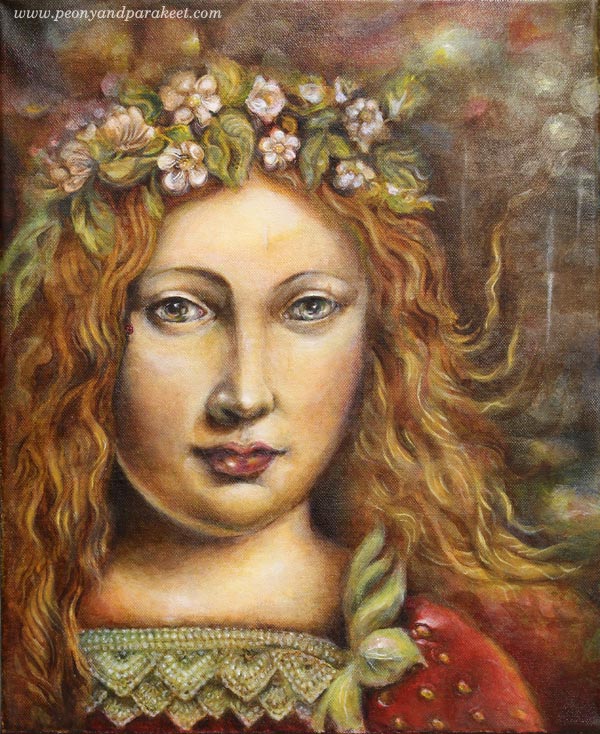
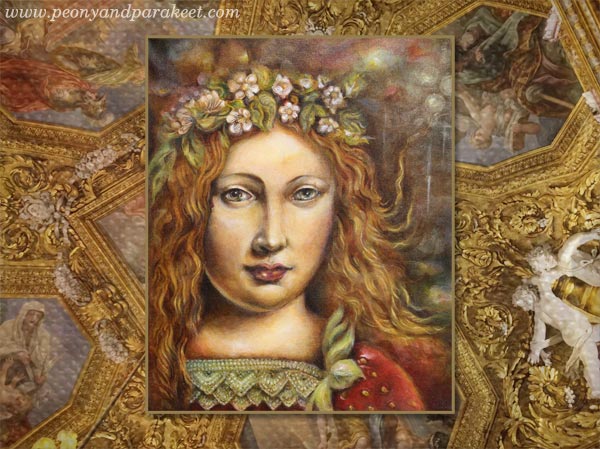
Here’s my latest acrylic painting called “Strawberry Madonna.” I started it in February, and it’s my first painting using old masters’ techniques with acrylic paints. It’s much more difficult to use acrylics instead of oil paints, but I managed to find few tips and tricks that helped. But this blog post is not so much about the techniques. I want to write about being unapologetic when creating art. It feels like a never-ending journey to me, and I hope this blog post will resonate with you too.
Palazzo Pitti and Traveling to Florence, Italy
Last week, I traveled to Italy with my husband to see Renessaince art. We flew to Rome, then took a train to Florence. After spending a couple of days in Florence, we got back to Rome, spend a couple of nights there, and then flew back home. We visited so many museums that it was a bit exhausting at times. I took over 700 photos, and there were so many highlights in our journey that I decided not to try to fit it all in this blog post, but focus on the glory of Palazzo Pitti, an art museum located in Florence, and save other experiences for later.
Namely, seeing Palazzo Pitti on the first evening in Florence, reminded me of how needless it is to tone things down and how we can be as glorious as possible when creating art and when using our imagination.
One Chandelier is Never Enough!
When watching the chandeliers of Palazzo Pitti, my first thought was: “Isn’t one enough?”
Then I realized that on my artistic journey, I have often thought like that: “it should be enough.”
- Creativity: “I should be enough to have one idea for one image.”
- Time: “It should be enough to have two hours for this piece.”
- Skills: “It should be enough to just have a little bit of fun with it.”
- Potential: “It should be enough to stick with what I know now.”
- Imagination: “It should be enough to replicate the reality.”
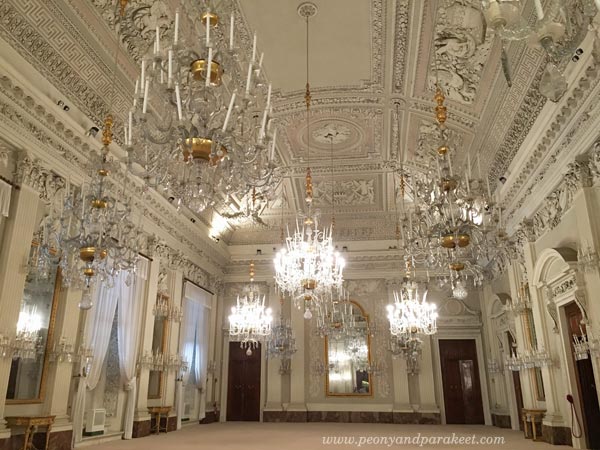
But one idea, one short session, one technique, one reality, is never enough if you want to continue the journey. When you have passed the first steps in creating, the room gets bigger. Making art frustrates you. It feels like your chandelier is broken. But instead of continuously changing the chandelier, you need more chandeliers to lighten your way.
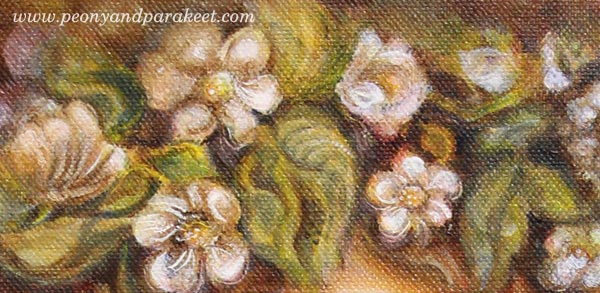
When you begin creating, it’s just fun to change the chandelier: the theme, the technique, the idea. But when you have been creating for a while, it becomes overwhelming. The nature of creativity is never to focus on one small thing at the time. One chandelier is never enough for the curious mind. You need to learn to:
- combine your many ideas
- take more sessions for one piece
- find the blind spots in skills and knowledge
- and the most important of all: increase your imagination so that it takes you above the everyday life.
When you have many chandeliers, you see it clearer why you create art and where you want to go with it. Don’t apologize for your lacking focus but embrace all aspects of your creativity!
Ask What Your Heart Says!
When I saw “The Horrors of War” by Peter Paul Rubens in Palazzo Pitti, it caused an immediate emotional reaction. I was in tears before I was able to analyze the painting. Even if the theme was very dramatic, violent even, the movement and the wind was so beautifully painted. To me, it expressed the beauty of change, the theme that has always been close to my heart.
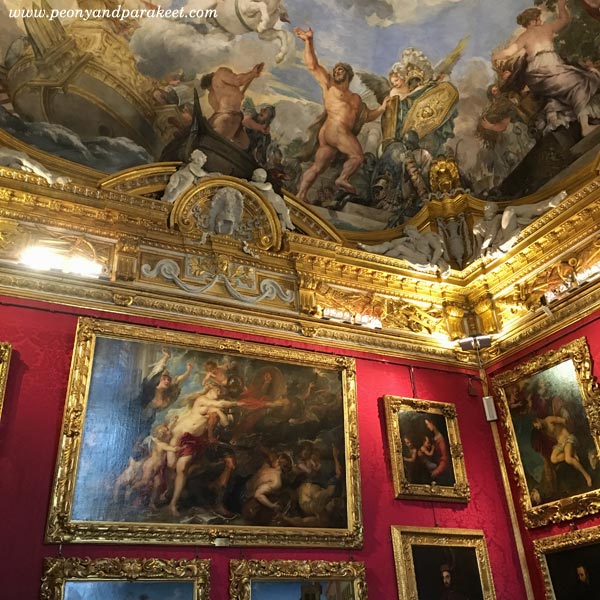
When I was a teenager, I often drew scenes or portraits where the wind was present. It just looked fun and dynamic. But the more I have been creating, the more I have realized that I love to express movement, change, and transformation in one way or another, and the wind is often a symbol of that in my work. Thinking about big changes is one of those chandeliers that always lightens my inspiration.
I believe in digging deeper behind the first reactions. If art makes you emotional, there’s something important that’s behind it. It’s often contradictory, something so different that you have a hard time in believing it.
It’s kind of funny how much time I spend at home, doing the daily routines, and how my mind is in grand transformations and explorations. But to find what’s your true passion, the mundane life and your everyday wishes don’t give answers to that. You need to connect with your imagination.
Don’t apologize for your circumstances but use your imagination to experience the freedom!
Decorating is Not an Enemy of Expression!
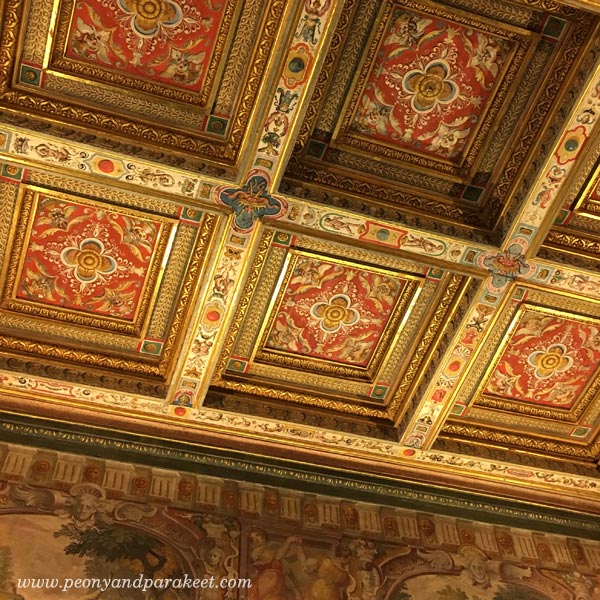
One thing that I found very delightful in Palazzo Pitti was how the number of decorative designs. I have always felt drawn to decorative painting style and even called myself as a “decorative artist.” It was my way of saying that I don’t feel like being very expressive. But nowadays I think that it’s possible to combine both decorative and expressive together, and there’s no need to limit the inspiration. Namely, who couldn’t be inspired by this ceiling?
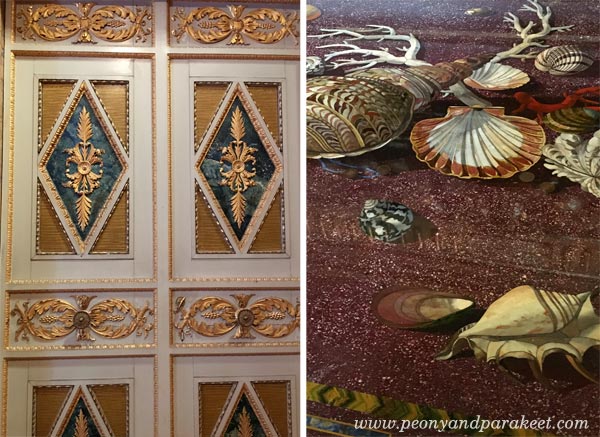
And look at the door and the tabletop! The most amazing thing is that the table top is made from stoneware!
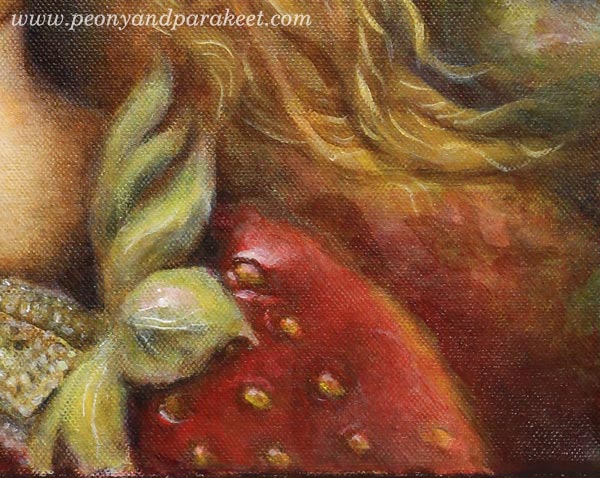
We may not be the similar masters as those decorative artists, but the experience in crafts can still be a treasure chest of ideas. For example, in my Strawberry Madonna, I added a crocheted lace on her dress and truly enjoyed painting it!
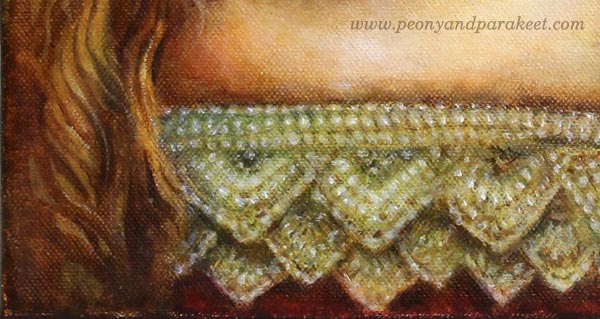
Don’t apologize for your background in crafts (or in anything) but see that as a part of your artistic journey!
About Confidence and Belonging
When walking in the aisles of Palazzo Pitti, I felt sweaty and modestly dressed. The Medici family would not have invited me to their party, for sure. I thought about my art too and how modest it felt after seeing the big masterpieces.

But it’s not only my art but I also often struggle when writing these blog posts. I don’t want to just write about my thoughts. I want to write so that you would continue creating and evolving with me. I want to offer classes that make you draw the connecting lines between your brain and your heart.
So that the way you speak about your art, would include more joy and confidence.
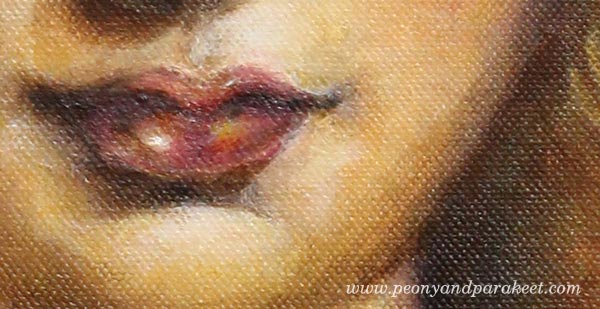
So that the way you see art, would be filled with happy surprises and inspiration.
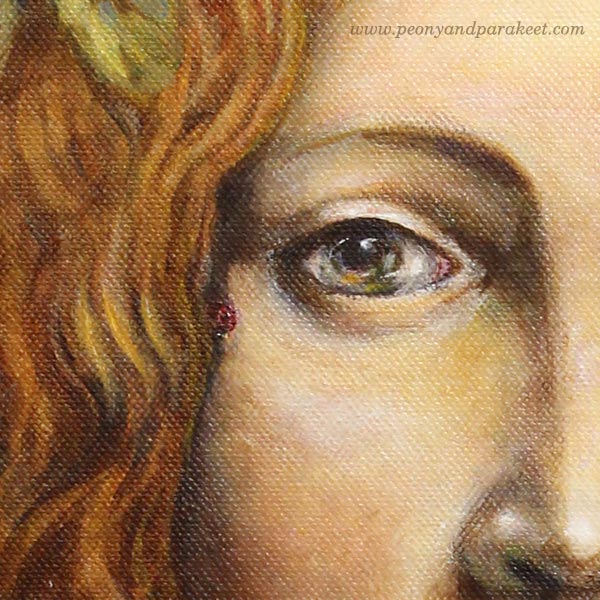
So that the way you explore the many styles, would make you see higher to your passion.
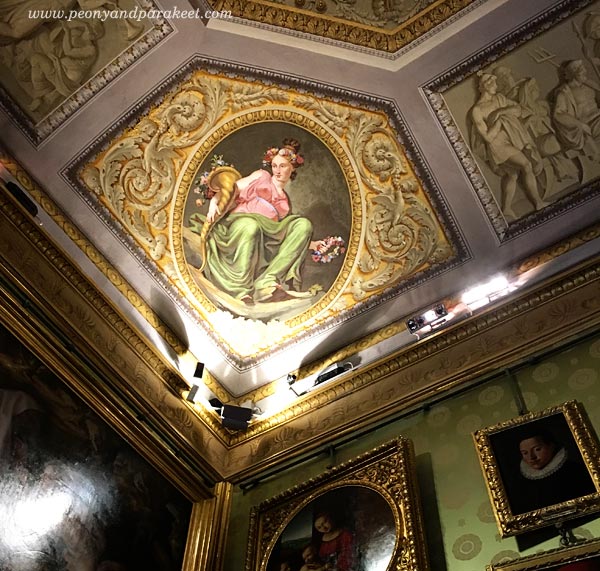
So that the ideas that you get, would get full wings because you value them.
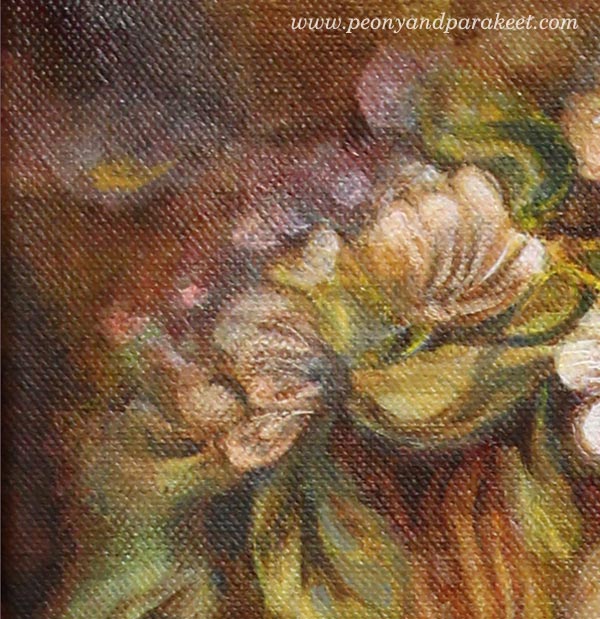
Here’s what we can learn from the treasures of Palazzo Pitti:
There’s no reason to be apologetic when creating and sharing your art. There’s no reason to underestimate the impact that art can have on your life and others as well.
Art is Timeless but Our Time to Create It is Limited
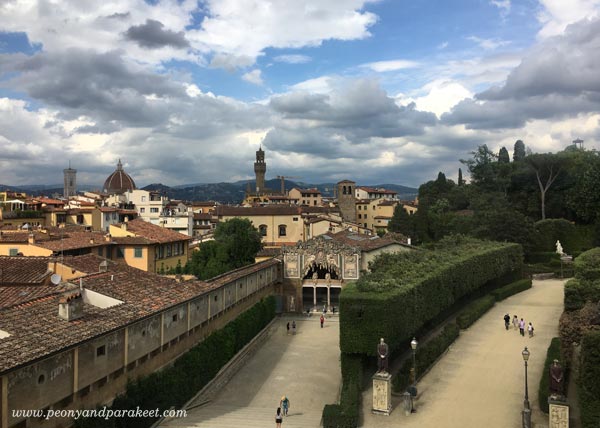
The final image is a view from Palazzo Pitti. It is a reminder of how art can stand time but how our time to create is limited.
If your heart wants to create in a new way, don’t postpone it. If you are struggling, don’t delay solving the problem. I hope I will see you in my upcoming coaching program The Exploring Artist, where your art and your artistic identity is in focus. It’s about finding ways and confidence to create unapologetic art as well as building belongingness with the like-minded people. >> Sign up here!
Helene Schjerfbeck – Step-by-Step Formula for Her Style

In this blog post, I will show you how to create a stylish portrait and learn from a Finnish artist Helene Schjerfbeck (1862-1946).
The Famous Helene Schjerfbeck
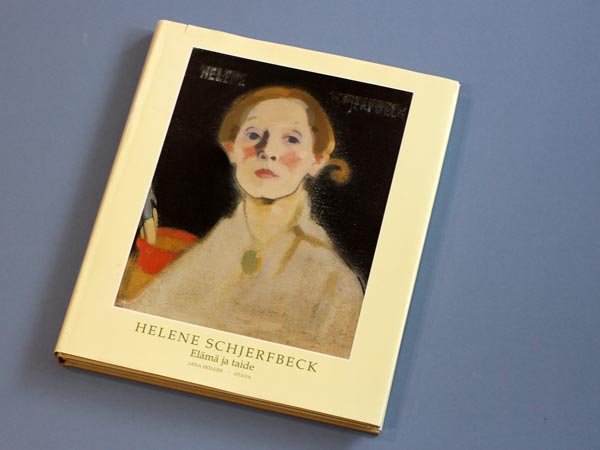
Helene Scherfbeck had an impressionistic and fairly detailed style. But during the years, she became a true expressionist, a master of expressing the most essential through simplifying. She painted a lot of portraits, and many of them have become very valuable. The Red Haired Girl II was sold for 1.5 million euros at Sotheby’s last year. One of my aunts admired Helene Schjerfbeck, and many years ago, she bought me a book about her paintings. The book is called “Helene Scherfbeck – Elämä ja taide” (Life and Art), and it’s written by Lena Holger. To be honest, I wasn’t a big fan of the style and didn’t even browse the book for years. But the more I have learned about art, the more enthusiastic I have become to study various styles. As I love to figure out a formula behind a style, it started to feel tempting to solve Helene’s secrets too.
Independent Visions – Helene Schjerfbeck in New York!
There’s also another reason why I am writing this. Currently, there’s a rare opportunity to see Finnish female masters in New York, USA. The Ateneum Art Museum, which is part of the Finnish National Gallery, displays an excellent exhibition at Scandinavia House from 29 April to 3 October 2017. The exhibition presents four early 20th-century Finnish artists from the Ateneum collection: Helene Schjerfbeck, Sigrid Schauman, Ellen Thesleff and Elga Sesemann. If you visit New York this summer, do go and see it, I promise you won’t be disappointed!
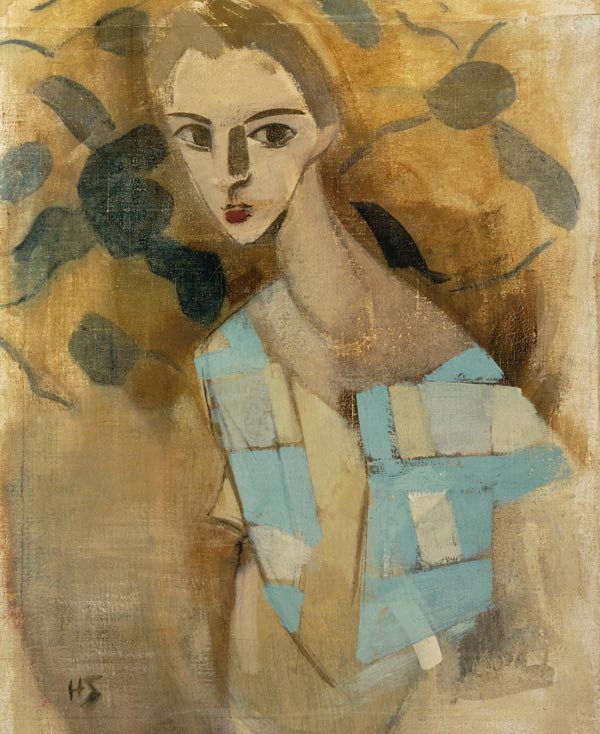
Here are a couple of Helene Scherfbeck’s paintings that you will see there.

I find the abstract nature of Helene’s style especially fascinating. The way she simplifies the spots where the light hits or where a shadow is formed is like she is building an abstract composition instead of painting a face.
Furthermore, the girl below is wearing a shawl that is like an abstract painting!
Mixing Helene Scherfbeck’s Style with My Personal Approach
One primary factor in building a style is the shape of the elements. I for one love organic elements and flowing form. Simple rectangles are not as appealing to me as more complicated and diverse shapes. However, I wanted to add Helene’s twist to a couple of watercolor paintings. As Helene Scherfbeck also painted still-lifes, I decided to paint a woman with a flower or two. First, I made a tiny painting and played with layers to create angular shapes. Then I painted a bigger watercolor painting with familiar flowing shapes but using the insights that I had got by painting the first one.

After these two paintings, I was ready to record a simple formula for achieving Helene Scherfbeck’s style.
The Formula for The Modern Woman – Step by Step!
During this drawing process, improvise, but also check that your drawing is not symmetric. It makes the drawing dynamic and reduces stiffness.
1) Draw a couple of arcs to create a face. Then add rectangles and triangles for hair. It is a fun and easy way to add hair without focusing on the shape of the head.
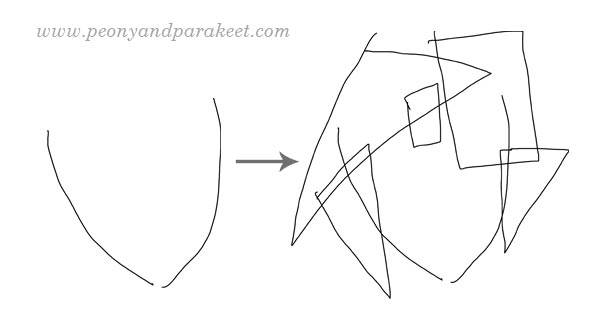
2) Add a neck and shoulders by drawing a rectangle and a couple of triangles that point to different directions. Then draw eyes, mouth, and other facial features. Use as many geometric shapes and simple lines as you can. After facial features, turn the work upside down and complement the drawing with geometric shapes so that it’s more like a balanced, asymmetric abstract painting than a portrait of a woman.

3) Soften the shape of the hair, the clothing, and some of the facial features. Then color the face, neck, and hair. Helene Scherfbeck often used grayish colors for the skin and a more striking color for the hair.
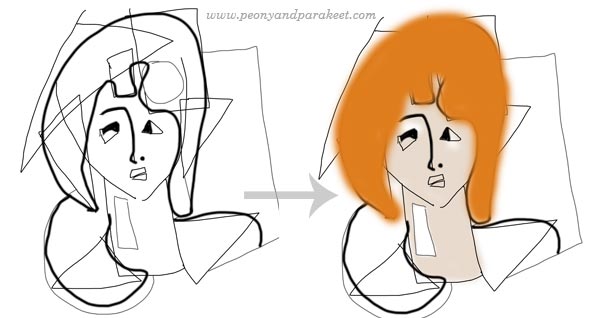
4) Add light and shadows on the face. Use mostly simple geometric elements. Then turn the work upside down and finish the abstract composition by using color to balance the painting. Remember to maintain the asymmetry!
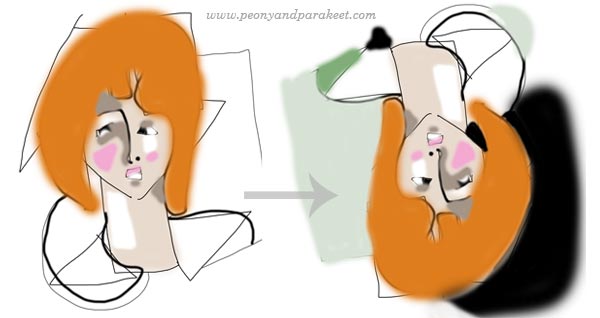
5) Remove some sketch lines and add more finishing details if needed. If you used long lines, make some of them shorter so that your drawing is not so stiff.
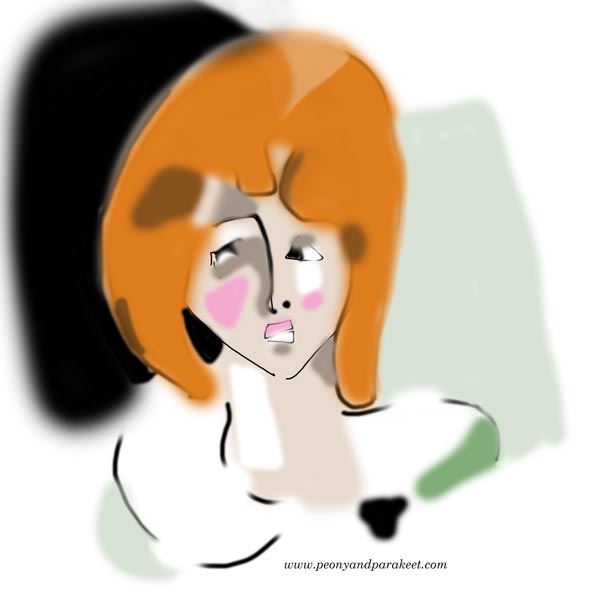
Helene Scherfbeck’s Style – The Combination of Simplicity and Softness
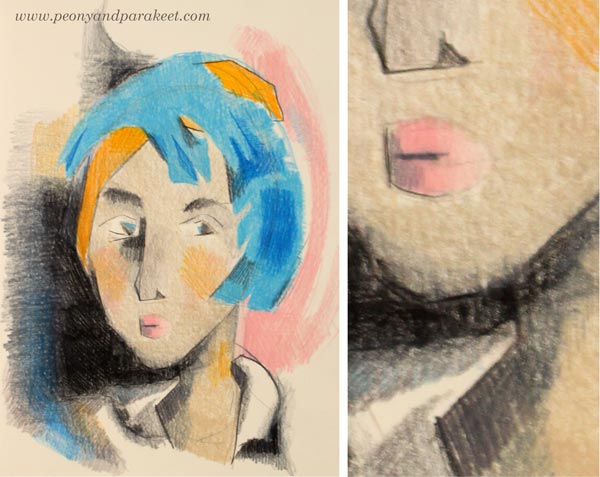
Even if Helene Scherfbeck’s style is very graphic, she also embraced uneven edges and soft color changes. This softness combined with distinct, even clumsy-looking geometric elements is the essence of her style.
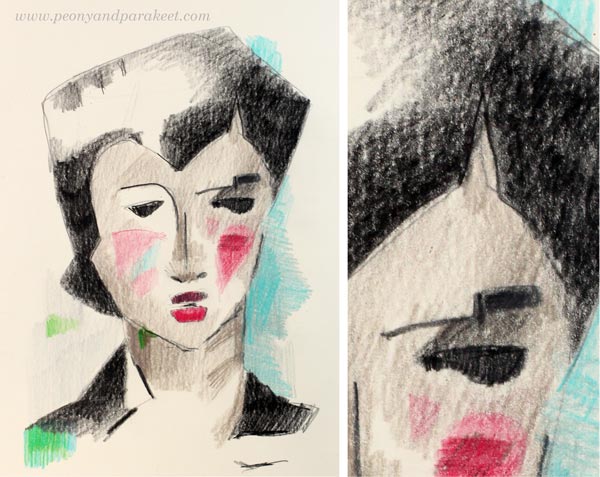
She also uses strong lines and bold colors to draw the viewer’s attention to the selected details. However, she does that very sparingly like there would be a limited storage of lines and pigments.
Find The Passion Behind Your Many Styles
I often find it distracting when people talk about their personal style like it would be the final destination for their artistic journey. They say tat once they have found their style, it would be like coming home and they would never need to go back to explore. I think it can be a harmful mindset. It leads to thinking that artists could be divided into three categories: a) those who search their style, b) those who stick with their style, and c) those who are afraid of going deeper because they don’t want to stop playing. That kind of controversy is not good at all! Going deeper allows, not prohibits, playing! Creative people are meant to travel spiritually!
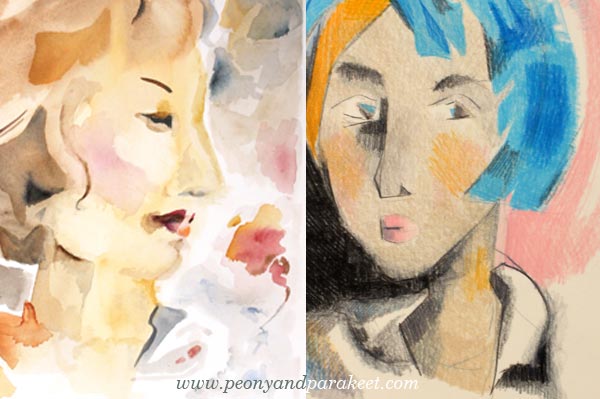
Instead of searching for your perfect style, your final destination, connect with your passion! Your passion can be like a base camp for your explorations, energizing you to take up new challenges.
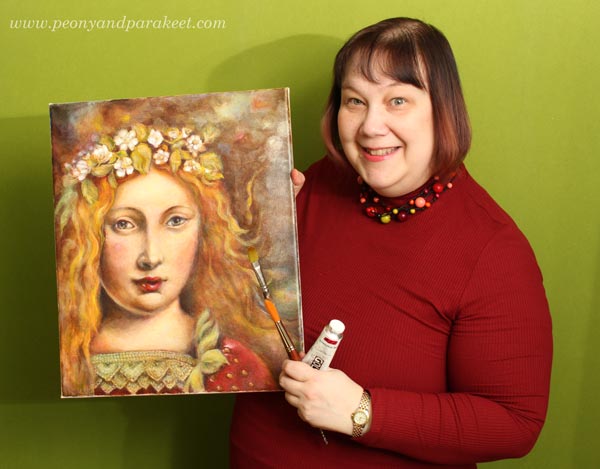
Sign up for The Exploring Artist to discover the passion behind your art
and to become more confident with the big word “artist”!
Finding Your Purpose in Art – Remember that You Never Create Just for Yourself!
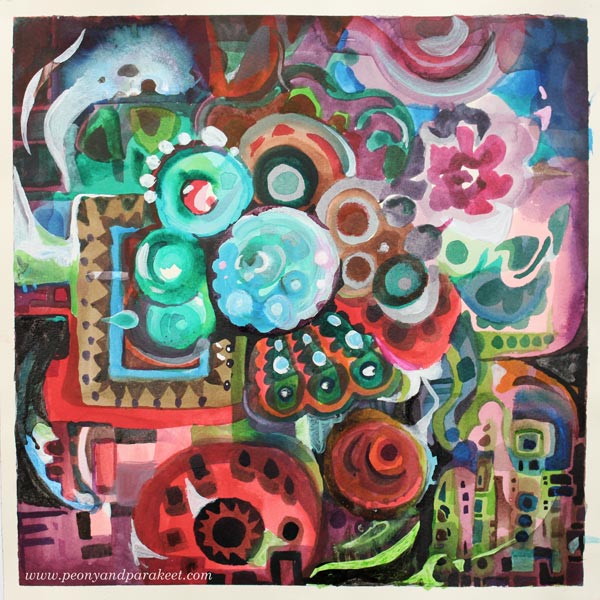
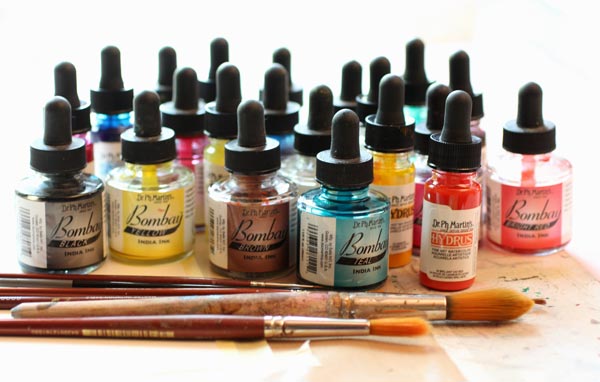
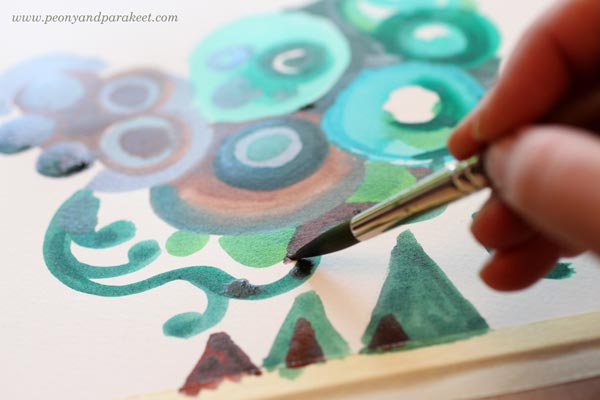
Here’s my latest small mixed media painting called “A Day in The Garden.” I used Dr. Ph. Martin’s Hydrus Fine Art Watercolors and Dr. Ph. Martin’s Bombay India Inks for making it. Like the title says, the inspiration for the painting came from the time spent in the garden.
Garden Inspiration – For the Beauty of Tulips

Even if the spring is about two weeks behind this year in Finland, we had a lovely weather last Sunday. The tulips were blooming, and I decided to go out and do some weeding to make them stand out.
As I was working in the sun, I soon warmed up. When putting away my cotton cardigan, I noticed a little red robin watching me. He sat in the bushes but had a curious look on his face. As I often talk to my budgies, I couldn’t help myself telling him how fine looking little bird he was. He clearly enjoyed my voice because he flew closer. He must have been a young bird as it didn’t take long before he was so close that I could almost touch him!
Garden Inspiration – For the Nourishment of A Red Robin
As the little bird grabbed an insect in his beak, I realized why he was so interested in me. Working the soil made it easier for him to find food. In the first place, I had thought about having some me-time in the garden and making room for beauty, but then unexpectedly I had got an audience, a client even! It caused me to think how similar it is with art. In the beginning, the practice can be very self-serving, but art never lives in a vacuum. Even if we would hide our pieces, art always has an impact on its surroundings. If not directly, then through our actions.
Purpose Needs People
Our soul-searching through art making can start similarly as the day in the garden, with an intention to spend some time with beauty. But as we progress, we begin to yearn for a deeper meaning. I believe that this purpose is related to people. Even just thinking about sharing art with other people brings in a wider perspective, a bigger vision, and more ways to use the imagination. No matter whether you ever share, sell, blog or show your pieces to anyone, you can still work with the themes like opening up, finding words that boost your art-making process, and imagining the people you want to connect with through your art.
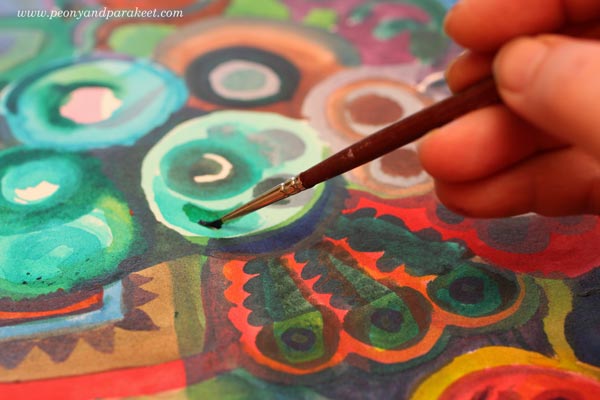
If we focus on style issues only, we will never see the whole ecosystem. We are like gardeners who sweat for their tulips but miss the impact on their environment.
Ideas Change but the Passion Stays the Same
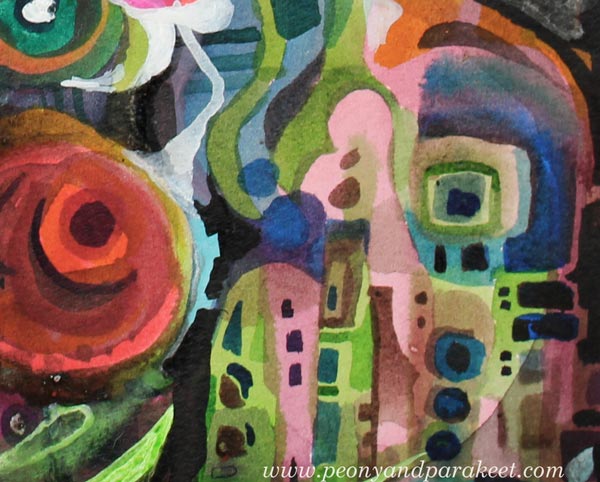
In a coaching program The Exploring Artist, I talk about finding “Your People.” There may be only one red robin in the beginning, but recognizing that they do exist is inspiring. Imagining what you can be for them is a big thing when you want to find a passion and a direction for your art making.
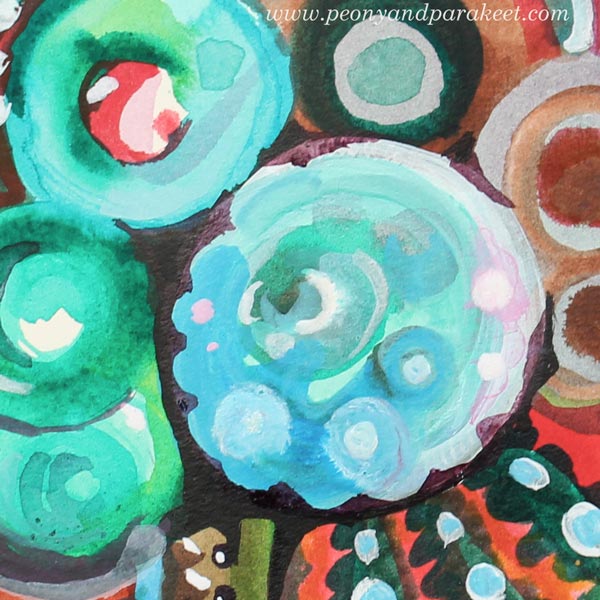
Namely, your targets of interest can and should change all the time. But your passion stays the same for a much longer period. You don’t have to create similar pieces again and again. You can freely explore the world of art and imagination. Your red robins will follow you because they know that you’ll always find something that benefits them too.
An American singer-songwriter Conor Oberst has said:
“Art is essentially communication. It doesn’t exist in a vacuum. That’s why people make art, so other people can relate to it.”
Sign up for The Exploring Artist to discover the passion behind your art
and to become more confident with the big word “artist”!
Want to Find Your Art Style? Need to Focus?

This blog post is dedicated to you who have been creating art for some time, and want to find your art style and a clearer focus. I have a bit different take on these issues than what you would probably expect. I think that forcing your creativity is not the way to go. Instead of making yourself to focus on one idea, I suggest that you learn to integrate your many ideas. And instead of trying to find your perfect art style, start building your artistic identity by doing some soul searching on a deeper level!
Finding Focus and Your Art Style – Watch the video!
I talk about focus and art style while creating the gouache painting. Watch the video below!
Sign up for The Exploring Artist to discover the passion behind your art
and to become more confident with the big word “artist”!
See the full program description for The Exploring Artist and sign up now!
When you sign up before June, you will get an early bird discount!