
Why I Paint White Flowers – How Your Artistic Voice is Influenced by Others
There’s a lot of talk about finding your artistic voice, but very little about how other people affect it. So this week, I share a story about my mother and her influence on my art.
Painting the Same Thing Again and Again
A couple of days ago, I was on a morning walk near my home in Southern Finland. The air was fresh as well as the view, dominated by the blue sky and white clouds. My beagles’ busy noses and a glimmering brook followed a sown field that had already started to green. Both birds and earphones fed entertaining listening. But all I could think of was my painting. Was it finished? Should I add more color to the flowers? What else did I need to adjust to make most of the tens of hours? I was alone with my dogs, but the inner critic kept me company: what kind of artist doesn’t even know the meaning of her images?
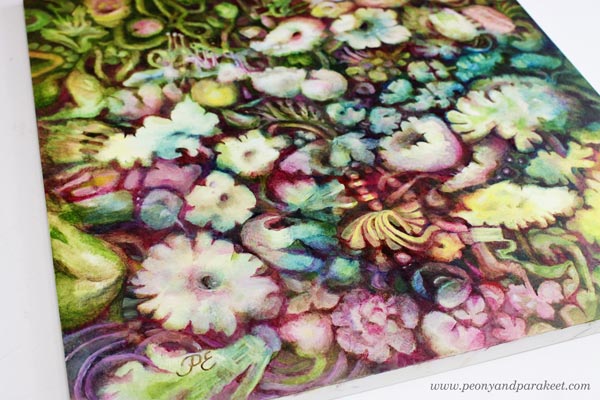
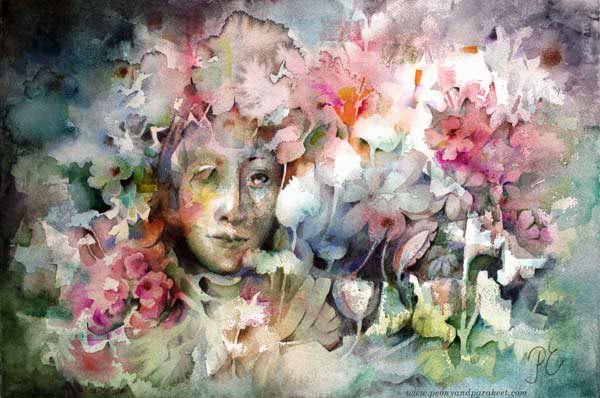
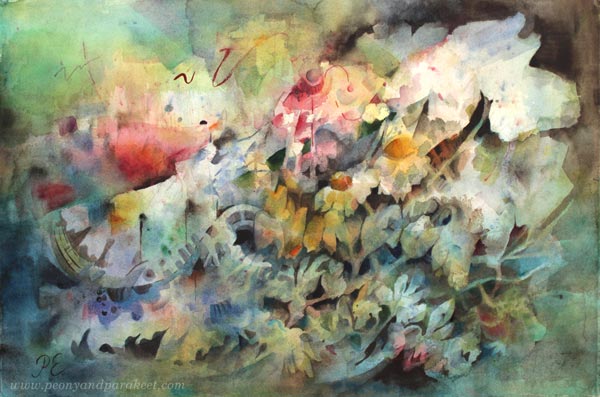
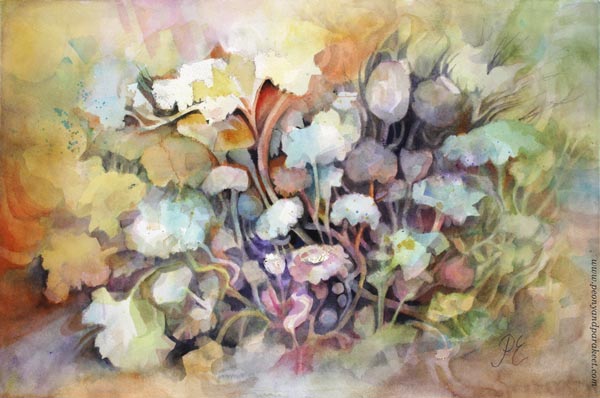
Yes, I am no artist at all. I paint white flowers, the easiest anyone can imagine, and the worst that my mother knew. “No white flowers,” she repeated to my father when her wedding anniversary came close, and he was about to buy a bouquet. “White flowers mean death.” And now, long after she has passed away, all I want to paint is white flowers.
Commenters are Your Art Coaches
Rebelling had no place in my upbringing during the 1970s and 1980s. As a teenager, I tried to respond to my mother’s corrections and criticism with an ignorant smile. Not for long. She didn’t hesitate to tell that it wasn’t a proper reaction. She was both a direct and shy person. Her presence was almost invisible in public gatherings, but at home, in her empire, she was the master of rights and wrongs. So when I showed drawings to her, she either approved or disapproved. She didn’t talk to me as directly as to my father – what to do or what not – but her words and facial expressions told everything.
My mother was like a strict gymnastic coach with high expectations, but she lacked one essential skill – the ability to show how the tricks could be done. She was as honest to herself as to anyone in this matter and put her energy for finding time, supplies, and art education for me. Time to create was the easiest part. My mother was a housewife. She had left her job at a young age right after she got married. She didn’t want her daughters to have the same destiny, so she did her best to keep me out of the kitchen and constantly reminded me how children would prohibit me from doing what I love.
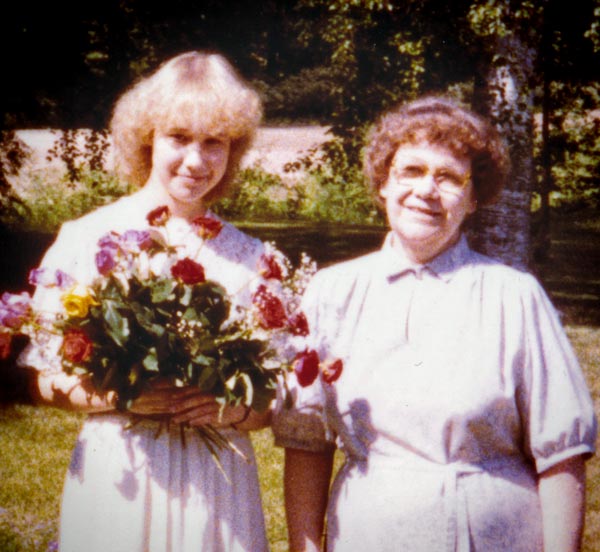
We lived in a small town near the Russian border, and our family wasn’t wealthy. The only income came from my father’s pension. In the evenings, my mother wrote all the expenses on a small black book. But purchasing pens and paper was mandatory. To her, it was the lowest level of civilization, more important than books. Our town had one bookshop that sold some supplies, but after we got more knowledge from local art groups and competitions, it became evident that I needed a better and broader selection. So every month, when my parents drove to a bigger town, I was often with them, selecting paper, paint boards, crayons, and acrylic paints from a real art supply store.
A Praised Piece Sticks into Your Mind
When I was some years over ten, in one spring morning, I decided to try out a new set of crayons. It was just a warm-up, a quick landscape without using any reference. “Look, mother, what do you think,” I said like so many times before. She looked at the image, tightened her lips, but unlike her, she didn’t say much. Later, when I opened a narrow kitchen closet to pick an iron, I stopped. The landscape was taped inside the wooden door. “I like to look at it,” she said after seeing my puzzled face.
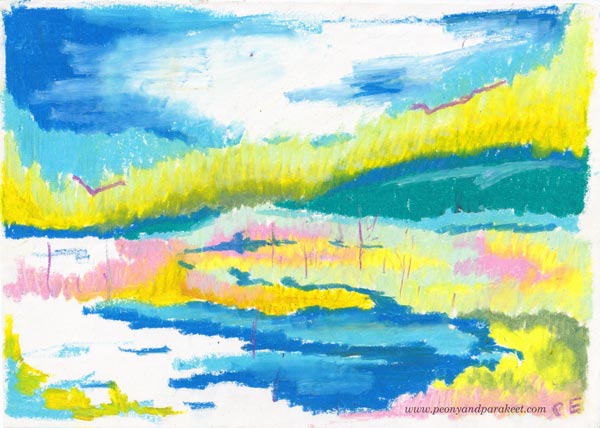
I was devastated. That little landscape didn’t deserve the place. So many times I had poured my heart out on paper and soon found out that it wasn’t to her liking. And now – I didn’t even color all the paper!
Finding the Why Behind Your Artistic Voice – Connecting the Appraisals and Repetitions
Fortunately, my mother was not the only one commenting on my art. My two big sisters had different opinions, and my teachers and friends as well. One piece didn’t satisfy them all, but there were always kind words from someone. It encouraged me to keep painting and drawing, as everyone, especially my mother, expected.
After my mother’s death, one stormy weekend, I traveled to the childhood home to pick things that I wanted to keep before we would sell it. The house was cold, but I knew it was the last time when I would see it like it used to be. Everything was clean and tidy. Performing tasks effectively with high quality had always fascinated my mother. “If I could choose what my profession was, it would be a researcher of work – if such a profession existed.”
When I got up the stairs to an attic, the sight would surprise anyone but me. The attic had always been nearly empty. In one corner, under a sloped sealing, my father had built a small closet for safe storage. I opened its little door, and there they were, neatly in a big cardboard box – my paintings and drawings. Not all, but a collection that my mother had curated over the years, the little crayon drawing included.
So a few days ago, when I was walking by the field and looking up in the sky, my mother came to me in the form of the freshly colored landscape. I now knew that my urge to paint white flowers hadn’t been an act against my mother, but a yearn for her acceptance that blank white blobs had once given to me. Now my question is: can I let go of them, or do I want to keep her in my art forever.
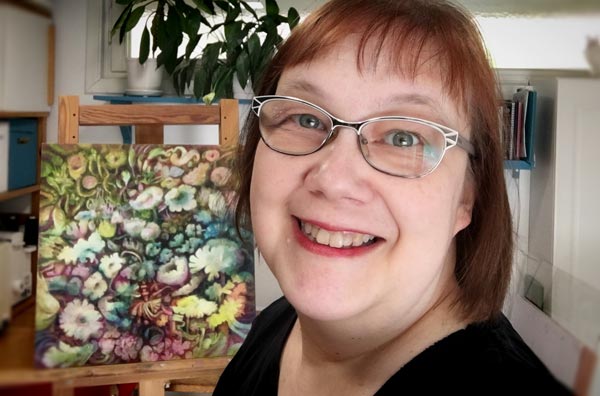
Who has influenced your art? Can you recognize how?
P.S. I also teach drawing and painting flowers in the class Floral Fantasies.
Expressing Hope by Painting Nature
These past weeks have been black. Social distancing, pandemic, the news … However, I want to share some things that have brought consolation, hoping that they do the same for you.
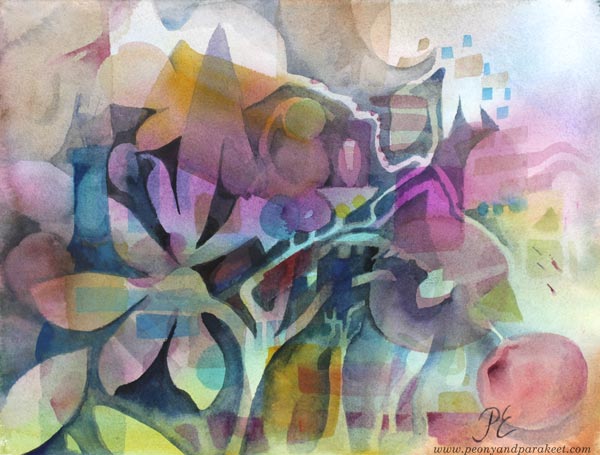
This first image is a watercolor painting created as an exercise for my newest class Magical Forest. It’s painted quickly and systematically, and it’s less romantic than many of my paintings, but I really like it. I put a lot of effort and thought into all of the class exercises, but I am especially fond of the last lesson where realistic nature themes meet abstract art in unconventional ways.
Expressing Hope – Art is Needed!

One of the carrying themes in Magical Forest is spirituality, and I feel that the connection between art and spirit is more timely now than ever. The need for art that soothes will grow. It’s important that we artists create images that illustrate the inner world when there are chaos and uncertainty in the outer world. This way, we don’t only take care of our sanity but spread hope for other people as well.
Moss, Stones, Clouds – The Comforting Side of Nature
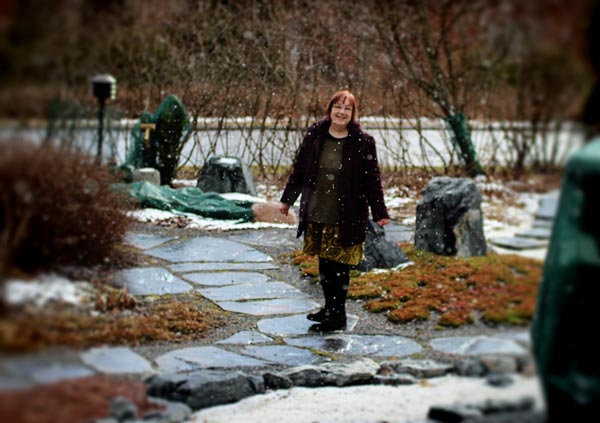
We haven’t got much snow this winter in Southern Finland, so I have had lots of opportunities to observe stones, both in our garden, and in nature. When the world is in a storm, it’s comforting to watch their stillness, and how the moss is like a warm blanket over them.

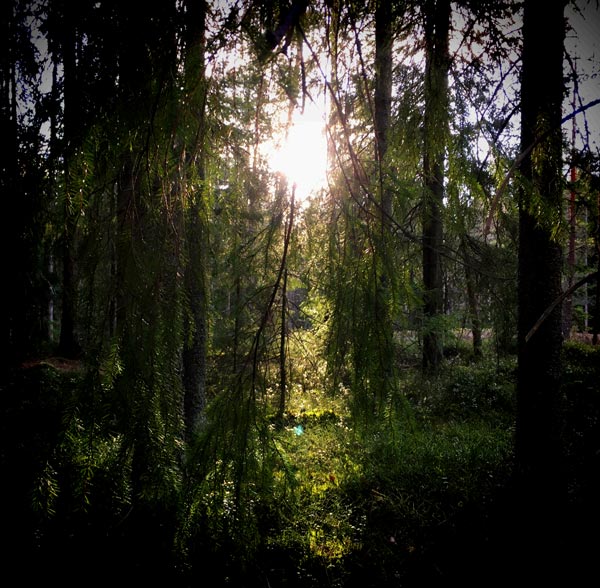
Last weekend, my husband and I took the dogs for a walk in the forest. When the sun shined through the trees, the view was like a sacred chapel.
Last year, I got a wish to include clouds in the class, and I was able to fit that in. Clouds are surprisingly fun to paint! When the bad news came, little paintings like this became even more important. I want to look at my clouds now and then. The softness of the sky draws in and refreshes my soul.

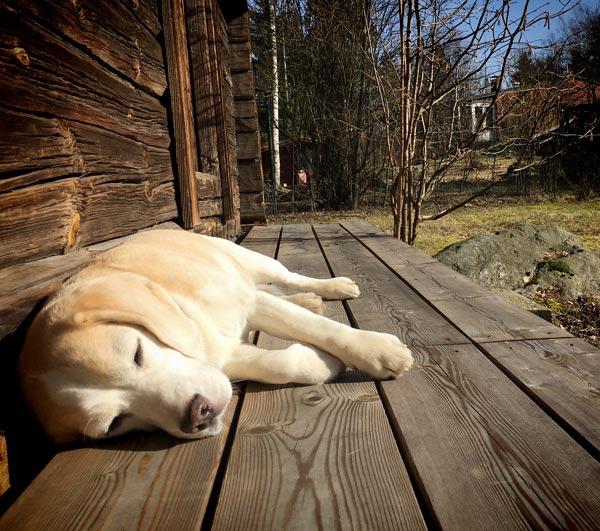
My beagle Stella also likes sunny skies. She has her chapel on the porch of the old shed that we have in our back garden.
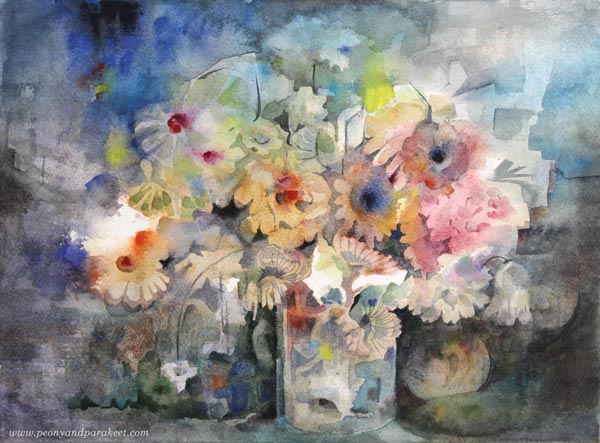
I painted this floral bouquet last spring, and with it, I want to wish hopeful news and hopeful weekend. Let’s take some time to create comforting art!
Nature is definitely expressing hope here in Finland. Let’s keep creating towards brighter days!

P.S. Weekend Sale! There’s a new presentation video about Magical Forest, and to brighten the weekend, I have reduced the price too. The sale ends on April 5 (PDT), so be quick! >> Buy here!
Embracing Artistic Origin – How to Make Images That Feel Genuine
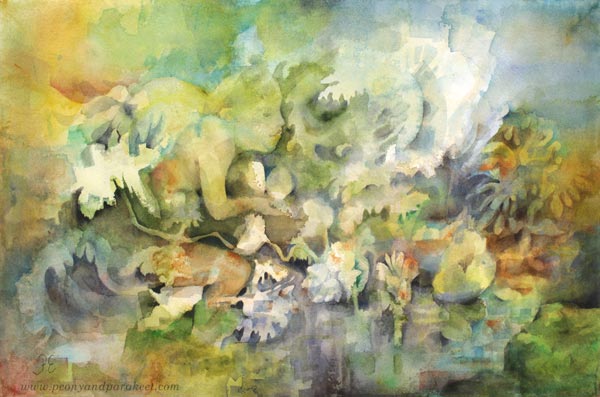
Here’s my recent watercolor painting called Aquanora (or “Akvanoora” if you say it in Finnish). I have always been passionate about art but never loved my paintings as much as I do now when I have been painting these wood spirits in watercolors (see this post and this one too).
I hope that this week’s post makes you ponder about your artistic origin. I claim that if you don’t recognize the origin when looking at your art, you don’t feel the connection with the images either.
My Cold and White Artistic Origin
The sad fact is that when I don’t paint, my life in Finland is about walking dogs and knitting. And most of the time, I dream about Europe’s glorious museums and palaces. Winters in Finland can be rough, and Stella and I don’t like them.
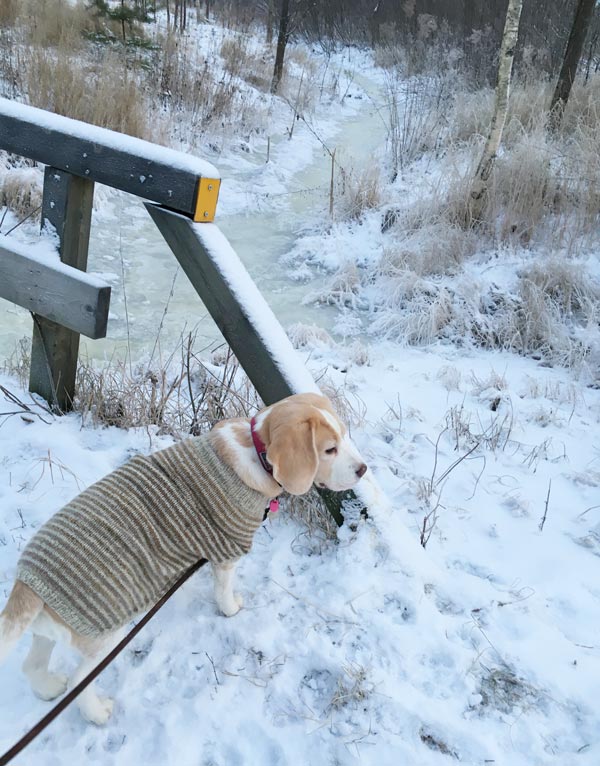
As you see from the photo, taken in winter a couple of years ago, Finland’s color is white. Not only winters are white, but Finnish people decorate their homes with white furniture. So even when it’s green and warm in summer, Finns stay cold in their white boxes. My home is considered very colorful, especially the bright yellow corridor gets glances. But recently, I have started to accept the Finn in me. I have come to love fresh white watercolor paper, filled with possibilities.
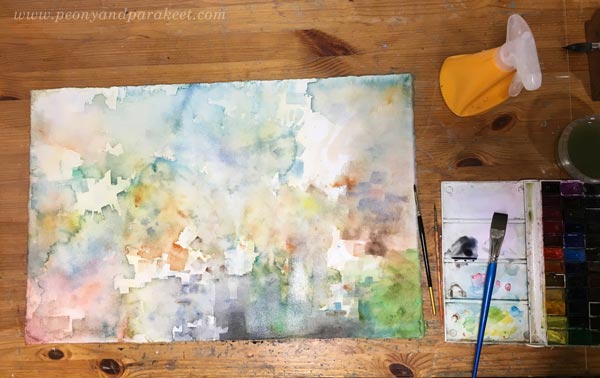
With watercolors, white has become my friend. Painting is like having a white fairy holding my hand, tightly at first, and then little by little she releases her grip.

Even if I would like to be the painter of the Renaissance palazzos, I am a Finn walking the dogs in bad weather, knowing the core of whiteness instead of gold.
Artistic Origin Can Be Opposite to Inspiration
We are often inspired by things that are new and exotic. Our origin can feel so common that it’s barely recognizable. It’s what we see and breathe every day and often, it’s what we want to escape when we create art. But the more I have created, I have started to think otherwise. Because I live observing moss and other nature’s wonders more than marble floors, maybe I should paint more of that greenness too.
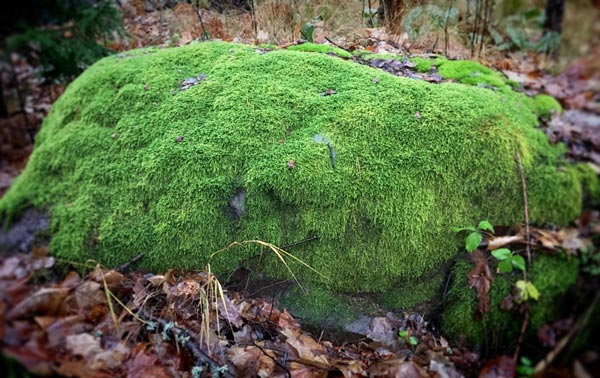
Namely, when European nobility played minuets in the 17th century, Finnish savages were freezing and starving in the land of thousand lakes and forests. So we know our stones, mosses, and swamps – the language of our nature – better than musical notes or calligraphed letters.
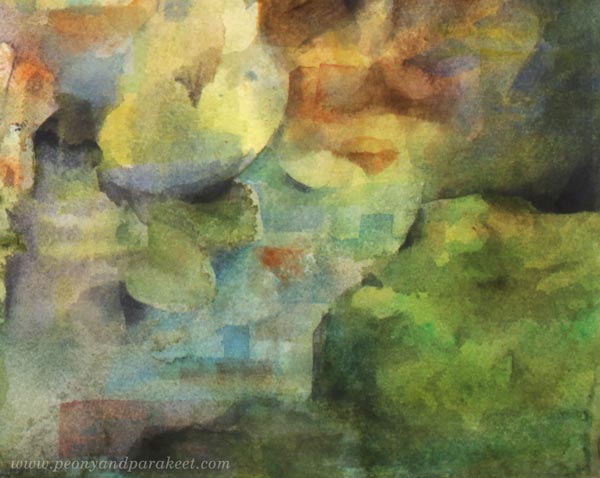
When European priests and saints trooped on huge church halls, Finns believed in Tapio, the god of the forest. Even if old beliefs are only old stories anymore, maybe it’s no wonder that these little fairies of mine rise from nature sceneries.
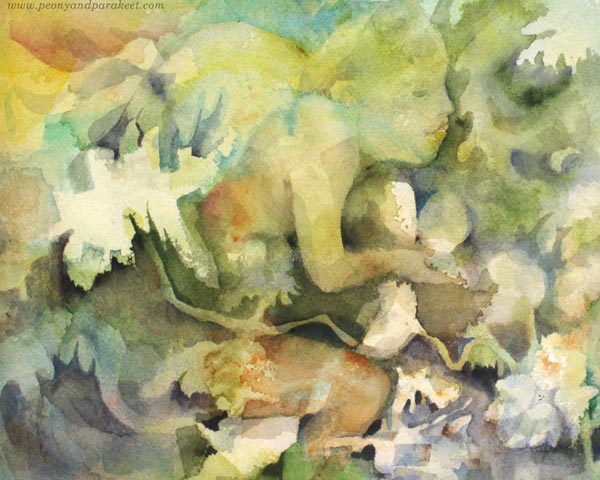
I have always thought that my art should not be spiritual because I don’t want to offend anyone. I don’t have any particular religious view myself, and because of that, I haven’t felt eligible to create spiritual art. But recently I have found it impossible to separate nature, spirituality, and imagination from each other. Nature can be our church, and for our imagination, there’s no conflict of dressing a wood spirit in a Renaissance outfit. By bringing the noble (inspiration), the wild (origin), and the playful (creativity) together, it can all fall into place. Art is about freedom after all.
How does your origin show in your art?
How could you deepen the connection?
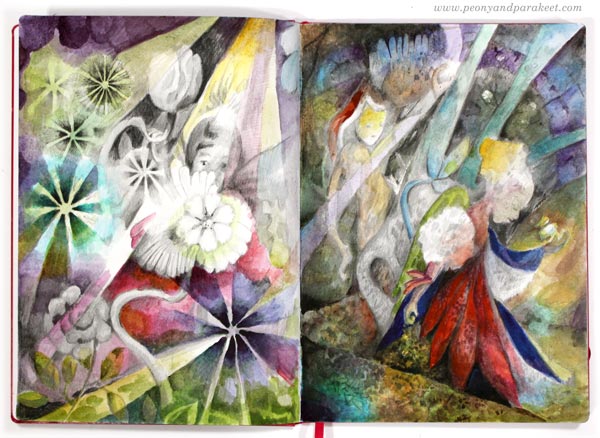
Coming Up – New Watercolor Class!
My sketchbooks are full of ideas for the upcoming class. It will be about nature’s light, textures, and spirits. There are intentional drawing exercises with pencil and intuitive painting projects with watercolors. I am looking forward to being your guide in the woods of creativity and self-expression. The class will begin in January and the early-bird sale is soon on Black Friday weekend. So stay tuned!
A Fairy Called Shyeling – Finding Your Silence Instead of Your Voice
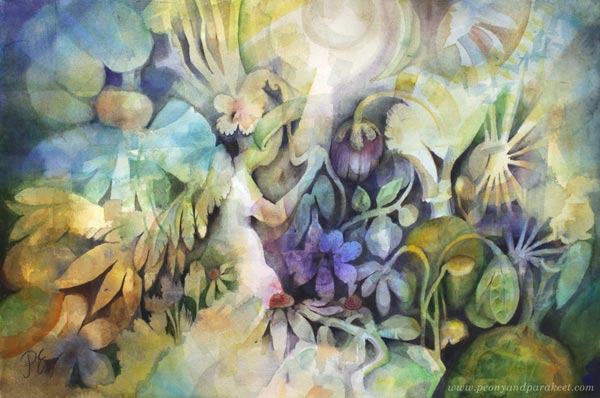
I call this watercolor painting “Ujokki” which is not a real word at all. “Ujo” means shy in Finnish. Maybe it could be something like “Shyeling” in English, expressing a timid and sensitive fantasy figure.
What Is The Shyeling?
The shyeling sees the little miracles of nature, the growth of the plants and how the light hits on the petals. She smells the soil, walks barefoot on the moss and listens to dewdrops falling on the ground. The shyeling is the most delicate and vulnerable part of us that we wish to connect and show through our art. It’s a silent power that originates from the memories and nuances rather than a loud voice demanding the ownership of the stage.
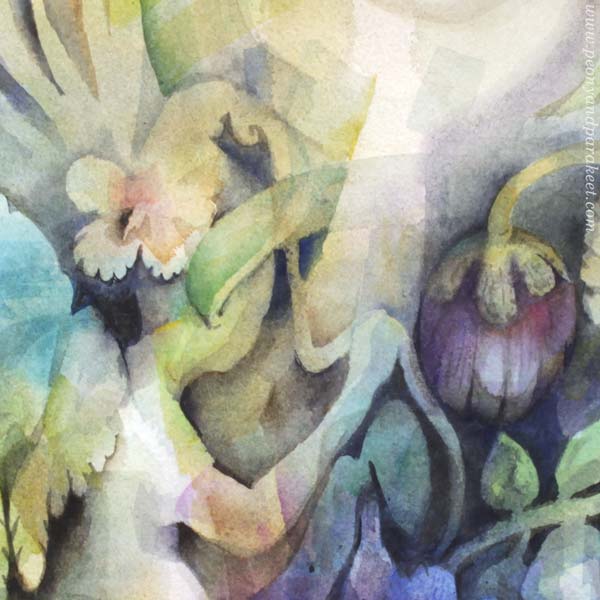
In my painting, the shyeling is pictured as a little flower fairy with big wings of imagination.
Why the Shyeling Is So Difficult to Find?
When I led IT projects and solved problems that involved different parties, personalities, and systems, the strength that I needed to possess was very different from what the shyeling has. Dealing with crises and interruptions echoed hard in my mind, and it scared my shyeling away.
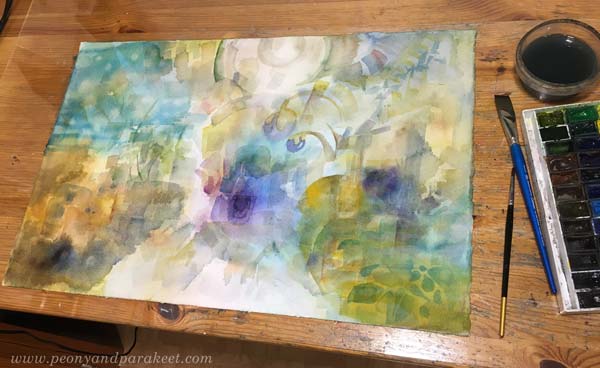
I have also mistakenly thought that shyelings are everywhere and for anyone. All my life, I have created art so that it pleases other people’s outer expectations. I haven’t even always noticed that. It’s been partly a subconscious and partly a practical thing. Shyelings don’t understand money, time, or numbers. They are weak and meaningless creatures in today’s busy world. But still, if we find ours, we don’t want to let go. We often talk about finding a visual voice, but I believe it’s more about finding our silent power.
Taming Your Shyeling
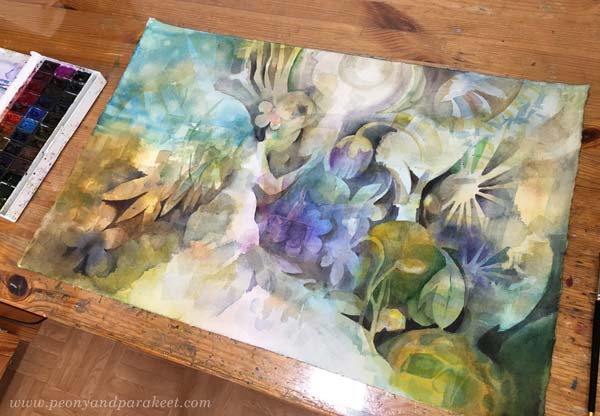
I have many paintings and drawings, where I have started to walk towards my shyeling but my impatience has taken over. The fact is that the less you have created, the longer the journey feels. But when you keep going, the destination will feel closer, and you will enter the zone where your shyeling skulks.
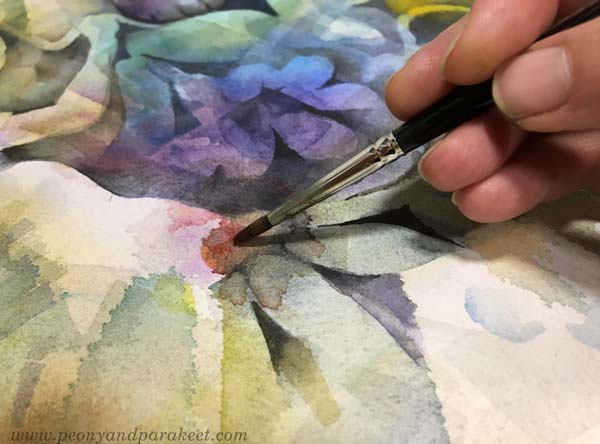
Also, remember that shyelings are like wild animals that need to be tamed. Taming needs skills, and skills need practicing. So be open to learning from other people’s shyelings. Yours might not be ready to appear from the bushes yet, but she’s been watching you, feeling more comfortable day by day.
Get Closer to Your Sheyeling!
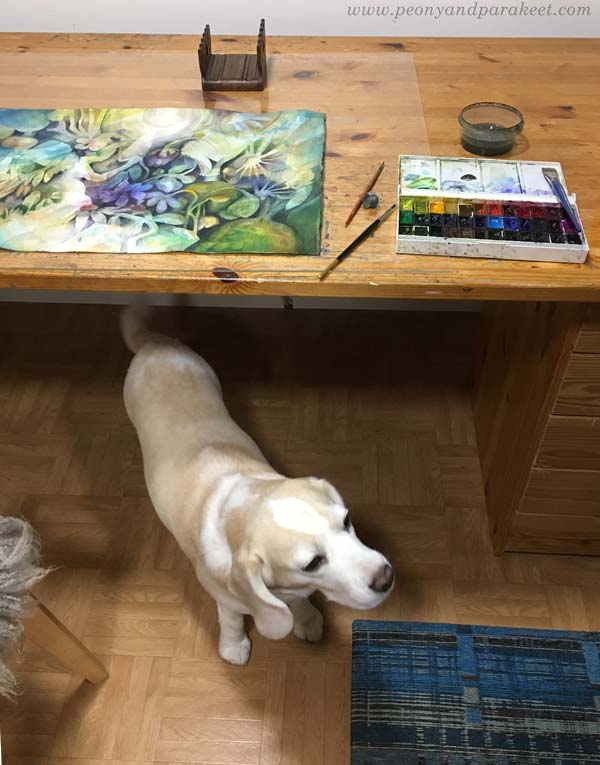
Recently, four things have taken me closer to my shyeling. First, I have stopped questioning my love for painting plants and flowers. If I like to do that, so be it. It’s not really about replicating the plants that I see anyway, but to use their shapes for creating new organic systems.
Do this: Create a piece about things that feel too familiar to you. Keep the idea process short, almost non-existent, create what you find the easiest. But, at the same time, lengthen the time that you usually take to create a piece like that. What do you discover during that extra time?
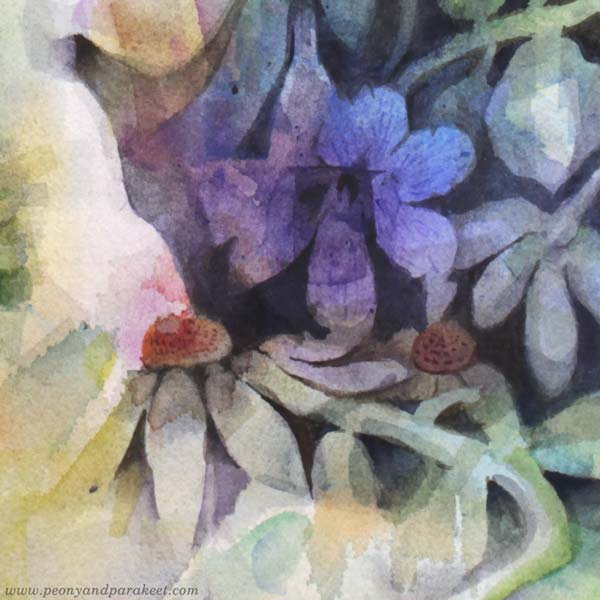
Second, I questioned why many landscape paintings look so empty to me. I found the answer from a childhood memory, always imagining nature as a luxurious place. I wrote more about this in the previous blog post.
Do this: Look at the old photos or dig our old things that reconnect you to the age when you were less than ten years old. What can’t be seen in the photos? What did you do when you were alone and nobody took pictures?
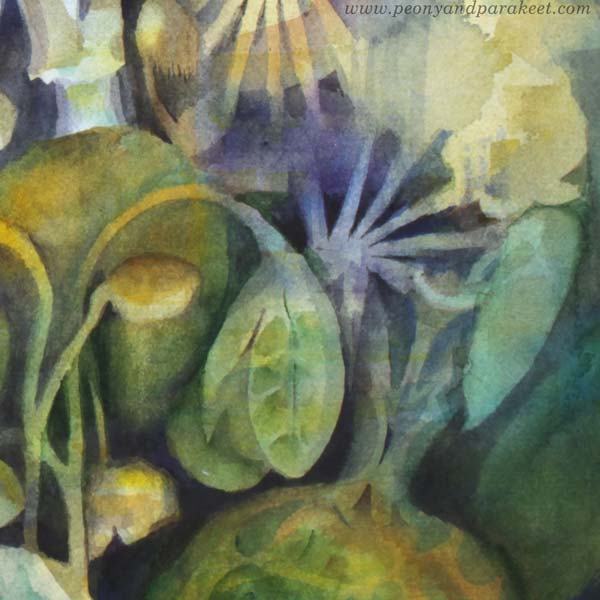
Third, I have challenged myself to become more skillful in expressing the atmosphere and space with light and shadows.
Do this: Evaluate your recent pieces so that you list things that lack there. Collect a list of things that you want to be present in your art. Then pick one thing that you start practicing more.
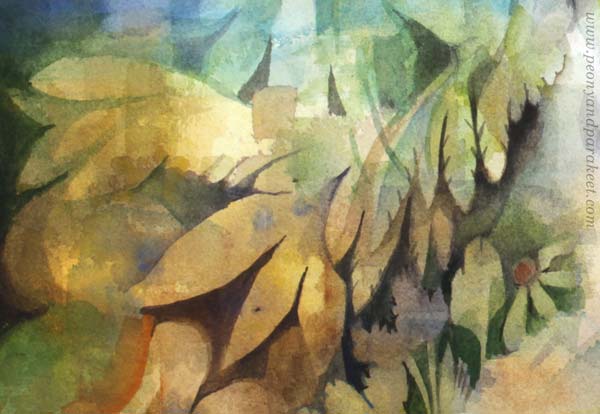
Fourth, I have practiced drawing and painting human figures without references. When I paint without references, I feel free and peacefully silent. Then there’s always a chance for my shyeling to appear.
What do you need to practice next to get closer to your shyeling?