
5 Tips for Quick Abstract Flowers
This week, we paint quick abstract flowers freely without any references.
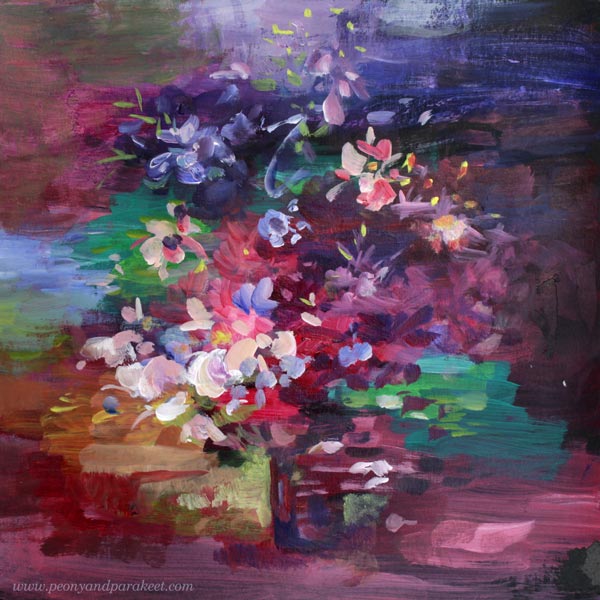
I have a black Dylusions Creative Journal and make small paintings there occasionally. It is especially good when there’s still paint left on the palette at the end of the painting session. I think it makes sense to use all the paint, and not throw the leftovers in the trash.
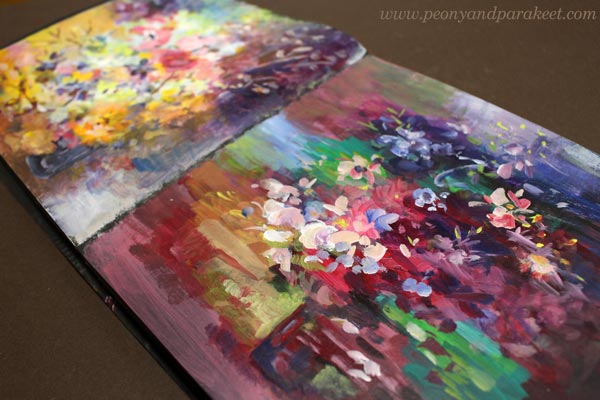
I don’t use any gesso but paint directly on the page.
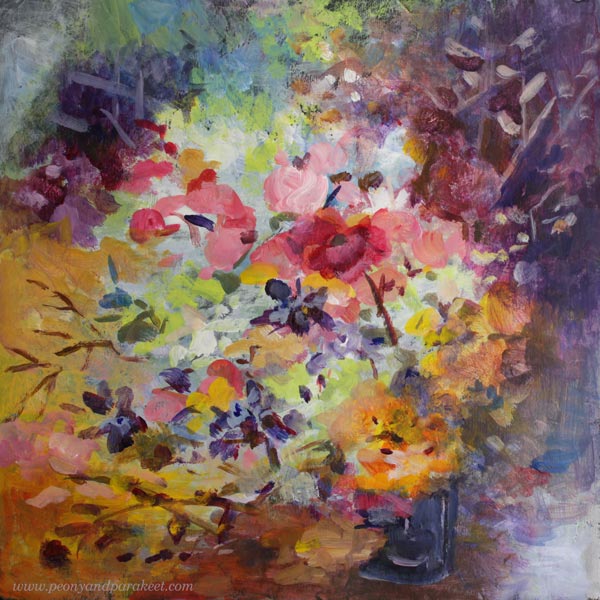
When I painted pieces for the course Liberated Artist Revisited, I noticed that there had been a long break in acrylic painting and some of the tubes had started to harden.
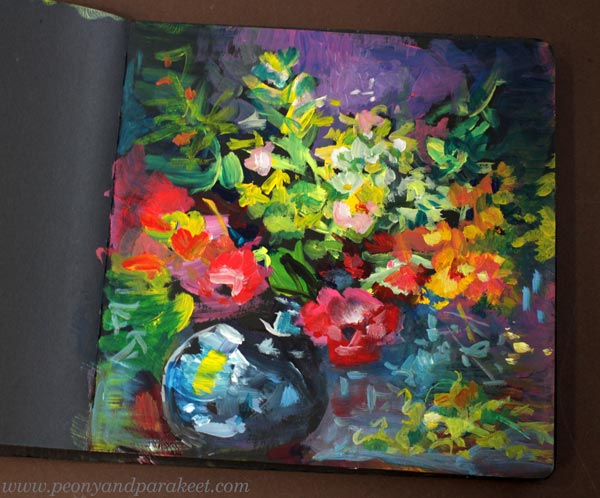
It motivates me to paint in the black art journal again because I don’t want those paints to go to waste. And sometimes it’s nice to paint something small quickly and see what comes out most effortlessly.
Quick Abstract Flowers – Five Tips!
I like painting abstract flowers, and thick paints are very suitable for abstract flower paintings. Here are my five tips for painting flowers quickly.
1) Start from the Old Mess
The fastest way is to start from an old painting.
I have a lot of pages in my journal where I’ve hastily painted shapes with leftover paints.
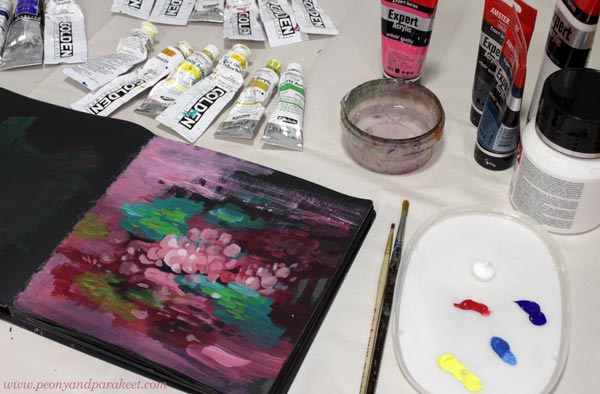
Continuing the beautiful mess feels much more effortless than starting a new one from the beginning.
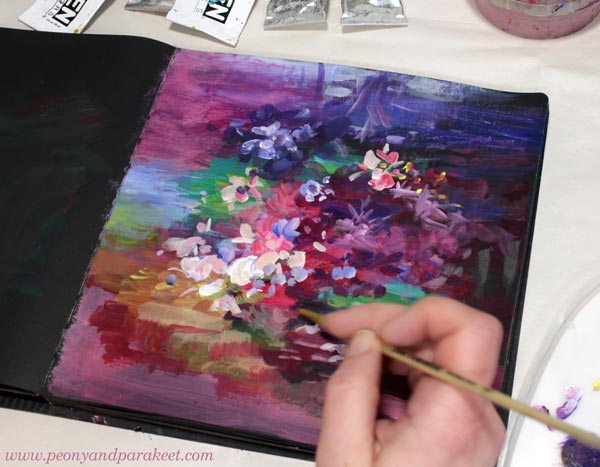
For example, here’s one page that still waits its turn to become a finished painting.
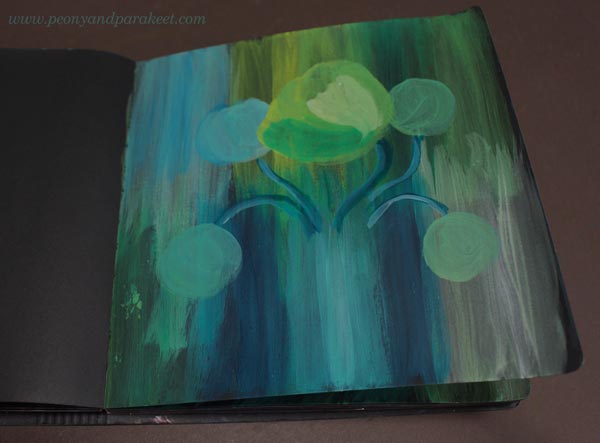
Most of my beginning messes are much more messy though!
2) Dark-Bright-Light
Include all three degrees of darkness in one painting.
Make color mixes and compare them in terms of darkness. By including all three – dark, bright, and light – you can achieve depth and atmosphere.
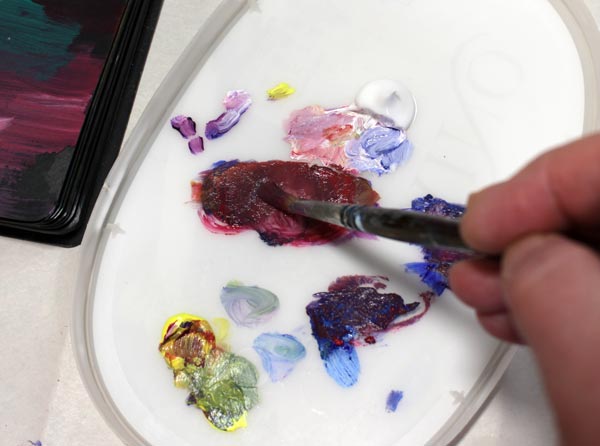
Make clear larger areas so that you can point to different places in the background and say, there is dark, there is bright, and there is light.
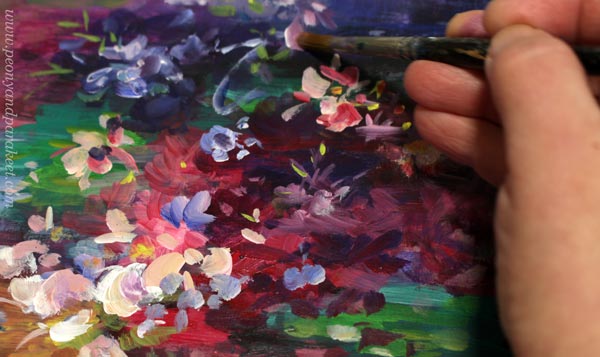
Flowers can have all three – dark, bright, and light colors.
3) Forget the Real Flowers!
Don’t think too much about the real flowers.
Don’t think about what a rose looks like or what flowers you want in your painting. All that stiffens your expression.
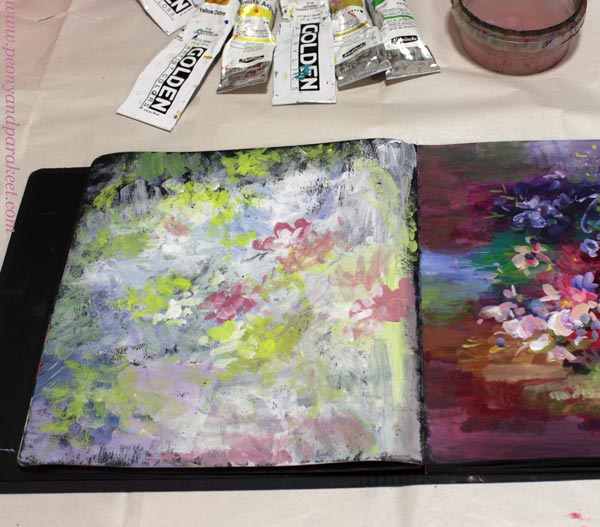
Focus on the colors and let the flowers form from the brushstrokes.
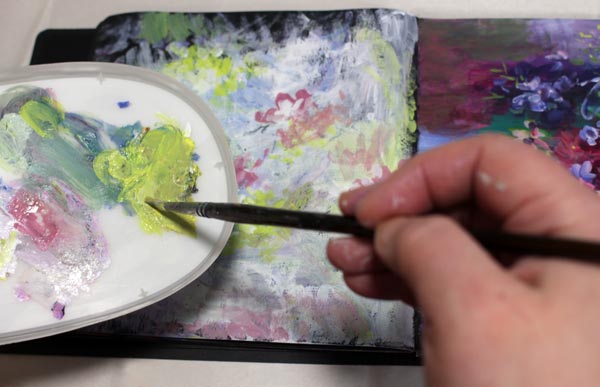
After all, a flower is just a few colorful strokes and a line for the stem.
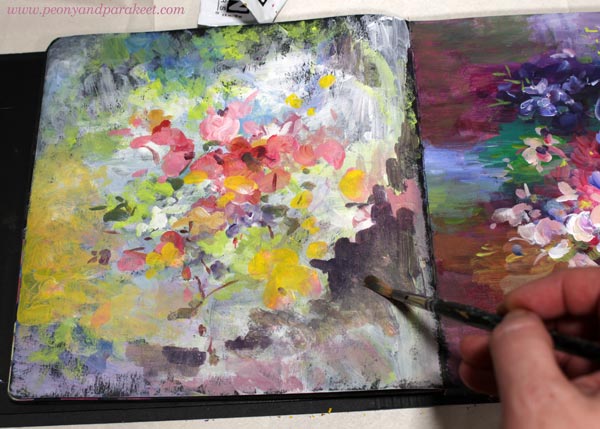
Use your imagination when you look at your work in progress!
4) Leave Room for Spirit
Not everything needs to be defined or look like a flower.
Flowers are concrete matter, so let the colors express the spirit!
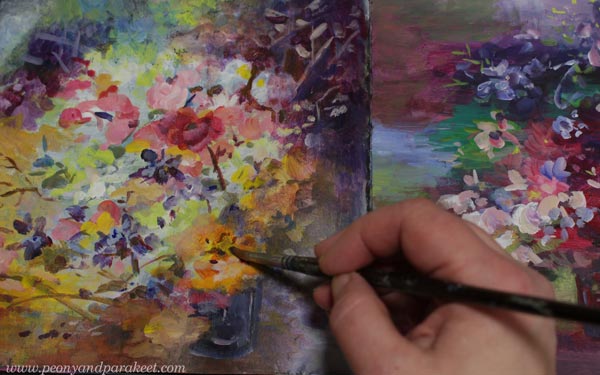
If you want to be extra quick, sharpen just one flower near the center and leave the others more abstract and vague.
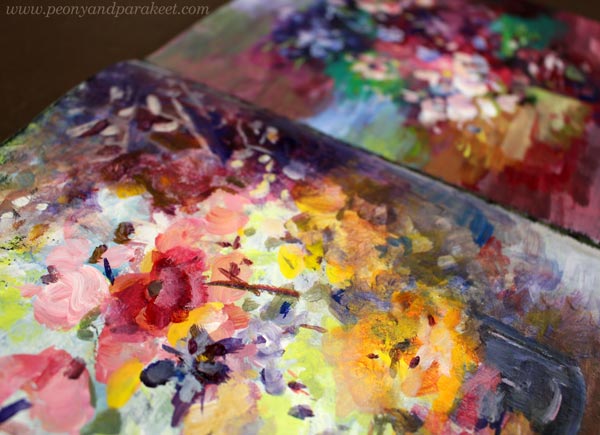
5) No Forced Feelings
Open yourself up to an emotional experience.
The speed of the painting depends highly on how soon you get an emotional connection with yourself and what you are doing. Let even the darkest thoughts come. For creativity, everything genuine is equally good.
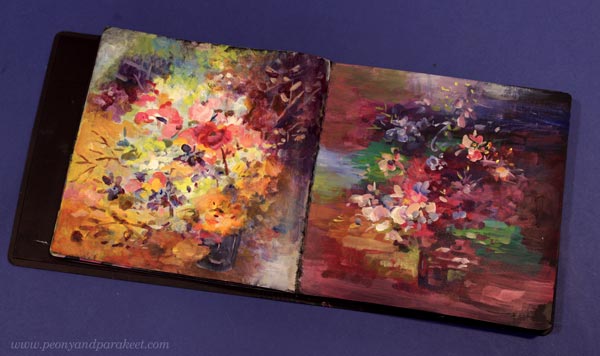
The beauty of making art is that imagination creates abundance and eternal life from almost nothing – from the leftover paint and leftover energy. And the more often you create, the more you get out of it!
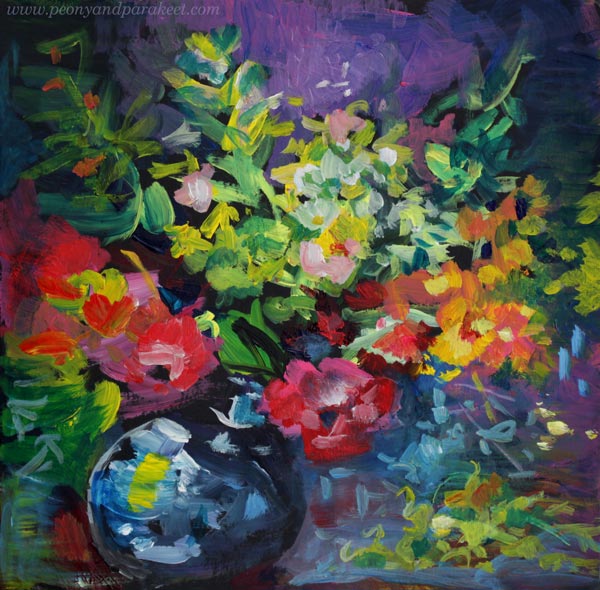
Liberated Artist Revisited – Buy Now!
In Liberated Artist Revisited, we time-travel to meet the teacher – Paivi from 2015, and create new art with her.
This course is both for the left and right brain. The young Paivi gives systematic instructions while the older Paivi enjoys her freedom and ponders about art-making and life in general.
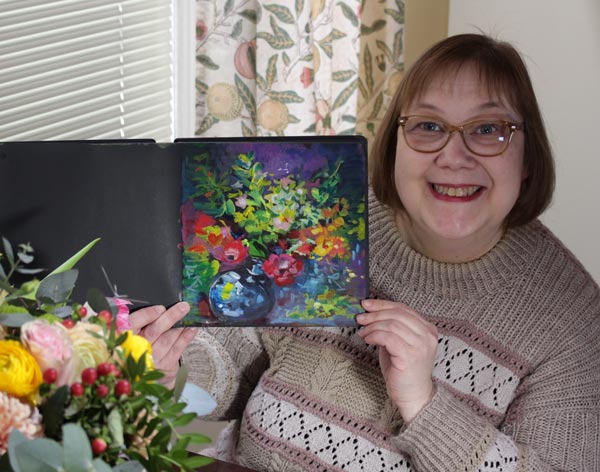
Liberated Artist Revisited is a limited edition – only available for purchase until the end of March 2024! >> Buy Now!
Inspiring Art Journals
This week is dedicated to inspiring art journals that hopefully make you start creating right away.
Towards the end of last year, I started to really miss drawing. When I want to come up with ideas, I need a pen and paper! Or maybe I should say that I need my art journals because that’s where the ideas stay in good order.
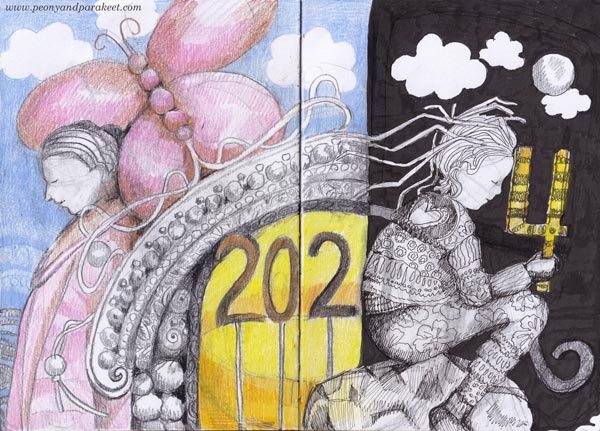
I made this spread in my colored pencil journal. 2023 is an old romantic woman that is going away and a young girl who is ready for adventure will take her place.
There are only a few pages after the previous year’s spread.

I hope to make more pages in this colored pencil journal this year.
Inspiring Art Journals
This week, I picked up random art journal books and browsed them. I especially love the one in the upper left corner with the black and white drawings the most.
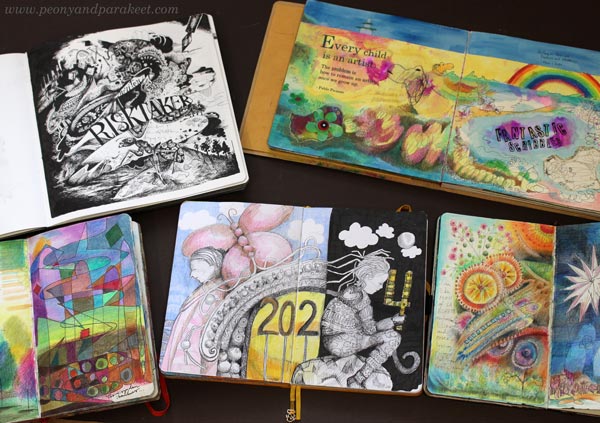
The drawings have no color but they are all full of ideas that still inspire me.
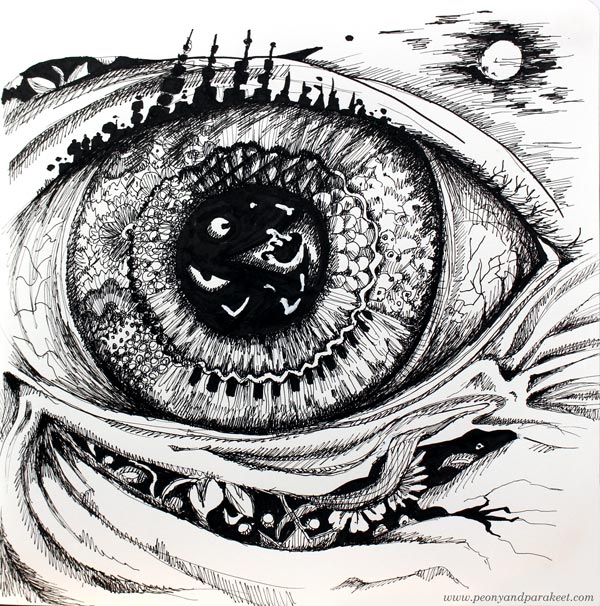
I now want to add ink drawings to my colored pencil journal as well.
Tiny Pages
Last year I bought a very small art journal. This is a pretty cute page!
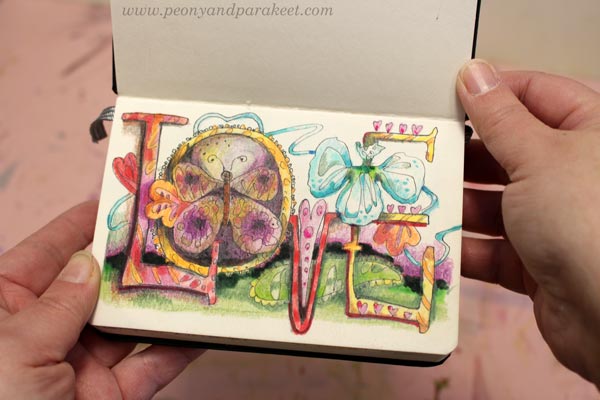
All the reds and pinks looked very nice together.
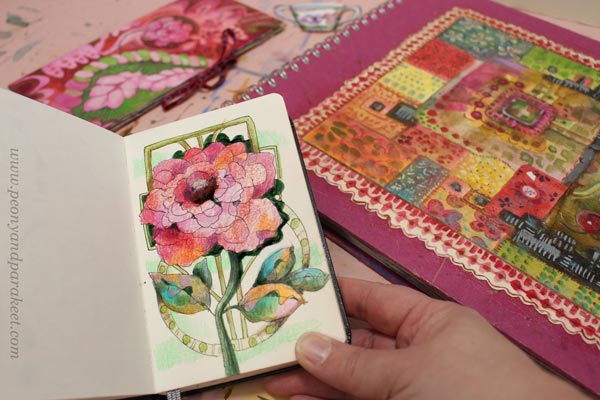
Years go by and my skills grow, but even the clumsiest covers still seem to fit with the new creations.
Doodler’s Resort
While browsing the journals, I found a spread with a transparent film in the middle. I had printed doodles on it and I still quite like the effect. This idea is from 2020, when the world stopped and I couldn’t do anything but mindless doodling.
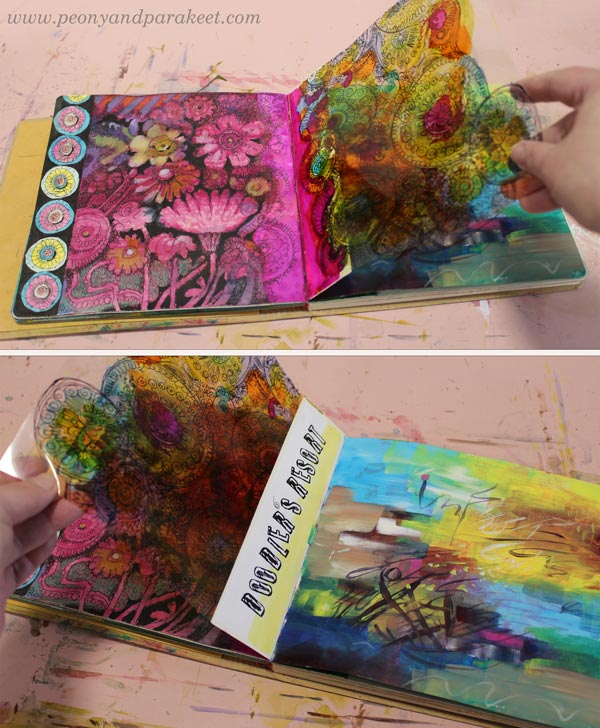
This art journal also has a lovely inside cover.
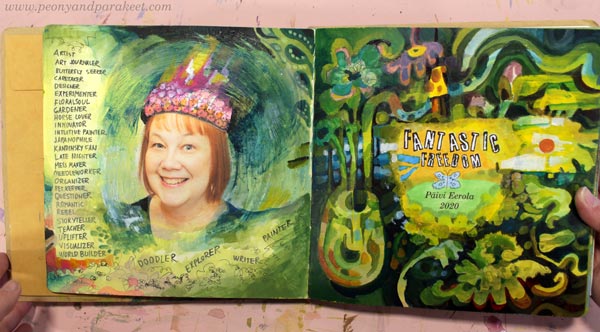
Divide the Content!
I don’t understand why it took so long before I realized that I could add annual pages, inside covers, chapters, and other pages telling about the content of the book in art journals.
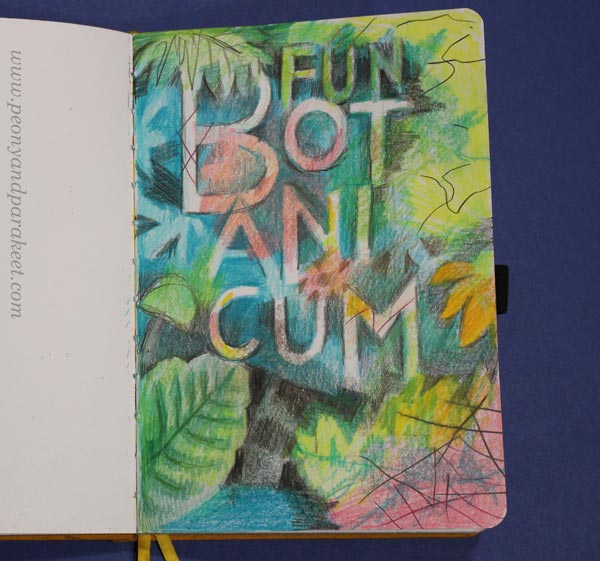
Nowadays, I have a course called Fun Botanicum, where you make a chapter cover, themed pages, and an end page in the middle of an art journal.
Inspiring Art Journals Tell About Time
It was fun to look at old art journals and wonder how these are connected to everything that is going on now.
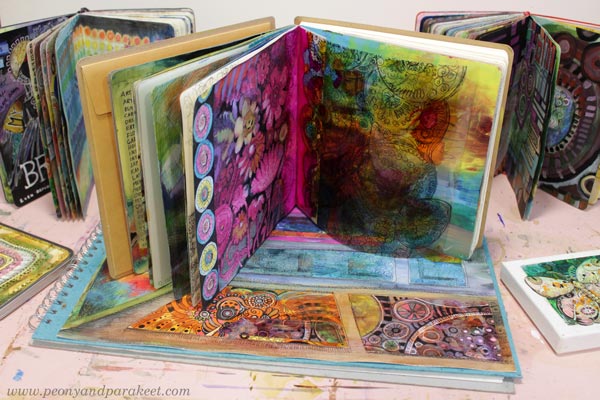
Time is a mysterious place. It is like an illuminated palace that blinds us. We can only walk away from it to the darkness. But as long as we are alive, we can start the adventure and get creative. “It takes a long time to become young,” said Pablo Picasso.
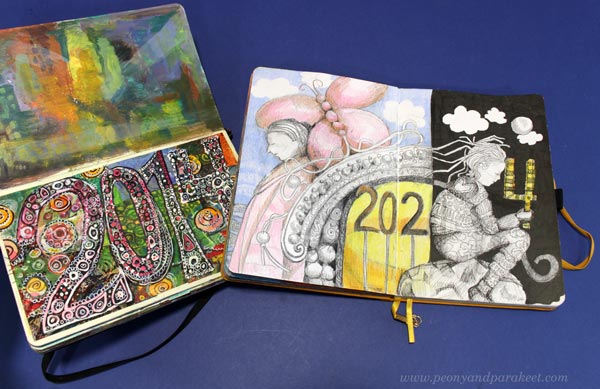
In my opinion, only by drawing can we know what we really think. The more you draw, the more your skills grow, and the more you will find out!
Do you agree?
Paint Beautiful Decorative Flowers!
This week, we create stylized beauty. You will see how I painted these beautiful decorative flowers.
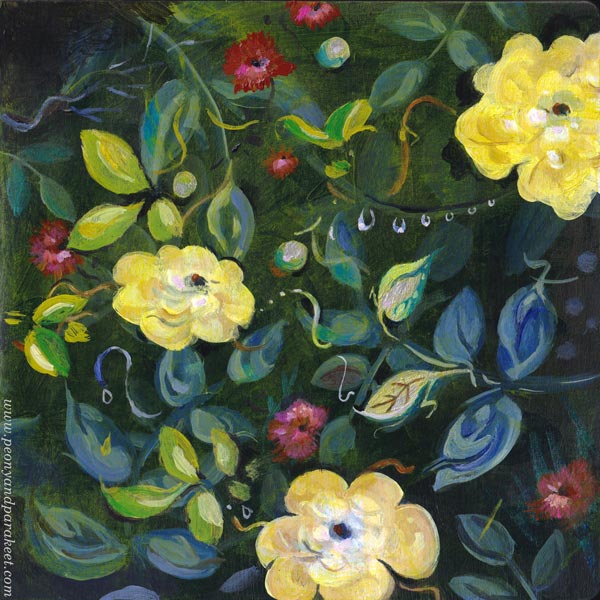
Time for Some Happy Art!
At least here in Finland, May-June is a time for parties. There are school graduations and then Midsummer at the end of June, which is celebrated not only by people but by Finnish nature too. Days are long and the deep sleeps during the dark winter are now coming into use. If different art forms had seasons, this uplifting time would be dedicated to decorative painting. Beautiful decorative flowers and other curvy motifs go well with the celebrations.
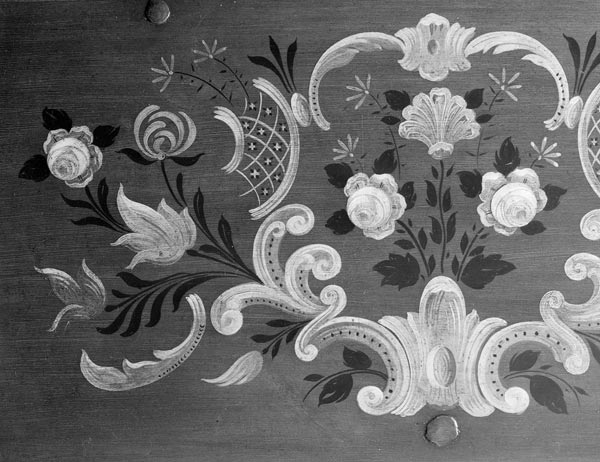
Decorative art is happy art for most people. Its tradition extends all over the world and it only requires a little sensitivity to beauty from the viewer.
Uplifting Art-Making
Three years ago, when the Corona lockdowns started, I buried myself in decorative painting. I made decorative collages from hand-painted papers and practiced decorative painting techniques.
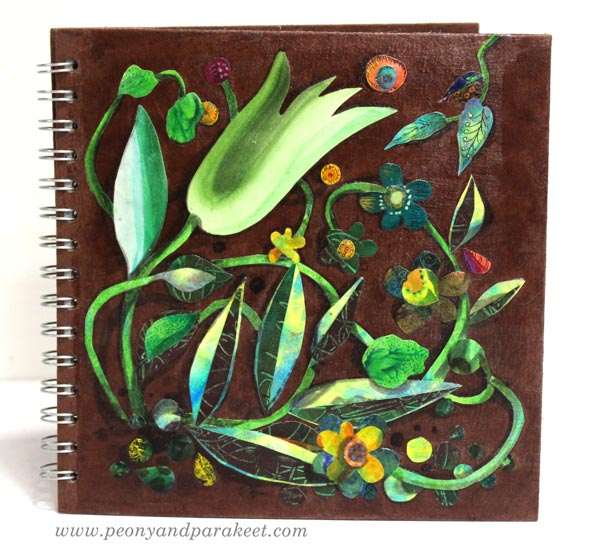
These curvy forms and lines are still present in my paintings, where decorativeness is mixed with a more dynamic and abstract expression.
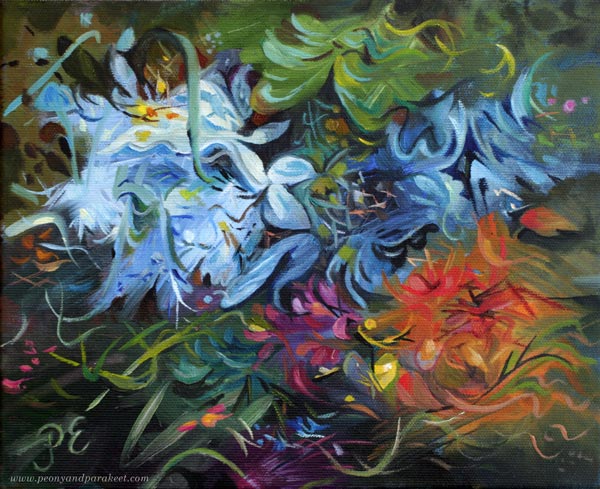
Painting in a decorative style is fun. A few thoughtful brushstrokes create beauty, and even a beginner’s work looks great when viewed from a far enough distance. Over time, the brush mark improves and has an effect on all drawing and painting, even handwriting. And it’s the perfect style for cards and gifts!
Starting a Decorative Painting
As I watched the blossoms in apple trees, I felt like painting something small and nice to celebrate the beginning of the blooming season.
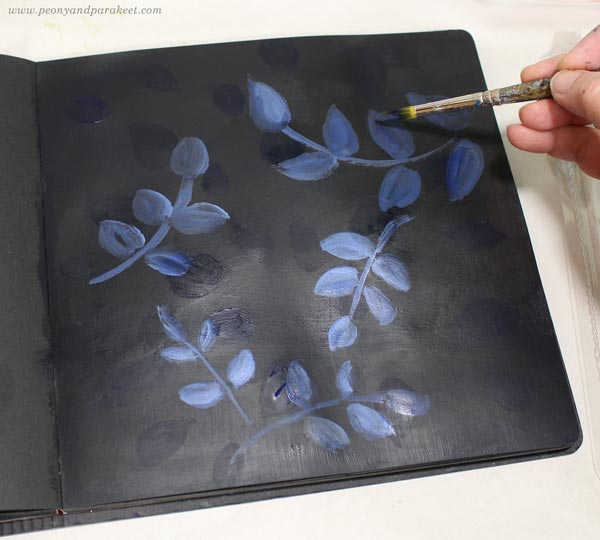
I took out my black Dylusions Creative Journal and acrylic paints and painted the background very dark blue. Then I made leaves on top of each other, and so that they get lighter layer by layer.
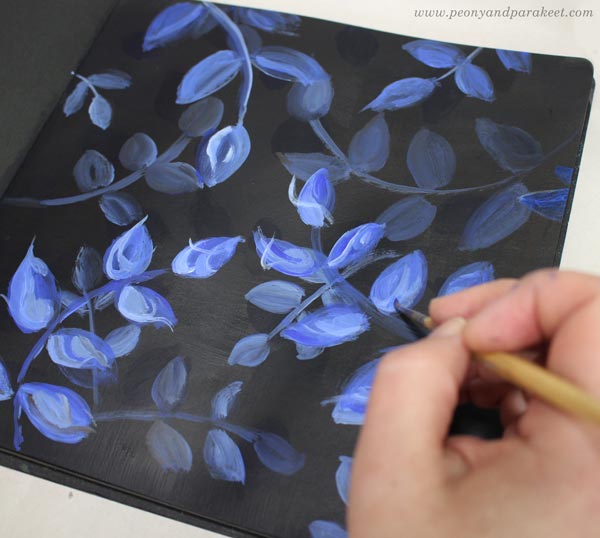
At the same time, I watched the videos of my course Decodashery.
Decodashery – Painting Techniques for Vintage Flowers and More
I still like this course a lot. Decodashery is beautiful, inspiring, and detailed in its instructions. It is also full of ideas. When the Corona lockdown was on, I had plenty of time to experiment with decorative painting and make more examples than usual. This course is for watercolors, gouache, and acrylic paints. You can choose what you want – most of the decorative techniques suit all of them.
Beautiful Decorative Flowers in Two Parts
At first, I thought about making two separate paintings for this post but then decided to make one work in two parts. The first part is simple and stylized and the second part is more creative. In this first part, I used quite raw colors: mainly ultramarine blue and white. I also mixed some brown umber with them.
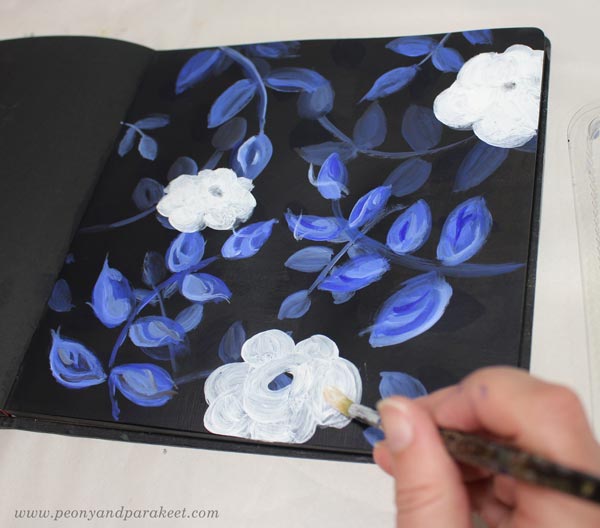
To highlight the decorative theme, I painted some parts with silver acrylic paint.
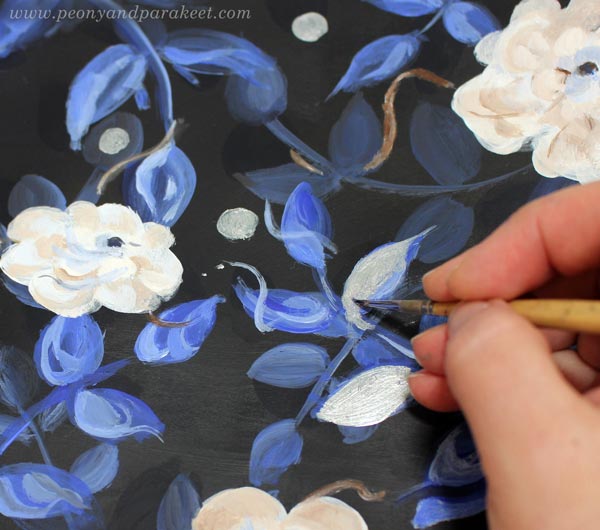
Finally, I added some Sienna brown and turquoise (manganese blue hue) to bring warmth to the details.
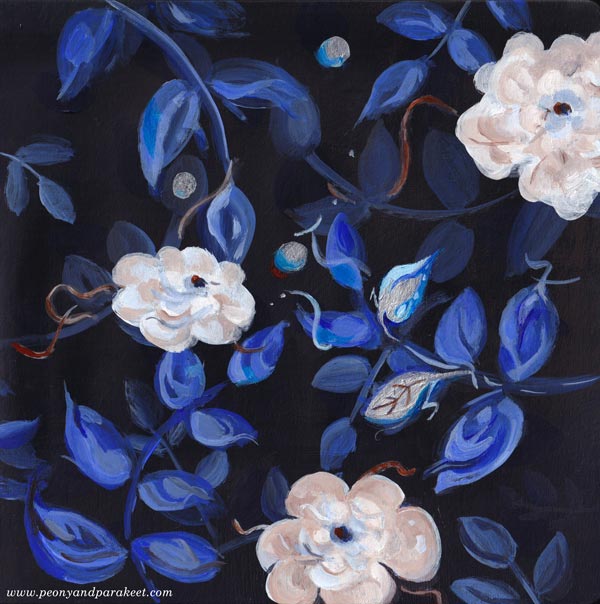
Now the first part is finished. The flowers that are only partly visible give the impression of continuous space.
Beautiful Decorative Flowers – The Second Part
In the second part, I wanted to bring more depth and warmth to the work. So I spread a thin layer of yellow-green color over the painting.
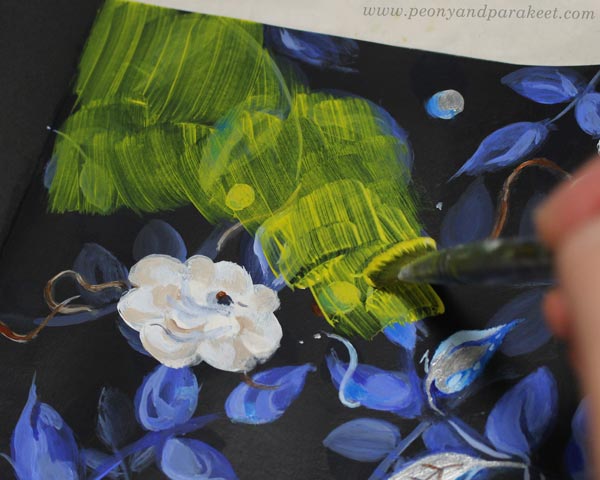
I used glazing gloss as a thinner here, but you can also try to thin the paint with water.
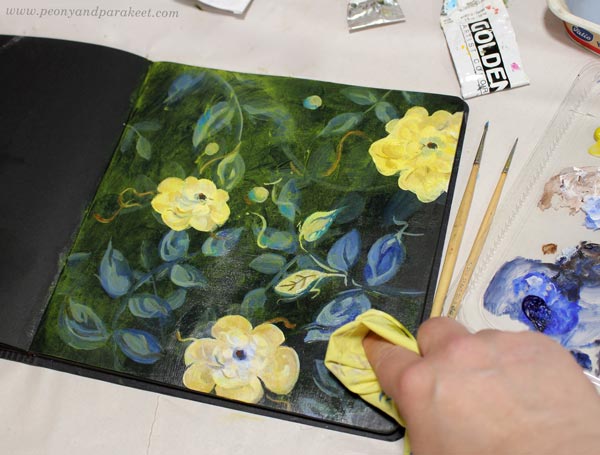
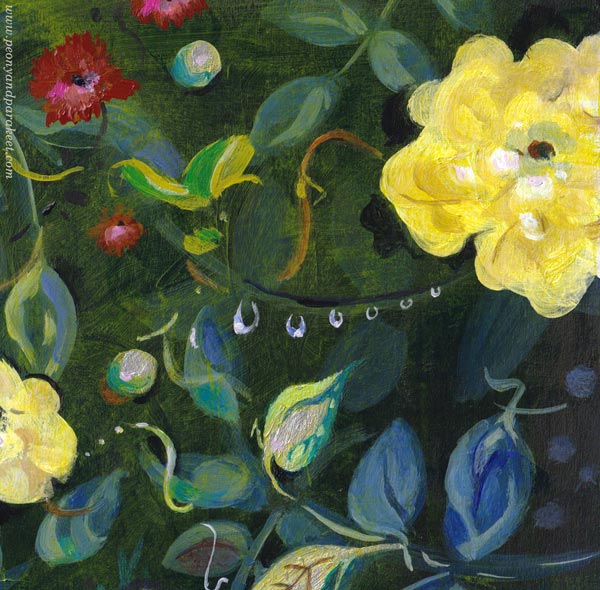
Immediately after application, I removed the excess paint by rubbing the surface with a cotton cloth. The thin color wash warms the tones of the whole painting.
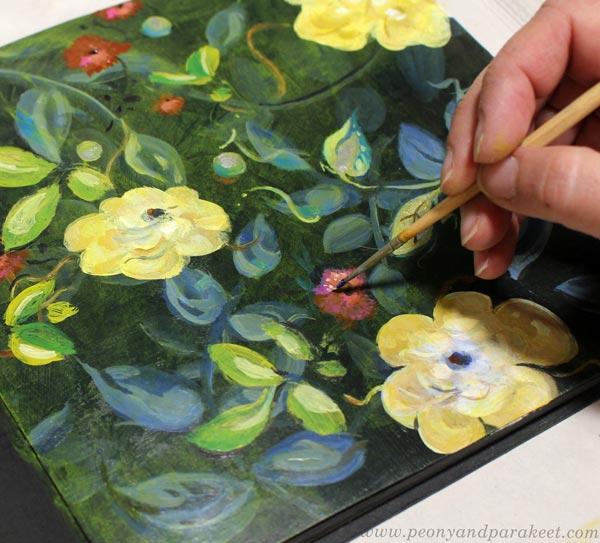
After the color wash, the painting is a bit hazy. Next, I added more details and brought some of them back up from the lower layers. This sharpens the best parts.
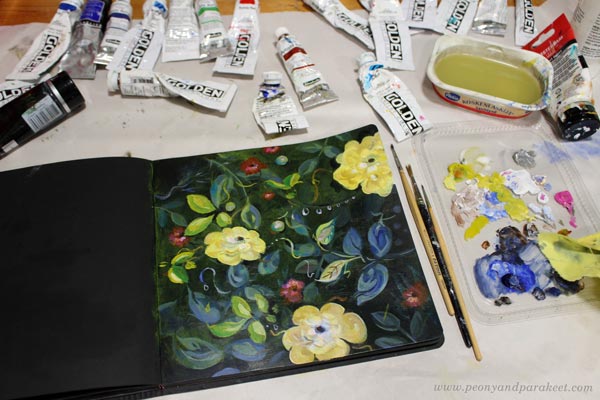
I had lots of tubes on the table but only used a few. Decorative painting encourages making a variety of tones by adjusting the lightness and darkness of color instead of always changing the actual color.
Happy for the Artist, Happy for the Viewer
There were moments of joy that only decorative painting can give me while making the page. This style feeds gentleness and peace. And even if the pleasures of the decorative painting process are only experienced by the painter, the decorative painting leads to results that are extrovertedly joyous, ready to brighten up anyone’s day.
Decodashery online course – Paint vintage beauty – Buy Now!
Why Draw in Black and White?
I have often asked myself: “Why draw when you can paint?” And as someone who loves colors, it hasn’t always felt appealing to omit them. Still, one of the biggest things in my artistic development has been to find a connection to my childhood through black-and-white drawings.
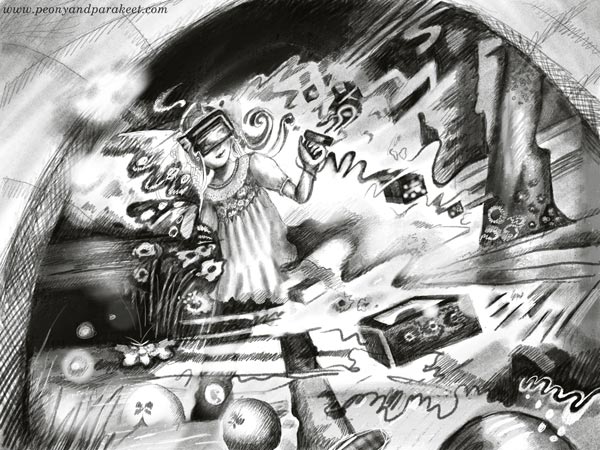
In this week’s blog post, I want to inspire you to draw things you love in black and white. If you want to practice ink drawing with me, see these courses: Animal Inkdom and Magical Inkdom!
My Way to Drawing in Black and White
It’s been over thirty years since my father’s death. He was quite distant, but I still vividly remember when he drew horses when I was a child. The horses were not noble and streamlined like in the picture books, but furry sympathetic characters. It was as if my dad really knew these animals.
So it was no wonder that when I participated in the Inktober drawing challenge in 2018, my drawing style borrowed a short hair-like line from my father. You can say that at that time, I fell in love with drawing. Nowadays, I still draw in black and white every time I want to visualize something through my thoughts. I now have an Apple Pen and Procreate, but I sometimes draw on paper as well.
See a quick 4-minute flip-through video about one of my sketchbooks!
See more pictures of the children’s book illustrations: The Beauty of Science – Illustrating a Children’s Book
Why Draw? – Move from One Idea to Many!
Drawing visualizes the invisible and makes us think deeper. First, the idea is wavering and could take any direction. But as the details increase, the big picture also grows. Therefore, it’s important for me to let the pen linger in small areas. I find pleasure in putting tiny pieces in place so that they are part of a bigger story.
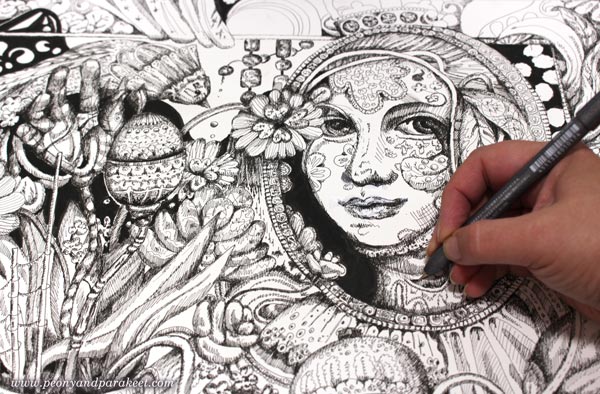
There are two good things about drawing with a thin black marker pen. First of all, the pen mark cannot be erased. You have to figure out how to make the wrong stroke a part of the drawing. It has often happened to me that the core of the picture was created while correcting a mistake. Another advantage is that when you don’t have to worry about colors, you can focus on shapes and patterns in peace. And of course, you can always color the drawing afterward, for example with colored pencils or watercolors.
Why Draw? – Connect Your Art with Your Origin!
I believe that anyone who has drawn for a while will develop an understanding of why they draw. I have a feeling that I was created to express things through ornaments. For me, an ornament is not just a picture, but a whole language. When drawing ornaments, I’m on the border between writing and illustrating, and feel that I am doing something important. As if I belong to those authors to whom poetry appears as pictures.
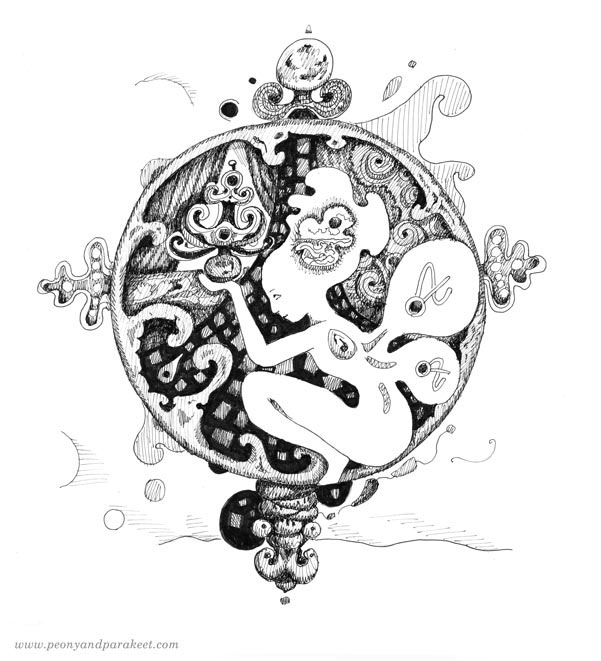
It’s confusing, but this connection between drawing and writing seems to have arisen in me when my father drew a horse. Of course, I didn’t know how to break it down like that as a child, but I now think of my father’s horses as ornaments that summarized the origin of our family. It wasn’t the most elegant possible, but I still wanted to give it wings. Nowadays, every time I draw, I feel close to where I am coming from. I hope that by drawing you too will find wings for your origin!
What would you like to draw? Leave a comment!