
Do You Need a Mentor?
I am honored to be invited to mentor at Mastrius and join a group of top art mentors and teachers around the world. Become a member of my mentorship group here: Paivi’s mentorship group
Mastrius has a great concept for mentoring and the mentorship complements my courses. I will still be running my online courses on this site, but when you want to step out of the course-form learning, my mentorship group is for you.
Mentoring vs. Courses
The mentorship group has set times for gatherings while my courses are for self-study.
The mentorship group is ongoing with a monthly fee, while my courses have a one-time fee. Notice, that you don’t have to commit to be in the mentorship group for a year or such, but you can start at anytime and leave at anytime.
The mentoring happens face to face via Zoom. The courses have a community on Facebook, but not group sessions. At Mastrius, you will get a 2-hour group mentoring with me once a month via Zoom, but there’s also another person, a navigator, who organizes another group meeting and supports your experience.
The mentoring is based on discussions and collective learning. The courses have a curriculum and the lessons follow each other in a pedagogical order. In the membership group, I will not be demoing much, but rather answer your questions, and I also have a monthly topic. The mentorship is less linear and more personal. You will get monthly homework and feedback. The group is cozy and private as there’s only maximum 10 members in the group. >> Join My Mentorship Group!
For Aspiring Artists – Are You One of Those?
My mentorship group is for aspiring artists that are a bit further than absolute beginners. You are an aspiring artist if art has been a hobby for sometime already and you now want to level up! You want to grow your skills, find your style, start building your brand, and get feedback on your work.
Let Me Be Your Mentor!
As you may already know, I am a full-time Finnish painter and art instructor. I have taught people all over the world for over 10 years. My paintings are born freely without references, and I want to help you find your own path to that abstract freedom, no matter what supplies you use.
You could call me a late bloomer in art. My background is in computer engineering and industrial design, but over time, I realized my life would be wasted in a cubicle without art. My route into the galleries and official associations hasn’t been traditional, but I made it by continuously challenging my skills and imagination. I want to help you grow your expression so that it becomes captivating and interesting, even for the gatekeepers of the art world.
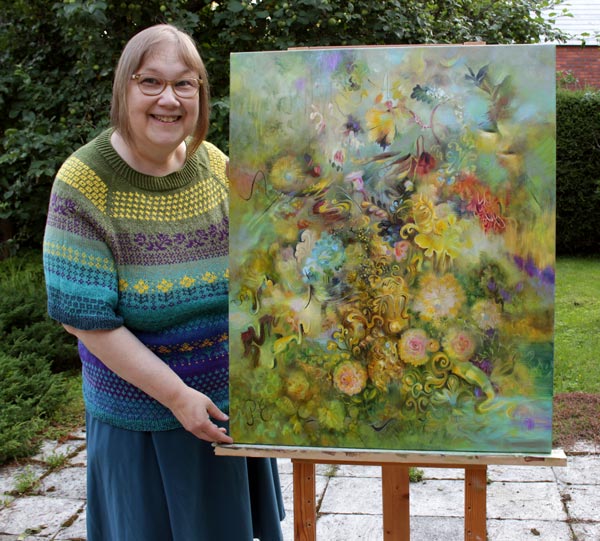
Art is a space that expands as you create. The world I build with each painting feels bigger than me. And when I paint with intuition, it’s like I am entering rather than creating. I want to help you step away from stiffness and connect your brush or pen to your inner world. To make the invisible visible: that’s what my mentoring is about.
What You Will Learn…
My mentorship group is for artists who want to connect their inner world with imagination and create freely. You can create fully abstract, semi-abstract, or representational art. My specialty is in plants and flowers, but you are free to draw or paint whatever inspires you. We will not use reference photos or models. Instead, we create more loosely and focus on atmosphere and mental connection.
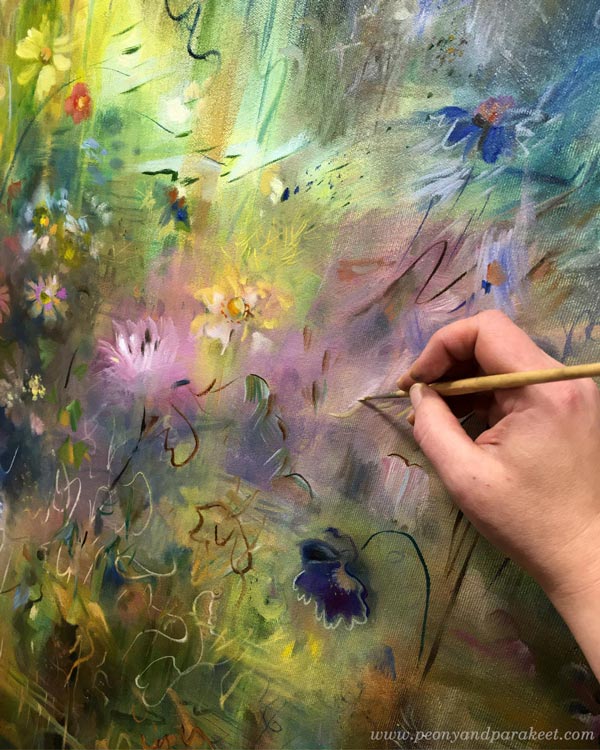
You will learn to fearlessly approach a blank paper or canvas by discovering what to boost and what to unlearn. To truly paint freely, it is important to expand your imagination and connect with your intuition, instead of settling for the first conventional idea that comes to mind.
Together, we will step away from the traditional route and enter the jungle where anything is possible. That said, we will still apply the foundational principles of art, but we will use them more loosely and creatively.
Focus Areas
- Abstraction without references: Connecting lines, shapes, and color
- Expressing your own nature: Light, spirit, and mood
- Making your art more captivating
- Supportive group critiques
- Inspiration and motivation
When Do We Start?
The first session of my mentorship group is on November 3, 2026. See the exact time in the registration page. >> Join My Mentorship Group!
P.S. If you have been following me for a long time, you may remember that I had a group coaching program called The Exploring Artist in 2017 and 2018. But soon after that, my career as an artist took a turn and my paintings started to sell, and with the lack of time, I had to reduce my offerings. But now with all the support from Mastrius, I am able to mentor aspiring artists again. I believe strongly in group learning – you learn from yourself more when you also connect with others. There will be things you have in common and things that are different, and seeing those helps you to grow so much faster than if you struggle alone. >> Join My Mentorship Group!
Artist Vlog – Day in the Life of an Artist
This week, you get to see my day from morning to evening! I’m walking the dogs, painting in oil and watercolor, taking care of my orchids, editing course videos, etc. I hope you enjoy this kind of documentary-style artist vlog!
The black journal that I used in the video is the Dylusions Creative Journal.
Remember to sign up!
Drawing Soulfully – Sign Up Now!
Awaken your line and find a way to your style!
Drawing Soulfully begins on August 25, 2026. >> Sign Up Now!
Three Brave Questions to Ask Yourself about Your Art
This week, I have questions about your art, and I will also share my answers as an example.
As an artist, you’re always asked: 1) where do you get your inspiration, 2) how is your art made, and 3) what does it represent or mean? But when you want to go deeper and find answers for yourself, answer my set of questions instead!
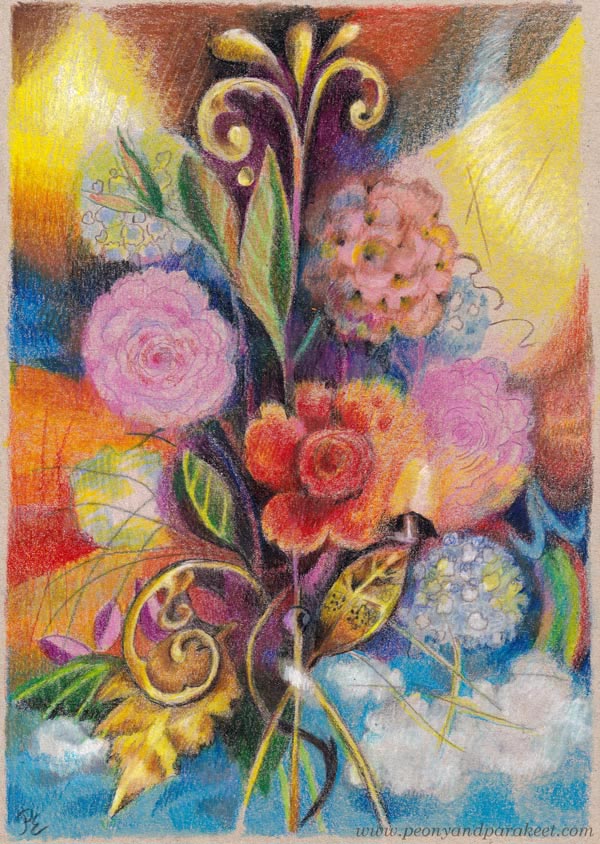
My questions about your art are not positive, but negative. They are braver, but also more grounded, and I think they can be more useful than the ordinary set. When you look at your art through what you don’t instead of do, it can be easier to see what’s truly closest to your heart. If you only dare to admit the truth…
Question #1 – What Subject Do You Always Return to (No Matter How Much You Resist It)
For some, it’s portraits; for others, landscapes. For me, it’s flowers. I actually feel a bit embarrassed about being a flower painter. A woman over fifty, painting flowers … you know the stereotype.
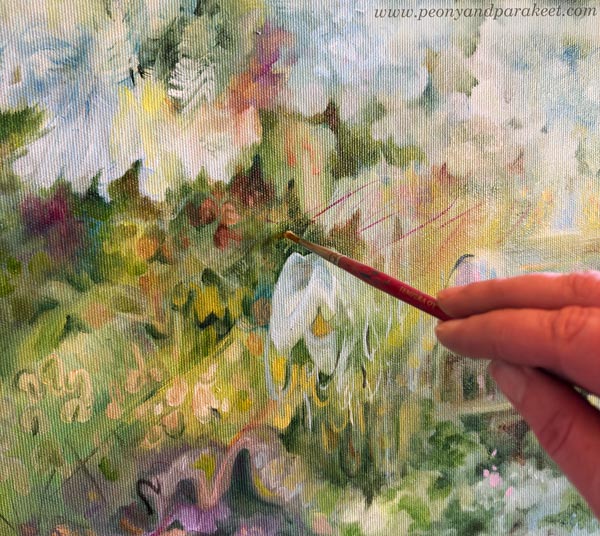
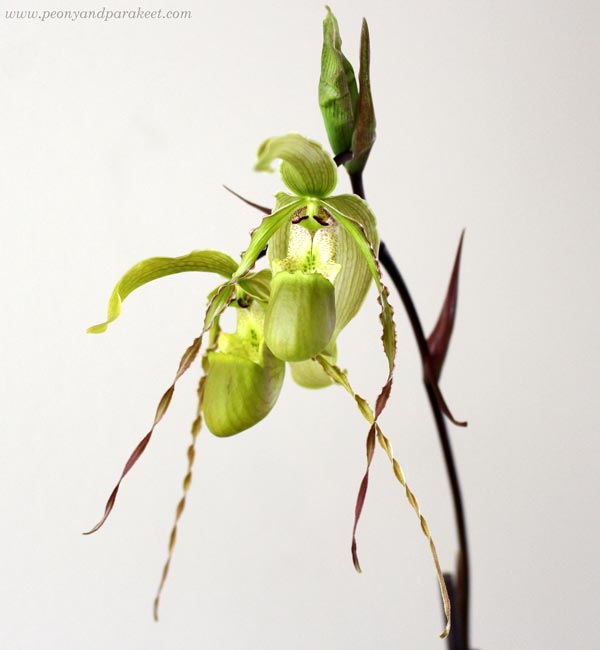
But I feel like my love for flowers and plants runs deeper than many artists. I have rare orchids, a flower garden, and I see flowers as pets with personalities.
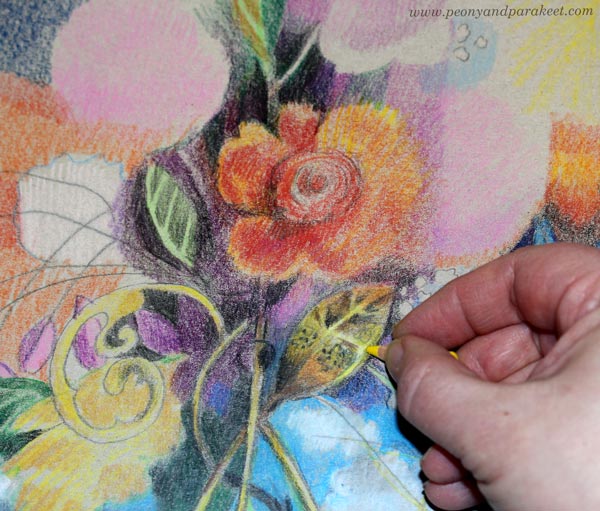
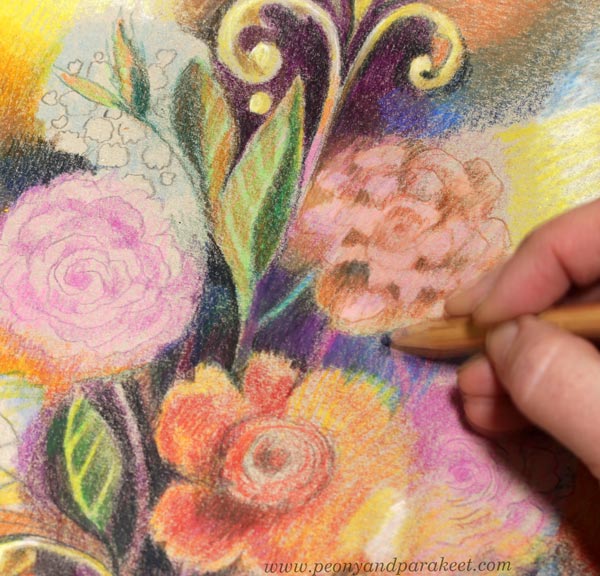
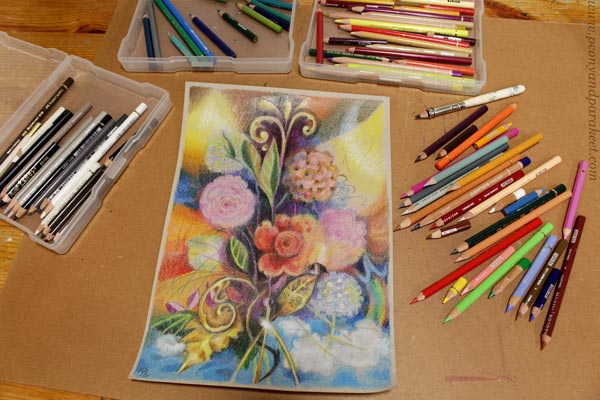
But I also have to admit that I planned to create a drawing of a female figure for this blog post. It never got past the early stages; I just wasn’t inspired. Then I tried an abstract idea. I started several, but still nothing. I wasted at least four hours and filled the bin with my scribbles. Finally, I gave in and drew those flowers.
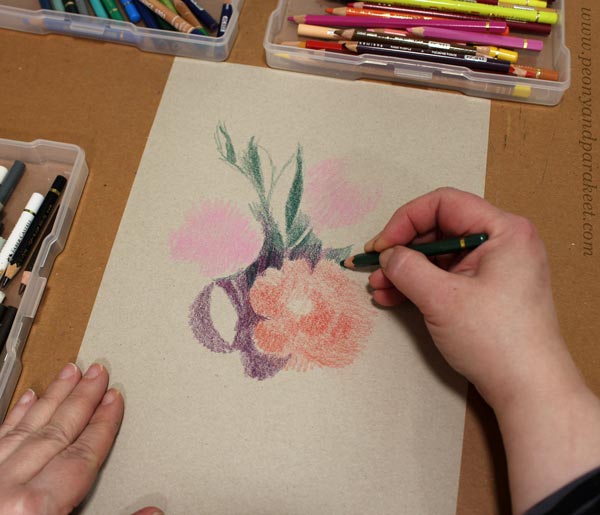
It was so much fun. I felt like I found myself again. “This is so superficial, Päivi!” a voice inside me said, while at the same time: “I love this world above the clouds, where flowers bloom, and everything shines.” So, I’m sorry to post flowers again!
Question #2 – What Do You Break in Your Creative Process?
Rather than convincing yourself how you follow the tradition and how you build the image, think about the cracks in your process. What should you do, but you really don’t? How does that affect your art?
There’s one stage I always try to avoid: sketching. Predictability just kills my motivation. That might be why I don’t draw people so often. When I was creating the course Doll World, I learned how to sketch human anatomy. It’s a very useful skill, but it didn’t stop me from avoiding it. It’s nice to know I can draw a person in any position, but at the end of the day, I’d rather be drawing flowers or ornaments.
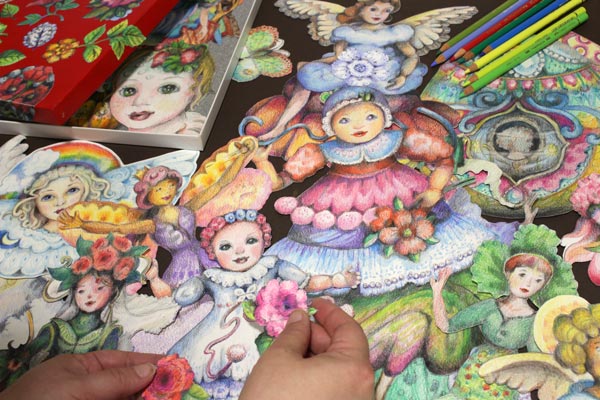
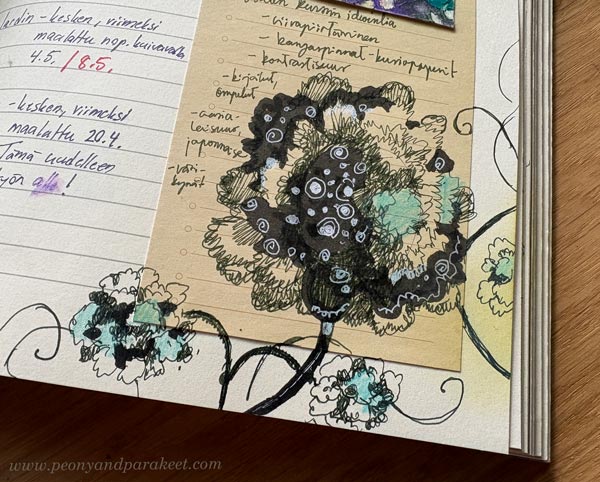
For my oil paintings, I do some prep work by researching and writing down ideas. Sometimes I’ll doodle something small in my planner among the written notes.
But I do practice drawing a lot. Even the drawing for this post is kind of a study for my paintings.
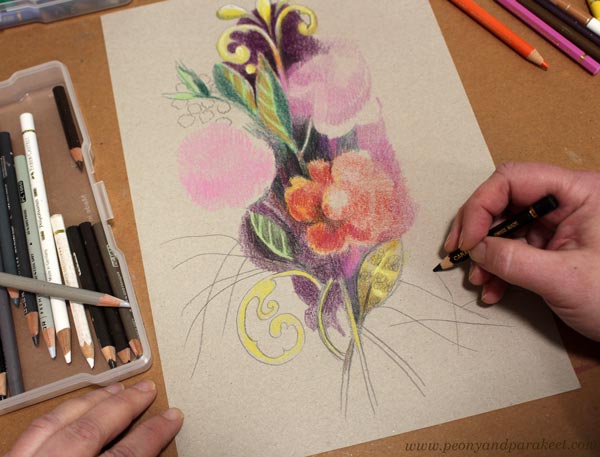
However, I never recreate the same image. I want to break that predictability and leave room for those sudden “aha!” moments.
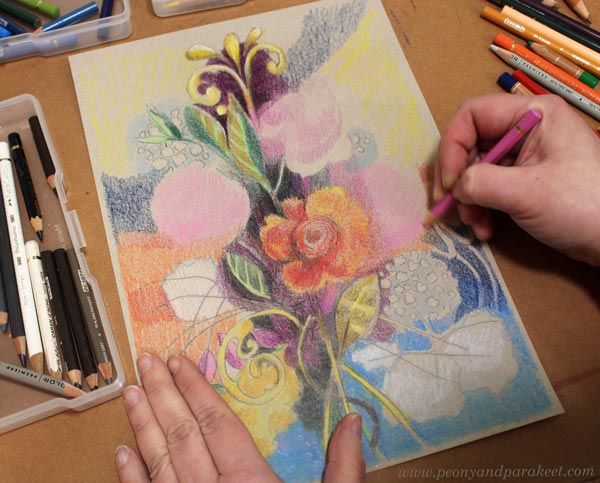
No sketching, no pencil/eraser thing – I’m a little embarrassed by this answer. I have so much respect for the old masters like Rubens and his peers; I think about them every day. I’m also constantly trying to improve my technical skills. But — and Rubens is probably rolling his eyes now — I try to do it without sketching!
Question #3 – What Do You Defy With Your Art?
The world is full of good things that inspire us and that we want to promote. Of course, we would like those things to add meaning to our art as well. But I believe that creativity can’t be forced. You can try to overlay meanings onto your art, but that will only obscure its essence and remove its clarity.
With my art, I’m not defying authority, climate change, social division, inequality, or war. There are many things I oppose as a person, but for some strange reason, they have nothing to do with my art. My art is about defying something as mundane as everyday life.
I respect those who capture the everyday, but that’s just not me. I’m not the kind of artist who sketches the houses in her neighborhood or portrays the ordinary lives of ordinary people. My art doesn’t come from the beauty of the everyday; for me, beauty begins where the everyday ends.
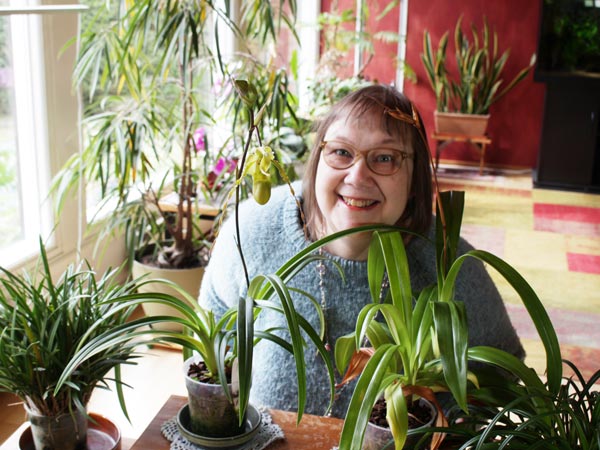
Now I should mention that I’m not a particularly “special” person myself, even though I’m a full-time artist. I work regularly and with discipline. In my free time, I mostly walk the dogs, take care of the plants, do crafts, and clean. I wear wool and cotton.
But when I’m making art, everyday life is far away. I admire the Baroque, rare collectibles, palaces, luxurious fabrics, and historical gowns. I’m a romantic, a nostalgist, and an avant-garde thinker—anything that rises above the mundane pulls me in like a magnet.
I suppose there’s something superficial and embarrassing in that, too. Isn’t luxury the indication of a materialistic mindset?
What’s Behind the Questions about Your Art?
Behind the awkwardly truthful answers, I see a kind of sacredness that inspires me immensely. It’s a connection to nature’s ultimate luxury, to my own intuition, and to a human-made beauty that lifts the spirit.
How would you answer these three questions about your art?
Intuitive Art Journaling
Art is more than re-coloring what we already see. This week, I talk about intuitive art journaling and inspire you to follow your spirit and create more freely.
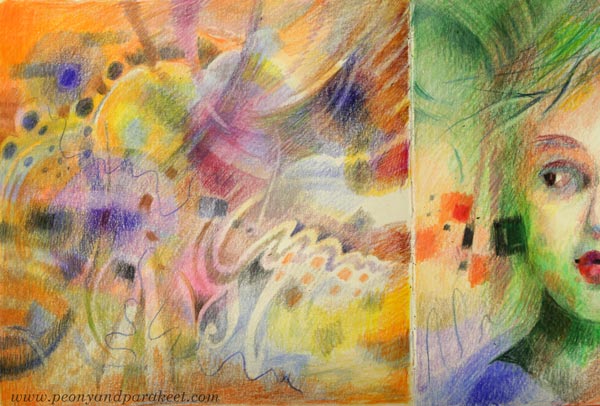
Even if we continuously grow our skills as artists, the joy of art-making disappears if we use too much reasoning. It’s good to practice the technical skills, but it’s also important to arrange time for the intuitive ideas to emerge.
Two Words – “Intuitive Power”
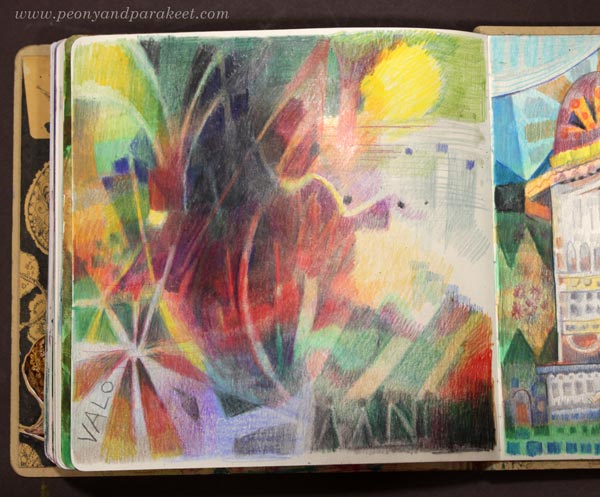
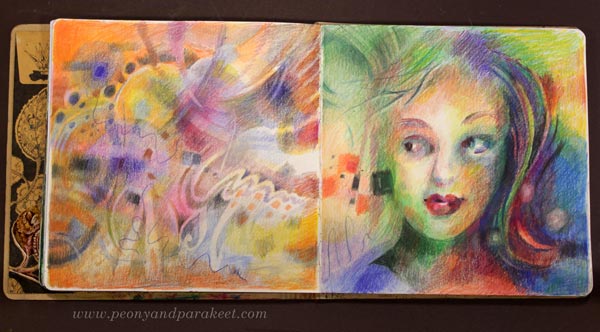
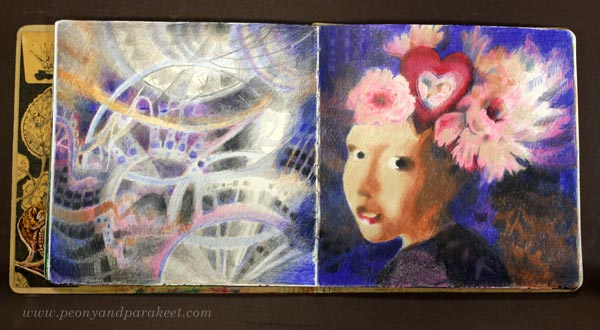
“Intuitive power” – these words suddenly came to mind when I looked at my colored pencils recently. I have been painting a lot, and it has made me miss my colored pencils, those powerful helpers! So, while working on the last pages of my Dylusions Creative Journal, I have been spending some quality time with them.
I started with a house, but then moved on to color more freely. I wanted to catch the atmosphere of that place rather than stay in the material level, drawing windows and such.
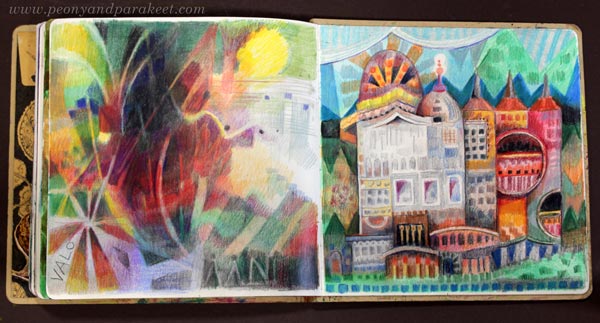
The longer I have been an artist, the more I have wanted to work with invisible things. More than tangible things, I want to express the spirit and the complexity of the world that can’t be photographed. I want to create images that are more like keys to many questions rather than direct answers to one.
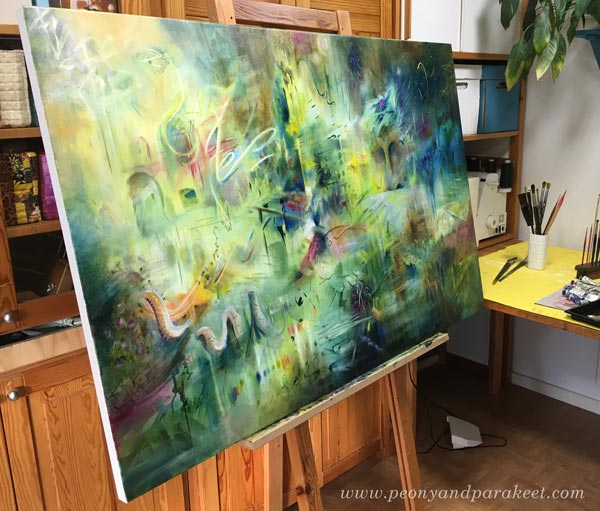
Intuitive Artist
Even if I have embraced and used the word “intuitive” for over ten years, I have now realized that it’s not just one word of the many, it’s “the word” for me. And I don’t mean to narrow myself with the word, but to expand my thinking and creating in the direction that feels natural to me.
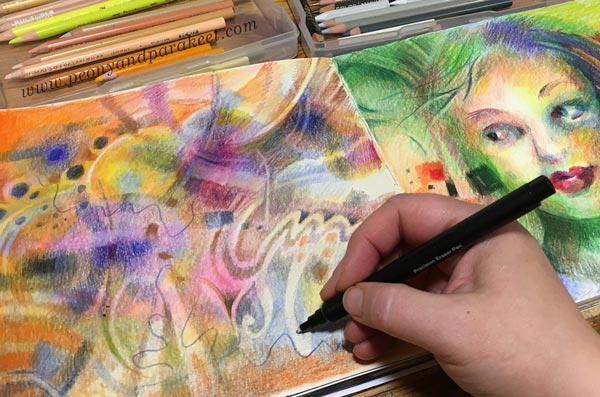
More than a building, I want to visualize the spirit of the place – the sensations that it causes in me.
More than a face, I want to visualize the spirit of the person.
Art Journaling Without Words
Rather than words, intuitive insights can come up as pictures. So, intuitive art journaling can be as simple as creating a series of drawings. The connection with a certain color can be enough to get started.
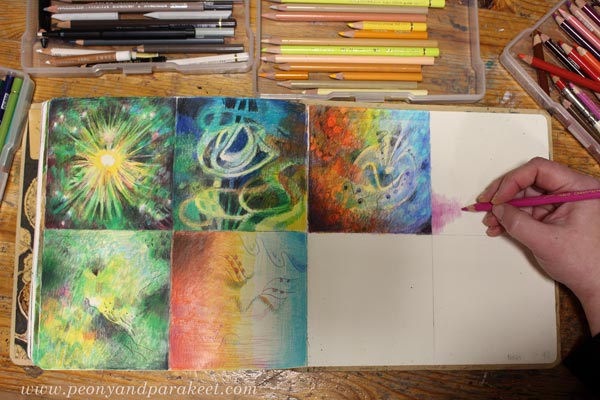
Color is a hole, and if you jump in, you enter the immaterial world. Colored pencils are the easiest tools for breaking the ice between the inner and outer.
“Intuitive power” – what do these words evoke in you?