
From Portraits to Stories – How to Dive Deeper in Visual Expression
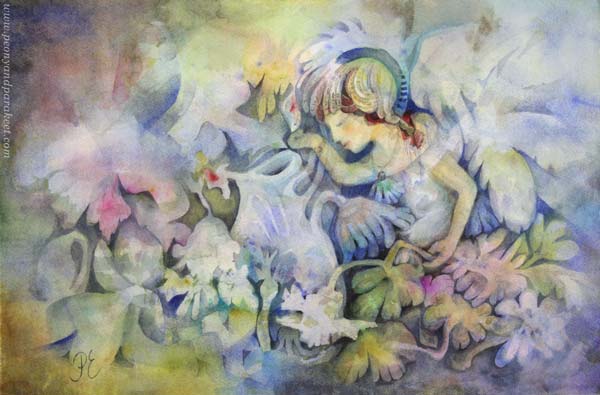
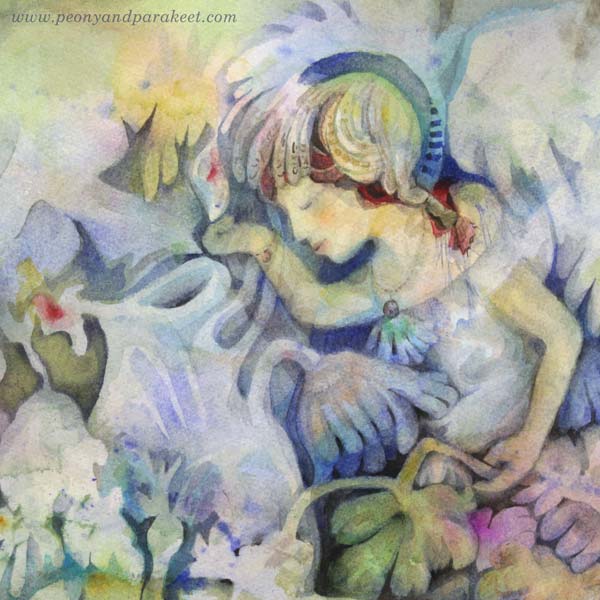
Here’s my latest watercolor painting called “Mirimer”. The name is a combination of “Miracles” and “Meri” (sea in Finnish). I love to invent these names that mix the two languages!
When I started this piece, I had two things in mind: I wanted to use Cobalt Blue Spectral (see the previous blog post about this gorgeous color), and I also wanted to continue my series of watercolor fairies.
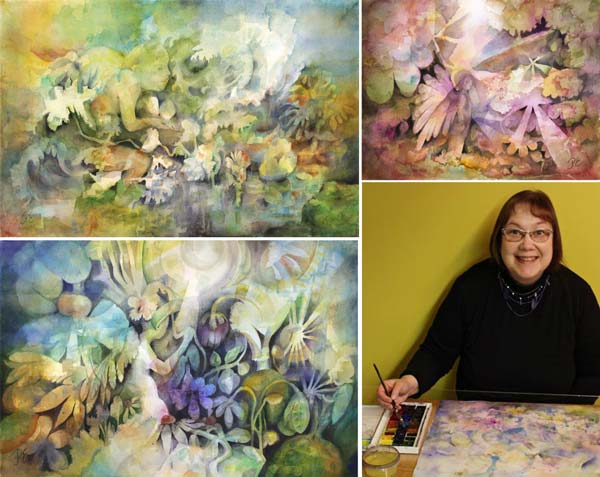
These fairies really speak to me. I feel that I should have started making these story scenes a long time ago and not wasted my time for stiff self-portraits, for example.
Life in Self-Portraits
As a teenager, I stared myself at the mirror and made self-portraits all the time. Any cardboard or piece of paper had my face!
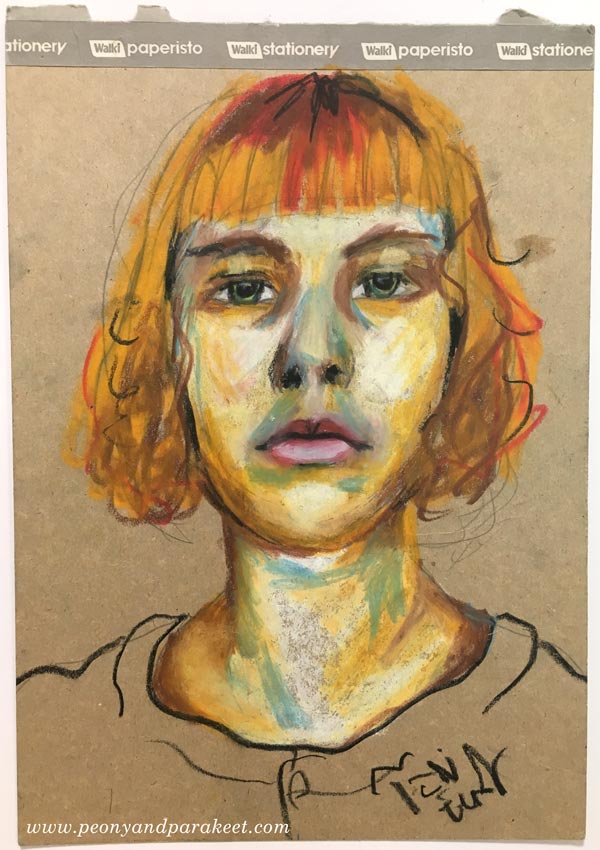
Every time I wondered if this would be a portrait of an artist: “Would my dream come true? Is this piece good or not?”
It has taken tens of years to move from literal self-reflection to expressing my emotions and my inner world. If I could turn back the time, I would peg myself to move from technique back to childish imagination, because there’s always enough time to learn the techniques, and never enough time to deepen the expression.
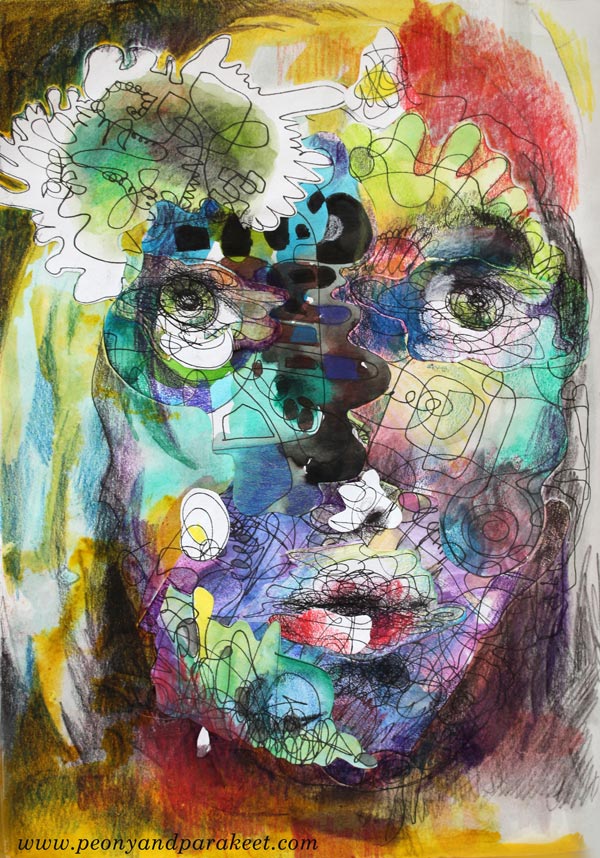
This is a self-portrait from a couple of years ago, and I like that the inner world finally begins to show.
However, for me, the greatest satisfaction of art is not in self-portraits or portraits in general. I want my art to move from portraits to stories, be more dynamic than just staring faces, tell about my experiences, and how I can see them in a new light. I believe that our inner world is full of stories that connect us to other people on a deep level. When I have thought about my artistic style or whether my art is “good” or “bad,” I have often neglected this story-telling aspect.
Mirimer – From a Portrait to a Story
When painting “Mirimer”, there was a magical moment when I heard my mother calling my name. She passed away tens of years ago, and I thought I had forgotten the exact tone in her voice, but the painting brought back the memory. It must have been because of the blue color, her favorite. I realized that I wasn’t painting a portrait of a fairy anymore. I was painting the story of accepting loss as a part of life.
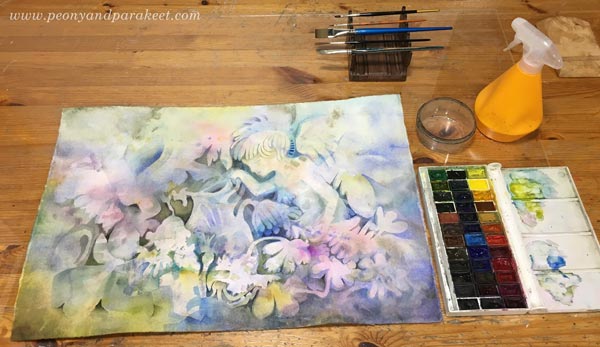
Mirimer became a blue-hooded angel, and the drops of water got some red to indicate that life carries pain that we can’t get to choose.
Illustrating Stories by Lucas Cranach
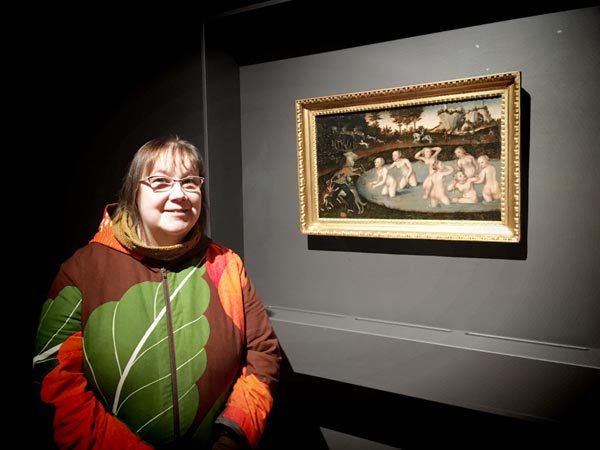
Stories also came to my mind when I went to see Lucas Cranach’s exhibition in the Sinebrychoff Art Museum. Lucas Cranach (The Elder) and her son, Lucan Cranach (The Younger), were not only German master painters in the 16th century, but they also knew how to run an art business. They had a workshop, an illustration studio, which had many employees, a logo, a style that everyone had to follow, and they produced prints too. So even if they lived in the Renaissance, they did what most artists today dream about. They built a visual world around stories that people yearned for.
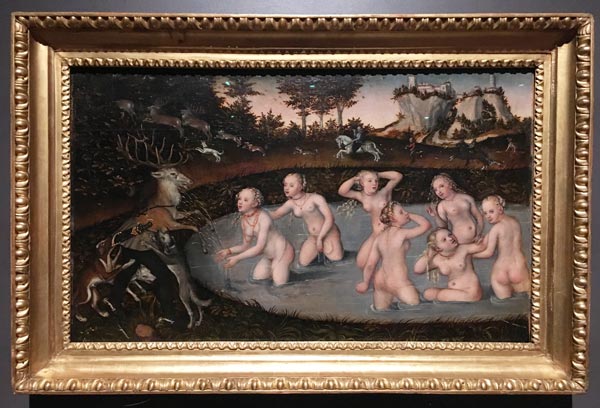
Many of the Caranachs’ stories were from Greek mythology. This painting, my favorite from the exhibition, tells a story about Actaeon turning into a stag when Diana and the nymphs splash water on him. They don’t like him to watch them, and his dogs begin to attack him too!
In the painting below, there’s Venus and her child, a little cupid. The cupid has been stealing honey and the bees have bitten him.
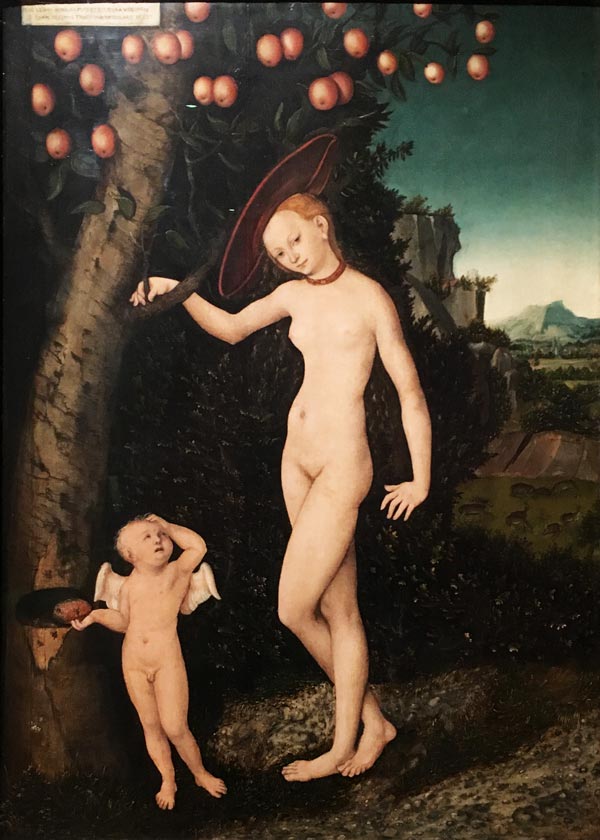
There’s also an old poem, written in Latin on the top corner of the painting too:
As Cupid was stealing honey from the hive
A bee stung the thief on the finger
And so do we seek transitory and dangerous pleasures
That are mixed with sadness and bring us pain
From Portraits to Stories – 5 Tips
- Allow more intuition and imagination into your process: Add splashes and other unexpected elements. Spend time with a color that speaks to you. Instead of actively painting something, spend time discovering and highlighting what already can be seen.
- Grow your skills from faces to body gestures. Learn to process a shape that’s on paper, in your head too so that you can find alternative ways to continue the painting.
- Play with the scale of the elements. We tend to make shapes that are all equal in sizes. But if you want to paint a tiny fairy, for example, you need huge flowers to indicate the small size.
- Let go of strict outlining, and leave room for spots of light and shadows. There’s no story without the atmosphere, and the atmosphere is created by setting the lighting.
- Take time to let the story unfold. Often, the stories have many layers, and the first associations are just the path to deeper ones.
Magical Forest – Discover Stories by Painting!
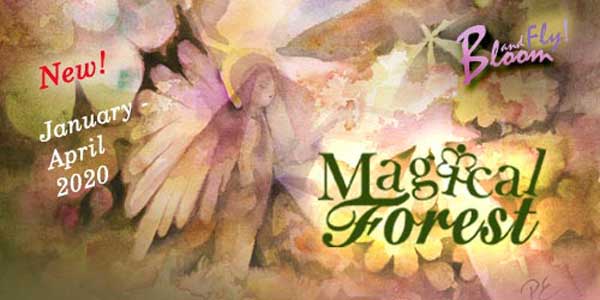
Paint watercolor fairies and nature’s spirits in their magical surroundings. Enjoy freeing up your expression while exploring flowery woods, shallow ponds, leaf chapels, and adventurous sceneries. Magical Forest begins on January 1st >> Sign up Now!
Cobalt Blue Spectral and Experimenting with Watercolors
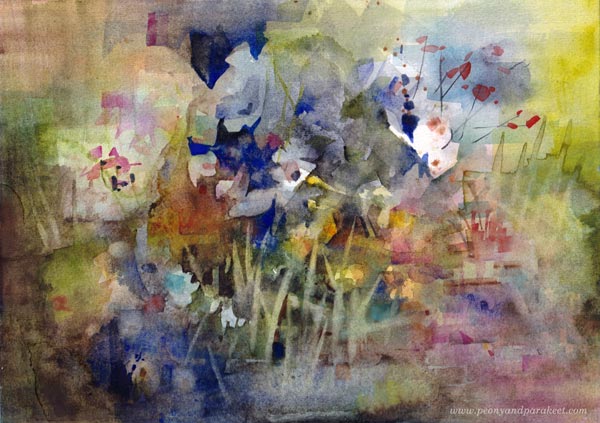
This week, I want to share something I don’t always do publicly: experimenting! The exploration and experimentation also have an important role in my upcoming class Magical Forest, so it’s a perfect time for some play!
Why Experiment?
Experiments are great, especially when:
– you want to try out new art supplies
– you are working on a bigger piece and need time to think between layers
– you have a very limited time to create
– you want to practice new techniques
– the process feels more important than the outcome: you need just to relax
This time, I could tick all the boxes! I had bought some new pans last week. A bigger painting was in progress. It was a late evening when I started painting. I wanted to use mostly angular, not so many organic shapes than usually, and I had lots of cheap watercolor paper for fun.
Cobalt Blue Spectral – Using Color as an Inspiration
I like to start an experiment by deciding a color or a couple of colors that I particularly enjoy. This time, I had a special treat – Cobalt Blue Spectral.
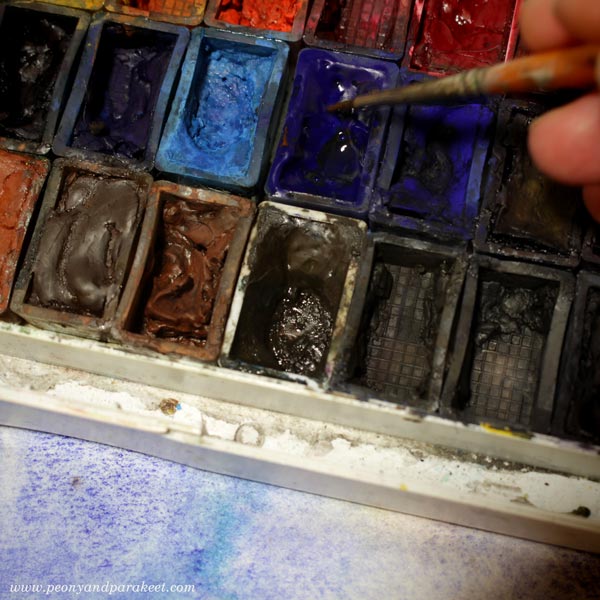
I have a small local art supply store in Helsinki, Finland, called Diverse. There are bigger stores in Helsinki too, but the service is never as good. The owner always has time to talk, and he knows what he sells. I happened to mention that I loved Cobalt Blue Spectral and that it’s so sad that St. Petersburg doesn’t produce it anymore. It was just one little sentence, among many. However, the sentence was heard, and I was astonished when the owner suddenly handed me a blue pan saying: “This is the last one that I have, and it’s from my personal collection.” So now, I have this amazing color again: Cobalt Blue Spectral. It’s much brighter than the usual cobalt and quite extraordinary indeed!
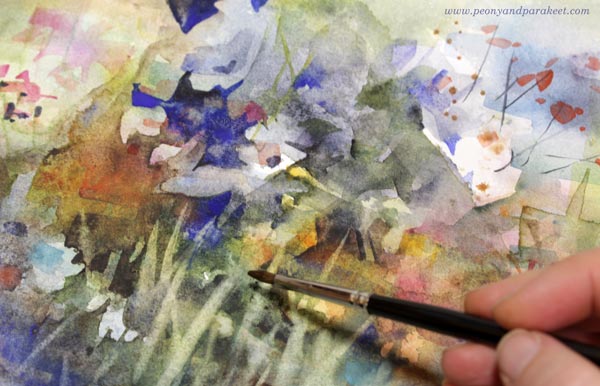
I also bought a few pans manufactured by Roman Szmal. The brand name is Aquarius, and I like all the Aquarius pans I have. Here I am testing a wonderful yellow Quinacridone Gold. I can’t get enough of warm yellows, and this is the most beautiful I have had so far. It’s golden orange when it’s thick, and lovely warm yellow when thinned.
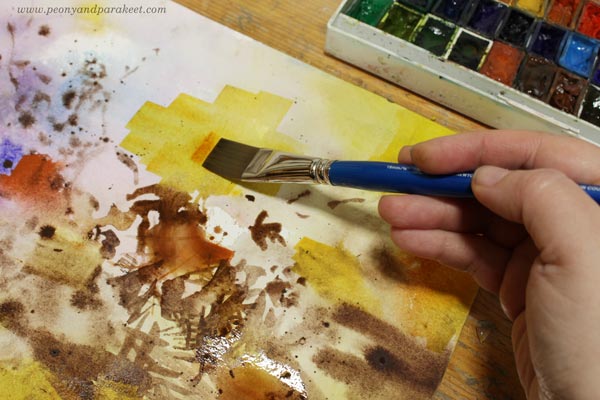
Multi-tasking
I like to paint many small studies at the same time so that when I wait one to dry, I can continue another one.
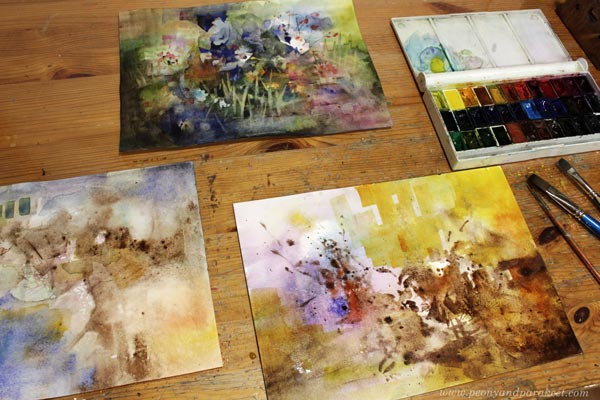
Looking for the Blank Spots
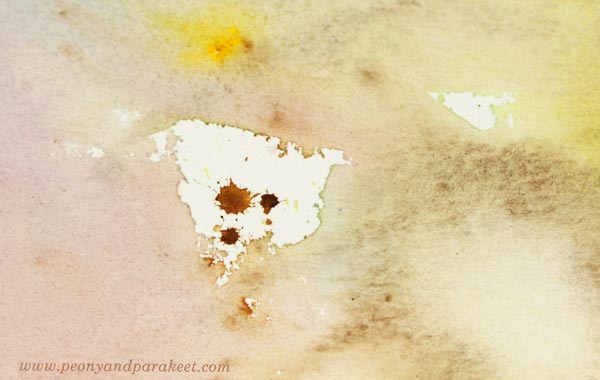
A big part of the play for me is to notice all the small little accidents, especially the blank spots, and figure out how to save and highlight them as the painting progresses.
Including Experimentation for More Serious Pieces
I like to start bigger projects with an experimental mindset too. I use a lot of water so that I can later decide which accidents to enhance and which to hide. A spraying bottle is my trusted assistant.
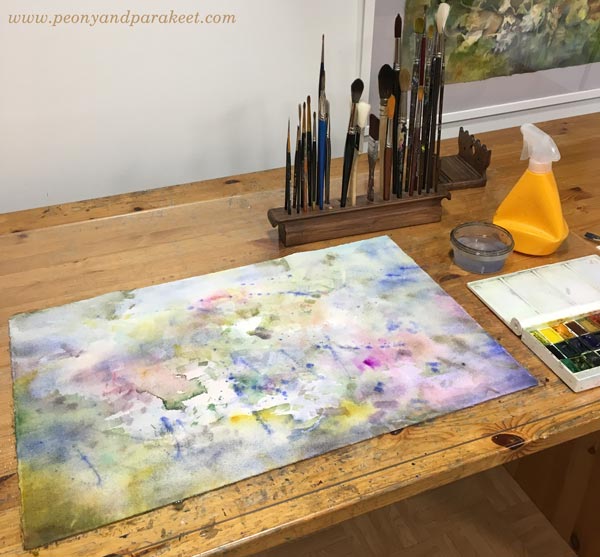
The size of this painting in progress is a half sheet (approximately 38 x 56 cm / 15 x 22 inches). It has 100 % cotton paper, and Cobalt Blue Spectral shows there too. Compared to the experiments, my painting pace is much slower.
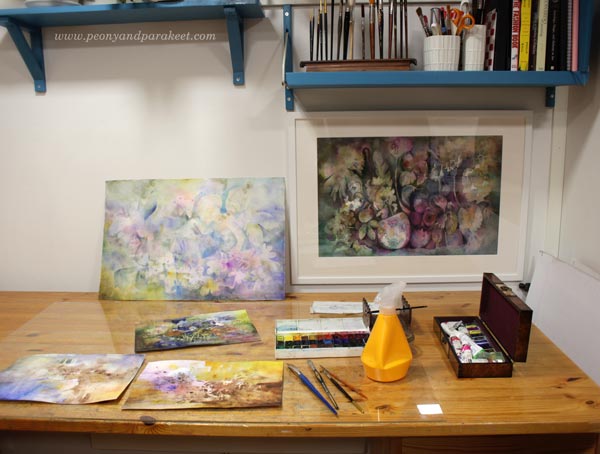
My little art room has been a watercolor studio during the last weeks. I also bought a cheap interchangeable frame from Ikea and ordered a Passepartout from a local framer. Now I can easily display half-sheet paintings!
Magical Forest – Come to Paint and Experiment with me!
Start the new year with the new class Magical Forest!
The early-bird sale ends on Cyber Monday, Dec 2 midnight PST.
>> Sign up Now!
Intentional or Intuitive Art – Create Both!
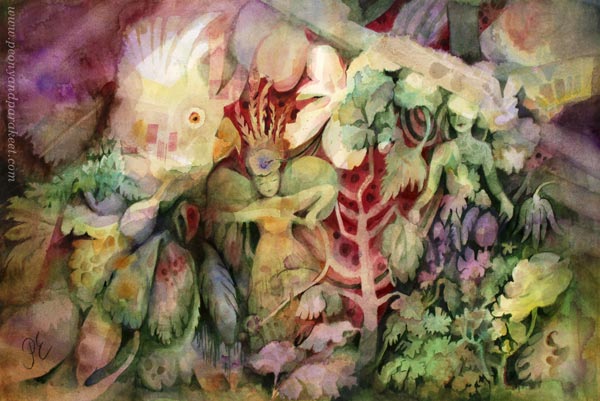
Here’s my new watercolor painting called “Tree of Friendship.” It’s painted freely, first by splashing water, and then by changing to more intentional strokes. But I also show another piece, a more controlled one that I made after this painting. I like to toggle between intuitive and intentional approaches, and maybe this is a working solution for you too in your artistic journey.
Intuitive Art – Start with Freedom!
I regularly need the freedom to paint without any predefined image in mind. If everything that I do is sketched, pre-planned, pre-thought, it’s suffocating. Watercolors have become my favorite medium because they dry rather quickly. I can also splash them without worrying about my safety or the cleaning of the clothes and the studio.
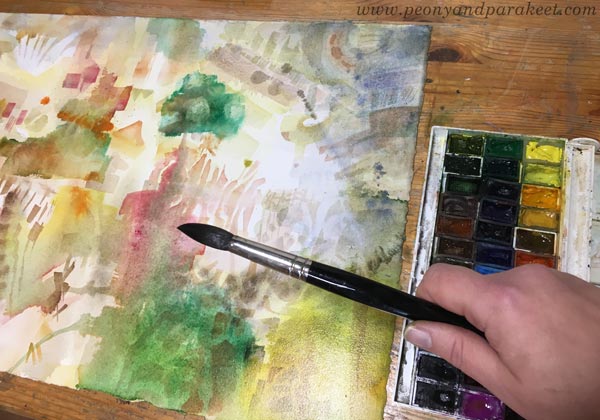
Even if I begin with abstract shapes, most of my work is representational, at least to some degree, when it’s finished. So I slowly discover what the painting could represent and move towards a more intentional approach.
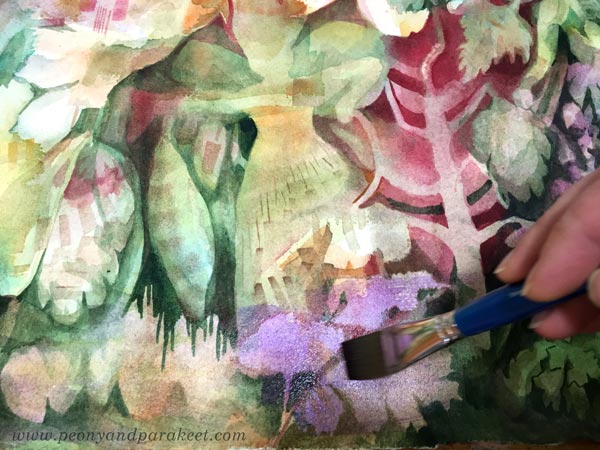
However, I try not to force anything and leave many elements so that they are not fully realistic. I love this freedom between representational and abstract art.
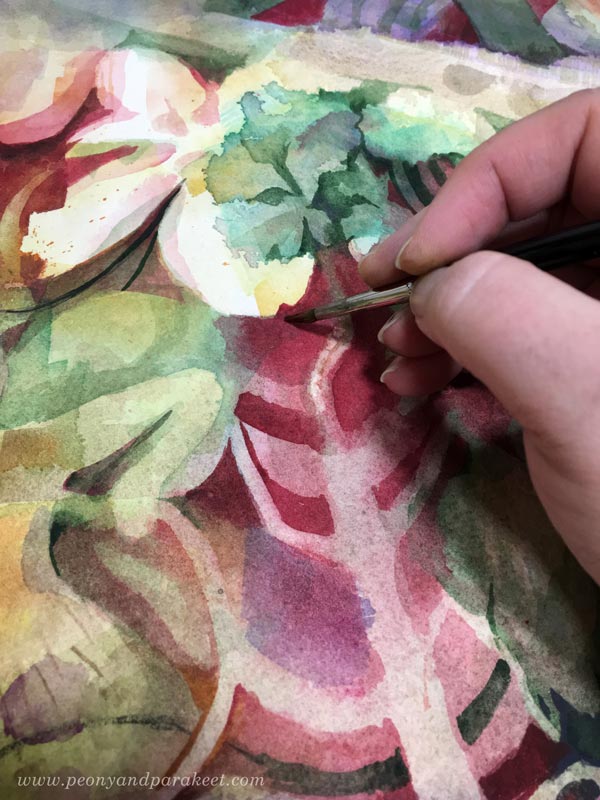
In the later stages, I practice intuition so that if I feel like I need to add irrational elements, I do it no matter how silly it is. Then I challenge myself to make them work. In this painting, some color was thrown on the forehead of the other fairy. The spot was connected with the big white flower by drawing a stem.
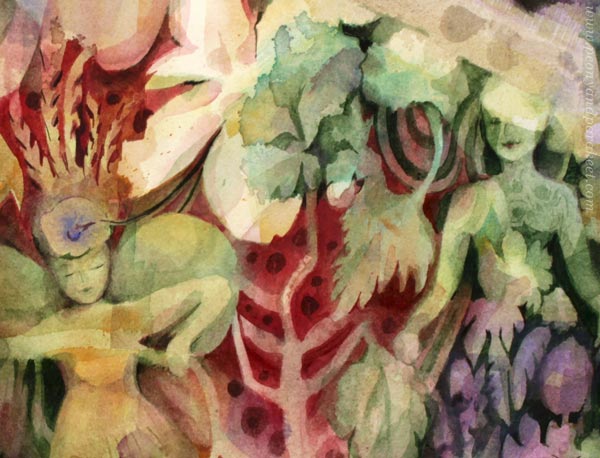
I also like to paint a small area at the time. Then time stops, and painting captivates me. It feels like an adventure, not knowing what will appear within time.
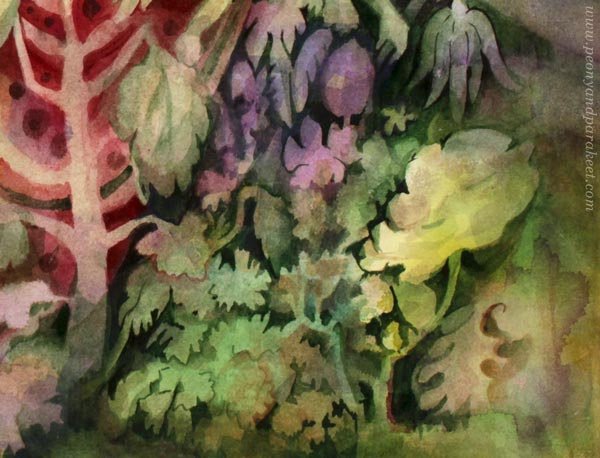
When I paint intuitive art, I often end up creating a challenge that feels almost too big. My self-confidence gets low, and freedom gradually becomes a chaotic prison.
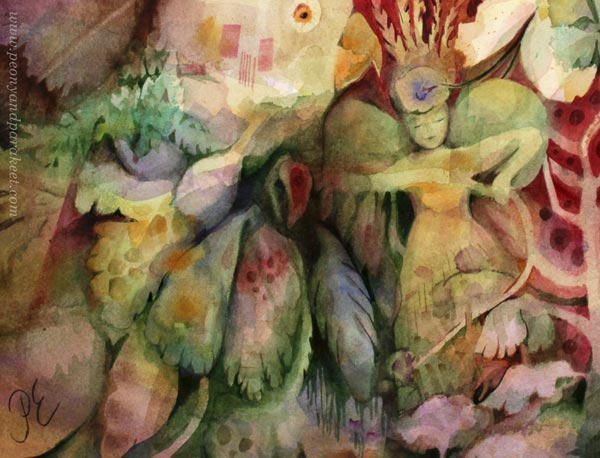
After this painting, I felt pretty empty and disappointed. I barely managed to make it work, and I questioned many times if this is what I want to do as an artist. I painted this piece for about two days. It took one good night’s sleep to get over the disappointment!
This painting is about the beauty of true friendship, secretly connecting two different souls together. When I create intuitive art, I am often able to express bigger themes and more deeply than if I work intentionally.
Intentional Art – Start with Order!
After some free painting, I am usually ready for order, and this time was no exception. Updating the watercolor chart grounds me. I try to do it whenever a pan gets empty and needs to be replaced. The more that I have painted, the more planned my storage has become. I have documentation about the new color that will replace the old one after it’s been used. The upcoming colors have been mentioned in the chart under the actual color.
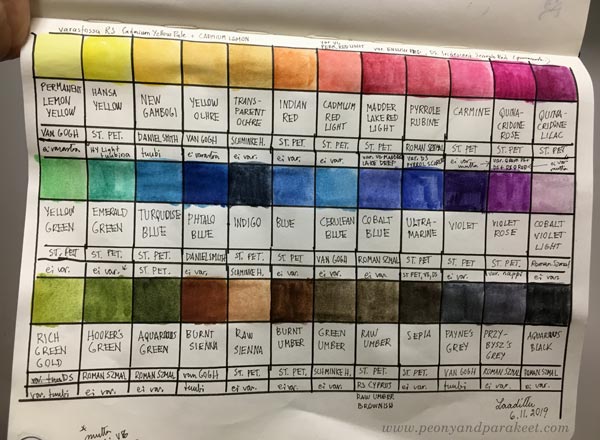
So I have this very controlled side of me that makes me paint a new chart and then memorize it so that when I paint, I don’t have to guess or search for a specific color.
This intentional part of me likes to paint or draw in an illustrative style. Then I often make a quick sketch first. This time, I sketched the face and other main elements lightly with a pencil on watercolor paper and then filled the outlines by painting. I got inspiration from pre-raphaelite paintings and had been thinking for a long time to include more clocks in my work because I really like them.
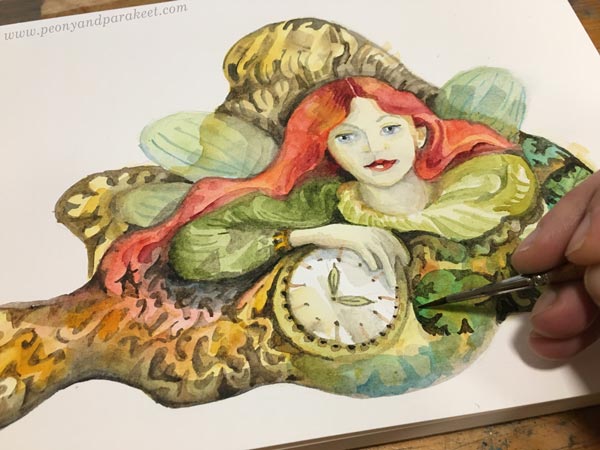
Even if I painted the textures, shadows, etc. freely, there was definitely no splashing involved. I used water much more sparingly and knew what I was doing most of the time.

The intention of making this piece went so far that I had made a couple of collage pieces to test the style beforehand.
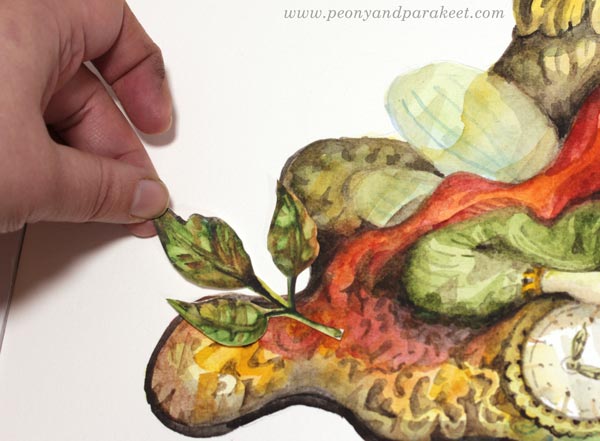
I quite liked how they seemed to fit, and there was no emotional ups or downs!

Why Alternate Between the Intuitive and the Intentional?
If I only painted intuitively, my technical painting skills would stop growing and decay. If I only painted intentionally, my ideas would become too traditional, and I would express too little of myself.
Sometimes we intuitively feel the urge to one direction or another. When you say next time: “I would like to become an abstract painter”, maybe it can be interpreted so that you have left too little room for self-expression lately. Or, if you say “I find it difficult to understand or create abstract art,” maybe it means that you need to practice your technical skills to move forward. Whatever is the case, open the other door too. Permit yourself to let go, and then get back in control again.
Some readers may find this advice worrying, dangerous even when they want to find their style and be consistent in what they do. I would not worry about that too much. If you compare my pieces below, they are not very different from each other. The two approaches will strengthen your voice and make sure that you will keep growing your skills as well.
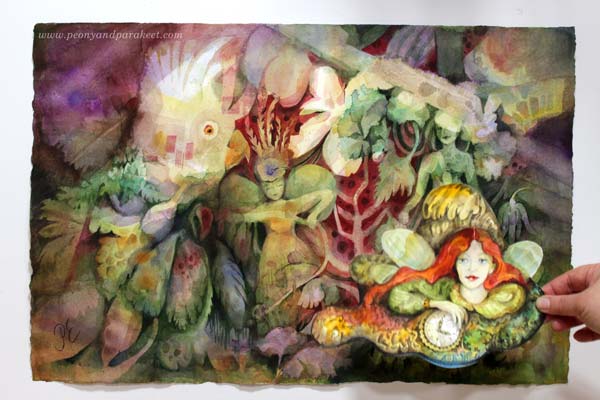
I am currently building a class that consists of creating both intentional and intuitive art. I am interested to hear your thoughts on the subject! What do You think?
Get Closer to True Artistic Expression – Draw Your Innocent Little Secrets!
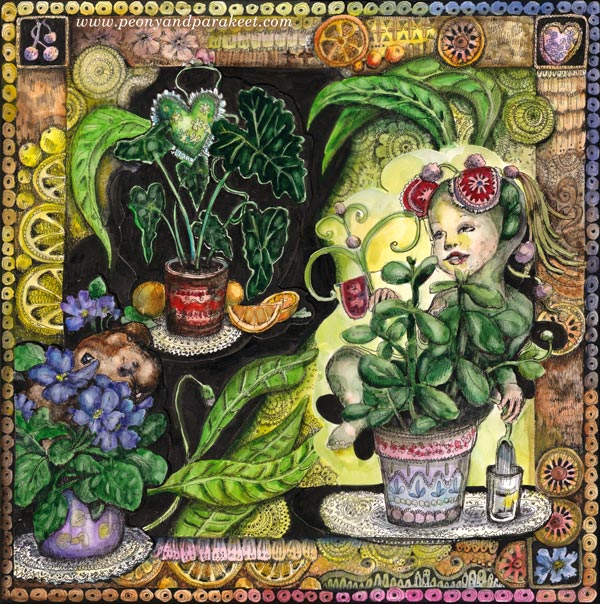
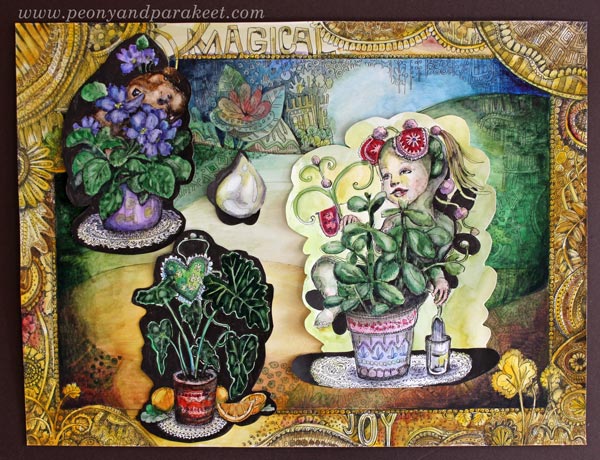
Here’s my latest art project, “The Secret Life of Pet Plants” – an illustration that I have composed of hand-drawn collage pieces. It’s about the love for house plants – the topic that’s close to my heart but that I haven’t touched much lately. I also wanted to include little secrets that I haven’t revealed in my art.
These little secrets are often pretty innocent stuff that we have labeled with words “too childish” or “too weird.” They can become creative blocks and drain our energy if we try to avoid them. Really, life is too short not to get them on paper! We can get more serious after they are out – if we ever want to get back, that is! I think I stay on this track for a while – making art that I have always secretly wanted to see. It feels good to be close to this kind of true artistic expression.
A Couple of My Innocent Little Secrets
One of mine is my secret admiration for traditional (and often a little bit tacky) cross-stitch designs. They often have decorative borders and look more like a collection of motifs than a real scene.
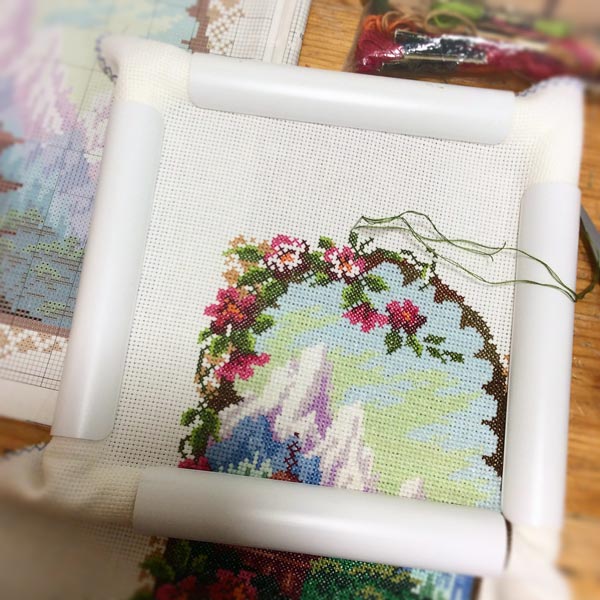
Another one is that, to me, plants are like pets with personalities. We have a lot of plants, both outdoors and indoors, and I feel a deep connection to many.
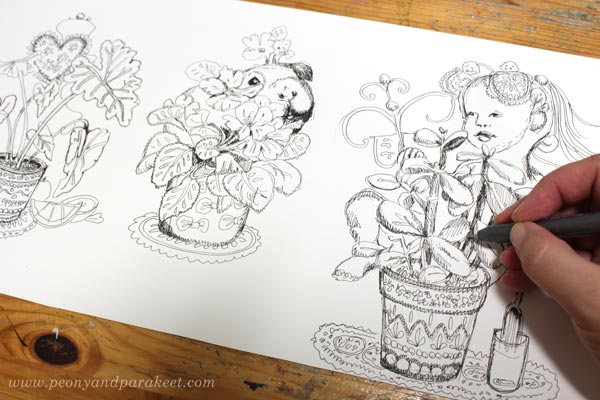
Here are the steps for an illustration made from hand-drawn collage pieces.
1) Make Small Drawings
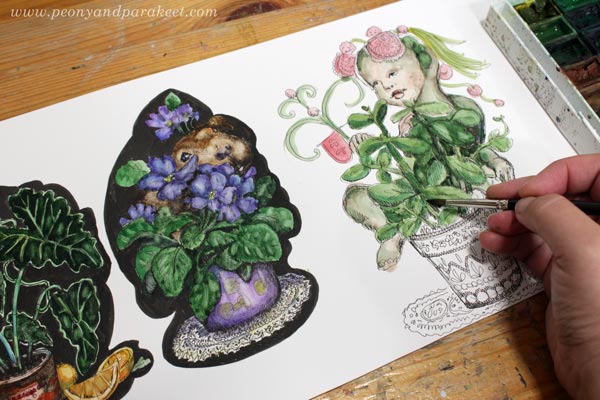
I started the process by drawing and coloring the main elements separately.
I love using watercolors with smooth Bristol paper. The color is easy to layer and also to wipe off if needed.
2) Draw the Background
I placed the colored collage pieces on a background that I had made for the class Magical Inkdom and tried how they would work as a composition. I also drew a water drop just in case I needed a small element for balance.
Then I drew a new background and marked the areas where the elements would go.
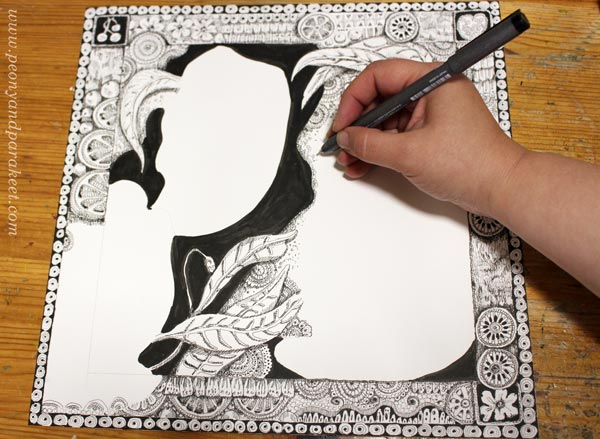
3) Attach the Collage Pieces to the Background
I usually attach collage pieces with gel medium, but this time, I used double-sided tape. It is easier to control, so I didn’t have to worry about having the medium in the areas where I wanted to add more watercolors.
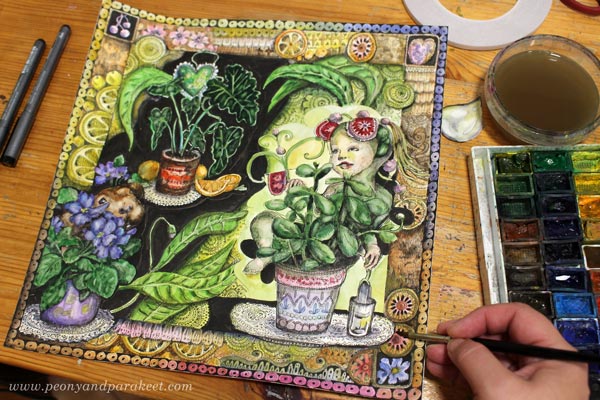
4) Display the Little Secrets!
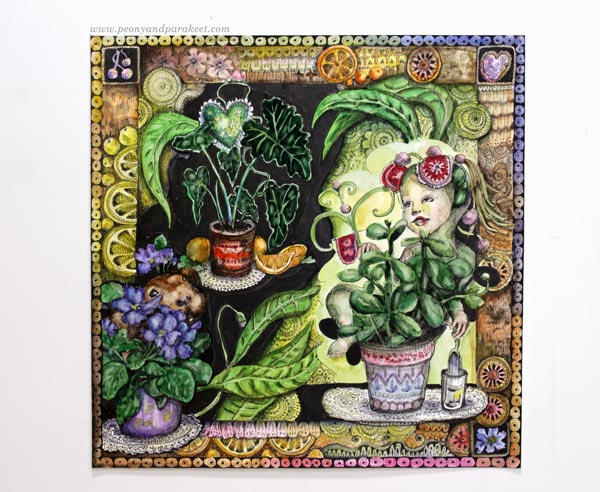
One wall of my studio is white so that I can photograph my work easily. But when I want to display the recent pieces, I don’t leave them on the wall but place them on the side table under a clear plastic plate. I love how this piece fits with the ones I have made for Magical Inkdom. It truly feels my true artistic expression at the moment.
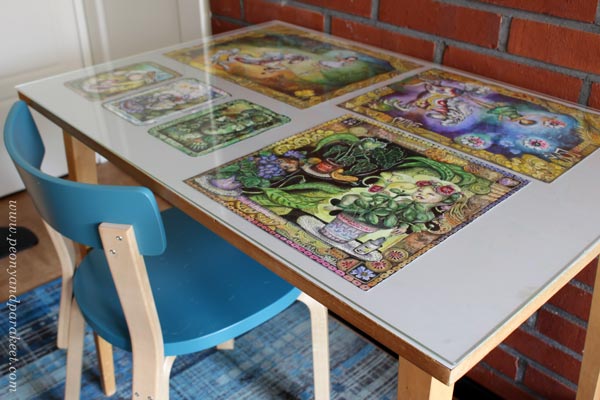
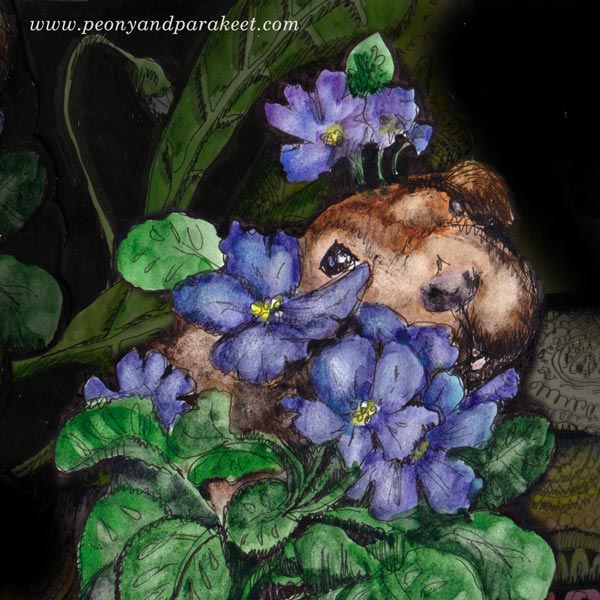
With the African violet that looks like a cuddly guinea pig to me, I want to wish you a happy and creative weekend!
Come to draw fantastic art with me – Sign up for Magical Inkdom!
Right after the registration, you will get all the lessons published so far, and you are good to start drawing! >> Sign up here!