
From Intuitive to Intentional Painting
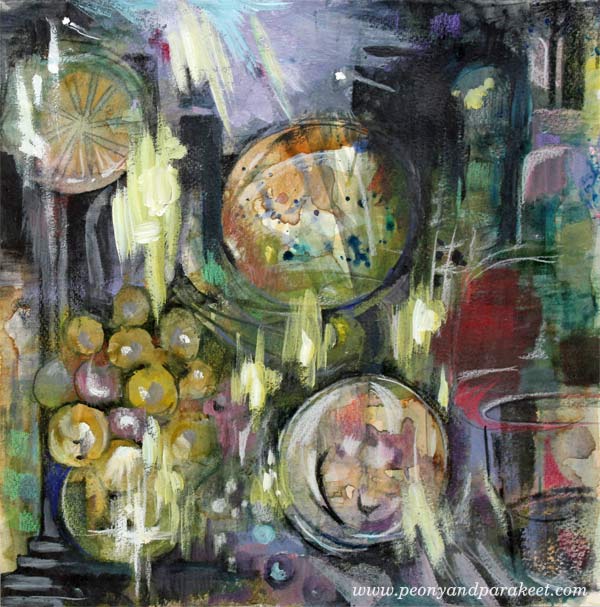
This is my latest mixed media painting called “The Phantom of the Opera.” Just saw the musical in The Finnish National Opera! I don’t know about you, but when I go to see a performance like that, I know that it will appear in my art one way or another. With this blog post, I want to challenge you to think what is intuitive and what is intentional in art. And – can they be combined?
Day 1 – Watercolors
It was a sunny winter day when I started the painting. A friend from the UK was visiting me, and we were chatting while I painted the first layers. With watercolors, like many times before.

I love how well watercolors support intuitive painting. You can just splash here and there and then get inspired by the result. In this phase, I tend to choose the colors quickly, based on what feels good. I would call this phase very intuitive also because I don’t usually have no idea about how the result would look.

After splashing watercolors on the paper, I tried to get something a bit more intentional out of it: distinct shapes, strokes and color areas.

The painting looked like it could be a still life with wine grapes and some fruits. But I did not have more time to continue with the painting, so I saved it in my album. I love to create 12 by 12 paintings as they fit on a regular scrapbooking album. I also love the square shape as it is easy to change the orientation of the picture in the middle of the process.
Day 2 – Acrylic Paints
About a week later I picked out the painting again. This time, I wanted to add some acrylic paint to it. I find the combination of transparent watercolor and non-transparent acrylic paint very attractive. When touching the acrylic paint tubes, I get ideas about color mixes that would work with the watercolor background. I would call this pretty intuitive step too.

As I am a very detail-oriented person when painting, I try to be bold when painting with acrylics. Broad strokes add more interest to detailed paintings.
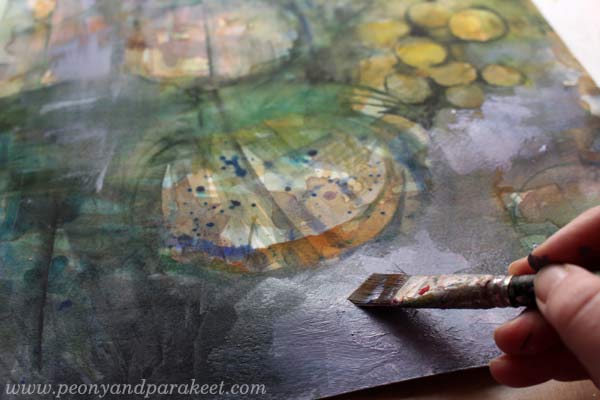
In the end, the painting still looked like a still life, but I wasn’t quite confident about the orientation of the painting.

Here you can see the difference between the end of day 1 (watercolors) and the end of day 2 (acrylics).
Day 3 – Colored Pencils
Because I love details, I also love to use colored pencils. With colored pencils, it’s easy to add little nuances here and there, and I also like the look of pencil strokes on the painting.
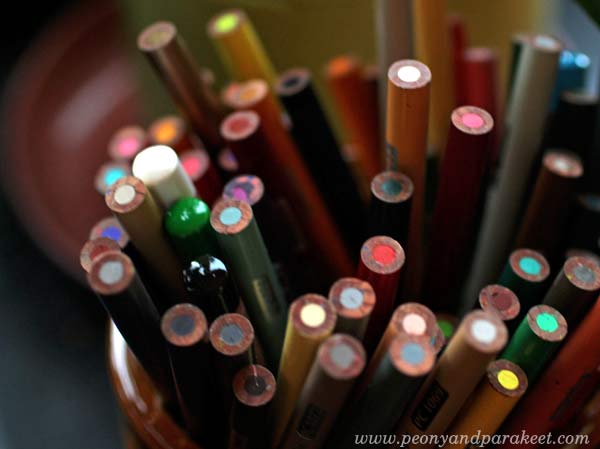
Day 3 was a day after day 2, but it was still before I had seen the musical. When I work with colored pencils, I am often very intentional. First, I had an idea to create wine glasses of the two round elements, but then I changed the orientation of the painting and saw lamps in the ceiling!

Which one do you like the best: the wine glasses or the lamps?
Day 4 – Acrylic Paints + Colored Pencils
Day 4 was after the musical. I got an idea from one of the scenes. The painting continued with acrylics expressing the famous chandelier crash!

So far I had been pretty intentional but then changed to intuitive. I played the music and tried to get into it as much as I could. I used both acrylic paints and colored pencils.
Here’s the result again:

Intuitive Painting – Guess What!
The story doesn’t end here! While photographing the finished painting, I glanced at my feet and saw the same color scheme in my socks! I had just finished them before Day 1 and worn them ever since. So, this painting actually started when I was picked the yarn from my stash for the socks. No, wait – it began when I bought the wool that I spun to the yarn …!

Combining intuitive with intentional is a lot of fun! It’s the best cure for getting rid of stiffness in the result. The intuitive parts allow you to feel free when painting; the intentional parts bring more clarity to the painting.
Get a Free Mini-Course: Subscribe to my weekly emails!
Video: Abstract Painting
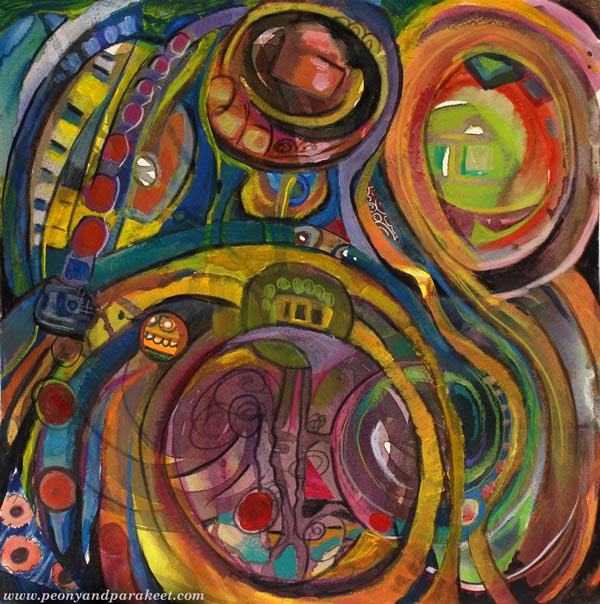
I made this abstract mixed media painting last fall and it has been waiting in the queue ever since as I also recorded a video of the process and had no time editing it.
The painting is called “Wheel Mechanics”. It expresses my thoughts about how good engineering, design and art are connected together but maybe you see something else? With abstract art, it’s good to present a basic idea (in this case: “merging”) in such a general level that it leaves room for interpretations. That’s one of the main difficulties in creating abstract art, I think.
I was about to make a video introducing my online classes so I combined the two together. You can watch me painting + get info about the classes.
Inspirational Drawing is the next class!
It’s my “the drawing class” and especially good for you who wants to enjoy drawing without boundaries. See these blog posts for fabulous drawings created by the students of this class: Explore by Drawing!, Do You Have a Talent for Creating Art? and sign up now!