
Lessons from Palazzo Pitti – Don’t Apologize for Your Art!
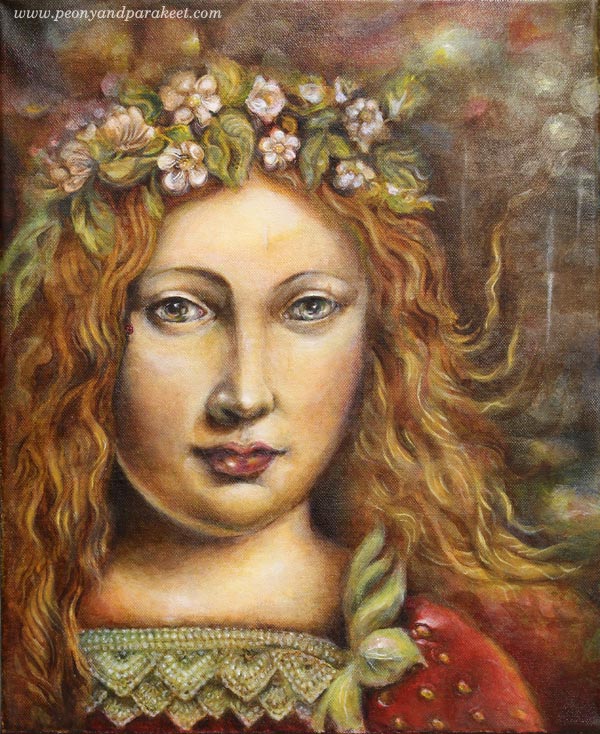
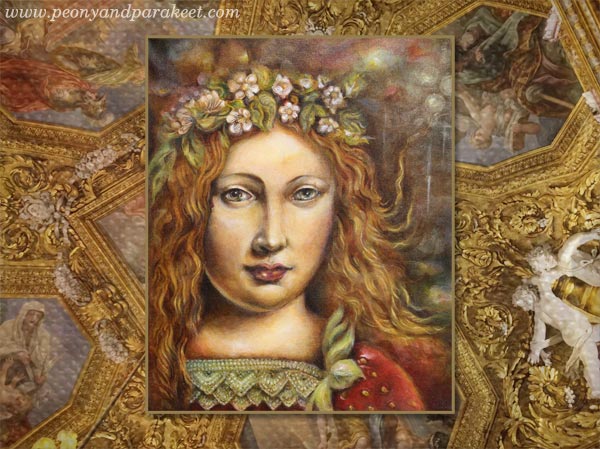
Here’s my latest acrylic painting called “Strawberry Madonna.” I started it in February, and it’s my first painting using old masters’ techniques with acrylic paints. It’s much more difficult to use acrylics instead of oil paints, but I managed to find few tips and tricks that helped. But this blog post is not so much about the techniques. I want to write about being unapologetic when creating art. It feels like a never-ending journey to me, and I hope this blog post will resonate with you too.
Palazzo Pitti and Traveling to Florence, Italy
Last week, I traveled to Italy with my husband to see Renessaince art. We flew to Rome, then took a train to Florence. After spending a couple of days in Florence, we got back to Rome, spend a couple of nights there, and then flew back home. We visited so many museums that it was a bit exhausting at times. I took over 700 photos, and there were so many highlights in our journey that I decided not to try to fit it all in this blog post, but focus on the glory of Palazzo Pitti, an art museum located in Florence, and save other experiences for later.
Namely, seeing Palazzo Pitti on the first evening in Florence, reminded me of how needless it is to tone things down and how we can be as glorious as possible when creating art and when using our imagination.
One Chandelier is Never Enough!
When watching the chandeliers of Palazzo Pitti, my first thought was: “Isn’t one enough?”
Then I realized that on my artistic journey, I have often thought like that: “it should be enough.”
- Creativity: “I should be enough to have one idea for one image.”
- Time: “It should be enough to have two hours for this piece.”
- Skills: “It should be enough to just have a little bit of fun with it.”
- Potential: “It should be enough to stick with what I know now.”
- Imagination: “It should be enough to replicate the reality.”
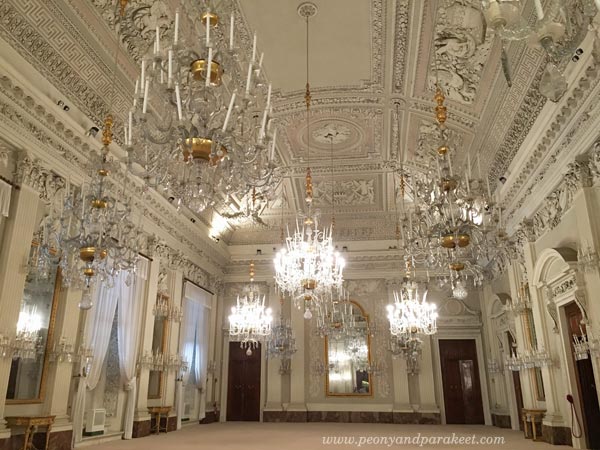
But one idea, one short session, one technique, one reality, is never enough if you want to continue the journey. When you have passed the first steps in creating, the room gets bigger. Making art frustrates you. It feels like your chandelier is broken. But instead of continuously changing the chandelier, you need more chandeliers to lighten your way.
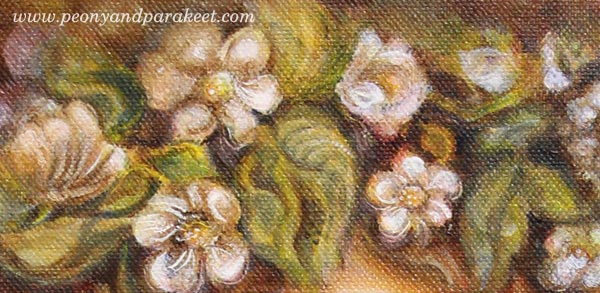
When you begin creating, it’s just fun to change the chandelier: the theme, the technique, the idea. But when you have been creating for a while, it becomes overwhelming. The nature of creativity is never to focus on one small thing at the time. One chandelier is never enough for the curious mind. You need to learn to:
- combine your many ideas
- take more sessions for one piece
- find the blind spots in skills and knowledge
- and the most important of all: increase your imagination so that it takes you above the everyday life.
When you have many chandeliers, you see it clearer why you create art and where you want to go with it. Don’t apologize for your lacking focus but embrace all aspects of your creativity!
Ask What Your Heart Says!
When I saw “The Horrors of War” by Peter Paul Rubens in Palazzo Pitti, it caused an immediate emotional reaction. I was in tears before I was able to analyze the painting. Even if the theme was very dramatic, violent even, the movement and the wind was so beautifully painted. To me, it expressed the beauty of change, the theme that has always been close to my heart.
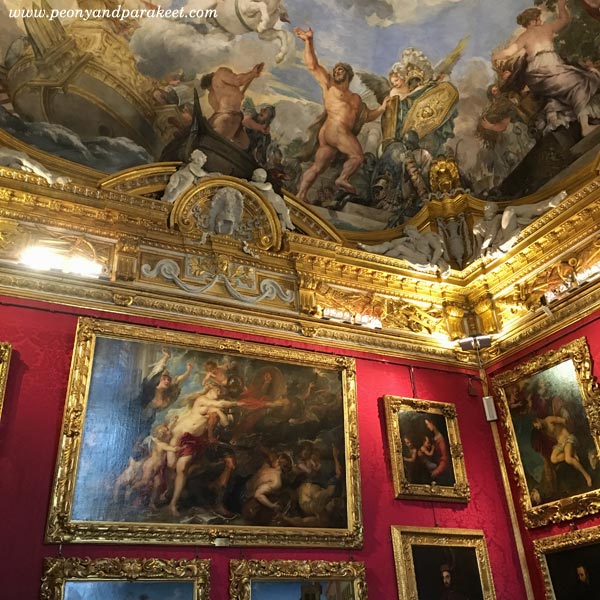
When I was a teenager, I often drew scenes or portraits where the wind was present. It just looked fun and dynamic. But the more I have been creating, the more I have realized that I love to express movement, change, and transformation in one way or another, and the wind is often a symbol of that in my work. Thinking about big changes is one of those chandeliers that always lightens my inspiration.
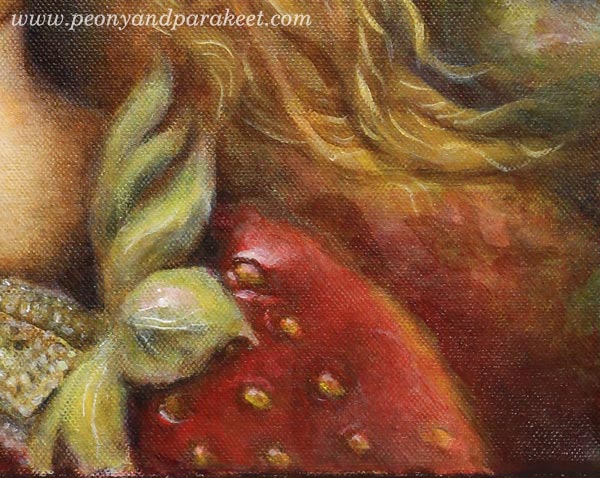
I believe in digging deeper behind the first reactions. If art makes you emotional, there’s something important that’s behind it. It’s often contradictory, something so different that you have a hard time in believing it.
It’s kind of funny how much time I spend at home, doing the daily routines, and how my mind is in grand transformations and explorations. But to find what’s your true passion, the mundane life and your everyday wishes don’t give answers to that. You need to connect with your imagination.
Don’t apologize for your circumstances but use your imagination to experience the freedom!
Decorating is Not an Enemy of Expression!
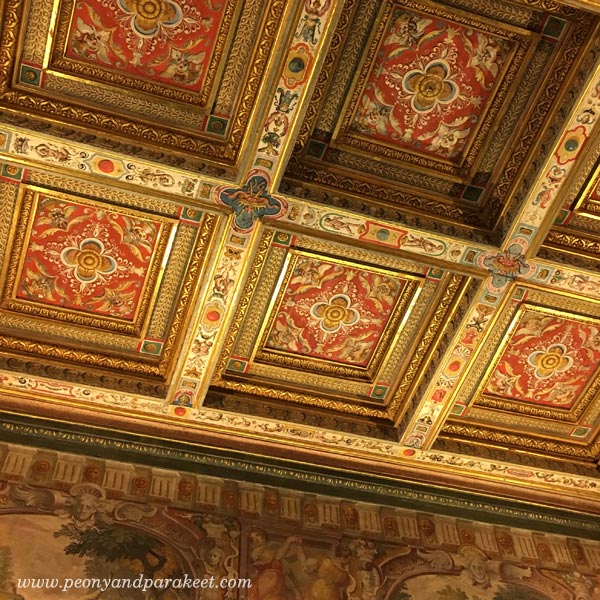
One thing that I found very delightful in Palazzo Pitti was how the number of decorative designs. I have always felt drawn to decorative painting style and even called myself as a “decorative artist.” It was my way of saying that I don’t feel like being very expressive. But nowadays I think that it’s possible to combine both decorative and expressive together, and there’s no need to limit the inspiration. Namely, who couldn’t be inspired by this ceiling?
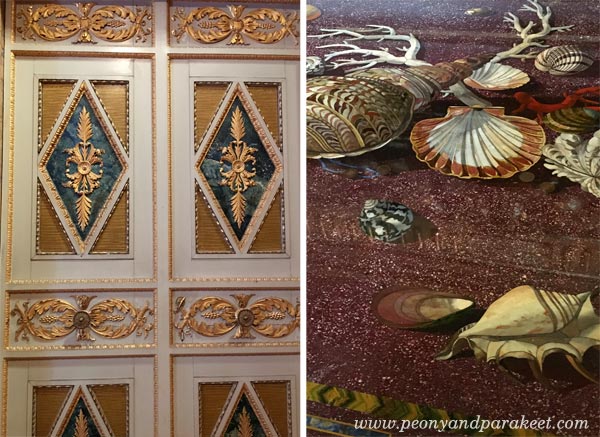
And look at the door and the tabletop! The most amazing thing is that the table top is made from stoneware!
We may not be the similar masters as those decorative artists, but the experience in crafts can still be a treasure chest of ideas. For example, in my Strawberry Madonna, I added a crocheted lace on her dress and truly enjoyed painting it!
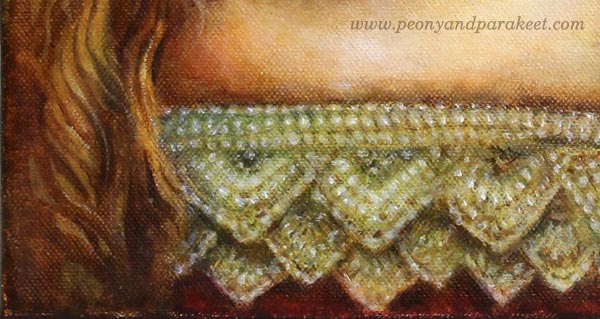
Don’t apologize for your background in crafts (or in anything) but see that as a part of your artistic journey!
About Confidence and Belonging
When walking in the aisles of Palazzo Pitti, I felt sweaty and modestly dressed. The Medici family would not have invited me to their party, for sure. I thought about my art too and how modest it felt after seeing the big masterpieces.

But it’s not only my art but I also often struggle when writing these blog posts. I don’t want to just write about my thoughts. I want to write so that you would continue creating and evolving with me. I want to offer classes that make you draw the connecting lines between your brain and your heart.
So that the way you speak about your art, would include more joy and confidence.
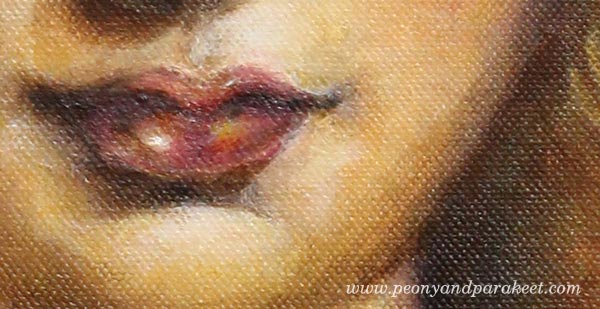
So that the way you see art, would be filled with happy surprises and inspiration.
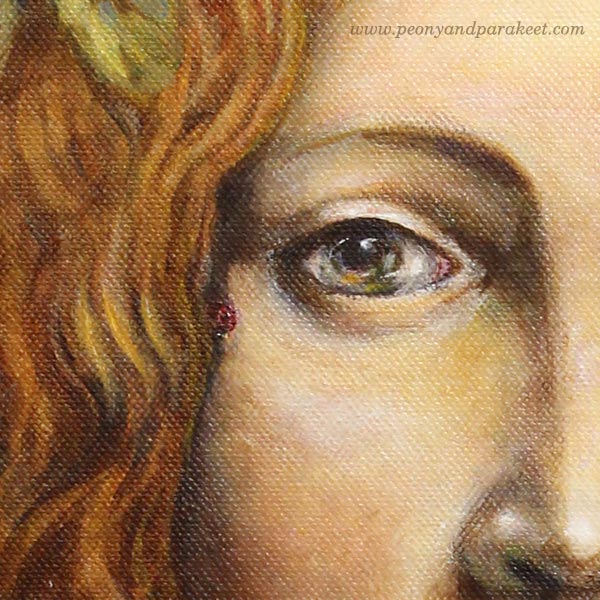
So that the way you explore the many styles, would make you see higher to your passion.
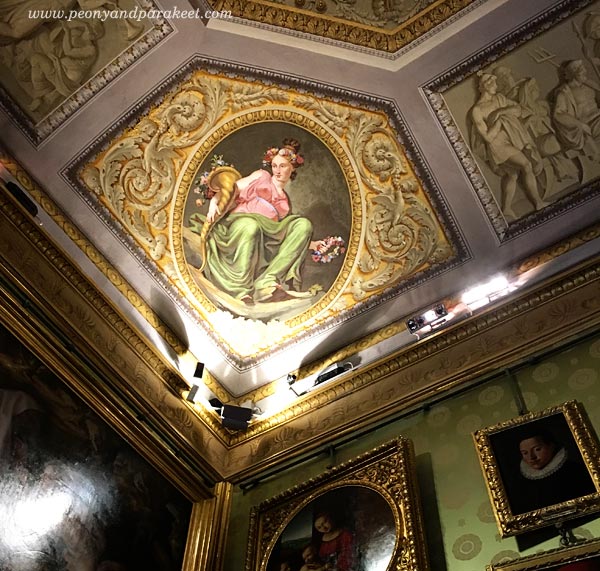
So that the ideas that you get, would get full wings because you value them.
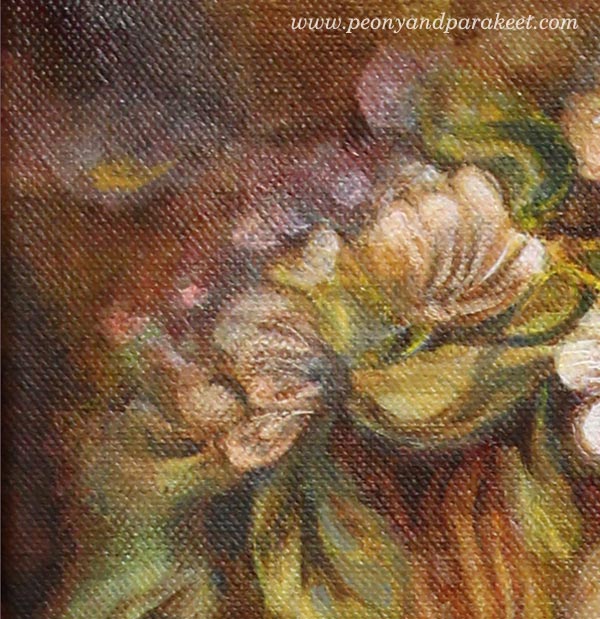
Here’s what we can learn from the treasures of Palazzo Pitti:
There’s no reason to be apologetic when creating and sharing your art. There’s no reason to underestimate the impact that art can have on your life and others as well.
Art is Timeless but Our Time to Create It is Limited
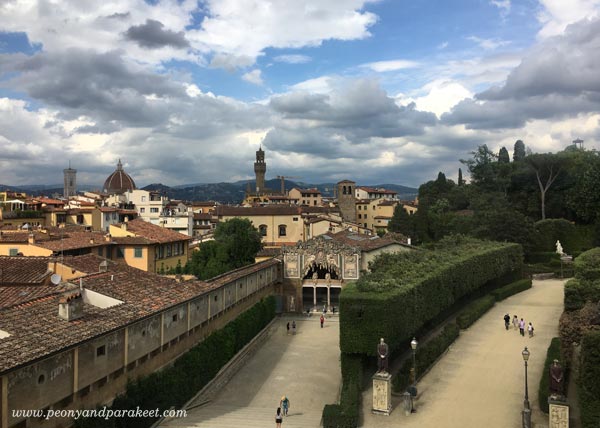
The final image is a view from Palazzo Pitti. It is a reminder of how art can stand time but how our time to create is limited.
If your heart wants to create in a new way, don’t postpone it. If you are struggling, don’t delay solving the problem. I hope I will see you in my upcoming coaching program The Exploring Artist, where your art and your artistic identity is in focus. It’s about finding ways and confidence to create unapologetic art as well as building belongingness with the like-minded people. >> Sign up here!
Helene Schjerfbeck – Step-by-Step Formula for Her Style

In this blog post, I will show you how to create a stylish portrait and learn from a Finnish artist Helene Schjerfbeck (1862-1946).
The Famous Helene Schjerfbeck
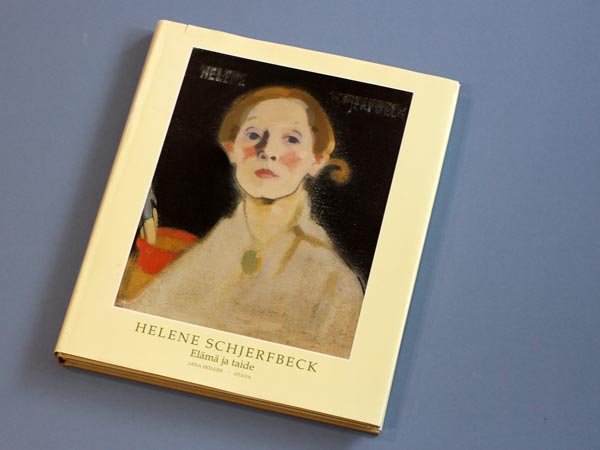
Helene Scherfbeck had an impressionistic and fairly detailed style. But during the years, she became a true expressionist, a master of expressing the most essential through simplifying. She painted a lot of portraits, and many of them have become very valuable. The Red Haired Girl II was sold for 1.5 million euros at Sotheby’s last year. One of my aunts admired Helene Schjerfbeck, and many years ago, she bought me a book about her paintings. The book is called “Helene Scherfbeck – Elämä ja taide” (Life and Art), and it’s written by Lena Holger. To be honest, I wasn’t a big fan of the style and didn’t even browse the book for years. But the more I have learned about art, the more enthusiastic I have become to study various styles. As I love to figure out a formula behind a style, it started to feel tempting to solve Helene’s secrets too.
Independent Visions – Helene Schjerfbeck in New York!
There’s also another reason why I am writing this. Currently, there’s a rare opportunity to see Finnish female masters in New York, USA. The Ateneum Art Museum, which is part of the Finnish National Gallery, displays an excellent exhibition at Scandinavia House from 29 April to 3 October 2017. The exhibition presents four early 20th-century Finnish artists from the Ateneum collection: Helene Schjerfbeck, Sigrid Schauman, Ellen Thesleff and Elga Sesemann. If you visit New York this summer, do go and see it, I promise you won’t be disappointed!
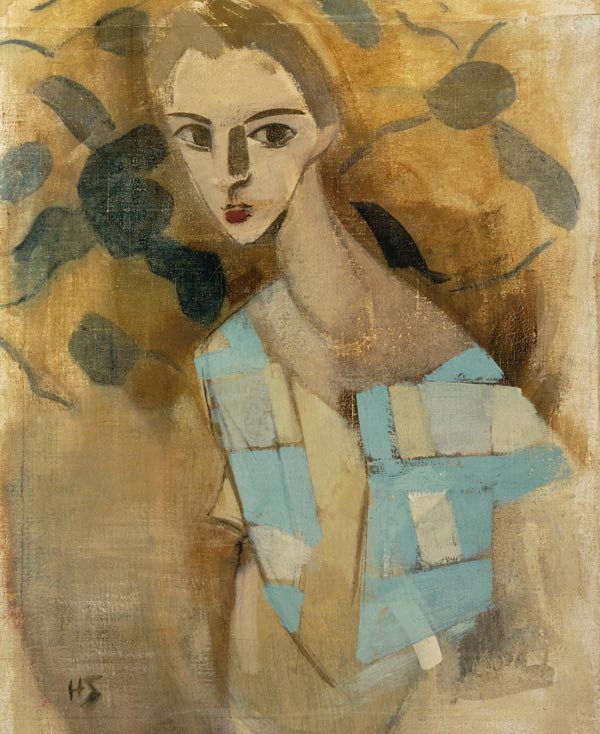
Here are a couple of Helene Scherfbeck’s paintings that you will see there.

I find the abstract nature of Helene’s style especially fascinating. The way she simplifies the spots where the light hits or where a shadow is formed is like she is building an abstract composition instead of painting a face.
Furthermore, the girl below is wearing a shawl that is like an abstract painting!
Mixing Helene Scherfbeck’s Style with My Personal Approach
One primary factor in building a style is the shape of the elements. I for one love organic elements and flowing form. Simple rectangles are not as appealing to me as more complicated and diverse shapes. However, I wanted to add Helene’s twist to a couple of watercolor paintings. As Helene Scherfbeck also painted still-lifes, I decided to paint a woman with a flower or two. First, I made a tiny painting and played with layers to create angular shapes. Then I painted a bigger watercolor painting with familiar flowing shapes but using the insights that I had got by painting the first one.

After these two paintings, I was ready to record a simple formula for achieving Helene Scherfbeck’s style.
The Formula for The Modern Woman – Step by Step!
During this drawing process, improvise, but also check that your drawing is not symmetric. It makes the drawing dynamic and reduces stiffness.
1) Draw a couple of arcs to create a face. Then add rectangles and triangles for hair. It is a fun and easy way to add hair without focusing on the shape of the head.
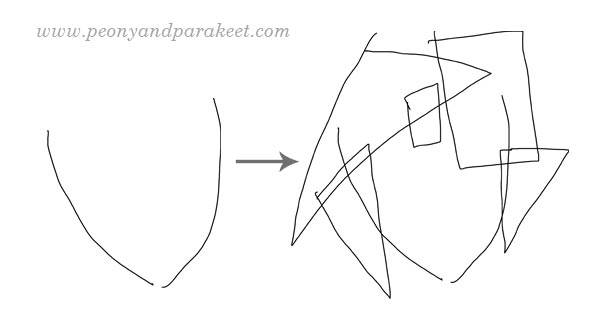
2) Add a neck and shoulders by drawing a rectangle and a couple of triangles that point to different directions. Then draw eyes, mouth, and other facial features. Use as many geometric shapes and simple lines as you can. After facial features, turn the work upside down and complement the drawing with geometric shapes so that it’s more like a balanced, asymmetric abstract painting than a portrait of a woman.

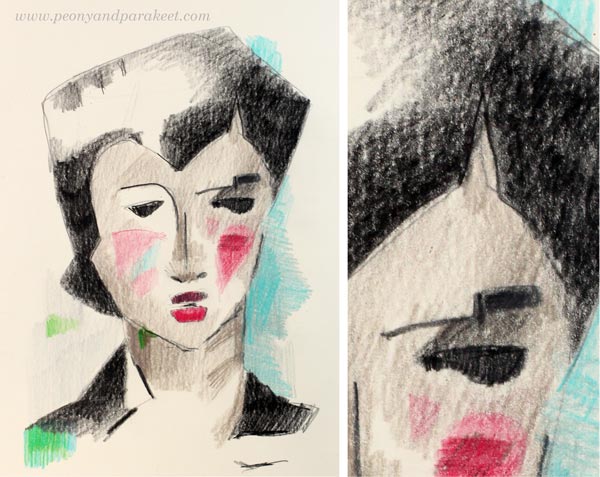
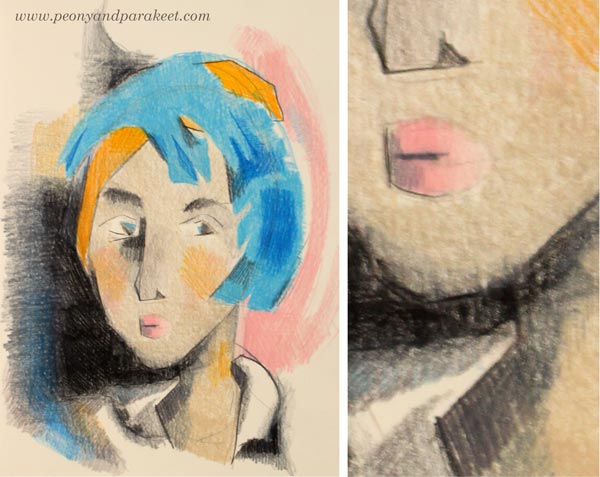
3) Soften the shape of the hair, the clothing, and some of the facial features. Then color the face, neck, and hair. Helene Scherfbeck often used grayish colors for the skin and a more striking color for the hair.
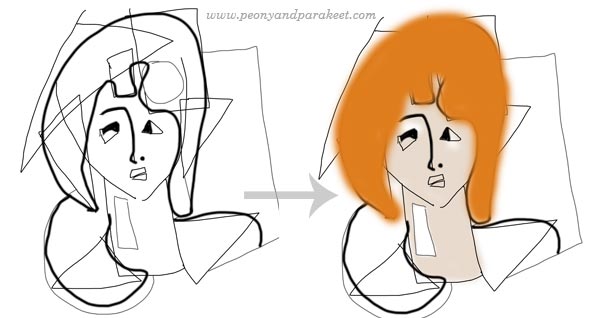
4) Add light and shadows on the face. Use mostly simple geometric elements. Then turn the work upside down and finish the abstract composition by using color to balance the painting. Remember to maintain the asymmetry!
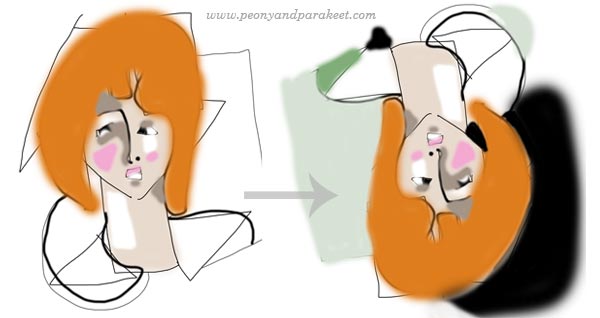
5) Remove some sketch lines and add more finishing details if needed. If you used long lines, make some of them shorter so that your drawing is not so stiff.
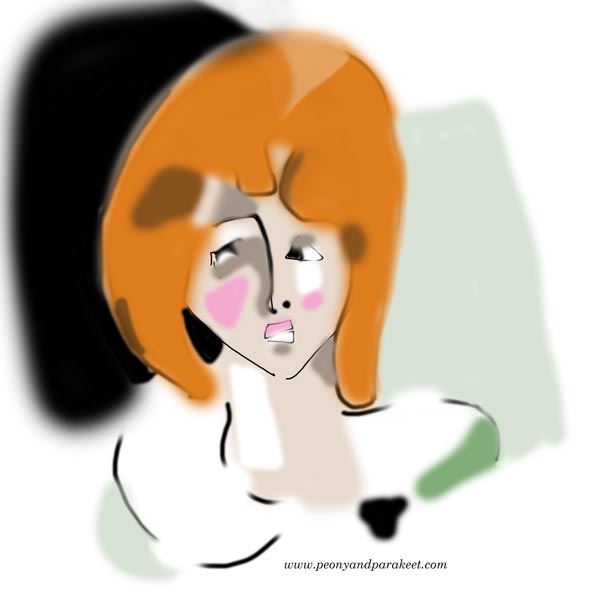
Helene Scherfbeck’s Style – The Combination of Simplicity and Softness
Even if Helene Scherfbeck’s style is very graphic, she also embraced uneven edges and soft color changes. This softness combined with distinct, even clumsy-looking geometric elements is the essence of her style.
She also uses strong lines and bold colors to draw the viewer’s attention to the selected details. However, she does that very sparingly like there would be a limited storage of lines and pigments.
Find The Passion Behind Your Many Styles
I often find it distracting when people talk about their personal style like it would be the final destination for their artistic journey. They say tat once they have found their style, it would be like coming home and they would never need to go back to explore. I think it can be a harmful mindset. It leads to thinking that artists could be divided into three categories: a) those who search their style, b) those who stick with their style, and c) those who are afraid of going deeper because they don’t want to stop playing. That kind of controversy is not good at all! Going deeper allows, not prohibits, playing! Creative people are meant to travel spiritually!
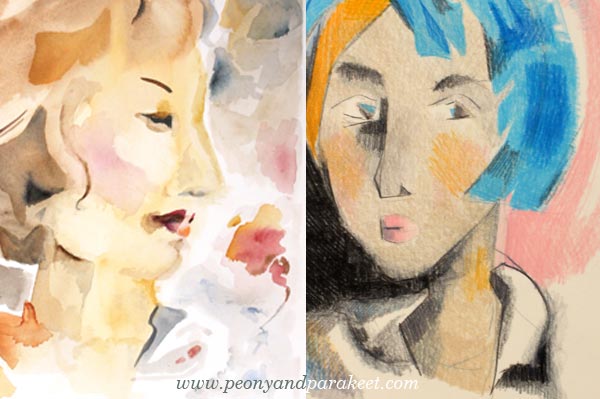
Instead of searching for your perfect style, your final destination, connect with your passion! Your passion can be like a base camp for your explorations, energizing you to take up new challenges.
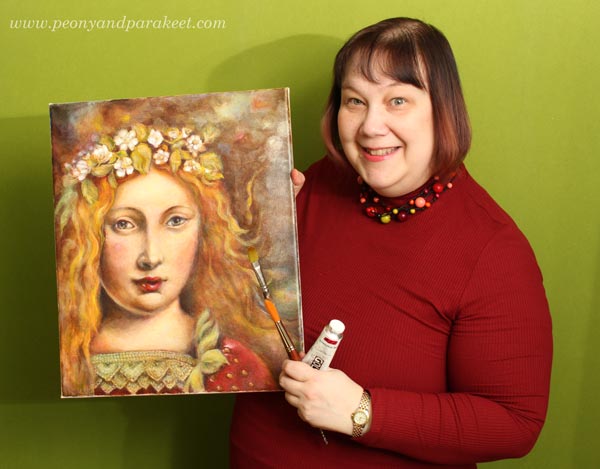
Sign up for The Exploring Artist to discover the passion behind your art
and to become more confident with the big word “artist”!
Have You Ever Felt Like an Outsider?
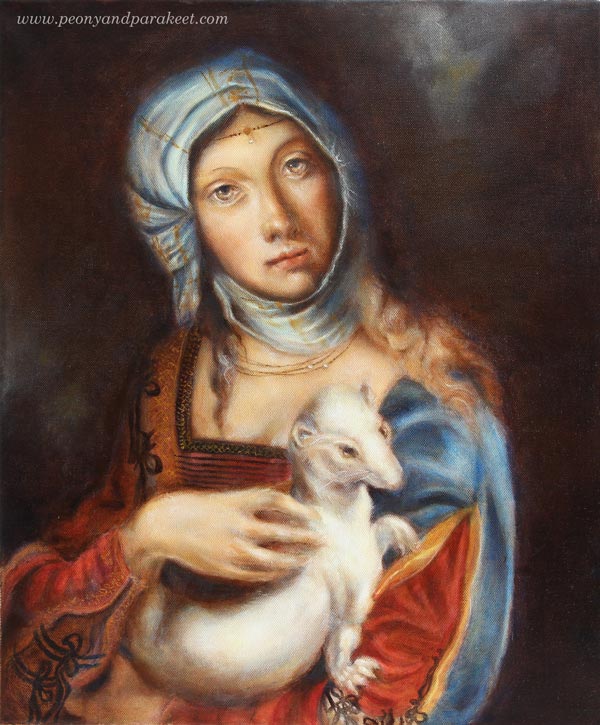
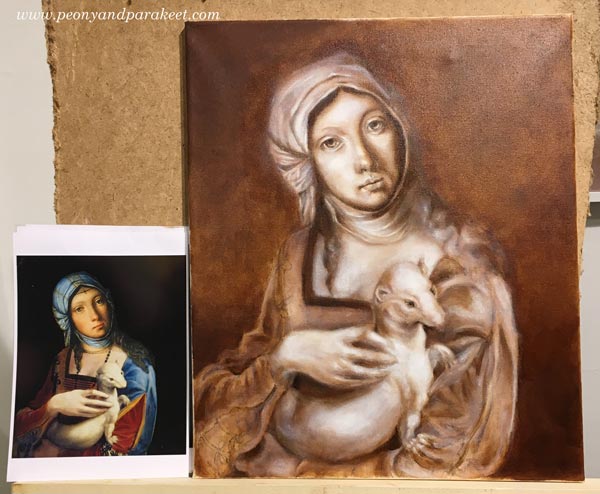
I have finished a new oil painting called “Gypsy Madonna.” I painted it at Emmi Mustonen‘s class during this spring while learning more about old masters’ painting techniques. It took about 42 hours from start to finish and about four months in calendar time. Every thin layer of paint had to dry before adding a new one. I show you some phase photos, but I focus on the deepest thing that I learned from this painting: feeling like an outsider and what to think about it.
The Basics of the Painting Process
My Gypsy Madonna combines two Renaissance paintings: Boccaccio Boccaccino‘s Gypsy Girl and Leonardo da Vinci’s Lady with an Ermine.

First I was just on a mission to get better with the painting technique.
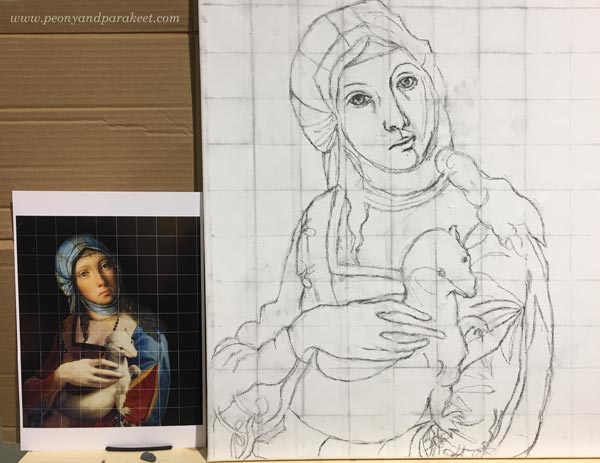
Then I wanted to play with the setting and discovered several stories that could be told through that (some of them are in this blog post).
Experiences of Being an Outsider
One day during the painting process, I remembered a childhood memory of a real gypsy girl. The local library had a weekly hour for children to listen to fairy tales and to play together. We were playing a game where two of us danced in the middle while others were watching. There were a lot of children, all waiting for to be chosen. Someone picked me, and we danced in the center of the ring while others were cheering.
Then it was my turn, and my friend Anne almost stepped up. But I had seen a sad gypsy girl sitting there, head drooping. She knew that nobody would pick her up. It was one of those games that would only depress her. It broke my little girl’s heart to see her sadness. I just had to do it, leave Anne sitting and ask the girl to dance with me. I never forget that smile when we were swirling around. It may have been the best thing that I have done in my life so far.
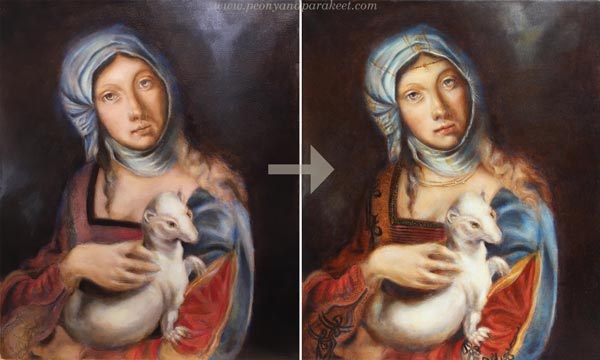
When I continued painting, it was suddenly me in the picture. I became the gypsy girl who gently scratches her pet. The outsider who never got children because she was much more enthusiastic about her love for animals. The outsider who was the only girl in most of the classes when studying technology. The outsider who dreamt about art while trying to tackle the more practical career. There are so many moments when I have felt like a black Madonna, not quite fitting in.
Everybody Is an Outsider
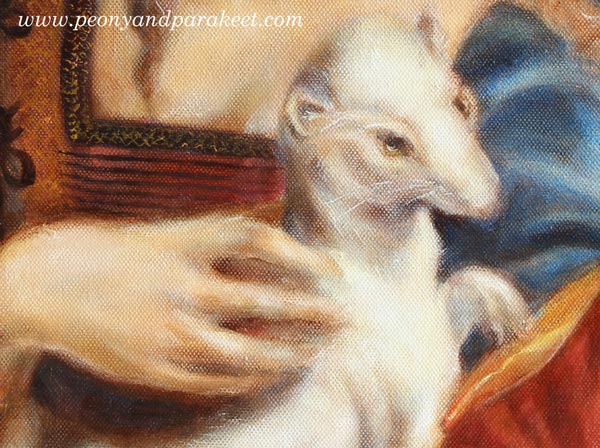
To me, the finished image symbolizes the beauty of choosing differently, being different. Even if I know that it’s perfectly ok to be different, the painting helps me to connect with the feeling on a deeper level. It makes me empathize with other people as well. Everybody is an outsider despite their personal story. We all belong to a minority in some ways. We are all Gypsy Madonnas in one way or another.

Have You Ever Felt That Nobody Understands Your Art?
To be honest, I feel shy about showing this painting. It’s not what I usually create, and I have shared some very personal stories. It has crossed my mind for several times how you, as a reader of this blog, might feel confused: “Is this what Paivi is creating nowadays? Is she going back to the Renaissance age?” I have also feared that the dark colors of the painting will make you want to stop reading. But on the other hand, I don’t want to stop exploring. If you don’t explore, you are unable to integrate new things into your creative work. Pablo Picasso has said: “To copy others is necessary, but to copy oneself is pathetic.” So no wonder if there are times when nobody understands what you are creating!
It’s also difficult to grow artistic identity when a part of that experience is feeling like an outsider. When you start creating art, you want to find your personal way to do it, but those discoveries can also make you feel lonely sometimes. This contradictory has caused me to challenge myself. I want to be better at not only understanding my personal feelings but also supporting other artists in their explorations. In the end, we are all on the same journey. We are standing together on the border of art and the rest of the world, expressing the same view through different eyes.

Stay tuned for my new class for building belongingness, making art that matters, and strengthening your artistic identity! The registration will open in May!
Rebuilding Art – Using Reference Images for Self-Expression
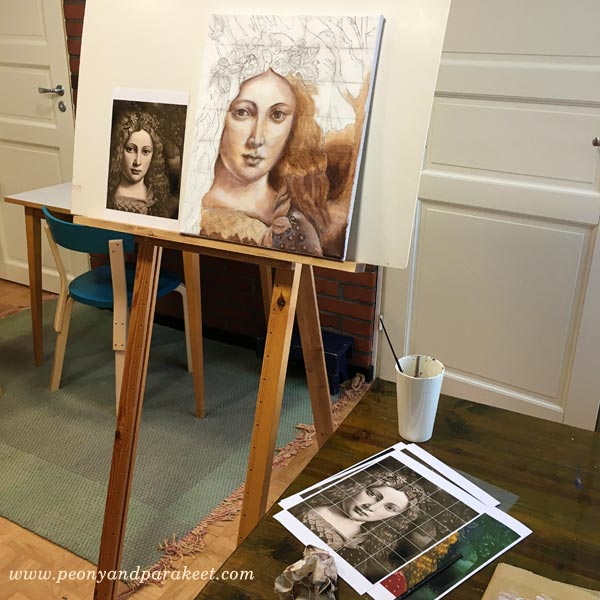
This blog post is about composing new art by using reference images. At the moment, I have a couple of paintings in progress that are based on reference images, and I also show other examples as well.
Why Don’t Artists Always Tell About Using Reference Images?
While painting my first oil painting at The National Museum of Finland, the visitors of the museum were able to visit the studio and watch us paint. Many people asked why we paint copies of the old paintings. The teacher Emmi Mustonen replied that it’s a good way to learn the old painting techniques and develop the understanding of formal elements. But I got the feeling that some of the people didn’t get it. Their facial expressions were imprinted on my mind, and it made me ponder why using reference images raises conflicting feelings.
Even if most artists who create realistic art or include realistic elements in their art, use reference images, many are not very open about it. I think that one reason is that many artists believe that people know that already and another reason that the process is not interesting. My experience is that there are surprisingly many people who assume that artists don’t take photos or use other than live models. And to me, the process of composing a new image from old ones is fascinating. I always stop to see an article where an artist shows how the reference images were used. I am especially interested if it’s about choosing the photos and combining several reference images into one piece.
Strawberry Madonna – Combining Several Reference Images to Tell a Story
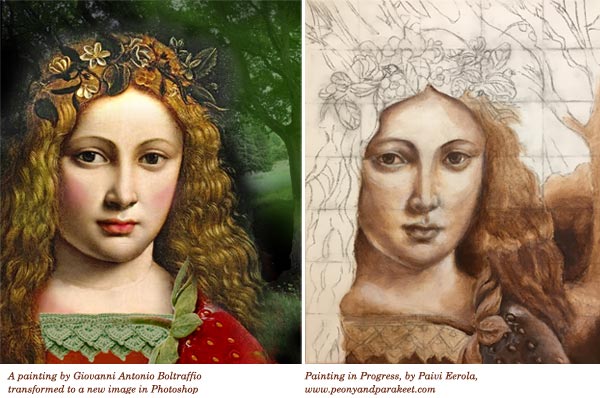
I am currently painting an acrylic painting on canvas that I call “Strawberry Madonna.” It’s my first using old masters’ painting techniques with acrylics instead of oil paints. The idea for the painting started differently than usually. I invented the title first and then started to think how Strawberry Madonna would look. I wanted to find a young woman who would have lips like she had just eaten a strawberry. By googling Renaissance paintings, I found Giovanni Antonio Boltraffio‘s painting. After that, I moved to building a story around the original idea.
Strawberry Madonnas are young girls who enjoy life without worries, have long summer holidays, eat strawberries, learn to crochet and read books like Emily of the New Moon or Anne of Green Gables. I have been one of them, and I feel quite nostalgic about it. I wanted the painting to include surrealistic elements. It has a big strawberry that is placed so that it could be a sleeve of the madonna’s dress. I am also going to change the flowers in the hair wreath to strawberry flowers and play with green and red paint. It will happen when I move on from underpainting to adding colors. In the background, there’s a photo that I took last summer. I am going to make it a little less detailed.
I used Photoshop to compose the reference image and made the sketch on canvas with charcoal. I drew a grid to make the sketching quicker.
Girl with a Ferret – Changing the Meaning with a Simple Trick
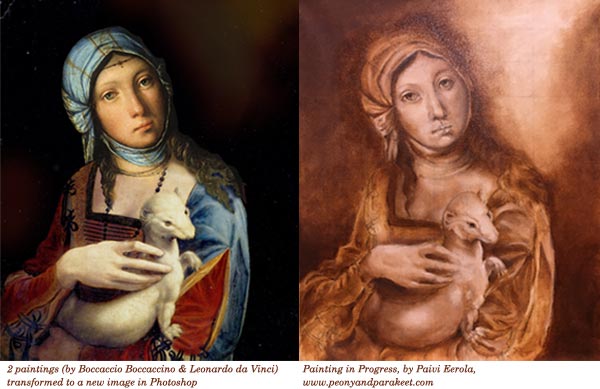
I have also started a new oil painting under the guidance of Emmi Mustonen. I got to pick the reference image freely. I wanted to pick an old Renessaince painting, but I couldn’t find any that would have a couple of my favorite features when painting with old masters’ techniques. I love to paint fur and fabric, and I wanted to find a face that would include openness. I fell in love with Boccaccio Boccaccino‘s portrait of a gypsy girl, but it didn’t have any fur. So I remembered Leonardo da Vinci’s “Lady with an Ermine” and created a new image by combining the two in Photoshop. I have several stories about this one.
The first one is about today’s society and how the pets have become more human in our eyes. I want to show the similarities in the wild gypsy girl and the tame ferret. Another story is about young girls and their love for taking care of animals. They might not know the wildlife, but they help to rescue animals and are ready to work hard when taking care of them. They are against fur clothing and not afraid to show it. The third story goes back to the 16th century. I imagine that the gypsy girl was hired to dress up and hold the ermine because the lady didn’t have the patience to pose for the artist. In the end, she never showed. The artist became frustrated and painted the girl instead. I can imagine the magical moment when the girl realized that she would be in the final painting instead of a lady.
I would like to talk with Boccaccio Boccaccino about my version. I also wonder, how he was able to paint the portrait of the gypsy girl when the artists mostly painted for churches and aristocrats back then.
At Monet’s Garden – Including All the Good Stuff to the Same Image
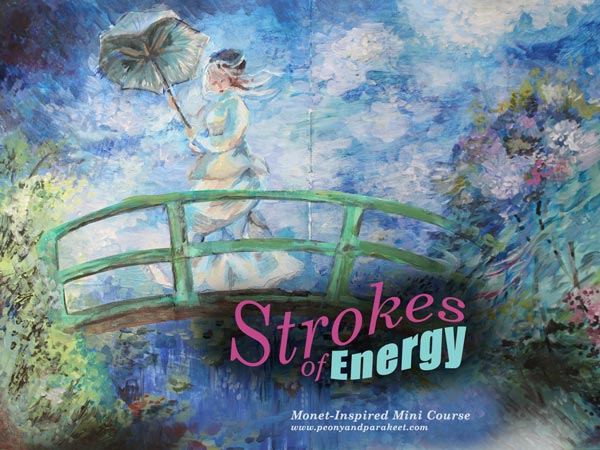
Last spring, I published a mini-course called Strokes of Energy as a part of the Imagine Monthly Spring series. I asked my students to name their favorite artists, and Claude Monet was among most popular ones. But when I thought about Claude Monet, I didn’t want just to serve those who love the garden or those who adore his way to paint the sky or those who want to express the windy scenes. I wanted to have all the good stuff in one image and then some more.
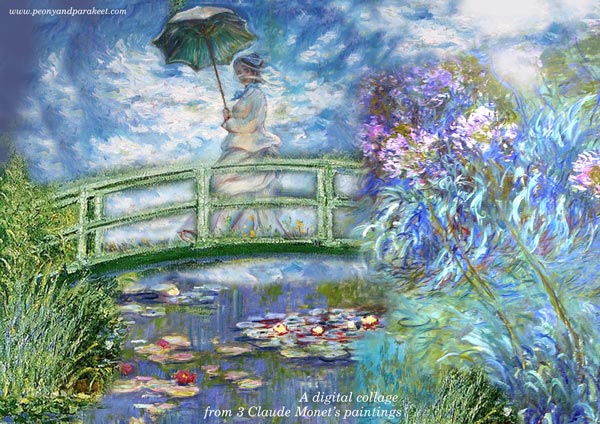
So I created a reference image in Photoshop combining three of Claude Monet’s paintings: “Woman with a Parasol” and a couple of paintings from the water lily series. Then I invented a technique where you can paint some of the elements as collage pieces so that you can adjust the overall composition before making the final decisions. This way it is possible to add more details one by one and improve the image during the actual creative process.
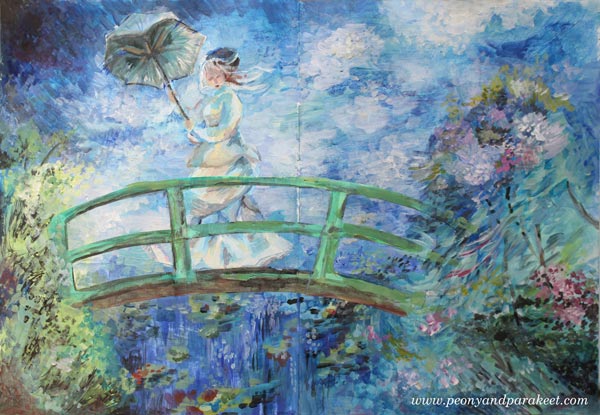
So this painting is about a woman who is experiencing strong wind. She doesn’t mind wind catching her parasol. She enjoys the fresh air and the beautiful scene around her.
Ulla’s Take
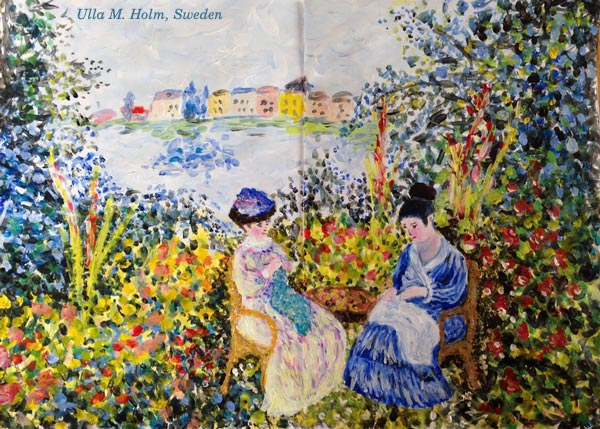
One of the students, Ulla M. Holm, made a Photoshop sketch from another set of Monet’s paintings and then painted the image with short impressionistic strokes. I love how the result also reminds me of her home country, Sweden!
Using Reference Images More Intuitively – From a Story to an Experience
I admit having mixed feelings about following the reference images carefully. With my art, I want to express freedom, and I don’t think that following reference images too closely helps with that. On the other hand, I don’t want to restrict myself doing abstracts only or creating similar paintings one after another. Many artists create the same again and again and become better and better with that. To me, art is about exploring and the hook there is to widen my perspective continuously.
So even if you would prefer abstract art, it doesn’t mean you can’t have reference images. Instead of connecting with the actual story, you can connect with an emotional experience.

I picked colors and ideas from Emile Vernon’s painting and imagined what it would be like wearing that soft dress. The dress felt like a dream, so I wrote: “Muisto unelmasta” – “a memory of a dream” in the image.
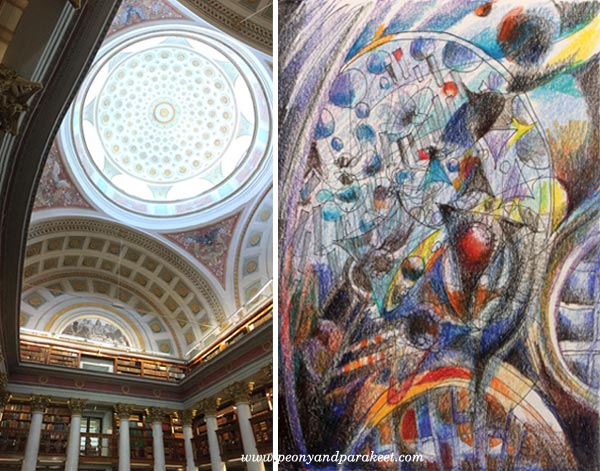
Here’s another example from my class Inspirational Drawing 2.0: a photo from The National Library of Finland and my interpretation, “The Power of Knowledge.”
Do yo want to experiment with this approach using your personal reference images? >> Sign up for Inspirational Drawing 2.0!
For the Fans of Monet – Strokes of Energy
My Monet-inspired mini-course Strokes of Energy is now available as an individual self-study course. >> Buy Strokes of Energy!
Geraldine’s Take
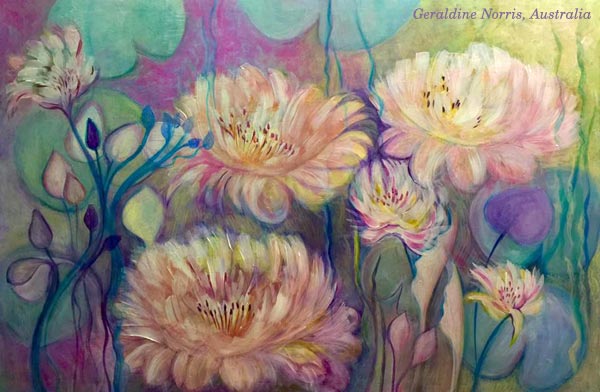
I want to end this blog post with a skilled artist Geraldine Norris from Australia who created her version of Monet in my class. She had just seen an art exhibition showing Monet’s work, and I think it shows how deeply she connected with the experience.
But wait, there is more beautiful Monet-inspired art from my students, see the presentation page of Strokes of Energy!
Until next time!