
Artist’s Wishes and How Art Answers to Them
This week, I share a new painting and talk about artist’s wishes and goal-setting, but also about relaxation and self-listening.
Restless Heart
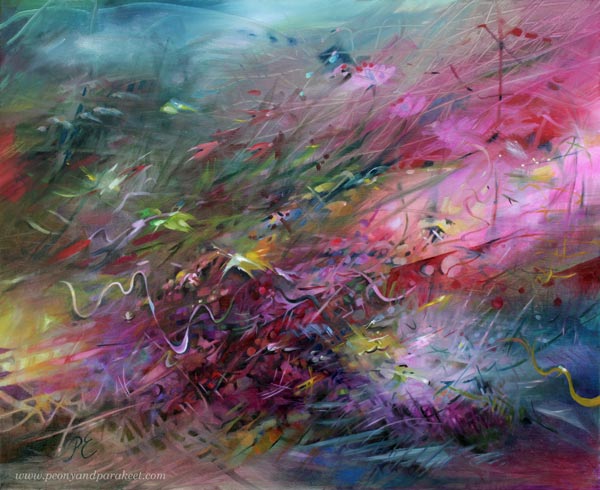
During the past few weeks, spring has changed to summer in Finland. More colors have appeared in the garden, and there’s a color burst on canvas too. “For the readers of my blog,” I thought. “They love pinks, reds, and turquoises!”
Painting a Series and Learning to Breathe
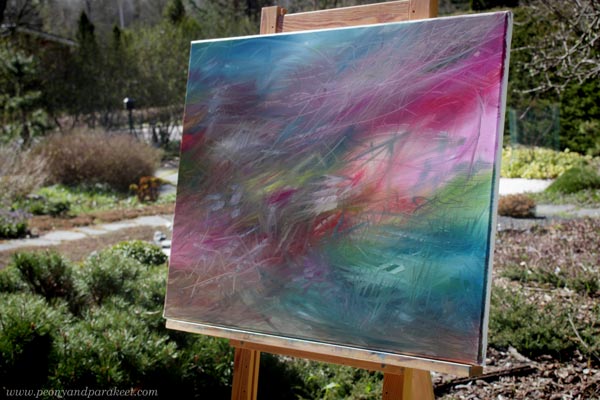
This spring, I have had an ambitious goal of painting a series of 9 canvases in oil, and I am coming to an end. There will be only one more after this piece.
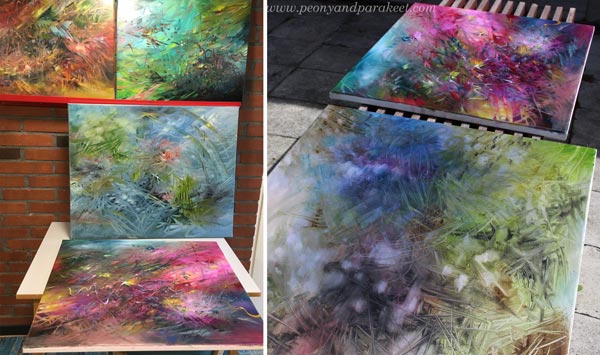
When I started the series, I entered a crossroads, and it was hard to see into the future. But after spending a lot of time in the studio and taking long walks, I have learned to breathe in a new way. Instead of exhaling only, I have learned to inhale too.
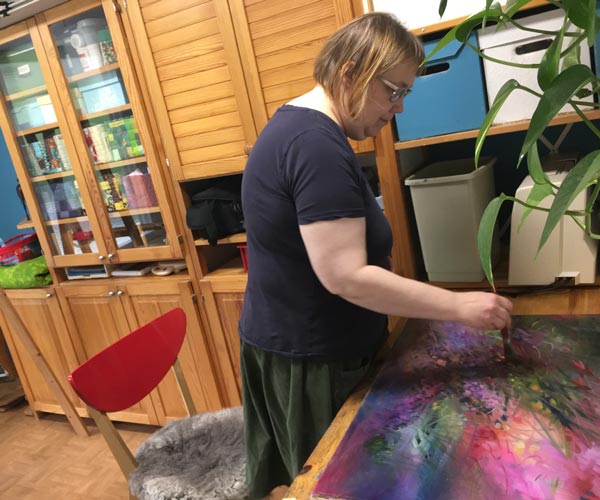
My focus has been more on receiving, not so much on producing. This change of direction has given me new motivation for life.
A Beast Called Creativity – Or Is It a Pet?
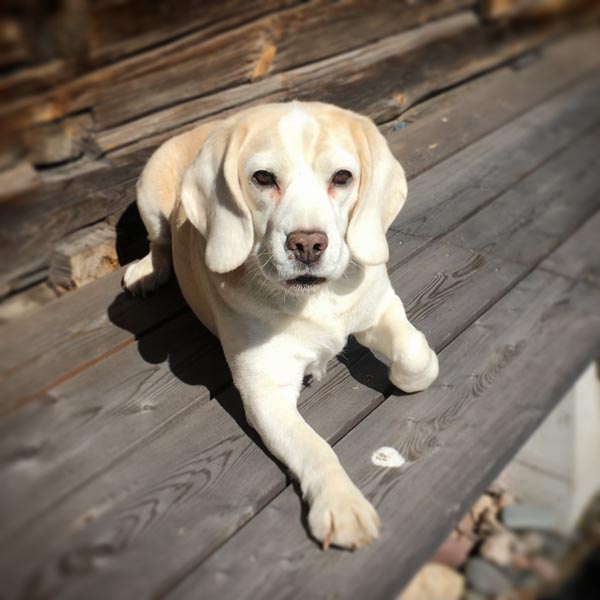
For years, I was afraid of dying before I learn to paint. I have no children, and I wanted to create an artwork that would continue its life after I am gone. But now, I realize that my dream of leaving a legacy was improperly put. It defined the success that depended on other people. But creativity is a wild beast that doesn’t understand money, prestige, or hierarchy. It’s like my dog Stella. She loves me no matter what my title is. And she always tries her best to do what I want from her.
I don’t think that the incapability to define my goal is unusual. Isn’t it so that often when we want to pursue art, we point to someone else’s work and say: “That’s how I want to paint, that’s who I want to be.”
Paul Cezanne and the Art of Wishing
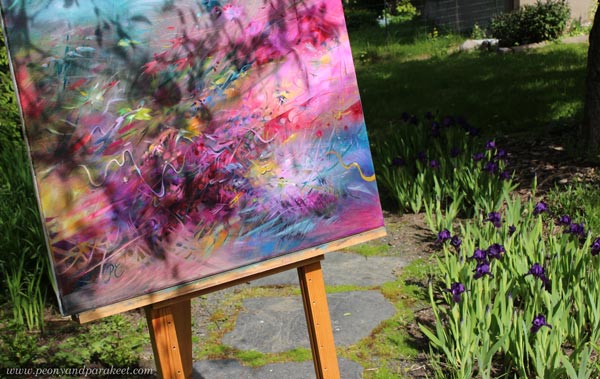
On these warm and sunny days, I have been pondering why I paint, how I paint, and why it suddenly feels so good. “Take the painting outside, Paivi,” I heard a whisper. “Is this about Cezanne?” I asked.
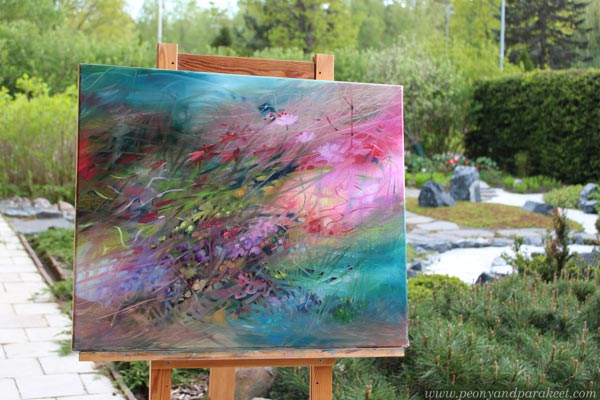
Paul Cezanne (1839-1906), a french impressionist, has said: “When I judge art, I take my painting and put it next to a God-made object like a tree or flower. If it clashes, it is not art.” I have found this definition distressing and demanding but also practical. I have used it many times to check if the painting is finished or not.
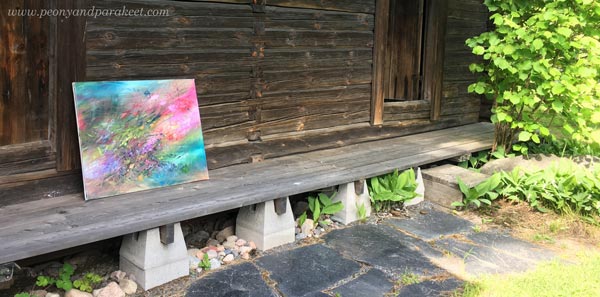
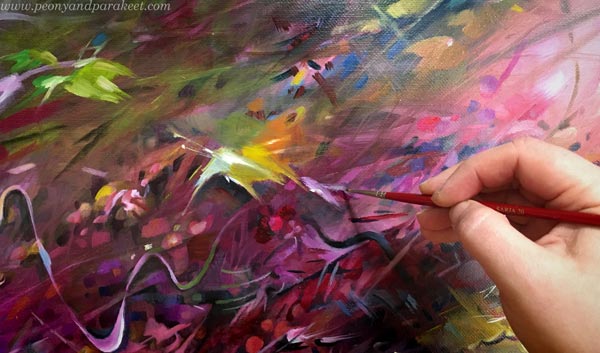
Cezanne or not, I followed my inner voice and took the painting out several times. First, I had stress about insects and other flying objects. But then I heard my inner voice answering the question – why my paintings are full of movement and why I always want to add some uncontrolled restlessness.
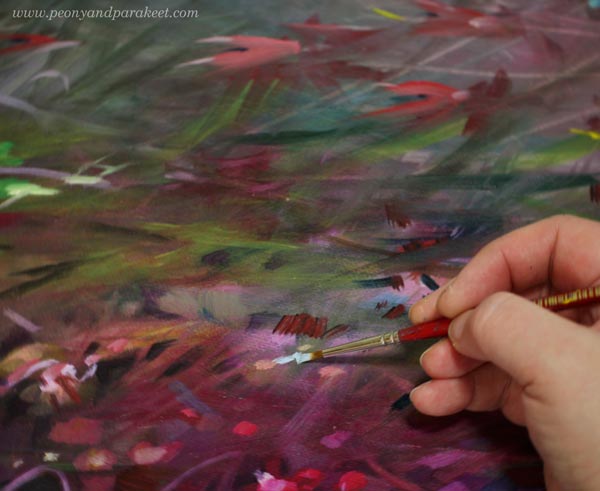
The answer is: The liveliness is the level of immortality that my creativity can produce.
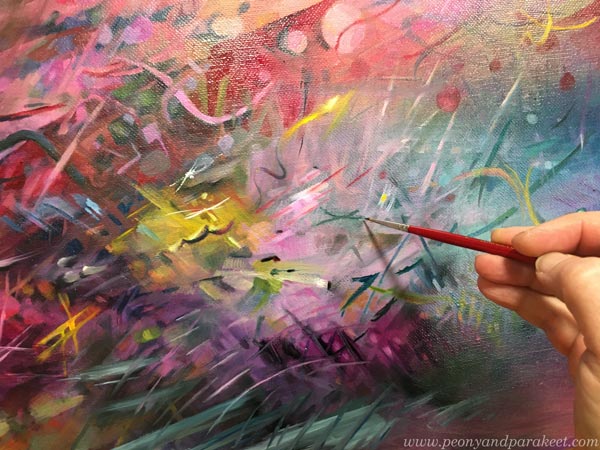
My images express the eternal life that I have yearned for!
Artist’s Wishes – A New Door
Now I see a new door. I can ask anything, and my creativity will do it for me. The only reservation is that the answer may be unexpected.
You, too, have this door. And you, too, have a restless heart that tries to understand your wishes.
Artist’s Wishes – What Do You Think?
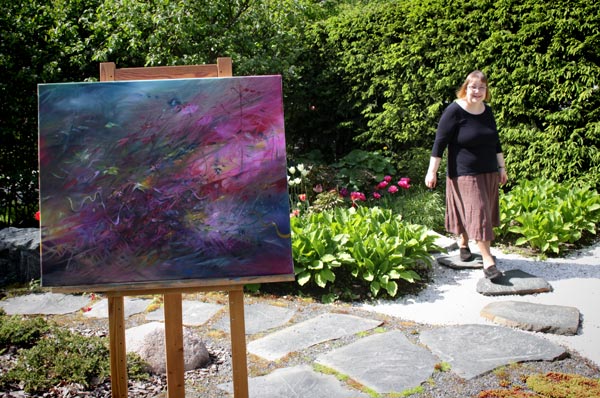
What do you think? How does your art match with your wishes? I am always looking forward to reading your comments!
Monet in the Box – Creativity and Shame
This week, I show my latest finished painting and talk about Monet and the hall of fame – no! – the box of shame!
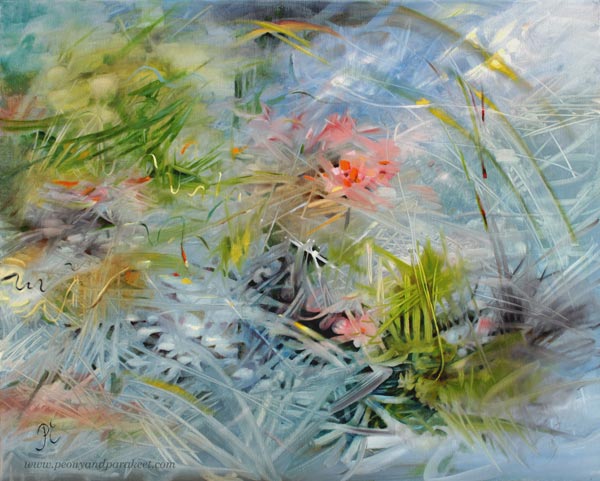
Last week, I participated in an online event organized by the Finnish Illustration Association. One of the speakers was Eeva Kolu, who talked about maintaining balance in life, not letting work take over all of it. She referred to a book that she had written which is unfortunately available only in Finnish. It’s called “Korkeintaan vähän väsynyt” (free translation: A Little Tired At Most)
I have been listening to the book on daily walks, and even if I am not finished yet, I already like the inner dialog that it raises. It makes me stop to ponder, sometimes agree, other times disagree. It’s not only pleasant, and yet, it’s definitely worth reading. One of the things Eeva Kolu brings up is shame. She says that shame defines the size of the box where we live. The box can become so small there’s not much room for life.
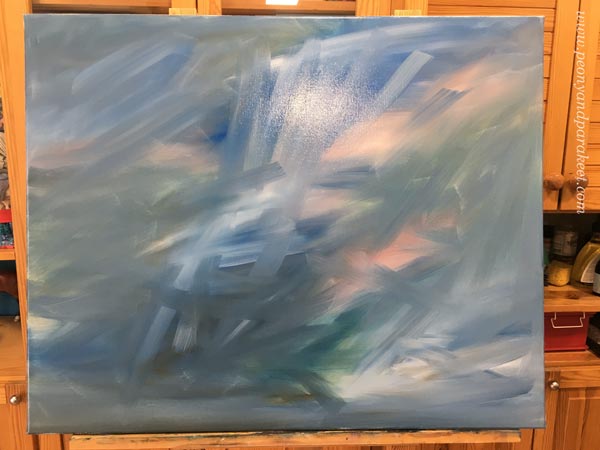
Eeva Kolu made me think about all the things I am shame of. Surprisingly, one of them is central to my art.
My Relationship With Old Art
When I was in my twenties and thirties, all I wanted to see was contemporary abstract art. In museums, I rushed through the old paintings because representational and traditional art was for mediocre people, and I didn’t want to be one of them. I felt shame about my uneducated family and the lack of abstract thinking in the surroundings where I came from. I had a new life with higher education, and my love for mathematics was well aligned with geometric shapes and lines.
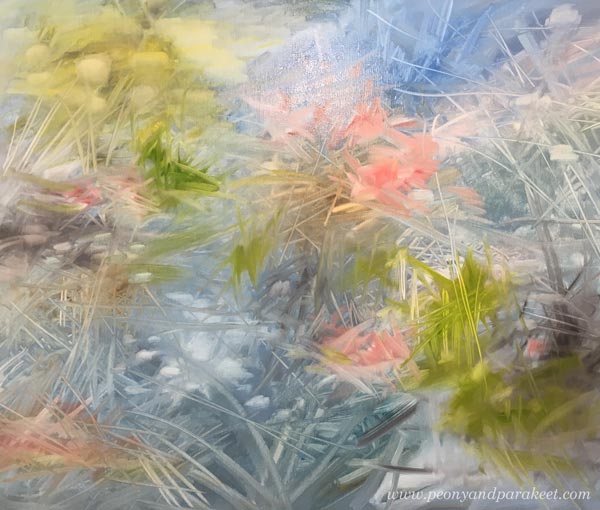
But age has made me understand more about my background and art as well. I have begun to love old art, and still, it’s something that causes me shame as well.
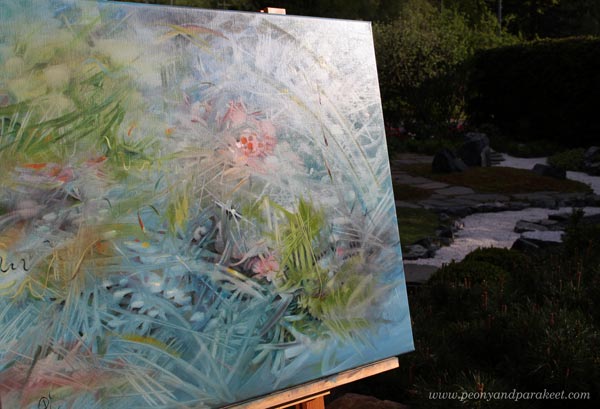
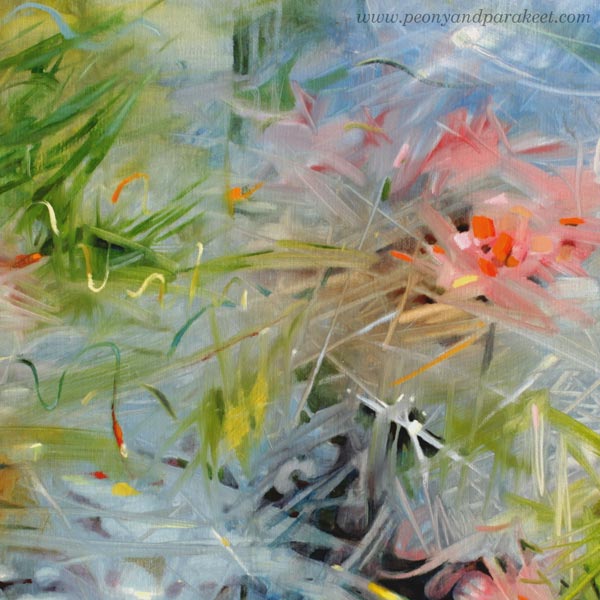
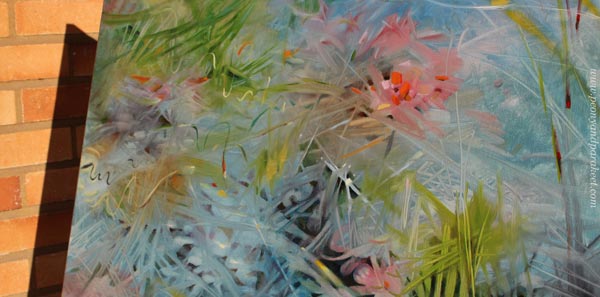
“Waterlilies,” my husband said when he saw this painting.
It made my box shrink. My intention was not to do any Monet. I just painted the dreamy blue that needed to come out, not make any imitation of anything.
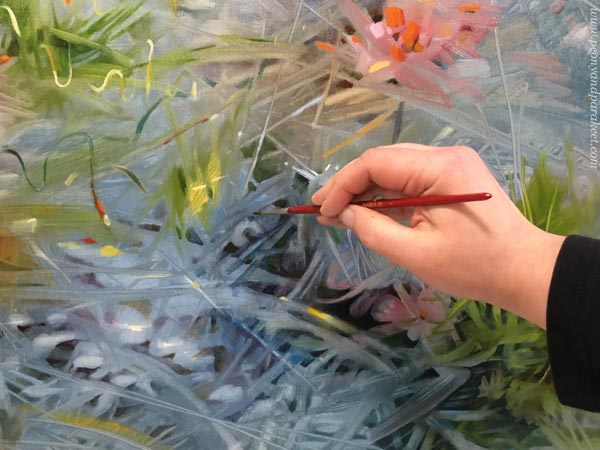
I Kind of Hate Monet’s Waterlilies
I have seen them in National Gallery in London. They are captivating. People love them.
But instead of making what people easily love, I would like to be an artist who sees to the future. Who builds paintings that are like complex machines. I should be a Leonardo of this age, imagining something technical that engineers will skillfully implement someday.
But my art has a mind of its own. No, a mind of mine. Or would I dare to say: a mind of my shame. I am stuck to the past, so I paint the past. I reach the worlds that feel excitingly unknown first but turn out familiar once the painting is finished. I end up recreating instead of inventing. That’s my shame.
In my classes and in this blog, I talk about old art now and then. But compared to the amount I think about stiff renaissance portraits, romantic baroque sceneries, frilly victorian dresses, cubistic still-lives, and all the masterpieces from the 15th to 20th century, it’s very little.
“My Readers Want Their Art to Be Current”
That’s what I say to myself often. The readers – you – don’t like old art so I try not to write about it. And still, the expected goal to be current seems ridiculous sometimes. There’s a bridge between current and old, and it’s very difficult to be current without knowing what’s not.
That bridge – or should I call it a long historical timeline – is the place where my creativity naturally lies. My shame is also my utmost love. When I paint, I don’t think about Rubens, Monet, Picasso, or Kandinsky. When you love something deeply, with the skills, it comes out naturally.
“Everyone discusses my art and pretends to understand, as if it were necessary to understand, when it is simply necessary to love.”
Claude Monet
Monet’s attitude seems very unintellectual. And yet, if you think about what you create and have created, can you relate? That sometimes it’s necessary to omit the feeling of intellectual understanding, bypass the shame, and simply love – so, widen the box instead of trying to get out of it?
Thumbs up or down for talking about art history and old masters? Share your thoughts in the comments!
P.S. Claude Monet is “a guest teacher” in the class Floral Freedom!
3 Tips for Bringing More Life into Your Art
This week, we look for what’s natural and lively in a bit different way than usual. I share three tips for bringing more life into your art.
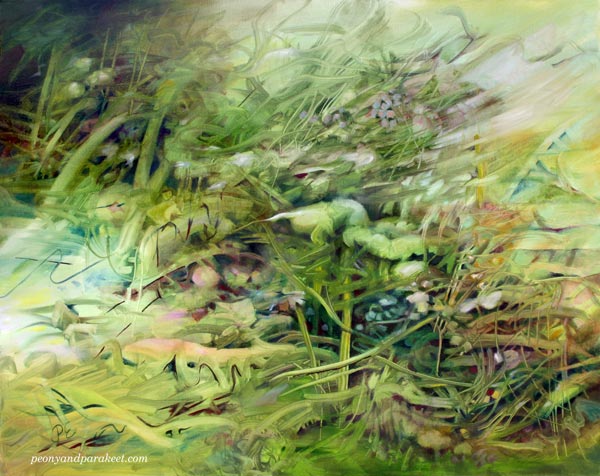
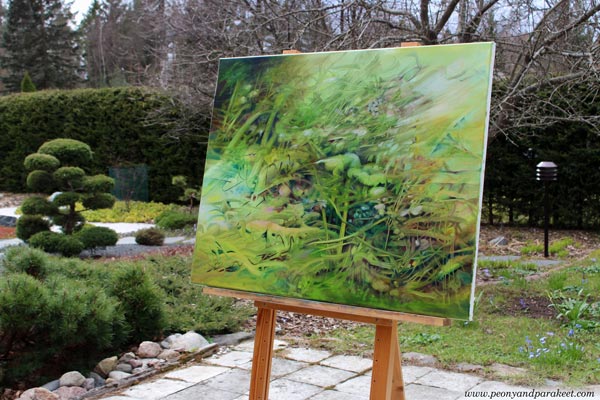
I just finished this green painting. It’s called “Muuttumaton” in Finnish, but this time, the translation “Unchanging” fits it better because the English word has a more active tone.
This painting was in progress in the video that I shared a couple of weeks ago.
Here’s the video again so that you can see me working with this in practice and compare the middle and the end!
So, that was the video, but in this post, I want to give you ideas on how you could bring more life into art.
These ideas are not technical because I think that my classes are better for learning the techniques, but more about changing the way you get inspired and observe what first appears on paper or canvas.
Tip #1 – Let Weeds be Weeds
In my painting, the main character and the focal point is a blooming weed. It appeared on the canvas right away and reminded me of Fernando Pessoa‘s poem that talks about a crop bending with the wind and then straightening once the wind stops. This kind of natural resilience that weeds also have is inspiring. In art, we usually make weeds look more like a flower. But could we loosen up and bring more life by letting the weeds be weeds?
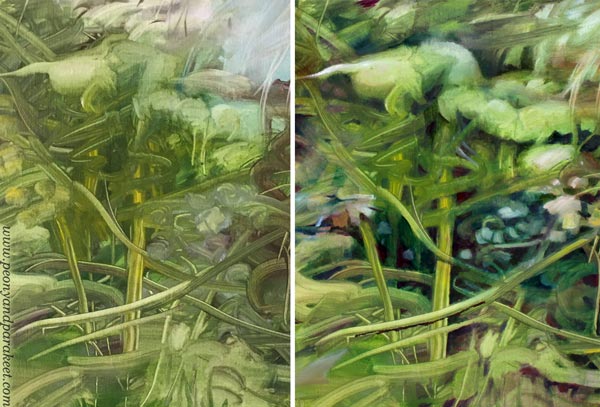
So, I just made the big plant look a bit more defined and let it be the star of the show.
Tip #2 – Try to Ignore Color
Even if I took pictures of the painting in our garden, I have been more inspired by the untamed side of nature lately.
With my beagle Stella, I have been exploring banks and woods that look ugly but are full of layers. For Stella, layers of smells, and for me, layers of shapes and textures. I have tried not to seek the most beautiful spring flower, but develop my eye to notice other than colorful things.
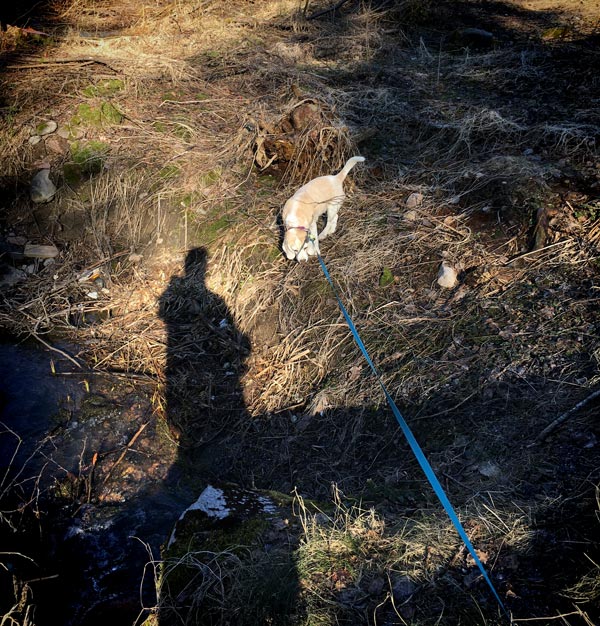
What looks ugly first can be beautifully free.
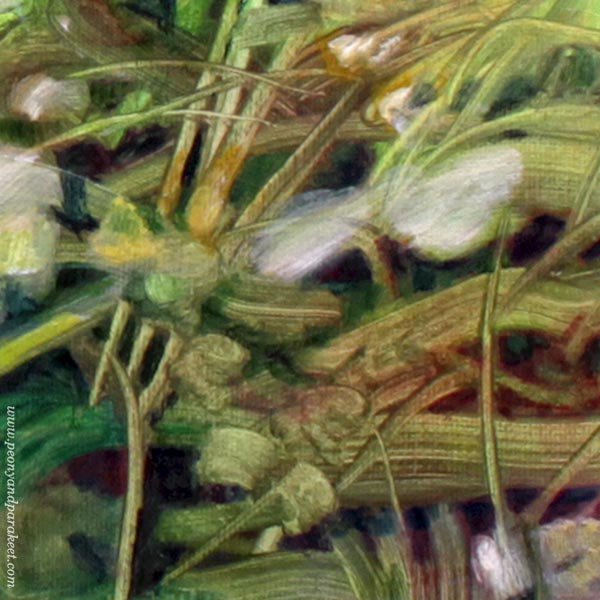
Subtle changes in color can make the painting look more lively than if you throw in a bunch of strong colors.
Tip #3 – Embrace Destruction
When bringing life into art, it’s not that we have to start with life. We can look at broken and deserted things like fallen or chopped branches. They can then have another life in our art. Imagine branches falling further down and breaking the cover between the outer and inner world. What kind of life could you give them there?
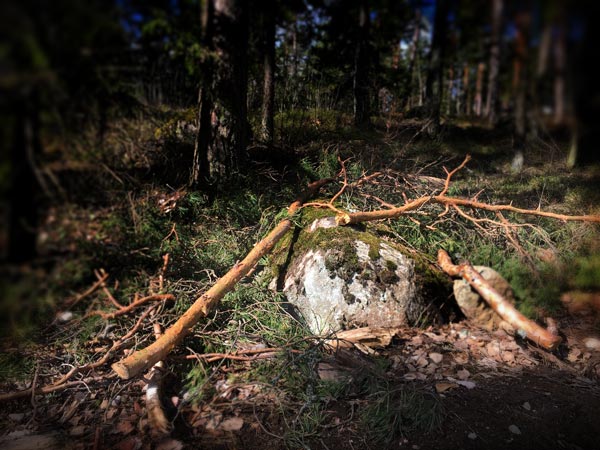
Admire how the grass grows, but also, how it withers!
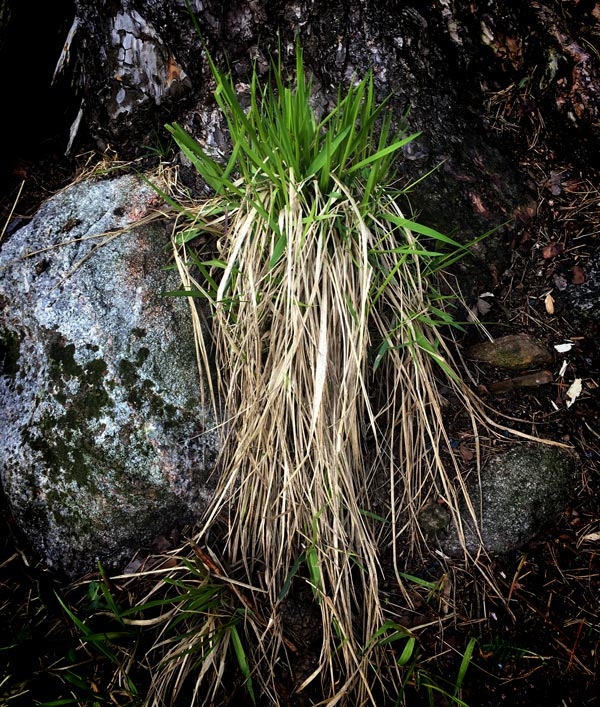
When we create, we can start with destruction and then use colors to make all the ugliness bloom. This way, we build a bridge between the garden and the wilderness – between the traditional beauty and nature’s aesthetics.
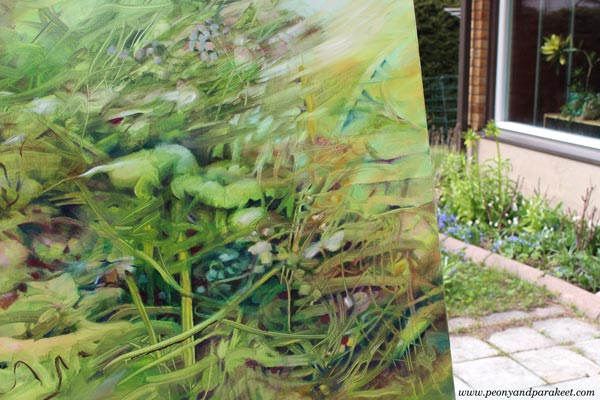
I don’t use references for my half-abstract paintings like this one. But I believe that things that we see and appreciate find their way to our art in one way or another.
So when you want to bring life to your art,
look for life as it is in the wilderness, not only as it is in your garden.
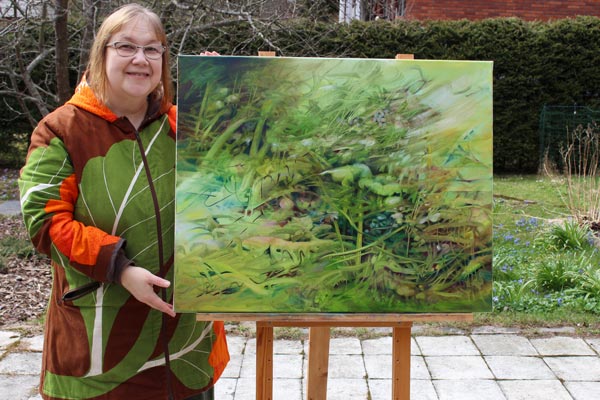
When looking at this painting, I want to be like that weed, stand tall where I happened to fall. I want to believe there’s something unchanging in this ever-changing life that keeps us creating. I hope we can be Pessoa’s crop that straightens right away when it gets the chance!
Your Art and Loosening Up
This week, I talk about being unique and loosening up in a video. You also get to see me working with a new oil painting.
Your Art and Loosening Up – From a Former Engineer
With the video below, I want to get you to think about how much you do layering. But this time, I don’t talk about the actual layers of the painting, but the layers of you and your life – the more abstract stuff. Namely, we often lead our artistic direction too literally and don’t allow contradictory or silly ideas. I hope you enjoy this video!
This is a little different than many of my videos. I would be interested to hear how you like it! Do leave a comment!
Links Relevant to the Video
- Ilun Handu Duunaa, Episode 44 (in Finnish)
- Paul Klee and Wassily Kandinsky at Wikipedia
- Paul Klee’s Pedagogical Sketchbook at Amazon.com (affiliate link)
- Wassily Kandinsky’s Point and Line to Plane at Amazon.com (affiliate link)
- Floral Freedom (the abstract floral class!)