
Abstract Portrait – Paint with Me!
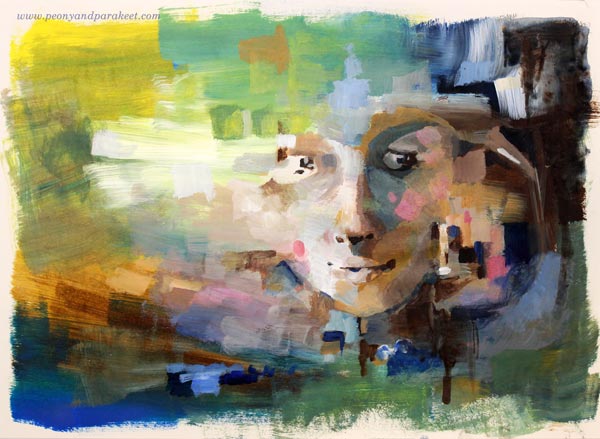
Here’s a quick abstract portrait from my sketchbook, painted with acrylic paints in 45 minutes. I didn’t use any reference photos for this one but just played with the shapes.
Create an Abstract Portrait – Watch the Video!
Get tips, ideas, and inspiration for your abstract portrait. Watch the video!
Innovative Portraits – Buy Now!
Innovative Portraits is about discovering new paths to painting and drawing portraits. Increase artistic looseness, find ways to get the proportions with ease, add more style by using shapes and colors, and invent ideas so that you never wonder what to put in the background. >> Buy NOW!
Expressing Mystery – Self-Portrait as a Fox
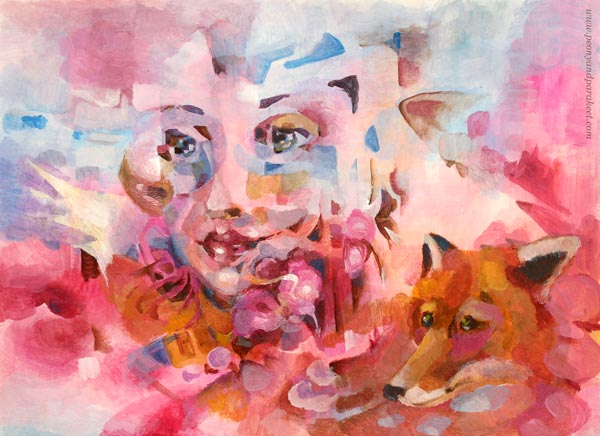
In my latest webinar, I showed some unconventional ways to make portraits. This week, I show how to build the sense of mystery for a portrait. Here’s my sample project, an acrylic painting that I made on a sketchbook. It’s called “Self-Portrait as a Fox.”
In Finnish, we have a saying “ketunhäntä kainalossa” – “to have a foxtail under the arm.” It means that someone tries to hide the true thoughts or goals, and you are noticing it. So it’s like a mystery that’s partly revealed without intention to do so. When building a mystery for the portraits, you somehow have to show that foxtail – to reveal a part of the mystery. Otherwise, the viewer doesn’t realize there’s any mystery at all. Think about leaving the fox out of the portrait above and just trying to express it all with the eyes. It wouldn’t have the same effect.
Expressing Mystery 1 – Start with a Mysterious Space
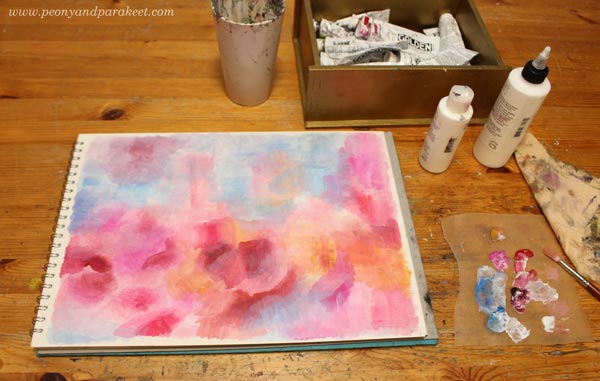
The lighting has a lot to do with mystery. Think about mysterious scenes in the movies – the light plays an important role there. Instead of trying to add spots of light after adding the face, start by painting the space where all happens.
Expressing Mystery 2 – Discover Facial Features
Once you have painted the background full of fun details, try to see a person there. You don’t have to see the whole face, but a cheek, an eye or a nose is enough. Add more facial features so that you can better see the face. Don’t outline everything. It’s a mystery, remember! The face should look like it rises from the background.
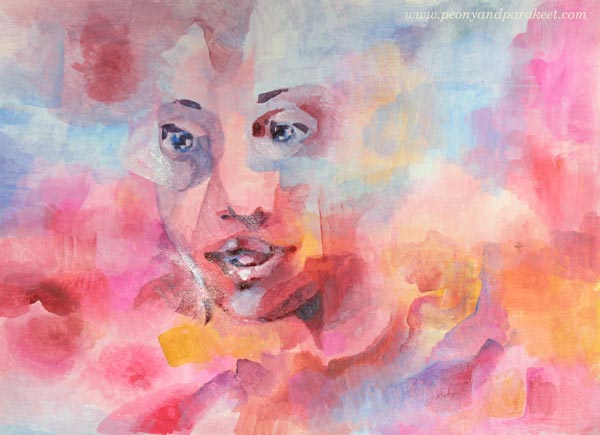
I rarely get the facial features to look mysterious enough at this point. I suggest that you don’t even bother to try. Just make it clearer where the person is. For this project, I didn’t use any reference images for the face. If you do, use the reference to get some ideas, but don’t make the face too defined.
Expressing Mystery 3 – Connect the Face and the Background Together
Now add more elements to the background. Add geometric shapes to outline hair and to dig out other interesting stuff. You don’t have to know the mystery yet. Keep the process mysterious enough!

To me, it usually happens that if I don’t know the mystery, I don’t have the idea of the facial expression either. I covered the mouth so that I don’t focus too much on that. Working with acrylics is easy because you can always add new layers.
Expressing Mystery 3 – Add Symbolic Elements
Boost the mystery by adding symbolic elements that create tension for the person. I chose a fox and a rose.
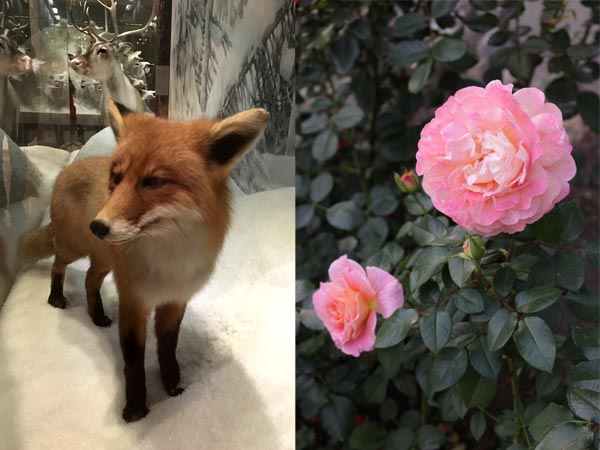
To maintain the mysterious atmosphere, I painted the fox and rose petals so that they partly disappear into the background.
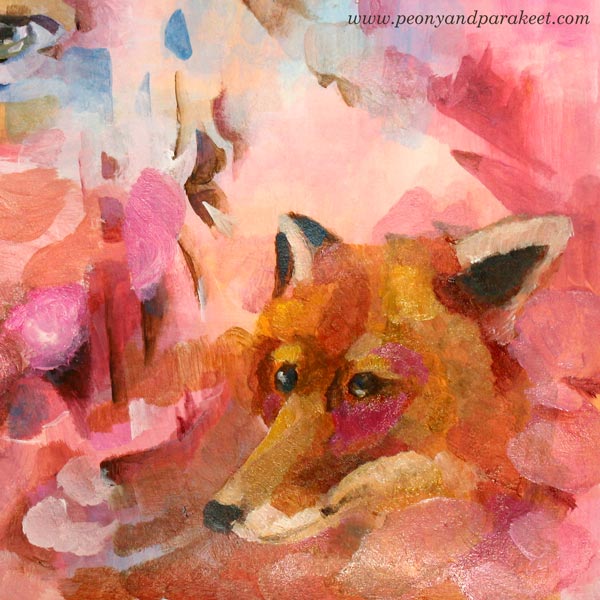
If you use reference photos pick just some details that you replicate more carefully. Put the reference photos away after a while so that they don’t dictate you and reduce the mysterious feel.
Expressing Mystery 4 – Finish the Facial Features
Build connections between the elements and the face by adjusting the facial features. Think about something happening at the scene and the reaction that it embarks. Here, the woman and the fox react differently. The woman looks surprised, but the fox doesn’t. If I had continued with this setting, I would have also added the element that causes the reaction toHowever the picture.
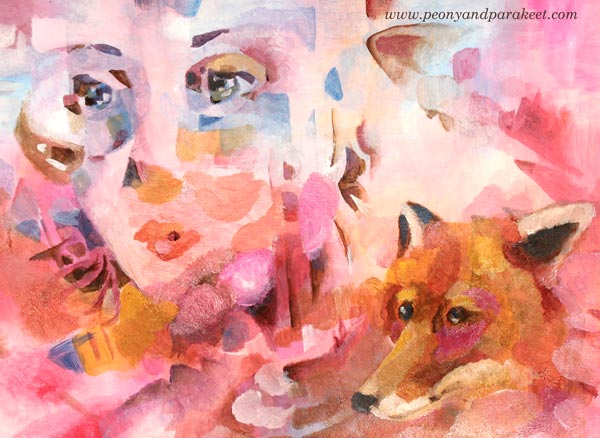
However, I was not satisfied with the idea of the woman and the fox reacting differently. So I repainted the nose and the mouth and made the face shorter so that the woman looks as conniving as the fox. Now the focus is on what they think and initiate.

Expressing Mystery 5 – Repeat Some Shapes and Colors
To make the painting more unified and to highlight the mysterious feel, add similarities between the biggest elements. I made some of the triangles resemble the fox’s ears, and continued the fox so that there’s the tail too. The tail is very similar to the woman’s hair. This kind of vagueness – when the viewer doesn’t fully see what belongs to where – also adds to the mystery.

I hope you enjoyed these tips, and hopefully, I will see you at Innovative Portraits as well!
Innovative Portraits – Refresh the Way You Make Portraits!
In the new upcoming class Innovative Portraits, we will discover new paths to painting and drawing portraits. This class is about increasing artistic looseness, adding more style by using shapes and colors, and inventing ideas so that you never wonder what to put in the background. >> Sign up NOW!
Innovative Portraits includes a 3-month membership in my art community Bloom and Fly so you will also get monthly live sessions and weekly feedback Tuesdays. >> Sign up NOW!
Colored Pencil Collages – Playing with Color
Fall in love with colored pencils and make the most of your paper stash! I also recommend these classes:
1) Collageland – save time and effort by creating textile-inspiration with pens and paper
2) Inspirational Drawing – for you who wants to say: “I can draw!”
The Fun Process of Colored Pencil Collages
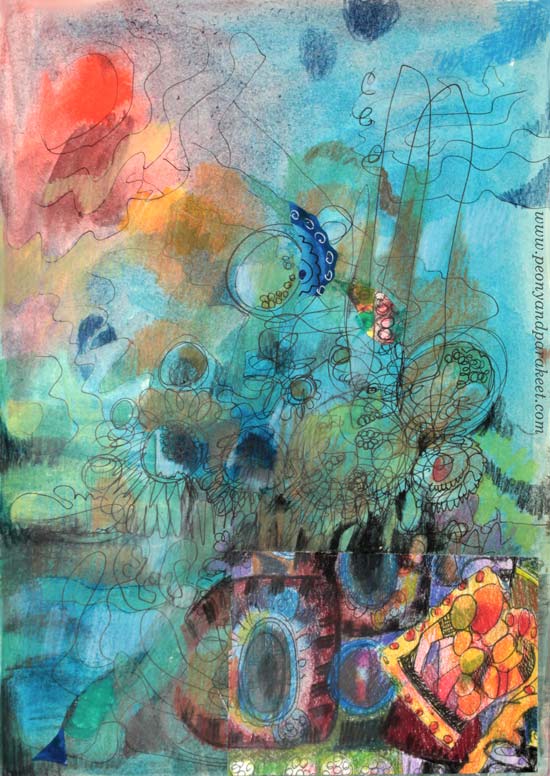
Here’s is an art journal page that started as a sad one. First, it only had some carelessly drawn lines. Months went by before it got some paint to accompany the doodles. After another long wait, it got some depth with colored pencils. It still looked unhappy, so I glued a piece of hand-decorated paper to cheer it up. Today, I found it again and was surprised how finished it looked.

This is often the way I make art journal pages: little by little, random lines, using up extra paint on the palette, saving a piece of paper from my stash. It’s a very unintentional process but after those finishing touches are added, it’s all good.
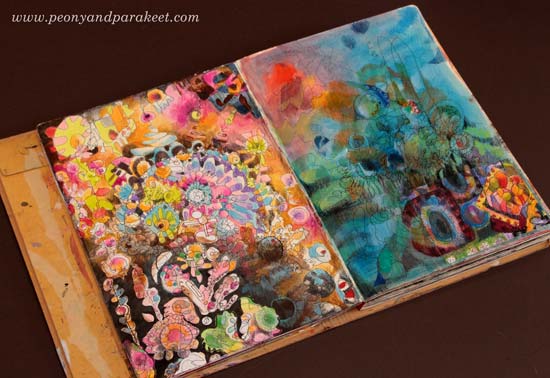
My Hand-Decorated Paper Stash
I have been doing this for a long time: making my collage papers and also saving the tiniest pieces. No matter what my main art projects are, there seems to always have time some scrap paper fun even if it’s sometimes just picking a small piece and gluing it on an art journal without analyzing what and why.

Colored pencils are one of my favorite supplies and I also have papers decorated with them. When I go through my paper stash, I often add some colored pencils on painted ones just to make them more valuable in my eyes. Then I also have some true treasures – papers that only have colored pencils on them. They take more time to make, and to me, they are like silk and others are more like cotton, the basic stuff.
Using Imagination with Colored Pencil Collages
When I am playing, odd is good. Paper pieces sometimes have a mind of their own, and strange results may appear! Here’s an art journal page called “Three Sisters”. It started with paper scraps but really came to life when I added colors to the background with colored pencils. See how I used many colors for the background so that it completed the composition and made the piece more cheerful.
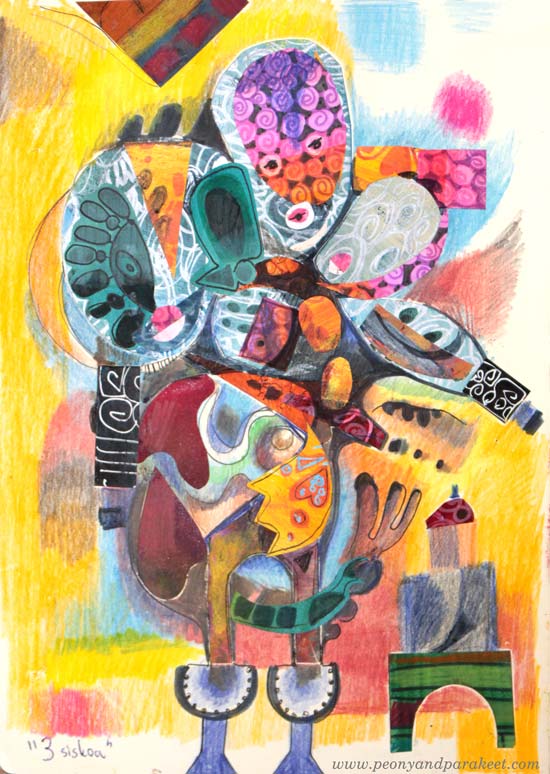
This collage started with a quite traditional idea. I wanted to make a doll. But when the doll got more heads, I followed the imagination instead of trying to stick with the original thought.
Start with the Expressive Background!
Create Step by Step!
Try this process if you often ponder these questions:
a) what to put in the background?
b) how to express with color?
In this process, you will start with the background so that it creates a structure for the rest of the work. A grey paper enables you to use color for expression rather than trying to tone down a screaming scene when using only “beautiful” tones.
Supplies: Grey Paper, Colored Pencils, Paper Scraps
You will also need gel medium or paper glue for attaching the collage pieces, and a black drawing pen for finishing touches.

Step 1 – Coloring Freely
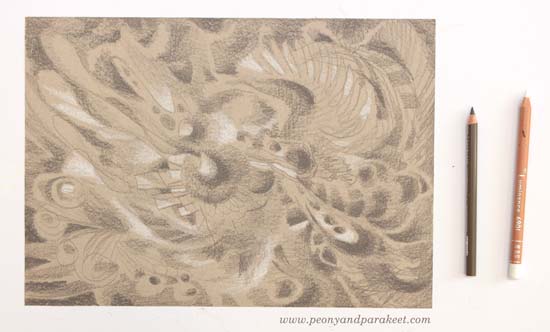
With white and dark grey (or black) colored pencils doodle random shapes. Fill some shapes by drawing, add shading, and have fun by playing with color values. Change the orientation once in a while so that your imagination keeps on going.
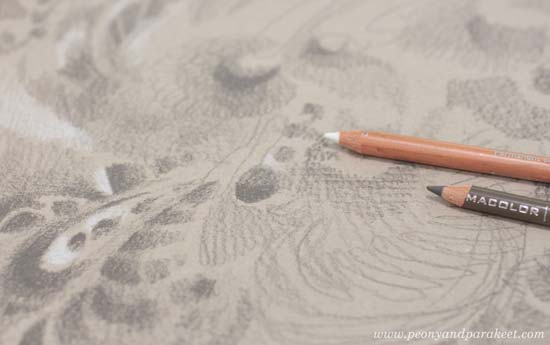
Step 2 – Cut Tiny Collage Pieces
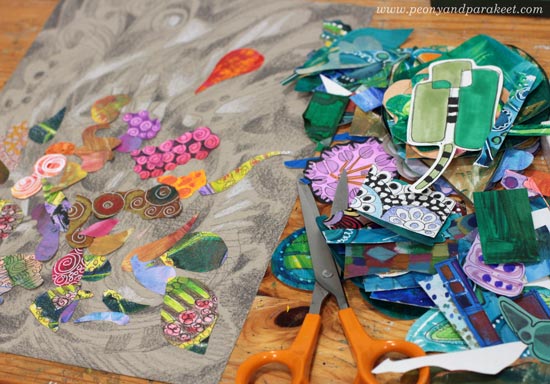
The pieces for this step can be really small ones, and you can cut them even smaller. Here’s one piece from my stash and I cut a smaller shape out of it!

Don’t worry about the composition yet, just cut so many small pieces that you have a collection to choose from.
Step 3 – Add Some Light and Shadows to Collage Pieces
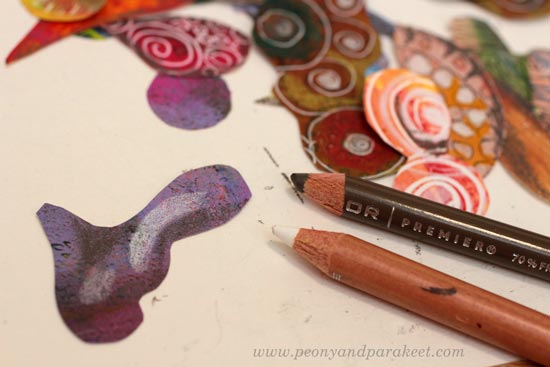
With the white and dark grey (or black) pencils, add some shadowing around the edges and some highlights with white. All the pieces don’t necessarily need this but it makes solid-colored pieces look much more interesting.
Step 4 – Glue the Collage Pieces
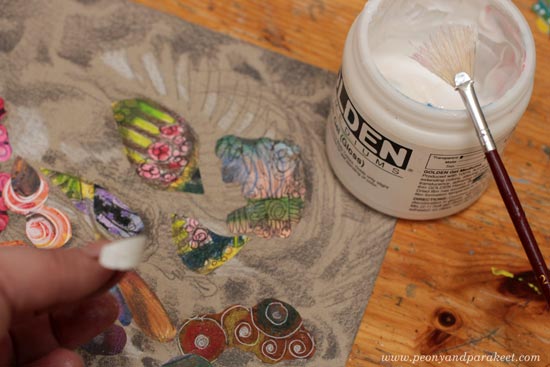
Use the background as a support structure and an inspiration source for your collage! If you have problems with composition, go through my free mini-course Loosen Up and follow the tips there!
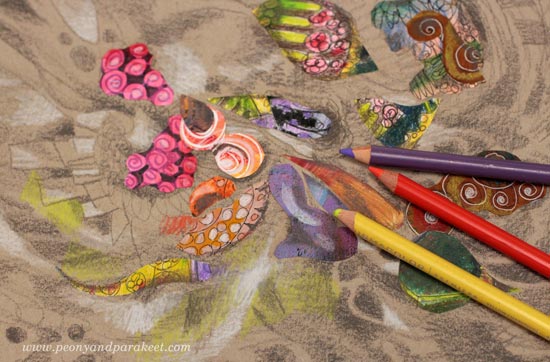
Step 5 – Add More Color with Colored Pencils
This step integrates your collage pieces with the background.
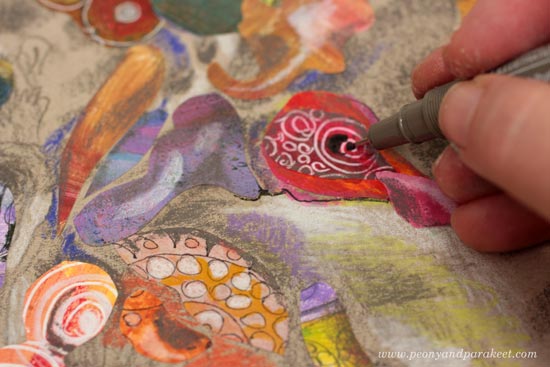
Step 6 – Draw Final Details with a Drawing Pen
Add some loose lines and dark details with a black drawing pen.
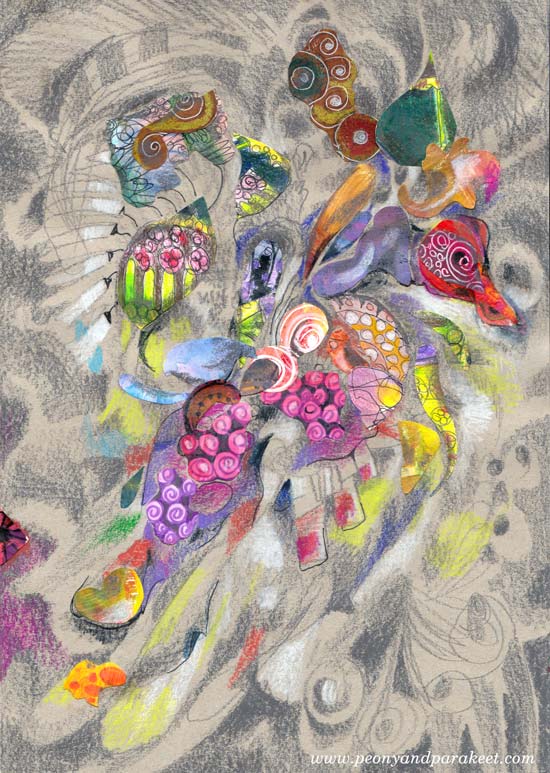
Here’s my finished piece, a fantasy creature!
Some Papers Last Longer than Others
I intended to cut some motifs out of this paper but maybe next time. Too precious for now! It’s inspired by Collageland.
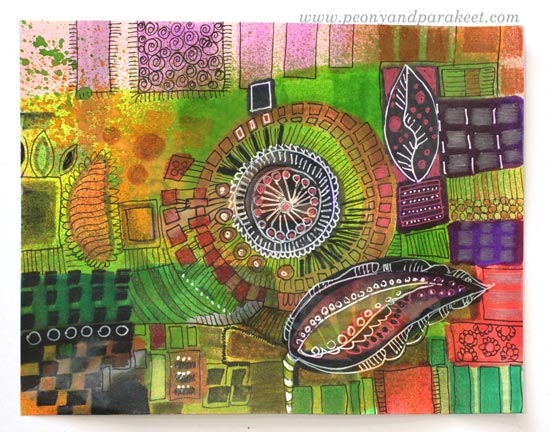
Create Handmade Collage Art to Build Your Visual Dreamland – Buy Collageland!
How to Add Depth when Creating Abstract Mixed Media Florals

When I started drawing and painting as an adult, it took quite a long time for me to understand the power of creating visual depth. Before that, every time I wanted to highlight a particular element, I added more lines to it and it just looked stiffer and stiffer. When you add depth, your art is not like a sentence where every word is underlined.
Instead, your art becomes more like a paragraph that invites the viewer to dig deeper.
How to Add Depth – Create with Me!
In the video, I create a floral painting without any reference photos and give you some basic tips along the way. I use a mixed media approach and combine pens with paints to make the job easier!
Come and Create Unique Floral Treasures!
Level up your skills, find the process you love and let flowers show the way to expressive art! You don’t want to miss this class!

Floral Fantasies in 3 Styles begins on Feb 19th – sign up now!