
Dolls in a Gallery – Paper Collage Step by Step!
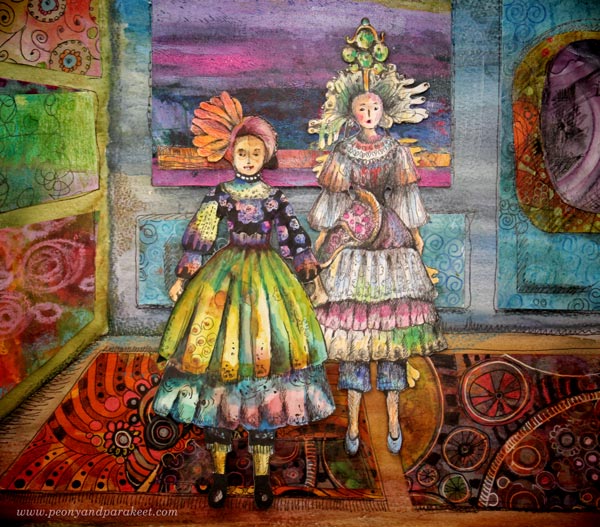
Last week, I published a video about drawing a paper doll. Now when you have the dolls, what’s next? Let’s take them to an art gallery, and show them all the other art that you have created! Follow me step by step to create a fun paper collage!
1) Draw Lines to Define the Space
Take a ruler and divide the paper so that it has two walls and the floor.
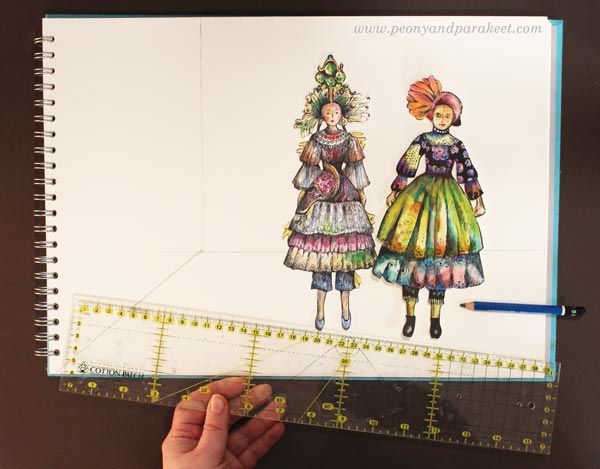
Start with the horizontal line and make sure that there’s enough room for the dolls to wander around the space. Then draw a vertical line approximately one third from the edge, and finally a diagonal that completes the side wall.
2) Paint The Floor and The Walls
I used watercolors to paint the background, but you can use any medium. Because you will add art on the walls and carpets on the floor, the interior can look quite plain at this point. Empty galleries usually are pretty sad-looking but that’s going to change in the next step!
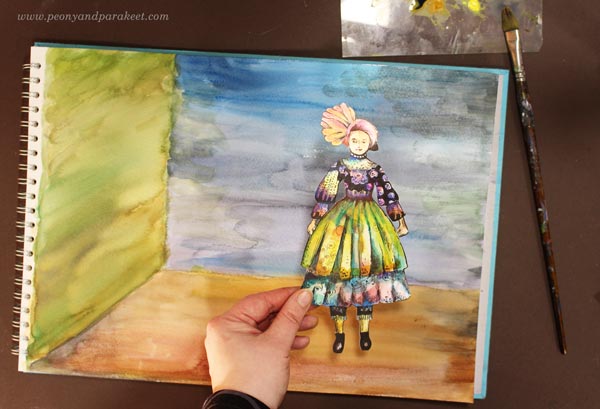
To make the gallery look more 3-dimensional, I used cooler colors on the back wall.
3) Decorate by Making a Paper Collage
Now the fun can begin. Turn your painting into a paper collage! Start by picking collage pieces to decorate the gallery. Hang art on the walls and make carpets on the floor. Go to your box of hand-decorated papers and use those! If you don’t have any, you can print some or cut images from magazines. But I think this project is the best if you can hang your art on the walls, and be the star of the gallery!
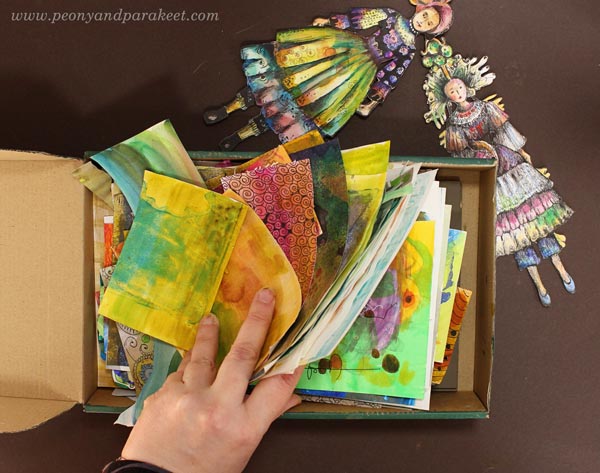
I also have a class called Collageland where I show how to make and use hand-decorated papers.
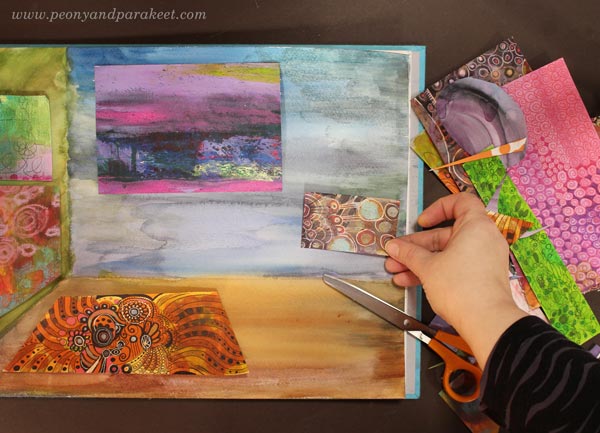
The back wall is the easiest to decorate because the papers can be rectangular there. But when cutting the pieces for the side wall, and the floor, make them inclined so that they follow the perspective.
To Glue or not to Glue?
I glued all the decorations with gel medium. If you make a pile of paintings and carpets, maybe some other furniture too, you may not want to attach them permanently so that you can change them. I didn’t glue my dolls in Step 5, but you can glue everything to complete the image.
4) Add Details with Pens
You can add fringes on the carpets, shadows near the paintings and panels, and adjust colors.
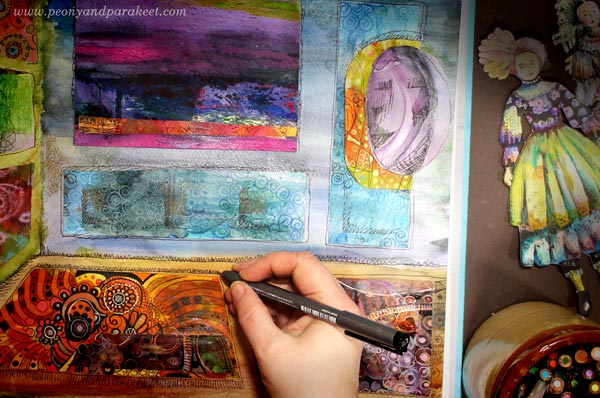
I use a black thin-tipped drawing pen (Copic Multiliner) and colored pencils in this step.
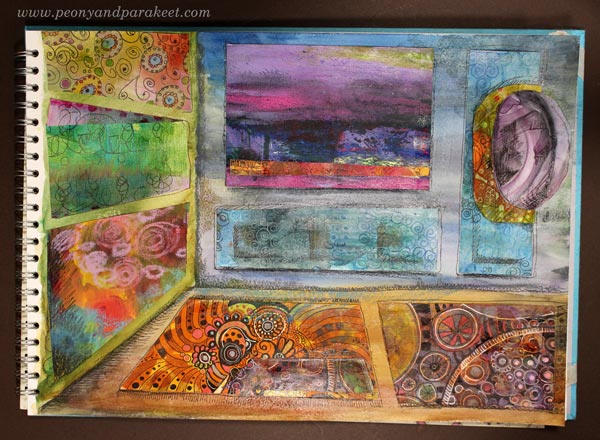
Here’s how my gallery looks when it’s finished. Because I love to take a step away from reality, I made a magic mirror on the wall. I made this paper collage on one of my A3-sized sketchbooks that has watercolor paper.
5) Let the Dolls in and Play!
Now invite the dolls to the opening! My dolls got so excited that the magic mirror became activated. It opened a door for the whole wild world!
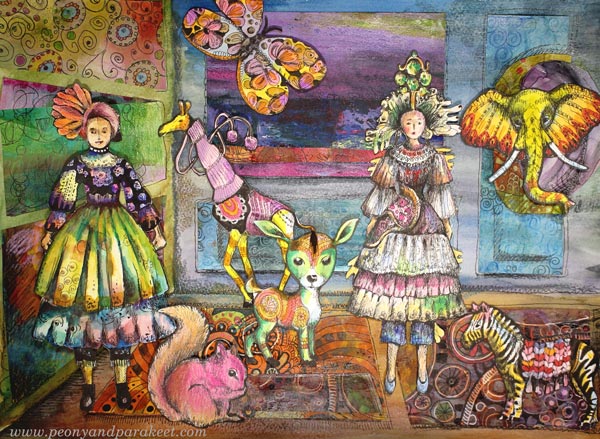
And after the opening was over, a couple of the guests decided to take an adventure through the mirror with zebras!
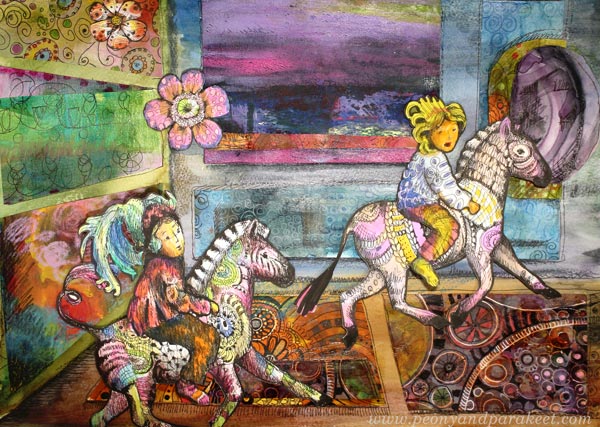
Drawing and Playing in Animal Inkdom
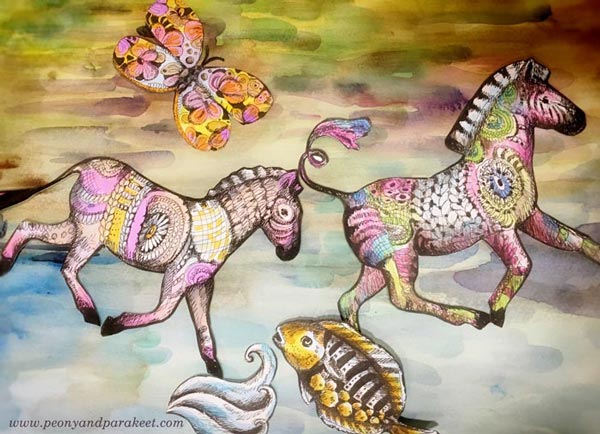
Take the paper doll with you, and come to draw and decorate animals with us in Animal Inkdom! You will get the published lessons immediately after the registration, and you can start drawing right away. Sign up for Animal Inkdom here!
Paper Doll – Let’s Draw Collage Art!
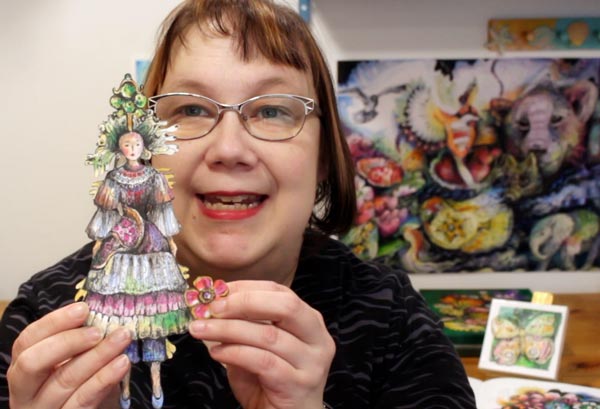
Here’s a fun little project for your box of joy – a box of hand-drawn collage pieces! Watch the video for instructions and inspiration!
Let’s Draw a Paper Doll – Watch the Video!
Drawing and Playing in Animal Inkdom
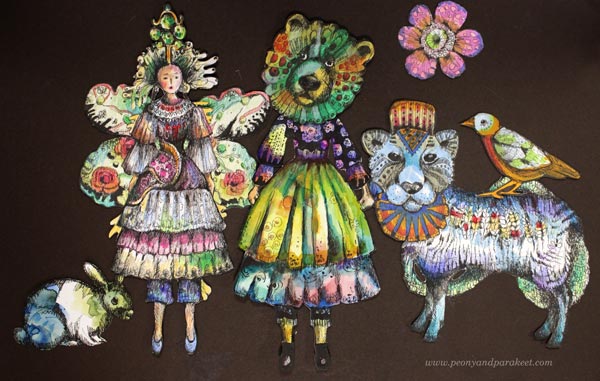
Take the paper doll with you, and come to draw and decorate animals with us in Animal Inkdom! You will get the published lessons immediately after the registration, and you can start drawing right away. Sign up for Animal Inkdom here!
Guiding Word – Choosing and Visualizing Your Word of the Year
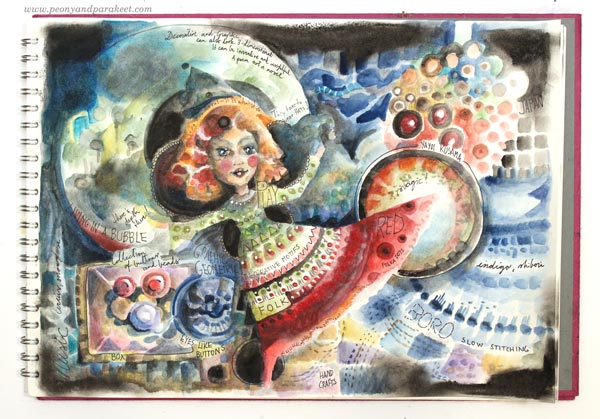
The year 2018 was groundbreaking to me. I was able to include things that seemed separate from my art in my art and build a new foundation for it. It strengthened my visual voice and style, but also, it felt more holistic than just that. I would say that my artistic identity got updated.
As a former software engineer, I see it this way:
Peony and Parakeet 1.0 – intuitive circles and colorful patterns, 2012-2014
Peony and Parakeet 2.0 – from mixed media to fine art, 2015-2017
Peony and Parakeet 3.0 – fantasy illustrations, 2018 -?
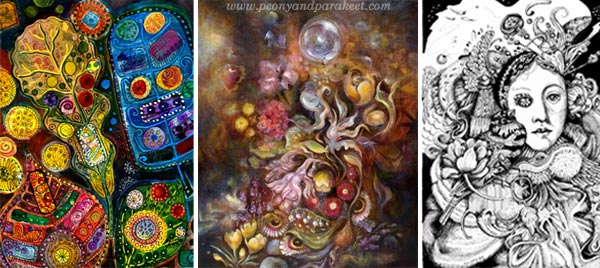
I am not quite sure how to label 3.0 yet, but it definitely started last year and went into bloom during the Inktober challenge in October.
What’s Your Word of the Year?
About a year ago, I developed a process for setting artistic goals. I introduced it to my art community Bloom and
My word for 2018 was “Depth”, and now when I look back, it was related to my old desire to create fine art. But the process of exploring depth was like the symbol of yin and yan. It started a journey towards the opposite word “Play.”
The process of choosing a word and exploring it through art-making had a huge impact on me, so I decided to share it openly. Watch the video to define your word and to explore it more in depth!
Guiding Word – Watch the Video!
My word for 2019 is “Play”. I am looking forward to
P.S. As you probably noticed already, this website and my artist website has been updated! There are still things to adjust and add, but feel free to browse the new look!
P.P.S. I am running a free live webinar The Joy of Drawing on Jan 17, 7 PM GMT – 11 AM PST, reserve your spot here!
The event is gone but here’s the recording!
Drawing Jewels and Flowers – Free 2-Part Mini-Course
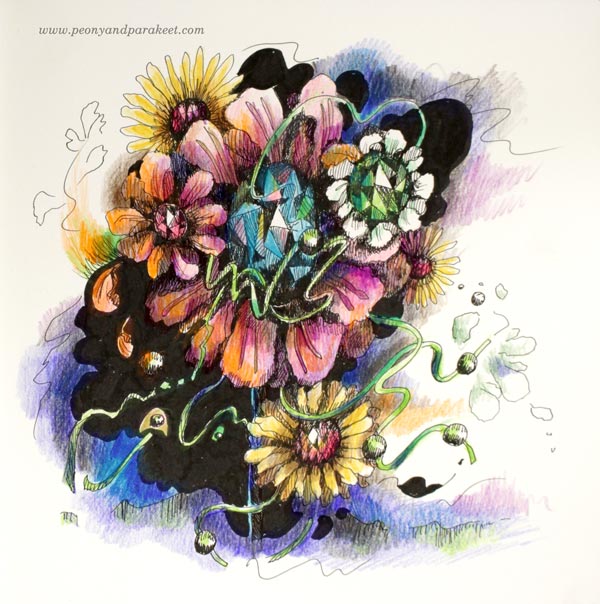
I have been working with a 2-part tutorial about drawing jewels and flowers. Part 1 was published last week, and Part 2 is now available too! I will guide you to create a gorgeous jeweled bouquet with just pen and paper. You can color it with colored pencils, felt-tipped pens, or watercolors.

Get the free mini-course! – Subscribe to my weekly emails and draw with me!