
Processing Visual Inspiration
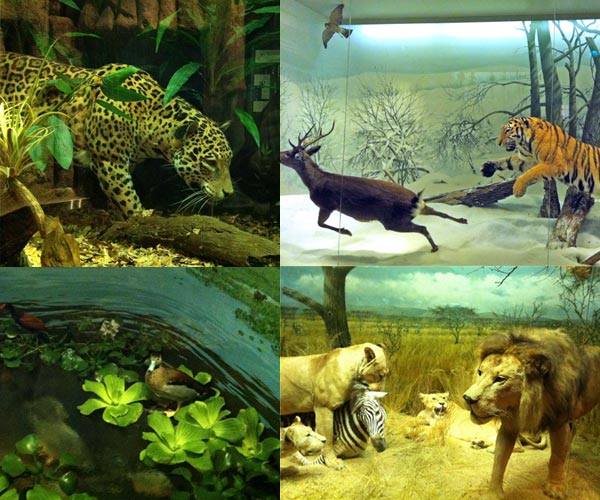
Last week, I visited Natural History Museum of Helsinki. My idea was to take a sketchbook with me and make few sketches – if I happened to see something inspiring. My skeptic attitude changed once I entered the place. I remember visiting the museum over 20 years ago but only the front door of the old building seemed a bit familiar, everything else looked new to me. I was mesmerized by the colors and details of stuffed animals, and only after a short while, almost overwhelmed by the amount of information and visual stimulation. It would have been impossible to put all the inspiration into sketches, so I took photos.
When I got back home, I knew I had to create an artwork inspired by the visit. But my mind seemed too full, not knowing where to start, what to express. I started a painting but against all my principles, I tossed it because I was totally clueless even if my mind was full of inspiration!
After a couple of days, I decided to make a sketchbook spread to help me process the subject. I loaded the photos to iPad and created several layers of watercolors while browsing the images.
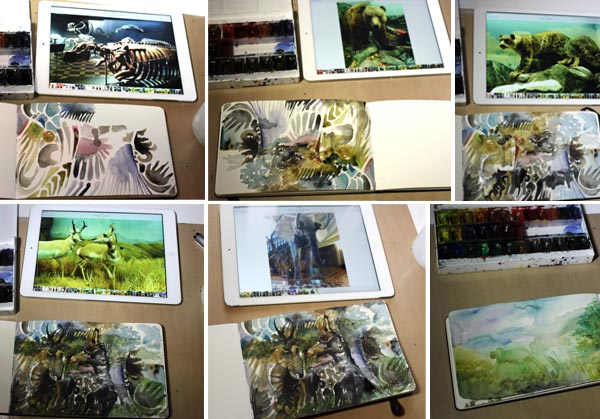
I wrote down some of my thoughts: how I admired lions and African animals in general when I was a child and how rich country Africa is, in terms of nature.

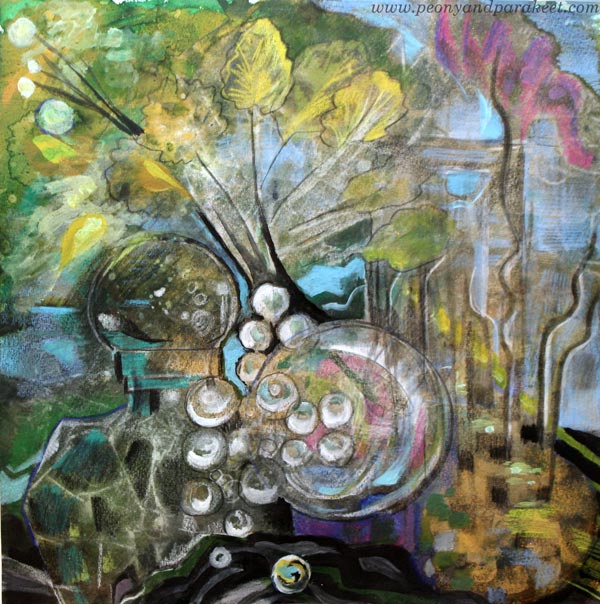
After this spread, I asked myself: what inspiring did I see that than the animals. The answer was: glass cabinets and the concept of collections that were kind of surreal. With that in mind, I started a painting on a thick watercolor paper.
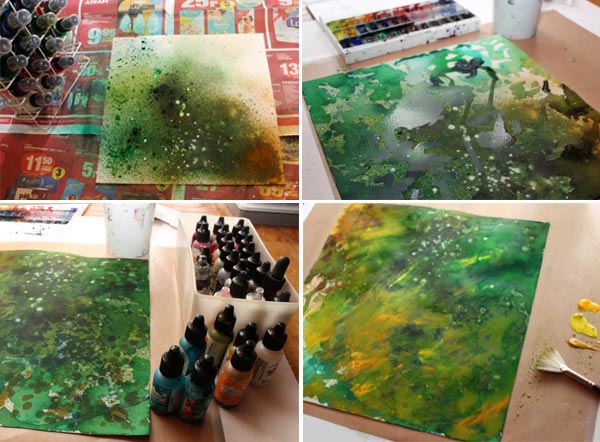
Randomly creating new layers with ink mists, watercolors, alcohol inks and gouache paints, I focused on the color first. Greens, turquoises and ochras were the ones that made the strongest impact on me when looking inside the glass vitrines.
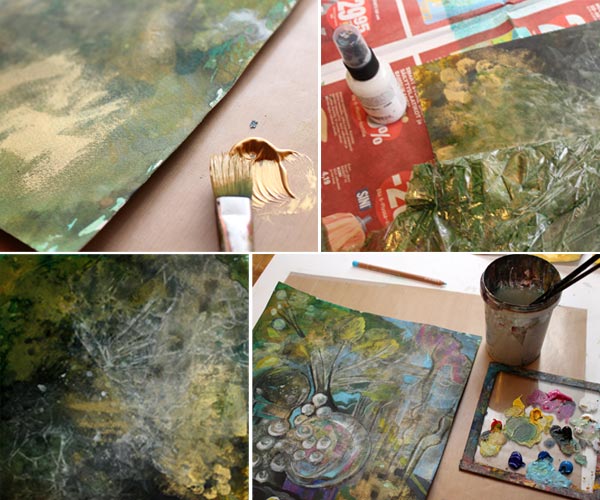
With gold paint and white ink, I created more details to embark my imagination. Then I thought about Slavic melancholy, fall, piano concertos and let all of that get mixed with glass and nature. When I looked at the end result, I kind of like the idea of mixing a landscape with a still life. The idea is surprisingly similar than what I saw in the museum: still-lifes that are also landscapes! I would have not thought it this way though without processing the subject so much. By taking photos, painting without a clue, working with the sketchbook and then creating a lot of layers made me somehow understand what inspired me in the first place. When I let go and followed the pencils and brushes, it was ready to come out.
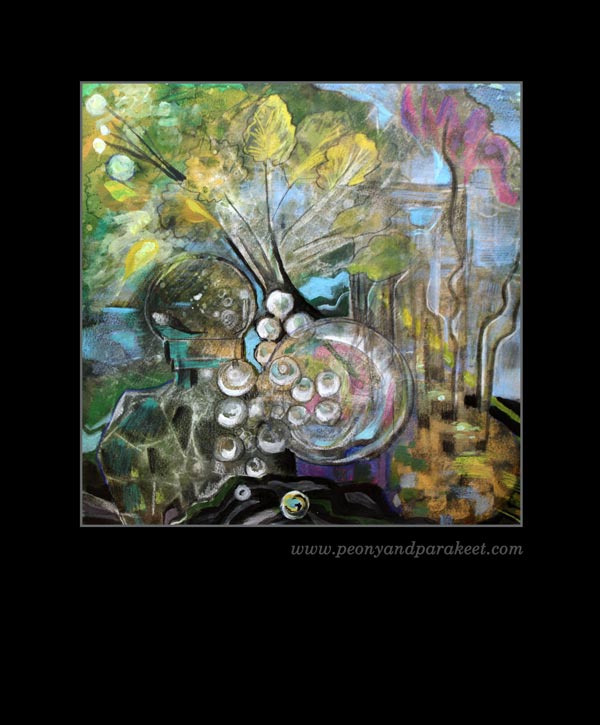
What I learned was: sometimes the creative process takes a lot of time, a lot of phases, don’t stop too soon!
Challenge yourself in mixed media art! Buy a bundle of 6 art journaling classes!
Add More Creativity to Your Art!
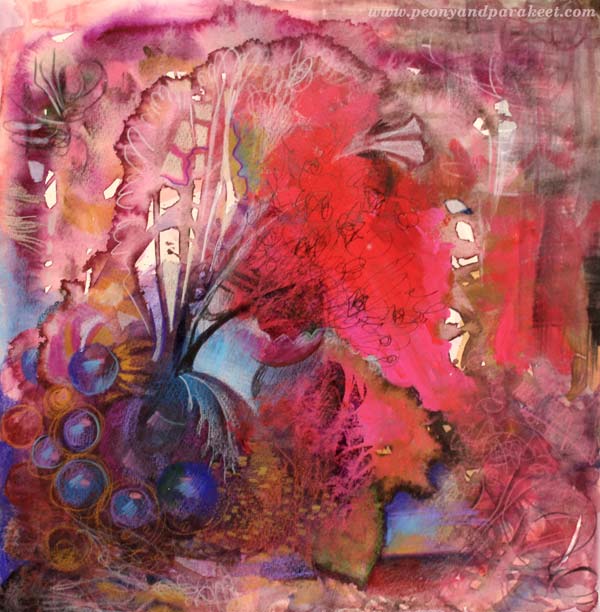
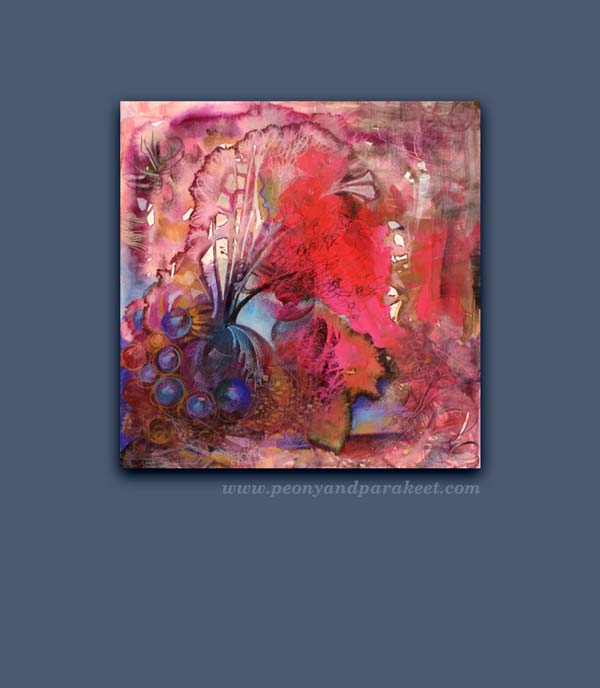
Here is my abstract still-life with watercolors, acrylic paints, and colored pencils, called “Harvest Stillife.” It’s created very intuitively, without any idea of the end result when started. But like so often before, when I selected images for this blog post, I found recent photos that must have been in my mind when I made this.
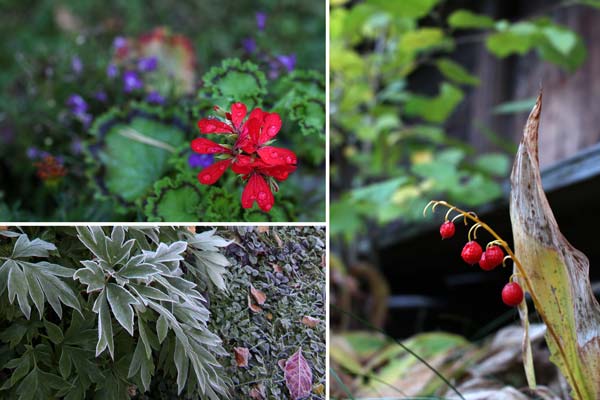
I love the complexity and the number of details that can be seen in these shots from my garden. Many who struggle with creating art overlook the complex nature of reality. In these photos, they only see a flower, bush, and some berries. Instead of labeling the obvious, you can examine all the color variations, different shapes, sharpness and blurriness of the elements, depth, patterns, the way each color connects with the next … Then you can try to summarize what the hierarchy of all these factors in the photos could be, how all this could be modeled. It seems too complex to describe in a simple way. That’s when creativity starts working for the solution, figuring out what things to bring out without losing the connection to all of it.
A big part of the visuals today has a simple, graphic look. If you get exposed to that a lot, you might think that simplicity is the key to creating good art. I believe it’s totally opposite: complex things are the best source of inspiration. Trying to see complex systems behind simple stereotypes feeds our creativity much more than trying to simplify the simple.
The same idea applies to painting: Embrace the complexity by adding a lot of variation and then bring out the essential.
Painting an Abstract Still-Life
Watercolors and acrylic paints:
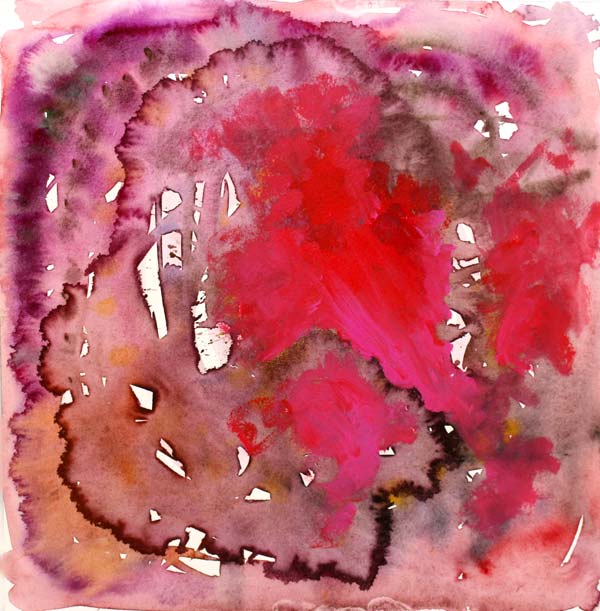
Placing a plastic wrap over the wet watercolor paint to add more delicate details:

Ready for finishing:
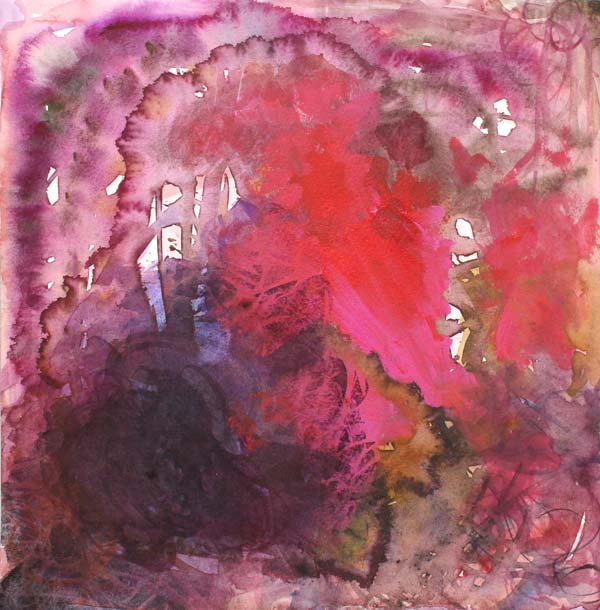
A detail of the finished look, done with colored pencils and a black drawing pen:
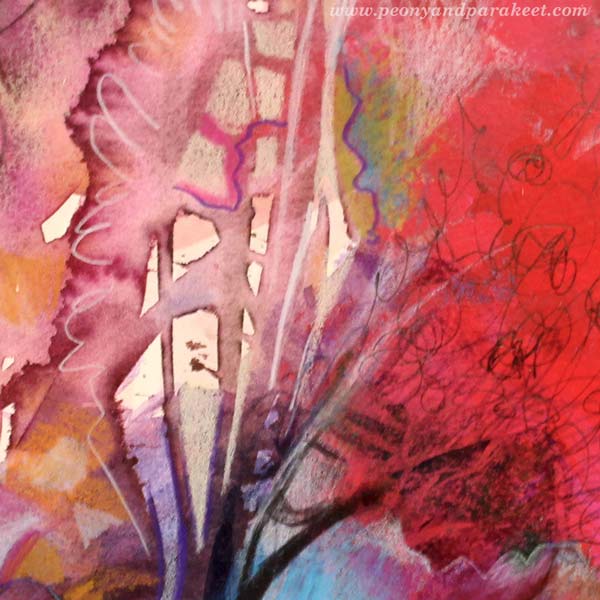
Creating abstract still lives so that they appear naturally is so much fun!
Subscribe to my weekly emails – Get a free mini-course!
5 Steps to an Abstract Landscape

Let’s paint together! The idea for this painting came from nature. Have you noticed that when the sun shines after the rain, everything sparkles! It’s so beautiful!
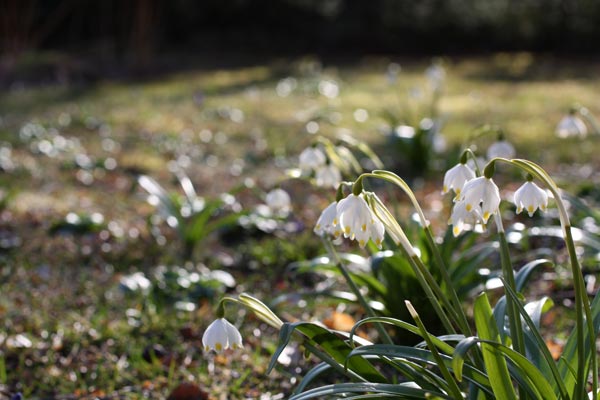
Soil, the sun and rain – even if they are different from one another, they all work together to make plants prosper. In the painting, the soil is made with colored pencils, the sun with acrylic paints and the rain with watercolors. These art supplies are so basic but they also work so well together! Watch the video and create your own abstract landscape – “Soil, Sun and Rain”!
More instructions for watercolors: Buy Watercolor 101 for Intuitive Painting
What Are the Cornerstones of Your Art?
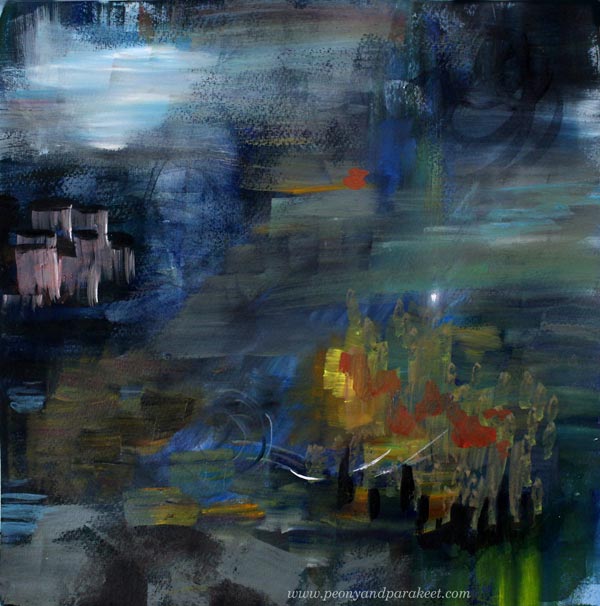
I have always loved abstract paintings. It occurred to me just recently that even if I rarely create realistic art, I rarely go to extremes in abstract. But then, what would prevent me from doing that, putting those cornerstones of my style to a new order.
Namely, if you know what you love to create, why not play with that? Thick black color, sharp lines, dramatic color transitions, sense of movement and muted but distinct colors – those are what I always seem to aim.
This painting is called “Cornerstones” as I like this detail the most.
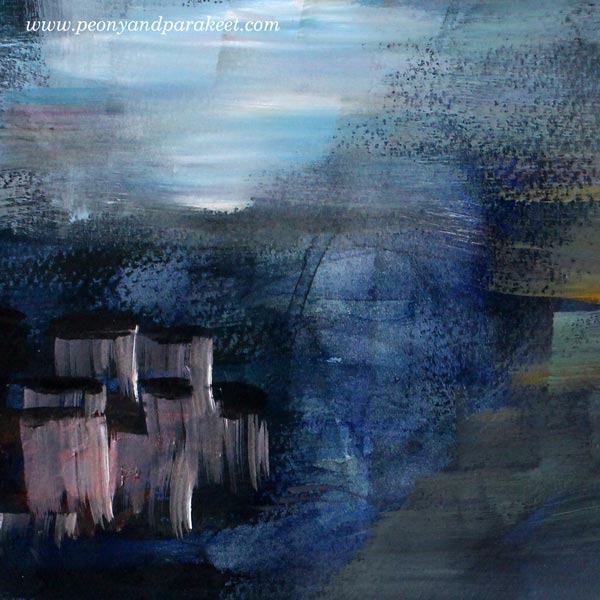
When you have your cornerstones set, you can feel free to experiment: use less of something, more of another thing, express deeper thoughts or become more playful.
My favorite supplies are watercolors, acrylic paints, and colored pencils. They can be seen as cornerstones as well. If I create something a bit different, it isn’t so scary when I use these old friends.
So I started the painting with watercolors. I had some leftover acrylic paints from other projects, so I stopped to watch the watercolored surface and tried to figure out how to create something a little bit different with them.
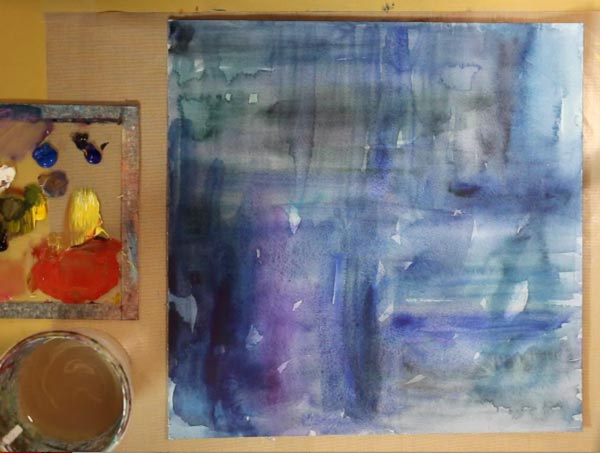
One thing that I love in acrylic paints is to have many colors on a brush at the same time and get delicious color effects.

I worked with fairly thick brushes so no wonder when the artwork reached this point, I felt it needed some sharpness and movement.
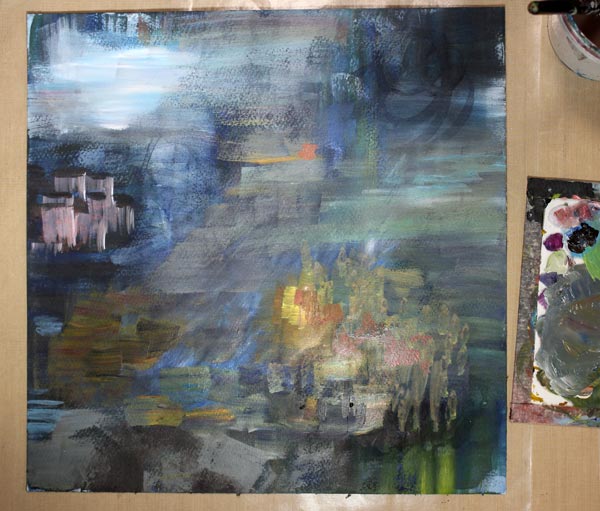
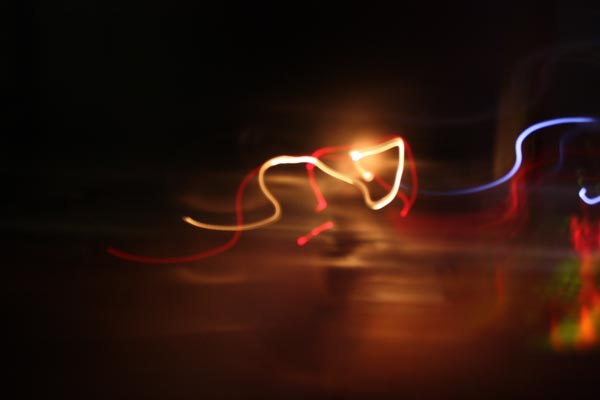
Then I remembered the photos that I love to shoot. I adjust the shutter speed low and move my camera to doodle with light. My photos are not brilliant, but I absolutely love playing with the camera this way. These photos make me think of bit streams and all the wonderful technical innovations.
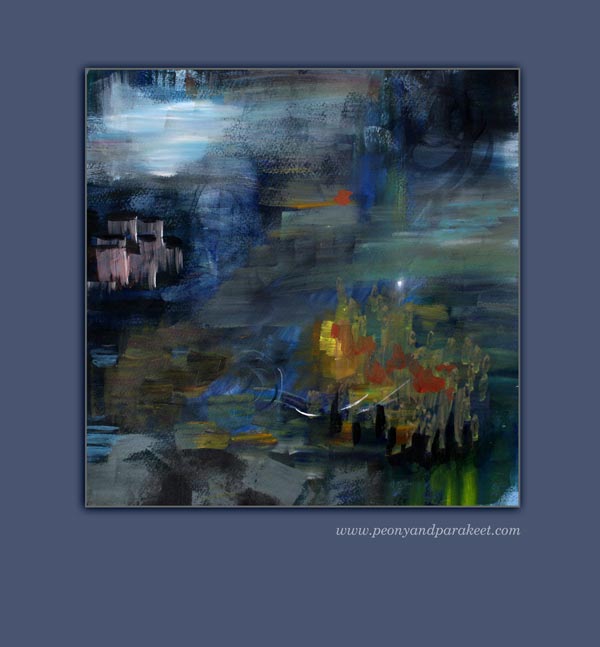
So I added a few sharp light details, and it was finished!
Subscribe to my weekly emails – Get a free mini-course!