
Expressing Inner Storms by Painting
This post is dedicated to all who have lost their creative inspiration during these challenging times when outer storms cause inner storms too.
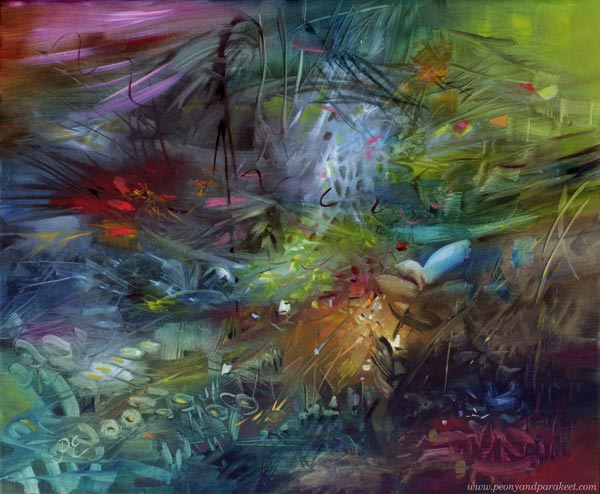
I have always loved art that uplifts and is more on the bright side of fantasy than in the darkness. I have defined myself as an artist who does not express agony or suffering or bring out what’s wrong in society. My art has based on the possibilities of imagination. It’s about the richness of the inner world. “Spiritual freedom” has been my word.
But the longer I have painted, the more courageous I have become. How flowery do my paintings have to be? To free up my art and to free up my thinking as well, I have begun to accept all kinds of shapes, colors, and emotions. The same flowers that bloom in my watercolor pieces become little monsters when I paint more freely in oil. It’s like there’s a new world under the inner world I only used to know.
Painting Inner Storms
At the end of January, I started a new big painting. It had dark colors, but I intended to brighten it. “When the time is right, I will make it more cheerful,” I promised to myself. Weeks went by, and it always felt like I had something more important to do. I didn’t have the energy, or I had too much energy. The more I postponed the finishing, the moody I became. “This pandemic gets to my nerves,” I said to my husband.
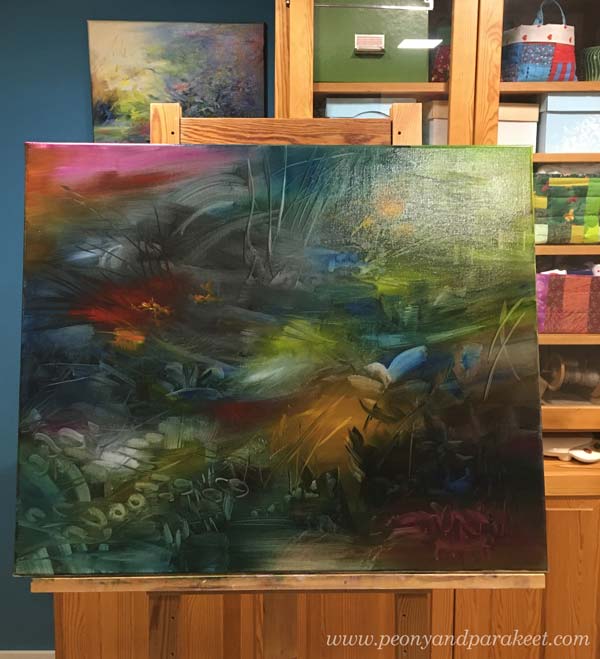
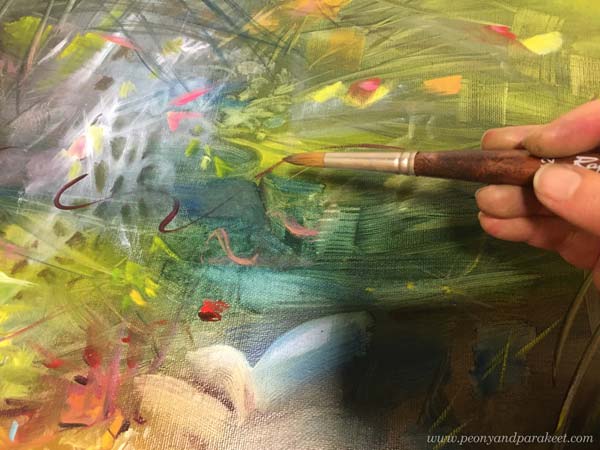
But when my spirit got more and more low, I had to do something. One night I picked paints and brushes, abandoned all the happy stuff I was creating and continued the painting. The brushes felt heavy at first. The paint tubes were like stones. But then I remembered the magic words: “Päivi, you can paint!” This confidence, even if it always feels false first, energizes my strokes and thoughts. The painting begins to speak to me, and my responses become more and more natural.
This Too Shall Pass
“What are you painting, Päivi,” I heard my inner critic saying after a while. “The piece is still very dark.” My immediate answer was: “Yes, it’s dark, but this too shall pass.” At that moment, I knew the name of the painting and why it should not be forced to look more cheerful. Inner storms can be as beautiful as the happy moments and little monsters as clever as any flower.
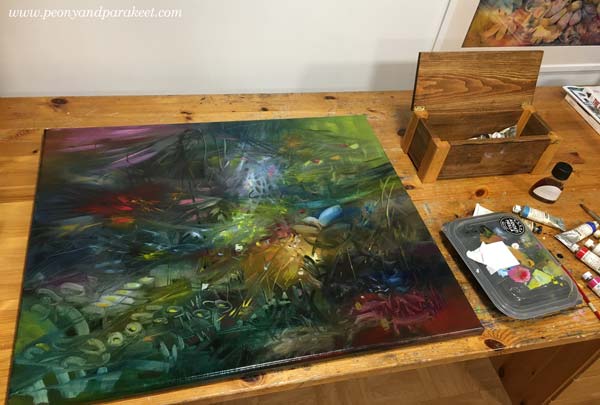
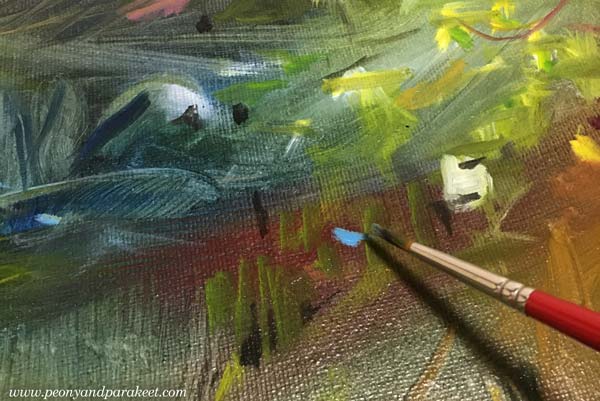
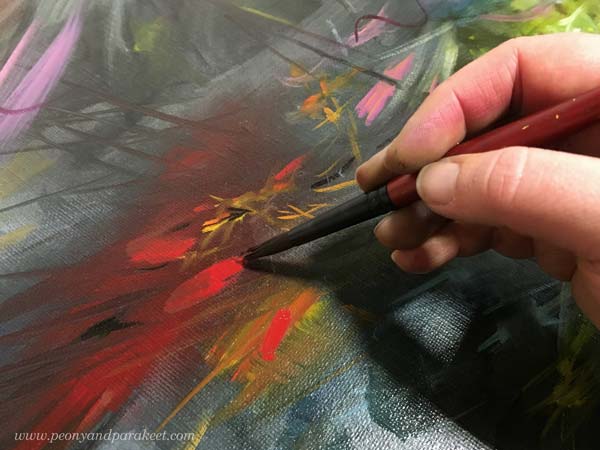
When I woke up the following morning, my mind was calm and still. And when I look at the painting, it gives me hope no matter how stormy and gloomy it seems.
Here are some detail pics.
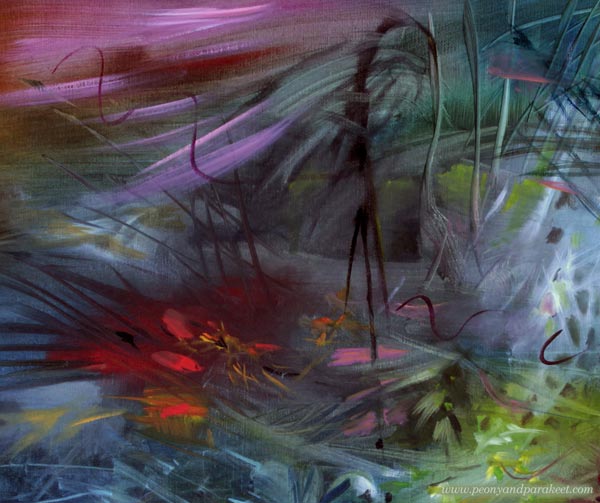
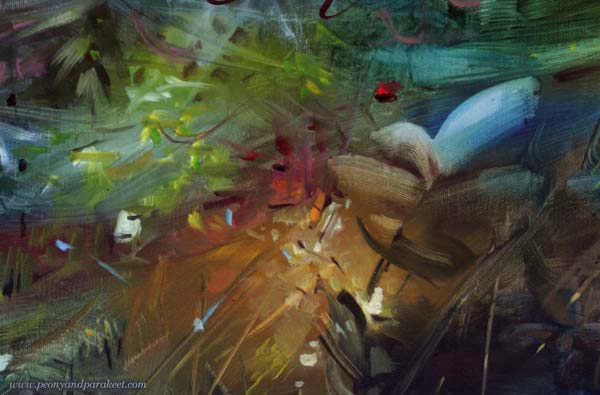
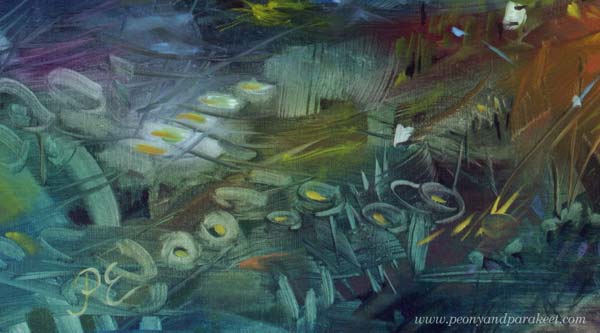
Here’s the whole painting again.
Sometimes the lack of inspiration is a sign of not letting out what needs do so.
Have a creative Easter!
P.S. My abstract painting class Floral Freedom is now available as a self-study. Watch the video below!
My free painting style is based on Paul Klee’s and Wassily Kandinsky’s timeless teachings presented in this class. >> Buy here!
Building and Breaking – Revealing Artistic Potential
This week, I talk about the hidden potential behind artworks and how we can reveal that by not only building but also breaking.
Modern Maximalist
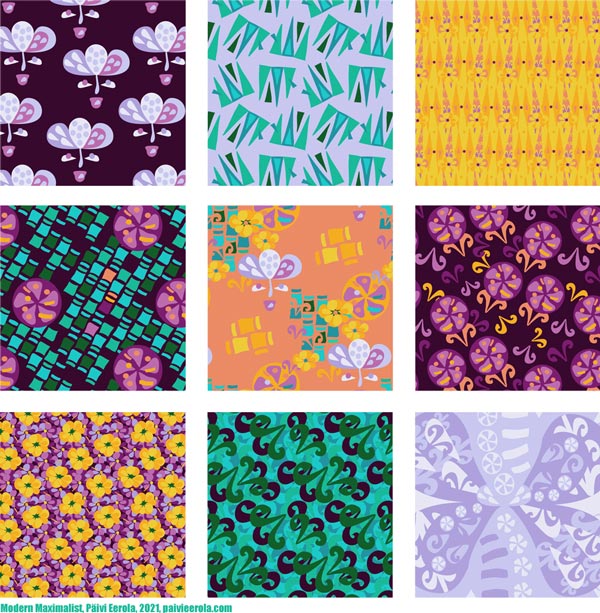
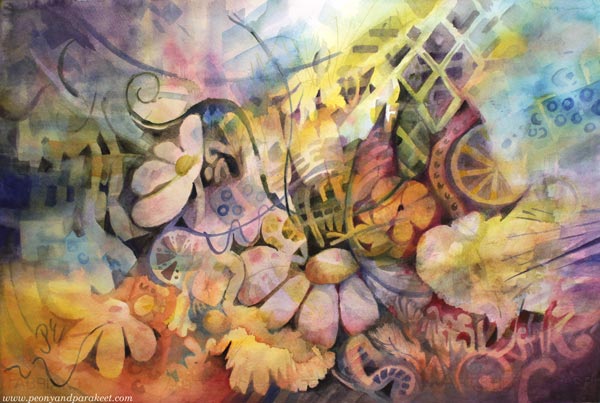
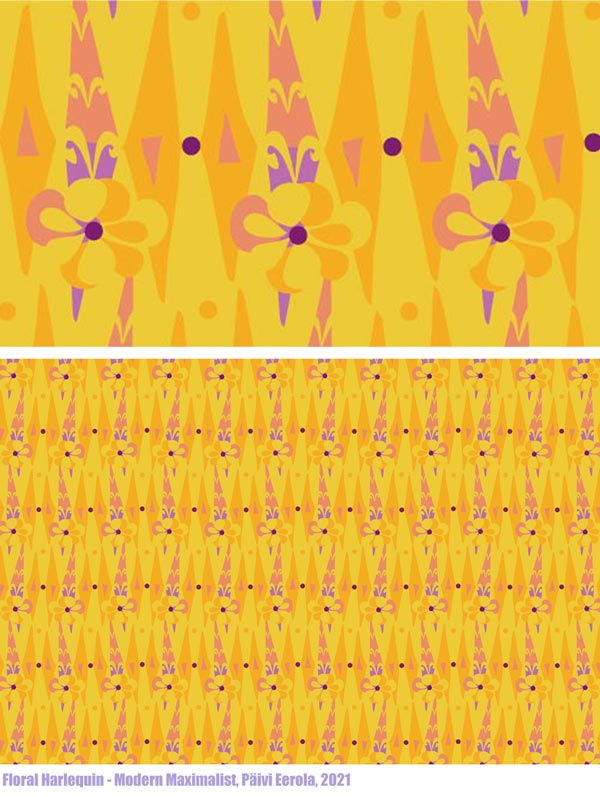
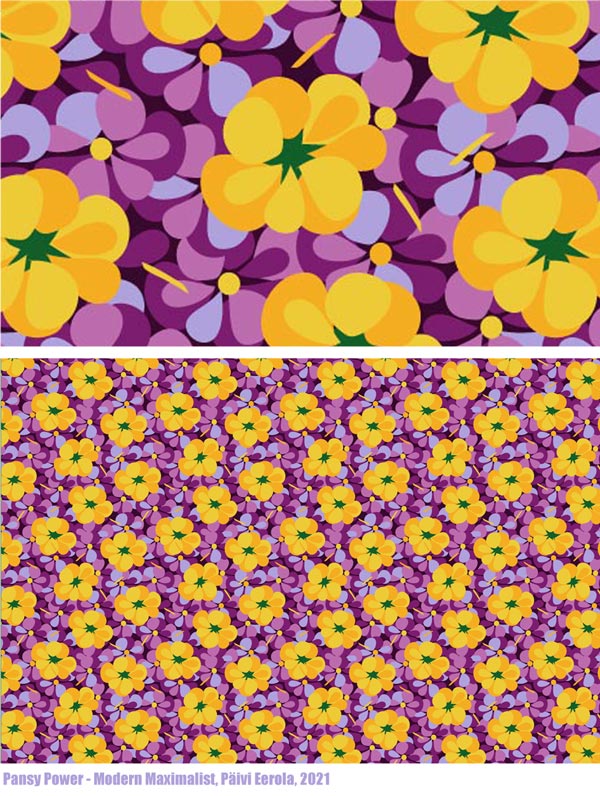
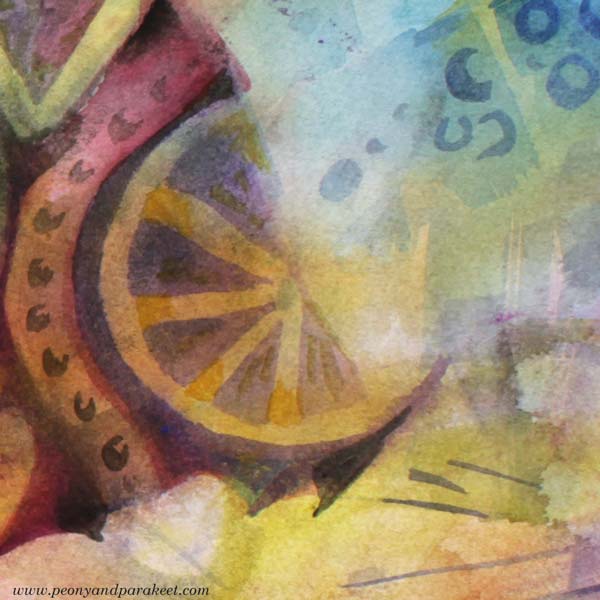
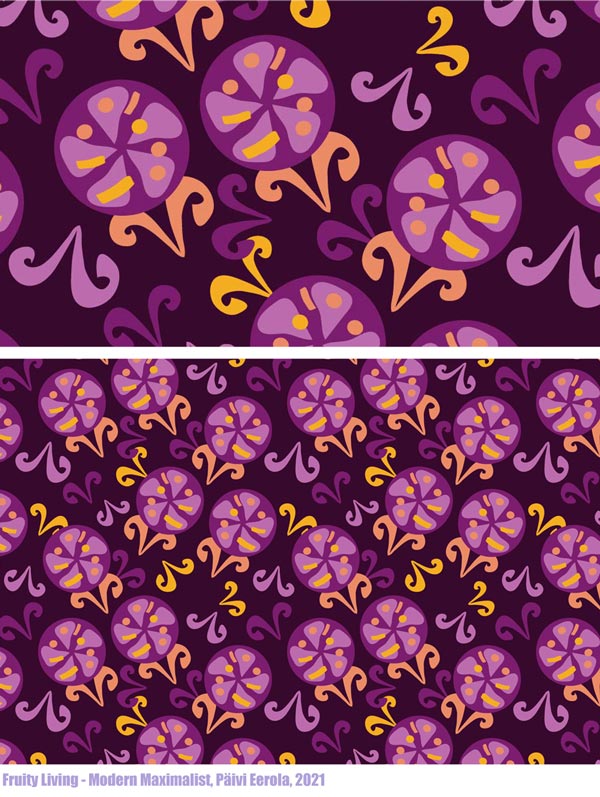
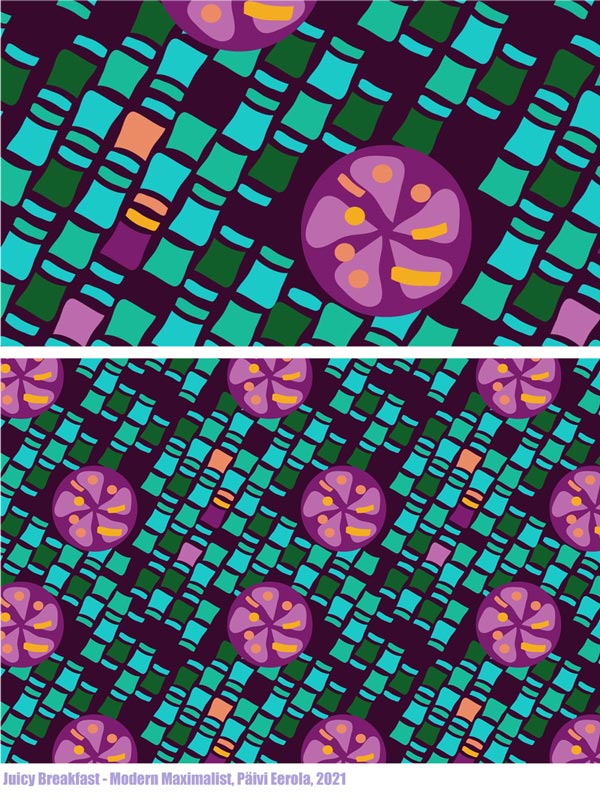
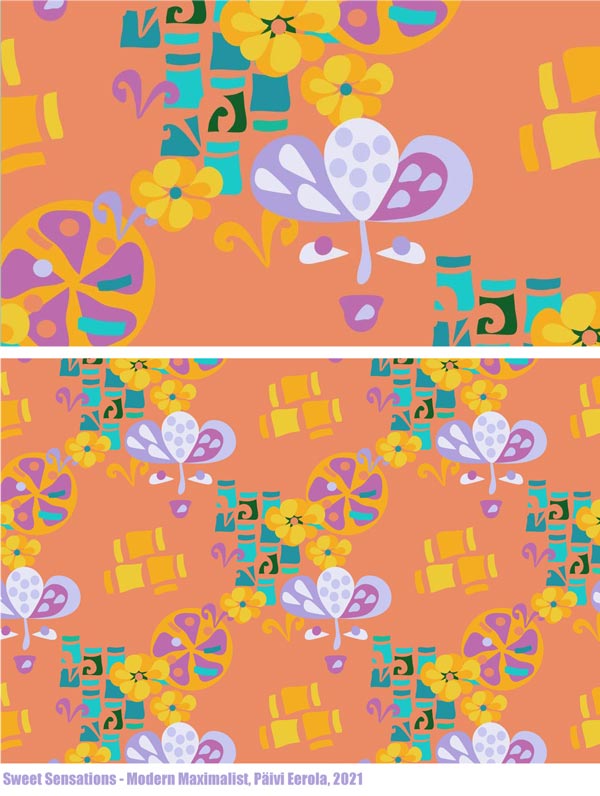
I have just designed a collection of surface patterns called Modern Maximalist. It’s drawn digitally in Adobe Illustrator and more modern than my work usually is. However, I love modern, especially the 1960s and 1970s styles. I was born at the end of the 1960s, live in a house built in the same era, and my love for retro has been too hidden in my art. But still, I didn’t want to design the collection based only on the images of others, but to build a bridge from my art to design. So, most of the motifs were based on this watercolor painting that I made a couple of weeks ago!
More Artistic Potential by Building and Breaking
Often when we create art, we build. We communicate the big picture and compose bits and pieces so that they work together. We get happy accidents (and sometimes some not-so-happy ones) and aim to make an image where the overall atmosphere takes over the details.
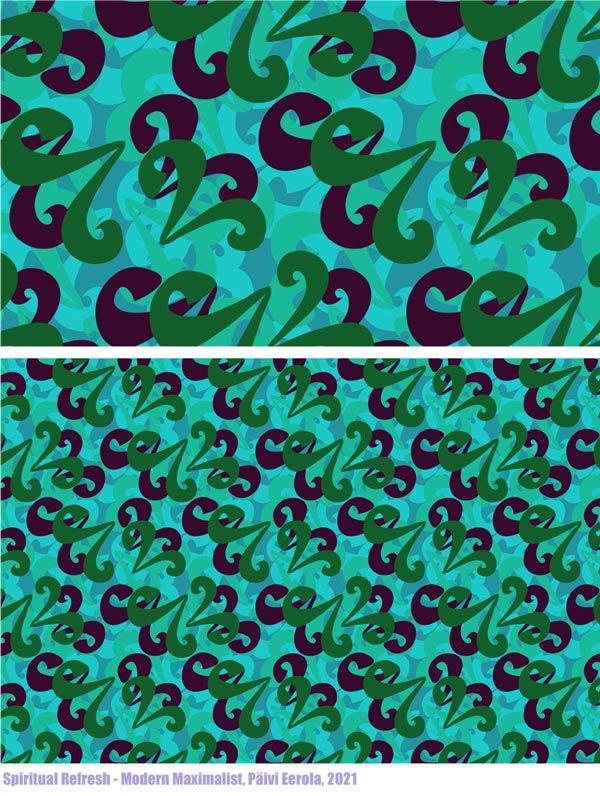
But to reveal more, we also need to break. Then the romantic flower that was painted to represent a dreamer, becomes a more stylish and symbolic figure.
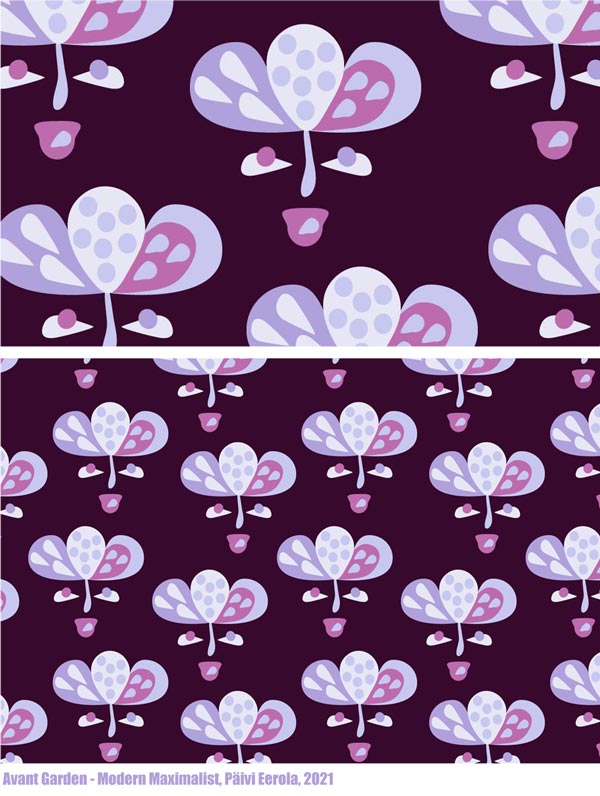
Yellow flowers and all the yellow washes can be more geometric when they are away from the big picture.

The juicyness of the fruits and other decorative details can be reorganized.
Picking Ideas from Other Images
We can also add more fuel, and break and pick from other images. This design called “List Maxima” uses motifs from the painting, but also the idea of a list that came from playing with the name of the collection, and fashion pictures that showed puffy and full dresses of the maximalist style.
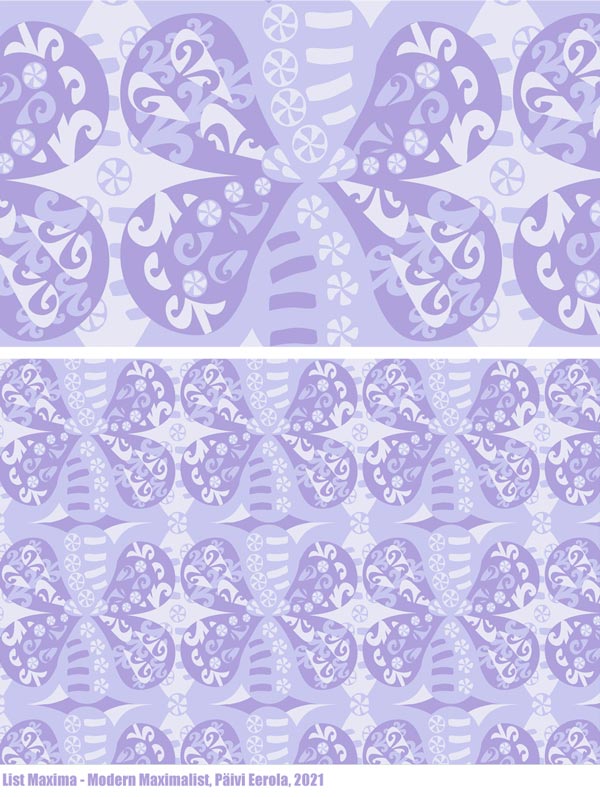
By breaking and picking, we also develop our ability to curate – to see which inspiration suits what we have already done. It’s an essential part of a style-development and and growing artistic vision.
I saw a pleated skirt on Prince Charles’s wife Camilla Parker-Bowles, not a maximalist style at all, but wonderfully modern so I broke and picked the image and got creative from that.
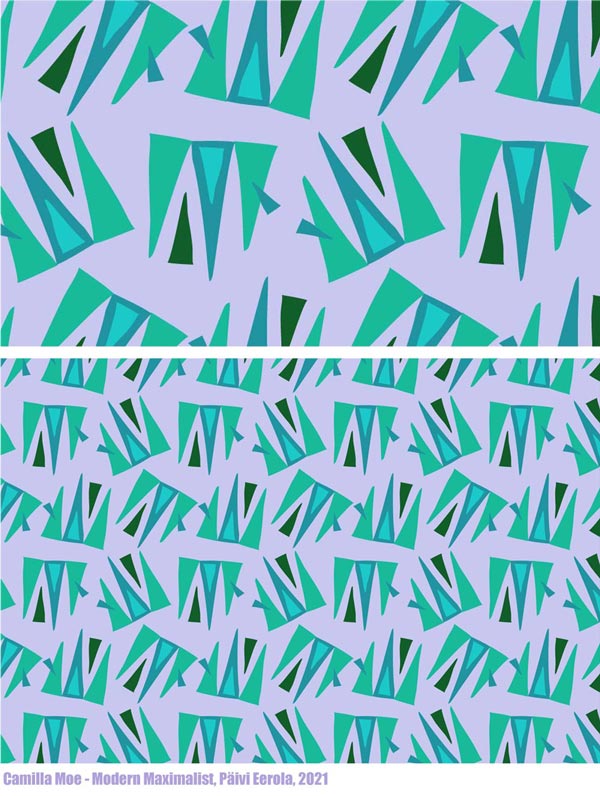
Artists often say to me: “I need to focus!” But by focusing on narrowing, we non-creatively force ourselves to do one thing. By breaking and picking, we can curate all kinds of inspiration and be creative so that it grows our artistic vision.
Revealing the Artistic Potential
No matter where you are in your artistic journey, your art benefits from the idea of building and breaking. Build to go deeper into the experience and break to reveal more ideas and potential! In practice, building often means painting, and breaking is often connected to drawing – even if, of course, you can use any techniques that suit you.
What was first a watercolor painting, could now be a quilt!
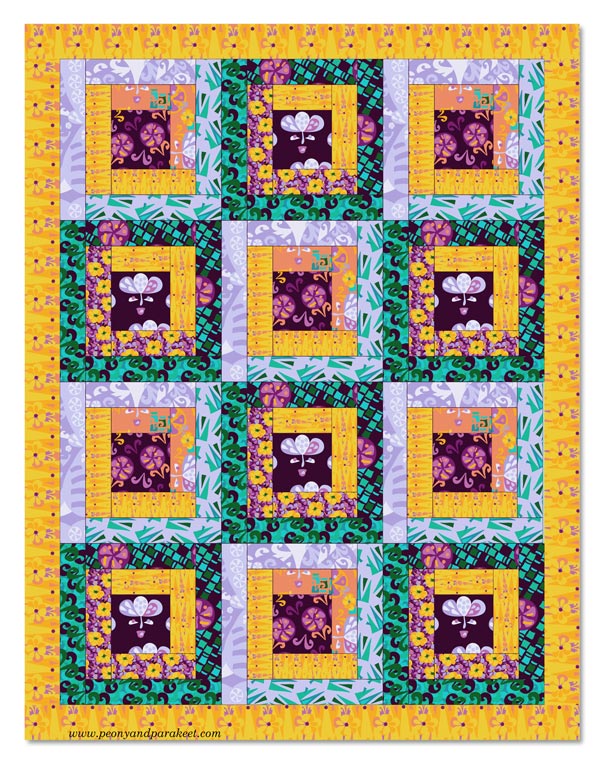
Building and breaking can alternate endlessly when we combine new ideas and results with old ones.
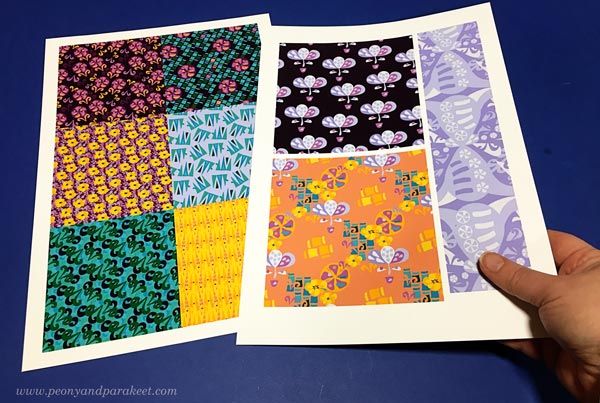
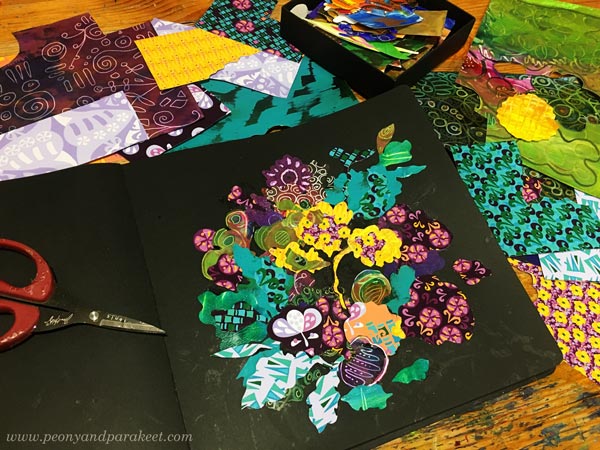
Here I am breaking and picking to create something new into my art journal.
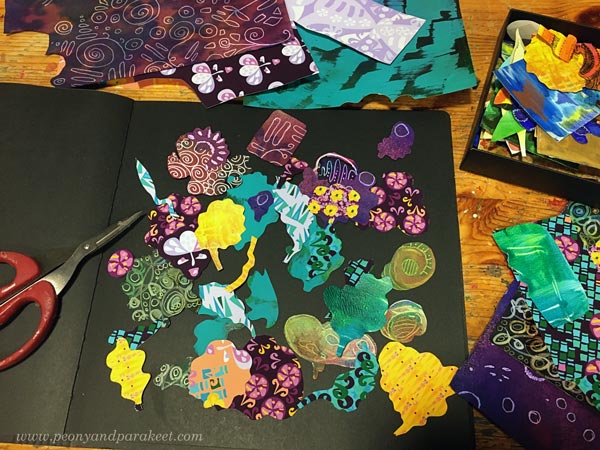
Here’s what I built by cutting and glueing new prints and old hand-decorated papers.
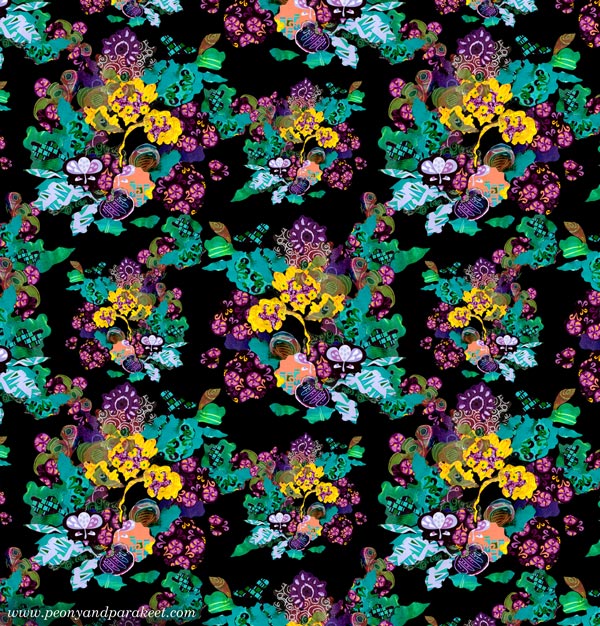
And I couldn’t resist checking if this could work as a repeat too!
I hope you found this post about building and breaking inspiring!
Need help for finding your artistic potential and building artistic vision? Sign up for my coaching program called Artistic Vision!
Creative Start – A Watercolor Edition
This week, we celebrate watercolors. I have a new painting and great news: You can now purchase the watercolor module of the class Floral Fantasies separately. >> Buy here!
This painting is about living at maximum, embracing the visual richness of our surroundings, and having the courage to show up and reach high.
My Rusty and Shy Watercolor Set
Why did I choose watercolors for this kind of grand subject? Those timid little pans! “Hey, Paivi,” they whispered to me. “We doubt if we can dance anymore.”
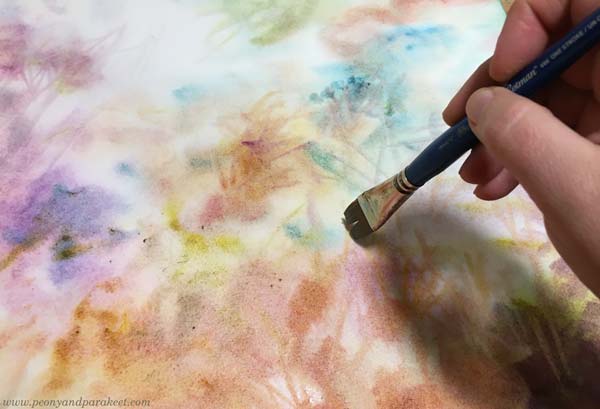
We humans are like watercolors. It takes some time to handle a new element. When a part of us gets washed away, we first become bland and unclear.
Layer by Layer Towards The Maximum
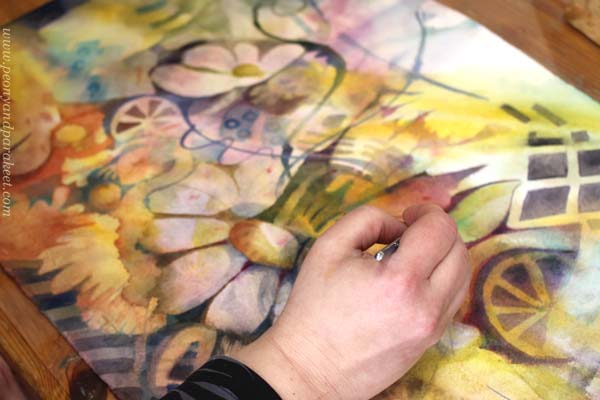
But the mildness changes when layers begin to build up. The colors get brighter and the depth becomes more evident. Like a painting, a life that had no energy begins to breathe and sing.
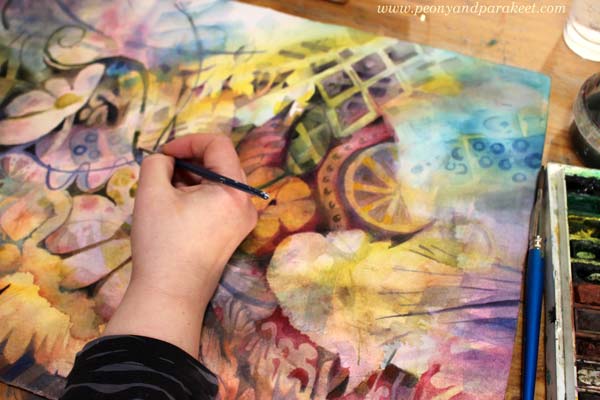
What first felt uncontrollable, can lead to openness.
The failures of the beginning become background music, and the true identity is revealed layer by layer.
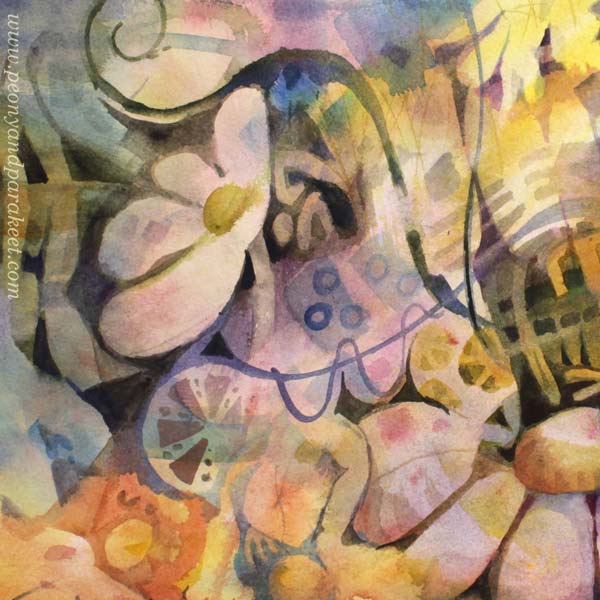
When the outer world is at a minimum, we have a chance to turn the inner world to a maximum. So why paint like a minimalist when the soul’s natural essence is a maximalist! Isn’t this the best time to let the inner artist out?!
Floral Fantasies – Watercolor Edition
By popular request, the watercolor module of Floral Fantasies is available separately from the rest of the class. The watercolor edition has four projects. There’s one small beginner project, two are slightly bigger but fun projects, and the last one is an in-depth project. You’ll start simple, but paint more richness and layers project by project. >> Buy now!
Floral Fantasies – both the watercolor edition and the full edition are on sale this weekend! The sale ends on March 7, 2021, at midnight PST. >> Buy now!
Artistic Growth – From “Huh” to “Wow”
This week, we’ll talk about changing artistic direction and how the first reaction doesn’t always matter as much as the second one.
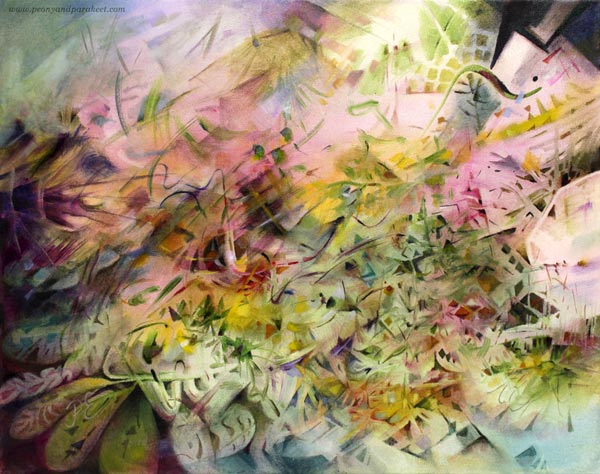
My seed idea for this painting was slightly different from usual, and I wanted to see how it would grow on canvas. It took many sessions and lots of struggles with finishing. “There’s still something wrong with this painting, Paivi,” I said to myself after correcting a couple of shapes that my husband pointed out. Last night, I had a dream that I walked an ugly dog on a thin leash. The breed was an odd choice, but the dog was still mine.
“Huh” and “Wow” – First and Second Reactions
Isn’t it so that we want to change, but as soon as we begin to see the results, we are likely to bounce back? It’s so easy to say: “No, this is not for me, I’ll try something else. I’ll try a different style, a new technique, another art class, or find other artists to follow and admire.” And this is not only a bad thing. In the long run, bouncing back is about integrating the new stuff into our natural self. But in the short run, it can prevent the growth we want and need.
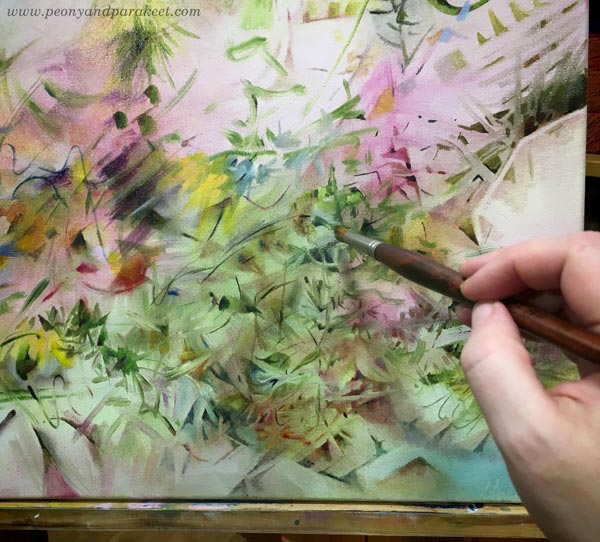
I have been reading James Victore‘s Feck Perfuction as an audiobook. It’s a book about creativity and easy listening about things that are really tough in practice. It’s more like a two-hour inspirational speech than a down-to-earth guide, but it feels current with this painting. In the book, James Victore refers to an American pop artist Edward Ruscha. He has said: “Good art should elicit a response of ‘Huh? Wow!’ as opposed to ‘Wow! Huh?'”
This week, my favorite video podcast, One Fantastic Week, talked about “Instagram art” – pictures that the Instagram algorithm likes. It’s colorful, easy to consume and comprehend, but its exposure doesn’t ensure the artistic quality.
Artistic Growth and New Truths
When a painting is not for a class or a specific exhibition, I try not to think about the audience too much. I trust that you will pick what you like, and forgive me those you don’t.
But with this painting, I realized that I have played in the “Wow! Huh?” category, and this one tries to be more “Huh? Wow!” And that change makes me uncomfortable. It’s like I have been written a revealing story but in a code language, being afraid that anyone who stops to look will see to the core of me. And at the same time, worrying about that anyone who doesn’t, only sees a mess.
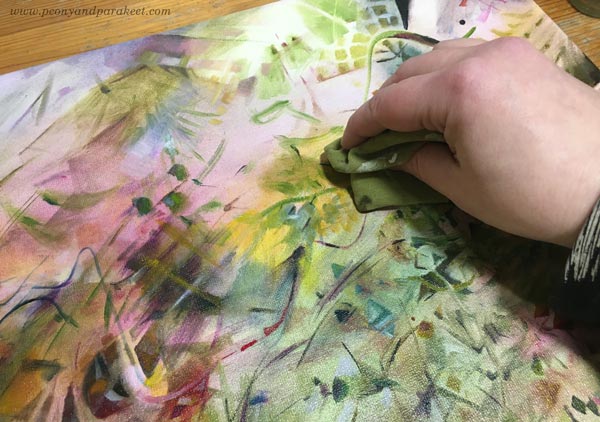
An Outside View to the Inside World
Teaching art has helped me to grow as an artist a lot. For example, when I get to see a student sharing a wonderful painting saying: “I don’t know about this one,” my gut reaction is then: “What!? This is beautiful!” But what’s “huh” for them is “wow” for me because I see the painting in a context that’s still new to them. They haven’t got used to seeing themselves like that. They are in the middle of a change, and it’s tempting to get back to the same old thing.
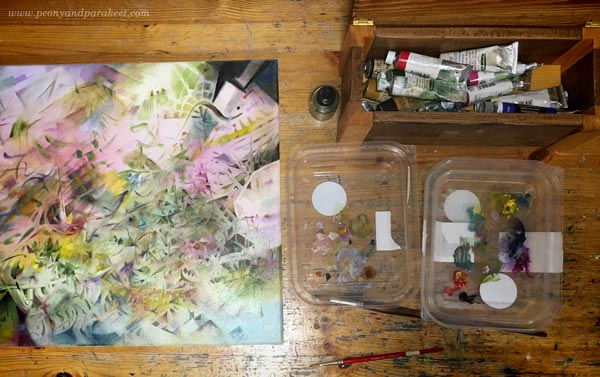
I recycle plastic lids and use them as palettes.
But when we do something regularly, it’s natural to miss the change. Floating on the surface isn’t enough anymore, and we get curious what’s deeper – “behind the glass” as we say in Floral Freedom, referring to Wassily Kandinsky‘s teachings. Then we need to learn, stretch, and redefine. Accept new truths.
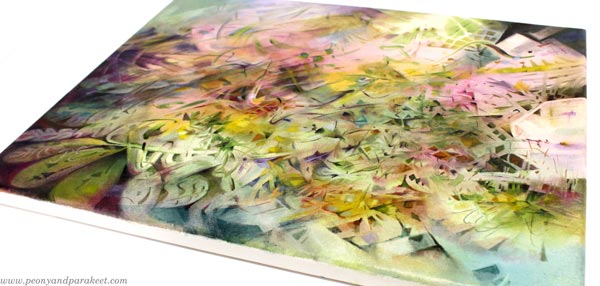
When looking at the mirror, I see more wrinkles than before. What was “huh” some years ago would be “wow” now. But with this wisdom, I hope long life for this painting. That the “huh” that it causes now will be “wow” someday. Maybe after I have fully accepted that my artistic growth is towards more and more abstract art.
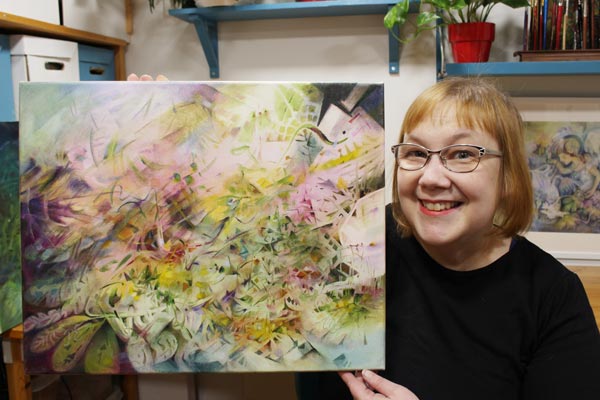
It’s also good to accept that some paintings are just “huh-huh” and a few manage to be “wow-wow,” and what’s “huh” for some is “wow” for another. What do you think?