
Visual Vocabulary First, Style Second
This week is about visual vocabulary and how to widen it.
I often hear the worry about finding the style, but more rarely about widening the vocabulary. Style is a quality word, but vocabulary is more about quantity. Still, it’s as important, and you can’t find the style without growing the vocabulary!
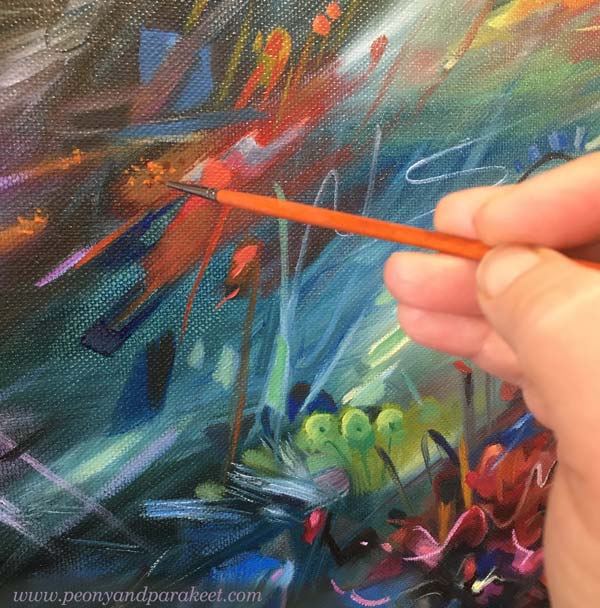
Often when we create art, we use a limited variety of shapes and lines and often the most ordinary ones. For example, your strokes may be quite straight and have very little variety in thickness. Or your shapes can be mostly basic geometric shapes. When I started, I mainly drew circles and my pieces were very symmetrical in general.
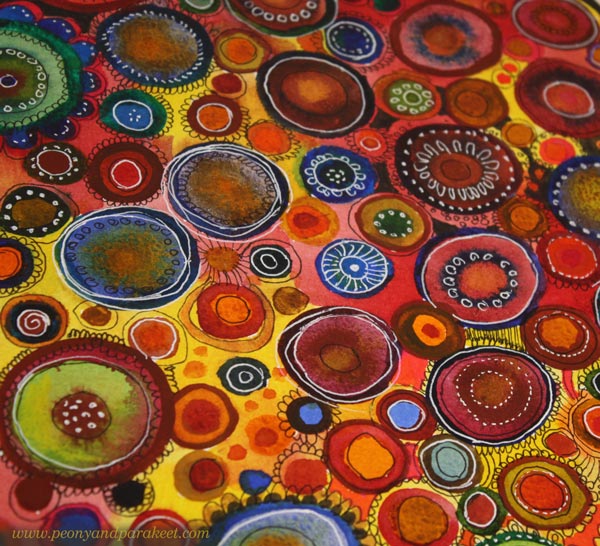
Forget the Style, Grow the Visual Vocabulary!
When you want to widen your visual vocabulary, look at the details of your work. There are seeds that can grow into great things. For example, could you repeat a random spot that almost disappears into the background and build a subtle texture from it?
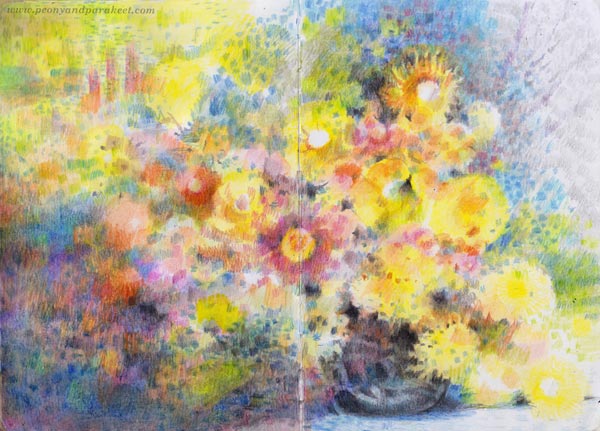
Look at your drawing line and think about whether it could deviate slightly from its path. Could you make a notch somewhere and thus make the shape more interesting?

Imagine you are a child who knows only a few words. Then it’s not important to question what the topic should be, but to find more words to tell any. Stop worrying whether you should create faces or landscapes and make a wide range of art to grow the visual vocabulary.
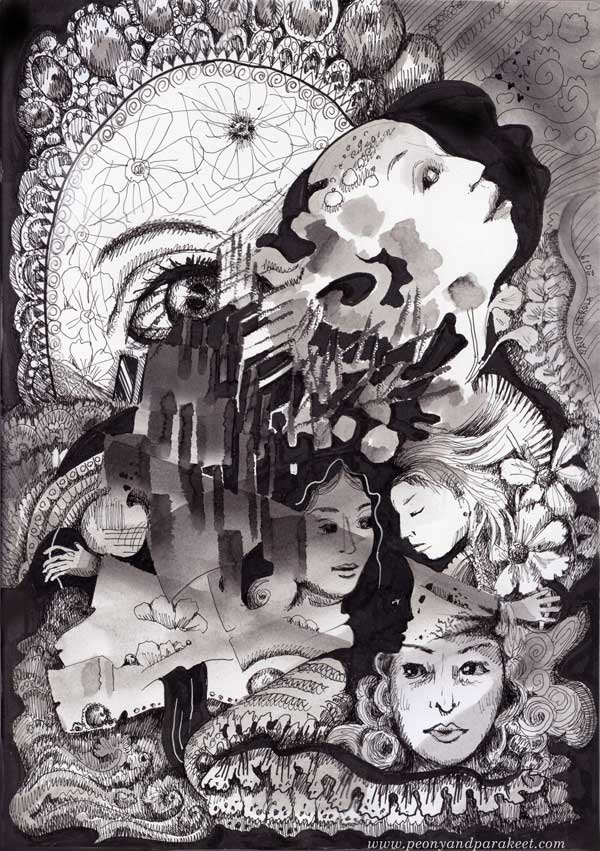
When you can draw a wide range of shapes, curves, lines and have many ways to color, repeat, break up and assemble them, you can produce visual stimuli on the paper that makes your imagination work. From this collaboration, art is born.
Outer Inspiration – Borrowing “Words” from Others
By looking at art, you can find words, i.e. shapes, that you want to incorporate into your own vocabulary, i.e. style.
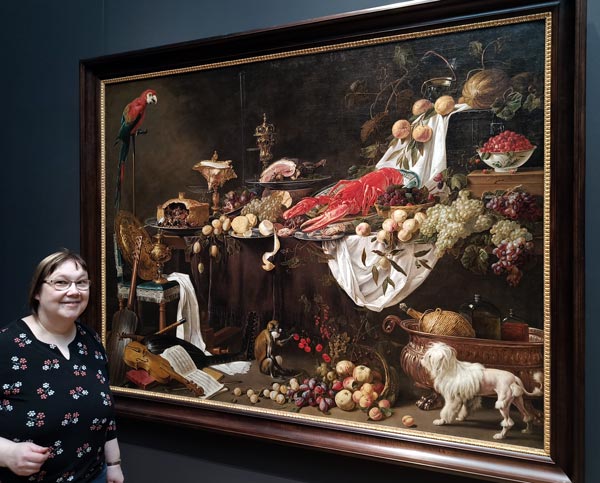
Art history is like an encyclopedia where we can pick what we like. Any art can be seen as abstract – just focus on finding a variety of shapes and colors.


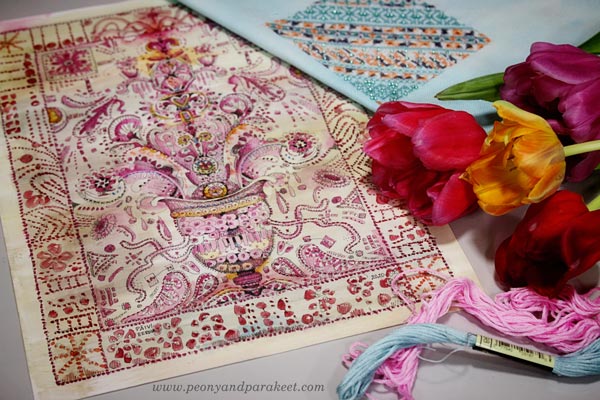
Your vocabulary can be inspired of not only fine art, but crafts as well.
Imagination Sets Who You Are
Too much outer inspiration causes copying, so don’t leave your imagination out of the equation! Imagine you are a singer who takes a popular song into your repertoire. Then you enter a singing competition and are told: “You sound a lot like the original singer of the song, but we want to hear who you are.”
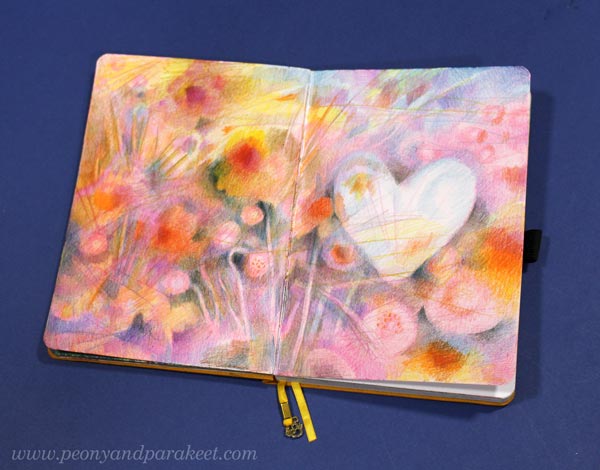
So we need not only to expand our expressive language, but also to develop our imagination. Visual vocabulary and imagination are a pair, and art needs both.
For example, you can draw a circle and give it a meaning, but can others see it? With imagination alone, the expression remains hidden. With a rich expressive language, we can make art enjoyable for others as well.
Welcome to My Courses + What I Want to Teach
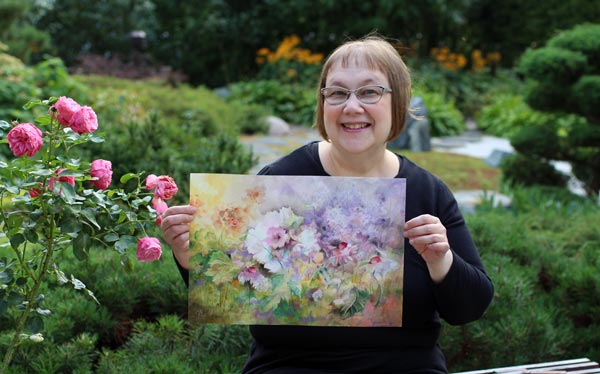
The goal of my courses is to develop both your visual vocabulary and imagination.
First, I want to get you to draw something a little differently than you have done before and thus enrich your visual vocabulary. Second, I want to make a crack in your everyday thinking and plant imagination in it. I want you to ask: “What if?” and to respond with something completely crazy – something that makes you feel free to tell completely new kinds of stories.
When art emerges from this starting point, richly and vividly expressing itself, you will find your style.
Picture Prompts – Creating Art Journal Pages with Hand-Drawn Animals
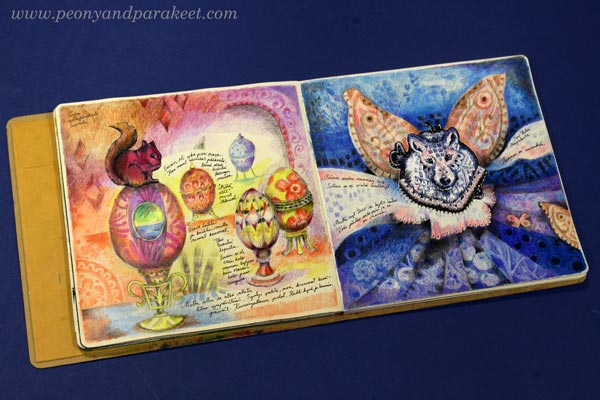
This week, we use small collage pieces as picture prompts for art journal pages.
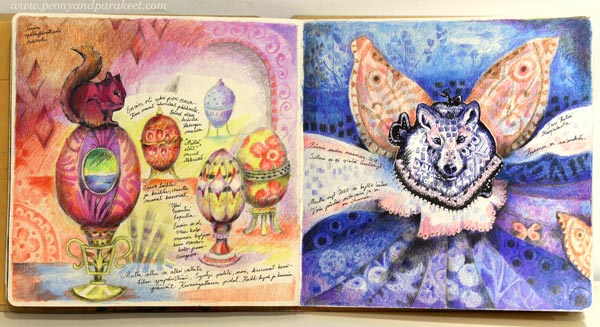
First you pick a small image, a hand-drawn squirrel or wolf in my case, and use that as inspiration for the rest of the page. You will need paper, colored pencils, and a pen for journaling. I also used felt-tip pens for the details that I wanted to highlight and graphite pencils for quick sketching. I attached the animals to the page with double-sided tape. My journal is Dylusions Creative Journal Square. (Affiliate link to Amazon.com).
Open Your Box of Joy and Select the Animal!
We will use hand-drawn animals as picture prompts. You can, of course, use any image, but I suggest starting with animals.
I save my hand-drawn collage pieces in boxes that I call boxes of joy. These little drawings are born from the joy of drawing. I have cut them so that they can be used as collage pieces.
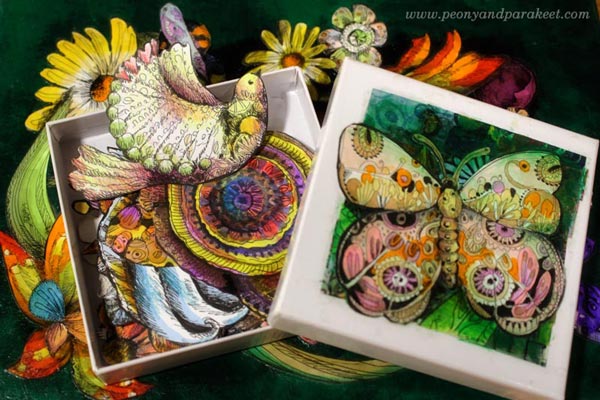
I started drawing these small separate little things in 2018, and have been creating them ever since. It’s so easy to pick a paper scrap and draw something simple, and then get enthusiastic about adding decorations and colors to it. I have several online courses where we draw these: Animal Inkdom, Magical Inkdom, Decodashery, and Doll World.
My animals are mostly drawn for the courses Animal Inkdom and Magical Inkdom, and I love them so much, that I have also printed copies of some of them. I have many boxes to choose from and I love to both use them and re-fill them.
For the first page, I selected a squirrel because it has pink and orange, and those have been my favorite colors recently.
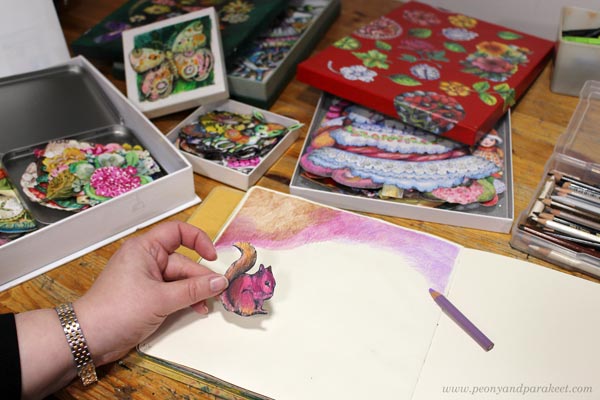
After selecting the animal, use its colors to color a small part of the page! Just color some layers freely (like in the course Intuitive Coloring). Don’t glue the animal yet, wait until you draw more and the story unfolds.
Picture Prompts – Go Beyond the Obvious!
We have a big nut bush in our garden and squirrels love it. So, my first thought was to draw some nuts for the squirrel. But that would be too ordinary and not fun at all. What if this squirrel would chase after Faberge eggs while others collect peanuts?
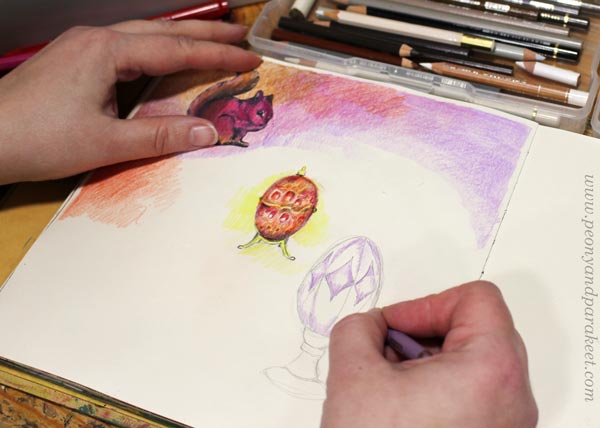
I love drawing decorated eggs. In Doll World, we draw a big egg, but this time I wanted the eggs to be small so I could fit many on one page.
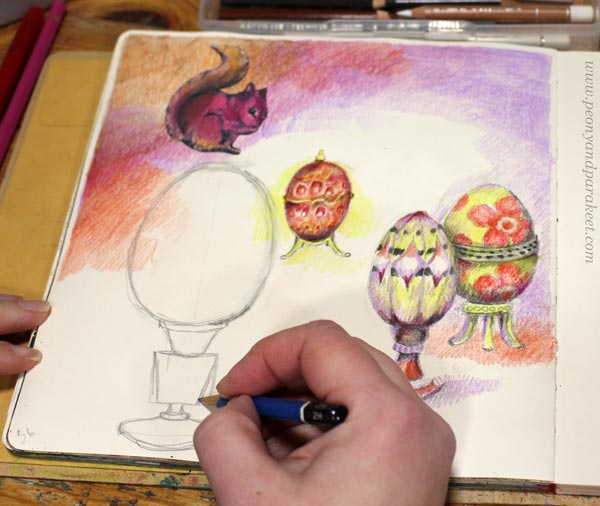
I made the eggs a bit different in size to make the page more interesting.
Static vs. “What If …”
When using the animal as a creative picture prompt, you want to find the story – not only the connection between the starting idea and the additions but also something surprising that keeps the inspiration going. If you only draw the ordinary, the picture easily becomes static – nothing is happening. Go for the extraordinary! Change the rules of reality, change the roles of the objects, make the animal speak – by drawing, you can create a world of your own. Ask: “What if?”
When I drew the first egg, it felt like just any object, but when I drew more of them, my imagination started working. Maybe the squirrel could sit on the biggest egg? And maybe the eggs could have a bigger role than to be just a decoration.

What if the scenery that I colored inside the biggest egg would leak into the surroundings?
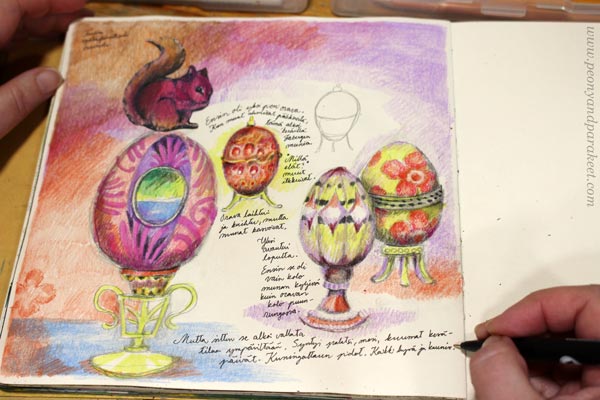
I wrote: “A palace was born, hot summer days came here, the queen (the squirrel) had a party, and all things good and beautiful came up.”
Then I drew more and completed the page inspired by the journaling.
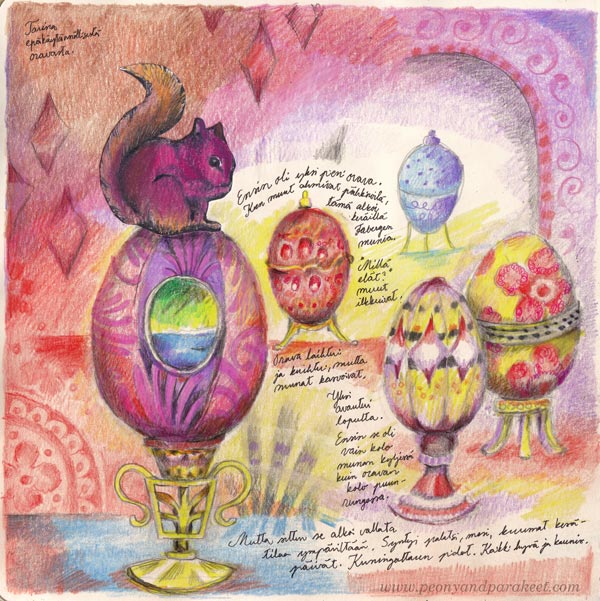
This is a story about an impractical squirrel who collected Faberge eggs instead of nuts and wasn’t much like other squirrels. But her eggs didn’t stay small. They grew and opened and created a place for her to live in.
“Isn’t that a story about every artist,” I realized after the page was finished.
Flying Wolf Art Journal Page
Let’s pick another animal and make the second page!
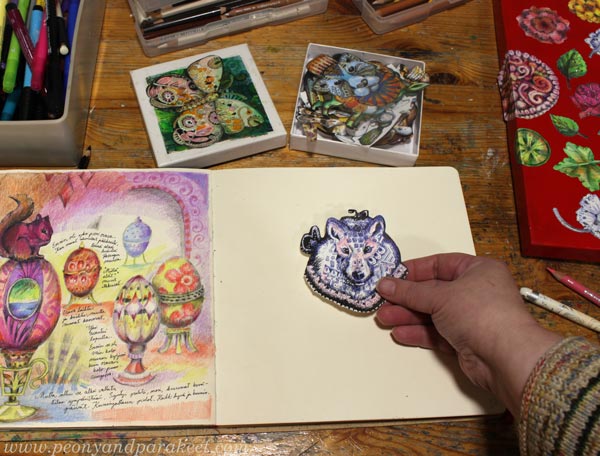
This wolf is the first little collage piece that I drew in 2018, so it’s time to give her a home. Decorating the animals was one of my core ideas for Animal Inkdom, so I can now color freely so that the decorations will continue to the background too.
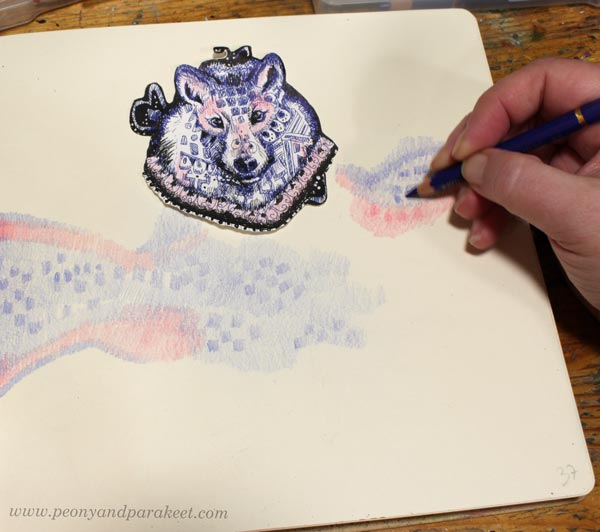
Again, I am using the colors that the animal has: blue, black, and pink. This way the collage piece doesn’t look separate from the rest of the page.
I wanted the wolf to fly, but not with furry wings. Could the wolf be partly a butterfly?
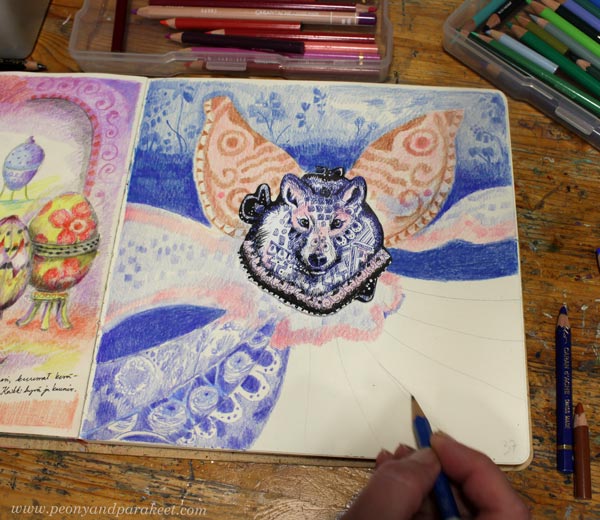
With the wolf, I felt a connection to my North Karelian origin. With the butterfly wings, I celebrated being a woman and loving delicate beautiful things.
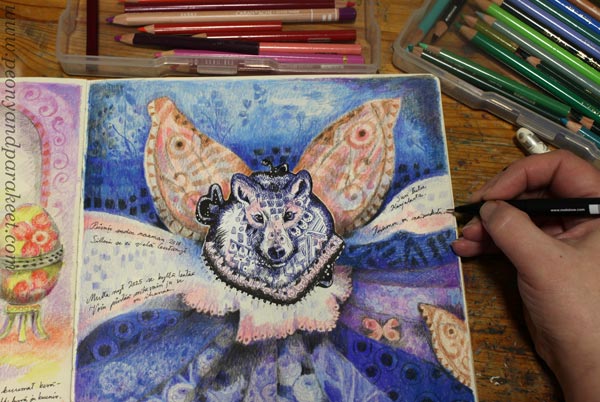
This wolf didn’t feel like a lonely one. So, I added a small butterfly and another bigger that is showing only partly on the right edge.
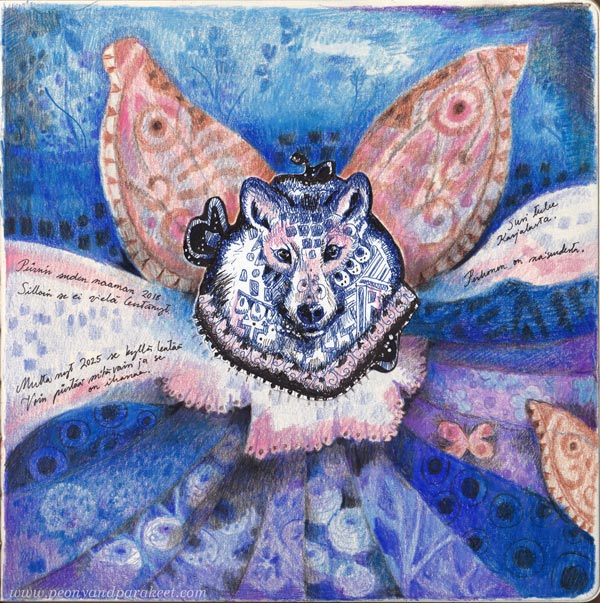
Back in 2018, my wolf didn’t fly yet, but it’s flying now! The more you draw, the more you can imagine!
Picture Prompts – Step by Step
- Pick the animal.
- Use the animal’s colors and patterns to get started.
- Ask: “What if …”
- Answer by drawing and journaling.
New in Development!
I have been making a new course that has a working title “Hearts and Stories.” I have already drawn quite many pieces for it. I collect them under a plastic plate that fits the side table of my studio. There I can see the whole collection at the same time, and think about what’s missing and how I will proceeed.
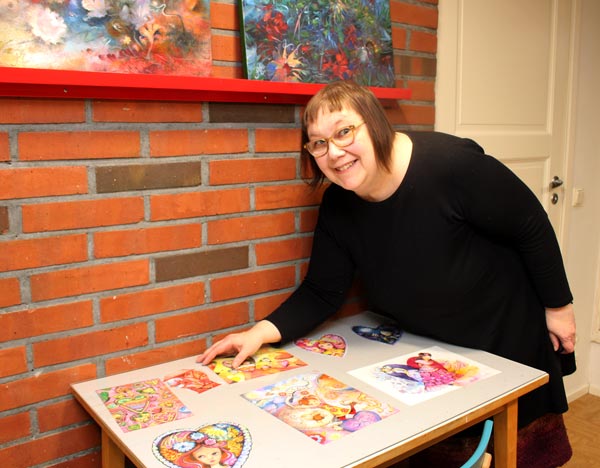
These drawings make me smile. My goal is that you too will smile when the course is running!
I want to be the advocate for drawing, because:
- If you only think, your imagination has limited capacity.
- If you only paint, you will stop playing and eventually run out of creative ideas.
- Drawing is important for any artist and for any human being.
What do you think?
Painting by Programming – Modern Vanitas
Happy Halloween! This year’s Halloween artwork combines painting and programming.
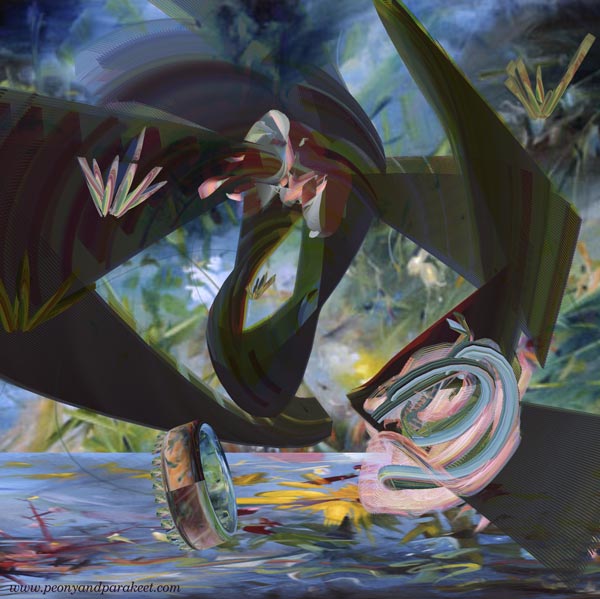
This week, I have a video that has excerpts from the artwork I programmed. The program picks four of my paintings at a time and forms a Vanitas-type arrangement with a skull, fallen crown, extinguished candles, and withering flowers – symbols of our transience. The program has 50 paintings from 2021-2024 to choose from. The music for the video is composed by me, representing a conversation about the temporary nature of life.
You can watch the video bigger by pressing the last icon on the menubar.
If you are interested in seeing more of this artwork, here’s a longer video that explains the Vanitas concept and shows more samples.
I designed the 3-dimensional shapes and then blended the paintings on them by programming.
Painting by Programming
One of my oil paintings is also Vanitas, so the theme is very familiar to me. The transience of life has both horror and beauty, maybe emptiness too that goes well with the machines. The way the computer paints with me produces fascinating details.
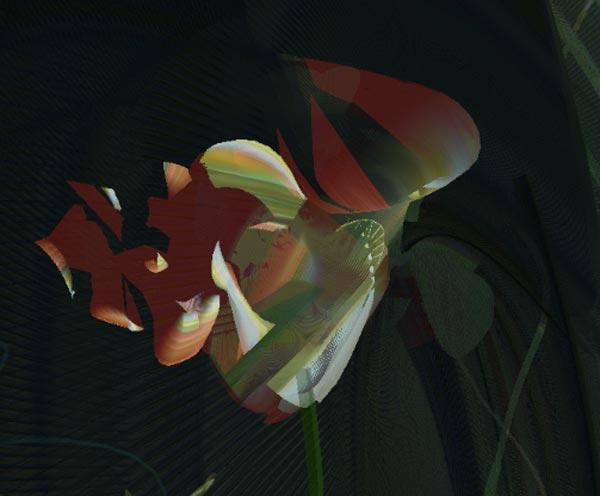
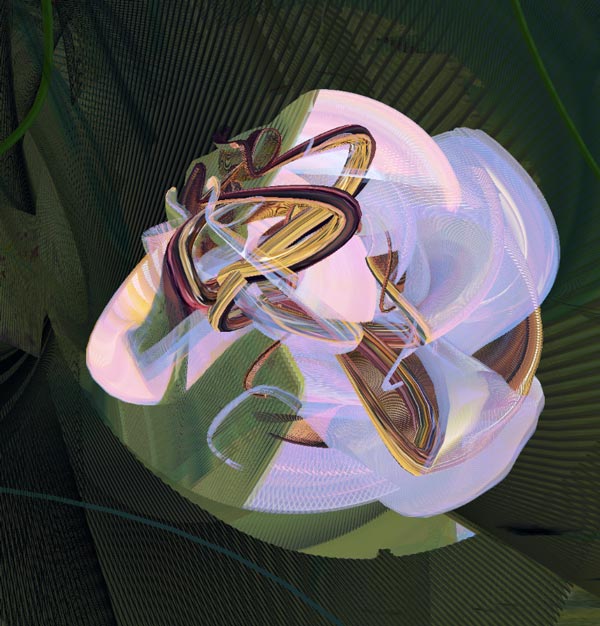
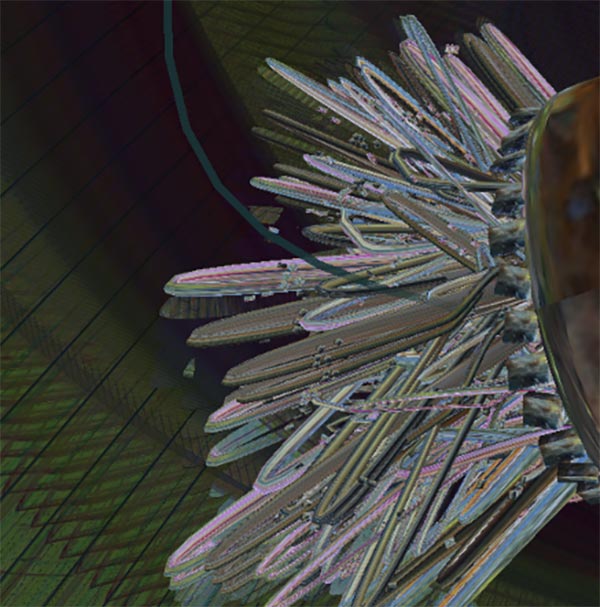
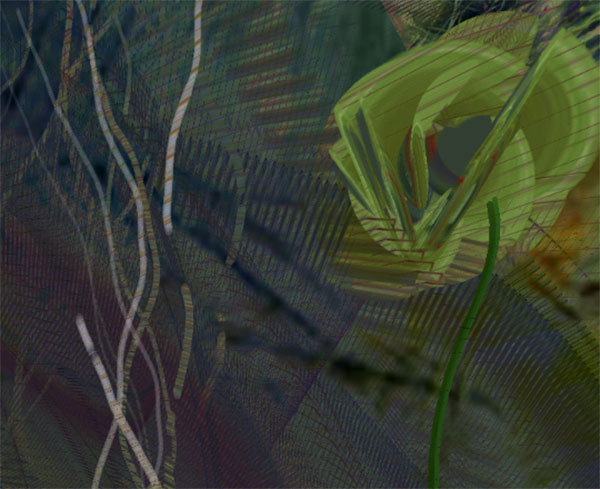
We can continue the tradition of Vanitas paintings and use any technique to make our own versions.
What kind of version would you create?
P.S. This month there was a digital art exhibition “Deform and re-form” on the screens of the Helsinki Central Library Oodi. The exhibition called “Deform and Re-Form” was organized by the Finnish National Gallery’s digital team. Oodi is a very popular big library building, with lots of visitors every day. It felt great to see my artwork “Queen of the Night” there.
Even if a part of this year’s art is digital and painted by programming, I still keep creating traditional art as well.
Selling Watercolor Paintings as Gifts
This week, I talk about making and selling watercolor paintings as gifts. At the same time, we celebrate the playfulness of watercolors.

See more and bigger pics at Taiko (online art store)
I love gift shops. My dream for a long time has been that, in addition to large oil paintings, I could sell smaller pieces as gifts. Recently, this has come true. I have sold many of my watercolor paintings not only directly but also via the Taiko online art store and the Gumbostrand Konst & Form gallery.
Art as Gifts vs. Art for Homes
An art buyer never buys art just for need. The work must appeal to the buyer on a deep level. Still, large paintings are chosen more according to the interior, and smaller ones are purchased as gifts. Sometimes a small painting is a gift to the buyer himself, often to someone else.

As a professional artist, I am more known for oil paintings, but I have dreamt that also my watercolor pieces would be in demand. I love to paint them and the idea of a perfect gift inspires me. However, it has taken time to grow my vision of how they should look.
Because I have grown many of my general painting skills with watercolors, my watercolor paintings have quite a similar style to my oil paintings. But with watercolors, I step in a slightly more illustrative direction. I want my watercolor art not to be too abstract, but approachable and atmospheric. See a collection of my recent watercolor paintings here!
Flower Art But With a Playful Attitude
My watercolor pieces usually have flowers. However, I don’t paint just static and spiritless flower arrangements. I see flowers as adventurous human or animal figures and get playful with them. On the one hand, the flowers are like dolls and teddy bears, and on the other hand, they are imperfectly perfect, feeling natural and real.
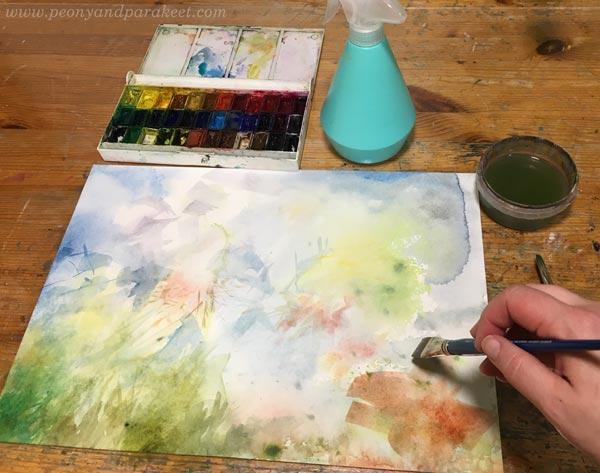
When the playfulness really kicks in, painting is fun.
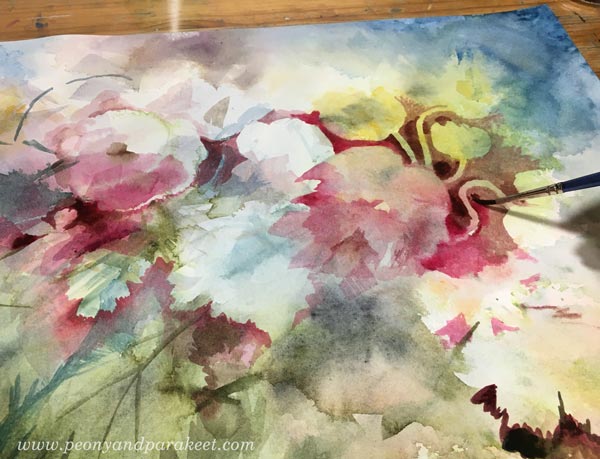
I love to discover plants in the middle of random watercolor spots. I have also a course called Freely Grown about this kind of process.
Taking Several Sessions to Grow the Idea
Usually, the first layers of the painting are fast and only take an hour or two. But that’s when the painting is just a regular flower painting, not a special piece that has a special appeal. Within a couple of hours, there’s not much time to grow the idea further or adjust the details.

I usually paint in several sessions where the first one or two lay the foundation and produce the basic painting, and where the next sessions (usually 2 to 4) grow the story and produce the finished look.

For example, for this painting, I took walks to see flowers and to add some more to the painting. But after a while, that felt too traditional and then decided on the gold mining theme.

The further I go, the smaller the brush strokes become.
Working with a Progress Photo
I find it helpful to take a photo of the unfinished piece, and then use it as a reference. The small-sized picture makes it easier for me to spot the areas that still need adjusting.

Looking at the photo also helps with distancing myself from the actual piece. I can ask: Do I love this? Would I buy this? When selling watercolor paintings as gifts, never underestimate the quality, always try a little higher.
Color over Color
Pigments are very different from each other. Some colors require many layers, and others can be used very thickly. Most artist-quality yellows have good coverage and work well for the finishing touches.

I have recently used smooth (hot press) watercolor paper because it’s best for tiny details.
Gentle Breakthroughs
I want to break boundaries with all my art, but in watercolor, I try to do it more gently than usual. In this painting, the flowers have caught Hokusai’s great wave from Japan and taken it to Lapland to pan for gold. And so it happened that the gold and the flowers started a decorative baroque party and everything small became surprisingly big and grand. Despite all this, this is a flower painting where the viewer can relax and enjoy the joyful atmosphere.

But whatever the story is, I try to express it so that it can evoke different memories and associations in different people. Somehow, the painting must make a gentle breakthrough in the eyes of the viewer – find a soft spot where the immersion can begin.
See more pics of “Kultaa huuhtoneet – Gold Panners” at the Taiko art store!
Freely Grown – Paint Watercolor Flowers with Me!
In the course Freely Grown, I walk you through my watercolor painting process. Because the finishing touches with a small brush are the most challenging, we take the easier route and do them with colored pencils. In Freely Grown, you paint flowers freely without reference photos and create a unique painting from the given techniques and guidelines. >> Buy here!