
Building a Mystical Course with Hilma, Georgiana, and Virginia
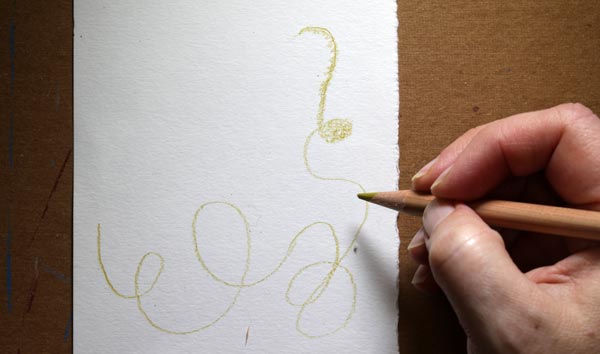
Usually, after making a course, I think: never again! It takes time to get new ideas and energy. But this time, after finishing Wild Garden, I had a new idea right away, and it felt like someone was talking to me: “You must do this, Päivi. If you don’t, nobody else will.”
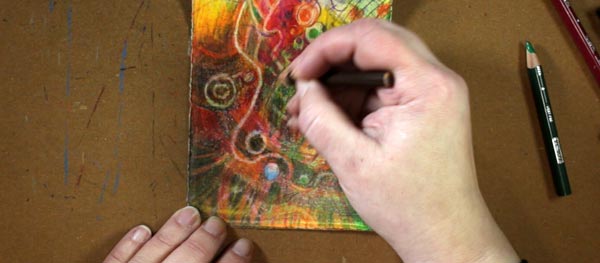
The upcoming course is called Mystical Minis. We will create abstract art with colored pencils.
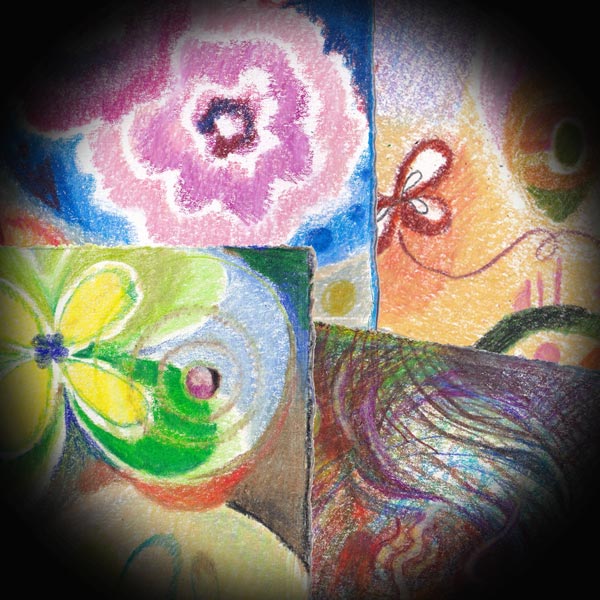
We will make small drawings, and each takes only about an hour to create. At the same time, we see our inner world in a new light and build a self-feeding process for creating art. This course will bring both excitement and depth to your art-making. I believe it will leave a permanent mark on you, and I hope you carry the influence of it with you for a long time what ever art you make after the course.
Mystical Trio: Hilma, Georgiana, and Virginia
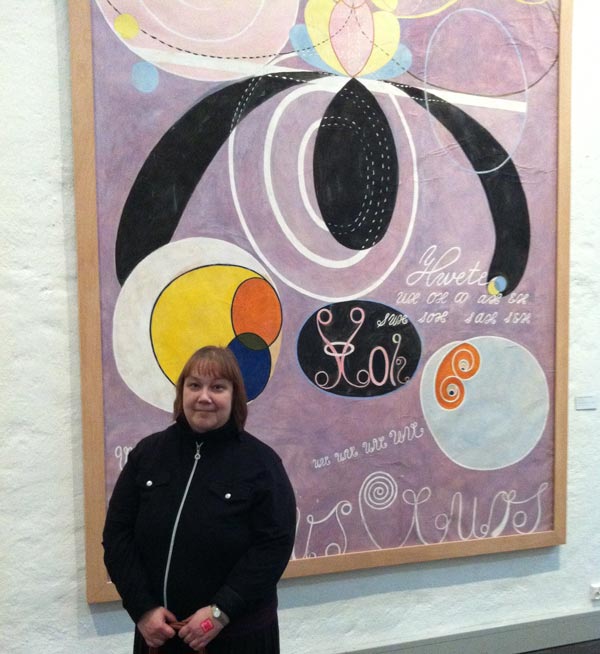
With Mystical Minis, I honor three women from about 100 years ago. Two of them are pioneers in abstract art: Hilma af Klint (1862-1944) and Georgiana Houghton (1814-1884). The third one is the modernist author Virginia Woolf (1882-1941). You can’t find another course similar to this one, I promise!
Mystical Flow
I have been super-motivated to create the new course. So far, I have also enjoyed making it immensely. Some courses are born with intention, while others come out naturally, and those love children need to be born without too much forcing. It’s the very same thing as in the art-making! This course wants to come out, and I will help it.
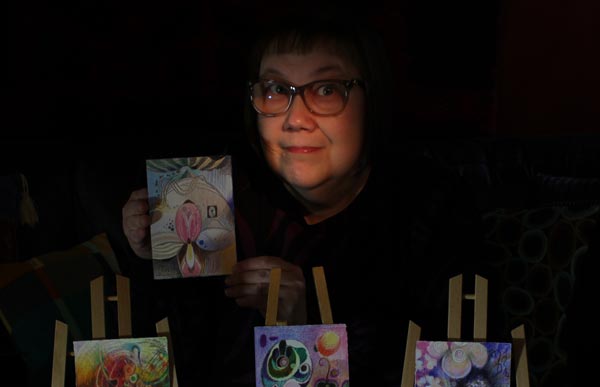
I usually question the course idea many times before I start making the course. I especially think about whether anyone will buy it and what kind of people would. But here, it feels like Hilma, Georgiana, and Virginia do not care. They just want the course to be born. They want their voice to be combined with mine, and that brings an extraordinary meaning to this work that truly feels mystical.
If you have been in my courses, you know that I am not a secretive person. I always try to explain everything as openly as I can, and I can’t help smiling. And when I asked Hilma, Georgiana, and Virginia, why they picked me, they said: we need somebody like you to complement us, just be you and everything will go fine. And I have trusted them and followed my inner voice to gather all of us together, not only Hilma, Georgiana, and Virginia, but also you who want to create a new kind of connection to your inner world.
Mystical Minis – When?
I am currently editing the videos. I don’t have the exact publishing date yet, but I expect releasing this mystical course late this year or early next year.
Flower Painting Comes to Life – Watch the Video!
This week you get to paint with me in my little studio. We follow the birth of this flower painting from blank canvas to an exhibition.
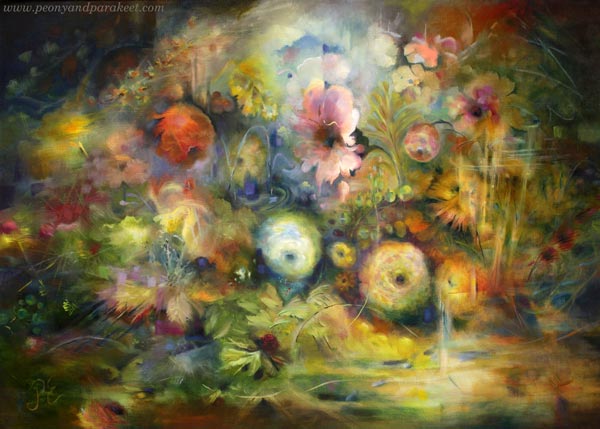
In the video, you see me painting and chatting, and also get to visit my current exhibition at the gallery Gumbostrand Konst & Form. The exhibition is from Feb 12 to March 9, 2025 in Sipoo, Finland.
From Blank Canvas to Exhibition Piece – Watch the Video!
While I paint the flower painting, I talk about making art, becoming an artist, and what it’s like to paint freely and not use any reference photos. This is a longer video than usually because I have collected the material for it many months.
In the video, I talk not only about painting but drawing too. I love to play by drawing, and that play affects my paintings. Never underestimate the effect of play, and always keep playing and drawing, no matter how high you want to reach!
Hearts and Stories – Sign Up Now!
Let’s draw for your inner child and make the most out of simple shapes!
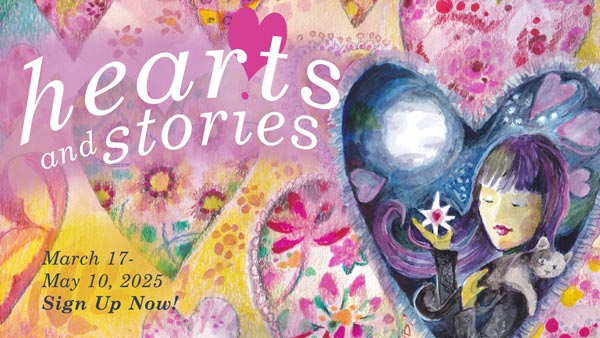
Hearts and Stories will begin on March 17, 2025. >> Sign Up Now!
Choosing the Word for 2025
Have you ever chosen the word for the new year and then happily forgotten it? Me too!
But last year, I had a word that stuck in my mind. It was “Integrate”. My word for 2025 is “Release”.
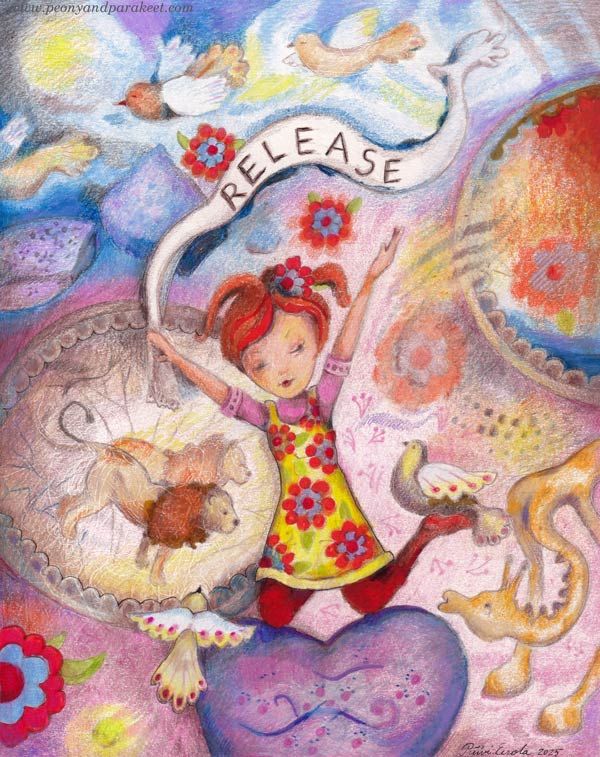
Here’s what I have learned about choosing the word!
Too Much Emotion, Too Little Impact
Some words appeal more to emotion, some to reason. Most often, I have chosen a word that has an emotional appeal. For example, “Imagination”, “Depth” or “Play“. There are plenty of these kinds of soft words, here are some common ones: “Joy”, “Courage”, “Inspire”, “Create”, “Focus”, “Nurture.”
These soft words that make your imagination run wild may seem like good choices, but they have this downside: when you’re busy working, your head is full of rational words. Emotional words don’t come to mind at that moment. This way, the practical connection to the word is missing.
My word for 2024 – “Integrate” – was a rather uninspiring word at first, but it became more and more inspiring over the course of the year. The idea was that even though I was doing a variety of art – drawing, painting and programming digital motion art – I could look for connections between different art forms so that I didn’t have to reinvent everything. I could also value more what I had created in previous years. This union of old and new worked out nicely, and with the word, I began to see my artistic career as a whole and not just an attempt to improve my artistry piece by piece.
The best thing about the word was that it didn’t describe the actual result but solved how to get there. So when I encountered problems, “Integrate” often offered at least a partial solution. That way the word came to mind repeatedly and helped me in situations when my inspiration was at its lowest.
Word That Changes Your Life
I think the best words are those that initiate change for the better. I have often chosen a word that is already familiar and doesn’t make me change anything. This year, my first candidate was “Elevate.” It sounded too soft, so I found a similar rational word “Upgrade.” But since I always try to improve my actions and the level of my art in general, I rejected “Upgrade” and chose “Release” instead.
To me, “Release” means letting go of what I’ve been holding in my heart and letting it come out. I want to give myself permission to be naive, naughty, brutal, overly cute, everything and anything, and start to blindly believe in my artistic vision. Release also means publishing what I’ve done openly and regularly and working with that in mind. Letting go and publishing is a bittersweet combination that really challenges me.
Release also means that I can let go of things if they hinder rather than help the cause.
Drawing the Word for 2025
Writing about the word is good, but I also wanted to process the word by drawing.
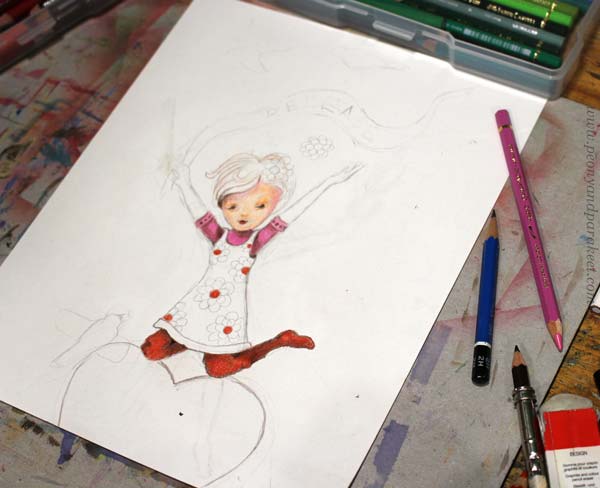
By drawing, you always find new dimensions. Even the hardest words become softer and create emotional connection.
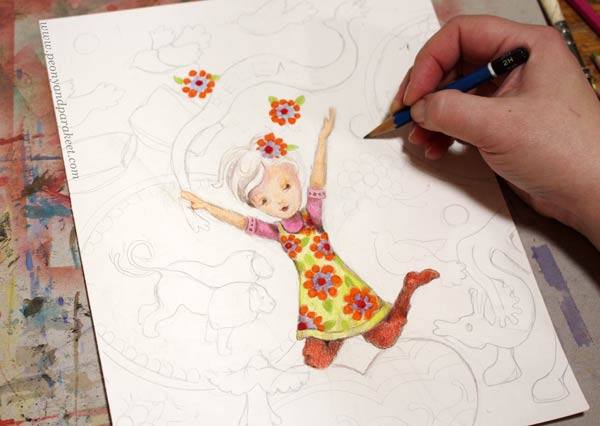
One thing leads to another. I love this way of drawing where the result remains a surprise for a long time.
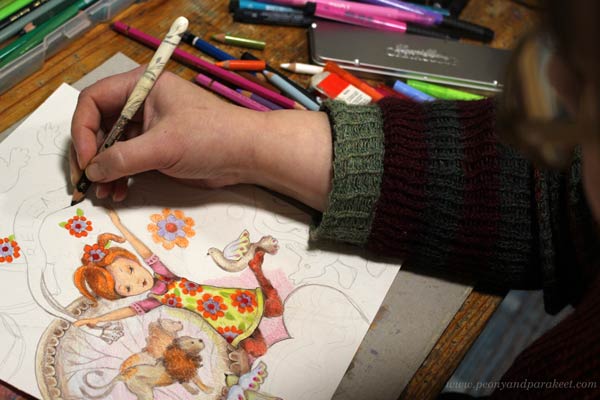
I combined colored pencils and markers here. I like the soft impression of colored pencils, but I used felt-tip pens in the highlights to intensify the colors.

When the drawing was half-finished I compared it to the little pieces I had drawn during the Christmas holiday.
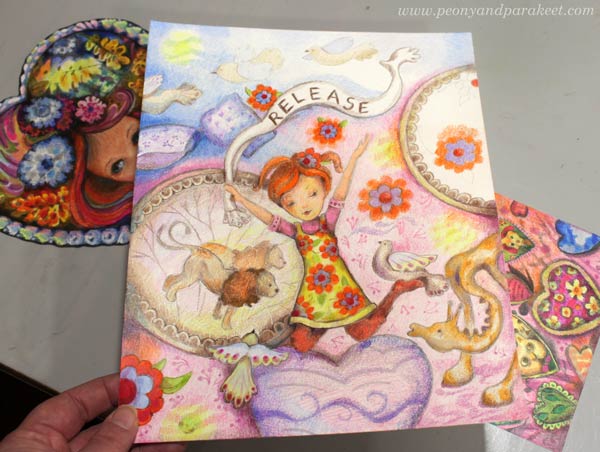
The colors still needs to be strengthened and details adjusted.
Finding the Connection with the Word
Even though this drawing isn’t very big, about letter size, there are a lot of details. I took many breaks and it took me about 3 days to finish the drawing. For the illustration that combines the right and the left brain, it’s important to find the connection between all the details and understand how they express the word.
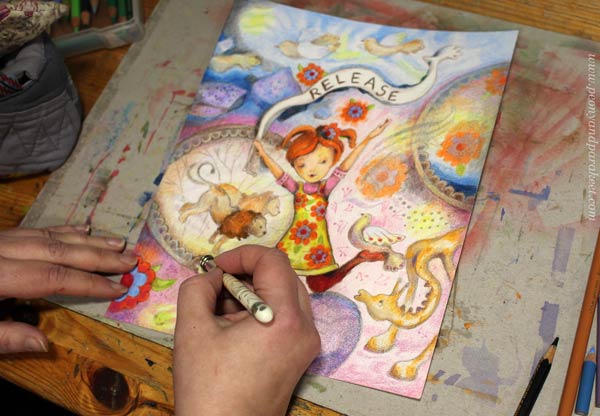
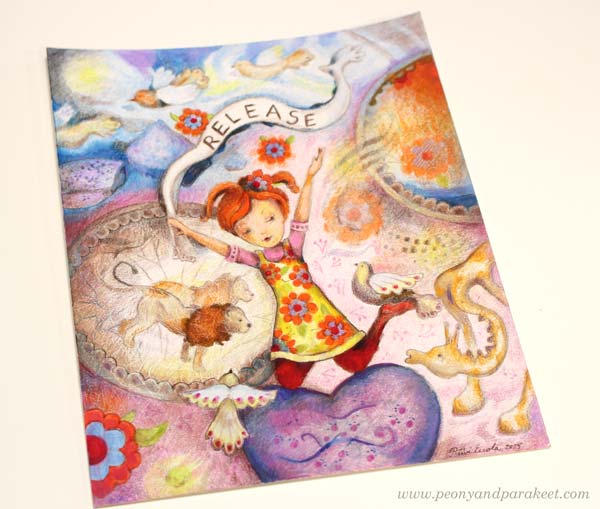
This drawing depicts my childhood in the 70s with plastic animals and daydreaming. The drawing feels revealing to me, although its style is playful.

Even if the picture feels a bit private, I want to share it with you: release, you know!
What’s your word for 2025?
Are you going to draw it?
Watercolor Flower Obsession
This week, I have a fun video for you. In the video, I create a watercolor greeting card and talk about my obsession with painting flowers.

The card is A5 in size, so about 6 x 8 inches and I have painted it on watercolor paper.
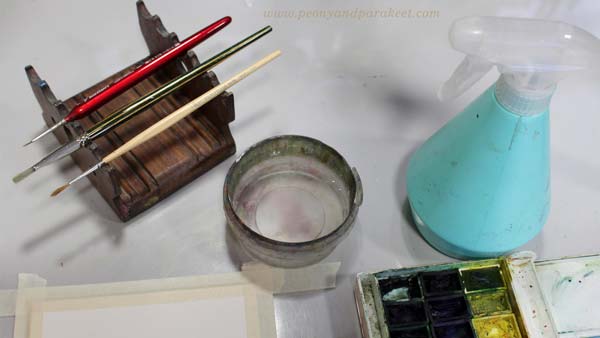
My smallest brush is very narrow and I could have coped with two brushes. In the course Freely Grown, we use the similar process, but finish with colored pencils, so it’s much easier than working with tiny brush strokes.
Watercolor Flower Obsession – Watch the Video!
In this video I confess how goal-oriented I am about painting flowers but also talk about the importance of play.
This video has a lot of material, you may want to watch it more than once to see them all! Also, here’s the link to last year’s greeting card, watch that video too!
Boutique of the Heart
In the video I talk about a boutique that’s not a commercial thing at all, vice versa:
“I believe that we can create the best boutique out of our own art. Imagine your workspace as a paper shop where you sell hand-painted cards, bookmarks, hand-drawn stickers, patterned papers – everything that is already art as such, but from which you can look for inspiration for bigger works. I have even come up with a name for this kind of personal shop. It’s Boutique of the Heart. There’s only one customer in the Boutique of the Heart – you, and one seller and manufacturer – you! The longer you keep the shop, the more you learn to love the things you draw and paint yourself.”
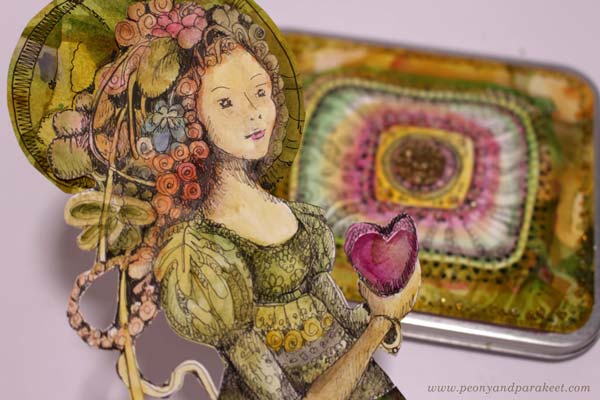
My message is that the essence of art is in play. Thus no matter how high you want to reach, you can still create art with a playful attitude and have your Boutique of the Heart. I know there are art instructors that solely focus on the techniques and those who are about fairytales and imagination, but I feel I am something between. I want to create art with people who want to move forward in art-making, but who also love imagination and free expression.

We can have obsessions, but there should always be time to play too.
What do you think?