
Bringing Old-World Feel to Abstract Floral Painting
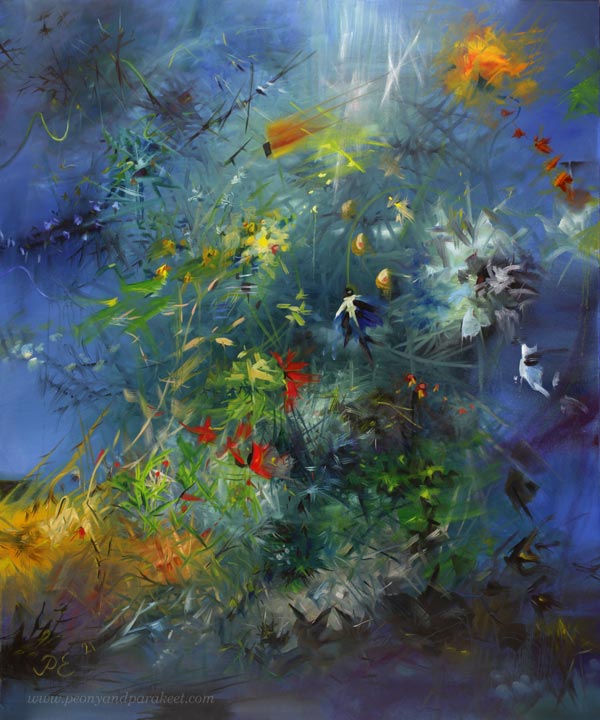
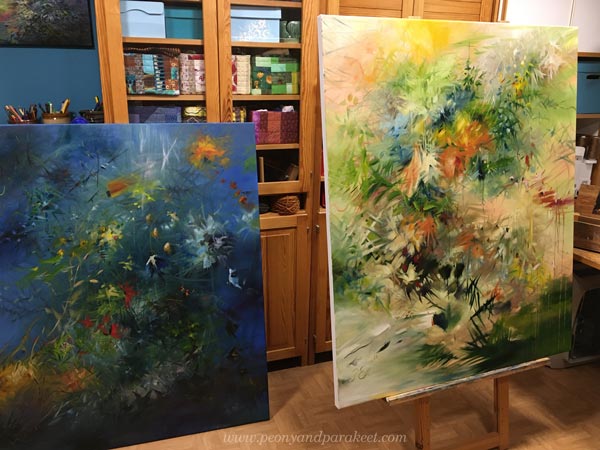
This week, let’s dive into the old-world feel and get inspired by the opera singer Edita Gruberová!
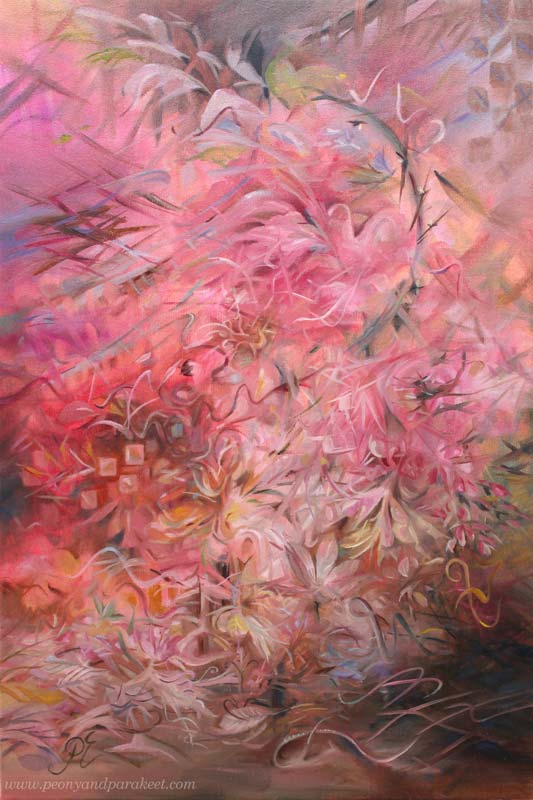
Ideas Behind the Painting
I listened to the opera singer Edita Gruberová (1946-2021) while working on this painting. Her version of the famous aria Queen of the Night from the opera Magic Flute is exquisite. Gruberová’s voice is partly like a bird’s not a human’s voice at all, and the aria brings that up well. The music editor Outi Paananen calls her a nightingale of Slovakia.
The transformation from a human to a bird felt inspiring. Maybe I could do a transformation of a painting so that my free and careless strokes would turn into decorative swirls, adding an old-world feel to an abstract floral painting. I had done something similar just recently but in a much smaller piece. See this blog post where I revamped a flower painting! From that experiment, I knew that it would take both time and patience. In a bigger piece, I could also get lost in the details so that the painting becomes confusing.
Before listening to Edita Gruberová, I already had a lot of ideas, collected in the blog post called Pink Inspiration. And now I wanted to add her and her birds to the painting too. I heard Edita’s story from Outi Paananen’s excellent radio program “Narrin aamulaulu” (in Finnish) on the Finnish Broadcasting Company. She had a clear artistic vision and strong willpower, and she demanded a lot of herself. It inspired me to challenge myself too.
Bringing Old-World Feel – 2 Tips!
In the past, painters often started with sketches and made detailed underpaintings with two or three colors. But a looser approach is not an enemy to the old-world feel.
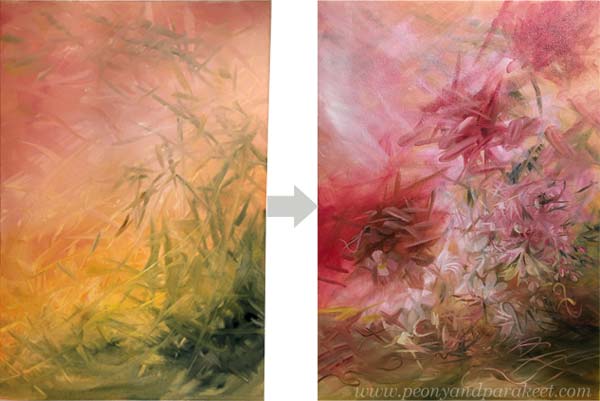
When you want to bring an old-world feel to an abstract painting, two things are the most important:
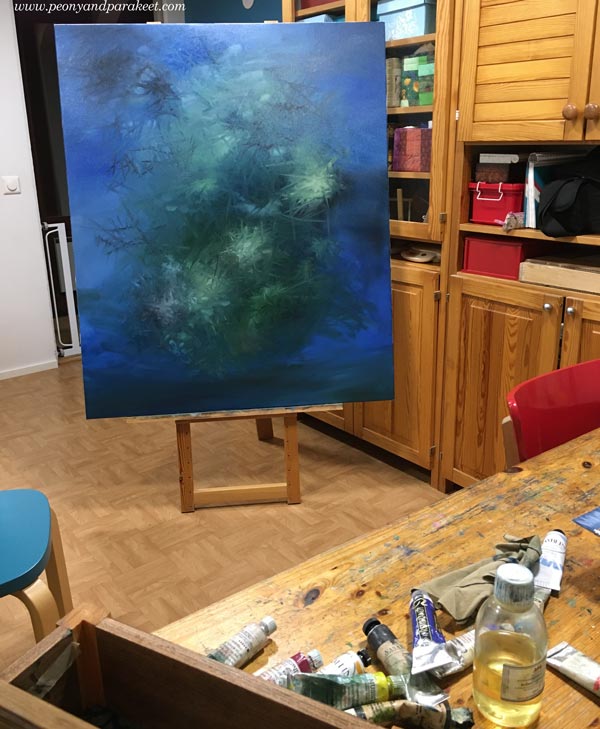
- Blurry on the bottom! Start from the background with soft transitions from light to dark, add blurry shapes, and paint like you would see the scenery from a far distance.
- Sharp on the top! Add sharp shapes and lines on the top of blurry ones. You can sharpen some blurry shapes but do it only partly, leaving some parts more undefined. But most importantly, let sharp lines and shapes sing the melody of their own. If the background is the orchestra, the top layer is the singer that has a melody of her own.
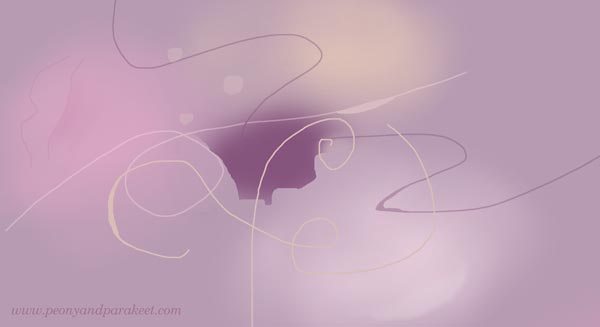
The thickness of the lines can change in places and there can be decorative dots too.
Timelessness Takes Time
It’s always tempting to get the piece finished quickly, but to get the sense of timelessness, the time has to stop while painting. So, I focused on tiny details and immersed myself in building a wondrous world with curves and swirls.
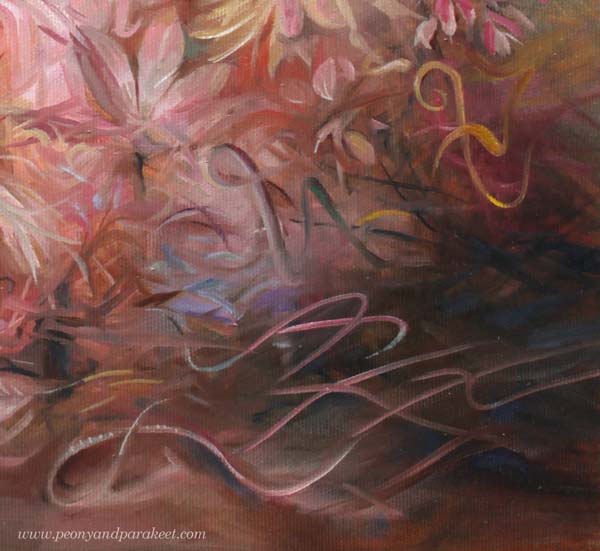
My lines are like old-fashioned handwriting in places. I have practiced them by drawing for a few years. Any note or waste paper can be used for practicing! I often doodled on planner pages.
Intuition and the Ability to (Not to!) See
As usual, I didn’t use any direct reference photos for the painting but worked intuitively. However, I tried to reduce the human ability to see ordinary concrete objects like flowers, faces, or such in simple forms. For a long time, I have thought that the ability to see is a part of creativity. But the more I create, the less I need the ability, at least in the first place. Seeing too soon makes me hurry and my art much less unique. So I try to let the shapes fly free and the big picture appear without too much forcing and seeing.

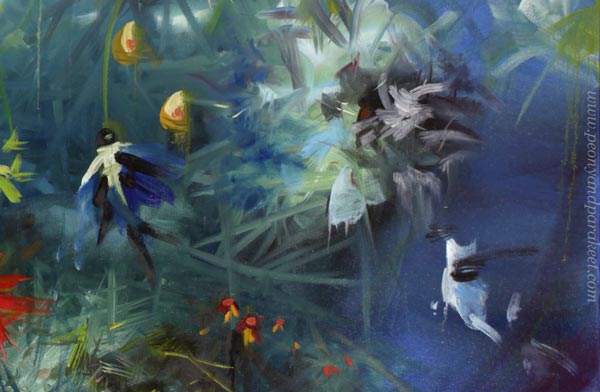
During the process, a little bird-like mesh appeared on the right. When I was making the final touches, and intentionally made him a partner in the center.

Sadly, Edita died last year, just before I discovered her, so I can’t send her a photo. But I want to honor her with this blog post and ask you to listen to her singing on Youtube. Isn’t that inspiring!
A Series in Progress
I have been painting like mad this month because I have to get everything finished for my solo show in June very soon. So, there are lots of paintings in progress in the studio!
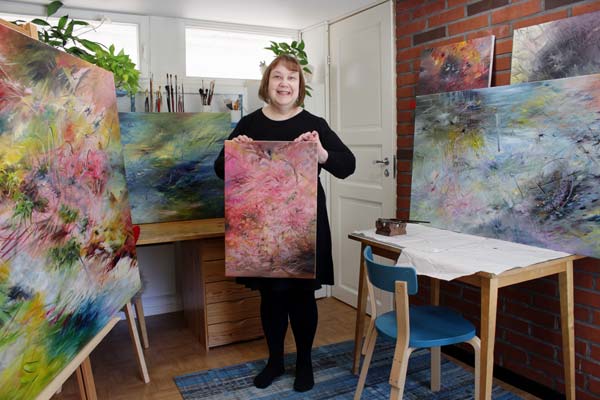
Easter was mostly spent with brushes, and if this wasn’t my ultimate passion, I would be quite exhausted already! Also, seeing the flow of wonderful creations from the students in my community Bloom and Fly energizes me a lot.
Let’s keep creating and inspiring each other!
What to Do When You Admire an Artist
This post is about art, admiration, and spirituality and enabled by Arts Promotion Centre Finland. This is the ninth blog post of the project; see the first one here, the second one here, the third one here, the fourth one here, the fifth one here, the sixth one here, the seventh one here, and the eighth one here!
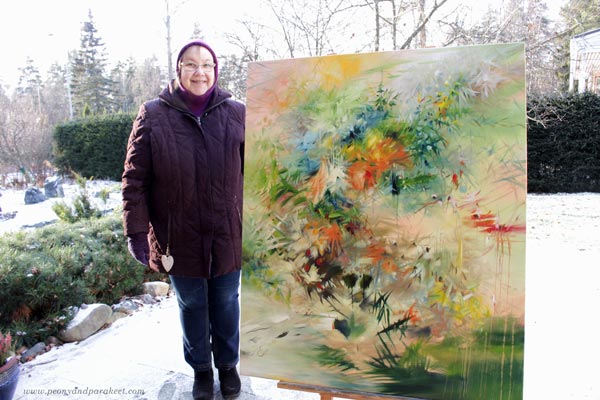
This week, I finished the last oil painting of the new series. It’s pretty large – about 27.5 x 35.5 inches – and I think it completes the series well because it’s the most dynamic of the seven.

My goal in the series was to express spirituality through abstract art. The plan was to explore Wassily Kandinsky’s idea about releasing the inner sound of the shapes and get inspired by art from the 16th to 18th centuries. This last painting is a salute to my favorite artist: Peter Paul Rubens (1577-1640).
Going Deeper – The Experience of Working with a Grant
Sadly, my three-month period of working with the grant is now coming to an end. During that, I painted a series of seven oil paintings, wrote several blog posts and weekly emails, plus a fictive essay in Finnish that that will hopefully get published somewhere. I still have the summarizing report to write and several paintings to varnish, but all the main work is done.
During the past months, my little studio has been filled with paintings. Every morning, before anything, I have gone there to both worry about the project and to enjoy the kind of excitement that only uncompleted work can give.

Despite the theme of spirituality, I haven’t lit any candles, meditated, or prayed. But I have slowed things down and taken time to question without forcing out the answer. At the same time, a clear schedule and content plan have brought structure to my days. I am grateful for the opportunity of doing this kind of deep work.

Many times when we create art, we hurry. A part of it is that we want to see the piece finished, but there’s more too. Art can make us feel uncomfortable and bring up memories we would rather want to leave behind. But making art can also point out stiffness, clumsiness, and differences between who we are and the artist we admire.
When You Admire an Artist – Rubens for Example!
Dear Peter Paul Rubens, I want to paint like you. I want to master the curvy lines, the soft transitions from one shade to another, the effortless flow in the composition, and something that I can’t name but that makes my heart beat faster every time I see one of your masterpieces.
With masterpieces, I mean paintings like “Four Continents” or “Four Rivers of Paradise” – this artwork has two alternative titles.

Experts used to think that the painting had four continents and four rivers. Europe is the woman on the left, and her partner is the river Danube. Africa is the black woman, and her man is the Nile. The woman in the center back represents America, and her man is Rio de la Plata. The woman on the right is Asia, and her man is the Ganges. However, there’s a competing interpretation of the river figures. They may represent the four great rivers of the ancient East/paradise: the Euphrates, the Tigris, the Gihon, and the Pishon.
Rubens was born in an era where a shape could not be freed in the way we now can. He had to build a representation layer that people could explain and understand in a specific way. We humans have a strong need to label things. For example, when people see my work, they immediately begin to describe what they see.
But my paintings can produce many interpretations because I try to make shapes so that they raise several different kinds of associations. When painting, I focus more on how the shapes and colors interact with each other, not on one interpretation of what they represent.
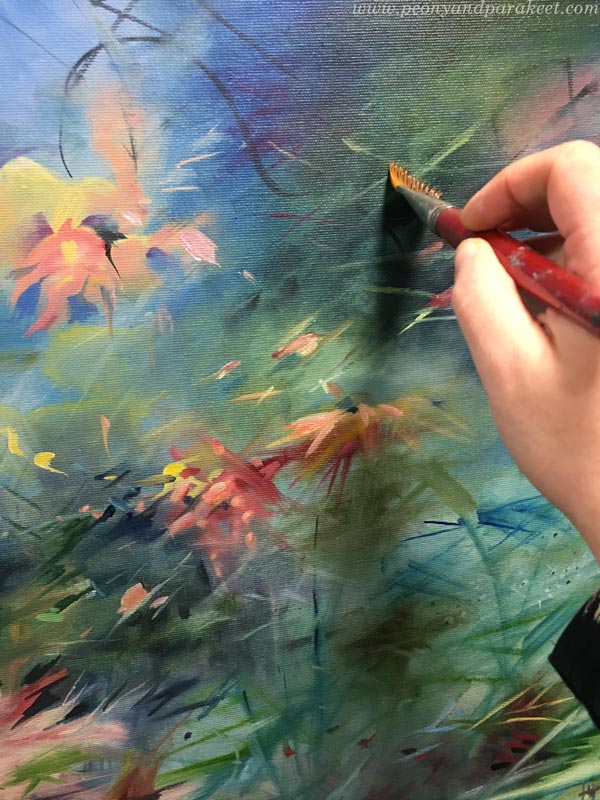
Rubens didn’t have the luxury to leave the shapes abstract – it would not be treated as a completed painting in the 17th century.
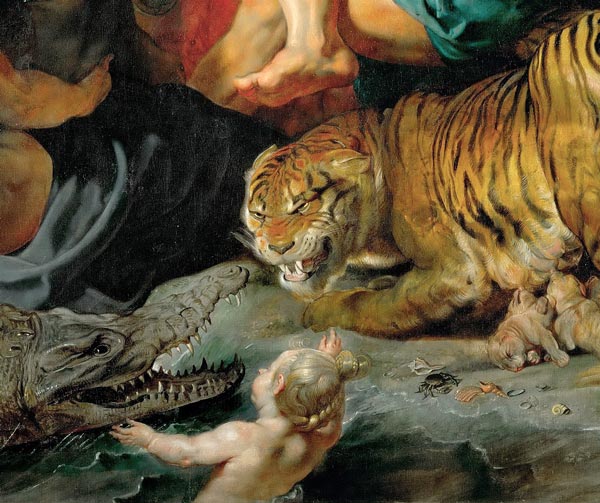
And still, his expression has such a sense of mystery that it draws me in and forms a spiritual connection with humankind.
Creating with Hurry vs. Taking Time to Imagine
Recently, I have started to feel that it’s ok that I am not Rubens, Kandinsky, or any other admirable artist. By taking time for imagination, I still can feel a connection with them.

Rather than trying to reproduce what my favorite artists have created, I imagine that my little studio is a time capsule where they hang around. My sensitivity for them can get mixed with the rest of my imagination, and produce my kind of work, still supported by them.

The core of art is that we are free to imagine. We are allowed to break the limits of time, explore the inner world, and go beyond literal ideas and explanations.

This journey has taught me that it is possible to live with wild thoughts no matter what direction they take. Like a rare animal, a thought can be shy and fast, and thus, require sitting before the trust is formed.
I started the project with the definition of spirituality, but now the greatest lesson seems to be to let go of any single definition and find more, no matter what the subject is.
I’d love to hear your thoughts on this post. Who do you admire, for example, if not anything else!
Roaming Instinct – Why Not to Limit Artistic Inspiration
This post is about artistic inspiration and spirituality and enabled by Arts Promotion Centre Finland. This is the seventh blog post of the project, see the first one here, the second one here, the third one here, the fourth one here, the fifth one here, and the sixth one here!
My second big painting is called “Roaming Instinct.”
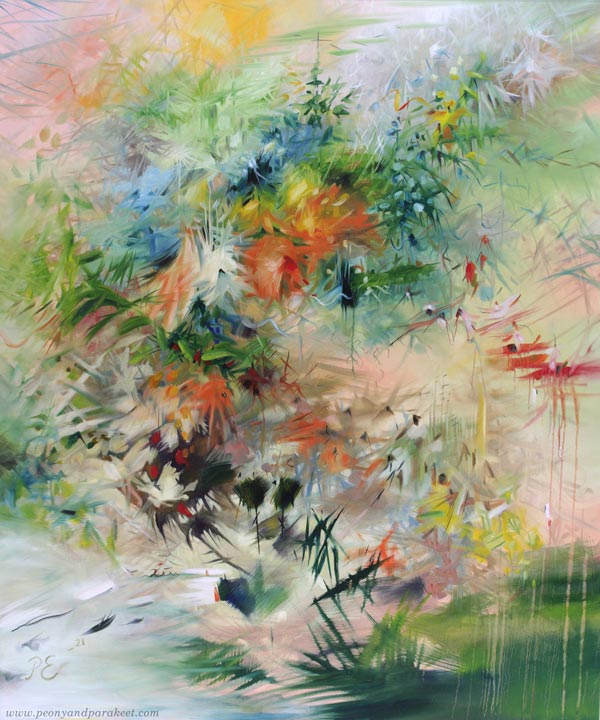
This painting and the previous big one have been really significant to me.
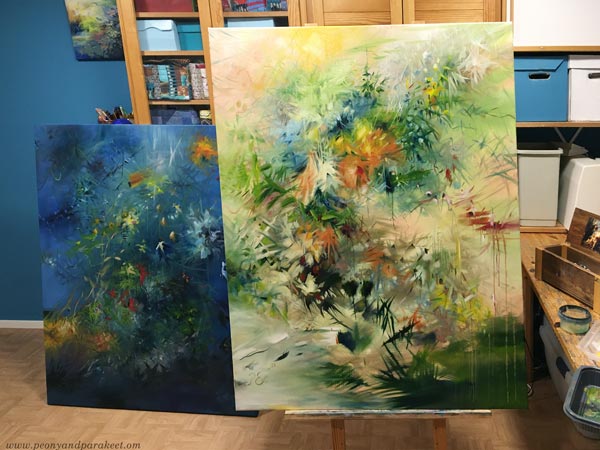
Regular practice and the big size have helped me to relax and let go – break the glass between the inner and the outer world, as Wassily Kandinsky would say.
Can There Be Too Much Artistic Inspiration?
As long as I have created art, I have been inspired by a variety of things. It has often felt like it’s too much.
Here are some:
- old portraits in fancy dresses
- houseplants and their pots
- midcentury-modern interiors
- colorful kitsch
- primitive dolls
- dressage horses
- English country gardens and cottages
- Tibetan yaks
- base jumping
- mountain climbing
- skateboards
- graffitis
- physics
- outer space
- mathematical algorithms
The list is ongoing and overwhelming!
I think this is not exceptional at all. The world is full of artistic inspiration. Like animals, we have a roaming instinct to explore further. No wonder they say that the hard choice for art-making is to choose what inspiration to pick.
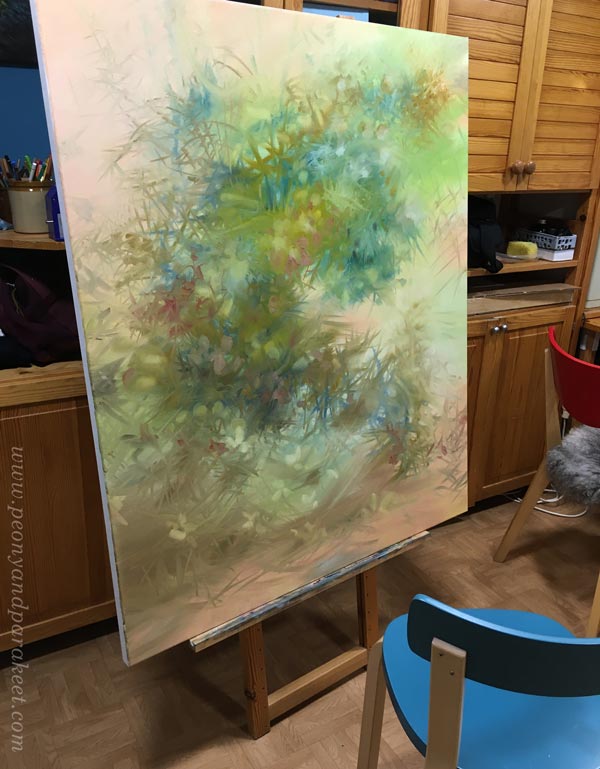
But recently I have felt like I don’t have to pick. No matter what I paint, I can bring it all together. If I paint a flower, it can look like a nomad, or a mountain, or a furry animal, or a space station, I don’t have to define.
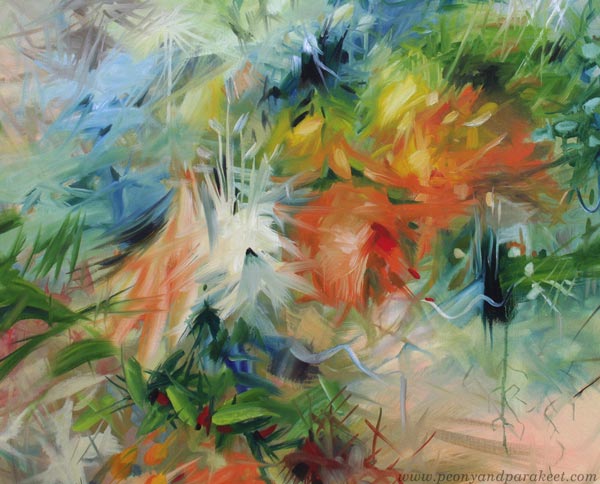
Every element can have a strong identity and the overall scenery can have a strong sense of location even if I can’t name it. Some people say my paintings are underwater sceneries, others see outer space. For me, they can be both, and yet neither. I feel I am delivering more than what can be labeled.
Finding Your Artistic Voice/Style/Spirituality/Identity – Whatever You Call It!
I have created art for a long time expecting to become better at what to pick and why. I assumed that art would make me know myself better and yes, it has. But it’s surprising that now when I am painting, it doesn’t really matter who I am and how I get inspired. My art is not to limit or to focus but to integrate.
When I started the project, one of the goals was to get clearer about my spirituality. My question was: “Can a former engineer create spiritual art?”
At the moment, I find it difficult to separate physical from the spiritual. All material things seem to have a spirit and everything immaterial seems to have a figure. When I paint, they mix and merge, and after a while, the painting seems to have a mind of its own. It tells what it wants, and my job is to obey.
Does this make sense? What do you think?
Longing for Freedom – An Intuitive Floral Still Life
This week, I have an intuitive floral still life! It’s the biggest painting that I have made so far – about 47 x 39 inches.
This post is also about artistic and spiritual freedom and enabled by Arts Promotion Centre Finland. This is the sixth blog post of the project, see the first one here, the second one here, the third one here, the fourth one here, and the fifth one here!
About Flying and Freedom
Our back garden is a mall for birds. We get to see many species and, if lucky, some butterflies too. I became interested in birds in the early 90s when I shared an apartment with a friend who had budgies and a cockatiel. Living with the birds made me notice them outside too. And what a great ability they have – flying!

“Free like a bird,” they say, and yes, flying and freedom do belong together. But when a blue tit enters a small bond under our dining room window, I see worry. Worry if he manages to clean himself before my beagles run out of the door or before bigger birds take their turn. His freedom is limited like anyone’s in this world. Even a dove couple who I jokingly call “the owners of the spa” are frightened by their surroundings. Last summer, a dove was killed near our home, maybe by a fox, and it took some time for the couple to reappear.
Flocks, couples – we are born not only to be free but also dependent on each other. When we have each other, we are safer than alone.

But birds have taught me that the longing for freedom is also about safety. The blue tit feels safe enough to wash on the ground because he is free to take off. Insignificant dots, that’s what we all are to him. And still, he also enjoys that we do exist – we who keep the bond clean and pretty.
Intuitive Version of 17th Century Floral Still Life
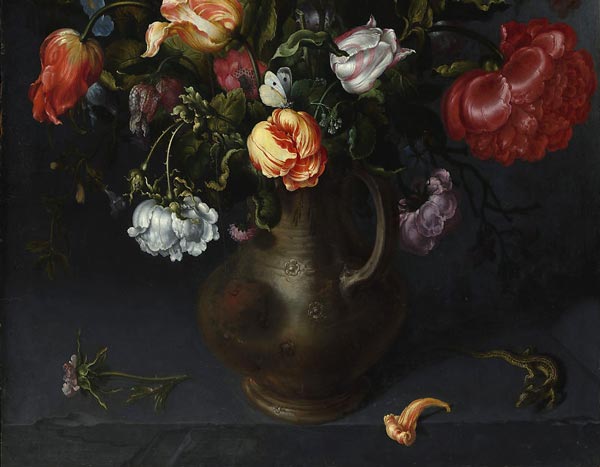
I wanted this painting to be my version of 17th century still lives. They had black backgrounds and were filled with things that had hidden meanings.
Nowadays, we can be freer and let the colors and shapes hit straight to our souls. We have the artistic and spiritual freedom to create intuitively and also, feel safe enough to open our inner world to others.
Freedom – What are your thoughts? Does it show in your art?