
Painting Seascapes – Making The Scenery Look Bigger
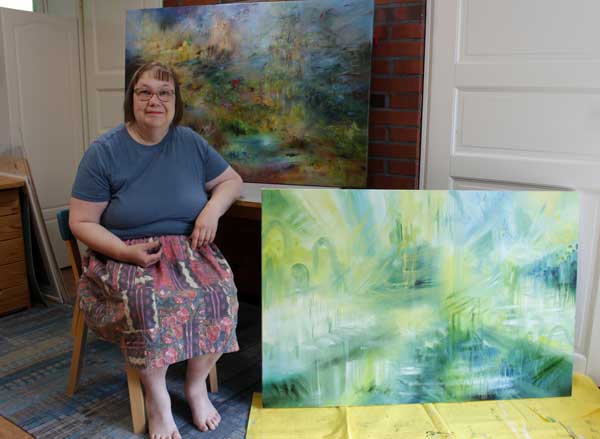
This week, we dive deeper into painting seascapes and other big sceneries. In spring, I thought my painting Atlantis was already finished, but after seeing the ship paintings in the Rijksmuseum in Amsterdam in May, I realized that I had made my seascape painting too simple and small-scale, and went back to working on it. Now it’s finished!
Painting a Bigger Sea
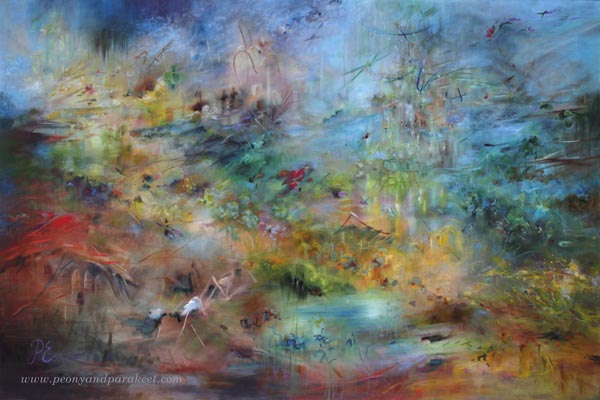
Despite the size of the canvas, you can make the seascape or any scenery look larger by adjusting the composition and the size of the brushstrokes. Compare the finished version with the one below!
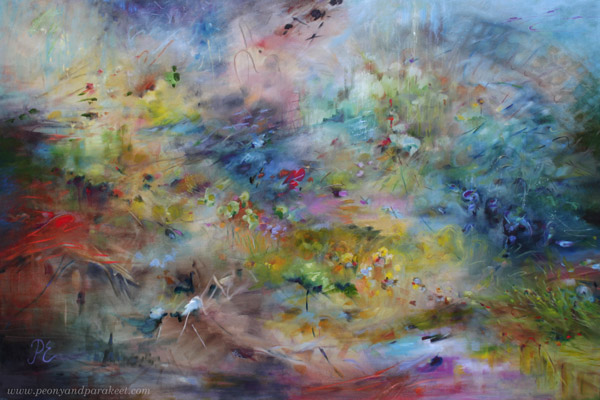
When you want to make a seascape look bigger, add tiny strokes, especially near the horizon, and adjust both left and right edges so that it looks like the seascape continues outside the painting.
The changes may look small when you look at the small photos, but in reality, they make a big difference. Here’s a close-up photo of before and after.
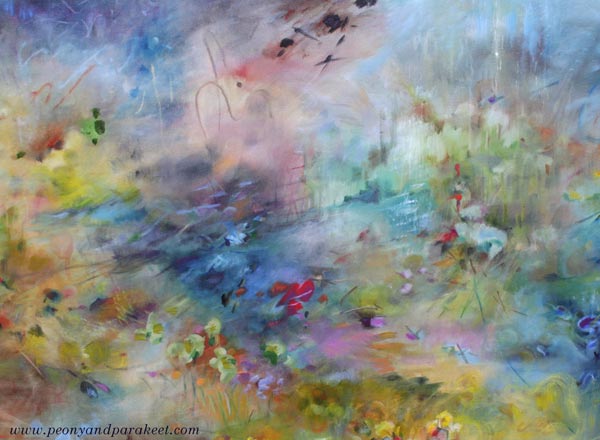
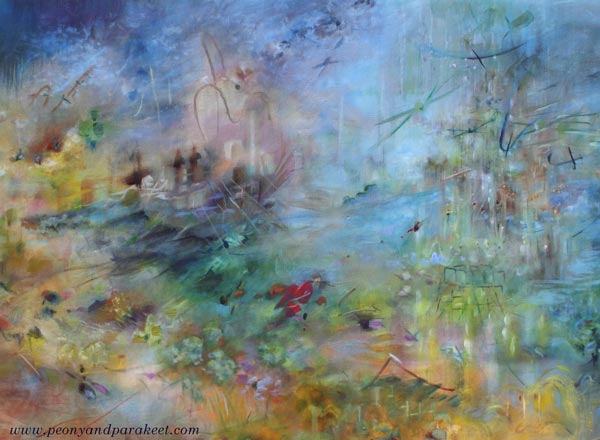
There are so many details that it was easier to make a short video instead of sharing more pics.
Seascapes don’t have to be boring and all blue. They can include all kinds of events and creatures, even buildings like in my painting.
A Series of Big Sceneries in Progress
It’s been a hot July in Finland, and my little studio is really warm in the afternoon. But I have big canvases in a queue, and the next one is already in progress.
New Course Is Coming Up!
Painting seascapes and other sceneries is exciting, but as you know, I also love flowers. I will be running a new watercolor course called Wild Garden from 22nd September to 14th November. Here’s a small teaser pic …
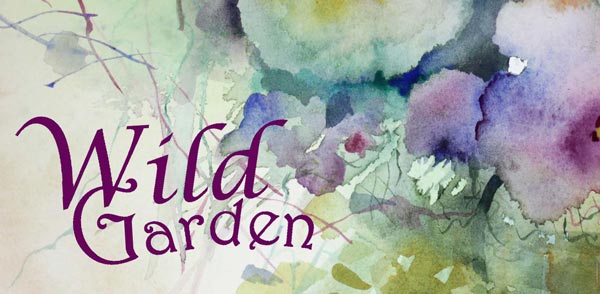
The early-bird sale of Wild Garden will start next week, so stay tuned!
Develop Your Art Style Without Forcing
When you want to develop your art style, you don’t have to force it. Stop feeling frustrated, not being focused enough, and start building your visual vocabulary. Learn how to create a variety of shapes and lines and find different ways to use color. Whether you want to paint abstract art or fill your art journal with fun drawings, this week’s video is for you.
Develop Your Art Style – Grow Your Visual Vocabulary
This week I want to bring back the topic I wrote about at the end of May: Visual Vocabulary First, Style Second. I felt that the importance of this topic could not be expressed well enough in the written text. This is also a very important issue for me in my own development as an artist. It is like a big onion with a lot to peel.

Not Everything But Essential Stuff
When I was making the video, I kept thinking that it didn’t express everything. That I should also talk about deeper levels of imagination and expression. And it also bothered me a bit to say in the video that the subject is not important and ask you to just focus on growing your visual vocabulary. But I don’t mean that what you express wouldn’t be important. I mean that when the content is taken to a generic level, for example, whether you should be painting landscapes or portraits, it’s superficial.
So I dare to publish a video that doesn’t express everything about making art, because it’s probably more useful when it offers a more limited view. The video dives into visual vocabulary, because in my opinion, it is the solution to more issues than anything else related to making art. Here, too, I emphasize the “in my opinion,” because there are, of course, many different ways to approach art making.
Develop Your Art Style Without Forcing – Watch the Video!
I personally believe that in art, being a creator makes a person visionary. Although art is also a work of the mind, the mind expands by creating, just as language skills grow through speaking. I am a pretty fast speaker by nature. So, it has been quite a task for me to get my English to a level where I can speak at a reasonably natural speed and fluently. When I notice grammatical errors while editing videos, I remind myself of the same importance of doing.
Even though we are not perfect, let’s keep creating and always moving forward!
Coloring an Intuitive Selfie
This week, we draw an intuitive selfie, so without a camera or a mirror. Let’s pick the colored pencils and create a self-portrait freely and intuitively!
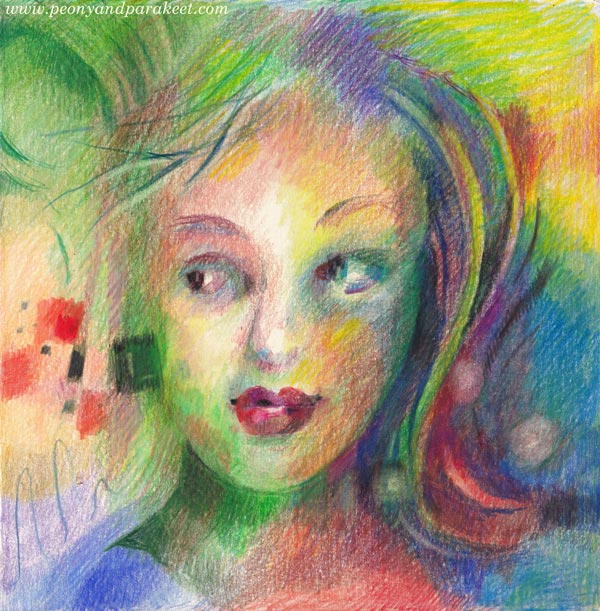
We use the pencils as a camera and draw the face as it’s a photo taken from the inner world’s view. At the same time, we explore blurriness, freedom, and asymmetry. Watch the video!
Coloring an Intuitive Selfie – Watch the video!
I am creating my page on the Dylusions Creative Journal (Square, 8 by 8 inches) but you can use any paper and any size.
In the video, I talk about the difference between doing coloring pages and coloring a blank page, and how I have processed my word for the year “Release”.
Inner vs. Outer Selfie
It would be great to hear your thoughts on becoming freer and making an imperfect intuitive selfie. Leave a comment below!
Using Up Old Crayons
This week, we use up those old crayons: oil pastels, soft pastels, Faber & Castell Gelatos, Derwent Artbars … whatever you happen to have!

This piece is made of Faber & Castell Gelatos and oil pastels. I used oil pastels a little more than gelatos. The paper is thick mixed-media paper. You can see in-progress photos in the video.
In the video, I talk about old crayons and show several examples of how to use them.
Using Up Old Crayons – Watch the Video!
Here’s the link to the course that I mention in the video: Innovative Portraits
Let’s keep creating art!
