
Art Exhibition in Villa Albert
This week, I have photos from the group exhibition I am currently participating. It’s called Taiteilijat Edelfeltin tunnelmissa – artists in the mood of Edelfelt. And here are four of us from left to right: photographer Niclas Warius, painters Kristina Elo and me, and another photographer Maarit Lehto. The sculptor Kaj Lindgård is also in the exhibition, but missing in the photo.
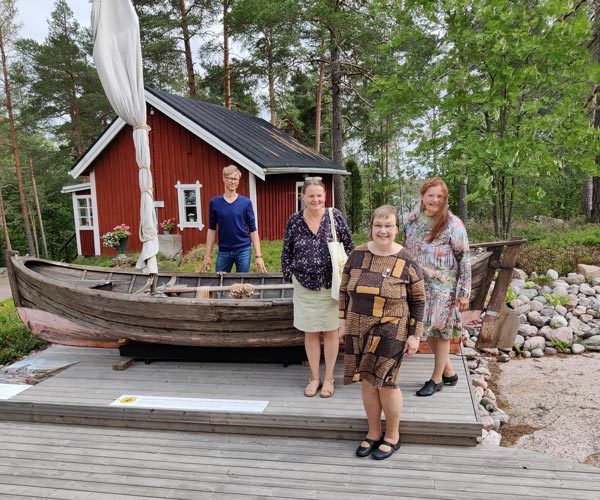
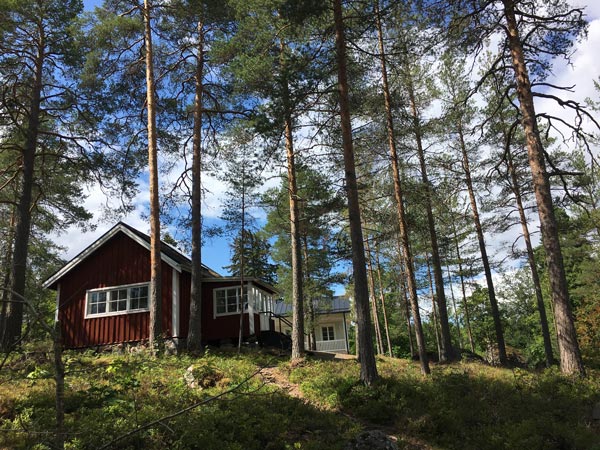
The red wooden cottage in the background is a summer studio of the famous Finnish painter Albert Edelfelt (1854-1905). It is in the possession of a private foundation Albert Edelfeltin säätiö that cherishes the memory of Edelfelt. Even if it’s just a small cottage, the location in Southern Finland is beautiful – near the sea and very near Porvoo, which is a small town popular with tourists.
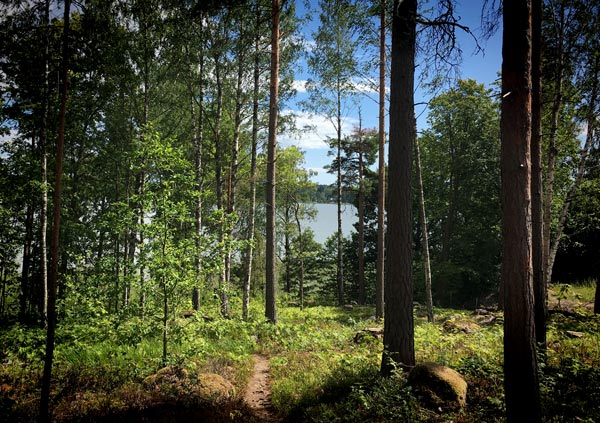
Albert Edelfelt painted here in summer and then went to France for winters.
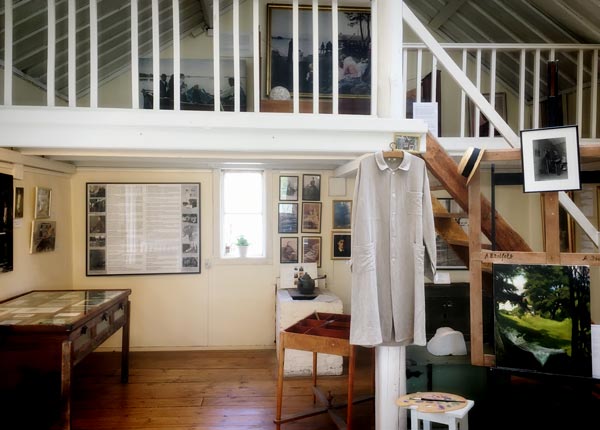
When you look at the studio from the sea, you can see the gallery Villa Albert behind it. The foundation built it in 2019.
The gallery is a nice space with a small shop as well. All visitors who come to see Edelfelt’s studio, come first to the gallery to buy the tickets.
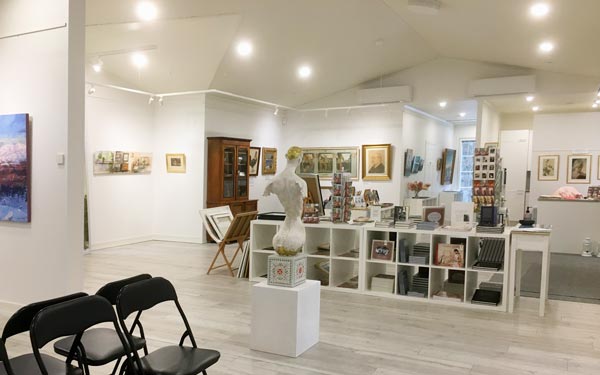
The head person of the gallery Hanna Kaarina Syrjäläinen is very skilled at hanging the exhibitions. I was so satisfied with how my paintings were displayed. Here an editor of a local magazine interviews me before the opening.
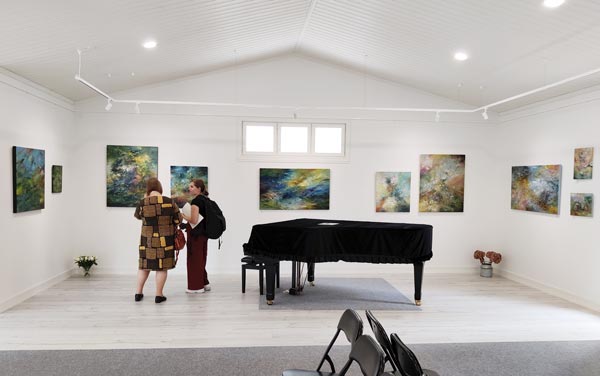
The foundation organizes concerts and other cultural events in the gallery. I think my paintings look great behind the grand piano!
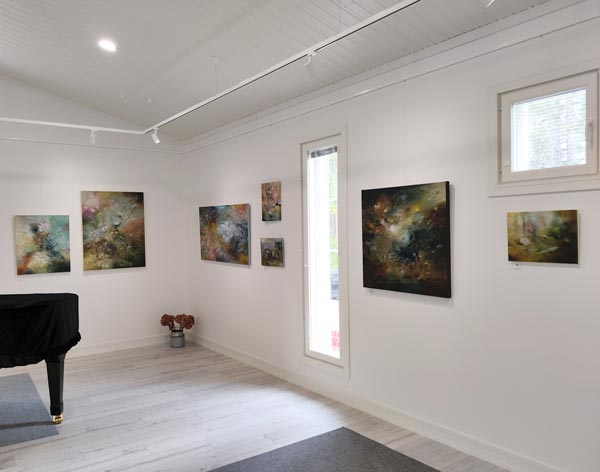
I had 12 paintings in this space and four minis in a separate showcase.
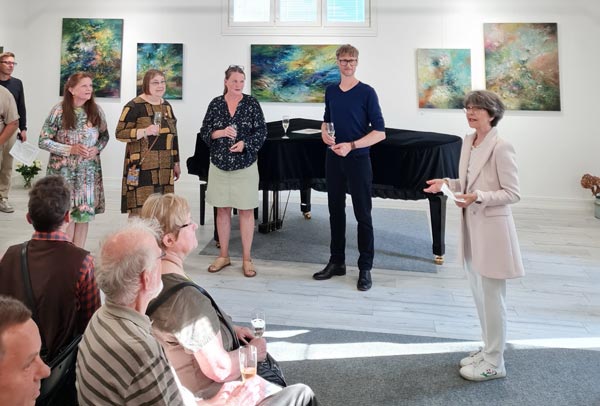
The gallery was full in the opening. The gallerist made a lovely speech about the exhibition.
Unfortunately, I don’t have photos of the other artists’ pieces, but do visit these websites to see their work:
It is an honor to be in the company of these artists!
I had a good time in the opening meeting new people who like this kind of art that has a connection to art history.
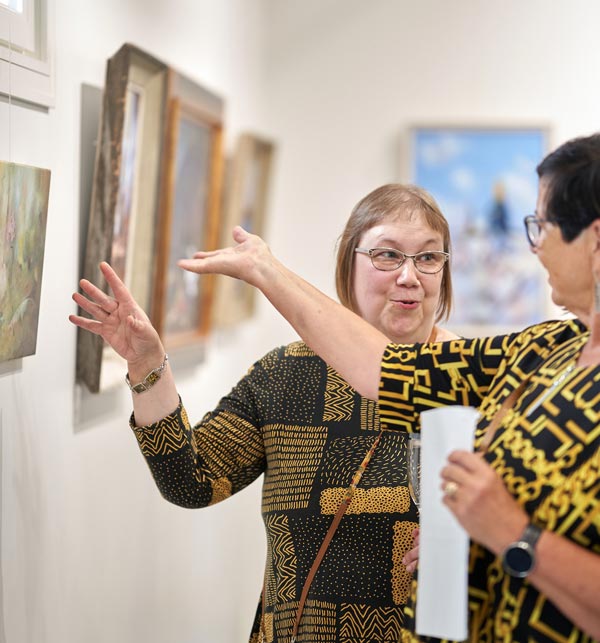
After working on the paintings alone for a long time, it’s so nice to hear what others see in them and tell about the creation process that started early this year.
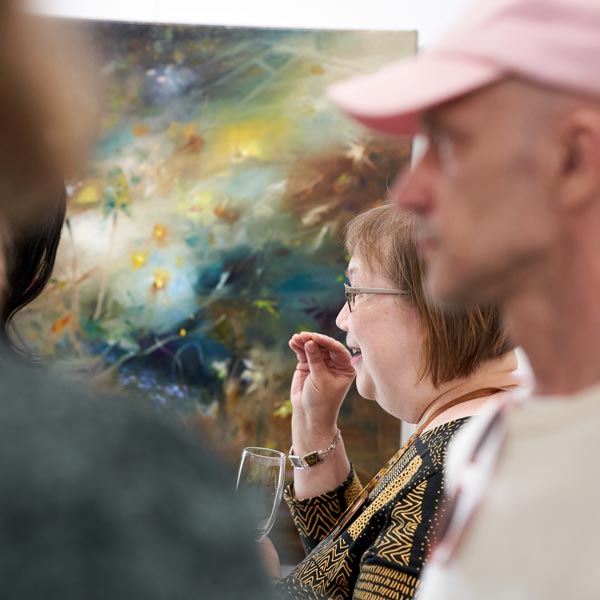
My paintings were mostly from this year, but there were some from the last year. I think it is a cohesive collection and as a whole, maybe best what I have presented so far.
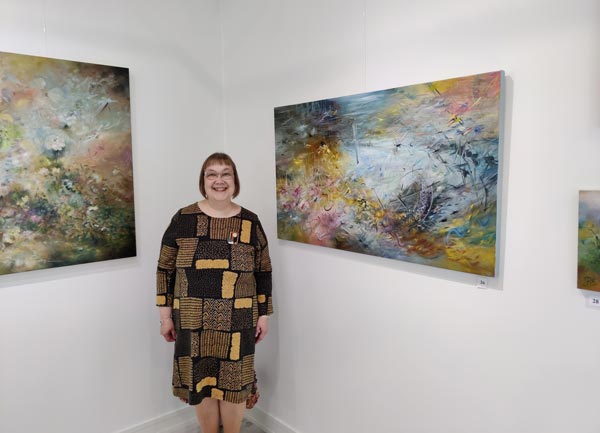
The exhibition continues until October 1st, so if you are in Finland this fall, do visit the Albert Edelfelt Studio Museum Villa Albert!
P.S. See the previous posts to see the paintings more closely. I still have a couple of pieces to show you, and now I feel the urge to draw, so more art to come in the next weeks as well!
Finding Emotional Connection Through Imagination
Imagination and emotional connection go hand in hand in art-making. If you don’t feel a connection with what you are creating, bring in more imagination and treat different areas of your work as characters – even if you won’t be including any humans. Let’s look at this example!
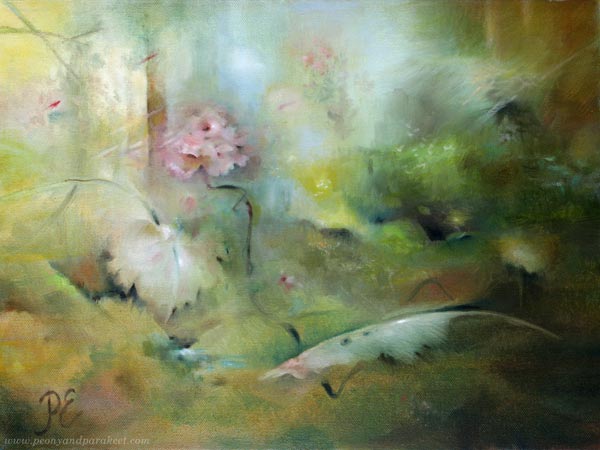
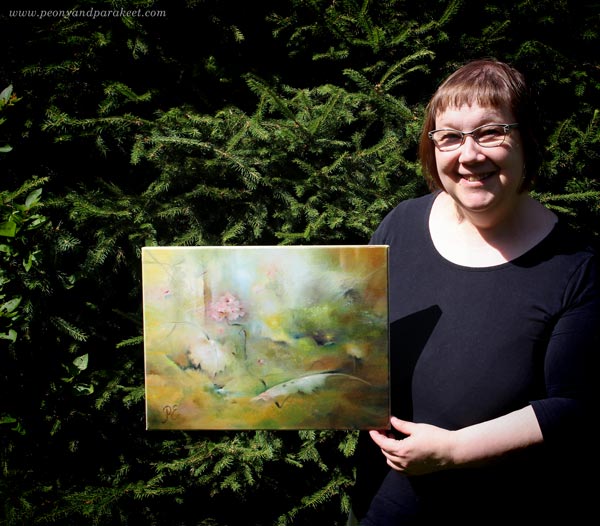
This small painting is part of a series I made for the Albert Edelfelt Foundation exhibition. It will take place in August-September.
Inspired by Albert Edelfelt
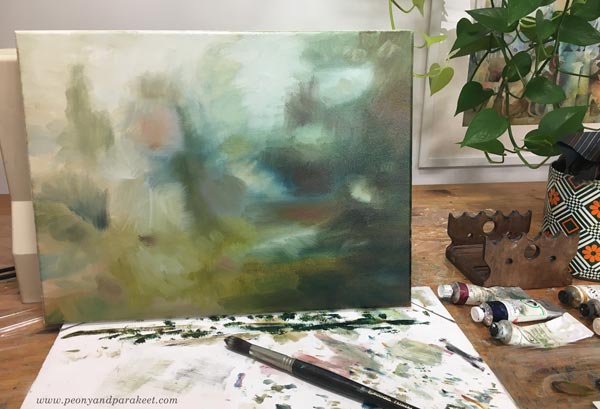
For the colors and composition, I was inspired by Albert Edelfelt’s artwork “Koivujen alla – Under the Birches”. It is not this painting that I photographed in the Albert Edelfelt exhibition at the Ateneum Art Museum, but another similar work that I made a mirror image of.
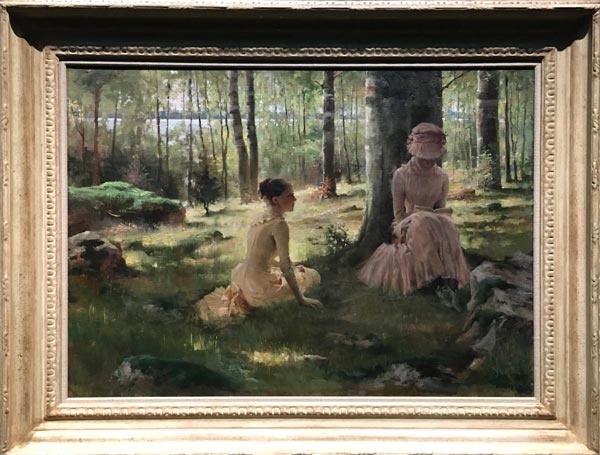
However, I was more inspired by another “Koivujen alla.” See the picture here!
My version of “Koivujen alla” didn’t have any people. Instead, I used my imagination to depict human characters in the form of a plant and an object.
Combine Inspiration and Observation!
A good way to get the imagination going is to combine two different things. For example, if you saw an artwork that inspired you to create, also gather unrelated observations from your surroundings. This way, you need your imagination to bring them into the same image.
In this project, I remembered a pine seedling that I had seen in a nearby rocky forest. The name of the area is Pöllökallio (owl rock) and we often go there with our dogs. This little pine tree was like a bonsai! It was so sweet that I took a photo of it.
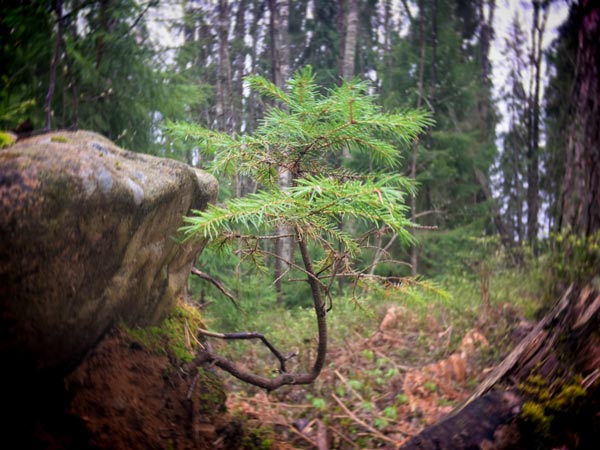
When the pink color of Edelfelt’s painting met a crooked stem of the pine, a tree-like rose was born!
Emotional Connection by Asking: Who is This?
The rose became the most challenging part because I wanted it to resemble the woman with a hat in Edelfelt’s painting. I thought about the hat when I painted a rose, but it didn’t work at all.
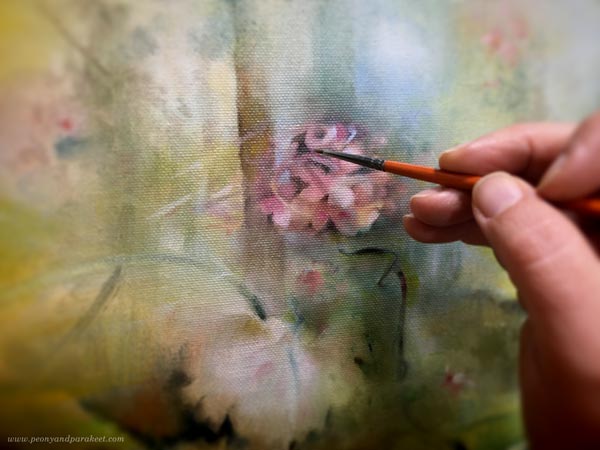
But then I came up with thinking about the character of the woman instead of her hat. That way my imagination met the emotional connection, and I quickly got the impression I wanted.
Build a Story to Boost the Emotional Connection!
One of the most common problems is that our art is full of separate islands. The sun might shine but the effect doesn’t show elsewhere. The person may smile but the eyes are not affected. There may be three ladies but what are their roles? Use your imagination to find connections between these islands and add elements that make the overall story make sense!
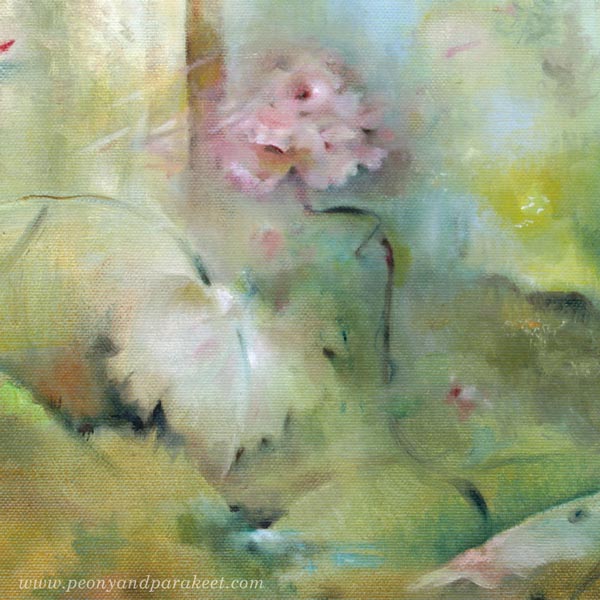
In my painting, there are not two women like in Edelfelt’s painting, but a rose, a leaf, and a feather – three introverts! The rose reaching for the sky has agreed to be the center point. The leaf examines herself through the pond. The feather has been a part of a bigger adventure and is now ready to shift the focus to others.
The small pond is a central element here. It brings the leaf and the feather together.
You can also see the colors of the rose elsewhere in the painting. For example, there are flying thoughts (red lines) that the rose tries to catch, and a bigger punch of roses that is in the background.
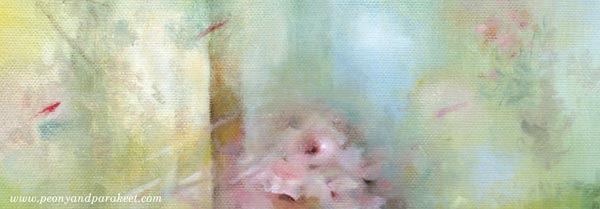
The painting is about three romantic introverts who went on a trip to a rocky forest on a lovely summer day. They are together, but in their own thoughts, just like the women in Albert Edelfelt’s painting.
When we paint or draw people, we hope to bring the character to life with their facial features. But we don’t need facial features to find an emotional connection. Once you get the hang of it, you can draw or paint anything, even just different shaped spots on paper.
What do you think?
Imagining Flower’s Spirit
When you want to draw or paint flowers that look unique and alive, imagine their spirit and discover what they would love to wear.
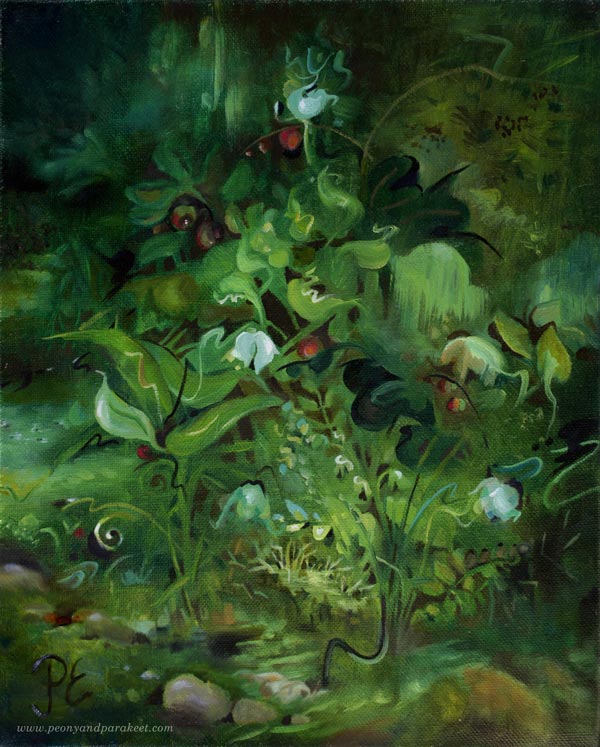
Art is not only about techniques and replicating what we see. When you create, you have permission to imagine and be convinced that you know something more than anyone else. You are the best scientist in your imaginary world! In your world, you can mix different fields, like botanical illustration with fashion design. That’s what I did in this painting called Kielomieli.
Kielomieli – The Mind of Lily of The Valley
We have lily the valleys growing in our yard and even though I don’t pay much attention to them, I feel like I know them. That plant spreads in the shade and may seem modest, but its mind is always alert and it observes the world sharply.
This little flower also knows how to influence people. Even before I was born, in 1967, Yleisradio, the Finnish national broadcasting company, organized a vote for Finland’s national flower and the overwhelming winner was kielo – the lily of the valley. It makes Finns kneel and admire its fine shapes. Unlike other flowers, the color is secondary to the lily of the valley, until it produces berries. With berries, it underlines that it is not just a white, innocent little flower. Everyone knows their toxicity.
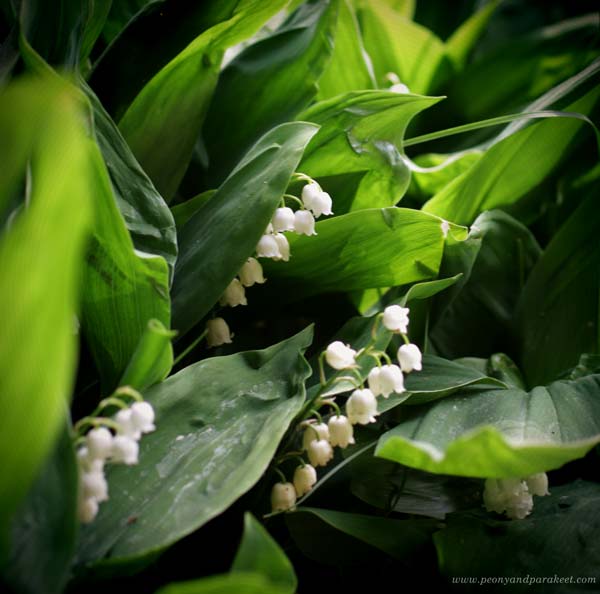
The lily of the valley’s mind is a group mind where everyone dances to the same rhythm. It still doesn’t mean that a single plant would not also be an individual. She just doesn’t share her own thoughts publicly.
Many people love lily of the valleys, but this plant is not a rose that craves attention. Even if it lies low on the border of the earth, its mind is more sublime than that of other flowers. It sees far and high, and nothing can discourage it.
Choosing the Style to Go with the Spirit
When you think about the flower that you want to draw or paint, ask her about her style and aesthetics. For example, is it bohemian, classic, gothic, or country? If the flower would be a human, how would she like to dress?
Clothes can express the spirit.
In flowers, the details of petals and leaves are also very similar to the folds and seams of clothing. I often find it helpful to think about dresses, hats, and jewelry when painting plants.
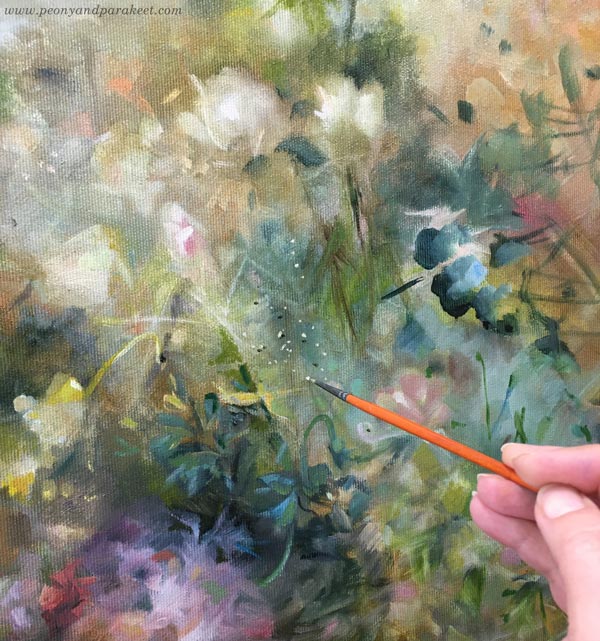
I imagined the lily of the valleys to be formal and stiff. They wouldn’t wear a bathrobe in a photo but choose a classic-lined dress or a jacket. So I chose to paint them in a decorative style. First, I practiced painting roses in that way – see this blog post for more instructions!
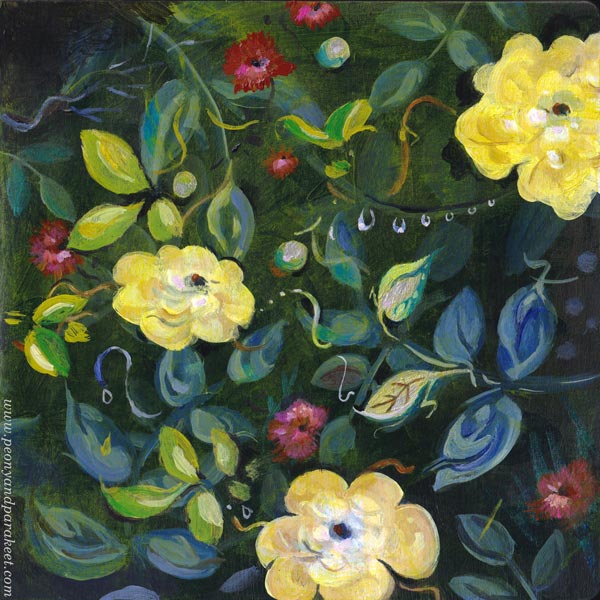
I have noticed that making a study speeds up my painting process even if the final painting would be different.
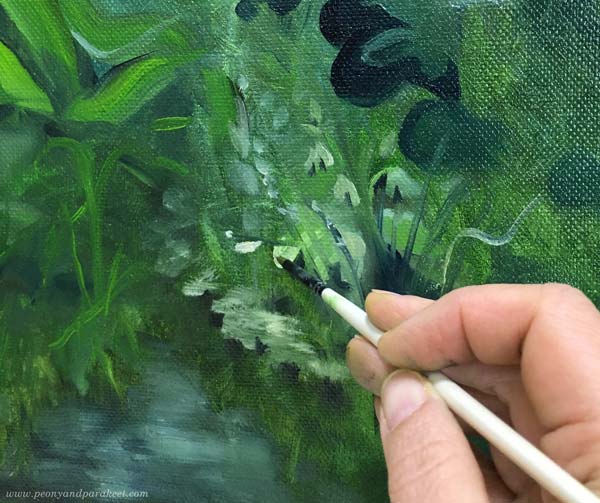
Once I had “loaded” that decorative style to my hand, I painted Kielomieli – the lily of the valley’s spirit.
Flower’s Spirit – Flower’s Portrait!
When visualizing the flower’s spirit, think about yourself as a portrait painter.
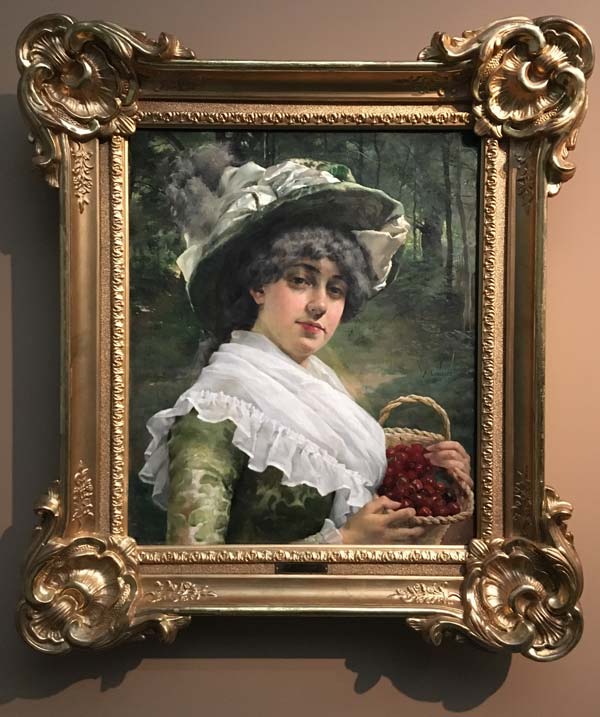
You don’t need a face to express a flower’s spirit. When the color choices, shapes, and lines are aligned, they all paint a picture of a character.
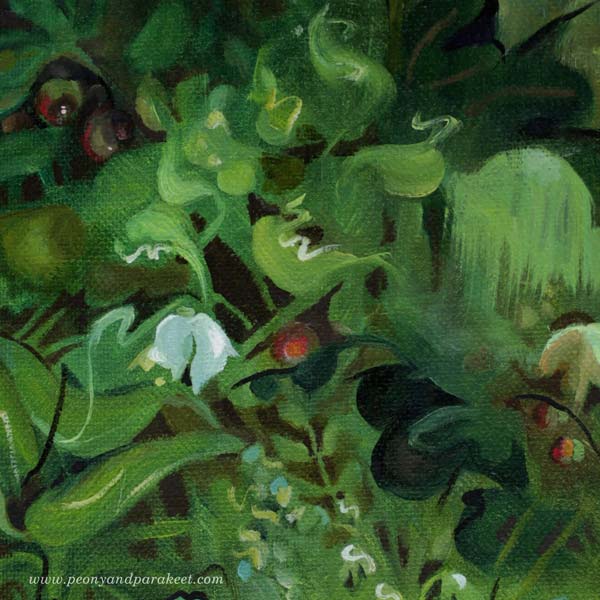
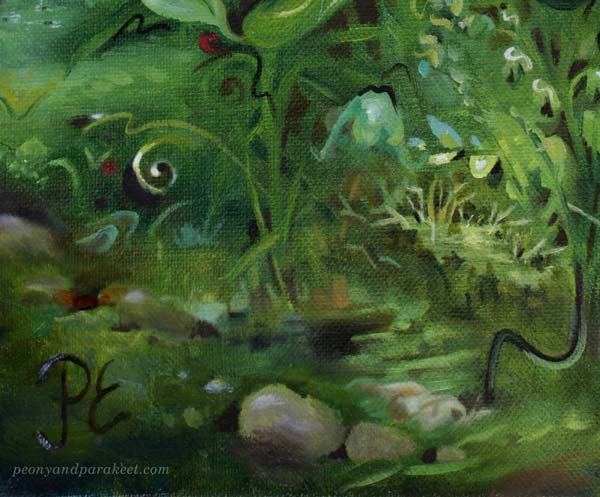
I hope this blog post gave you new ideas to break the glass between reality and imagination!

Disappearing Garden – About Transience and Creating the Best You Can
I’ve been painting for the exhibition “Taiteilijat Albert Edelfeltin tunnelmissa – Artists in the Mood of Albert Edelfelt”, which is in August-September. Now I want to present the main work of my new series to you. It’s about transience and called “Katoava puutarha – Disappearing Garden”.
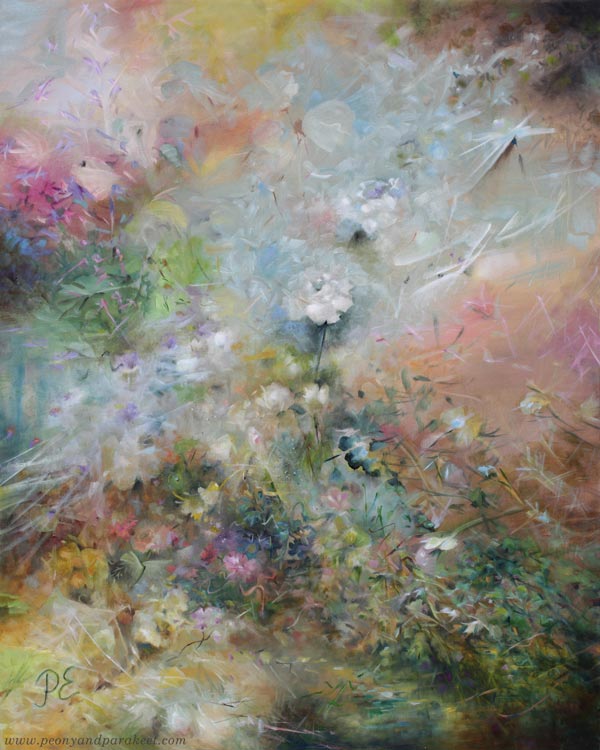
There is sadness in this painting. For years we had a neighbor who liked gardening. She fell ill and died and the rich garden has now been turned into a lawn. It made me think about how perishable we are, including our work. We are disappearing gardens, no matter how much we would like to think otherwise. So let’s enjoy our flowers while they still bloom!
Impression of an Old Painting
Disappearing Garden has many small details and a lot of work went into them. But because of the subject itself, it seemed important to spend time and patience on this work. I wanted to create the impression of an old painting that reaches across the eras as if overcoming its core problem: transience.
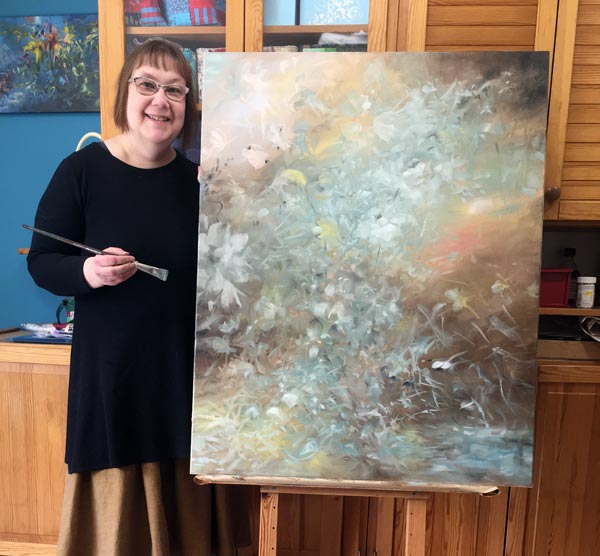
I usually make paintings in pairs, but this time I had a pair already ready: last year’s finished painting Queen of the Night. It is a dark shade and I wanted to make a light counterpart to it.
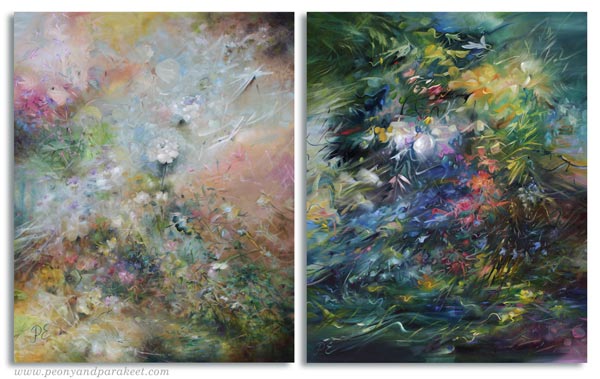
Both of these works are inspired by bygone eras: the 18th and 19th centuries.
About Transience and Creating the Best You Can
While painting The Disappearing Garden, I thought about how important it has been for me to practice a lot. But recognizing my transience, I now want to paint as well as I can. Life is hectic and a new start is always tempting. I can make dozens and dozens of nice and small pieces and collect likes with them. On the other hand, I can wait for the perfect time and perfect vision: question my artistic core and taste and where my focus should be.
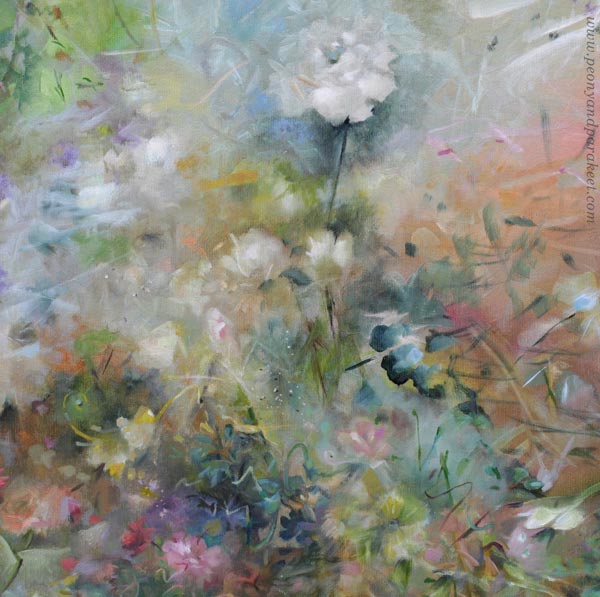
But it’s also so that life is constantly changing. If I don’t capture this moment, will I achieve anything? That’s why it felt important to give this painting as much attention as it wanted.
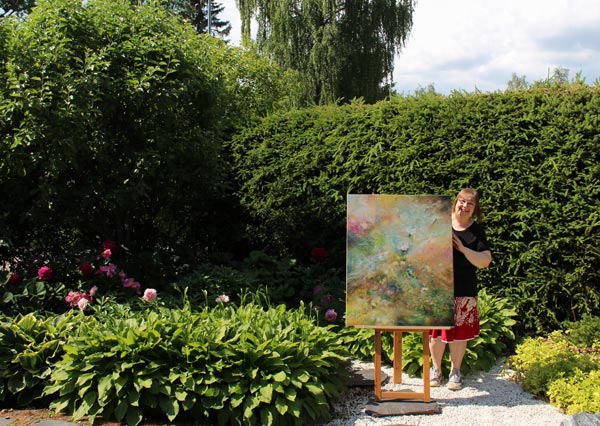
Do these thoughts resonate with you?