
Kaunosielu – Painting and Drawing Sensitivity
Kaunosielu is a Finnish word for which I don’t know an English equivalent. It means a dreamer who loves beauty, but the word has an ironic undertone. This romantic soul, alienated from everyday life, cares little about taking care of practical matters and frequently stops to admire the beauty around her.
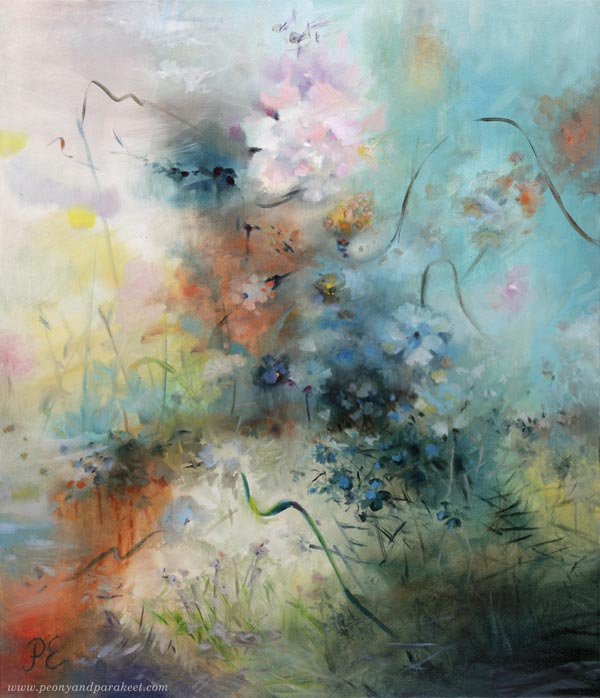
I’ve been thinking about people’s yards in my neighborhood a lot lately. The new houses have a small lawn area, a wooden patio, and a row of white cedars. These homes are advertised as “easy-to-maintain yards” in real estate ads. And yet, it often happens that when time passes, a few violets or a peony bush appear. It makes me believe that we all are “kaunosielu people” who have a sensitive heart and eye for beauty.
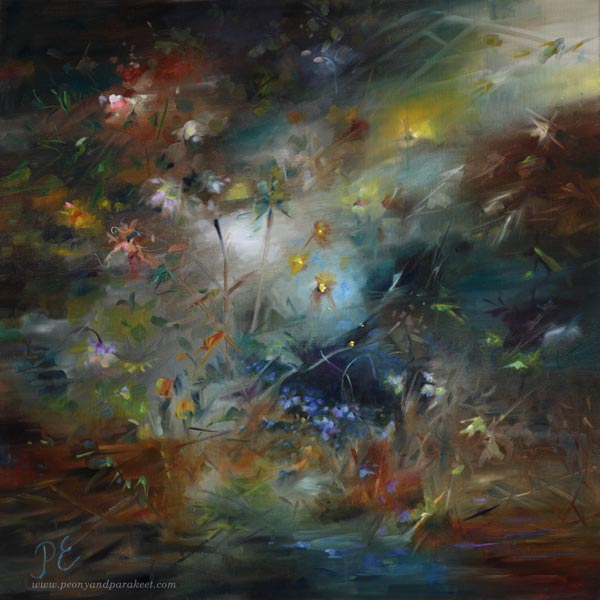
So my Kaunosielu painting is dedicated to that part of you who stops after seeing something beautiful. This topic was challenging for me because I usually express movement. Here, however, it’s all about staying rather than leaving and looking rather than running away.
Inspiration from Pastel Drawings
I am making a series of paintings for an exhibition called “In the Mood of Albert Edelfelt” and I have browsed a lot of Albert Edelfelt’s (1854-1905) works. Surprisingly, his pastel drawings fascinate me the most. Look at this woman, for example – or rather – her dress!
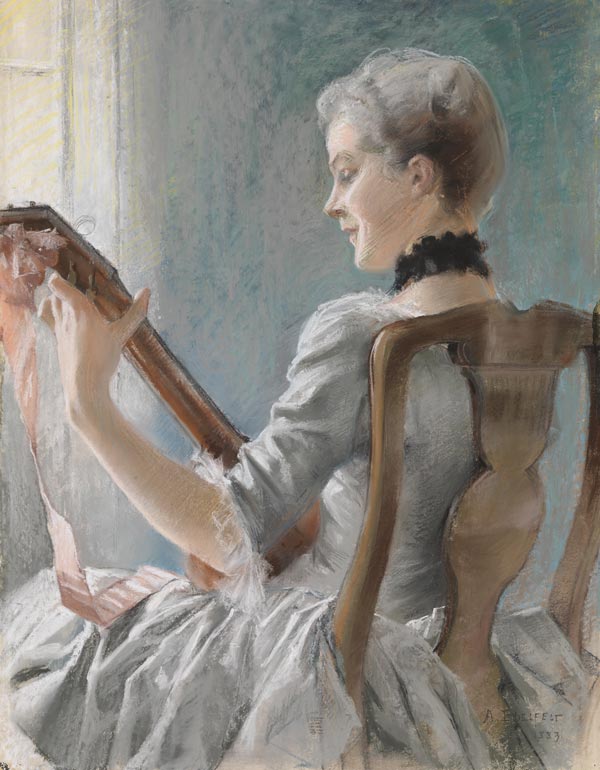
I see a similarity with flowers in old portraits. The outfits are pleated like the petals of flowers and the lines form interesting patterns.
I also started using chalk brushes in the ProCreate app. Here is a digital pastel drawing: peonies and strawberries.
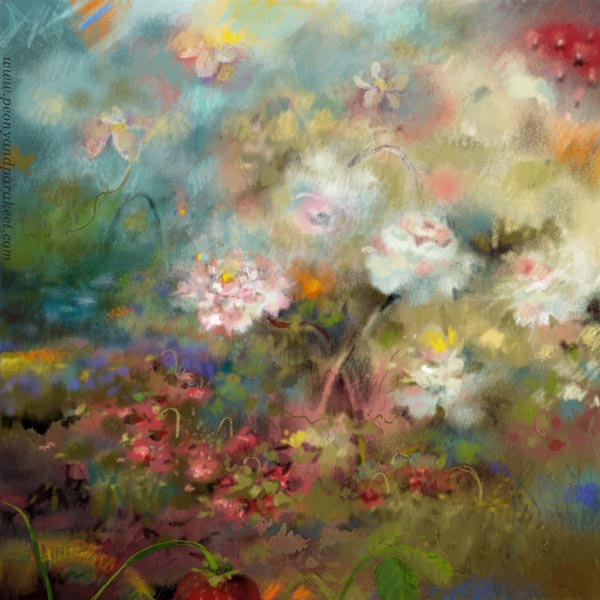
I have done oil pastel work for the course Innovative Portraits, but now I dug out the soft pastels.
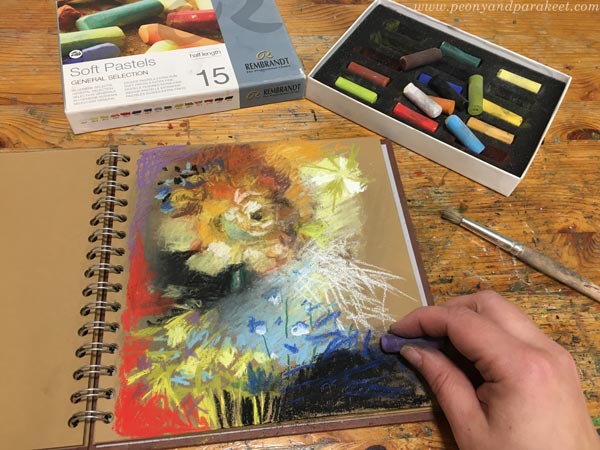
Soft pastels are more chalky than oil pastels and maybe a bit more difficult too because, unlike oil pastels, soft pastels also need fixative.
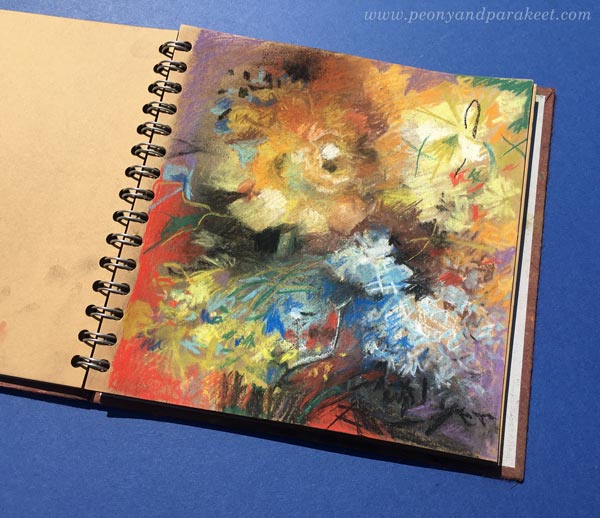
This is just a small notebook and a small piece but I like to practice between bigger paintings.
Kaunosielu on Canvas
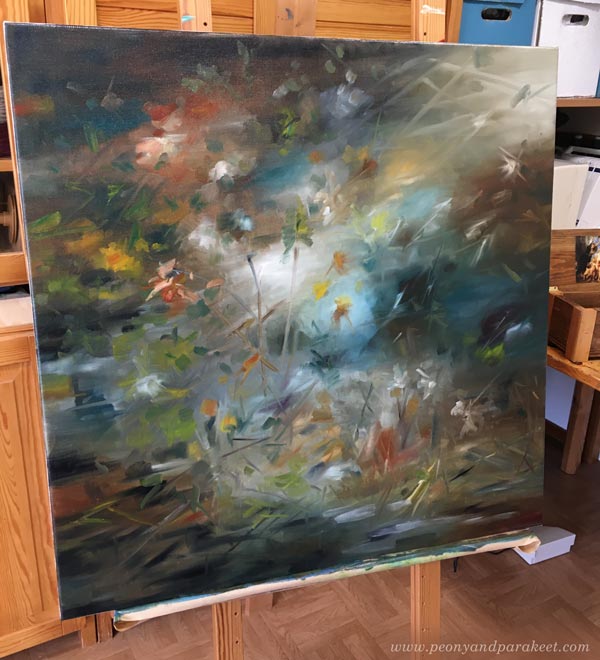
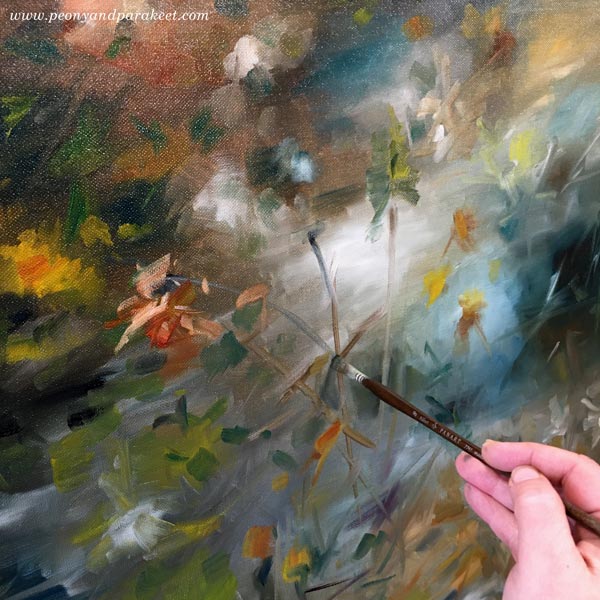
My painting Kaunosielu is painted in oil, but it is close to pastel artworks in terms of color scheme and the use of lines.
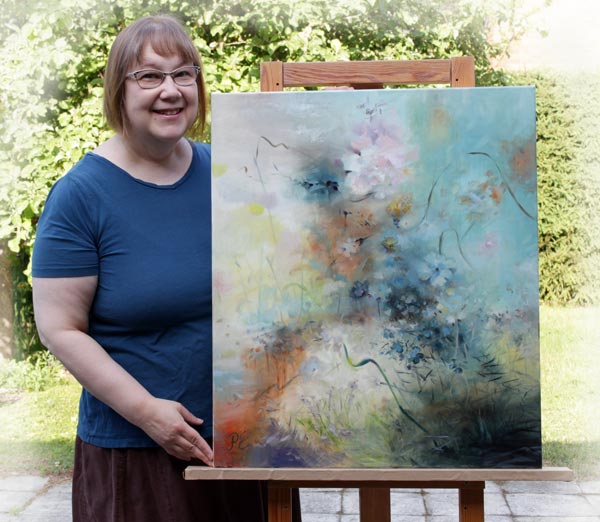
The painting is inspired by a lovely pastel drawing by Albert Edelfelt called “At the Window.” I was lucky enough to see this work authentically in the Albert Edelt exhibition of the Ateneum Art Museum. This piece is 68 x 62 cm, so it’s quite large for a work drawn on paper. And look at that frame!
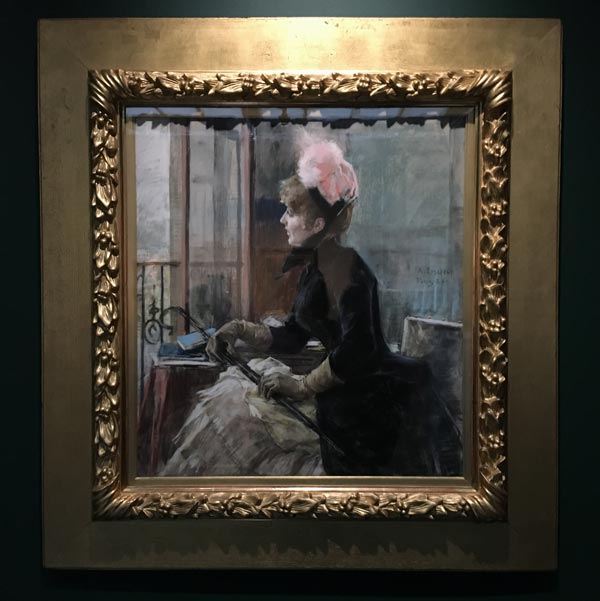
I was especially fascinated by the composition, and as soon as I started my painting, I felt that now it was coming: Kaunosielu! I had been planning to do a piece called that for a long time.
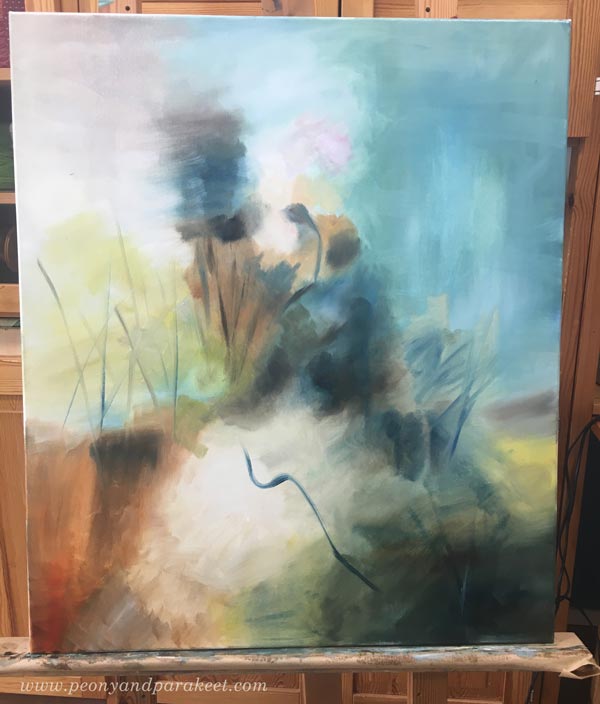
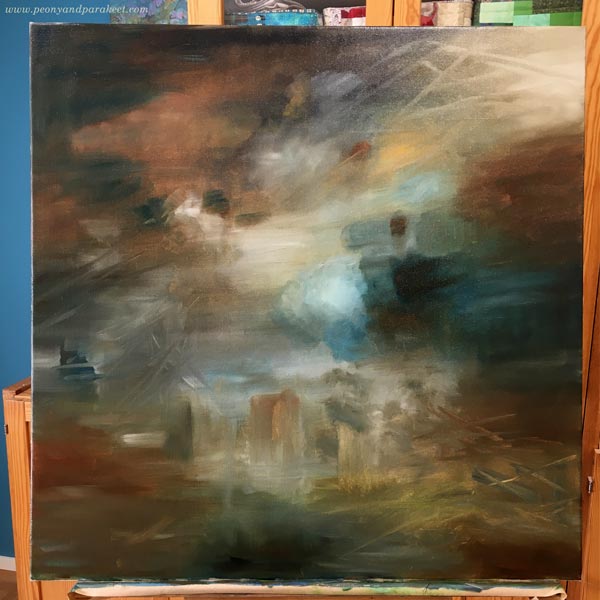
I wanted to incorporate haziness and vagueness into this painting, but at the same time use strong variations in darkness. With the big differences in color value, I wanted to create a sense of presence similar to Albert Edelfelt’s paintings.
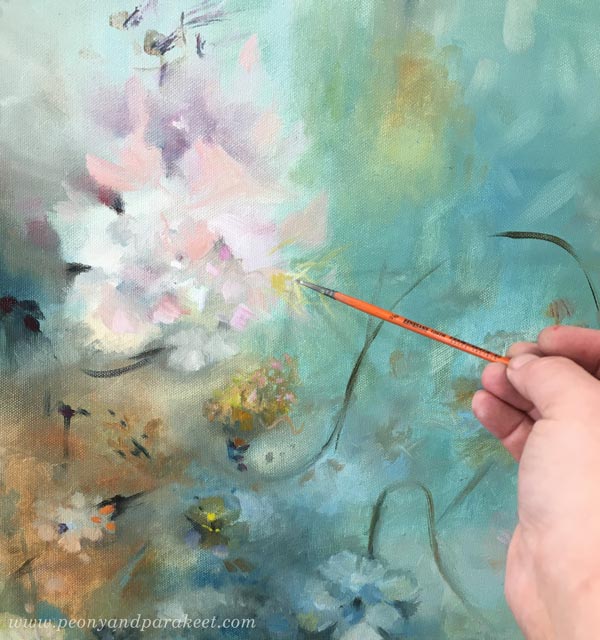
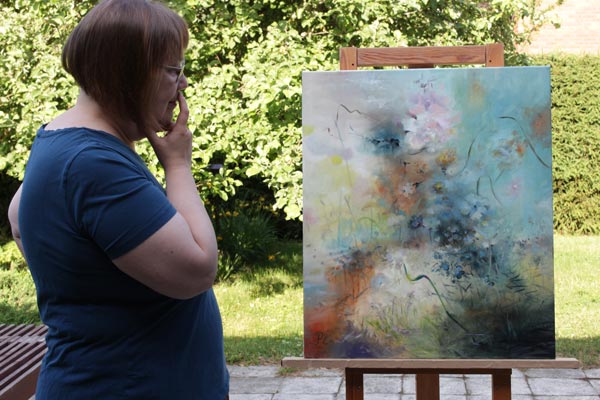
When I took this photo in the morning sun, it felt like the moment stopped and two Kaunosielus came into the picture.
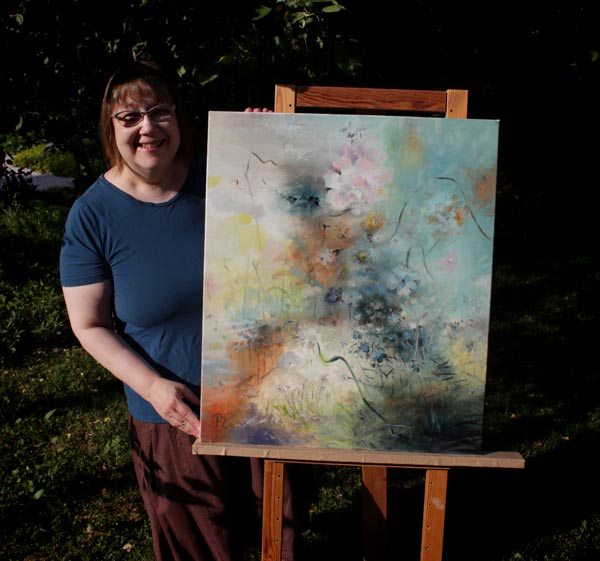
This photo shows so well how darkness and light go hand in hand.
This Week’s Challenges for Your Art-Making
- Empathize with the kaunosielu personality: Examine what it means to be an impractical but sensitive sielu – soul!
- Examine old portrait paintings. Dind the similarities between flowers and luxurious dresses.
- Be bolder with contrasts. Enhance your expression by combining pastel colors with really dark blues and browns.
- Experiment with soft pastels or oil pastels or mimic their effects with other art supplies.
I hope all these tips inspire you to start creating!
Everyday Life as an Artist
This post is about my current everyday life.
I was going to tell you that my life has been very ordinary lately: I wake up in the morning, take the dogs for a walk and start painting. In the evening, I practice my ideas with the ProCreate app or knit and let my subconscious work on art-making.
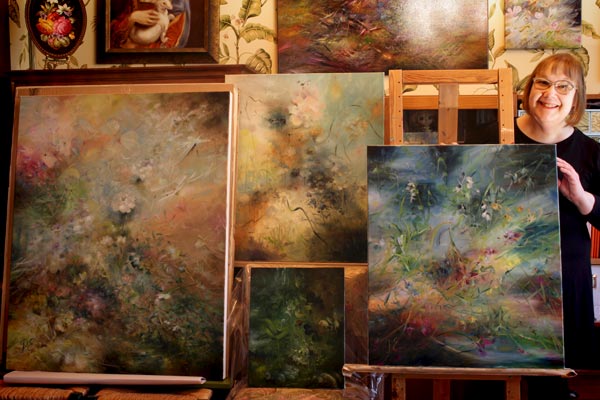
But if my dead parents heard about this life, they would claim that it’s not ordinary at all!
Visiting Exhibitions
Last week, I went to the big exhibition presenting the work of Albert Edelfelt at the Ateneum art museum in Helsinki. When I sat down to listen to seminar presentations about his work, my parents came to mind. They would have liked to see the exhibition. And they would be amazed to learn that I went to see it because of my work. I wanted to examine Edelfelt’s brush strokes in real life because I’m currently painting works for the show called “Taiteilijat Edelfeltin tunnelmissa – Artists in the Mood of Edelfelt.”
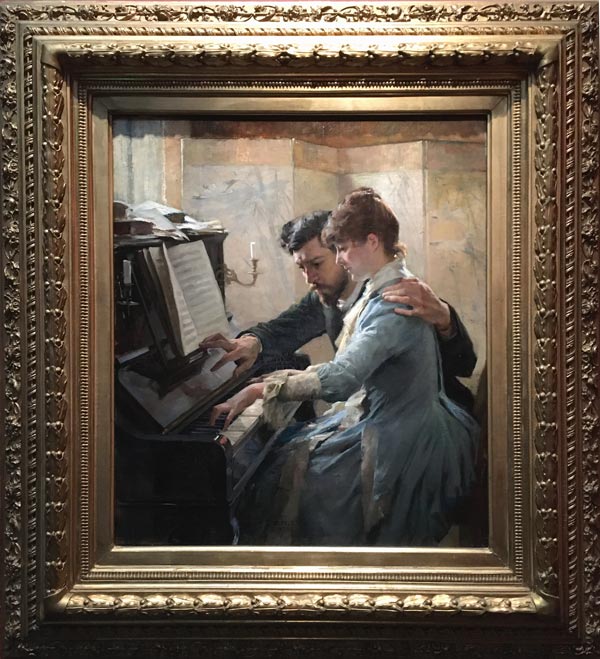
It’s important to me to see what other artists have created. It makes me feel connected, discover new techniques, and it inspires me to do things a bit differently than what I see. I often ask: what’s lacking if this would be my work? In the painting above, I would have added abstract elements on the top, depicting music.
Pressures of Everyday Life
All work becomes mundane when you do it systematically and goal-oriented. There will be pressures that you didn’t even think about in your dreams. You have to remember to order the supplies in time, plan the sizes of the paintings, the subjects, and the schedule for each one, pick up dog hair from unfinished works at the time of shedding, clean the paint tubes, wash the brushes carefully, wonder if anyone likes the painting and worry if it’s finished or not. Making a series of paintings is always a financial investment.
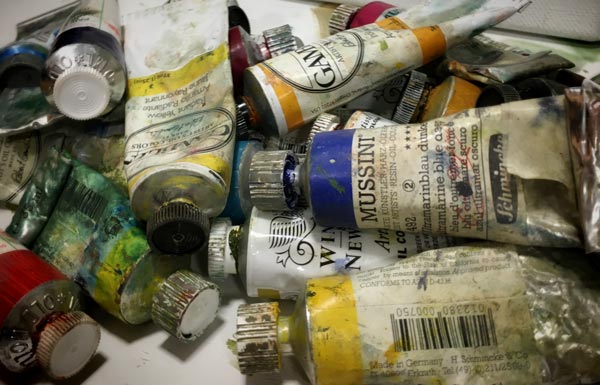
But when I am washing the floor from oil paint stains or doing something else mundane related to painting, I want to remember how wonderful it is to work on this project.
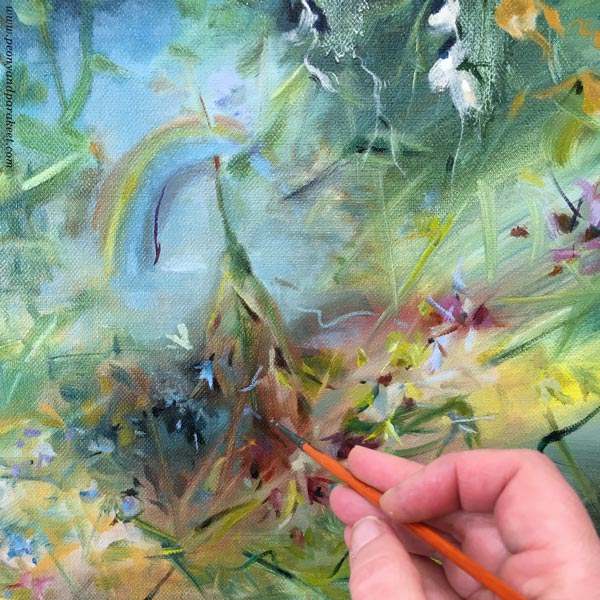
After all, I love art history, and the very thought that my paintings go to the place where Albert Edelfelt spent his summers is inspiring.
Everyday Ponderings
Lately, I’ve been thinking about why I always deal with longing in my paintings. I easily lean into nostalgia. Albert Edelfelt depicted people and landscapes realistically, but he also sometimes dealt with history and went back in time.
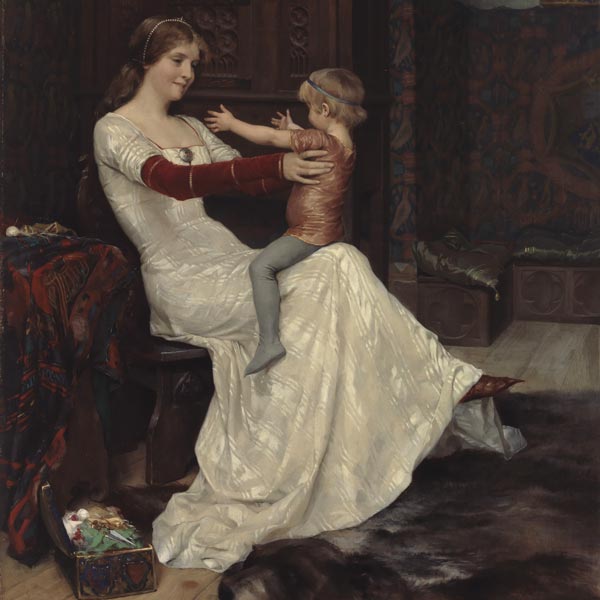
However, the difference between me and Albert is that he was interested in how things could have really happened and did detailed background research. I’m more inspired by how things could have gone differently.
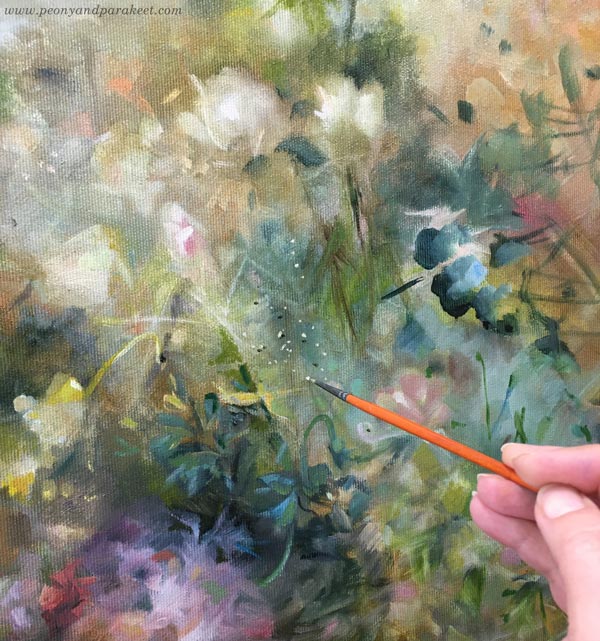
I don’t know how my parents thought my life would turn out. Many times it has gone differently than I would have guessed myself! Sometimes for good, sometimes for bad. Life as an artist is very unpredictable. Just when you think you have to stop, a new project comes up.
Everyday Task – Planning for the Future
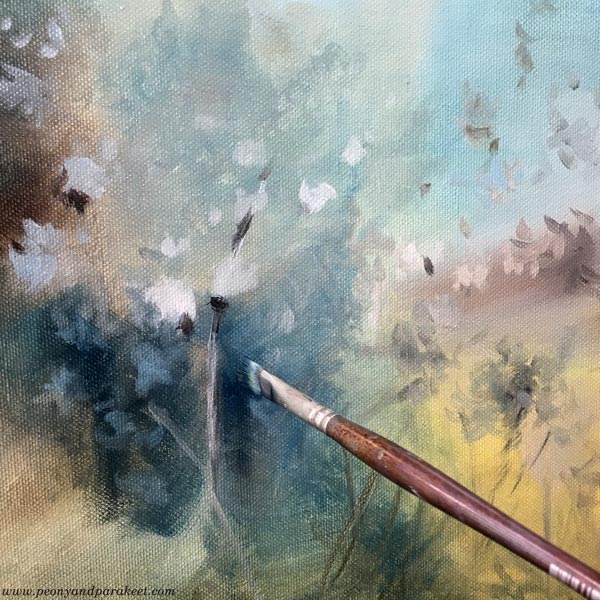
One of the hardest things in being an artist is to always move forward and think bigger. When this year’s plans are set, the next year begins to worry.
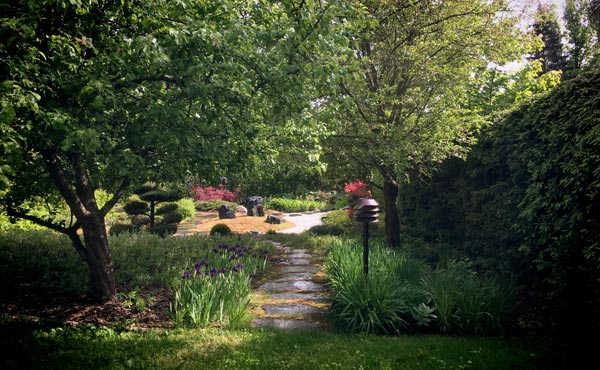
Artists are always in progress and very similar to gardeners. When a person says: “My garden is now finished,” you know that it’s the beginner speaking. Gardens are never finished!
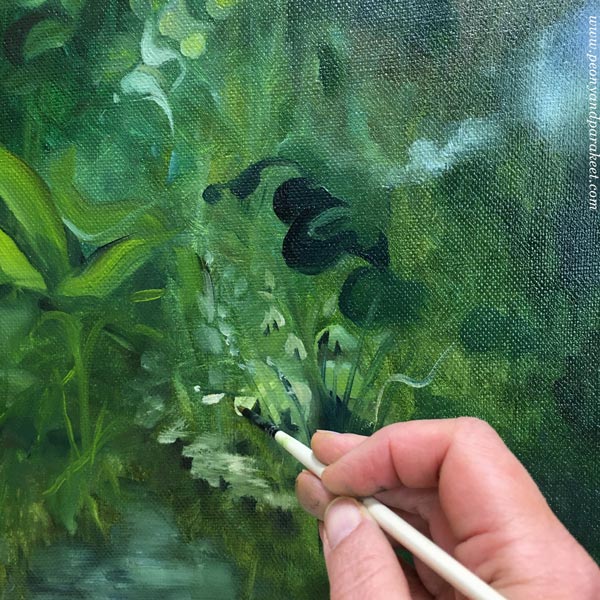
It’s the same thing with art – you will find yourself, but then you will change and have a new you to find. I try to get the most out of this everyday life because it too is about to change for sure.
Gold Caches of Your Artistic Journey
This week, I talk about the balance between following others and doing your own thing.
– Do what everyone else does.
That’s what my mother often told me when I was a child. Her point was to encourage me to learn and be part of a crowd – important skills, but I hated that phrase. As if you shouldn’t deviate from the path, stop, or run faster!
As an adult, I learned that life is not just about moving on your own. Everyone needs public transport.
Helsinki Bus Station Theory for Artists
Have you heard about Helsinki Bus Station Theory? It is particularly familiar to us southern Finns. Most of the buses in Helsinki go a long way on the same road until they take a different direction. “Stay on the bus, don’t hop off too soon,” we advise. This also applies to many things in life.
As artists, we don’t want to be like everyone else, but to hop off and find our own thing. And yet, to get to our own remote area with our treasures, we have to sit on the bus for quite a while. If we leave too early, we won’t find the caches, because they are much further away than we initially thought.
Traveling with Companions
We all have artistic talents that are strengthened by the journey together. This is why I teach classes.
If we get off too early, our talents won’t emerge. Ingenuity turns into chaos in the eyes of the viewer. Intuitiveness makes us do ordinary things because we can’t express its nuances. Sensitivity appears as unnecessary cautiousness. Analyticity produces a rigid impression and our personality is covered in an internal struggle about what the image should look like.
Through art history, I have understood that traveling with a companion can be enormously inspiring. As artists, we are always part of the past generations. When we look at old paintings, we can have a dialogue not only with ourselves and with our current teachers, but through our imagination, also with the masters themselves.
Gold Caches
Before I started this painting, I was looking at a portrait of Louis Pasteur by Albert Edefelt. Did Edelfelt guess how important a person Pasteur would become? I told Albert that we still benefit from Louis’s inventions. So, his glass bottles and notebooks were like gold caches.
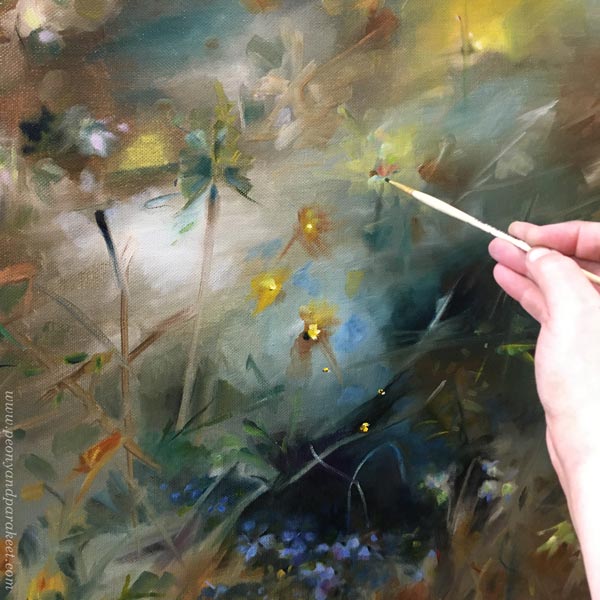
My gold caches are found in nature. When I walk on the wide path of a nearby park, I often turn my gaze to the shadows. When the sun hits there, a humble plant suddenly finds itself at the center of the scene.
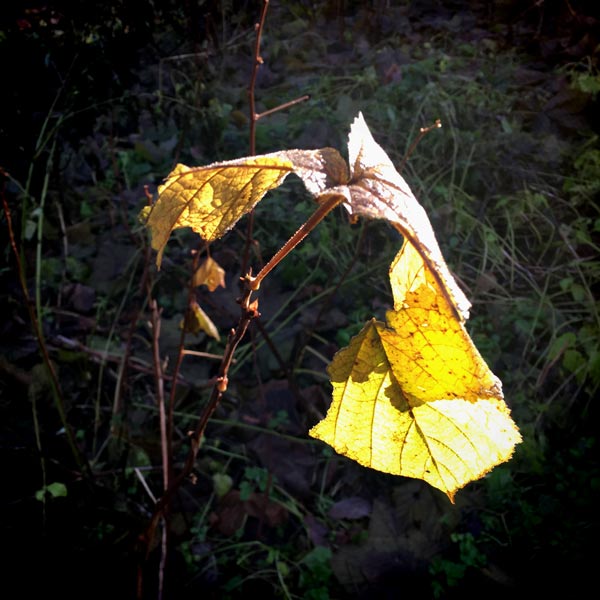
When that happens, I don’t only stare at the star of the show, but look around and notice all kinds of other wonderful things.
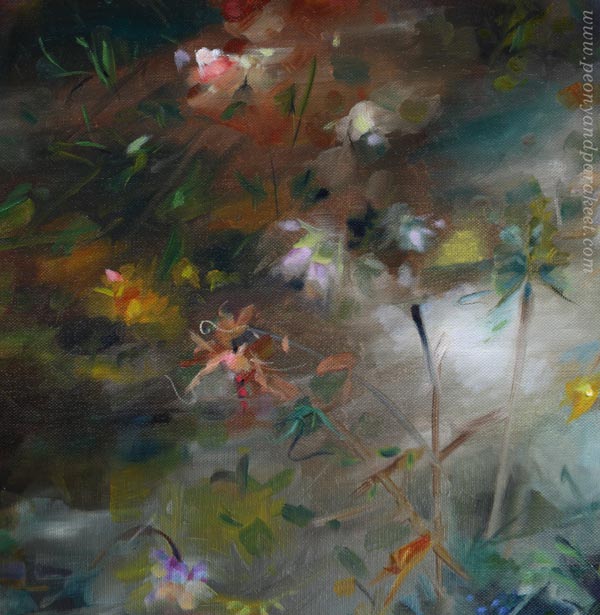
As a child, I already knew that it is not always good to march on and act like everyone else. It just has taken all my life to express that by painting.
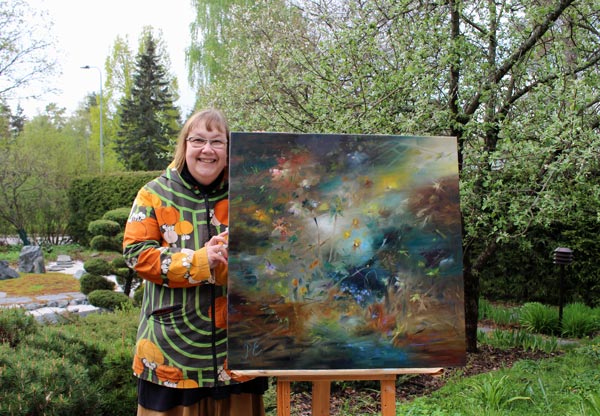
Did you know about Helsinki Bust Station Theory before? Where your gold caches could be? What do you think about all this?
Abstract Birds
There is a saying that if you don’t know what else to add “Put a bird on it!” But this week I want to talk about birds as the main object of the picture, not just as a decoration. This blog post is also about abstract birds and their connection with realistic bird art.
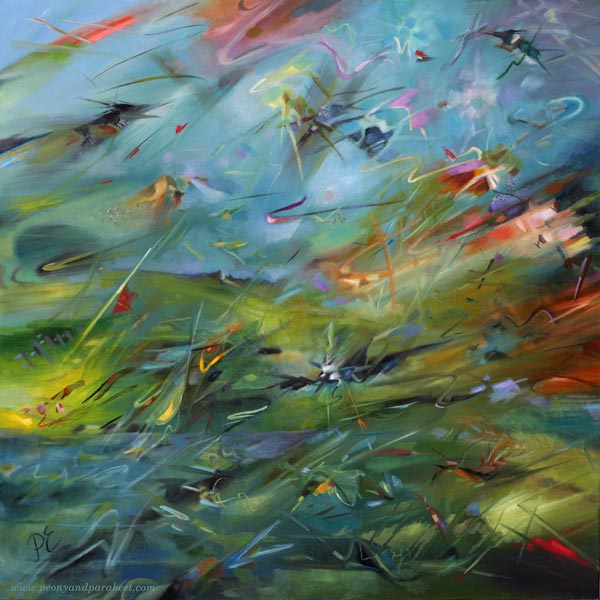
Here’s my new painting, also bird-themed!
The Love for Real Birds
As a child, I saw a lot of birds and at some point, I started to learn to identify them. Ornithologist sounded like a great word and I have always been fascinated by people who are extremely enthusiastic about something. I learned about birds from a bird book I got from my parents, which was illustrated with drawings. I also drew birds myself, and it’s quite easy to recognize them once you’ve once drawn every detail.
Since those times my knowledge has unfortunately deteriorated, and I never became an ornithologist! But even though I’m no longer good at identification, I know birds as animals well. After all, I have had pet birds for decades. At the moment I have two budgies, Leonardo and Primavera. Over time, my interest in wild birds has started to return and a dream has surfaced, which the newest painting “Kingfishers” also tells about.
Here’s how it started! Wild strokes here and there.
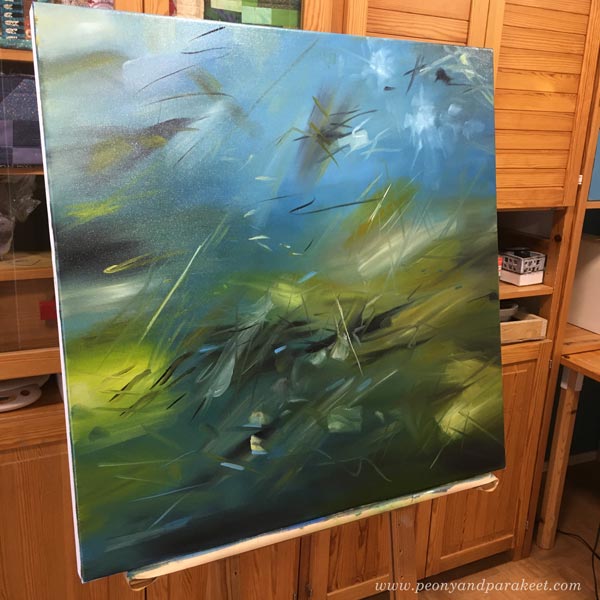
I think most of us have some relation to birds – what’s your story? Could you bring more of that to your art?
Dreaming of Birds
Ever since I was a child, I’ve wanted to see the kingfisher. In recent years, I’ve started imagining how one would sit on top of our mailbox on a summer’s day when I come down the hill towards home. And this spring I’ve started imagining kingfishers flying around the ditch along my walking path. I know that these are unlikely to come true, but they are still wonderful thoughts. Kingfishers are very rare here in Finland.
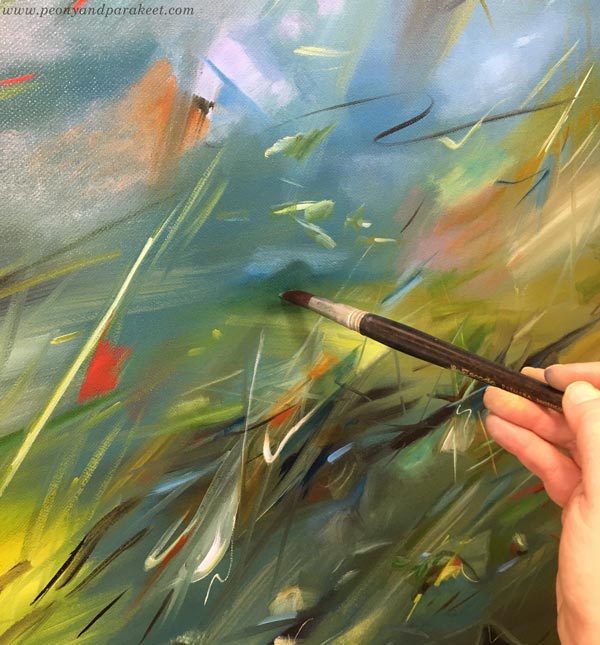
So when I started a painting inspired by the ditch, I wanted those kingfishers there. After all, I had already written “kingfisher” in my notebook earlier this year when I started planning the new series of paintings.
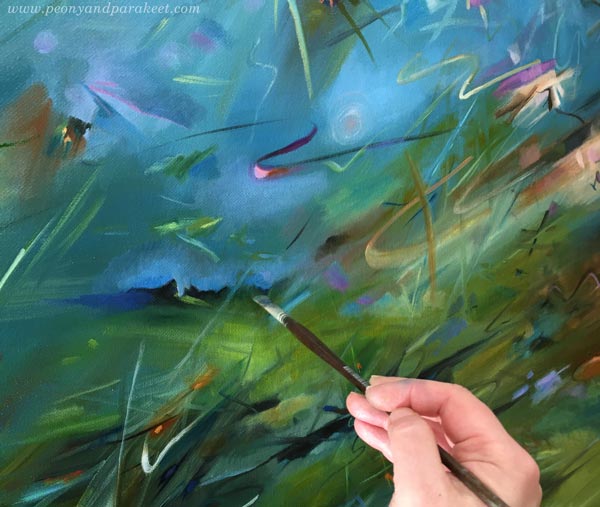
And when I researched the subject more, I found out that there are about 120 species of kingfishers. So I could paint many different ones in the same picture!
Birds by Von Wright Brothers
This month, I want to blog about art history too. And as a Finn, I have to introduce the brothers Magnus von Wright (1805–1868), Wilhelm von Wright (1810–1887), and Ferdinand von Wright (1822–1906). One of the most famous paintings here in Finland is “Taistelevat metsot”.
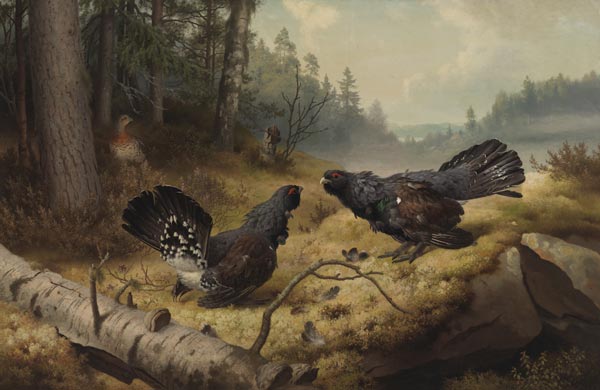
Von Wright brothers drew and painted huge numbers of birds and are remembered as bird artists. I saw this pigeon painting in the Ateneum Art Museum in 2018 when they had a big exhibition of von Wrights’s art.
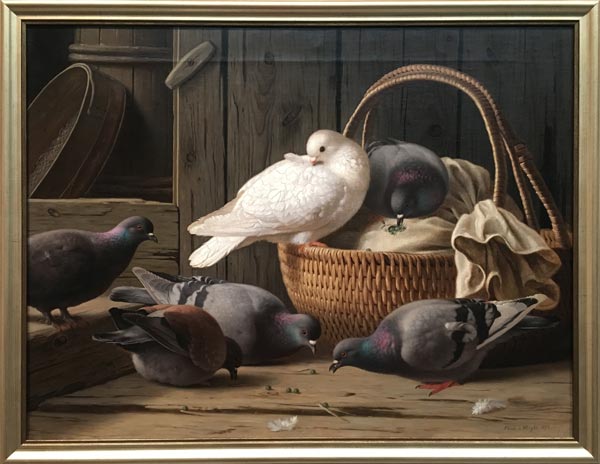
For the Von Wrights, the recognisability of bird species was essential, and they also depicted birds from the perspective of their authentic living conditions and behavior.
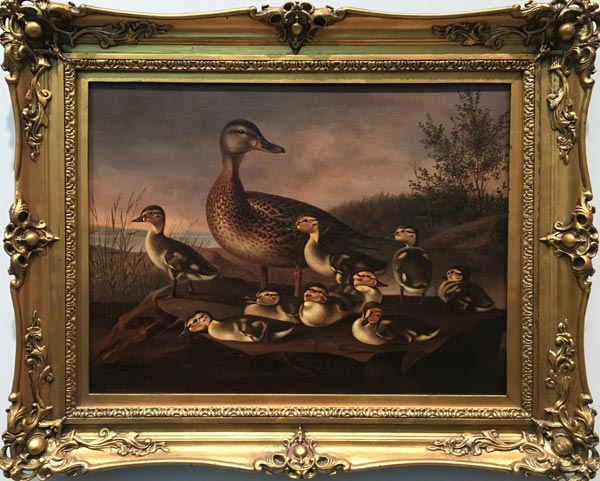
The paintings were very stylish and very aesthetic, but because of their accurate details, they also worked as scientific illustrations.
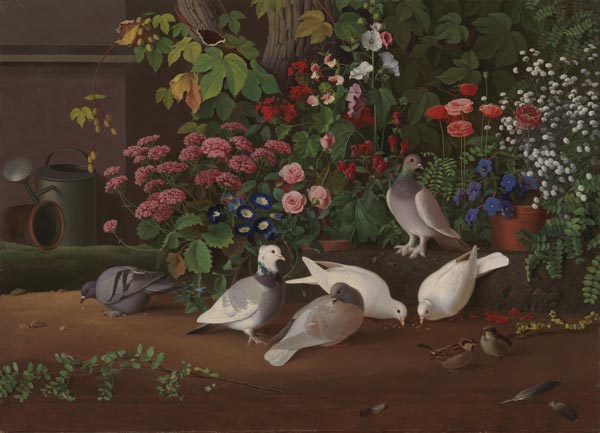
Unlike the von Wrights, I am not interested in the exact description of bird species, but rather in describing the vitality of life through birds.
Flying Birds and Their Abstract Shapes
I am especially fascinated by the ability to fly and I always try to look as closely as possible when I see a bird flying in the sky. When the bird flies high, its image breaks up and becomes an abstract composition. The flying bird serves us modern art in the middle of the mundane reality. A museum experience without visiting one!
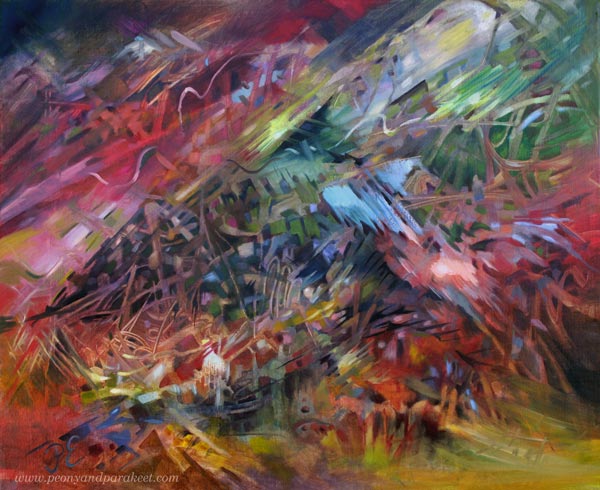
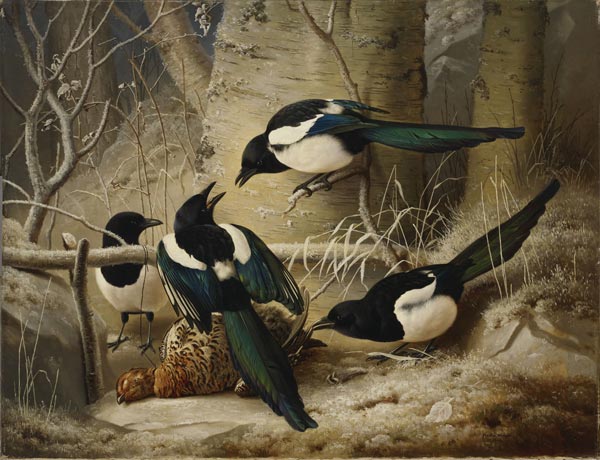
I often see finches and magpies here where I live. I think magpies are really beautiful birds and this painting of Ferdinand von Wright is fabulous even if its theme is a bit brutal.
Many blackbirds live in our garden and I have also painted them in 2021.
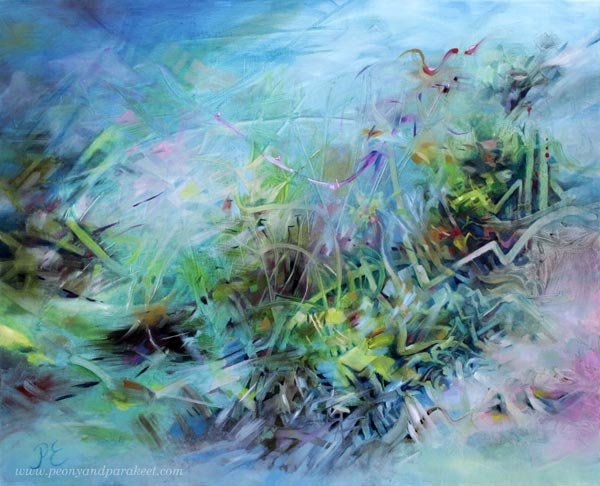
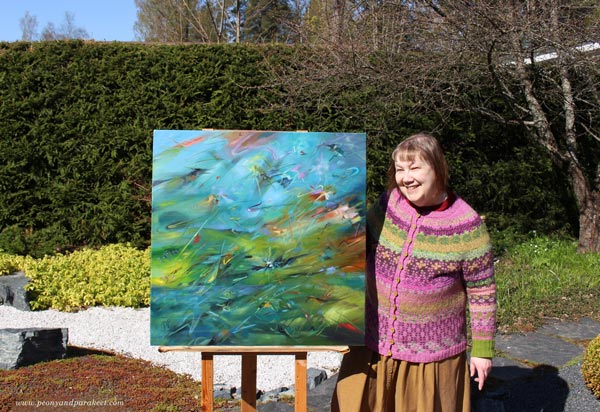
I find it fun to adjust abstract shapes so that they express the essence of the bird. Here’s the Kingfishers painting again, photographed by my husband in the front garden.
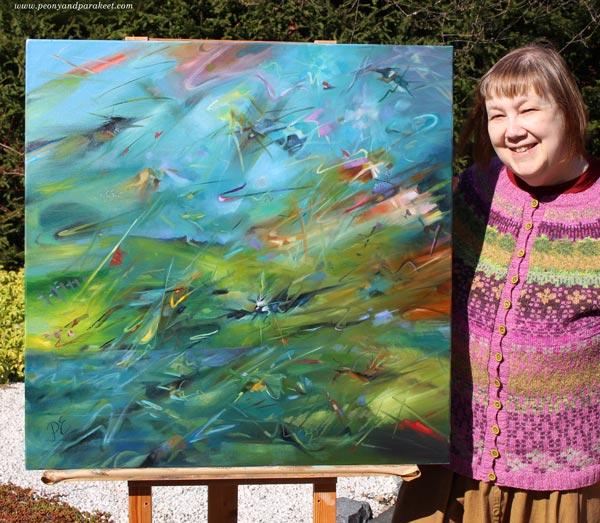
And here are some pictures of details so that you can examine brush strokes and abstract birds more closely.
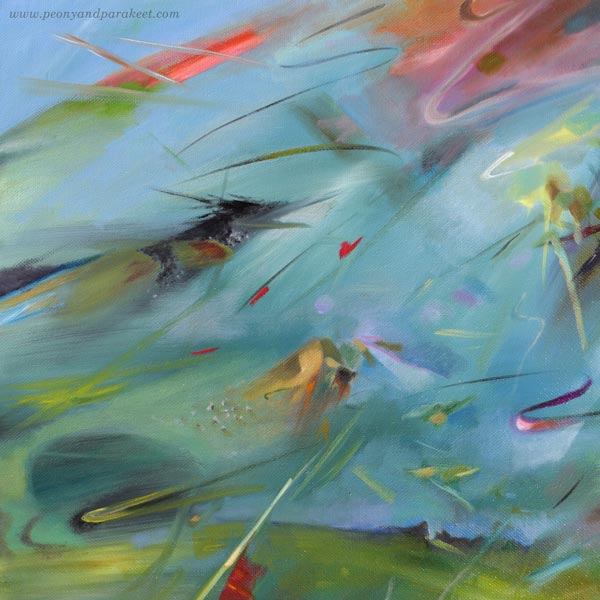
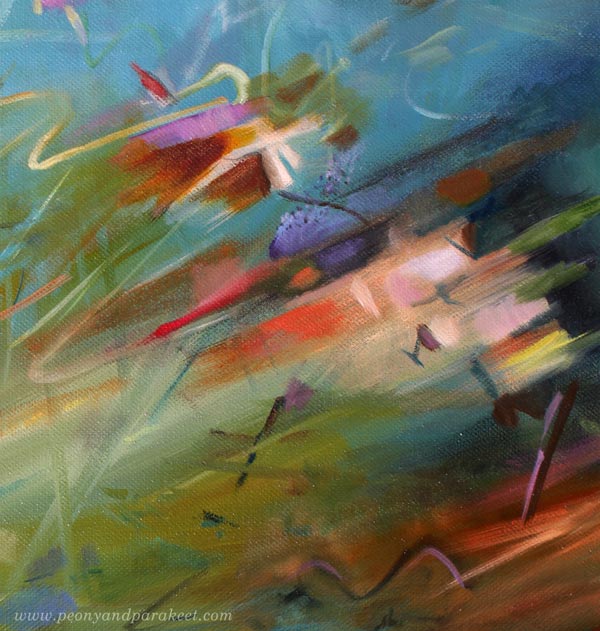
If you think about kingfishers, painting them can’t be just about flying near a stream, it has to be about catching fish too. To bring that up, the bird on the left below looks a bit like a fish.
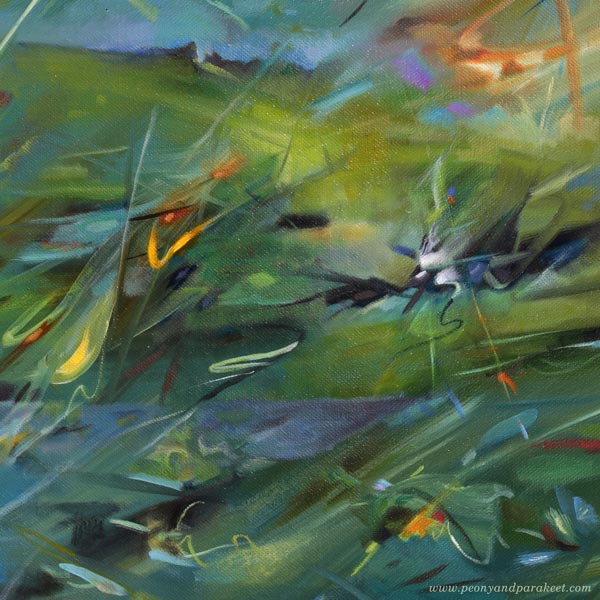
Not So Abstract Birds to Get to Know Them
Of course, a flying bird can also be created so that it’s not abstract but has many decorative details. This project is from the course Animal Inkdom and is drawn in several sessions piece by piece so that it’s more manageable and fun.
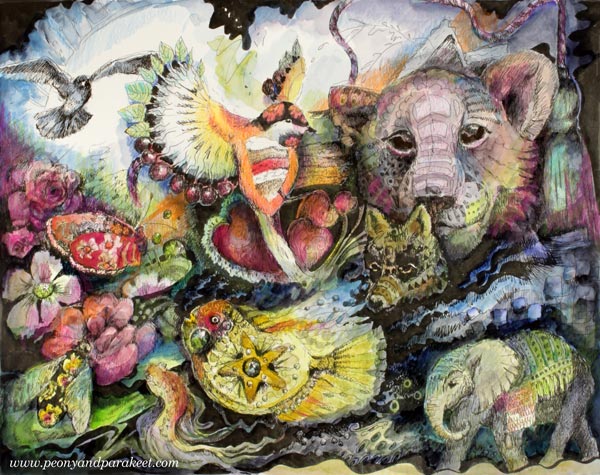
In the center is a bird that flies into the animal world. When re-examining this, I hope that over time I would paint all kinds of animals in my abstract style. It is often necessary to study the animal for a long time before an abstract can be derived from it.
The Connection Between Letting Go and Not Letting Go
So if you wish that your expression would be freer, one way is to go deep into the subject. Not just to look at what a kingfisher looks like, for example, but to live its life, experience a deep identification with it and look for forms that express that emotional connection.
Often both the forms and the connection are first found through creating art that is less abstract and more accurate. I think that it would have been quite easy for the Von Wright brothers to become abstract bird artists, but the time wasn’t right for them. They left a legacy though, and I am one of their followers.