
Why History, Computers and Art Belong Together
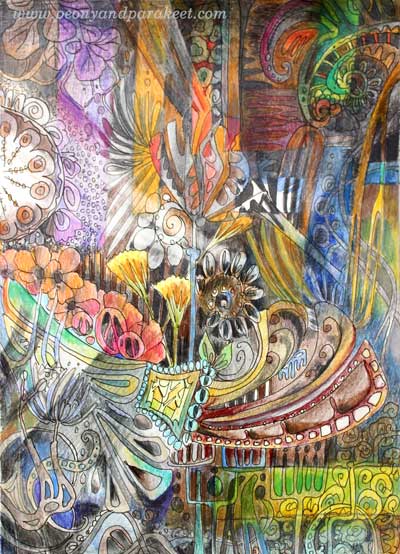
This art journal page is about two things that are close to me: art nouveau and computer engineering. With my background in technology, many find it surprising that historical styles like Art Nouveau fascinate me so much. And vice versa: why someone so interested in history, has studied and worked with computers.
Inspiring Periods of World History
For me, history, computers, and art have a natural connection. Think about the era of Art Nouveau: the end of 19th century and the beginning of 20th century. It was the era of the industrial revolution when many technical inventions were born. Also, at the same time, new kind of art was emerging. For example, Virginia Woolf wrote books using the stream of consciousness, Vincent van Gogh painted Starry Night, and Charles Rennie Macintosh designed a grand building for Glasgow School of Art. After inventing computers, we are experiencing another great era with a lot of innovations, the internet, and smartphones among others. I am certain that it will be seen as one of the most exciting time in the world history. We have new tools for art and design and we if any can use art to look at what the future could hold.
The Stream of Consciousness – Creating a Coloring Page
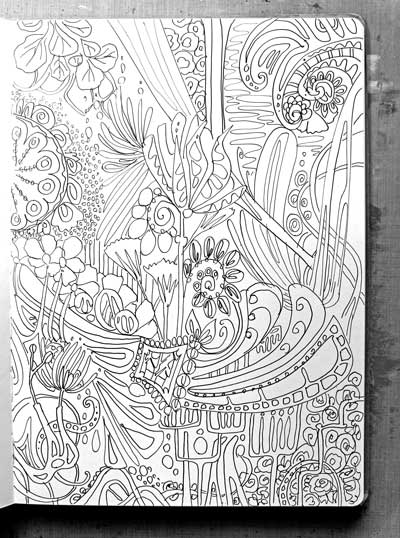
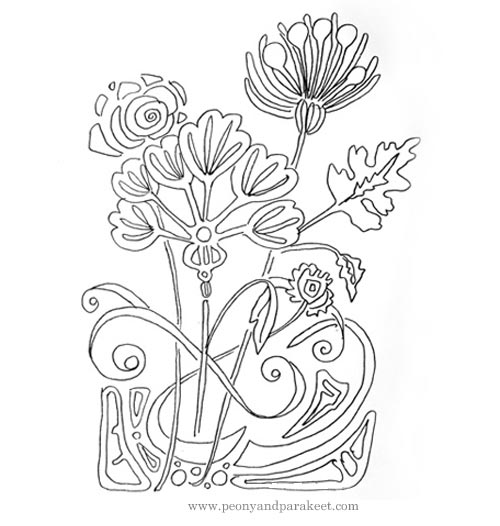
When I started to create the art journal page, I thought about the two eras and their similarities. With a black drawing pen, I began drawing art nouveau style shapes. It was exciting to think about modern things while drawing in the old style. It is very inspirational to stay focused on two things that have both similarities and differences.

It is relaxing to draw like imitating Virginia Woolf: using the stream of consciousness. Rotating the page makes it easier to keep the stream flowing.
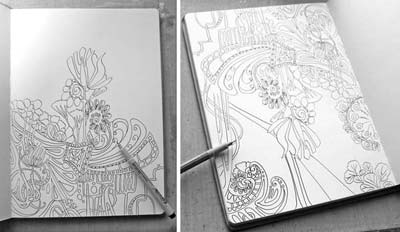
Coloring books seem to be popular at the moment. We art journalers can make our own! Here’s my page before coloring.
Past, Present, Future – Art Is an Equation
When I studied computer engineering, I had to understand a mathematical equation that was used widely to control technical systems. It was called Kalman filter and it was composed of three parts: past, present and future. I found the philosophy behind the equation most fascinating: to get better at what we do, we must understand the past, stay grounded to the present and be brave enough to predict the future.
Art can be our equation. We can use art to ponder on what has happened to us. We can use art to record the present. But most importantly: art can make us get off the ground. We can predict what the future will hold by taking old and current stuff and create new combinations. We can imagine what Virginia Woolf would do in the 22nd century and illustrate it. There are no limits and we already have most of the information.
That’s why I think that history, computers and art belong together. They are all parts of the same equation.
Adding New Dimensions by Coloring
To bring today’s graphic shapes to the work, I drew rectangular areas on the top of the drawing. Then I colored them with a different color scheme.

Finally, I expressed how past can bring us the future by erasing color with a light strokes. The light comes from the past. With the past, we can see the future.
Tell me, what have you picked (or would like to pick) from the past to your art?
Create your own colored version of this page!
>> Buy Coloring Freely!
Let Unconventional Inspire You

You know I love beautiful and decorative things. But the more I create, the more I feel that creating art should be expression first, aesthetics second. This watercolor collage is called “Leftright Wrongright” and it is about how sometimes the old wrong and unconventional can be the new right.
Rubber Stamp Art
If you think of experimental and avant-garde, would you ever consider using rubber stamps? In that context, they are the most boring thing. They are the absolutely wrong choice when you want to create unique and advanced art. But as my mission was to express how wrong can be right, I just could not resist taking the risk and using them! I painted the background with watercolors and then started stamping.
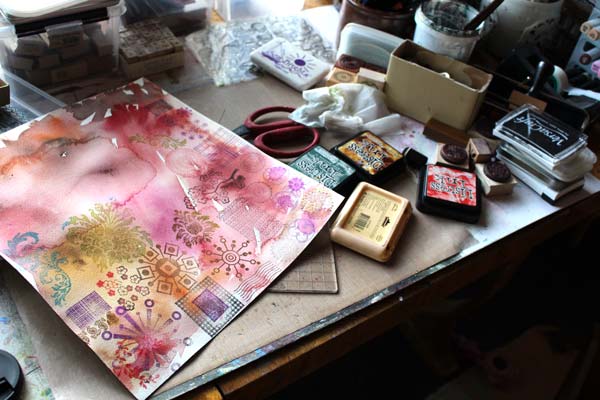
I only stamped once with each of the stamps. That way they were seen as individuals, not as a bunch of clones. I have used this principal before too, see Can Rubber Stamping be Art and Make Samplers to Save Bits and Pieces.
Watercolors
Watercolors are my trusted friend. They make the best backgrounds but also, they make rubber stamps look much more interesting. After the whole background was covered with stamped images, all different from each other, I added water and brushed the water-based ink to blend with watercolors.

With the big brush, I doodled this and that thinking fierce fully about destruction and bravery.
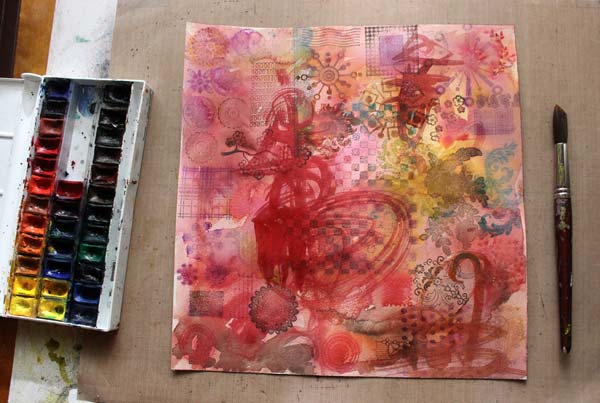
With a smaller brush, I added details and enhanced them with colored pencils.
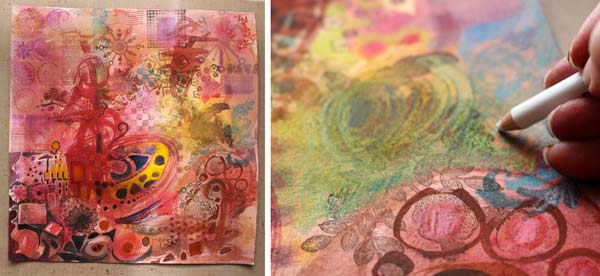
Imitating Rubber Stamps
To make the stamped images even more individual, I added hand drawing to make few of them bigger and more handmade. A thin drawing pen is great for imitating rubber stamps that have delicate details.
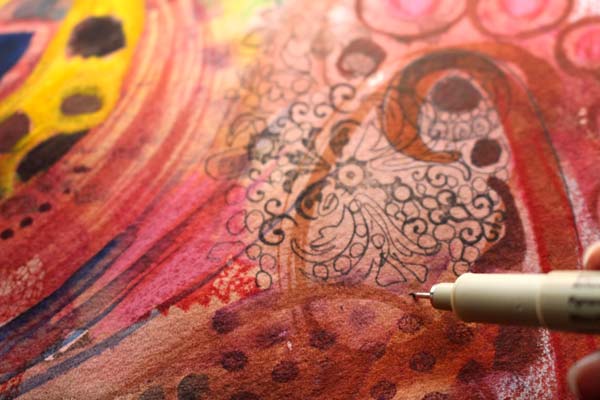
Finishing
When I worked with this artwork, it became clear to me that the final touches are crucial here. I should not only do what I usually do but add something that is against the rules, disrespectful even. First, I doodled with a white gel pen and let the doodling look a bit dreadful. Then, I grabbed a piece of paper, painted red and yellow with heavy acrylic paint. The unsophisticated color and the clumsiness of the shapes when I cut it made it look so wrong.
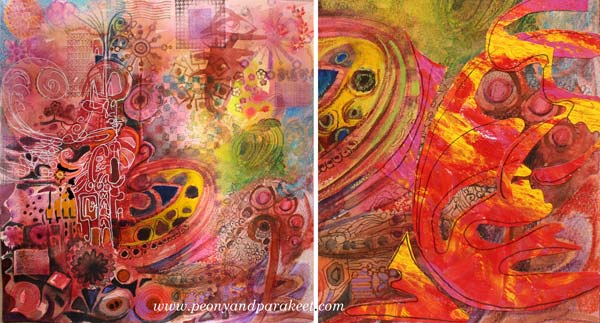
But I finished this artwork with a new attitude. As I wanted to express that sometimes we need to do things that make us feel uncomfortable, I needed to break my ordinary rules. I added few rough elements without over-decorating them. They are the wrong that makes the right spin. They make me ask: do right and wrong exist at all when creating art? If we think that unconventional is wrong, are we denying the true power of art and where it can take us?

Hopefully, this inspires you to add something wrong to your art, and make it right!
Let me be your art teacher: Subscribe to my weekly emails!
Intarsia in Watercolor
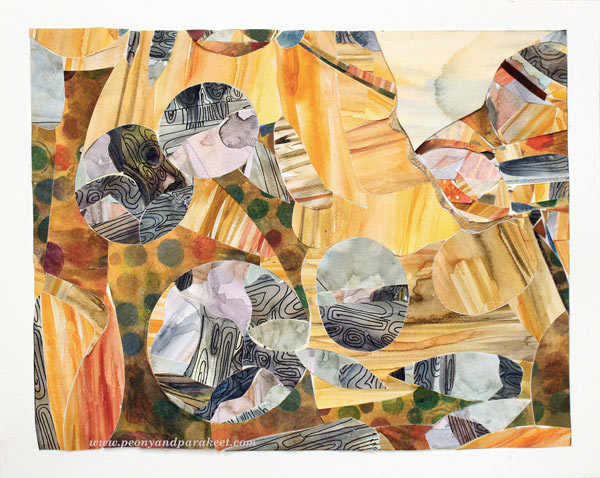
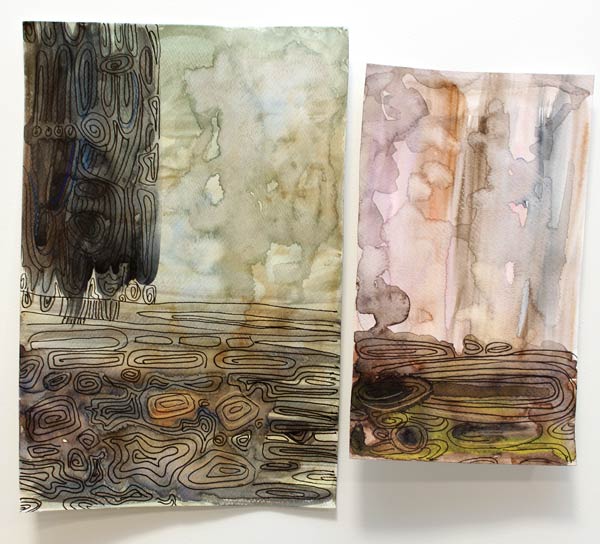
Last week I visited a fascinating exhibition. The gallery displayed Yoshinobu Nakamura’s wood intarsia art. Yoshinobu Nakamura is a Japanese artist living in Finland. He creates masterpieces by combining tiny wooden pieces. I was deeply impressed how the characteristics of various tree species and specimens showed in his work. I wanted to try the subtle color scheme and some kind of intarsia myself. And I did, only using watercolors and watercolor paper instead of natural wooden blocks!
Love for Tiny Pieces
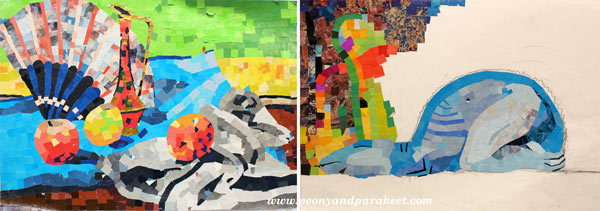
Speaking of tiny pieces of paper, I have always loved them. When I was a teenager, I cut the pieces from magazines and made a mosaic type of work. Some of them never got finished as they were painfully slow to create!
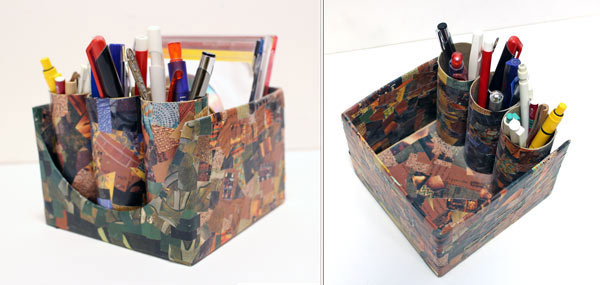
Years later, I made a pen holder for my husband using paper scraps cut from magazines. I carefully covered every surface that could be reached and finished the penholder with gel medium. It has survived at least ten years!
Watercolor Paper Intarsia
But this intarsia project was going to be different from mosaic work. I would not only cut the paper into small pieces but also adjust each piece in line with others! I started the project by painting the papers. For some of the painted areas, I also added lines resembling wood grains with a black drawing pen.
Next, I tried cutting the pieces. I discovered that they have to be put on top of each other, right side up. The cut line will then fit perfectly.
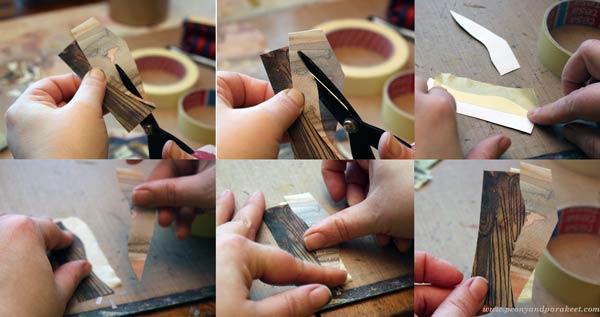
I used masking tape to attach the cut pieces together.
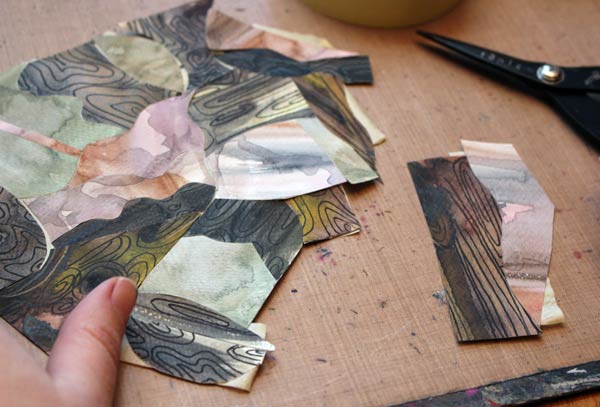
The big piece that I made looked pretty interesting. But it looked even better when the geometric shapes were cut out of it!
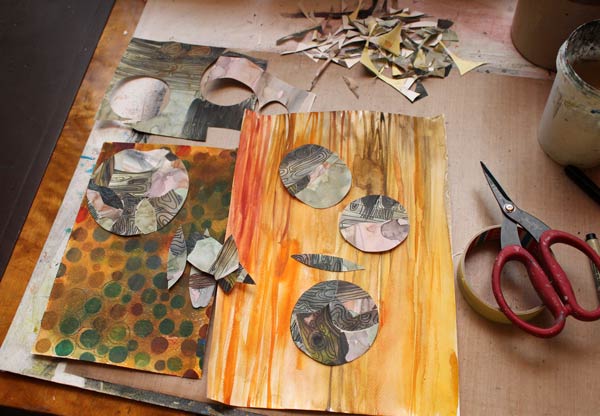
I painted one watercolor paper to look like pine wood. The spotty paper was found from the stash. After hours of cutting and adjusting, the artwork was finally finished. See, all the papers are on the same level, not on top of each other! With intarsia technique, you can use thick papers for collage art!
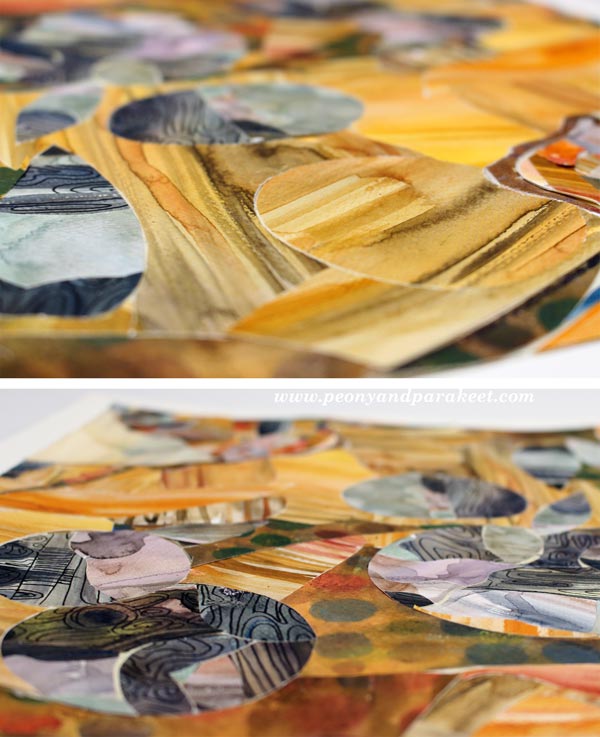
My belief in watercolors continues to stay strong. I love how easy it was to imitate wood with them!

Once the artwork was put together, I attached the piece, with masking tape background and all, onto a white watercolor paper using gel medium. I think I call it “Rolling Stones.” Have fun with this technique!
Let me be your mentor in art: Subscribe to my weekly emails!
Drawing in Art Nouveau Style
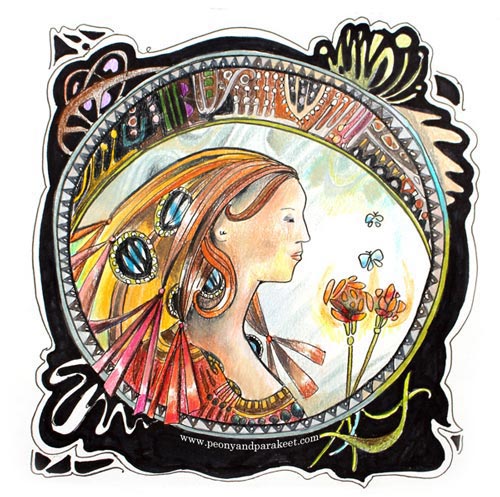
If I had a time machine, I would have no doubt where to go first. I would press the buttons and whoosh … enter the beginning of 19th century. First I would want to meet one of my favorite authors, Virginia Woolf, then have an evening with Charles Rennie Mackintosh and his wife Margaret. Maybe another brilliant architect Frank Lloyd Wright could join us. Then I would spend a whole day with Alphonse Mucha, another with William Morris … There are so many to talk to and so many places to go. I would need weeks for my visit!
From Arts and Crafts movement to Art Nouveau and Art Deco – my love for art and design is mostly originated in those historical periods. I often try to hide it and be open to new ideas and various styles. But if I just need to draw something quickly or if I can choose freely, I am all for Art Nouveau.
Art Nouveau Drawing – Watch the video!
I am passionate about drawing and styles. I believe that finding your own style, increases the joy of creating. Last week I wrote that down and then began to ponder: could I share more Art Nouveau in this blog? So, here you are, in the middle of Art Nouveau themed post and at the beginning of the video blog post where I will show you how I draw in Art Nouveau style. But more than about Art Nouveau, this video is about the importance of doodling and sketching. Promise me, never stop doodling!
Did you notice my William Morris curtains at the beginning of the video? Tell me, what are the styles and artists from the past, that you admire?
Doodle with Art Nouveau in mind: Buy Doodled Luxury!
Color my Art Nouveau drawings: Buy Coloring Freely!