
Creating Small-Sized Art
Creating Small-Sized Art – Watch the Replay of the Live Broadcast!
Artist Trading Cards
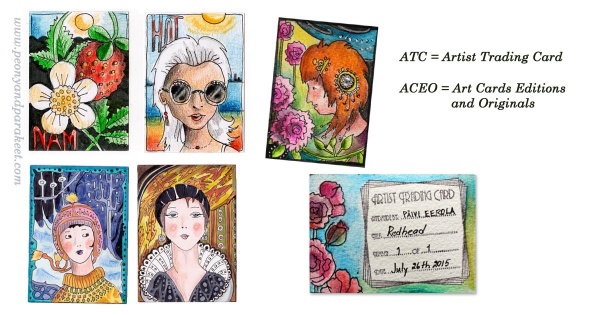
>> Pointillism in ATC cards – Instructions
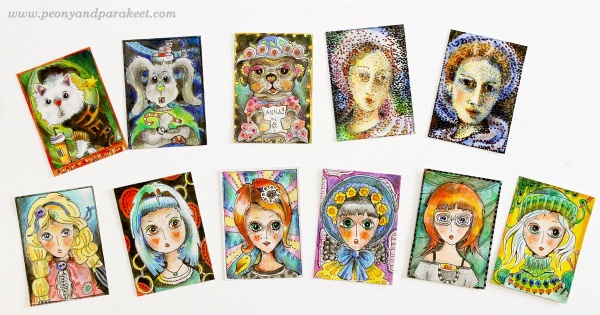
>> My drawing class for those who can only draw stick figures!
Small Watercolor Panoramas
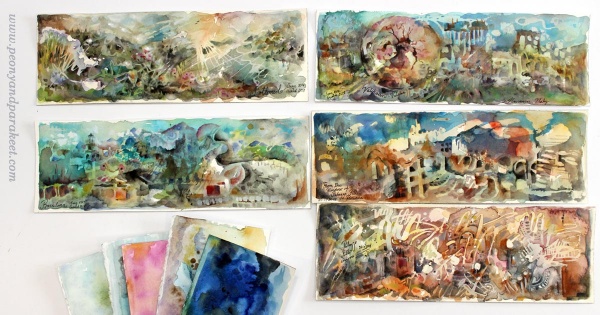
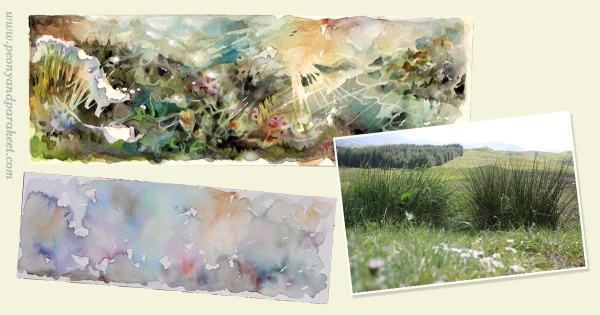
See more in this blog post: Watercolor Panoramas to Express Travel Memories
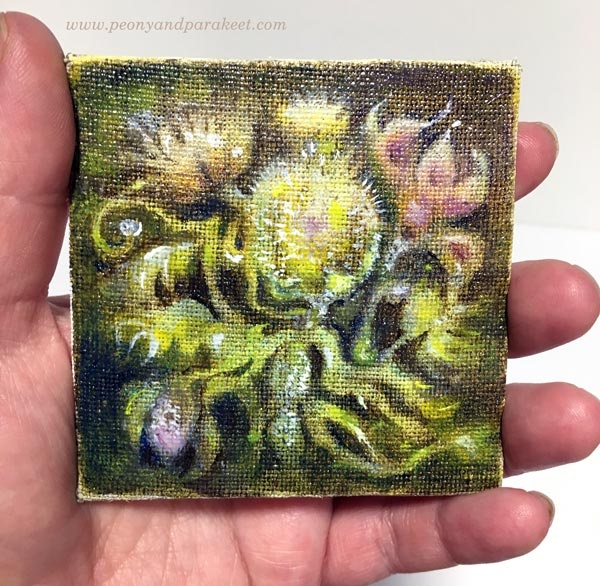
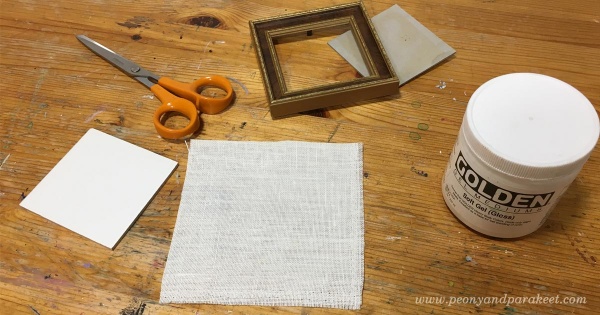
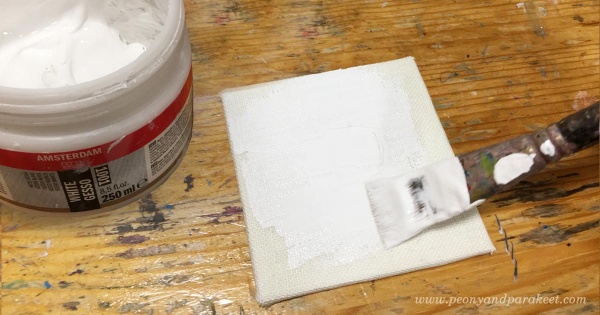
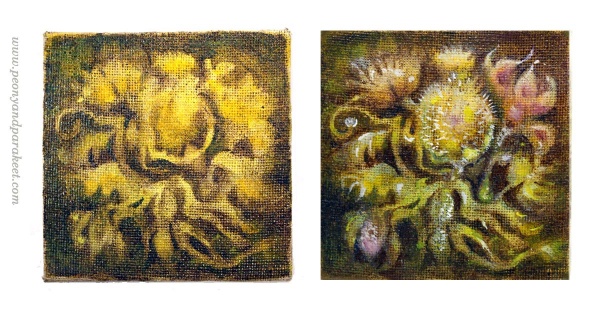
Creating a Small Canvas Painting

>> Add richness to your artistic expression – Join my art community Bloom and Fly
Eeva Nikunen’s Miniature Art
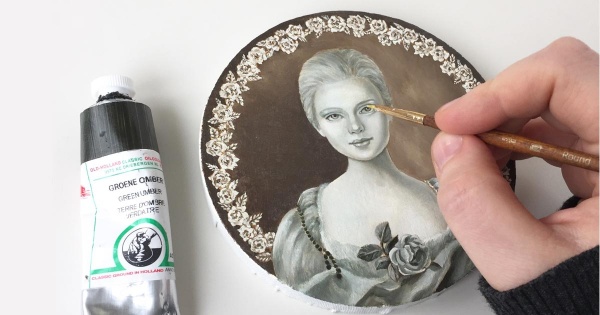
See more of Eeva’s detailed art at eevanikunen.com
Next Week: Eeva Nikunen
Resilience – How Eeva Nikunen Managed to Create a Series of 50 Drawings
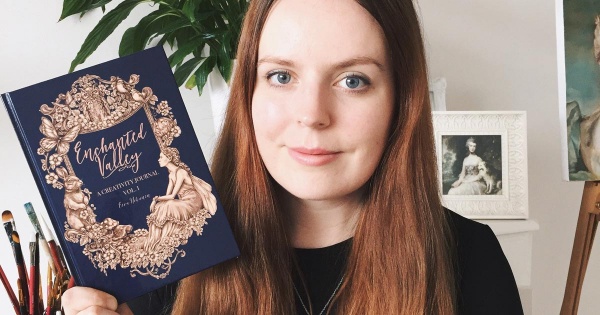
I will interview fantasy artist Eeva Nikunen on May 3rd 6 PM Finnish time (4 PM in the UK, 8 AM PDT) This is another live broadcast of my blog, and everyone is welcome to listen to us. Eeva has just launched a self-published journal of over 50 detailed pencil drawings. We will be talking about resilience and what she has learned from creating a series and how she has been able to carry through the project all by herself.
If you can, come see us live:
>> Save your spot here!
Little Assistants – How Pets Help with Art Making
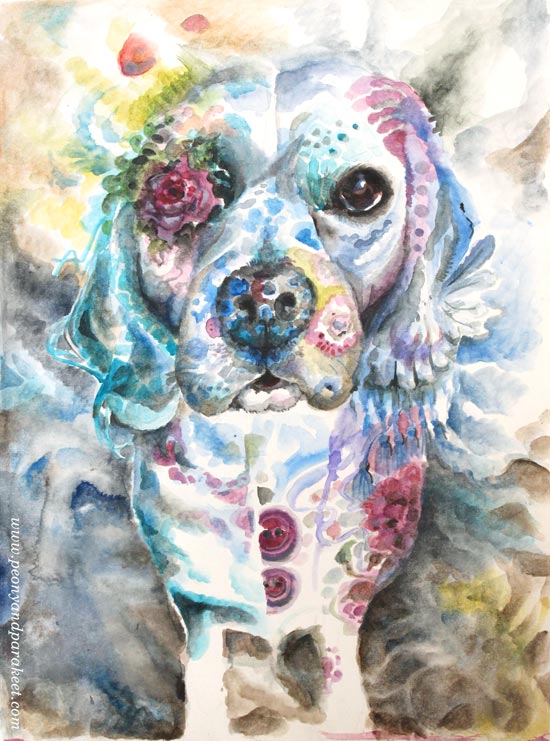
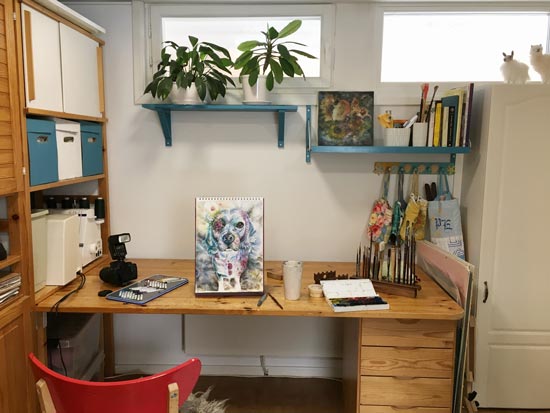
I work at home with two dogs and four birds. My husband leaves early in the morning and then there are only us, the gang of seven. One of my little assistants is a beagle called Stella, a very cute little angel to every human but I think she would describe herself as a hungry hunter and would order a very different portrait than this one!
Gathering Inspiration
First, I take the dogs out for a walk. I solve most of my work-related problems and make plans in this private morning meeting, happening inside my head. In the afternoon, there’s another walk, but that’s not as productive as the one in the morning.
I always carry a phone with me so that I can take photos if I happen to see something inspirational and artistic. As a result, I have a lot of pictures that are not so great or meaningful to memory keeping and such, but that look abstract art to me.
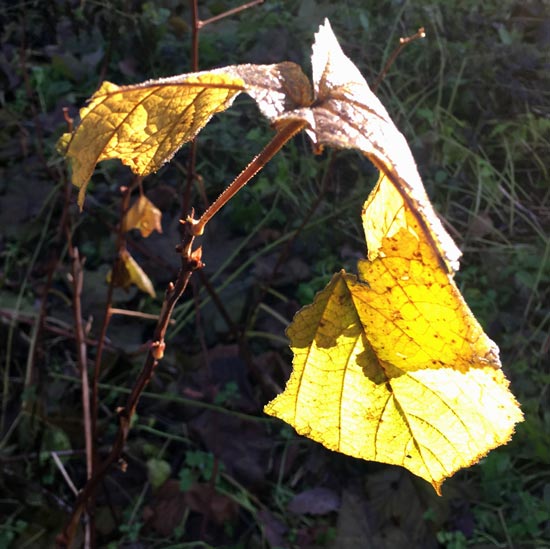
This winter we have got quite a many snow storms. In February, it had snowed a lot during the day, so before we left our front yard, I was already taking photos of this mad whiteness that we were trying to overcome.
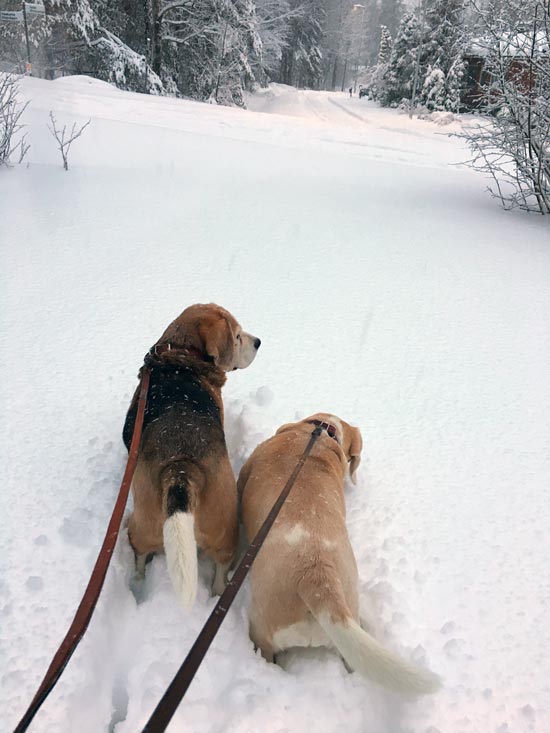
We had been wading for some time when I realized that I had lost my keys in the snow while taking photos. After a lot of sweat, and stepping back and forth, I finally found the keys in the middle of “the road.” During a year, there are many days in Finland where everyone else than dog owners have their meetings indoors.
Taking Healthy Breaks
On a workday, my dogs hang around quite a lot. They have learned that if I set something on the floor, it’s not for them to lay down on.
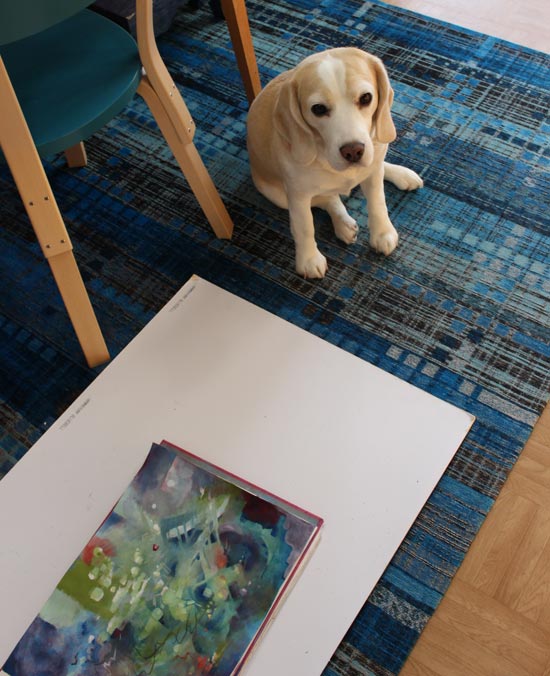
They try to be patient when waiting for daily treats but maybe see their role as interrupters who force me to have short breaks now and then. Cosmo, the old one, is the leader who decides when to stop my work, and Stella quickly joins him.
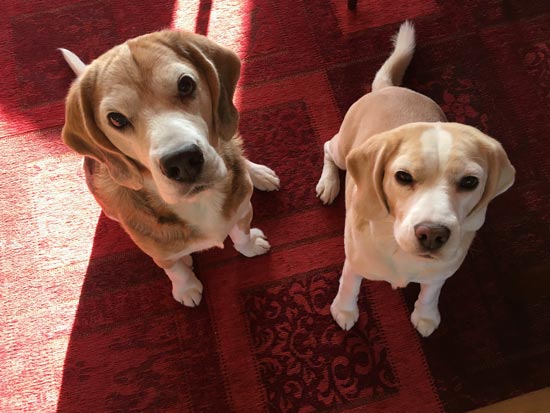
These breaks don’t always seem so healthy and fun to me. I am often in a very concentrated mode and find a soft touch of a nose just annoying. But who could resist these faces?
Getting Genuine Encouragement
The birds – four budgies called Henrietta, Citronelle, Dynamite, and Bonneville – see my work differently. They want to join me and encourage me when I am at my best. It means that every time I record videos, and they sense the excitement in my voice, they start chirping: “Go on, you are doing great! Oh Paivi, you are so inspiring!”
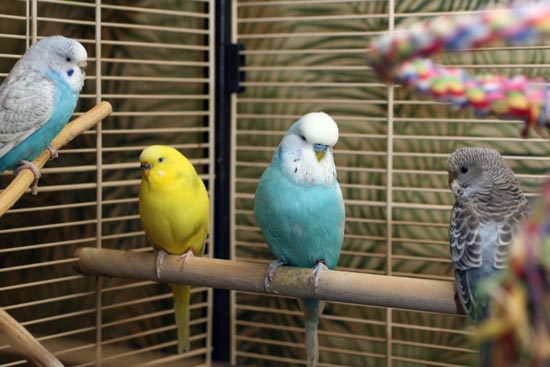
Hearing the birds is a contradictory thing. My birds don’t lie so if I don’t hear any sounds when I am speaking, I know that my enthusiasm doesn’t show and I have to fix that. But despite the walls, the mic picks up the high-note sounds easily. So I have to stop recording, go to the library room to ask them to be quiet. Sometimes nothing else helps than darkening the room and adding a cover on their cage. It often feels cruel, especially after seeing them happy and excited first. So many of my videos have bird sounds in the background, and I hope that you forgive us!

Having Pets as Models
Cosmo and Stella are very proud of their modeling skills, and they think that the reward they need for every minute is very moderate too. However, it’s often cheaper for me to take a photo and use that as a reference.

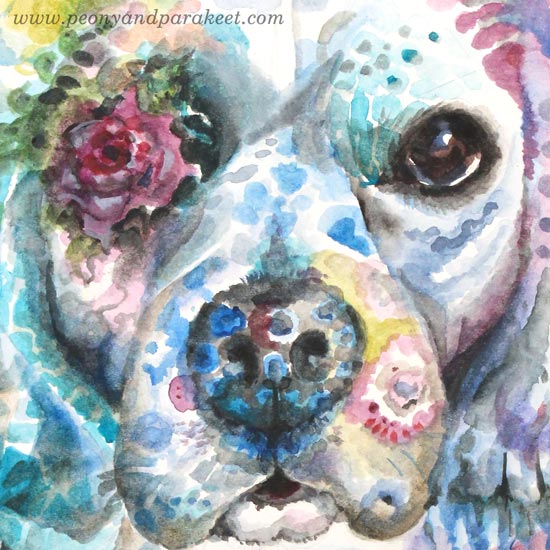
Unfortunate for them, but I don’t often paint dogs. But this month, when the monthly theme of Bloom and Fly is stretching the imagination and adding surreal elements to art, I wanted to express how cute Stella is in my eyes.
Learning Leadership Skills
My position as the leader of the pack has strengthened during the past years. We all wait eagerly for my husband in the afternoons but I am often the one my pets turn with their needs. My husband loves them as much as I do, and it hasn’t always been this way. But the time spent with them matters, and it gives me the sense of satisfaction when I don’t have to leave my pets alone.

This year, leading an online community has been new to me. In fact, when I left my day job in 2014, I thought that I would be just making self-study classes and taking care of the pets! There’s a false sense of independence built in the art making because most of the creating happen alone. But after running my first workshop, I realized that I can help more when there’s more interaction.
With the community, it has dawned on me that the role of a leader doesn’t mean that I have to know it all. We are all learning from each other. It’s a liberating thought, and it doesn’t only empower the leader, but the members as well.
We often have intentions to create a certain kind of art or share our art but postpone it because we feel that we need to figure it out by ourselves first. Some of the things that I have postponed are diving deeper into watercolor painting and develop more ways to use art for self-exploration.
But the truth is that when you have the support, changes start to happen. You get structure and kindness that gives you courage. There’s no need to struggle alone or wait until you are ready. The life is not so long after all.
Bloom and Fly – Don’t wait until you are more skillful, join the community now!
Minimalism in Creating – Making the Most of What You Have
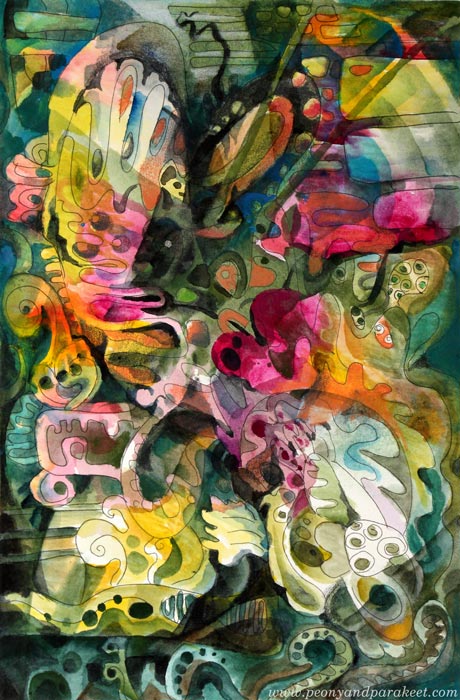
Here’s my latest little study in watercolor, called “Ikebana.” I finished it today, but for a long time, it was just a piece of watercolor paper with random doodles and colored spots. I had started the piece in December 2016 when running a local art class. I had just painted mindlessly while discussing with the students and then left the piece unfinished.
Choosing Not to Toss Away
When I was holding the unfinished, ugly painting, I thought of my choices. I could toss the paper away and forget the thing. Or I could treat it as a treasure and make the most of it, despite the controlling straight lines that went through the page and other uninspiring details. To me, choosing to continue the painting, is usually always the better choice. Making the most what I have calms me down, gives me a sense of purpose, and positively challenges me. I don’t consider it so much as a choice of saving money or space but getting a peace of mind.
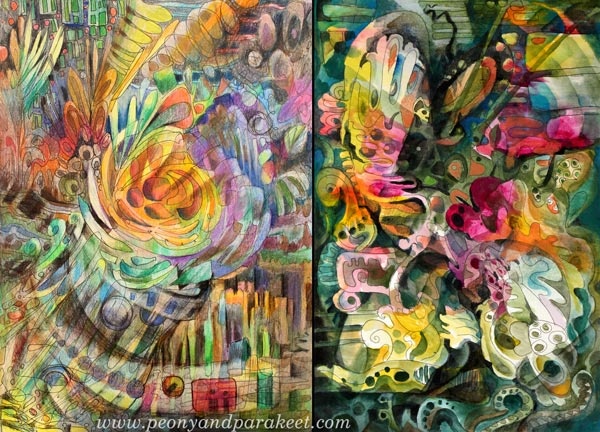
I have also noticed that when I work on with the old pieces, I find new ways to make them more expressive. That in turn, helps me to develop better classes and help my students. This time, I was inspired by April’s theme of Bloom and Fly – surreal art!
Getting back to old doodles also reminds me that even if I can’t make all the details work together, art is never fully perfect. Often the minor “mistakes” add personality and interesting tension to the piece.
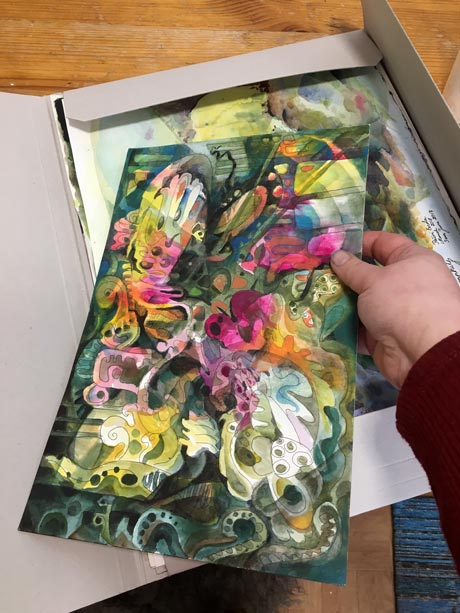
I also like to store the finished pieces organized in folders.
Using Up Old Art Supplies
One of my favorite things is to organize art supplies once in a while. I try to find the best places for them so that they get used up. I find it much more pleasurable to buy new supplies when there’s the actual need. It’s also nice when I have had time to think what to purchase next.
So when I noticed that some pans of my White Nights watercolor set are getting empty, I decided to experiment and fill some with paint from the old tubes. I found an old gouache tube by Schminke, the pink that I totally love but had forgotten, and I hope it will keep on wetting well even after the pan is fully dried.

One of the pans that I made, the muddy green, is a color mix. It’s a color that I usually use for watercolor paintings to give brighter colors more power.
My Meditation – Cleaning Brushes
The longer I have created art, the more I have put a focus on my brushes. I used to buy them carelessly and toss them away once they didn’t seem to work anymore. But nowadays, I like to appreciate what I have and take time to clean the brushes carefully after each painting session.
The cleaner that I currently use is The Masters Brush Cleaner, recommended to me by my artist friend Eeva Nikunen. I have saved many old brushes by cleaning them properly with this cleaner, and I couldn’t even think of cleaning oil paint from the brushes with anything else.
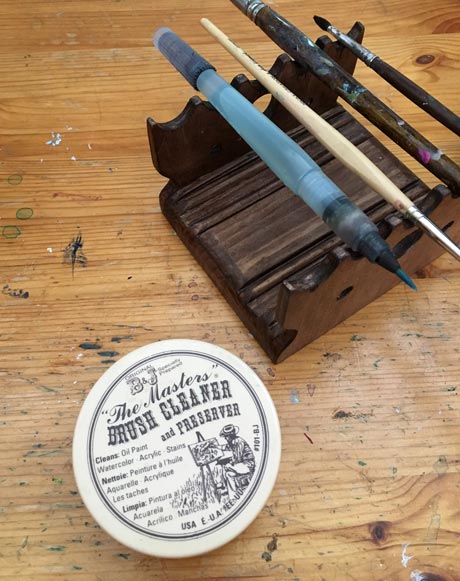
This cleaner is a solid soap. You dip the brush in water and then rub the soap with the brush. Formerly, I only washed the brushes with warm water after watercolor painting. Now I use the cleaner for watercolor brushes too, and it’s lovely to begin a new painting session when my brushes are like new!
No Need for Inventing New Ideas
To me, looking old stuff with fresh eyes is one of the best things in art, and it applies to ideas as well. See “From Innovation to Experience” from 2014 and Origami from 2016-2018!
Is This Too Much Minimalism?
I was hesitant to write this blog post because I don’t want to take the joy out of buying new stuff and starting new art. I also enjoy that! But often the best cure for procrastination is to stop thinking what you don’t have and start using your creativity to make the most of what you already have. Bonding with the old supplies and ideas can give a sense of independence and freedom too.
“It’s not who you are that holds you back, it’s who you think you’re not.” – Artist Jean-Michel Basquiat
I heard this quote from one of the members of Bloom and Fly, and it feels appropriate here too!
Bloom and Fly – Get new inspiration and perspective to your art!
>> Sign up here!
Watercolor Panoramas to Express Travel Memories
I try to have a wide range of topics on this blog, but now I am posting watercolor sceneries again! (See the last week’s post). I have quickly become addicted to them! It all started with buying Daniel Smith watercolors and realizing that many members of my community Bloom and Fly love watercolors. I try to grow my skills in most of the media that the members use. Then I can give advice that’s not only great in theory but also works in practice.
Not So Traditional Landscape Painting
A lot of reasons were needed for landscape painting because so far, it has been one of the most boring genres of visual art to me. I haven’t ever been the kind of person who travels with a tiny watercolor kit and sits down near the sights to paint the surroundings. I do usually carry a camera – often just my phone – when traveling or walking in nature but never before have I understand the fascination of the traditional landscape painting.
But last week, I realized that because art is freedom, I can be as wild and expressive as I want. That made the landscape painting a fun game. It gives me the opportunity to re-live the travel memories, get lost in the process, and then come out with a piece that’s like a souvenir from that creative experience.
Watercolor Panoramas – Playing with Expression
This time, I was not painting just one piece like last week, but five small panoramas at one go. I carelessly chose the reference photos for the last part of the process. I will talk about the process later in this post, but let’s talk about the expressive ideas first.
A) How Would The Place Currently Look?
When painting watercolor panoramas, it was interesting to see what travel memories come to mind and how they got merged with the current life.
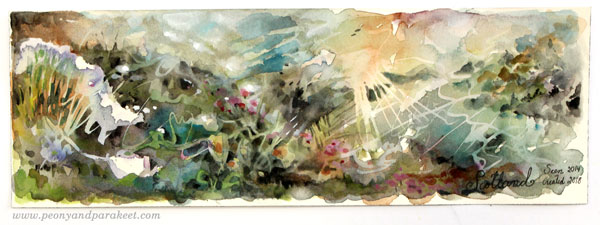
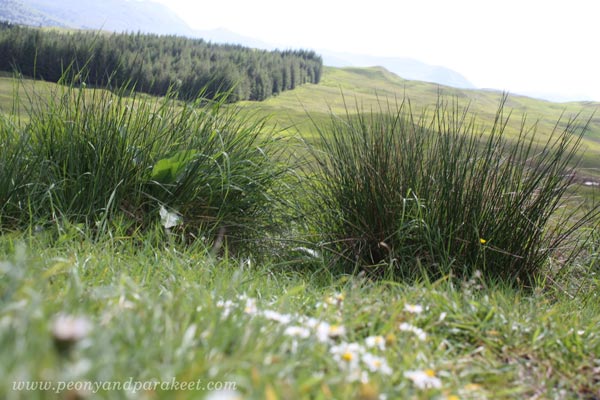
When we were in the Scottish countryside in 2014, it was a sunny day in June. The heat felt very similar to Finland’s summer. It was pleasant, not suffocating at all, and remembering it made me ponder how the spring would look there now – perhaps quite similar to Finland too.
This was the photo that I used as inspiration when finishing the painting.
B) The Chain of Memories
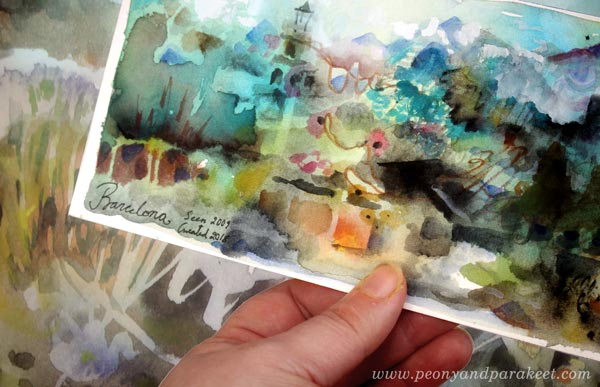
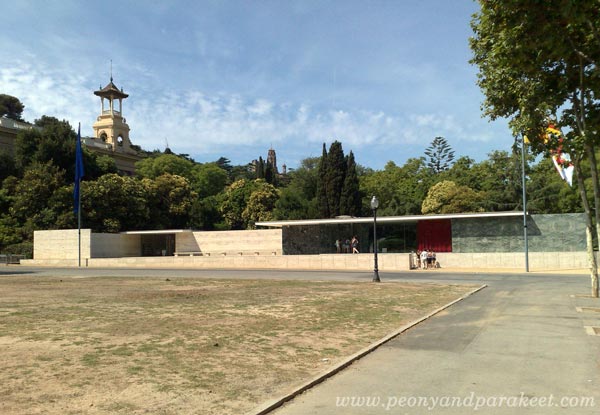
Barcelona was my husband’s suggestion in 2009. I wasn’t excited until I remembered Mies van der Rohe’s Barcelona Pavilion. And of course, the pavilion was also the first thing that came to my mind when I painted the panorama. But I also remembered Catalonia’s National Art Museum, Gaudi’s architecture, the mountains that surrounded the valley, the sea views, a lot!

The long chain of memories and locations started from this (not so artistic!) snapshot showing Barcelona Pavilion.
C) The Emotional Experience
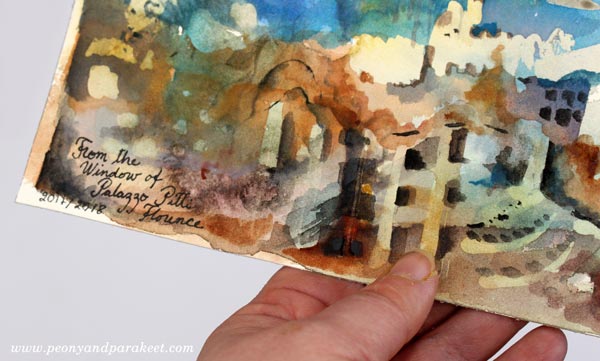
Last summer, we visited Palazzo Pitti in Florence, Italy. The place has inspired me ever since. I remember entering the museum and seeing the first room filled with chandeliers. It was a hot and relatively quiet evening in Florence, but my mind was buzzing. It’s like I was trying to get exposed to as much art and beauty as I could.
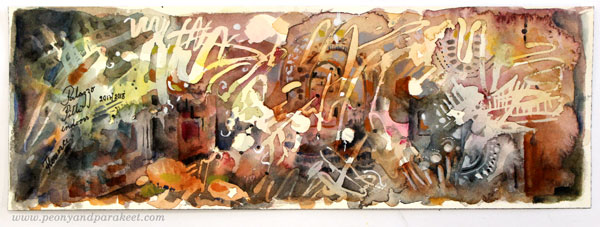
Here’s the photo that I had in hand when finishing the watercolor panorama above.

D) Being Far, Seeing Far
When being far away from home, it’s possible to see the life from a different perspective. It’s like rewriting some parts of the personal story. In the brilliant Palazzo Pitti, I had the same experience than when visiting Hermitage Museum in St. Petersburg, Russia: I should trust my points of view more, and not hold back. When I looked out of a window of Palazzo Pitti, it didn’t matter what other people saw there. I saw what I saw, and that’s true to me.
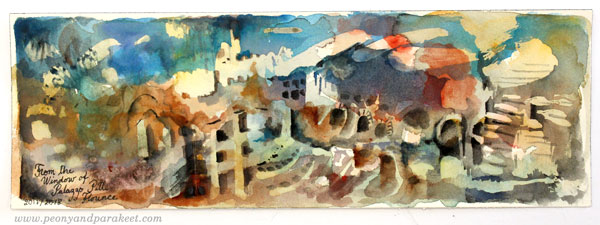
Here’s the reference photo that I almost deleted when I came back from the trip because it wasn’t so pretty. While painting, I realized that good reference photos are not only those which show the best scenes. The ones that remind from the best moments are also worth saving and painting.

E) Highlighting What Matters
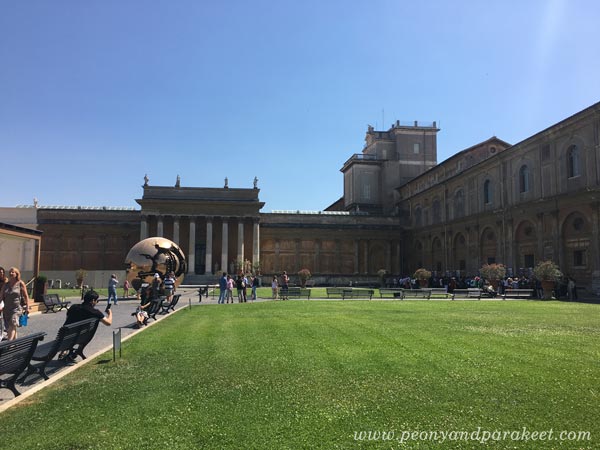
While traveling in Italy last summer, we visited Vatican Museums too. Some of the things that stuck in my mind were the huge maps on the walls and the incredible number of tourists. While painting, I thought how the old maps could be seen as symbols for the curiosity to know the globe.
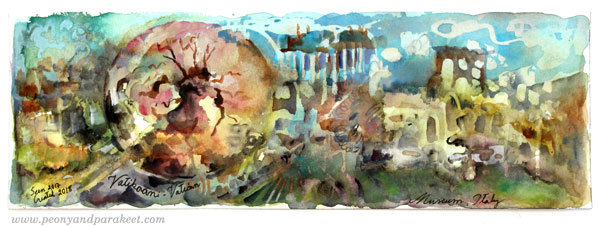
The statue of the reference photo (Arnaldo Pomodoro’s Sphere within a Sphere) expresses the complexity and fragility of the world. I made it dominate the scene in the watercolor panorama and made it look a bit like a round map. To me, it’s much more important than the buildings!
Watercolor Panoramas – My Process
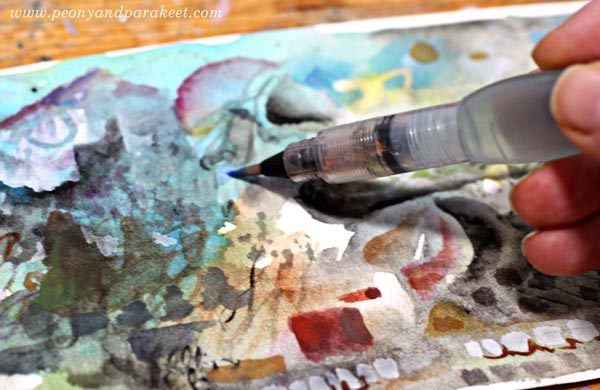
The idea for panoramas was accidental. I happened to find oblong pieces when going through the watercolor papers. I often like to paint a square, so I had cut away the excess of a blocked paper. I don’t usually work in this small scale. However, using a thin water brush most of the time, made it quite easy.
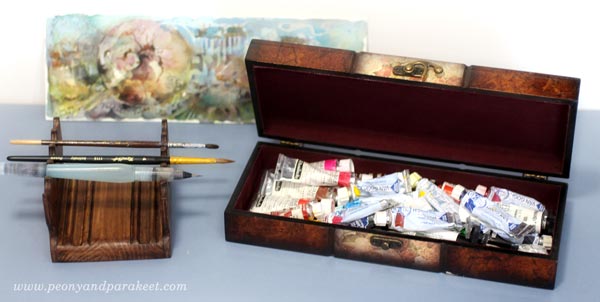
For the colors, I used a mixed collection of watercolor and gouache paints.
1) Background – Traveling to the Mind
The fact that I didn’t use any reference photos until in the end, made the painting fun. The first layers were splashing and blending. I had no idea about the scene or the location that would appear on paper!
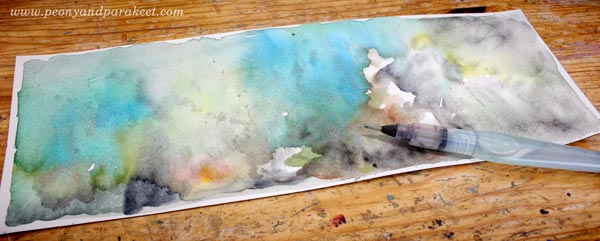
I took a photo of the backgrounds and then another one when the paintings were finished. Can you recognize which belongs to which?
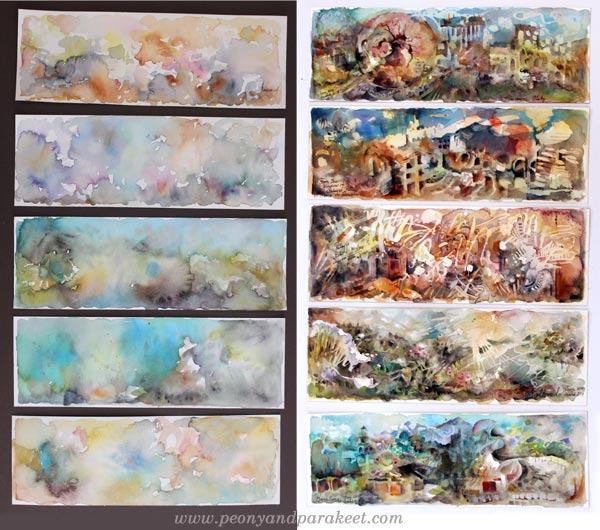
2) Doodling with Watercolor and Masking Fluid
After I had painted the background, I started doodling. Working with five watercolor panoramas at the same time was handy. I could work with one painting while others were drying. I used both pigments and masking fluid for doodling. Some backgrounds had watercolor doodles first. Others went straight to masking.
At this point, I started thinking about a reference photo that could suit the painting. For some panoramas, I found the picture quickly. But there were a couple that raised no memories at all, so I just doodled this and that!
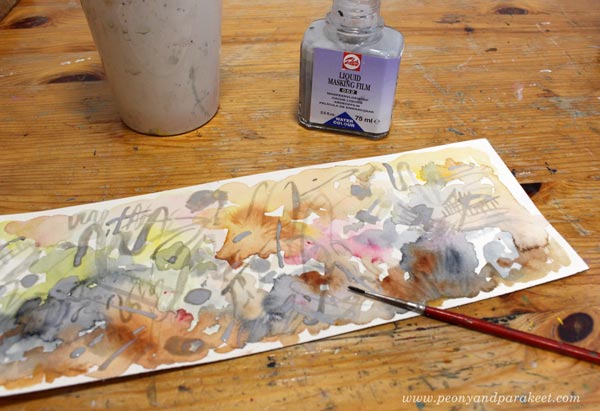
After the masking fluid had dried, I was having fun again. I splashed the paint and enjoyed the wonders of watercolor.
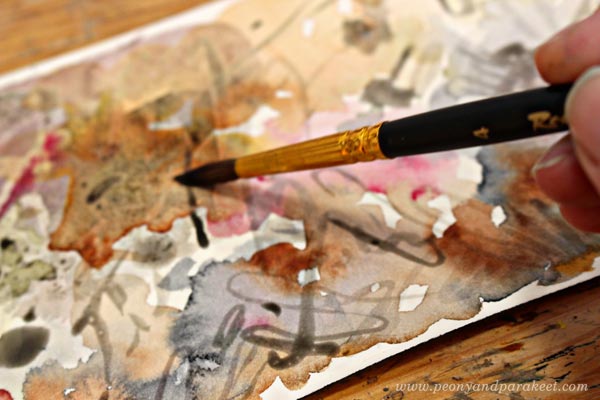
After the topmost layers had dried, I removed the masking fluid. Here’s “Scotland.”

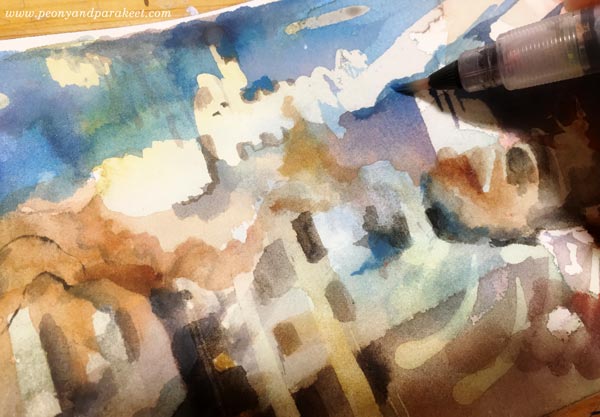
3) Finishing the Painting with a Reference Photo
When aiming for an expressive and loose image, the reference photo is more like an inspiration photo. I can glance at it, pick some ideas and elements from it but I don’t follow it to the detail. I let my associations and memories override the photo and build an inner vision of the place. (My class Inspirational Drawing guides you to master this process more in detail.)
Why I Have Never Learned Watercolor Painting from the Books
Some elements of the panoramas are more abstract, some more recognizable. It’s important to cherish the abstract nature of art when making room for expression.
I must confess that during the years that I have experimented with watercolors, I have found the books and videos difficult to comprehend and adapt. Watercolor tutorials usually follow the reference photos very carefully. To me, it doesn’t make sense. I need to know “the code” – the logic and the principles behind the image, not just the image. After you’ve got the code, you can express much more!
As an artist, I have always been more interested in what something expresses than how it looks. I have often felt disappointed by the lack of the expression part in tutorials, so I try my best to focus on the expression when teaching others.
The Magic of Finishing Touches
To me, the most challenging step in creating is finishing. The first two steps are usually just happy happy happy, but then there is a danger that the project becomes sad sad sad.
The watercolor panoramas were quite easy to finish, but if I have bigger struggles, I use the camera for the whole creative process. Then I take a photo of my work and look at it in several ways, enlarge it, make it smaller, etc. It’s fast and makes the finishing much easier than just staring at the actual piece. In May at Bloom and Fly, I will show how to use a camera and other digital tools to make the most out of your art, even if the actual creating would happen manually.
The Summer Season (July-August) of Bloom and Fly is Watercolor Journey
>> Sign up here!